
Program guide · 8 min read
Georgia’s Resilient Forest Incentives Program
Georgia's Resilient Forest Incentives Program, run by the Georgia Forestry Commission, reimburses private landowners for named practices on forest land by a published per-acre schedule: $150 an acre for understory mulching and $130 for non-commercial thinning. It has a ten-acre minimum and a yearly sign-up window, currently June 15 to July 3.
What the program does
The Resilient Forest Incentives Program is a Georgia Forestry Commission cost-share program for privately owned forest land. You carry out a practice the program names, you document it, and the program reimburses you at the rate it publishes for that practice. You apply as the landowner, and the payment comes to you.
The program pays by its own schedule and its own rules. Our quote prices the work on your land, and the schedule sets what the program reimburses. The two numbers are separate, and we keep them separate: you won’t see a reimbursement figure on a Sawnee quote.
The program figures we can confirm
- $150
- An acre, for understory mulching
- $130
- An acre, for non-commercial thinning
- 10 acres
- Program minimum
- June 15 to July 3
- Sign-up window
Program figures and sign-up windows are set annually and are current as of November 4, 2026. We confirm every figure with the Georgia Forestry Commission or NRCS before any application. This page explains how programs work; it is not a guarantee of eligibility or reimbursement.
Those four figures come from the program’s published terms, and they change from year to year. We confirm every one of them with the program office before any application goes in. The cost-share hub covers the other state and federal programs that pay for forest work in Georgia.
The practices on the schedule
The program publishes a list of practices, each with its own rate. Three of them match work we do. The table shows what each one covers and where it sits on the current schedule.
| Practice | What it covers | Published rate |
|---|---|---|
| Understory mulching | Brush and small hardwoods under a standing forest canopy, ground in place | $150 an acre |
| Non-commercial thinning | Small, crowded trees with no market value cut so the stand’s best stems have room | $130 an acre |
| Site preparation | A cut-over tract readied for planting | Confirmed with the program office before you apply |
The schedule lists other practices too, such as prescribed burning. We don’t burn, so we leave those to your forester and a burn crew, and we cut the firebreaks a burn plan needs. Site preparation is on the list, but we haven’t confirmed its current rate against the program’s own page, so we leave the number off this page until we have.
The program office decides whether a job fits a practice. Below, each practice as the schedule names it, and the work of ours that corresponds to it.
Understory mulching
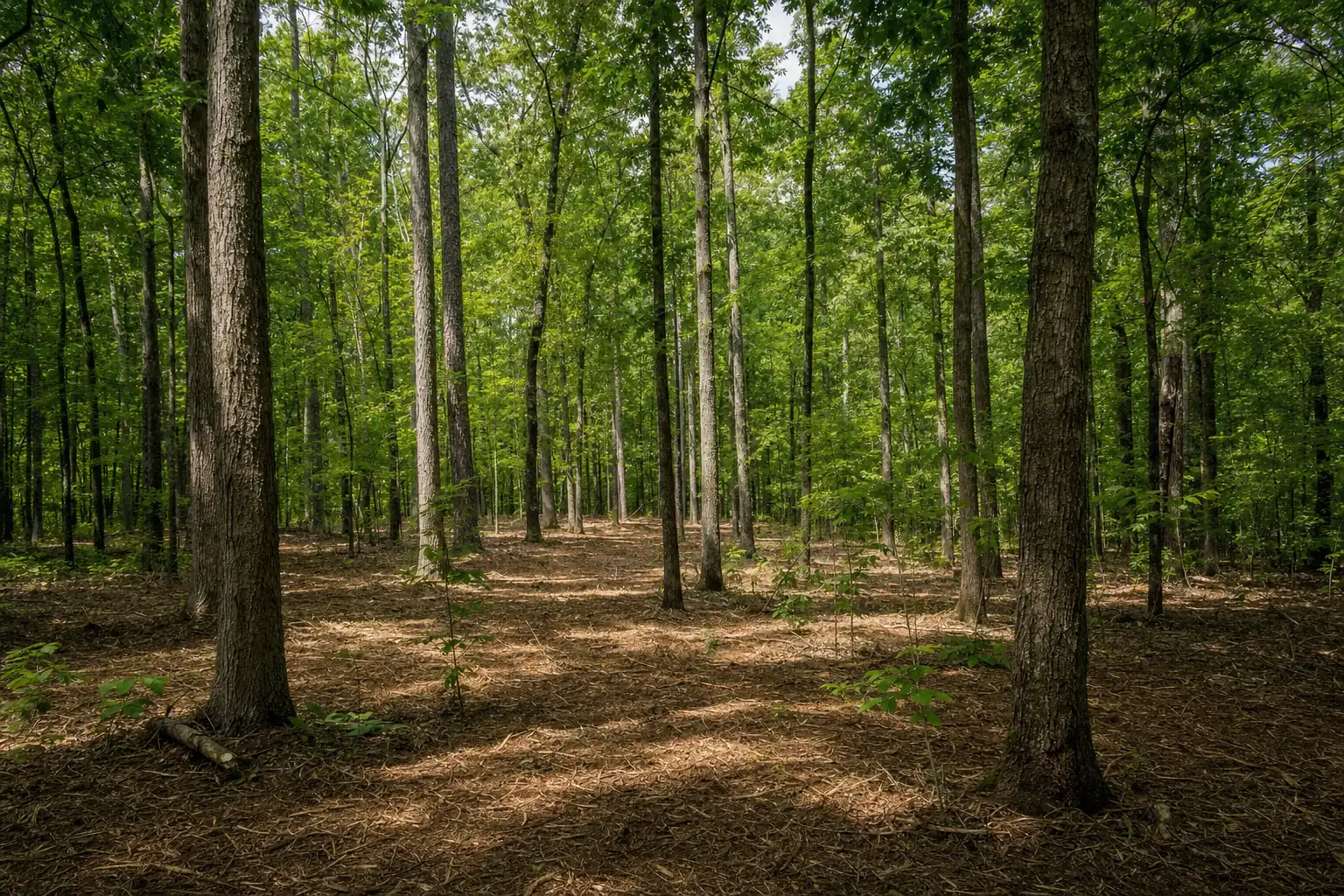
This is work under a forest canopy that stays standing. Sweetgum whips, red maple, privet and briars that crowd the floor of a pine stand get ground where they stand, and the pines stay. Our matching service is underbrush clearing. The floor resprouts in hardwood sprouts within a season or two, so plan for a follow-up pass or maintenance mowing on the open edges.
Non-commercial thinning
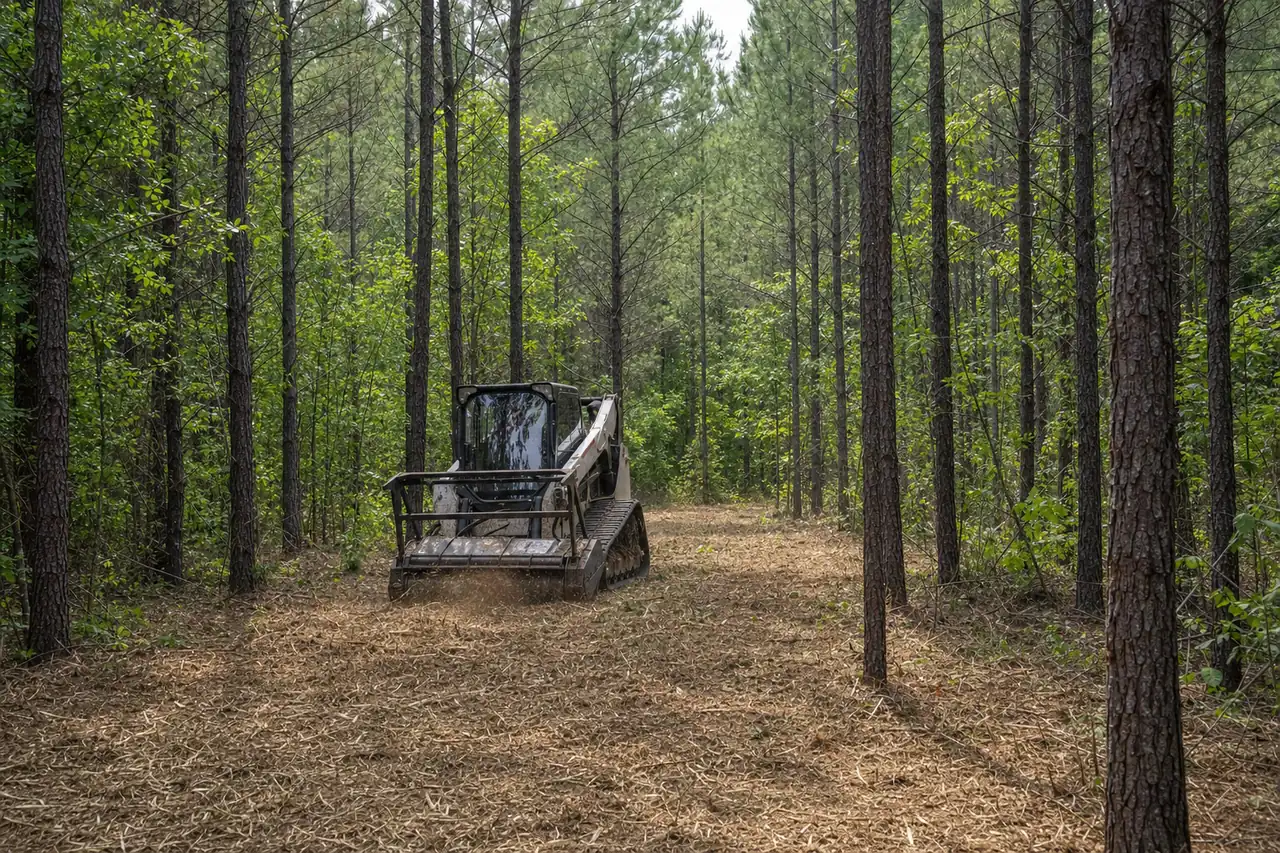
Young pine stands often come up too thick for any tree to grow well. Non-commercial thinning cuts the small, crowded stems a timber buyer won’t pay for, so the trees left standing get light and room. Foresters usually prescribe it to a target basal area or a stems-per-acre count and mark the trees with paint. We cut to those marks and mulch the stems where they fall. See pre-commercial thinning and our timber stand improvement service.
Site preparation
After a harvest, a cut-over tract fills with slash, cull stems and hardwood sprouts. Site preparation clears enough of it for a planting crew to walk the rows and for the seedlings to get light. We mulch the slash flat instead of raking it into piles to burn.
Who qualifies
The program is for private landowners with forest land. Three things decide whether your property is in the conversation:
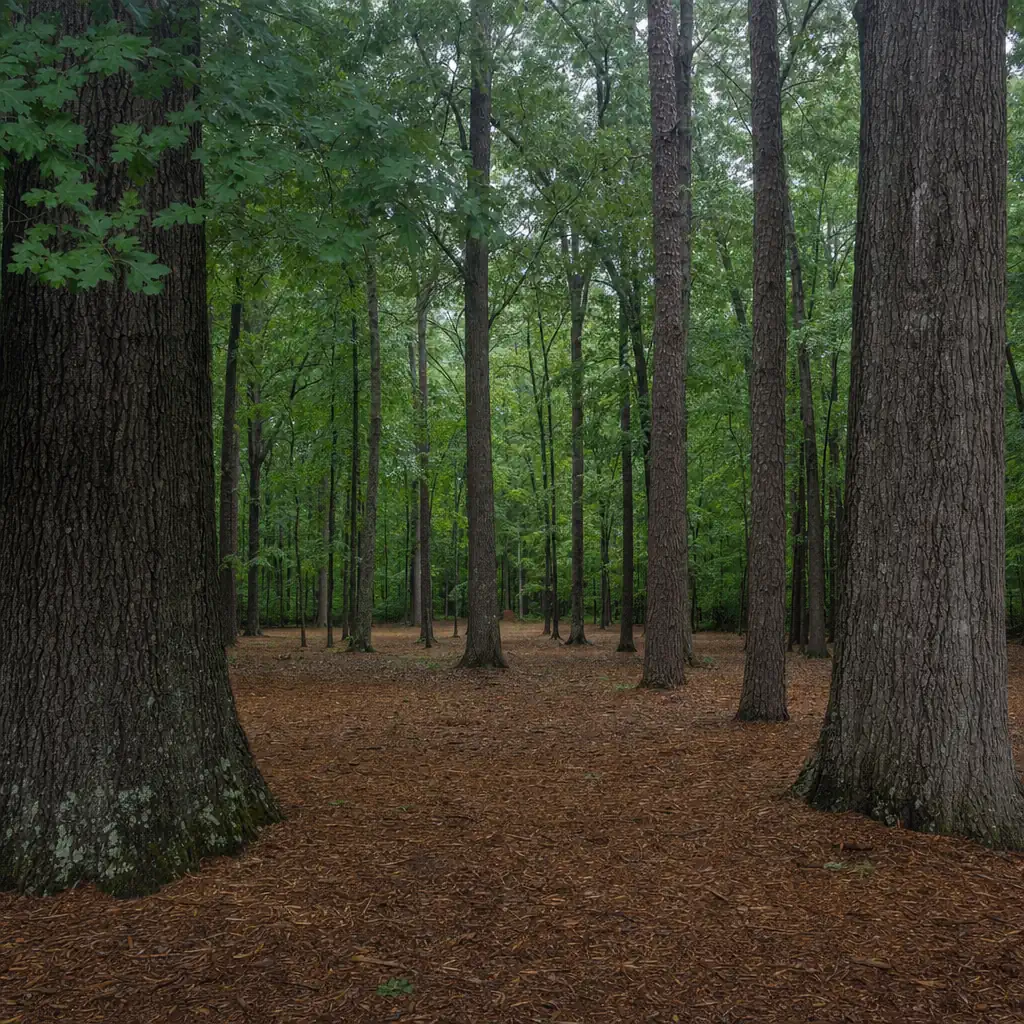
- Forest land. Pine or mixed stands, cut-over tracts headed back to timber, wooded acreage you manage as woods. A house lot, a lawn, a pasture or a building pad falls outside the program.
- The ten-acre minimum. The program has a ten-acre minimum. The program office confirms how it counts those acres on your property, so ask before you plan around it.
- A practice that fits. The work has to match a practice on the schedule. Clearing land to build on does not.
A lot of the land around Cumming is small residential acreage, and most of it won’t qualify. The larger wooded tracts out toward the Etowah side of the county and up toward Dawsonville are where these programs come into play. More in who qualifies for Georgia forestry cost-share and the acreage minimums.
The sign-up window and the calendar
Sign-up runs June 15 to July 3. The window is short, and the dates can change from one year to the next, so the planning has to happen before it opens. The work follows acceptance. A year usually runs like this:
- 1Walk the land in springWe measure the stands, mark the privet and the creeks, and match the work to named practices.
- 2Confirm with the program officeCurrent rates, the minimum and the dates, checked before you apply.
- 3You apply in the windowThe application is yours, filed during June 15 to July 3.
- 4Work after acceptanceScheduled on dry ground, with records kept by practice.
Spring is the time to call. That leaves room to walk the land, talk to a forester if the stand needs one, and settle which practices fit before the window opens. A landowner who calls after the window closes has missed that year. See the sign-up window and how the application works.
Why one plan needs several crews
A forest plan rarely stops at one practice. A forester walking a thirty-acre pine tract off a county road might call for thinning in the young stand, understory mulching under the older pines, firebreaks around both, and privet treatment along the creek. Each of those takes a different machine or a different crew.
A single-machine operator can do the piece their machine does. For the rest, they tell you to hire someone else, and you end up coordinating three companies on three schedules, each sending its own invoice for the program file. We run the whole plan on one contract, with one point of contact. Our invoices are itemized by practice, so the acres of understory mulching sit on their own line, separate from the acres thinned and the feet of firebreak.
 Underbrush Clearing: Open the Woods, Keep the Canopy
 Timber Stand Improvement and Post-Harvest Site Prep
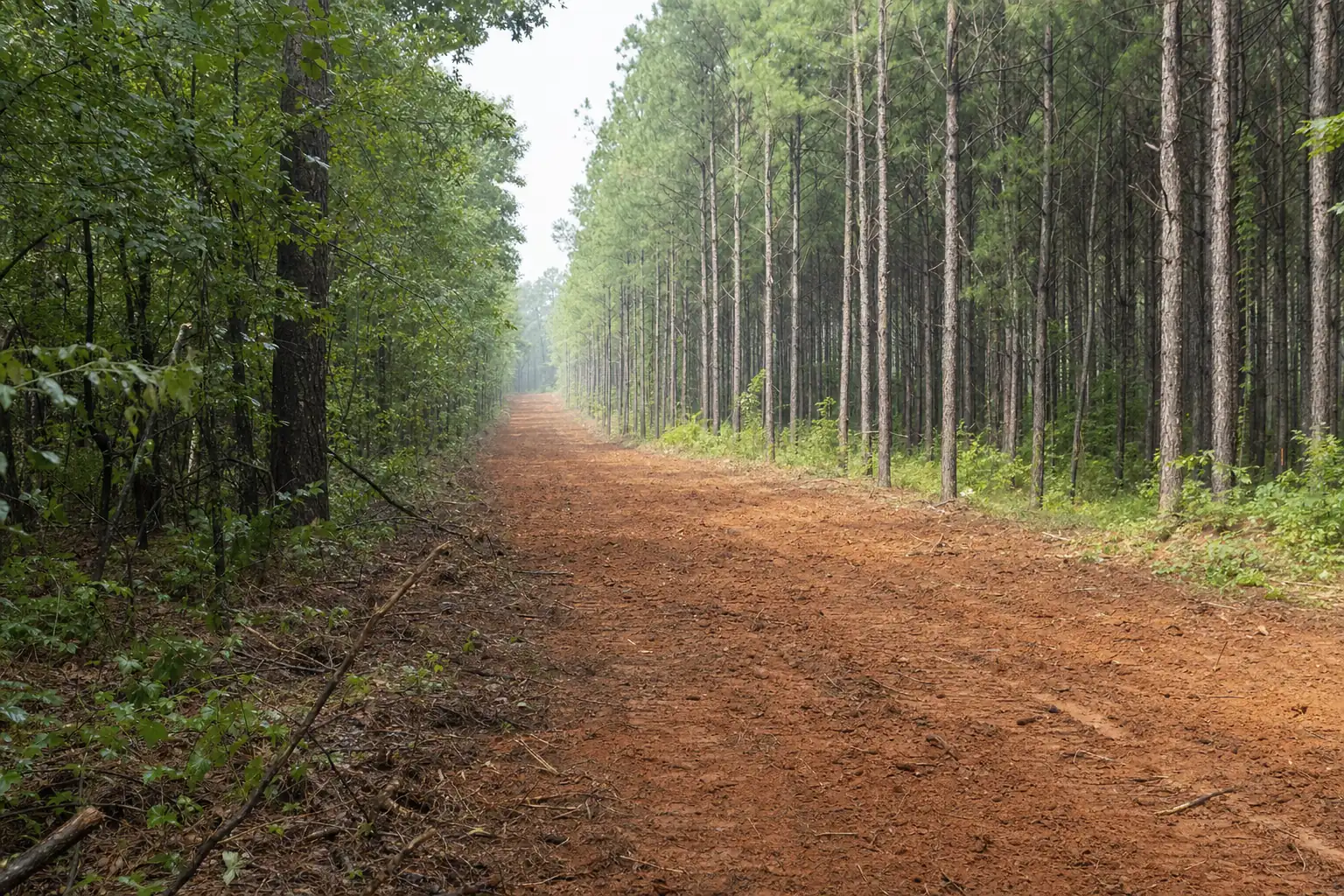 Firebreak Installation
What the program does not pay for
- Development clearing. Lot clearing, pad prep, driveways and pasture conversion are outside a forestry program.
- Land under the minimum. A seven-acre wooded lot doesn’t meet the ten-acre minimum, however good the work is.
- Our price. The program reimburses by its schedule. It does not pay a share of our invoice, and we never put a reimbursement amount on a quote.
- Work outside the named practices. Hauling debris or grading a food plot can be useful work, but if it doesn’t match a practice on the schedule, the program doesn’t reimburse it.
We tell you on the first walk if your job doesn’t fit. If part of it fits and part doesn’t, we price the two parts on separate lines so the program file stays clean.
County rules that still apply to program work
A program practice is still work in the woods, and Forsyth County’s rules still apply to it. Three come up on forestry jobs here:
- Forestry is exempt from the land disturbance permit. The county’s erosion ordinance exempts forestry land management practices. If forestry work disturbs a stream buffer, though, no other land disturbance except normal forest management is allowed on the whole property for three years.
- Buffers on creeks. Georgia keeps a 25-foot buffer along state waters, and Forsyth County holds a 50-foot undisturbed buffer plus a 25-foot setback. Your forester flags the streamside management zone, and the machines stay out of it.
- Plans for the land. The county allows timber harvesting and forest management only in agricultural zoning districts, and a clear-cut property can’t be rezoned for three years. If a house or a subdivision is in the land’s future, say so before the plan is written.
Permit thresholds, fees and buffer widths are those published by Forsyth County and the State of Georgia as of November 4, 2026. Confirm current requirements with the issuing authority before work begins. This is not legal advice.
We flag the creeks before the machine moves and plan the work around them. More in stream buffers and clearing near water.
Where landowners lose a year
Most landowners who miss out don’t fail a rule. They run out of calendar. These are the ways it happens around here:
- Calling after the window. The landowner sees a crowded pine stand in August, calls, and learns the window closed weeks ago. The work can still happen, but outside the program for that year.
- Starting before acceptance. Ask the program office how it treats work done before you are accepted. We schedule program work after acceptance unless the office tells you otherwise.
- One lump-sum invoice. A single line reading “clearing, 22 acres” doesn’t show which acres were thinned and which were mulched. The claim needs the work broken out by practice.
- No photos. Pictures of the stand before and after the work are easy to take and hard to recreate later.
- A plan that needs three contractors. When the thinning crew finishes in October and the firebreak crew can’t come until spring, the file sits open and the landowner chases paperwork from two companies.
Other programs on the same land
This is one of several programs that pay for forest work in Georgia. The Invasive Plant Control Program targets privet, kudzu and other invasive plants. Georgia’s Southern Pine Beetle Prevention Program pays for prevention work in pine stands. Federal EQIP, through your local USDA Service Center, lists forestry practices such as Brush Management and Firebreak; see federal conservation programs for Georgia landowners.
Whether one property can draw on more than one of them, and for which acres, is a question for the program offices. The rules on combining programs are theirs. We cover what we know in can one property use more than one program.
Before you apply
- Know your forest acreage, and which stands are pine, mixed or cut-over.
- Walk the land with us, and with a forester if the stand needs a prescription. See working with a consulting forester.
- Match each piece of work to a named practice, and set aside anything that doesn’t fit.
- Confirm the current rates, the minimum and the window with the program office. We do this with you before any application.
- File in the window, and schedule the work once you’re accepted.
- Keep the records: itemized invoices by practice and photos from before and after. We hand you both at the finish.
The application and the decision belong to you and the program. Our part is the walk, the plan, the work and the records the claim asks for.
Keep reading