Regrowth guide · 7 min read
Will It Grow Back? The Honest Answer
Yes. Forestry mulching grinds each plant off at the ground and leaves its roots alive, so sweetgum, maple, oak and privet sprout back the first spring around Cumming. Cut pines don't. Mowing once or twice a year and a dormant-season privet treatment keep mulched land open. This guide covers what comes back, when, and the plan.
Why mulched land comes back
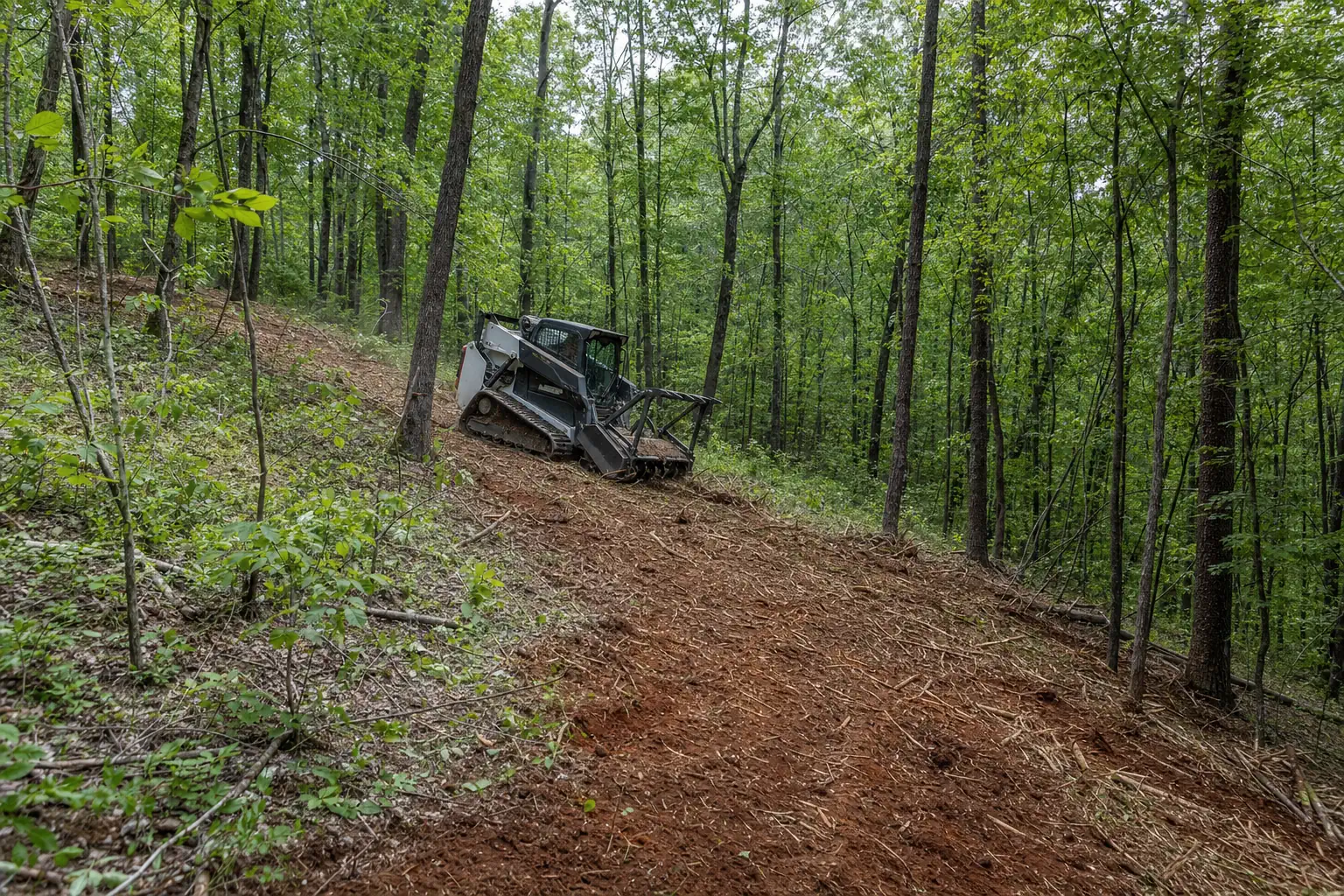
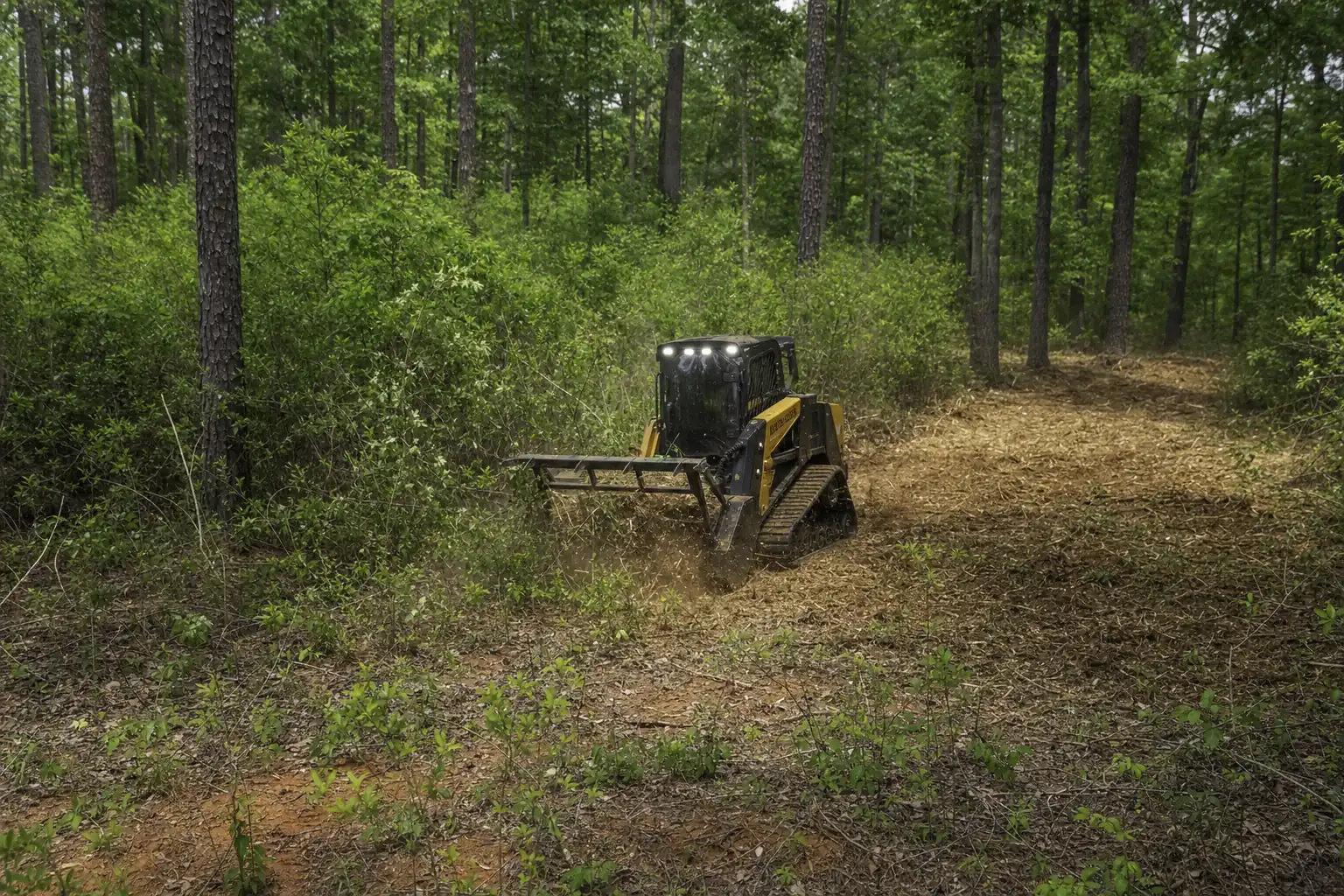
A forestry mulcher cuts every plant at the ground and grinds the stump to grade. It doesn’t dig. The roots stay in the soil with the energy the plant stored in them, and most hardwoods and shrubs answer by pushing up new shoots from the root crown and the roots. Seeds already in the ground, and the ones birds drop along fence rows and field edges, add to it.
The chip layer slows seedlings that have to come up through it. It does nothing to a sprout from a live root, which has the whole root system feeding it.
Mulched land doesn’t stay open by itself. We tell you on the walk what will come back on your ground and set up the plan to deal with it before we leave. The method is covered on the forestry mulching page.
What comes back and what doesn’t
The species on your land decide how fast it fills in. Around Cumming, most overgrown ground is some mix of sweetgum, red maple, oak, loblolly pine, privet and briars.
| Plant | Comes back? | What to expect |
|---|---|---|
| Sweetgum | Yes | Sprouts from the stump and roots the first spring |
| Red maple | Yes | Sprouts from the ground stump |
| Oaks | Yes | Sprouts from the stump |
| Beech | Yes | Resprouts after cutting |
| Chinese privet | Yes | Comes back thick and even from the roots |
| Blackberry and greenbrier | Yes | Back within the first growing season |
| Kudzu | Yes | Roots run as deep as 9 feet; takes years of treatment |
| Loblolly and other pines | No | A cut pine doesn’t resprout; new seedlings can still come in |
Grinding a stump below grade doesn’t stop a hardwood from sprouting either. It puts the stump under the surface so a mower can pass, and the sprouts that come up get cut with everything else. Only pulling the stump and its roots, the way a building pad gets grubbed, stops the sprouting at that spot.
The full species list is in which trees resprout after mulching.
The first year after the mulcher leaves
A tract mulched in the fall or winter looks clean through the cold months. Then the season turns. Here is how the first year usually goes on Forsyth County ground:
- 1First springSprouts push up from ground stumps and roots across the mulched area.
- 2SummerSprouts and briars put on height. Mow before they harden into wood.
- 3FallA second mowing pass where the ground grows fast, plus trails and plot edges.
- 4Dormant seasonPrivet resprouts sprayed November to February by licensed applicators.
The sprouts come up even and close to the ground, which is the good news. A field of knee-high sprouts is easy to mow. A thicket of ten-year-old privet and sweetgum takes a mulcher. Land mulched in the fall can also spread privet seed, so expect seedlings the year after along with the sprouts.
Three kinds of ground, a year later
The old pasture. Several acres that went to sweetgum and blackberry after the cows left, mulched in winter. By June the field is a carpet of sweetgum sprouts and briars knee to waist high. One bush hog pass in early summer and another in the fall hold it, and by the second year the owner is mowing a field.
The underbrushed woods. A few acres behind a house, privet and saplings mulched out under oaks and poplars. Sprouts come up between the trunks, thinner than in the open. A privet treatment that first winter and a pass along the trails keep the woods walkable.
The creek-bottom privet. A privet wall along a branch, mulched outside the stream buffer. The privet is back thick by late summer, as the research says it will be. The dormant-season treatment that winter does more than any mowing could, and a second treatment the next year clears most of what’s left.
Mowing keeps it open
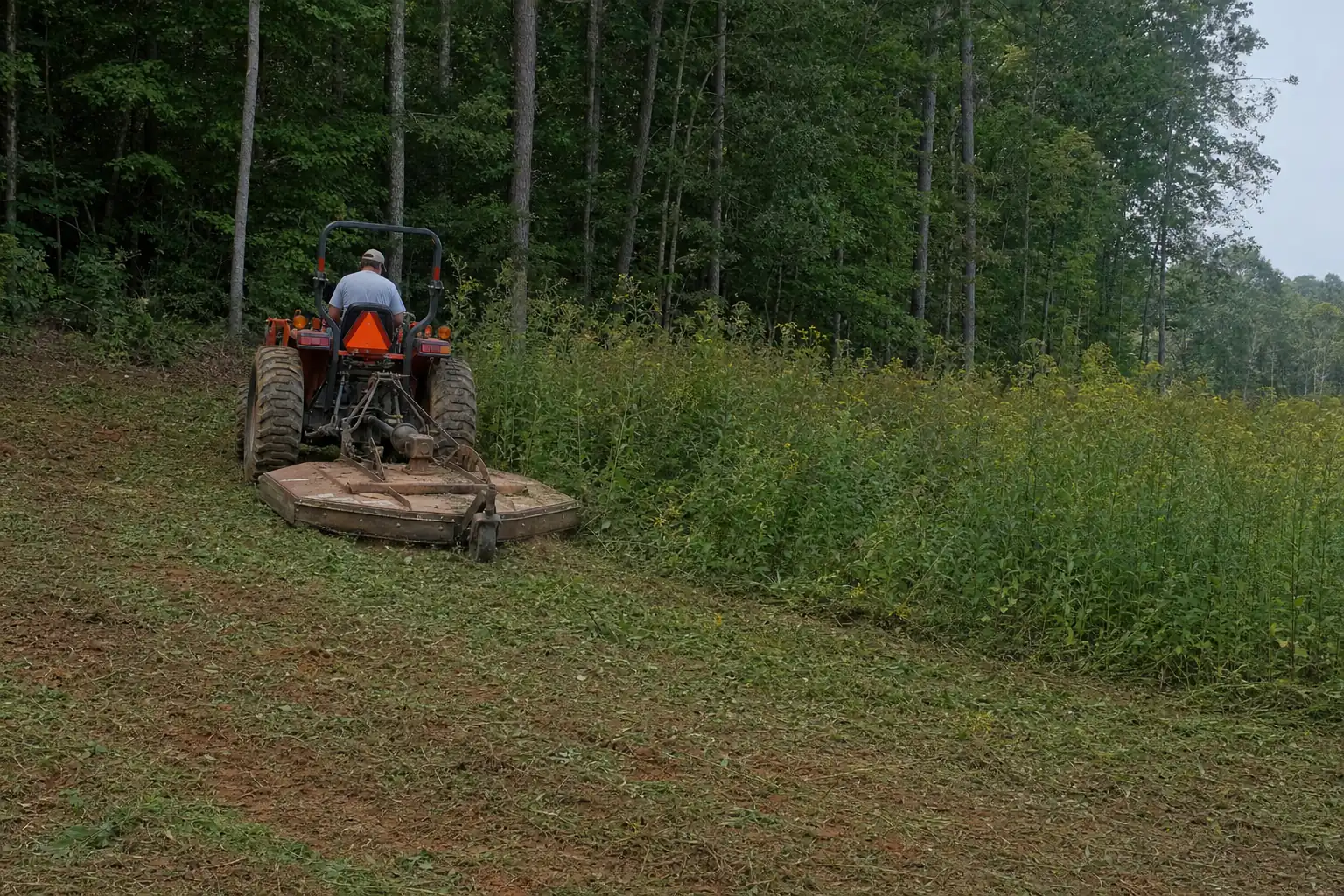
Most mulched ground stays open with a bush hog: a tractor and rotary cutter that handles grass, weeds, briars and soft sprouts. Plan on once or twice a year after the first pass. Fast ground, like old pasture with sweetgum roots everywhere, needs two passes. Slower ground under a kept canopy may need one.
The mulcher’s work stays done as long as the mowing keeps happening. Skip three or four years and the sprouts turn into saplings, and the next pass is a mulching job again.
We run maintenance mowing on an annual arrangement: the visits, the areas and the price set once, with photos sent if you live out of town. See bush hogging and maintenance mowing and how often to bush hog cleared land.
Privet needs a treatment, not more mowing
Chinese privet resprouts every time it’s cut, mowed or mulched. Mowing alone keeps it short and keeps it alive. UGA Extension tells landowners that brush mulching levels privet thickets but leaves the roots, so regrowth will occur, and that regrowth is uniform and easier to control with herbicide. Late fall is their preferred time to treat.
Research in North Georgia backs the pairing. Forest Service studies found spring and fall herbicide treatments outperformed summer ones on privet, and a riparian study that combined mulching with herbicide found little privet back five years later.
Privet after mulching, by the research
- Nov to Feb
- Dormant season, the usual privet treatment window
- 93 to 100%
- Privet control from spring and fall treatments
- 67 to 69%
- Control from the same treatment in summer
- About 7%
- Privet back five years after mulching plus herbicide
Herbicide applications are performed by licensed applicators in accordance with the product label.
For most privet stands, two treatments clear it, with spot checks for seedlings over the next few seasons. Licensed applicators do the spraying, following the label. The timing and the products are covered in should I spray after mulching and Chinese privet removal.
Kudzu is a longer program
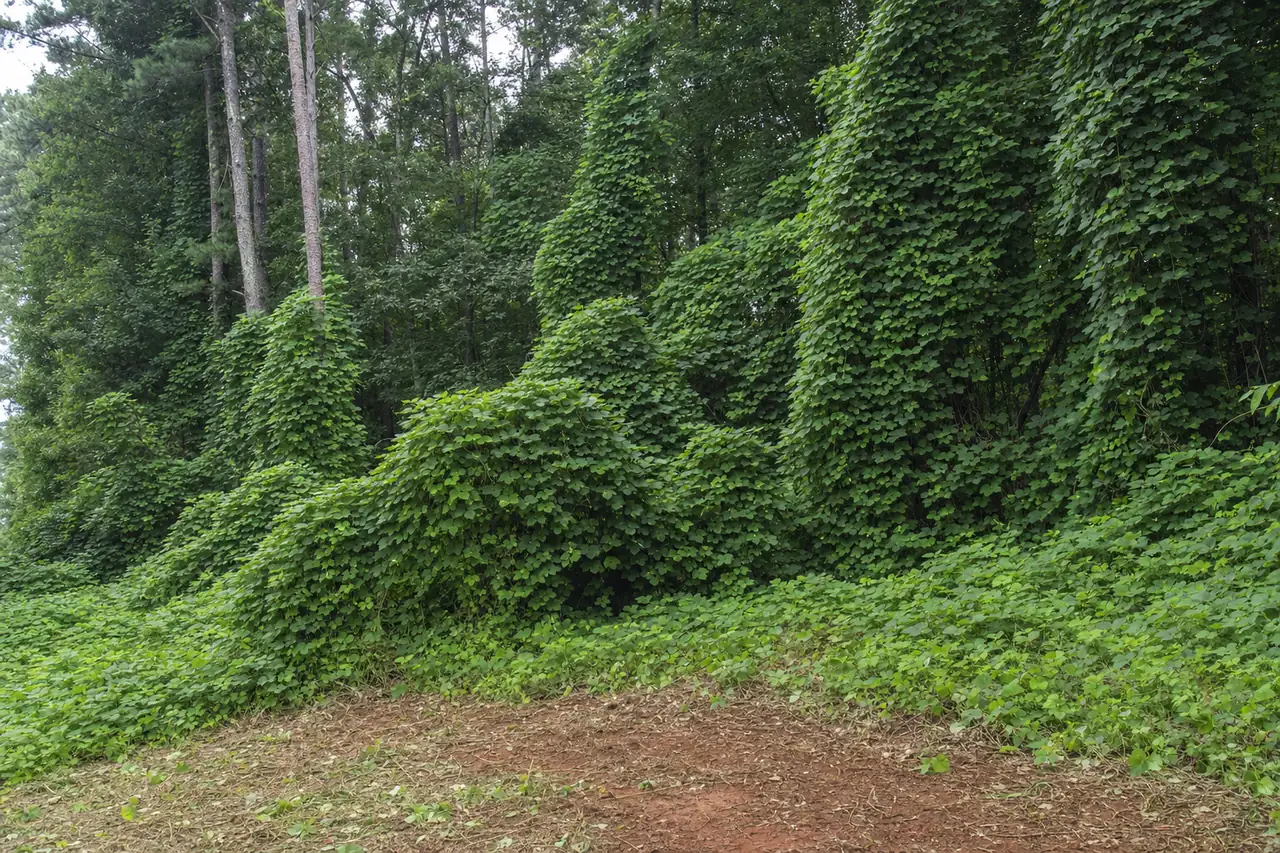
Kudzu roots run as deep as 9 feet, and each crown has to be controlled before a patch is gone. Georgia’s extension guidance puts full eradication at three to ten years of repeated treatment. Mulching or mowing a kudzu blanket is a good first step because it opens the patch so each crown can be found and treated. It doesn’t kill kudzu on its own.
On a road bank or steep clay slope, the treated area also needs straw and seed as the kudzu dies back, or the bank washes. See kudzu removal and does mulching kill kudzu.
Give the land a job
Land you use stays open with less work. Ground that turns into something else stops being a sprout field:
- Pasture or lawn. Stumps ground below grade, the chip layer kept thin, then lime and seed. After that, regular mowing keeps the sprouts down. See can a mulched field become pasture or lawn.
- Food plots. Worked and planted every year, so sprouts never get a season to grow. See food plot and hunting land clearing.
- A house, barn or drive. The footprint gets grubbed and the roots come out with the stumps.
- Open woods. Underbrushed woods sprout back too, and a mowing or mulching pass along the open areas keeps the understory from closing in. See underbrush clearing.
Ground that sits with no use is the ground that goes back to woods fastest.
What it costs to keep it open
Keeping land open costs less than clearing it a second time. Maintenance mowing is quoted per visit once we’ve walked the ground, because a flat ten-acre field and a steep tract full of stumps mow at different speeds. If the land has been left long enough to go woody again, these are the mulching ranges that apply:
| Work | Estimated price |
|---|---|
| Maintenance mowing | Quoted per visit after the walk |
| Mulching a field gone back to brush and saplings | $1,200 to $2,500 an acre |
| Mulching saplings that reached 4 to 8 inches | $2,500 to $4,000 an acre |
| Mulcher time with an operator | $150 to $300 an hour |
Ranges are estimates for Forsyth County and the surrounding area based on job density, terrain, access and acreage. Your written quote is the only price that applies to your property.
The gap between the first row and the rest is the case for mowing on schedule. More in forestry mulching cost per acre.
What we set up before we leave
Regrowth is part of the job, so the plan for it goes in the same contract as the clearing. On the last day we walk the land with you, or send photos if you’re out of state, and leave you with:
- A map of what gets mowed. Fields, trails, fence lines and firebreaks marked, with wet spots and ground stumps noted.
- A visit schedule. One or two passes a year, set from how fast your ground grows, with the price agreed before the first cut.
- Privet areas flagged. Where the treatment goes in the dormant season, including the fence rows that reseed the field.
- A check-in after the first spring. We look at how the ground came back and adjust the visit count.
One contract, one point of contact, and nobody has to remember to call when the field is already head-high.
Mistakes that bring it back faster
- Waiting for it to look bad. By the time a mulched field looks overgrown, the sprouts are woody. Set the visits on a calendar.
- Mowing privet and calling it done. Cut privet comes back every time. It needs the dormant-season treatment.
- Spraying in midsummer. The same treatment that clears most privet in spring or fall does worse in summer.
- Ignoring the edges. Birds drop privet seed along fences and field edges, and an untreated fence row reseeds the field.
- Mowing wet clay. A tractor on soaked ground ruts it. We move the visit to a dry week.
Regrowth has an answer: mowing on schedule and a privet treatment. Read how a forestry mulcher works for why the roots stay, and is forestry mulching worth it for the full trade-off.