
Timing guide · 8 min read
The Best Time of Year to Clear Land in North Georgia
Late fall through winter is the best time to clear most land around Cumming. The leaves are off, so rock, old fence and keeper trees show, and privet stands out green. The catch is wet red clay, which stops tracked machines after rain. Summer works on dry ground, and mulching runs through the May 1 to September 30 burn ban.
Season by season around Cumming
Land can be cleared in any month here. Each season brings its own trade-offs, and the right one for you depends on the ground, what’s growing on it and what you plan to do next. The dates below are our practice in Forsyth County, not an official calendar.
| Season | What helps | What gets in the way | Good for |
|---|---|---|---|
| Late fall (Nov to Dec) | Leaves dropping, cooler days, ground often still firm, privet easy to spot | Deer season on hunting land | Underbrushing, privet, house lots ahead of a spring build |
| Winter (Jan to early Mar) | Full leaf-off, no nesting season, dormant-season privet treatment | Wet clay after rain, short days to dry it | Walking and quoting, survey lines, lake lot views |
| Spring (Mar to May) | Longer days to dry the ground | Spring rains, sprouting brush, nesting birds | Work that can’t wait, planning for cost-share sign-up |
| Summer (Jun to Aug) | Dry ground on long dry spells | Heat, full leaf hiding the ground, burn ban for anyone who burns | Food plots, dry-ground clearing, mowing |
| Early fall (Sep to Oct) | Drier weeks, ground firming up again | Plots already planted, hunters in the woods | House lots and pasture, before the leaves drop |
Spring is the season we’d pick last for wooded land. The rains keep the clay soft, the brush is leafing out and sprouting, and birds are nesting. It still works for jobs that can’t wait, and it’s a good season to walk land and plan for the summer and fall.
Late fall through winter gets our vote for most land, as long as the clay is dry enough to work. The sections below explain why, and when another season wins.
Why leaf-off helps
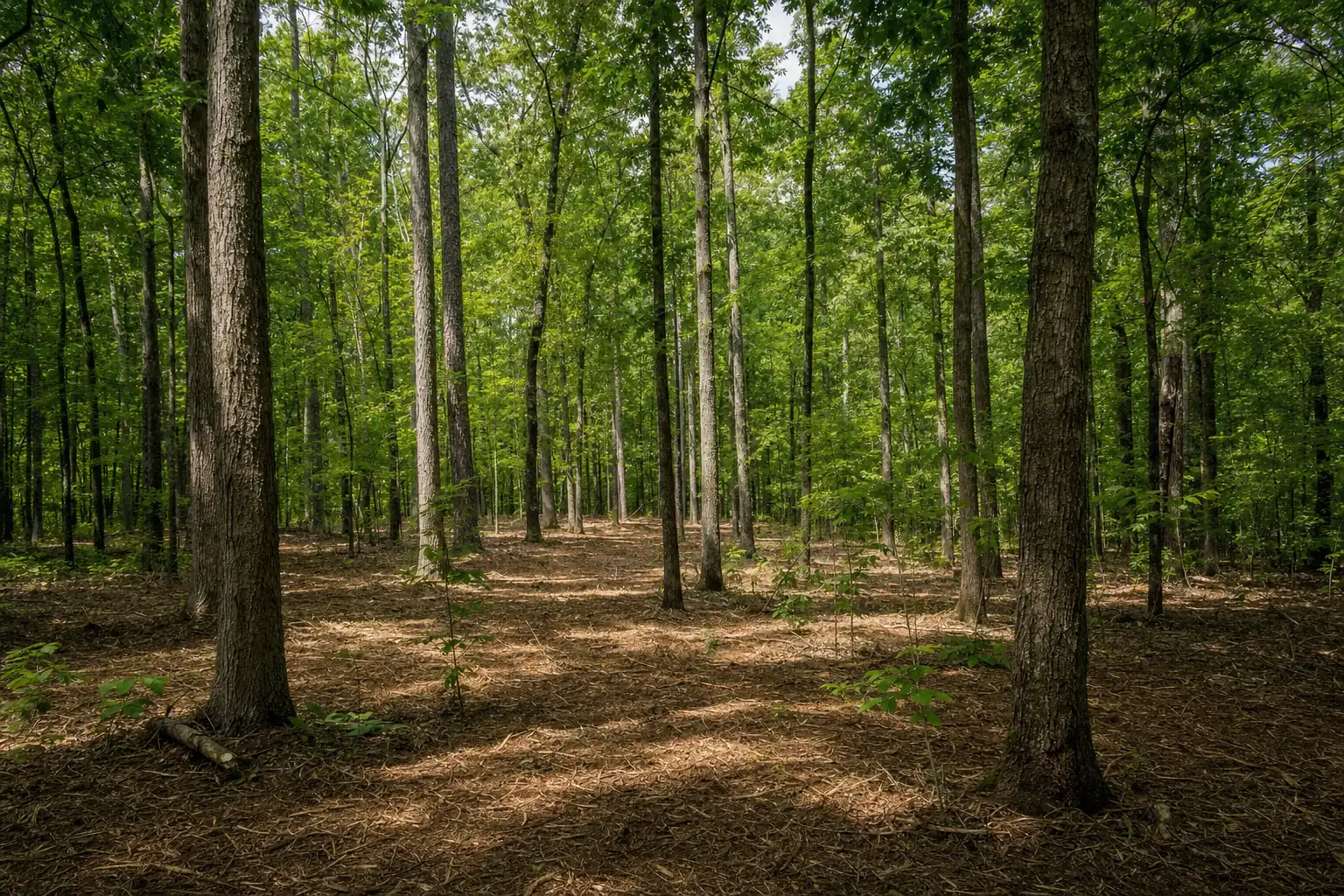
From mid-November to early March the hardwoods are bare, and you can see the land. Rock outcrops, gullies, old fence wire, tires and trash dumped decades ago all show up from the road. So do property corners and the shape of the trees worth keeping. When we walk your land in winter, we find those things before the machine does, and the quote is sharper for it.
Chinese privet is semi-evergreen and holds its leaves and dark berries into winter. In January, a privet thicket is the green layer in otherwise bare woods, which makes it easy to map how far it has spread. See how to identify Chinese privet.
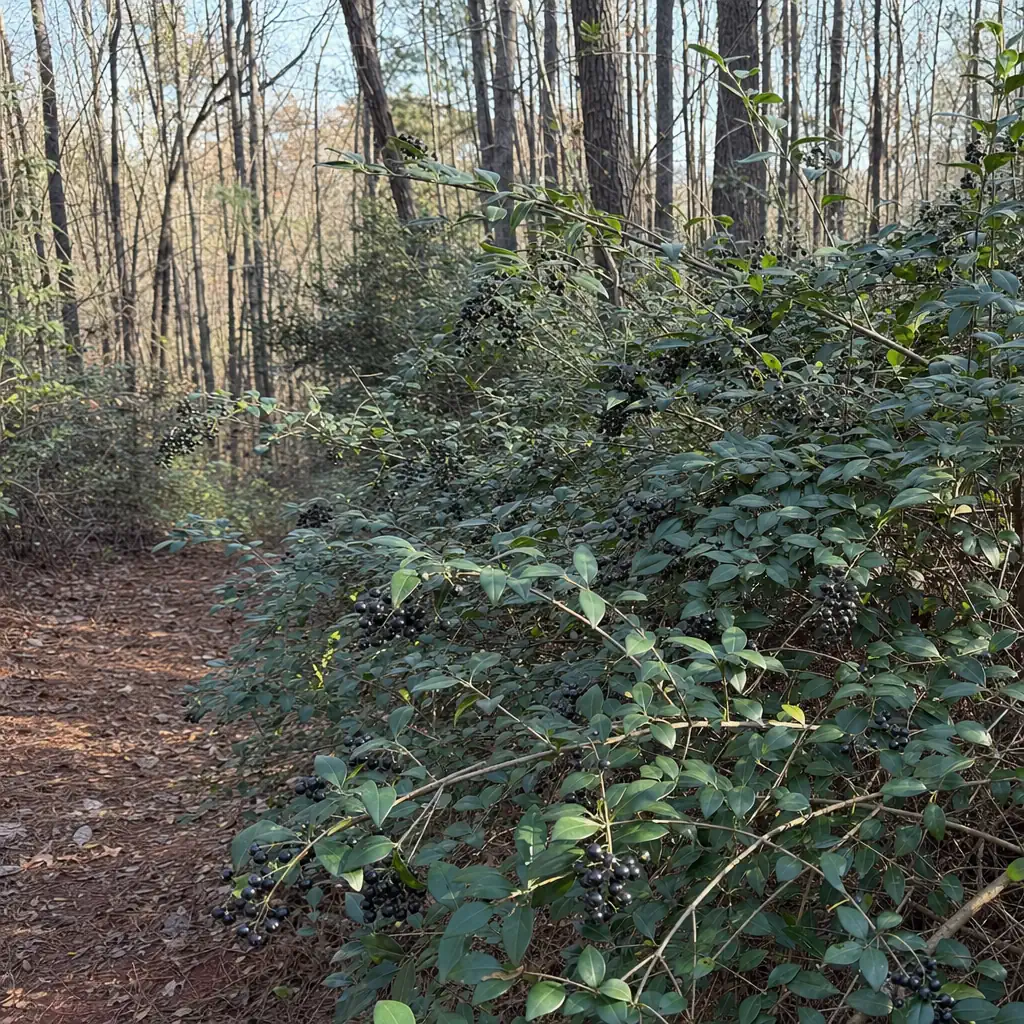
Leaf-off helps the people who come before and after us too. A surveyor can see down a line, and a buyer walking a listing can see the slope and the creek. On a lake lot you can stand where the house will go and see the water through bare trunks, which makes it easier to decide which trees on your side of the line to thin and which to keep.
Cool weather is also easier on a crew working a dense thicket all day, and on the machines.
Wet red clay is the catch
Winter has one real drawback here: rain. Cumming gets roughly 50 to 55 inches a year, and in winter the clay dries slowly under short, cool days. Saturated red clay won’t hold a tracked machine without rutting. We wait out wet weeks instead of tearing up your ground, which moves the start date but not the price.
Weather and machine time
- 50 to 55 in
- Rain a year around Cumming
- 1 to 3 acres
- Light growth one mulcher clears in a dry day
- Mid-Nov to early Mar
- The dormant season, when the hardwoods are bare
On the walk we look at which parts of your land hold water: the low side of the lot, the creek bottom, the spots where the clay stays slick for days. On a job that spans wet and dry ground, the machine works the high ground first and comes back to the bottom when it firms up. Ruts cut into wet clay take grading money to fix and can damage the roots of the trees you meant to keep. A job with three days of machine time can stretch across weeks in a wet winter, and we’d rather tell you that up front.
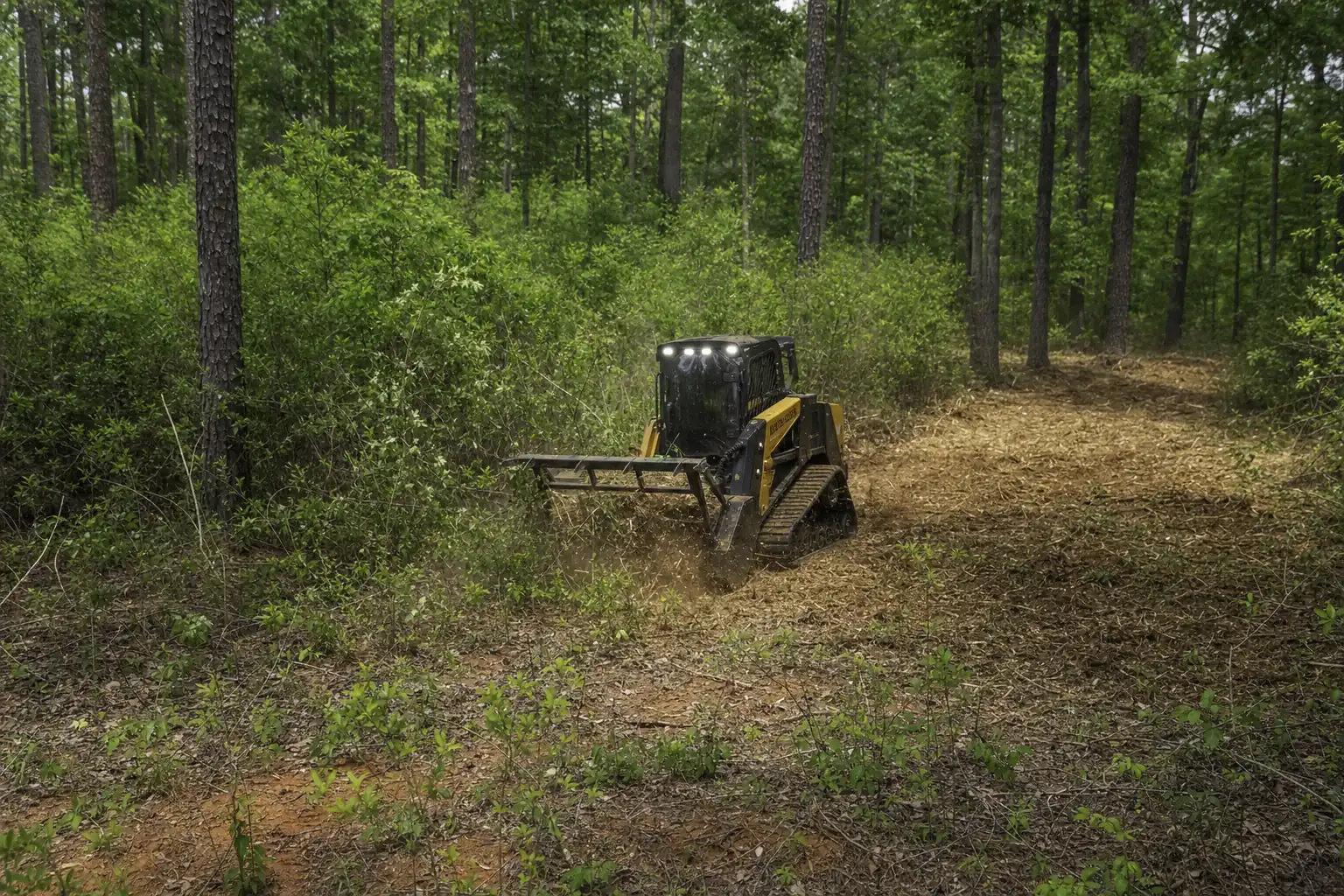
Dry weeks are the cheapest weeks, because the machine works a full day instead of waiting on the ground. A forestry mulcher on tracks, driving on the mulch it makes, handles damp ground better than a dozer or a skidder. Soaked clay is another matter. More in can you clear land in the rain or on wet red clay and mulching on red clay and slope.
Summer clearing
Summer works on dry ground, and long dry spells can make it the easiest time to run a machine. The heat is hard on crews, and full leaf hides rock and gullies until the mulcher finds them. We take longer on a summer walk for that reason.
State rules ban land-clearing burns in Forsyth County from May 1 to September 30. That leaves a dozer-and-burn-pile job with nowhere to put its pile for five months. It doesn’t touch mulching, because there’s nothing to burn. See mulching compared with burning.
Permit thresholds, fees and buffer widths are those published by Forsyth County and the State of Georgia as of November 4, 2026. Confirm current requirements with the issuing authority before work begins. This is not legal advice.
Most native birds’ nests are protected by federal law, and spring into summer is nesting season. If you’d like the clearing scheduled around it, tell us and we’ll plan for it.
If privet or kudzu is the target
Invasives change the calendar. Mulching levels a privet thicket in any season, but privet resprouts from the roots, so a follow-up herbicide treatment is what holds the ground. UGA Extension names late fall as the best time to treat privet, and dormant-season treatment from November through February is the standard approach. Spring and fall treatments have tested far better than summer ones.
Herbicide applications are performed by licensed applicators in accordance with the product label.
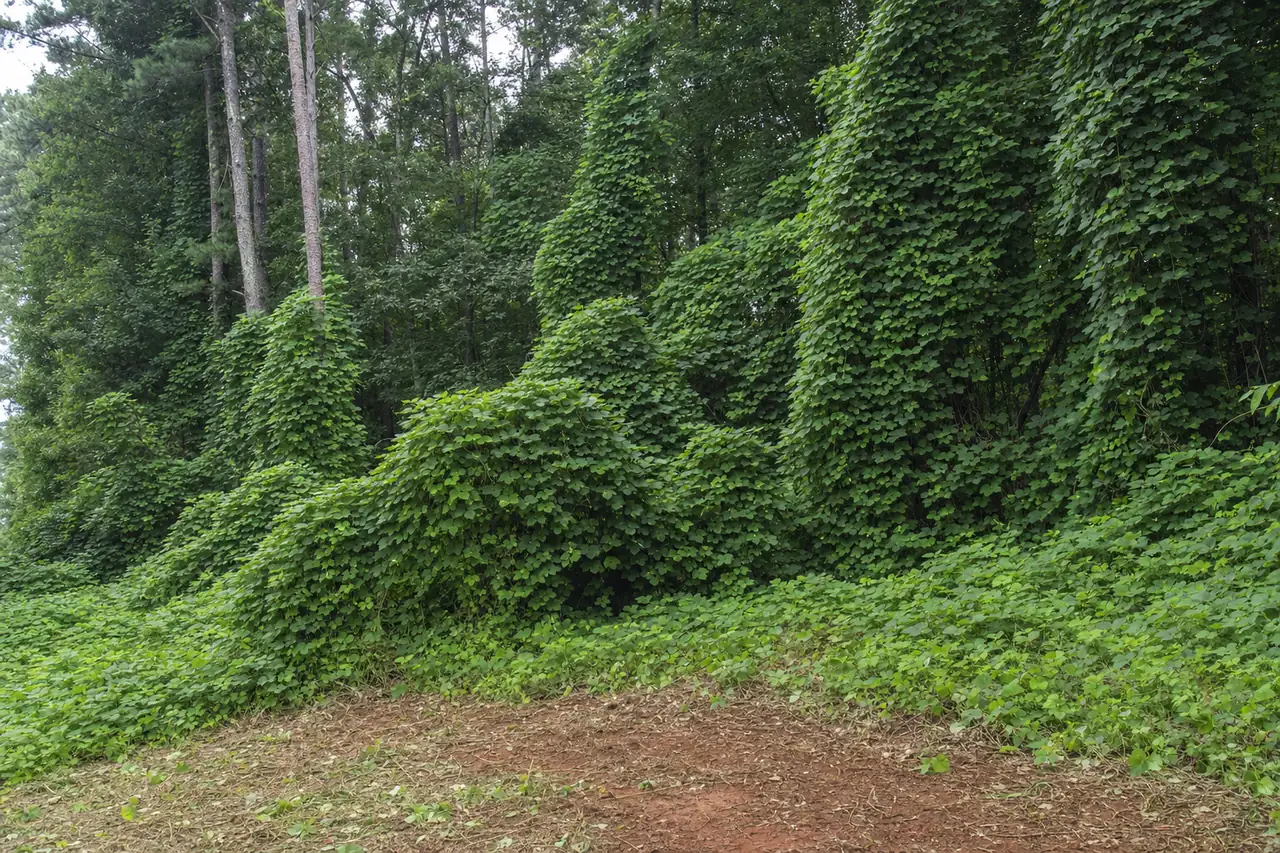
Timing the mulching matters too. Privet holds its berries into winter, and mulching a fruiting thicket in fall can scatter seed, so expect seedlings the next year and plan the follow-up treatment for them. Kudzu runs on a longer clock: repeated treatments while it’s leafed out, over three to ten years. See the best time of year to treat privet.
Hunting land and food plots
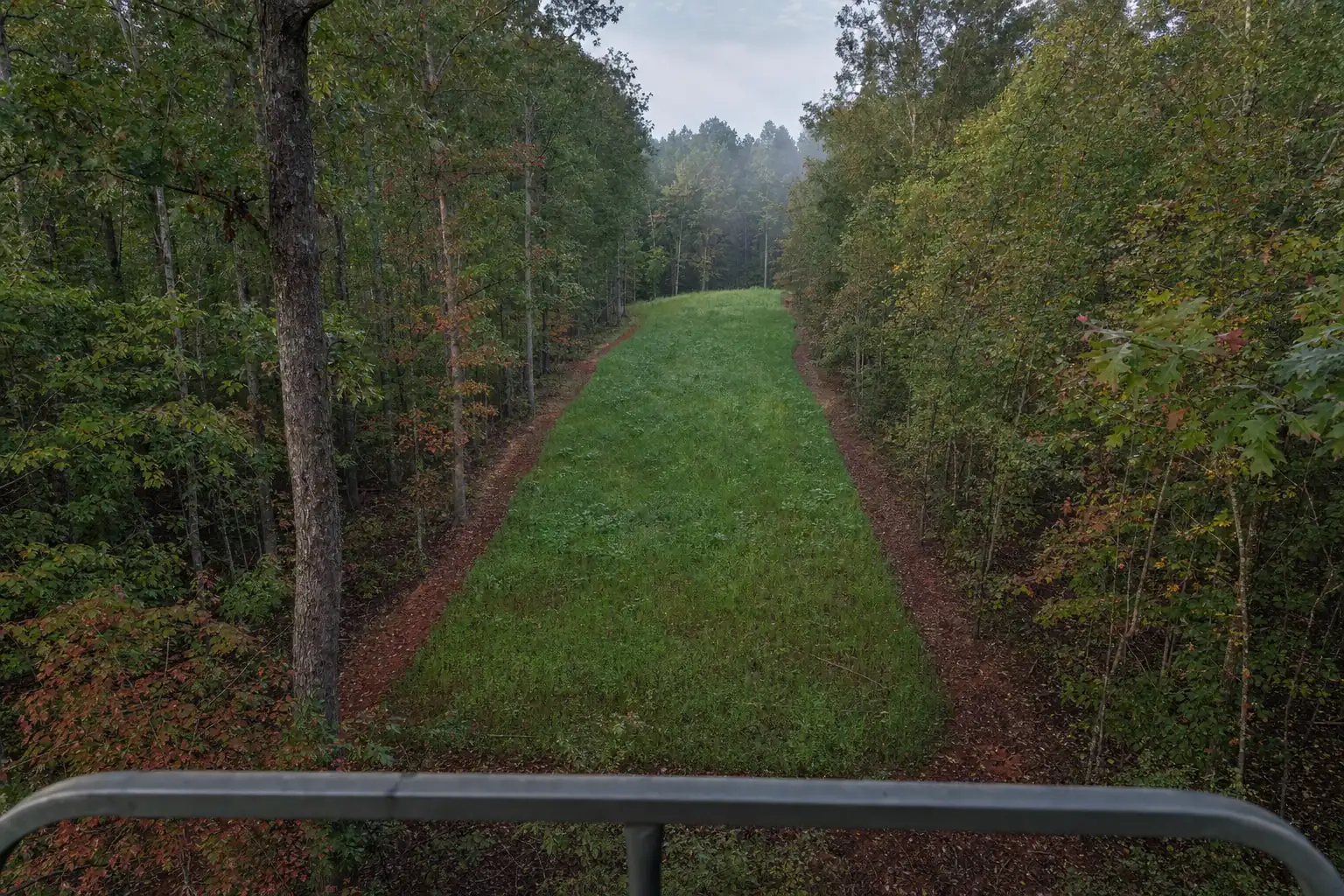
Hunters work backward from the season. Cool-season plots go in the ground in late August or September in North Georgia, and the ground has to be cleared and worked before that. Plan and clear the plot by July. Clearing lanes and trails in October means running a machine through the woods while you’re trying to hunt them.
Late winter, once the season closes, works for shooting lanes, trails and firebreaks. The leaves are still off, so you can stand in the box stand and see which lines to open.
The North Georgia food plot calendar lays out the year, and food plot and hunting land clearing covers the work.
The best window by type of job
| Job | Best window | Why |
|---|---|---|
| House lot | Late fall or winter ahead of a spring start | The lot is open when the builder is ready |
| Underbrushing | Late fall through winter | Keepers and rock show with the leaves off |
| Privet | Mulch fall or winter, treat in the dormant season | The follow-up treatment holds best then |
| Food plots and lanes | By July | Ground ready for late summer planting |
| Land going on the market | A few weeks before listing | Fresh mulch, frontage open for photos |
| Storm timber or a beetle spot | Now | Blocked access and spreading beetles don’t wait |
More on getting land ready to list in land-for-sale preparation.
The cost-share sign-up window
If you own ten acres or more of forest land and want to use Georgia’s Resilient Forest Incentives Program, the program sets the calendar. Sign-up runs June 15 to July 3, and the program office decides whether your work fits one of its named practices, such as understory mulching. You apply as the landowner, and the work follows acceptance. Walk the land with us in spring so the plan is ready before the window opens. Start with when the sign-up window opens.
Program figures and sign-up windows are set annually and are current as of November 4, 2026. We confirm every figure with the Georgia Forestry Commission or NRCS before any application. This page explains how programs work; it is not a guarantee of eligibility or reimbursement.
When something else sets the date
For plenty of jobs the season is the least of it. A builder’s start date, a closing or a listing sets the schedule, and we work backward from it. If the site disturbs an acre or more, the county permit, the erosion plan and the silt fence come before the first tree, and plan review takes time. Start that paperwork early. If you’re closing in March and building in April, walk the land with us in December, so the permit, the silt fence and the clearing all fit before the builder’s crew shows up. A builder with several lots can stagger them so one is cleared while the next is in review. See how long land clearing takes.
Storms and pine beetles don’t wait for a season either. Downed timber across a driveway needs clearing now, and a southern pine beetle spot spreads, so infested trees should come down quickly. See storm damage cleanup and southern pine beetle salvage.
Regrowth starts the next spring
Whatever month you clear, sweetgum, privet and briars sprout from the roots the next growing season. Mulch slows that flush for a while, and the canopy you kept shades out some of it. Plan a mowing pass in the first summer and one or two a year after, or the land drifts back toward a thicket. See bush hogging and maintenance mowing and will it grow back.
- 1Walk it any seasonWe walk land year-round, and a winter walk shows the most.
- 2Written quoteScope, finish and price in one business day.
- 3Pencil a dry windowWe book around the forecast and what your ground does after rain.
- 4Call the day beforeIf the clay is soaked, we tell you and move the date, not the price.
Call any time of year to get on the schedule. We walk land in every season, and a winter walk for a spring job is often the best of both. The full range of work is on the land clearing page.
Keep reading