
Cost guide · 7 min read
What Land Clearing Costs Per Acre Around Cumming
Clearing wooded land around Cumming costs about $1,200 to $2,500 an acre for light brush and saplings, $2,500 to $4,000 for mixed growth with 4 to 8 inch trees, and $4,000 to $6,500 or more for dense hardwood. Small jobs carry a $1,200 to $2,000 minimum. Trunk size, slope, stumps and access decide where your land falls in those ranges.
The ranges, by what’s growing on the land
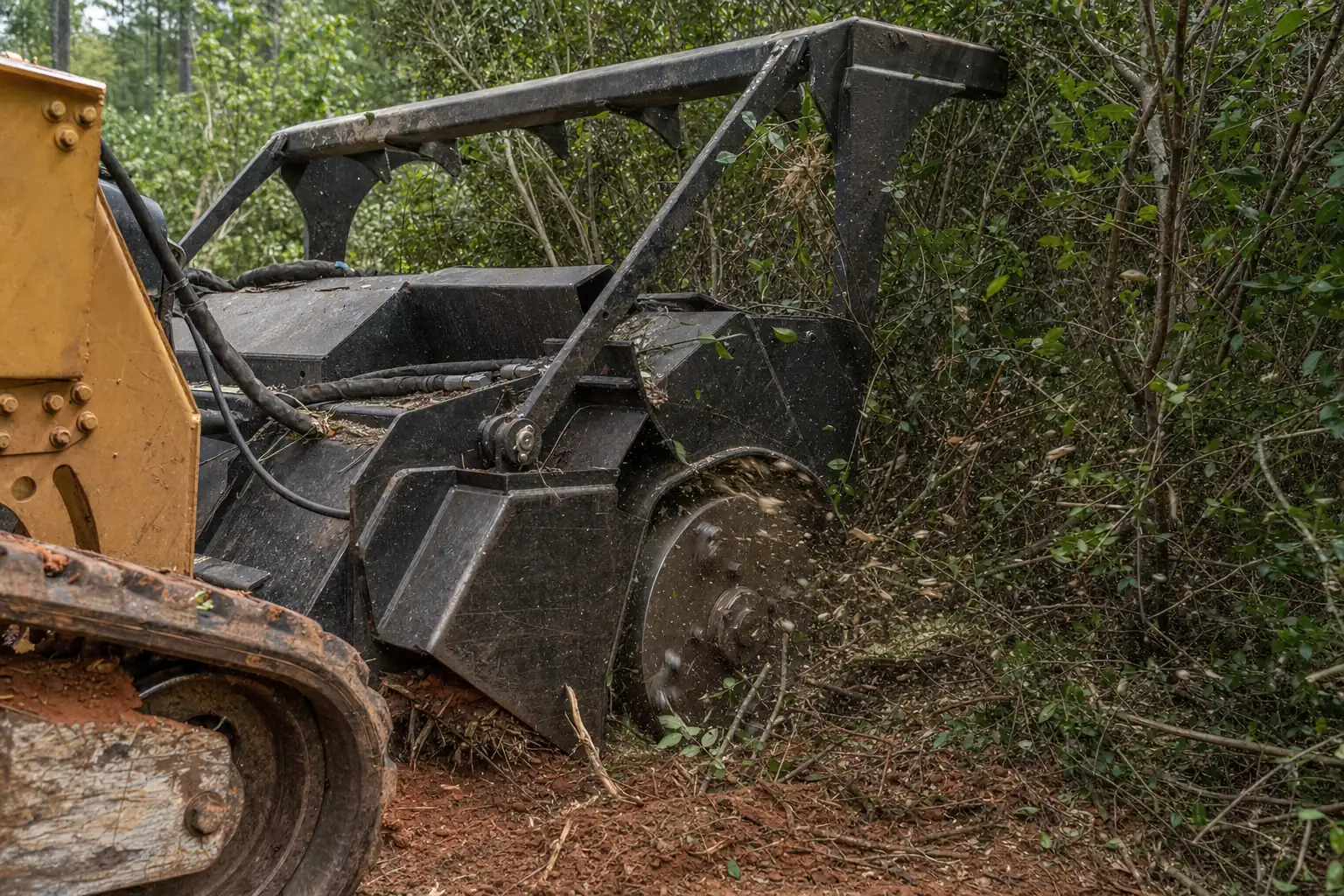
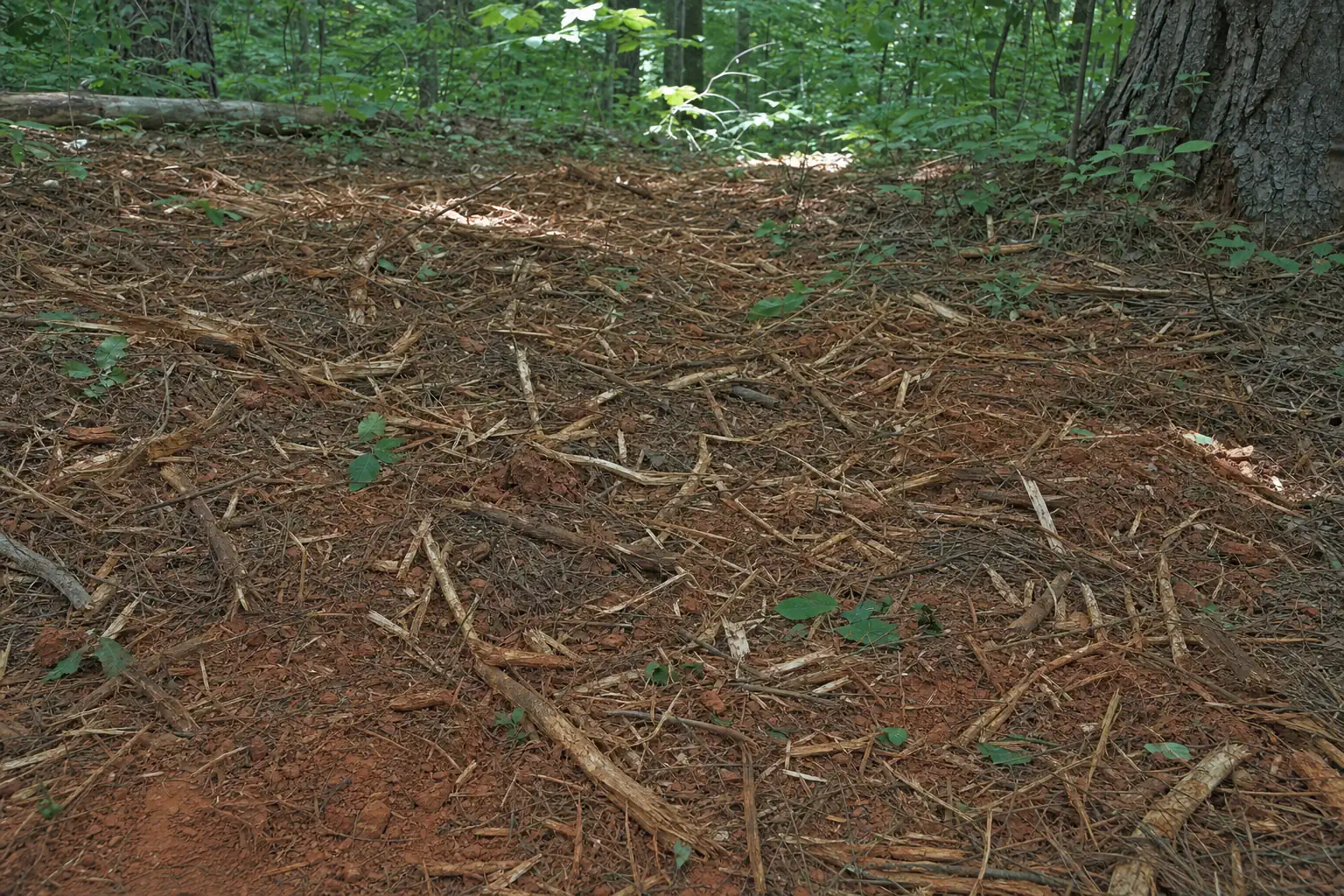
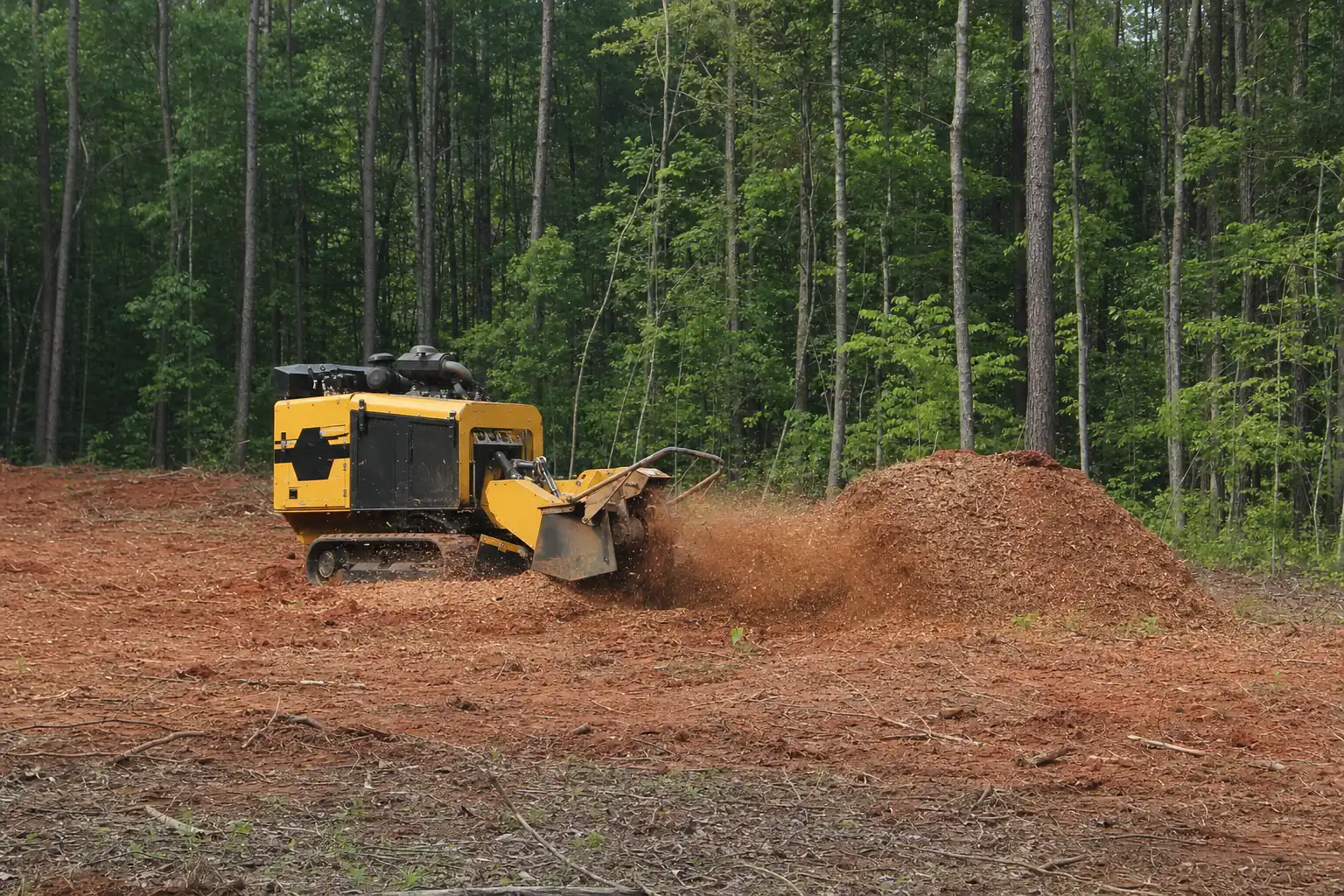
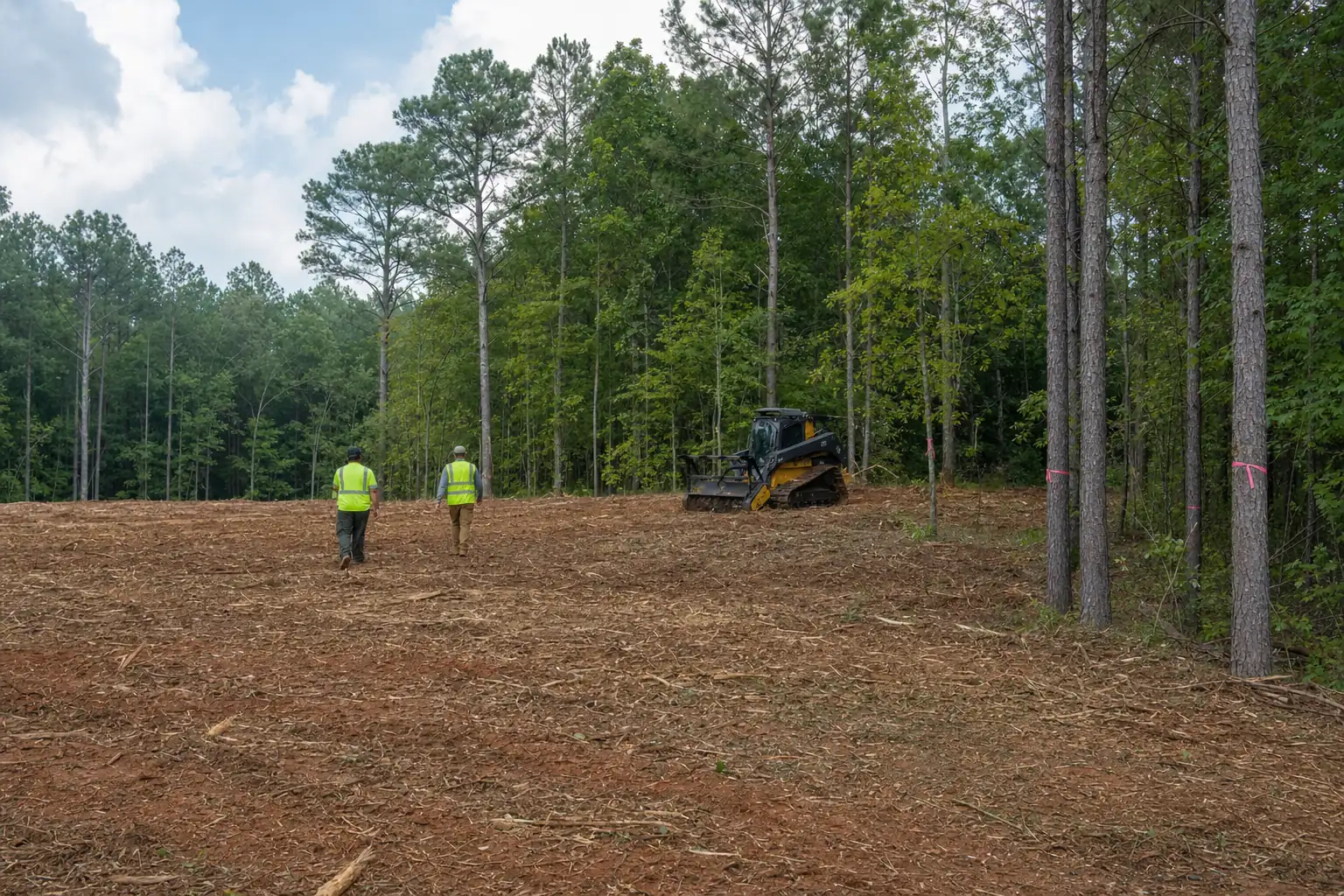
These are per-acre estimates for clearing with a forestry mulcher in Forsyth County and the towns around it. The mulcher grinds brush and trees where they stand and leaves the chips on the ground, so there is no hauling in these numbers.
| What’s on the land | What it looks like | Per acre |
|---|---|---|
| Light | Briars, privet, vines and saplings under 4 inches | $1,200 to $2,500 |
| Medium | Mixed pine and hardwood with trees 4 to 8 inches across | $2,500 to $4,000 |
| Heavy | Dense hardwood 8 to 12 inches and up, slopes over 15 percent, rock | $4,000 to $6,500+ |
| Small jobs | A half acre or less, priced as a flat job | $1,200 to $2,000 |
Ranges are estimates for Forsyth County and the surrounding area based on job density, terrain, access and acreage. Your written quote is the only price that applies to your property.
The per-acre rate drops as the job grows. Hauling the machine to your land costs the same for a half acre as for ten, so a small job carries a minimum and a big tract spreads that trip across every acre.
Trunk size moves the price more than acreage
Two acres of privet and two acres of 10-inch oaks are different jobs. Forestry contractors think in what the trade calls inch-acres: the size of the biggest trunks multiplied by the ground they cover. A mulcher chews through a 3-inch sweetgum in seconds. A 12-inch hardwood takes minutes, and past 8 to 10 inches a tree usually gets felled first and the trunk dealt with on the ground.
Machine time on one acre
- 3.5 hrs
- Per acre where the biggest stems are 4 inches
- 10.5 hrs
- Per acre where they reach 12 inches
- 1 to 3 acres
- What one mulcher clears in a day of light growth
- 8 to 10 in
- Trunk size where trees usually get felled first
The first two figures come from a published production study of forestry mulchers. Same acre, three times the machine time. When you send us photos, the thing we look at first is the trunks, not the acreage.
The other things that move your number
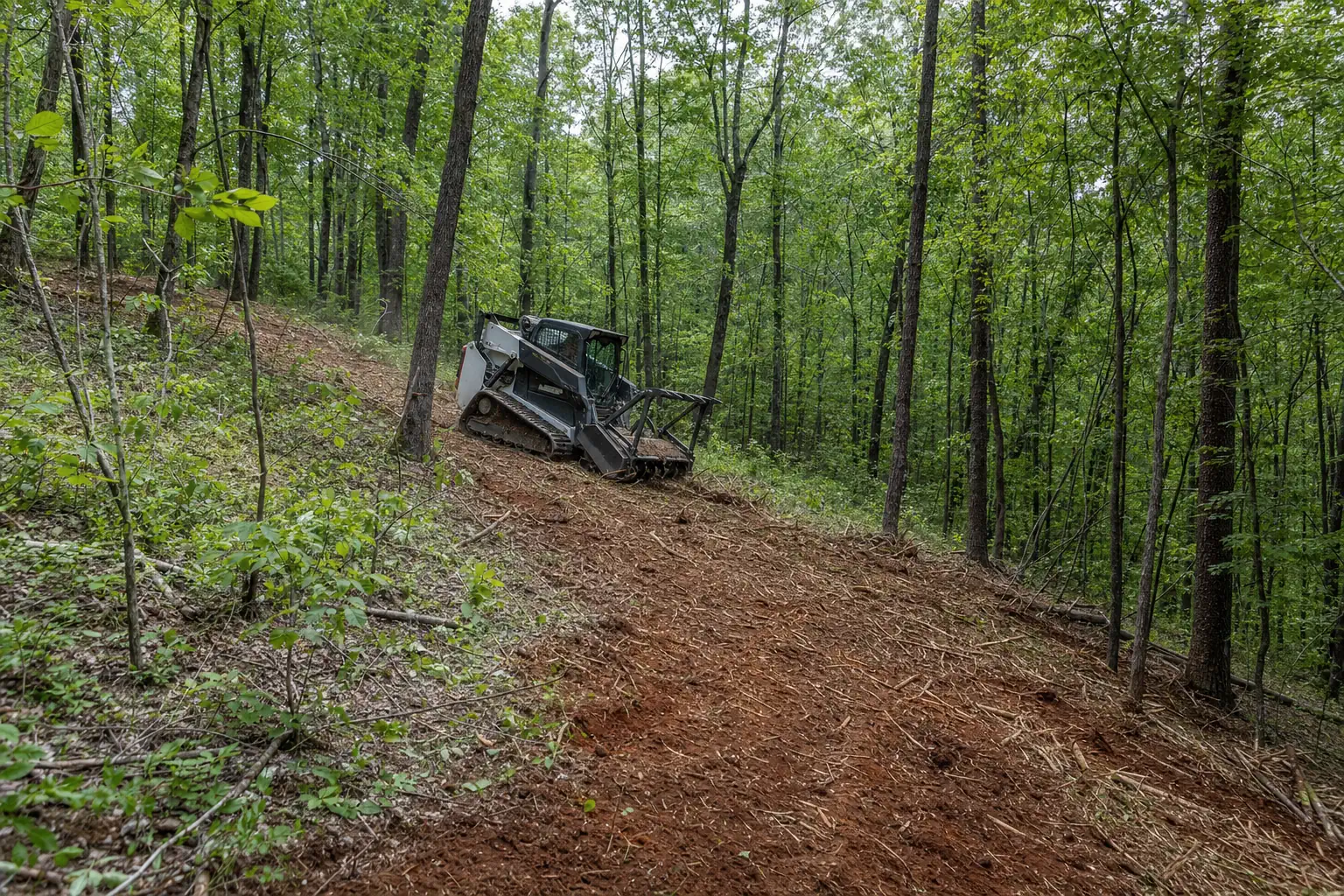
- Slope and ground. Piedmont slopes, gullies and rock under the clay slow a tracked machine. Ground over 15 percent usually lands in the heavy band whatever is growing on it.
- Access. A gate the trailer can’t clear, a long walk from the road or a soft drive adds time before the first tree comes down.
- Stumps. Ground flush with the surface, ground below grade, or pulled out with an excavator are three different prices. Only the ground under a slab or a driveway needs stumps out.
- Trees you keep. Working around twenty flagged oaks takes longer than clearing everything, and it is usually worth it.
- Wet red clay. Saturated clay stops tracked machines and leaves ruts. We wait out wet weeks instead of tearing up your ground, which can move a start date but not the price.
- Finish. Coarse mulch left as it falls costs least. A finer chip for seeding, raking, grading or hauling anything away adds to it.
What different jobs usually cost
Most calls we get around Cumming fall into a handful of job types. Each one tends to land in a predictable part of the range.
| Job | What drives it | Usual band |
|---|---|---|
| House lot in mixed woods | Clearing plus stumps out and grading under the pad | Medium, plus site prep |
| Underbrushing under big trees | Brush and saplings only, canopy kept | Light |
| Old pasture gone to sweetgum and privet | Stem count more than trunk size | Light to medium |
| Hardwood ridge for a homesite or view | Big trunks, slope and rock | Heavy |
| Food plots, trails and shooting lanes | Narrow work spread over a tract | Light to medium |
| Storm-downed timber | Tangled trunks under tension | Machine time, by the hour or day |
Each of these has its own page: lot clearing, site preparation, food plot and hunting land clearing and storm cleanup.
Mulching, dozing and burning compared
Most land around Cumming gets cleared one of three ways. They cost different amounts because they leave different ground behind.
| Method | What’s left on the ground | Per acre |
|---|---|---|
| Forestry mulching | A mulch layer, stumps ground flush, topsoil in place | $1,200 to $6,500+ |
| Clear, grub and haul | Bare clay, stumps out, debris trucked away | $3,500 to $8,000 |
| Hauling debris off a mulched or dozed site | Added on top of either method | $500 to $2,500 |
Dozing makes sense under a building pad, where stumps and roots have to come out anyway. Everywhere else, scraping off the topsoil costs more and leaves bare clay to wash every time it rains. Burning skips the haul fees, but Georgia’s rules ban outdoor burning in Forsyth County from May 1 to September 30 and limit it the rest of the year. We don’t burn. More on that in mulching compared with bulldozing and mulching compared with burning.
What a full site job adds
If the land is getting a house, a barn or a driveway, the clearing is only the first line of the quote. These are the pieces that usually follow it.
| Item | When you need it | Typical range |
|---|---|---|
| Stump grinding | Stumps below grade where you’ll mow or plant | $100 to $400 per stump |
| Grading | A level pad, a driveway base, a drainage fix | $1,200 to $3,500 per acre |
| Silt fence and erosion control | Permitted sites and any job that drains toward water | $500 to $1,200 per acre |
| County clearing and grubbing permit | Disturbing an acre or more, or within 200 feet of state waters | $250 county fee |
| Machine by the hour or day | Small, odd-shaped or open-ended work | $150 to $300 an hour, $1,800 to $3,000 a day |
Permit thresholds, fees and buffer widths are those published by Forsyth County and the State of Georgia as of November 4, 2026. Confirm current requirements with the issuing authority before work begins. This is not legal advice.
The permit line matters more than its fee. A site that needs one can’t start until the erosion plan is approved and the silt fence is in. The guide to permits to clear land in Forsyth County walks through who needs one.
What a written quote should list
A per-acre number with nothing behind it is hard to compare. Ours spell out the pieces, and you should expect the same from anyone you call:
- The acreage, measured, and a map or sketch of the area to clear
- Which trees stay, flagged with you on the walk
- What happens to stumps, line by line
- The finish: mulch left in place, seeded, graded or hauled
- Silt fence, construction exit and permit, if the site needs them
- How weather delays are handled and what is not included
More detail in what a land clearing quote should include.
When a low quote costs more
The cheapest number is often the one that leaves the most out. Three ways a low quote turns into a bigger bill later:
- No erosion control. A permitted site without its silt fence fails inspection, and work waits until it’s in. Red clay washed into a neighbor’s yard or a creek is a problem you own.
- Stumps left under the pad. A stump ground flush under a future slab rots and settles. Your builder then pays someone to dig it out.
- Work on wet clay. Running tracked machines on saturated ground leaves ruts that take grading money to fix.
A single-machine operator can only quote the part their machine does. The silt fence, the stump work and the grading go to other companies on other schedules. We run all of it on one contract, so the number you compare is the whole job.
Timing and season
Dry weeks are the cheapest weeks, because the machine works the full day instead of waiting on the ground. Winter has two advantages around here: leaf-off shows rock, old fence and buried trash before the machine finds them, and cool weather is easier on a crew working a dense thicket. Summer clearing is fine on dry ground. If the land is hunting property, clear food plots and lanes well before the season so the ground can be worked and planted; see the North Georgia food plot calendar.
Ways to bring the number down
- Clear what you need. A house needs its footprint, a working margin, the driveway and the utility runs. The rest can stay wooded. See how much land to clear.
- Underbrush instead of clearing. Taking out the brush and saplings under the big trees costs light-band money and keeps the shade. See underbrush clearing.
- Leave stumps flush where nothing gets built. Pulling them only pays off under a slab or a drive.
- Sell the timber first. On larger tracts with merchantable pine, a timber sale can come before the clearing. See selling timber to offset clearing cost.
- Check the cost-share programs. Forest land of ten acres or more may qualify for state programs that reimburse named forestry practices. A house lot does not. See Georgia’s cost-share programs.
Cleared ground grows back. Brush and sprouts return within a season or two unless the land gets mowed or used, so plan for maintenance mowing when you budget.
How we price your land
- 1Send the addressA pin and a few photos are enough to start.
- 2Walk the landWe measure acres and trunk size, flag keepers and check slope, creeks and access.
- 3Written quoteClearing, stumps, erosion control and permit as separate lines.
- 4Schedule the workA dry week, with one contract and one point of contact.
The ranges on this page are a starting point. The quote after the walk is the price that applies to your land.
Keep reading
Questions people ask next
- QHow much does it cost to clear 1 acre of wooded land in Georgia?
- QHow much does it cost to clear 5 acres?
- QIs there a minimum charge for clearing a small lot?
- QHow many acres can be cleared in a day?
- QCan I sell the timber to offset clearing cost?
- QHow much does forestry mulching cost per acre in Georgia?