
Lake Lanier guide · 8 min read
Clearing Near Lake Lanier: The Corps Rules Before You Cut
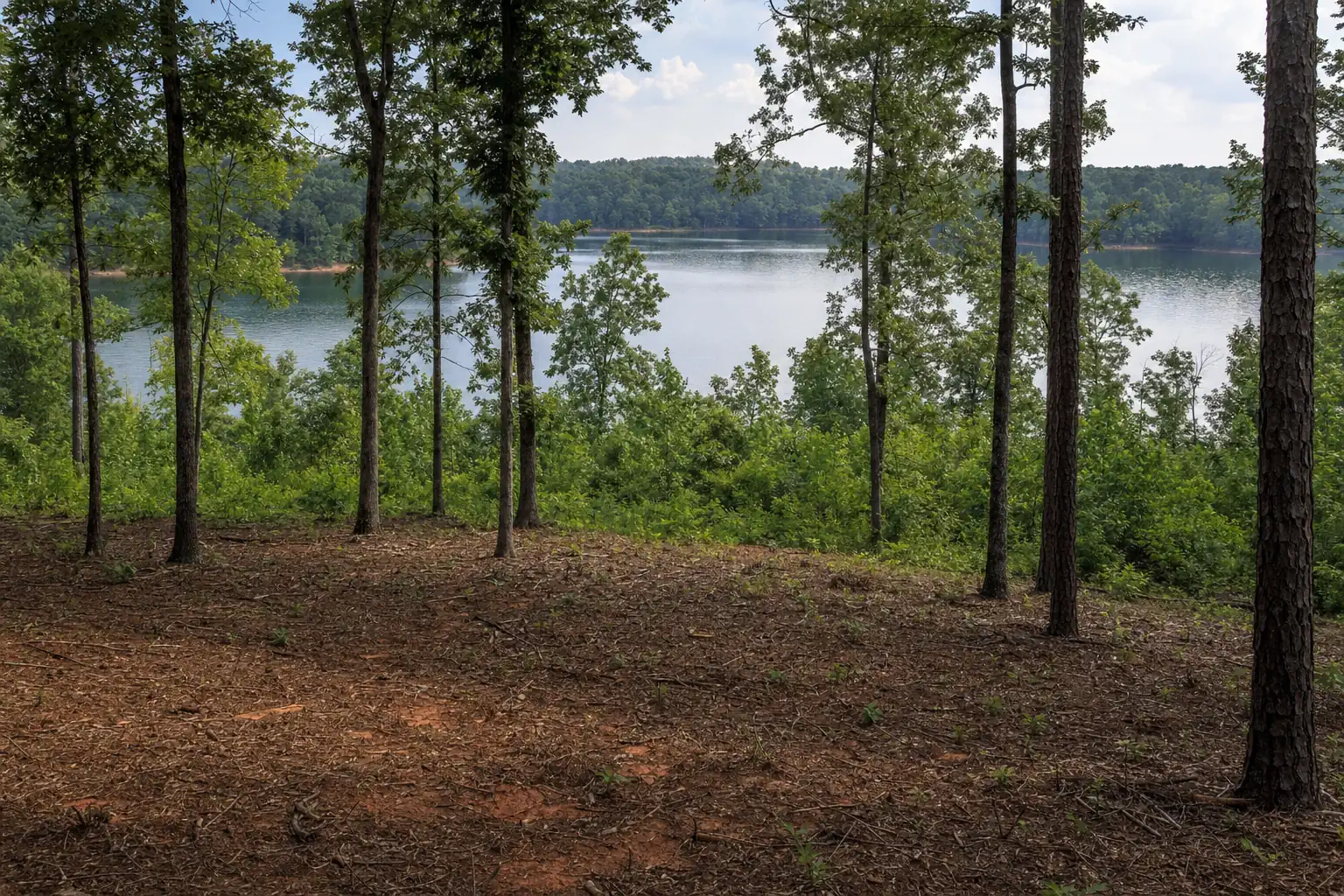
Below your property line, the Lake Lanier shoreline is federal land managed by the Army Corps of Engineers. Federal rules prohibit cutting trees there without written permission, and the Corps does not permit clearing for views or lawns. Vegetation modification is limited to grandfathered permits. This guide covers what the Corps allows and what you can clear on your side.
Where your land ends and the Corps land begins
On a Lake Lanier lot, your deed stops at the government line, wherever your survey puts it. The shoreline between that line and the water is federal land. The U.S. Army Corps of Engineers manages it, under a Shoreline Management Plan written in 2004 that still governs the lake. A revision of that plan is in progress.
Shoreline rules are set by the U.S. Army Corps of Engineers under the 2004 Shoreline Management Plan and were checked on November 4, 2026. A revision is in progress. Confirm with the Lake Lanier Shoreline Management Help Desk before any work near the government line.
The Corps strip can be narrow or wide depending on the lot, and from the porch it often looks like part of the yard. The trees and brush on it aren’t yours to clear, and the lot owner answers to the Corps for any clearing past the line.
So the first job on any lake lot is finding the line. Your plat shows it and the survey pins mark it on the ground. We locate it and flag it on the walk-through, before anyone talks about views.
What the federal rules say
The governing rule is short. Under 36 CFR 327.14(b), cutting trees or removing wood from Corps project lands is prohibited without written permission of the District Commander. Lanier falls under the Corps’ Mobile District, run locally through the Lake Sidney Lanier Project Management Office on Buford Dam Road. The Corps’ own fact sheet, “Trees at Lake Sidney Lanier,” puts the part lot owners ask about most in one sentence: “Clearing to obtain scenic vistas or to establish lawns is not permitted.”
That covers the requests we hear on lake lots: opening a view to the water, turning the slope into lawn, taking out the understory on the Corps strip so the dock shows from the porch. All of those are clearing on federal land for a view or a lawn, which the Corps does not permit.
The vegetation permit question
Lot owners often ask about a vegetation modification permit for the strip in front of their lot. According to the rules we work from, vegetation modification now appears on the Corps fee schedule under grandfathered permits only, and new authorizations are not permitted.
If your lot carries an existing permit, its terms are between you and the Corps. If it doesn’t, plan on the Corps strip staying as it is. If you’re buying a lake lot, ask the seller which Corps permits the lot has, and confirm their status with the Shoreline Management Help Desk before you plan any work. We recheck this rule each season. The short version is on can I get a vegetation permit for my Lake Lanier lot.
What the Corps does allow
A few narrow things happen on Corps land with the Corps’ say-so. None of them involve a clearing contractor’s machine.
| Activity | Allowed? | Conditions |
|---|---|---|
| Clearing for a view or a lawn | No | The Corps fact sheet says it is not permitted |
| New vegetation modification permit | No | Grandfathered permits only; new authorizations are not permitted |
| Cutting a hazardous tree | With a Specified Act Permit | One-time act, no fee, valid 90 days, no equipment on government property |
| A path to your dock | Dock permit holders | A 6-foot meandering path |
| Mowing | Only in an authorized grass area | Under a Shoreline Use Permit |
The path and the mowing area come with permits you’d already hold. They don’t open the rest of the strip to clearing.
The hazardous tree exception
The one cutting the Corps fact sheet describes for homeowners is a hazardous tree. The Corps can grant a homeowner a Specified Act Permit for a one-time minor act such as cutting down a hazardous tree. The fact sheet sets its terms:
- No fee. The permit is free.
- Ninety days. It’s valid for 90 days.
- No equipment. It does not allow the use of equipment on government property, so no mulcher or track loader goes onto the strip.
- The wood stays. It usually doesn’t allow removing the wood.
- Low-risk trees stay. The Corps does not remove low-risk trees.
The request goes to the Corps, and the Corps decides. We don’t work on Corps land under any permit. If a dead oak on the strip leans toward your house, call the Shoreline Management Help Desk at the Lake Sidney Lanier Project Management Office in Buford first.
What happens if Corps land gets cleared
The rules we work from list consequences that land on the lot owner: a required replanting plan for the cleared area, and a voided dock permit. The answer page on clearing Corps land on Lake Lanier covers what follows.
A single-machine operator working by the day goes where the owner points, and the owner usually points at the water. Our quotes on lake lots draw the line on the sketch, and our crews stop at it.
What you can clear on your own land
Your side of the line is usually where the brush problem lives anyway: privet, briars and sweetgum saplings filling in under oaks and pines on a slope toward the water. Underbrushing it opens sight lines through the big trees without scraping the slope bare.
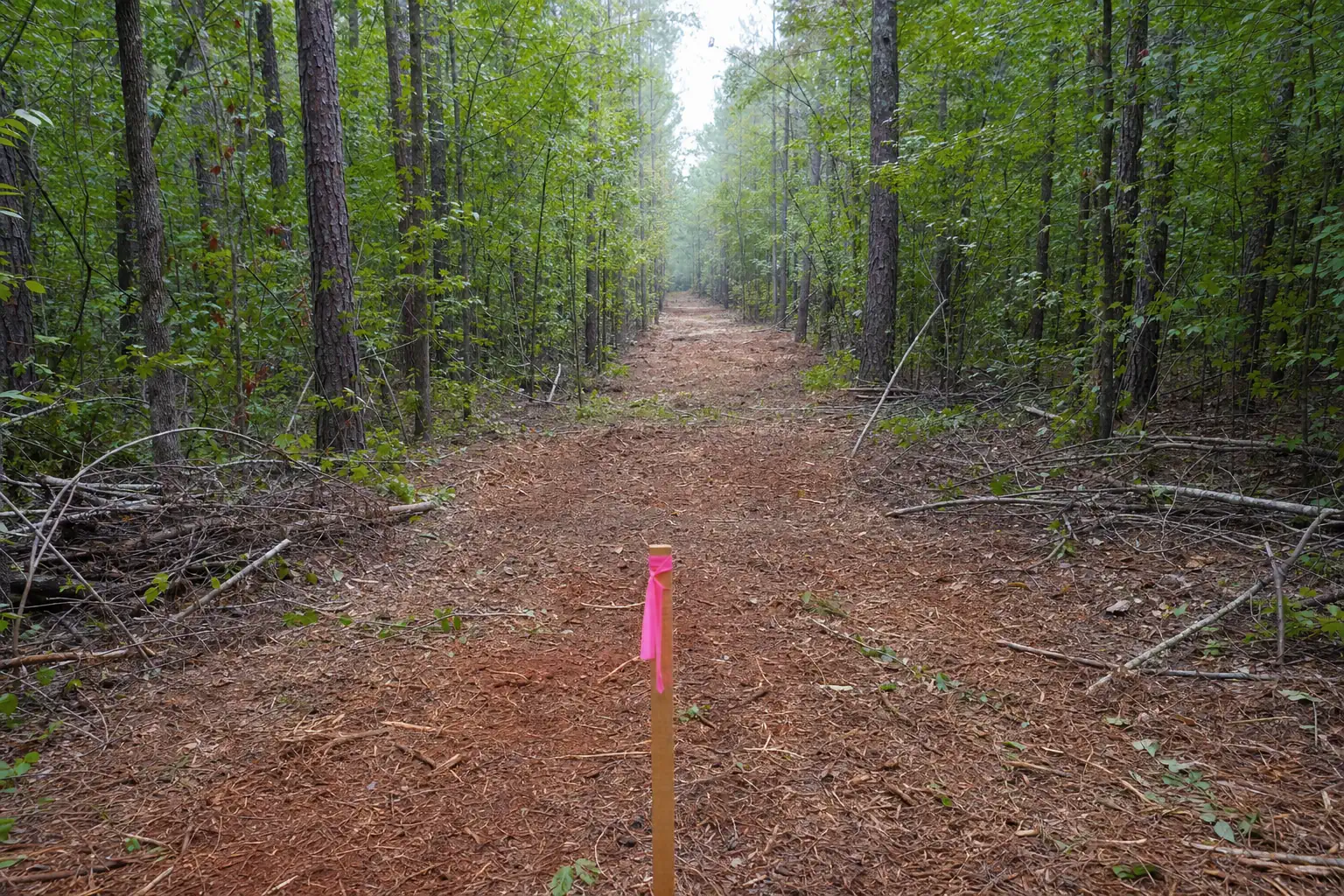
- Underbrush out, canopy kept. The mulcher takes privet, briars and saplings and leaves chips on the ground. See underbrush clearing.
- A filtered view. Small trees and brush thinned on your property to open sight lines toward the water, with keepers flagged with you. See keeping the big trees and clearing the rest.
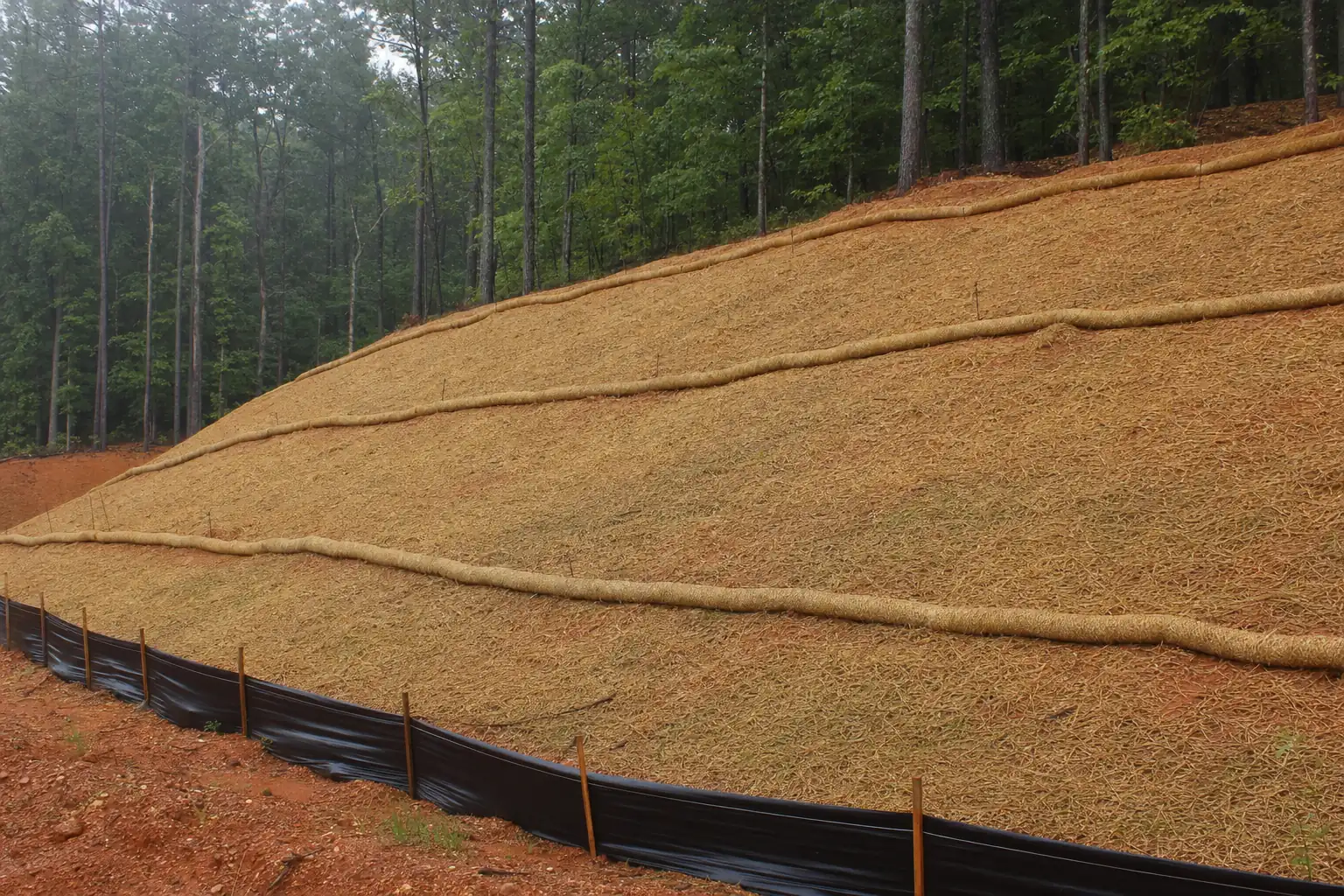
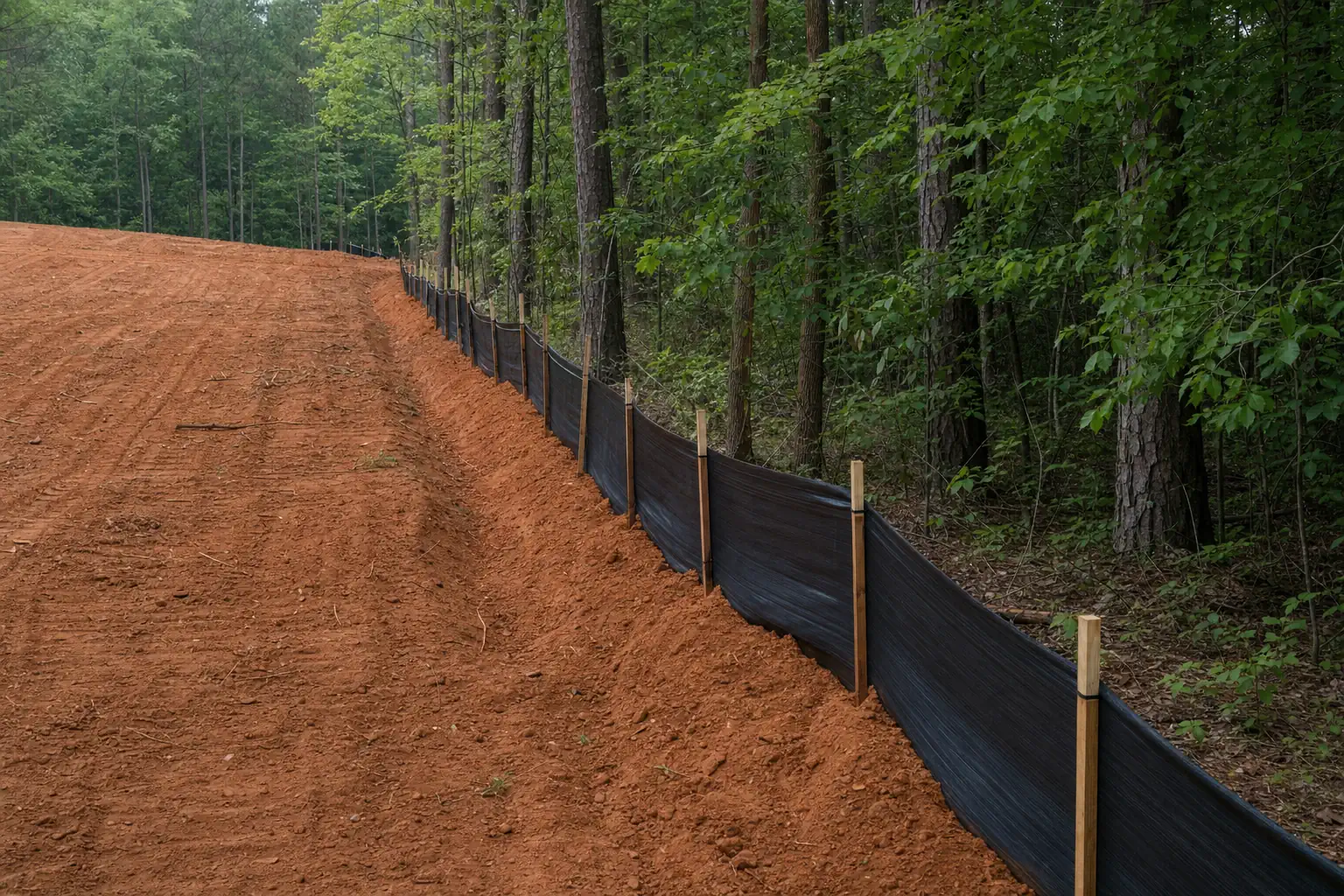
- Slope kept covered. Mulch stays on the slope, and silt fence goes on the low side wherever the ground runs toward the lake.
County rules still apply on your side. A lake lot sits close to water, and the county’s land disturbance permit covers clearing within 200 feet of state waters even on jobs under an acre. The county’s tree ordinance exempts homeowners removing trees outside the required zoning buffer, which leaves trees inside that buffer under the ordinance. We check both on the walk; permits to clear land in Forsyth County has the details.
Permit thresholds, fees and buffer widths are those published by Forsyth County and the State of Georgia as of November 4, 2026. Confirm current requirements with the issuing authority before work begins. This is not legal advice.
Common lake lot requests, and what we tell owners
Most calls about lake lots start with one of a handful of requests. The table splits each one between your side of the line and the Corps side.
| Request | On your land | On Corps land |
|---|---|---|
| “Open a view of the water from the deck” | Underbrush and thin small trees, keepers flagged | Not permitted |
| “Clear a way down to the dock” | We clear to the line | The 6-foot path that goes with a dock permit, under the Corps’ terms |
| “Take out a dead tree by the water” | Part of the clearing if it stands on your side | A Corps decision under a Specified Act Permit, with no equipment |
| “Turn the slope into lawn” | Possible with clearing, grading and seed, plus erosion control | Not permitted, apart from an authorized grass area |
| “Get rid of the privet along the line” | Mulched, with follow-up for regrowth | Left as it is |
The pattern holds for any request: everything up to the line is a normal clearing conversation about trees, slope and cost, and everything past it goes to the Corps.
Leaf-off is the best time to judge what underbrushing will do for a view. In winter you see through the canopy to the water, and the brush and saplings you’d take out stand out against the trunks you’d keep. If the timing allows, we flag keepers with you then.
Keeping the clay out of the cove
A lake lot usually slopes toward the water, and the soil under the leaf litter is red clay. Strip the cover off that slope and the next hard rain carries clay across the Corps strip and into the cove in front of your dock. Underbrushing with a mulcher avoids most of that, because the chips stay on the ground and the roots of the trees you keep stay in it.
We still treat the low side as the place that matters most:
- Silt fence above the line. Where the slope runs toward the water, fence goes in on your side before the mulcher starts.
- No bare clay left behind. Anything the work leaves bare gets mulch or straw before we leave.
- Machines off wet ground. A tracked machine on a saturated lake slope leaves ruts that channel water downhill, so we wait out wet weeks.
The fence and cover cost a line on the quote. Clay in the cove is harder to undo. The erosion control requirements guide explains the rules behind it.
How a lake lot job runs
- 1Find the linePlat, survey pins and the government line located and flagged.
- 2Flag what staysKeeper trees marked with you, and the drainage toward the lake noted.
- 3Controls inSilt fence on the low side wherever the slope runs to the water.
- 4Underbrush and thinThe mulcher works your side of the line and leaves the ground covered.
Most of the care on a lake lot goes into the first two steps. The mulching is the quick part. When we’re done, you walk the line with us and see that nothing past it was touched.
The brush comes back. Privet and sweetgum sprout again within a season or two on a lake lot like anywhere else, so plan for maintenance mowing or a follow-up pass on your side of the line.
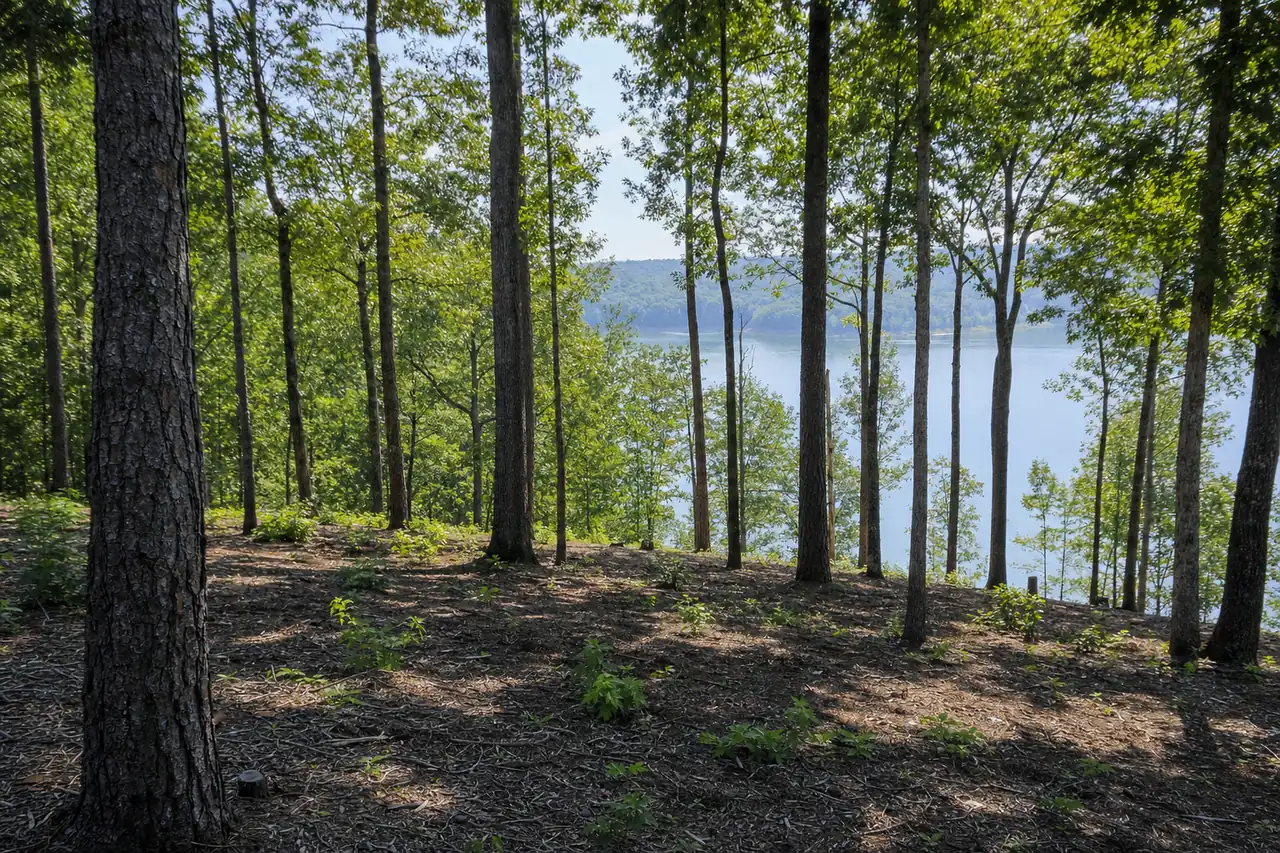 Lake Lot and View Clearing on Lake Lanier
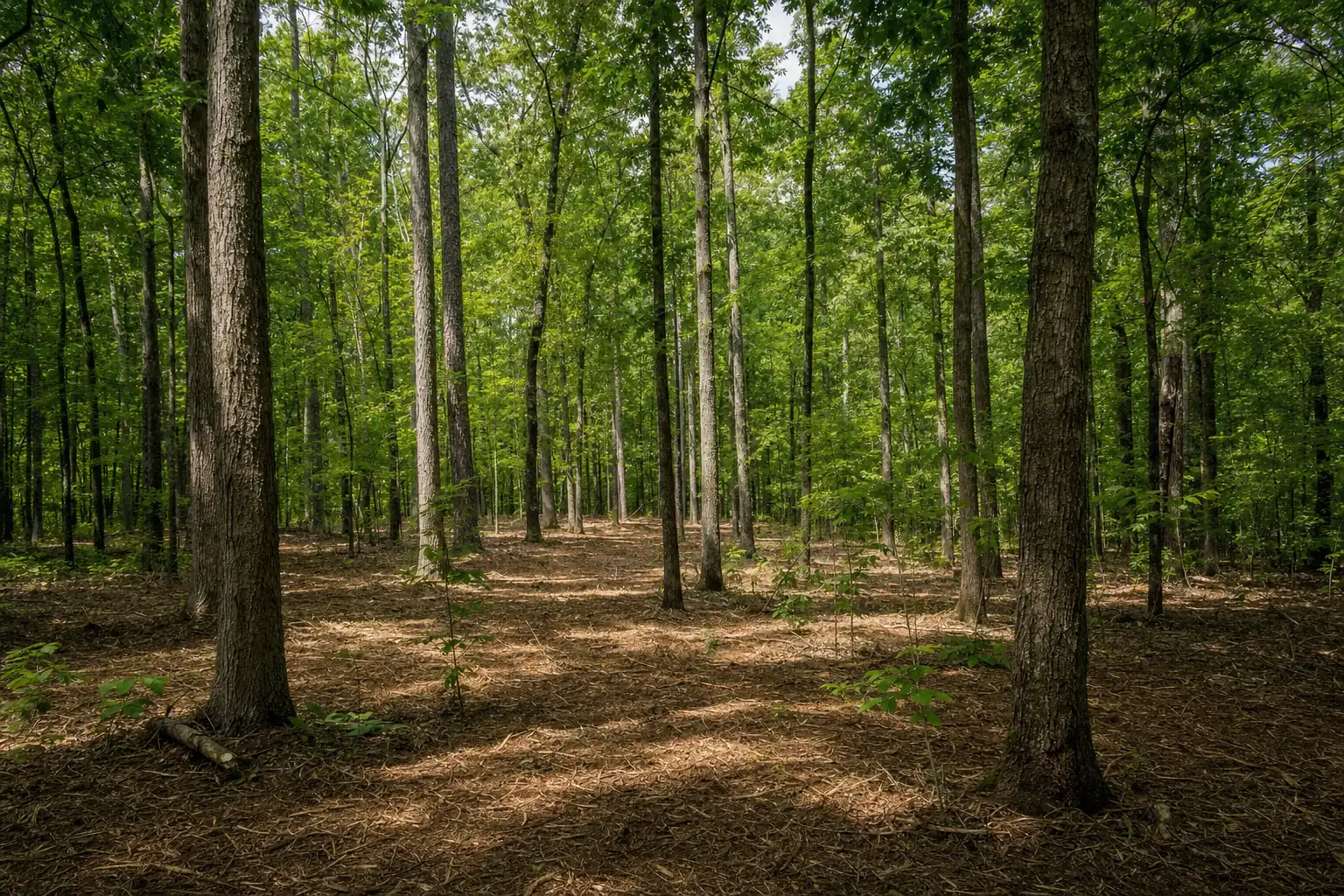 Underbrush Clearing: Open the Woods, Keep the Canopy
 Erosion Control and Silt Fence Installation
Before you hire anyone for a lake lot
- Find your plat. It shows where your deed stops. If the pins are missing, a surveyor can reset them.
- Pull your Corps paperwork. Any dock permit, Shoreline Use Permit or grandfathered vegetation permit sets what’s allowed on the strip in front of your lot.
- Ask the Corps. The Shoreline Management Help Desk answers questions about the strip, including hazardous trees. With the shoreline plan under revision, the answer this season may differ from last year’s.
- Ask the contractor where they’ll stop. If the answer is “at the water,” find another contractor.
Every rule on the Corps side of the line is the Corps’ to set. Ours is simple: we clear your side and stop at the line. The rest of the rules for clearing in Forsyth County are on the erosion control and permits page, and the service itself is lake lot and view clearing.
Keep reading
Questions people ask next
- QCan I clear my Lake Lanier lot down to the water?
- QCan I get a vegetation permit for my Lake Lanier lot?
- QWhat happens if you clear Corps land on Lake Lanier?
- QCan you keep the big trees and clear the rest?
- QDo I need a permit to remove trees on my own property in Forsyth County?
- QDo I need silt fence for a small clearing job?