Comparison guide · 8 min read
Forestry Mulching Compared With Bulldozing and Grubbing
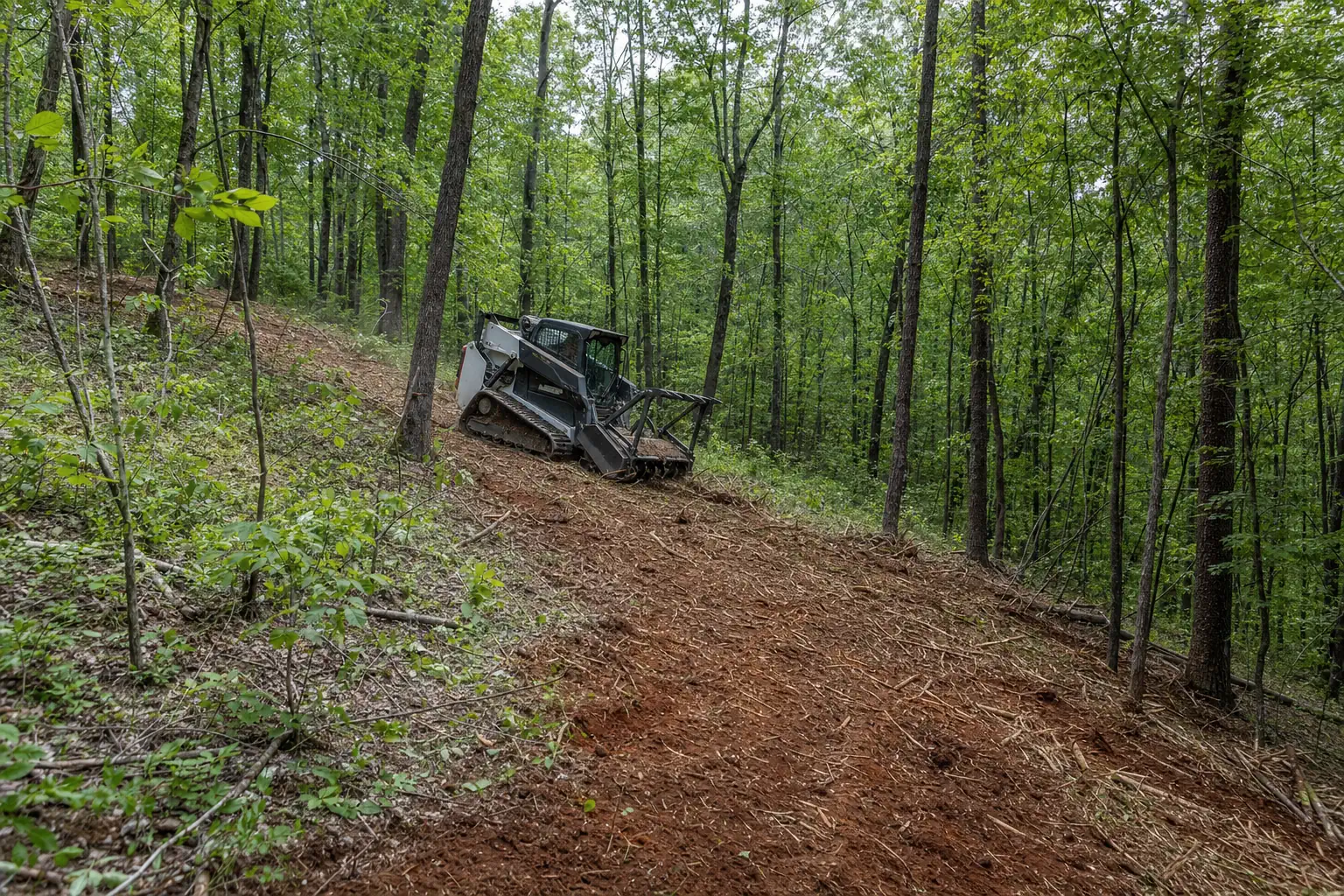
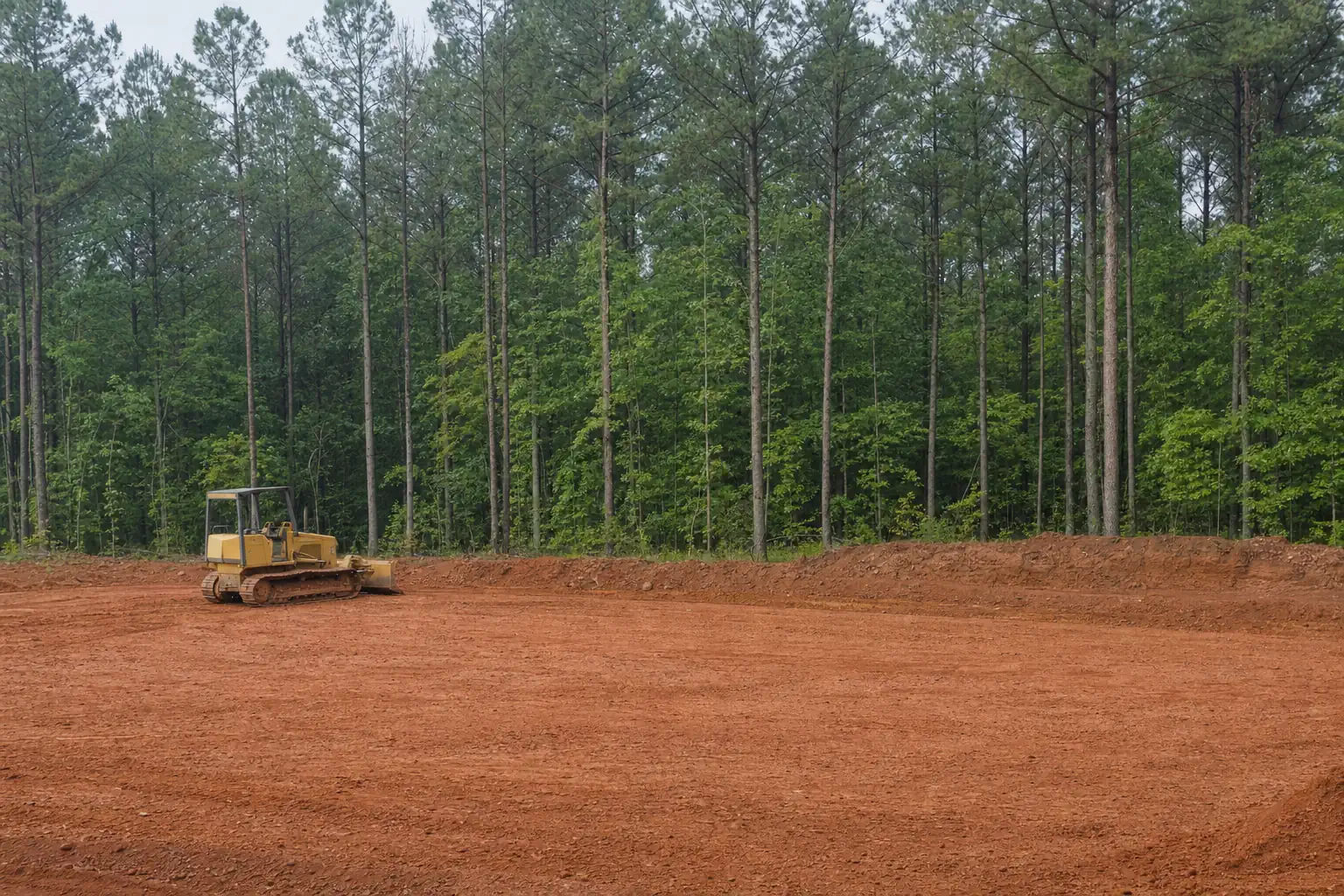
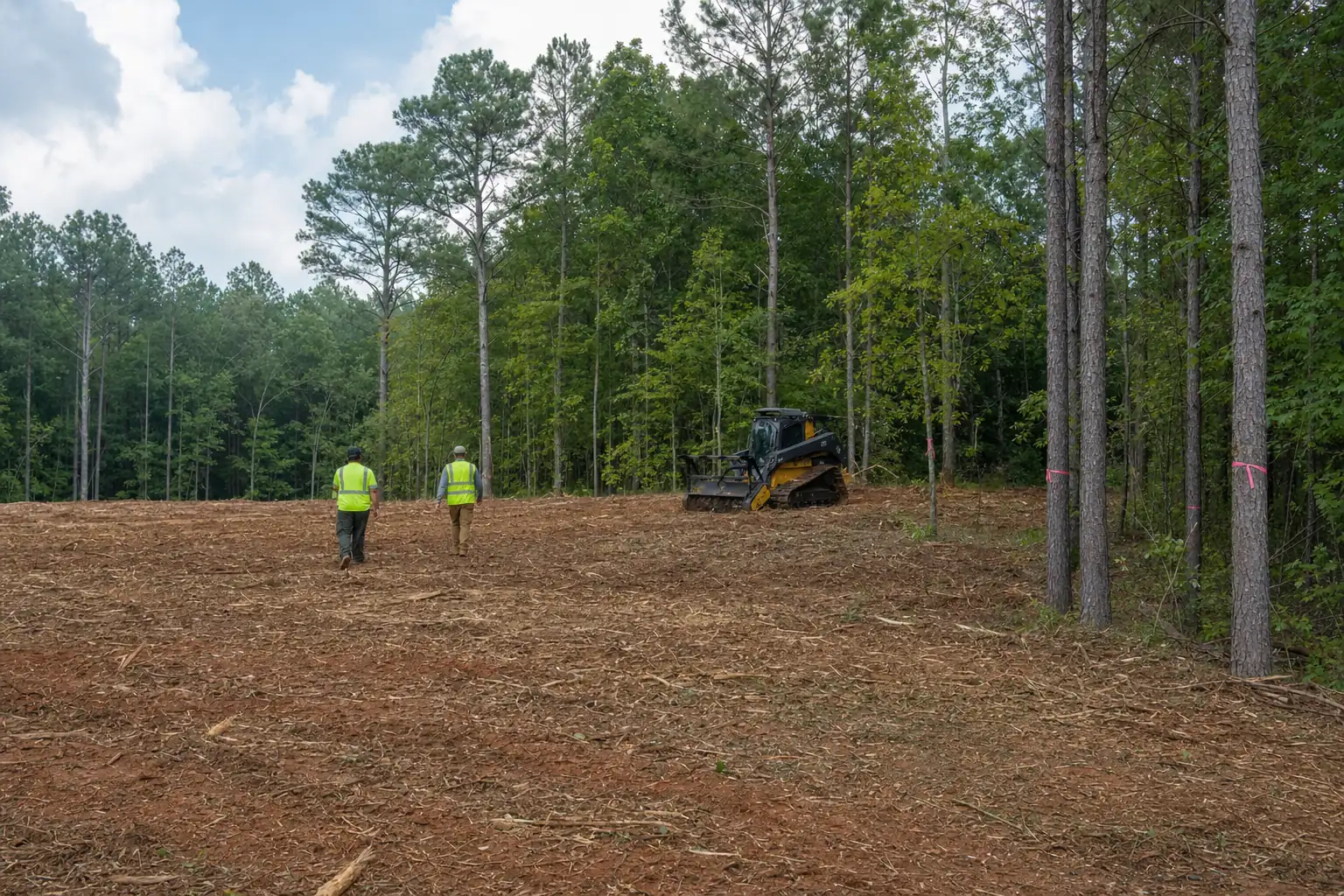
Forestry mulching grinds brush and trees in place and leaves stumps at grade and the topsoil covered. A dozer pushes trees over, grubs out stumps and roots, and leaves bare clay and a debris pile. Around Cumming, mulching runs about $1,200 to $6,500+ an acre and clear, grub and haul $3,500 to $8,000. Building pads still need the dozer.
Two machines, two kinds of ground
A forestry mulcher and a dozer both clear land, and they leave you with different property. The mulcher grinds what’s growing and leaves the soil where it was. The dozer takes the trees, the stumps, the roots and usually a few inches of topsoil, and pushes all of it into a pile. On Forsyth County’s red clay that difference shows up in the first hard rain.
| Forestry mulching | Dozer clearing and grubbing | |
|---|---|---|
| Brush and trees | Ground into chips where they stand | Pushed over and piled |
| Stumps | Ground to grade, roots left in the soil | Pulled out, roots and all |
| Topsoil | Left in place under a mulch layer | Scraped, mixed into the pile or graded off |
| Debris | None; the chips are the cover | A pile to burn, grind or haul |
| Trees you keep | Worked around, root zones left alone | Hard to protect inside the push area |
| What you walk on after | Covered ground, stumps flush | Bare clay, root holes, ready to grade |
| Best for | Woods, lots, pasture, trails, view work | Building pads, driveway cuts, bare grades |
Grubbing is the trade word for pulling stumps and roots. Clearing and grubbing together is what most county permits and site plans mean when they say a site gets cleared to build.
What each one costs
These are our estimates around Cumming. The mulching range runs wide because trunk size moves the price more than acreage does.
Per-acre ranges around Cumming
- $1,200 to $6,500+
- Forestry mulching, light brush to dense hardwood
- $3,500 to $8,000
- Clear, grub and haul with a dozer and excavator
- $500 to $2,500
- Hauling debris off a site, per acre
- $1,200 to $3,500
- Grading a pad or driveway base, per acre
Ranges are estimates for Forsyth County and the surrounding area based on job density, terrain, access and acreage. Your written quote is the only price that applies to your property.
Mulching costs less on most land for a plain reason: the machine makes one pass and nothing leaves the property. Dozer clearing pays for the push, the stump pulling, the pile, and then whatever happens to the pile. If the ground then needs grading, that is another line.
The gap narrows on dense hardwood with big trunks, where a mulcher slows down and the upper end of its range meets the lower end of the dozer’s. Even there, the dozer price usually leaves you with bare clay that needs erosion control and seed. The per-acre detail is in forestry mulching cost per acre and land clearing cost per acre.
Where the dozer is the right call
Mulching is our default, and it is the wrong tool for some ground. We say so on the walk and bring the heavier iron on the same contract.
- Under a slab or footing. A stump ground flush rots in place and the soil above it settles. Under a house, a garage or a barn, stumps and roots come out. See do stumps have to come out before a building pad.
- Driveway cuts. A drive needs a firm base with no buried wood, cut to grade so it drains.
- Ground that has to be graded bare. A level pad, a drainage swale or a sports field starts with grubbed ground.
- Big trunks you won’t keep. Hardwood past 8 to 10 inches gets felled. An excavator lifts the stumps if the ground needs them out.
- Old windrows and push piles. Someone else’s dozer job from years ago, now grown over. We grind those with a horizontal grinder.
Grubbing digs, so we call Georgia 811 at least three business days before it starts. Mulching standing brush doesn’t dig. More in call 811 before land clearing.
What bare clay costs you after
Forsyth County gets roughly 50 to 55 inches of rain a year, and much of it falls on slope. Bare red clay sheds that water and takes the soil with it, into the road ditch, the neighbor’s yard or the nearest creek. A dozed acre needs silt fence on the downhill side, and the bare areas need straw and seed if they sit idle.
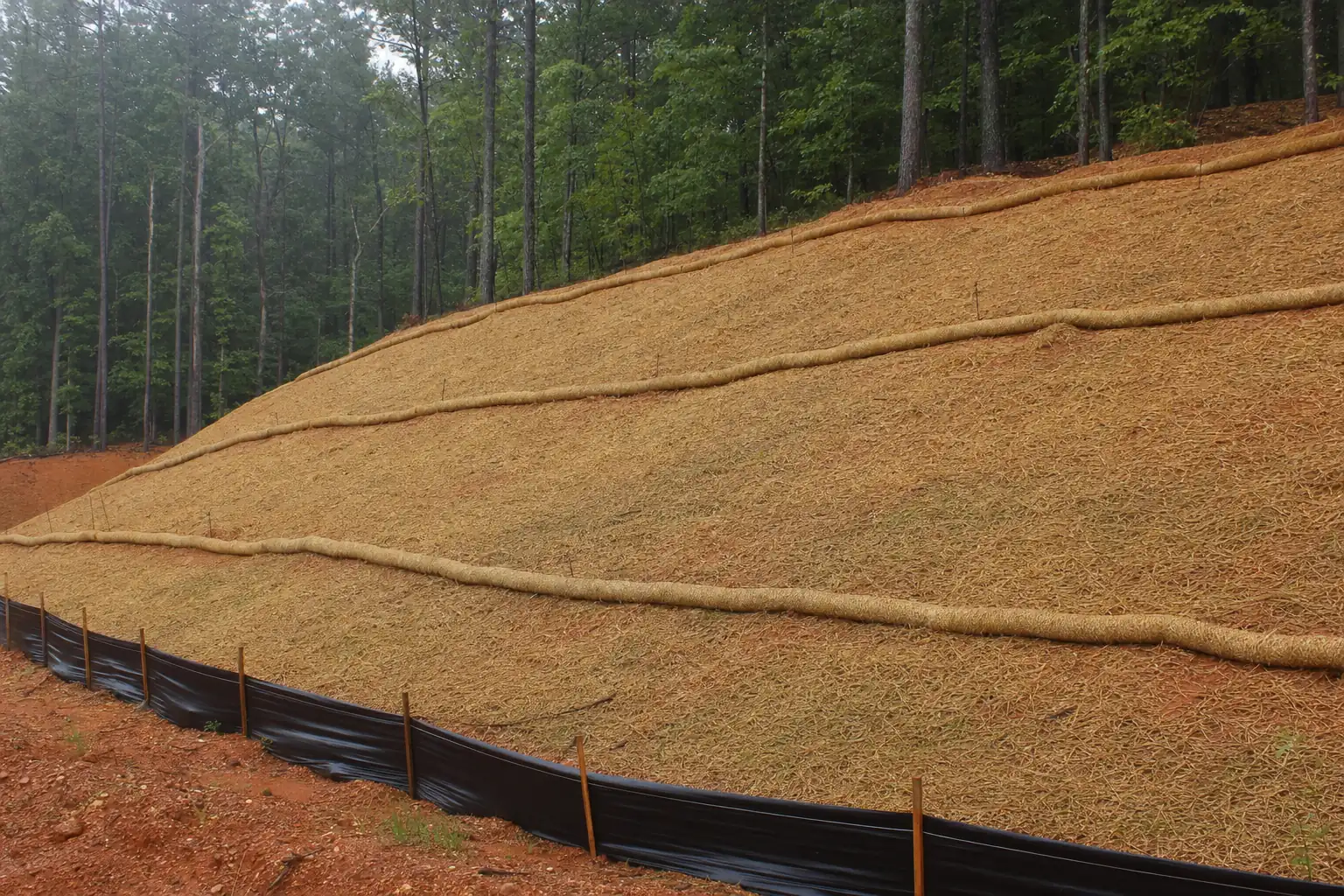
Forsyth County counts clearing of vegetation as land disturbance, whether a mulcher or a dozer does it. Outside the forestry and farm exemptions, a project that disturbs an acre or more, or works within 200 feet of state waters, needs a land disturbance permit before work starts. The listed clearing and grubbing fee is $250, and the permit needs an approved erosion plan with silt fence in the ground first. Along creeks, Forsyth keeps a 50-foot undisturbed buffer plus a 25-foot setback.
Permit thresholds, fees and buffer widths are those published by Forsyth County and the State of Georgia as of November 4, 2026. Confirm current requirements with the issuing authority before work begins. This is not legal advice.
Silt fence and erosion control run about $500 to $1,200 an acre where a site needs them. Mulching doesn’t make the permit question go away, but ground that never goes bare is far easier to keep in place, and a mulched area outside the footprint needs less fence than a scraped one. The guide to permits to clear land in Forsyth County walks through who needs one.
Trees you keep and their roots
A keeper tree’s roots run out under the ground well past its trunk. A dozer working near it scrapes those roots, packs the soil over them, or both. The tree can look fine for a season and then decline. North Georgia landowners tell that story on the forums often: the dozer job left the shade trees standing, and a couple of years later they were dying.
A mulcher works around flagged trunks without digging. The chips go on top of the roots instead of the blade going through them. If keeping trees is the point, mulch everything you can and limit grubbing to the footprint. Keep the big trees, clear the rest has more.
Most jobs use both
The choice is rarely one machine for the whole property. A typical house lot around Cumming gets mulched across most of its area, and only the footprint, the drive and the utility runs get grubbed and graded.
- 1Mulch the lotBrush and small trees ground in place across the whole lot, keepers flagged.
- 2Mark the footprintThe house, drive and utility runs staked from the site plan.
- 3Grub only thereStumps and roots pulled inside the stakes, silt fence set downhill.
- 4Grade the padPad and drive base cut to grade, the rest of the lot left covered.
That sequence leaves less bare ground, less silt fence, a smaller debris problem and more of your trees. It runs on one contract with one point of contact, so the mulching crew and the dirt crew work from the same plan. See site preparation for the pad side.
Site Preparation: Pads, Driveways, Utility Runs, Staging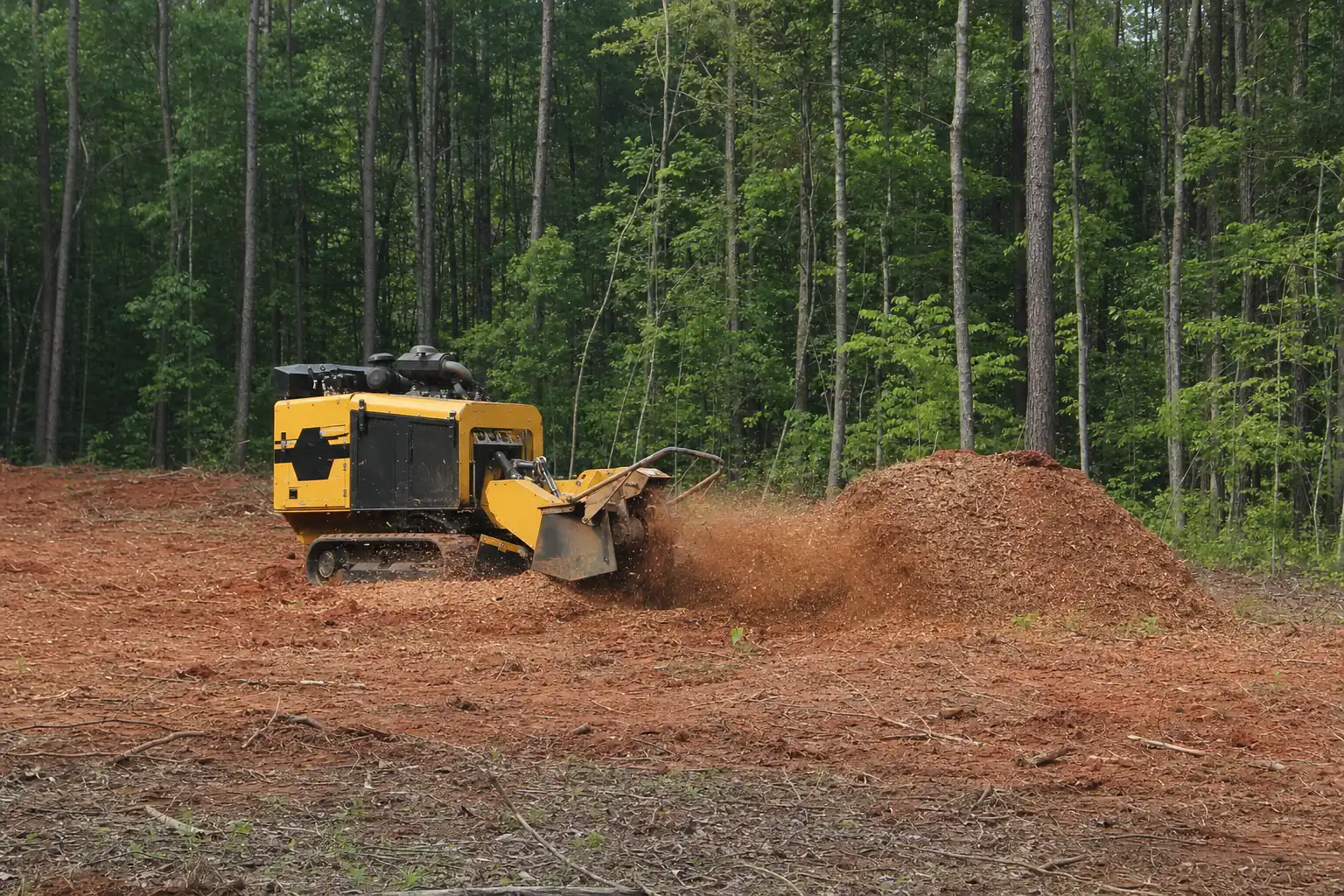 Stump Grinding, Grading and Pad Prep
 Lot Clearing for New Homes and Small Acreage
What each does to your schedule
A mulcher shows up, works and leaves. A typical lot takes one to three days of machine time, and the main thing that moves the date is rain. A grubbing job has more moving parts: the dozer, an excavator for stumps, trucks or a grinder for the pile, silt fence before the first push, and grading after.
On sites that need a county permit, the paperwork comes first. Forsyth County takes applications weekly and returns comments within nine business days, and the erosion plan has to be approved before anything gets disturbed. Once the site is open, bare ground left idle more than seven days needs to be stabilized. A mulched lot is covered from the first day; a grubbed one stays exposed until it is graded, built on or seeded.
Wet weeks hit both methods. Saturated clay ruts under any tracked machine, and a dozer pushing wet clay leaves a mess that costs grading money to fix. We move the date rather than work soaked ground. See clearing land on wet red clay.
What happens to the pile
Every dozer job ends with a pile of trunks, tops, stumps and dirt. There are three ways to get rid of it, and each costs something.
- Burn it. Forsyth County bans land-clearing burns from May 1 to September 30, and the rest of the year a burn needs a permit and distance from houses. Stumps with clay on them burn poorly. We don’t burn. See mulching compared with burning.
- Haul it. Trucking debris off a site adds about $500 to $2,500 an acre.
- Grind it. A horizontal grinder turns the pile into chips you can spread on site. See horizontal grinding.
Mulching skips the pile. More in what happens to the debris.
Regrowth on each
Grubbed ground loses its roots, so the old stumps don’t sprout. Bare clay doesn’t stay bare, though: left unbuilt and unplanted, it fills with weeds, briars and seedlings. Mulched ground keeps its roots, so sweetgum, maple, oak and privet resprout the first spring. Cut pines don’t.
Either way, land you don’t build on, plant or graze goes back toward woods. Mowing once or twice a year keeps it open; see bush hogging and maintenance mowing and will it grow back.
Picking the method for your land
Work it out piece by piece. For each part of the property, ask what it will be in five years.
- A house, barn, drive or pad. Grub and grade that footprint.
- Yard or woods around the house. Mulch it and keep the shade trees.
- Pasture, lawn or food plot. Mulch it, grind stumps below grade where you’ll mow or disk, then seed.
- Woods you want to walk, hunt or sell. Underbrush it and leave the canopy.
- Ground near a creek. Leave the buffer alone and mulch outside it.
Three properties we see around Cumming
The wooded house lot. Two acres of mixed pine and oak off a county road, with a house planned near the front. We mulch the whole lot, flag the oaks around the future yard, and grub only the footprint, the drive and the septic and utility runs. Most of the lot never goes bare.
The old pasture. Ten acres that went to sweetgum, privet and blackberry after the cattle left. No building planned. This is mulching work from end to end, with stumps ground below grade where the owner wants to mow or plant, and a privet treatment the next winter.
The commercial parcel. A development site that will be graded edge to edge for a building and parking. Here the dozer and excavator do most of the work under a full erosion plan, and a mulcher clears the areas held for later phases so they stay covered until their turn. See commercial and development clearing.
The forestry mulching page covers the method in full, and how a forestry mulcher works covers the machine.