
Identification guide · 8 min read
How to Identify Chinese Privet on Your Property
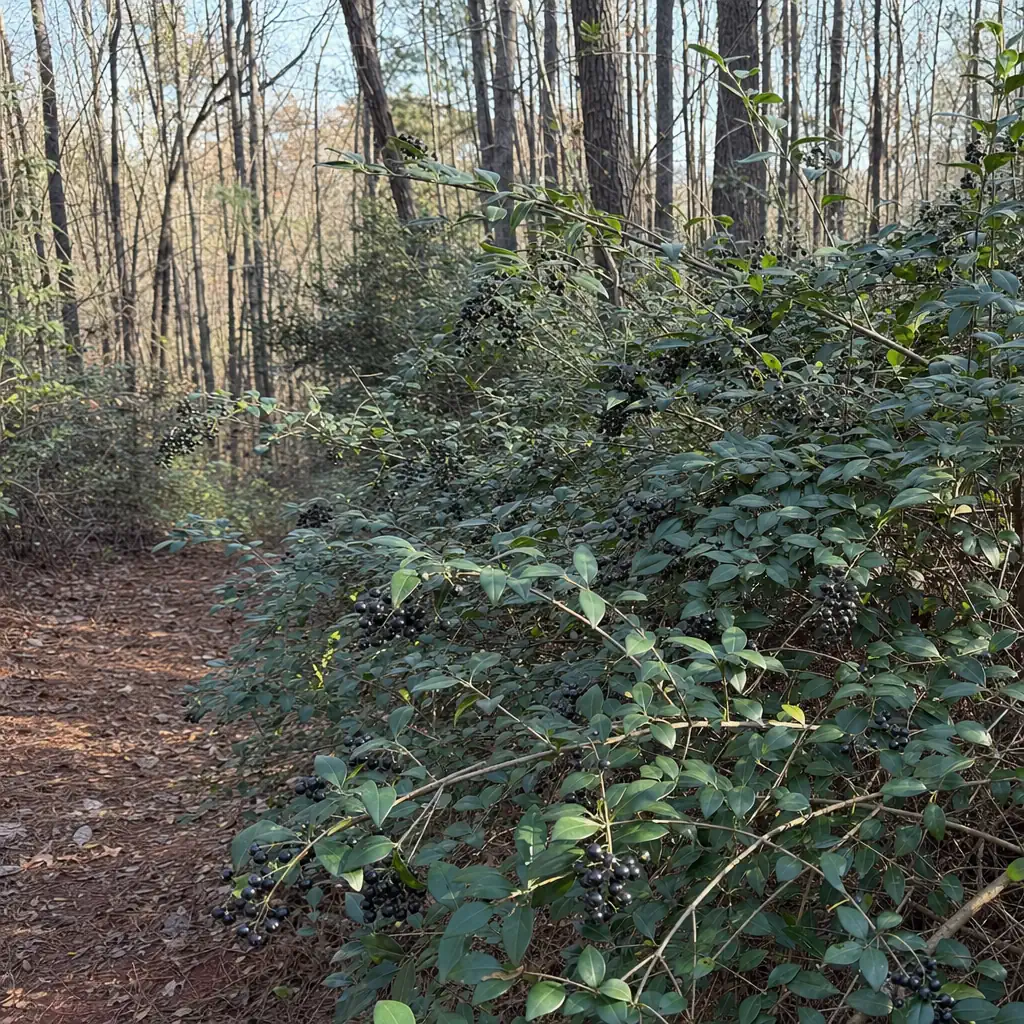
Chinese privet is a semi-evergreen shrub that grows to 30 feet in Forsyth County creek bottoms, fence rows and woods edges. Look for small oval leaves set in opposite pairs along the twig and dark purple-black berries that hang on into winter. In January, when the native shrubs stand bare, privet is the green layer still in leaf.
What Chinese privet looks like up close
Privet came to Georgia as a hedge plant and left the yards a long time ago. On acreage around Cumming it grows as a clump of thin stems that fills the space under the big trees, and left alone it reaches 30 feet. Five features give it away.
- Leaves in pairs. Small oval leaves sit opposite each other along the twig, two at each joint. Sweetgum, oak and holly, the plants growing around it, set their leaves one at a time up the stem.
- Leaves that stay on. Privet is semi-evergreen. It holds most of its leaves through a North Georgia winter, so it stays green while the woods around it turn gray.
- Berries that hang on. Clusters of small dark purple to black berries ripen in fall and stay on the branches into winter. Birds eat them and drop the seed along every fence and tree line they perch on.
- Flowers in late spring. Dense clusters of small white flowers cover the shrub, with a heavy sweet smell you often notice before you see the plant.
- Many stems from one base. Privet grows as a clump of gray-brown stems with smooth bark. Older plants send up suckers from the roots, and a few plants become a wall.
One plant on its own is easy to miss. A thicket is hard to miss: a dense green layer about head height, so thick you can’t see far into the woods, with almost nothing growing on the ground underneath.
The season cues, through the year
Privet changes through the year, and some months make it far easier to find than others. If you are walking the land to decide whether you have a problem, pick your month.
| Season | What privet is doing | How easy it is to spot |
|---|---|---|
| Winter | Still in leaf, berries still hanging, natives bare | Easiest. The green layer stands out from a distance. |
| Late spring | White flower clusters and a strong smell | Easy. Follow your nose along the creek and fence rows. |
| Summer | Full leaf, blending into the green understory | Hardest. Check the leaf pairs up close. |
| Fall | Berries ripen dark as native leaves turn and drop | Getting easier each week toward winter. |
Winter is the month we recommend. Drive the frontage or walk the back line in December or January and the privet shows up as the only green thing under the hardwoods. There is a short piece on that in spotting Chinese privet in winter.
Where privet grows on Forsyth County land
Privet tolerates shade and wet ground, and birds plant it for free. That puts it in predictable places.
- Creek bottoms. The flats along Big Creek, Settingdown Creek and the smaller branches that feed them are some of the worst privet ground in the county. The Forest Service ran its North Georgia privet research in creek bottoms for that reason.
- Fence rows and field edges. Birds sit on the wire and drop seed. An old pasture fence often shows up as a straight green line of privet in winter.
- Old pasture. Fields that stopped being mowed fill in with privet, sweetgum and blackberry within a few years.
- Under the canopy. In mixed pine and hardwood, privet takes over the layer between the ground and the lowest branches.
- Old homesteads. A hedge someone planted by the house decades ago is often the source for the whole tract.
- Road frontage. Edges along county roads get sun and bird traffic, and privet walls along the frontage are common on land for sale.
Plants people mistake for privet
A few plants in the same woods share one or two of privet’s features. The leaf arrangement settles most of them.
| Plant | What’s similar | How to tell |
|---|---|---|
| Chinese privet | Small oval leaves in pairs, green in winter, dark berries | An upright shrub with many stems |
| Japanese honeysuckle | Paired oval leaves, green into winter | A vine that twines around stems and fences instead of standing on its own |
| American holly | Evergreen, berries in winter | Stiff spiny leaves set one at a time, and red berries |
| Native shrubs and saplings | Similar size and shape in summer | Bare in winter, and most set leaves one at a time |
Honeysuckle is invasive too, and it usually grows tangled through the same thickets. If you find one, look for the other. Other invasives that show up on the same land, from wisteria to autumn olive, are covered in other invasive plants we clear.
What privet does if you leave it alone
Privet doesn’t stay a few bushes. It shades out everything under it, and the ground beneath a mature thicket ends up close to bare. Native shrubs, wildflowers and tree seedlings can’t get started, so the woods stop renewing themselves.
What the North Georgia research measured
- Up to 30 ft
- How tall privet grows when left alone
- 70% vs 20%
- Native plant cover where privet was treated, against plots where it stayed
- About 7%
- Privet re-infestation five years after mulching plus herbicide
The Forest Service figures come from a study in North Georgia creek bottoms. Where privet was mulched and the regrowth treated, native plants covered about 70 percent of the ground. Where privet stayed, they covered about 20 percent.
Herbicide applications are performed by licensed applicators in accordance with the product label.
The practical costs show up on the land itself:
- You can’t see your property. Creeks, survey pins, old fences and the back line disappear behind it.
- Hunting land loses its browse. The native plants deer feed on get shaded out under a privet layer.
- Land for sale shows badly. A buyer standing at the road sees a green wall instead of woods.
- It spreads every year. Each fall’s berries seed the next fence row and the next neighbor’s tract.
Scattered plants, a thicket, or privet grown into trees
Once you know it’s privet, the next question is how much. The answer decides whether you need a machine at all.
| What you find | What it looks like | What usually fits |
|---|---|---|
| Scattered plants | A few shrubs along a fence or a drive, open ground between them | Treatment of the standing plants, no machine |
| A thicket | A solid layer about head height, bare ground underneath | Mulch in place, then two treatments on the regrowth |
| Privet grown into trees | Stems several inches thick, mixed in with sweetgum and maple | Mulch, with bigger trunks felled first, then treatment |
| Privet along a creek | Thick growth on the banks and in the flat beside the water | Work planned around the stream buffers before anything starts |
A spray crew alone can handle scattered plants. A thicket on acreage is different: spraying it standing leaves a dead brown wall you still can’t walk through, and cutting it alone grows back. That’s where mulching first earns its place, because the regrowth comes up low and even and a sprayer can reach all of it. Creek banks get their own plan, laid out in privet removal along creeks.
Checking your own land in an afternoon
You don’t need a botanist. A winter walk and a phone camera will tell you whether you have privet, where it is, and roughly how many acres it covers.
- 1Walk it in winterDecember to February, when privet is the only green under the hardwoods.
- 2Check the usual placesCreek bottoms, fence rows, the old house site and the road frontage.
- 3Confirm a plantPaired oval leaves, smooth gray stems, dark berries in clusters.
- 4Send us photosA wide shot of the thicket, a close-up of a twig and the address.
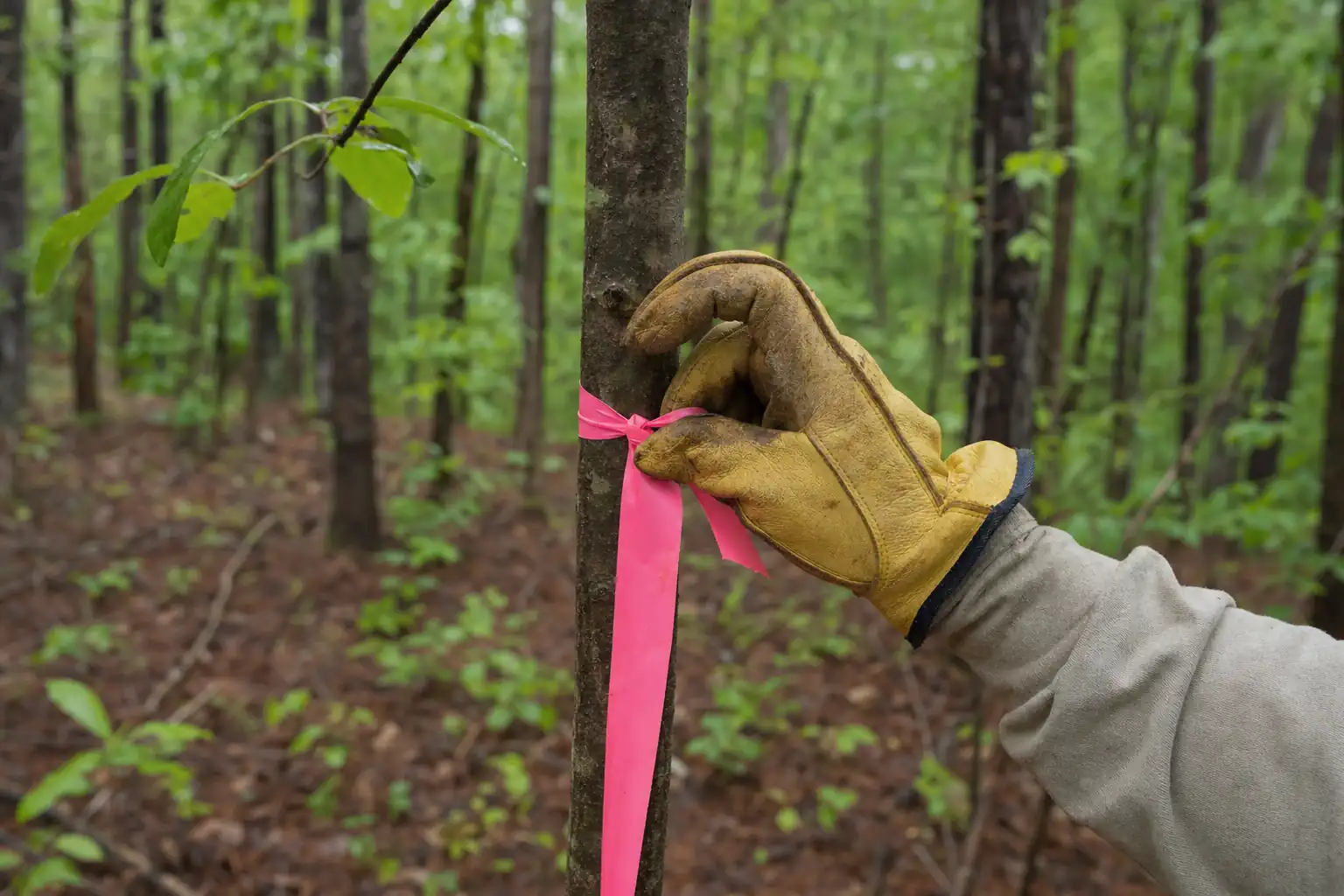
Mark the edges of what you find on a phone map or with flagging tape. The acreage and how dense the thicket is are the two things that set the price, and a rough outline saves time on the walk.
The photos that help us most are simple. Stand at the edge of the thicket and take one wide shot so we can see how tall and how solid it is. Take a second from inside it, looking at the stems, so we can judge their size. Then a close-up of a twig with its leaves, and of the berries if they’re on. If there’s a creek, a ditch or a steep bank nearby, photograph that too, because water and slope change how the job runs and what the county requires before work starts.
What to do once you’ve found it
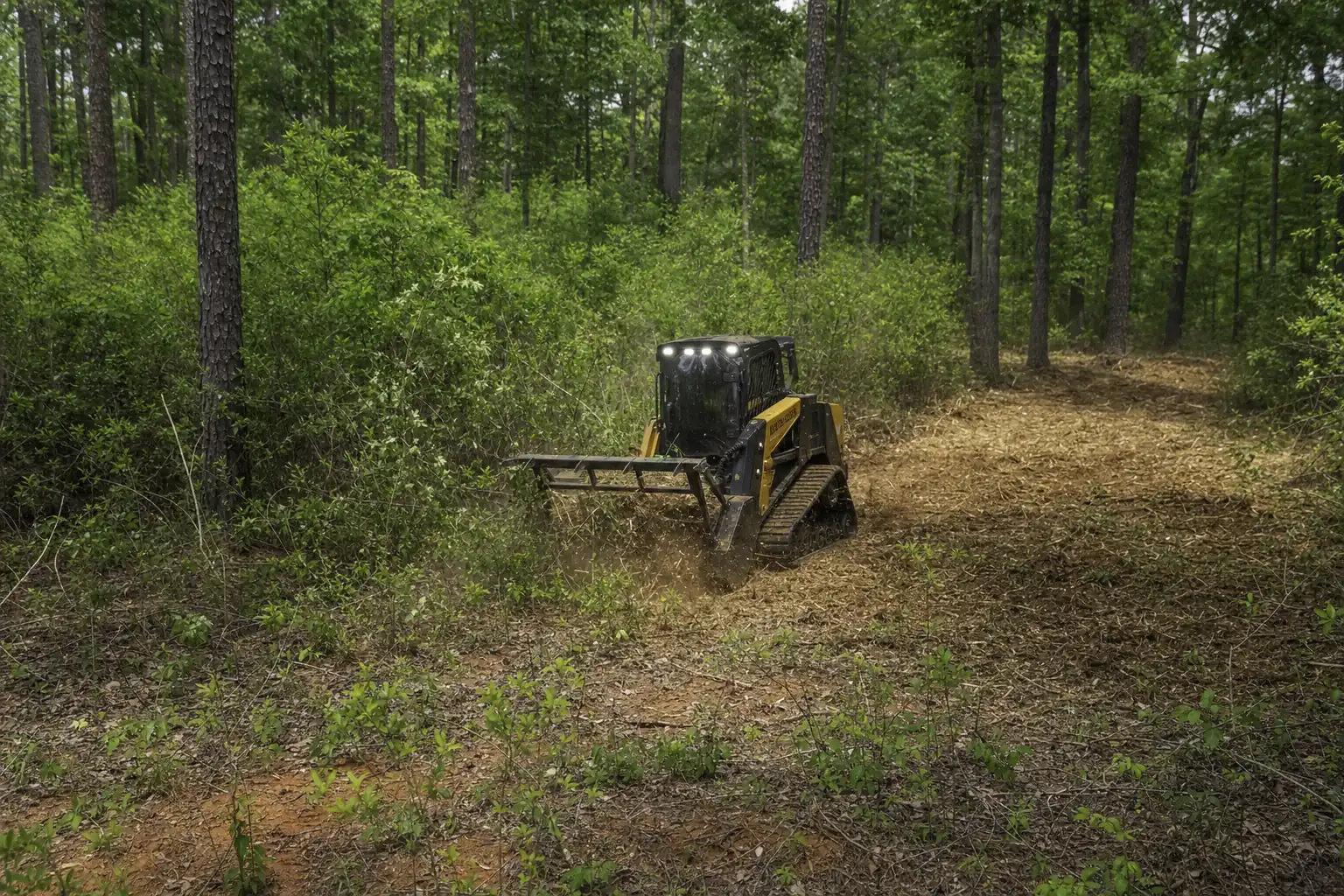
Cutting privet down doesn’t kill it. Bush hog it, chainsaw it or mulch it and the roots send up new stems by the next spring. The approach that holds is two steps: mulch the thicket in place, then have licensed applicators treat the even regrowth that comes up after. Most stands clear with two treatments. Why cutting privet doesn’t work explains the biology, and herbicide follow-up after clearing covers the timing.
Chinese Privet Removal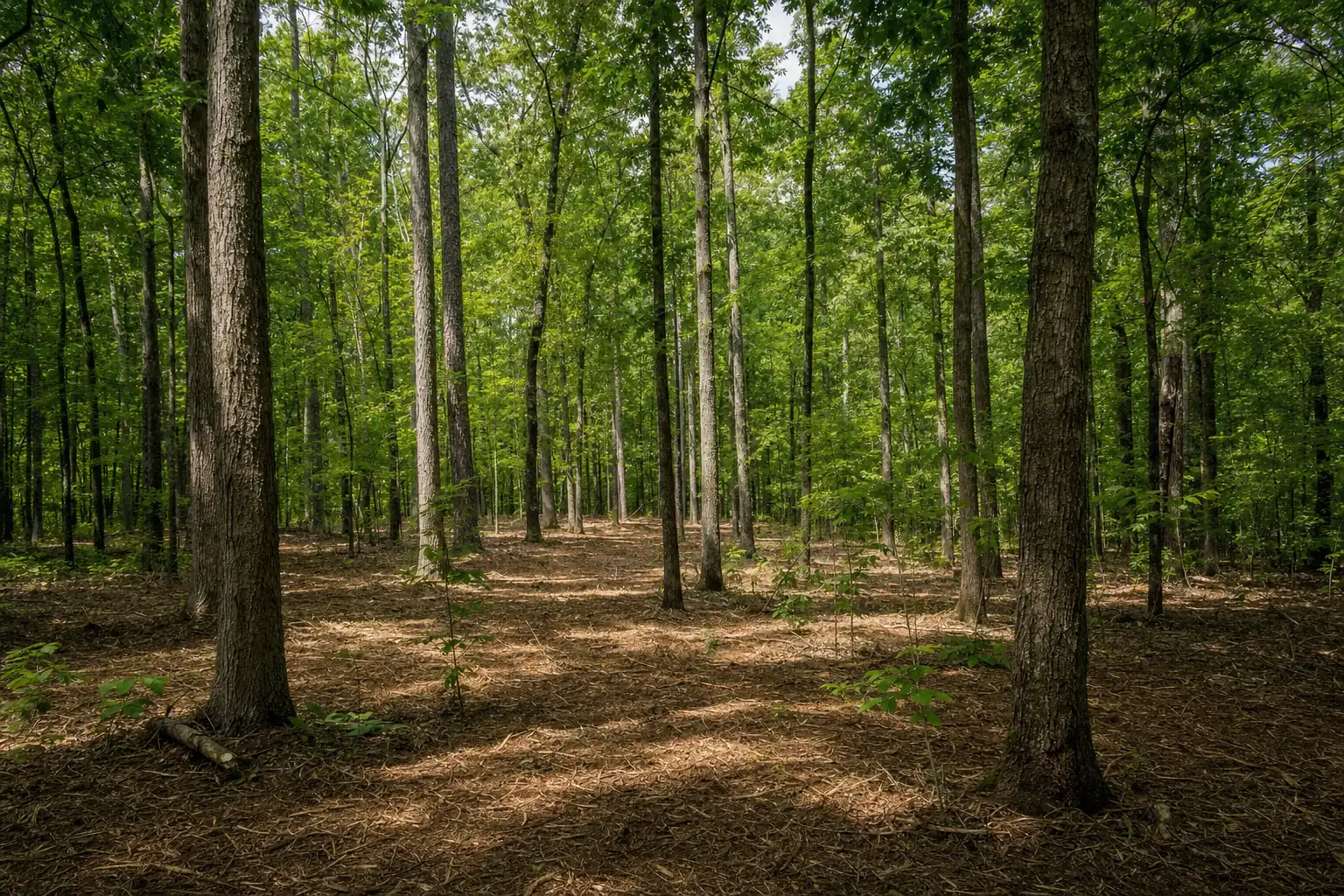 Underbrush Clearing: Open the Woods, Keep the Canopy
 Bush Hogging and Maintenance Mowing
On most acreage around Cumming, privet mulches fast. Thickets of privet, brush and saplings usually price at about $1,200 to $2,500 an acre for the mulching pass, and privet grown up through 4 to 8 inch trees at about $2,500 to $4,000. Treatments are quoted on top. Privet removal cost per acre has the detail.
Ranges are estimates for Forsyth County and the surrounding area based on job density, terrain, access and acreage. Your written quote is the only price that applies to your property.
Privet on the property line
Privet doesn’t stop at the survey line. If the neighbor’s fence row is solid privet, birds will keep carrying berries onto your side for years after your own thicket is gone. That’s why we treat edges and fence rows as part of the job, and why the second treatment and the walk-throughs after it matter as much as the first visit.
If you share a long line with privet on the other side, talk to the neighbor. Two owners treating at the same time get further than one. Where the line itself is buried in privet, fence line and survey line clearing opens it so a surveyor can work.
Keeping it from coming back
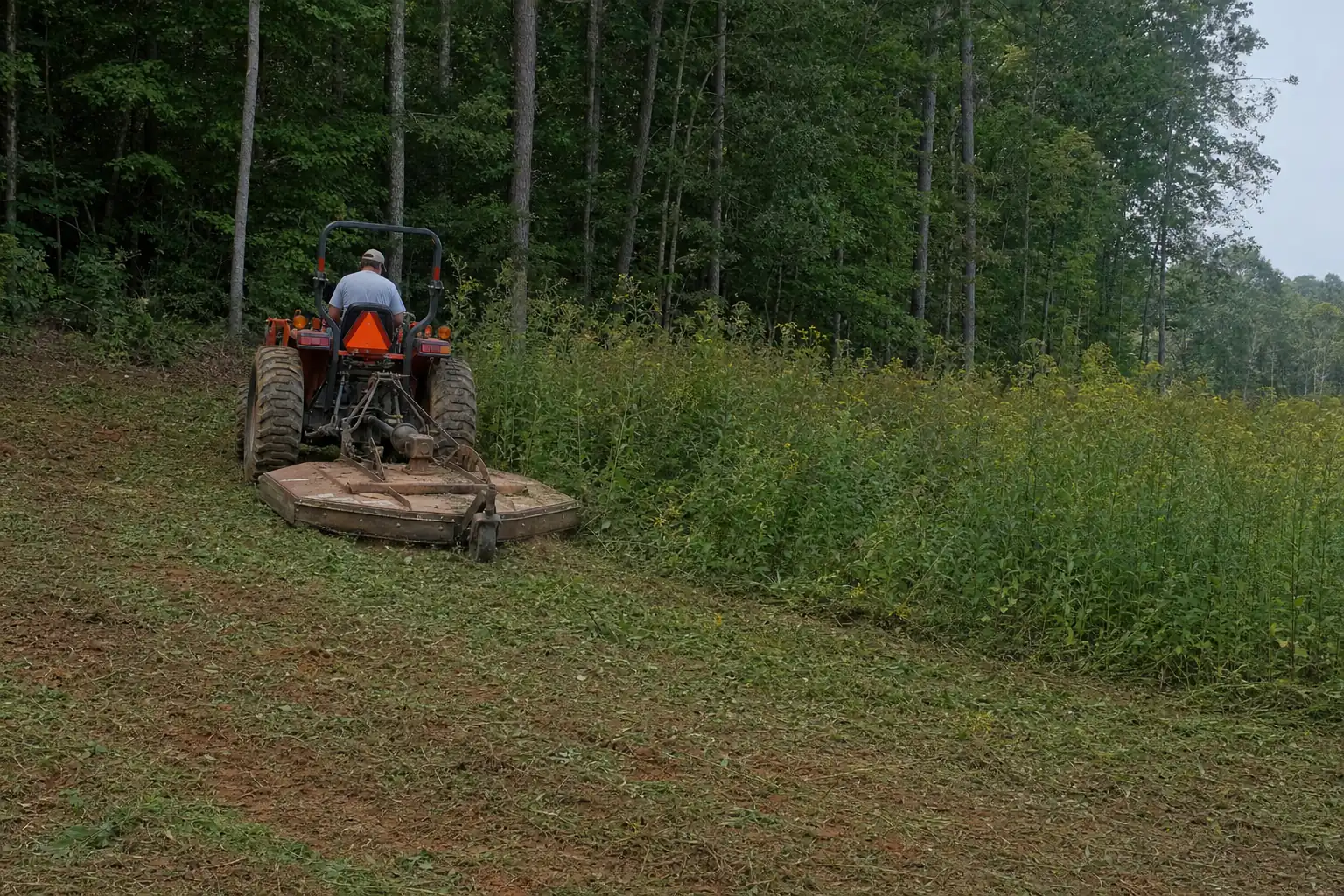
Seed already in the soil keeps sprouting for a while after the thicket is gone, so expect seedlings the year after treatment. A walk each winter catches them while they’re small, and the green-in-winter cue makes that walk quick. Ground you want kept open also needs mowing once or twice a year, because sweetgum and briars move in where privet used to be. We set that up as maintenance mowing on the same contract.
The full picture of privet, kudzu and the other invasives in the county is on the invasive plant removal page.
Keep reading
Questions people ask next
- QWhy cutting privet doesn't work, and what does
- QHow do I get rid of Chinese privet permanently?
- QWhen is the best time of year to treat privet?
- QWhat does privet removal cost per acre?
- QOther invasives we clear: wisteria, ivy, bamboo and more
- QCan you remove privet along a creek without hurting the water?