Straight answer · 3 min read
When Is the Best Time of Year to Treat Privet?
Late fall through winter. UGA Extension names late fall as the best time to treat Chinese privet, and Georgia forestry guidance gives the dormant season, November through February. Privet still carries leaves when native plants are bare. Forest Service trials found spring and fall treatment gave 93 to 100 percent control, against 67 to 69 percent in summer.
The timing question matters more with privet than with most brush, because a treatment in the wrong season can leave a third of the plants alive and cost you an extra round. The good news for Forsyth County landowners is that the best window falls in the quiet months, when the woods are bare and the privet is easy to see.
Why late fall and winter work best
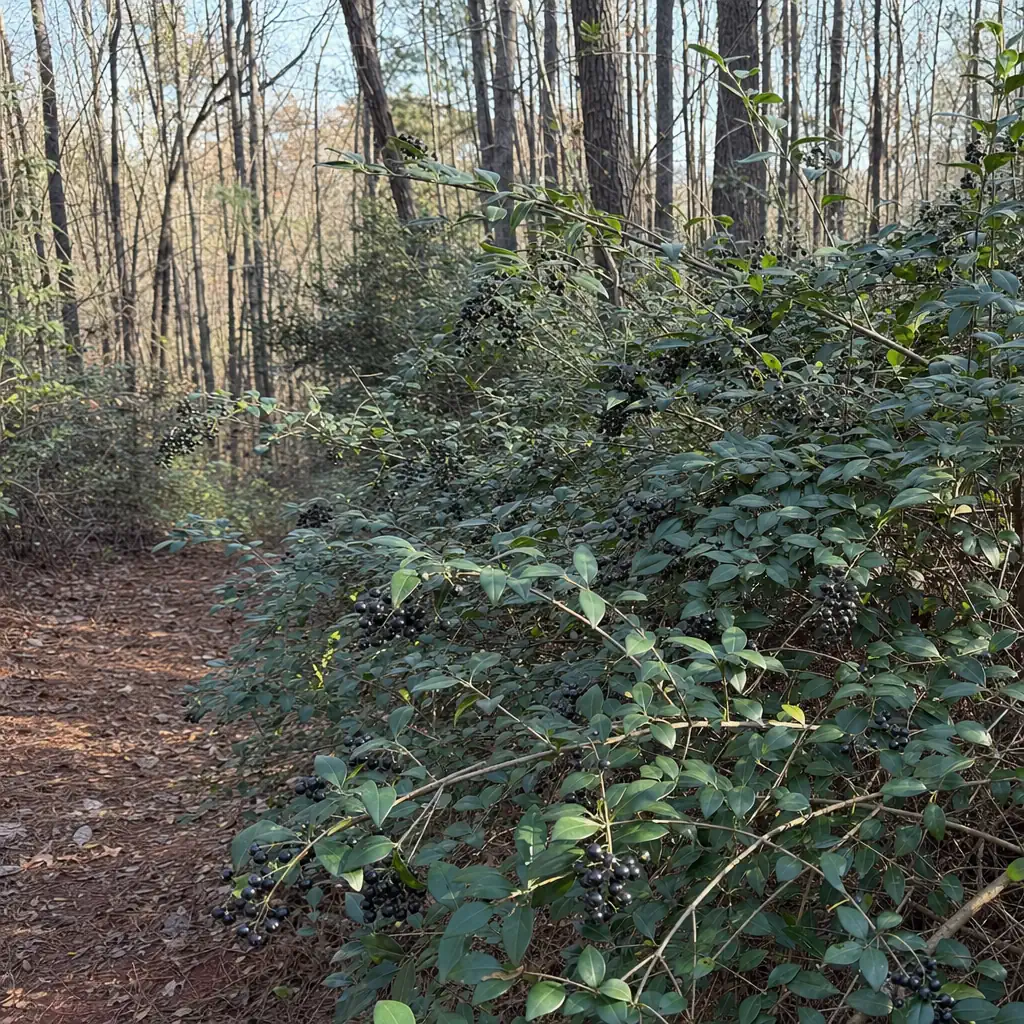
- Privet keeps its leaves. It’s semi-evergreen, so it still carries leaves through a North Georgia winter. The treatment works through those leaves.
- The native plants don’t. Most of the understory around it is bare in winter, so there’s less risk to the native shrubs and seedlings you want to come back.
- It’s easy to find. In December and January privet is the green layer under gray hardwoods. The applicator can see every sprout, including the scattered ones along fence rows.
- The research backs it. Forest Service trials found spring and fall treatment far more effective than summer.
- 93 to 100%
- Privet control from spring and fall treatment
- 67 to 69%
- Privet control from summer treatment
- Nov to Feb
- Dormant-season window in Georgia forestry guidance
Herbicide applications are performed by licensed applicators in accordance with the product label.
Privet treatment through the year
| Season | How it works | Our take |
|---|---|---|
| Late fall | Privet in leaf, natives turning and dropping | The best time, per UGA Extension |
| Winter | Privet green, natives bare | Strong. Inside the November to February dormant window |
| Spring | New growth on privet and natives alike | Effective, with more care around native plants |
| Summer | Everything in full leaf | Weakest. About two-thirds control in Forest Service trials |
How the timing fits a mulching job
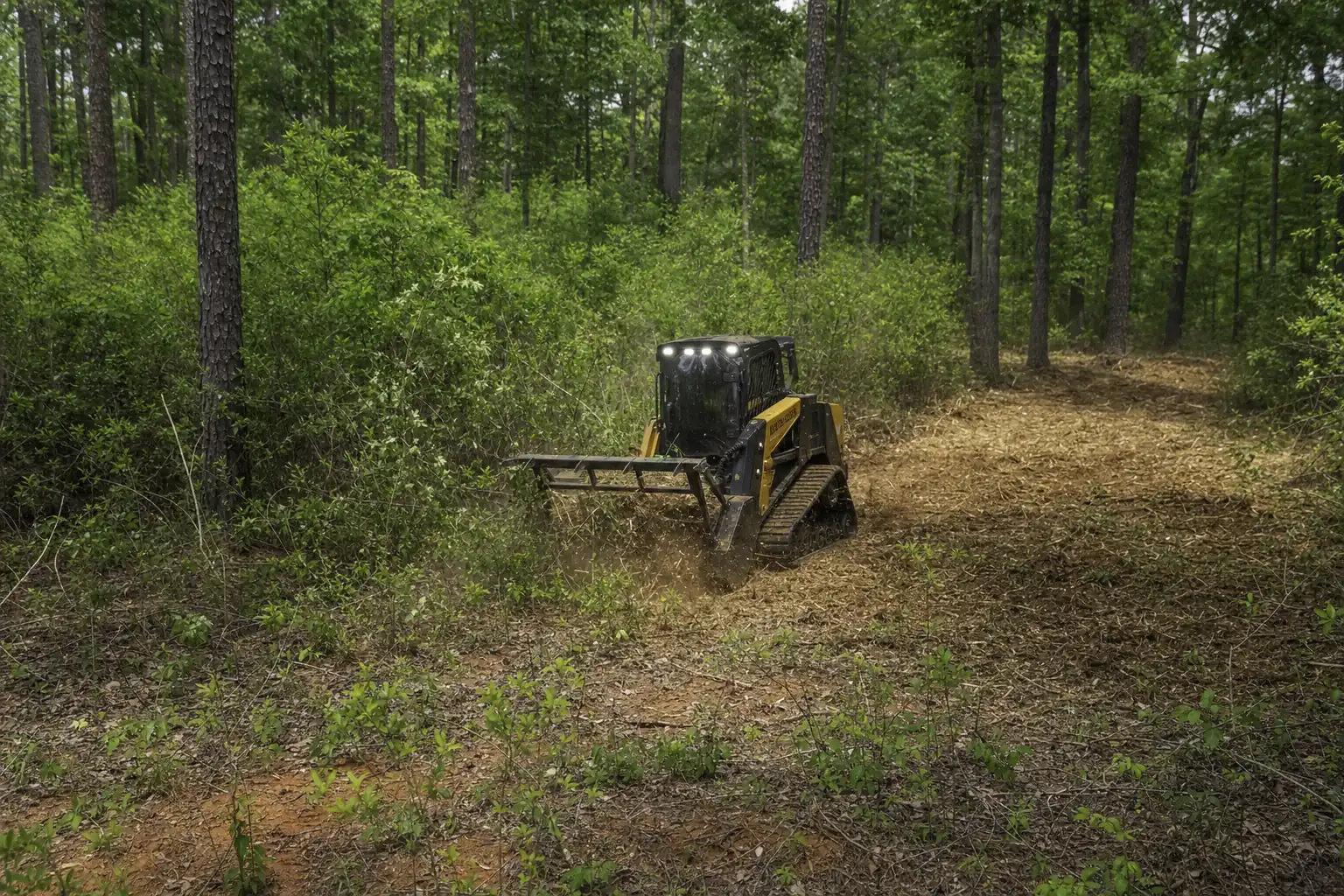
Most privet jobs on acreage start with a forestry mulcher, and the treatment calendar follows the mulching. The roots send up an even flush of sprouts the next growing season. Those sprouts need to leaf out before treatment, because spraying bare mulched ground does nothing. The first treatment goes on that fall or winter, and the second the season after.
A few timing details on the mulching side:
- Berries. Alabama Extension notes that mulching privet in fall can spread seed. When the plants are loaded with berries, we plan for extra seedlings in the follow-up.
- Wet clay. Winter rain leaves red clay saturated, and we don’t run tracked machines on it. That can move the mulching date.
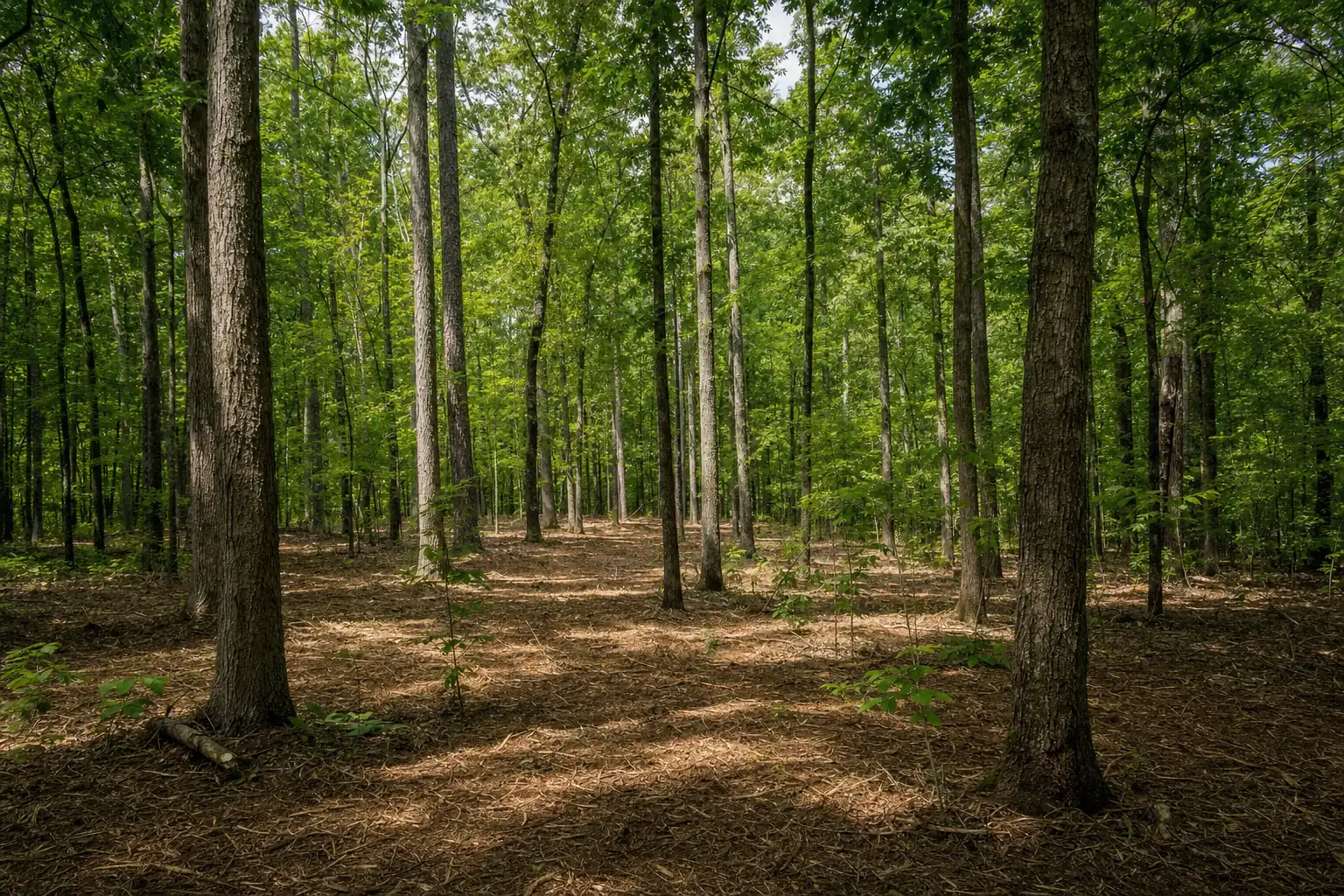
- Leaf-off. Winter mulching has its own upside: the ground, the creek banks and any old fence wire are easier to see.
The full season-by-season plan is in herbicide follow-up after clearing.
Scattered privet that never gets mulched
Not every privet problem needs a machine. A few shrubs along a driveway, a fence row with open ground on both sides, or seedlings that show up after a thicket is gone can be treated standing. The same late fall and winter window applies, and it’s when those plants are easiest to find. Georgia’s forestry guidance also describes treating the lower stem of larger plants, and treating a cut stump right after it’s cut. The cut-stump method doesn’t wait for a season, but it does have to happen the same day as the cut, while the stump can still take it up. The applicator picks the method by plant size and what’s growing around it.
Kudzu and the other invasives run on different calendars
The privet window doesn’t carry over to everything. Kudzu drops its leaves after the first frost, so it gets treated in the growing season while the vines are leafed out, and the treatments repeat for years. Wisteria, bamboo and the other invasives each have their own timing, set by the plant and the product label. When a tract has several, we plan one calendar for all of them. See does mulching kill kudzu and other invasive plants we clear.
Who treats it, and how to book the window
Licensed applicators do the treatments on our jobs, following the product label, including its rules near creeks. Because the treatments run on the same contract as the mulching, the dates go into the written plan before the machine shows up. If you call in late summer, there’s time to walk the land, mulch in the fall and have the first treatment ready for the regrowth the following season.
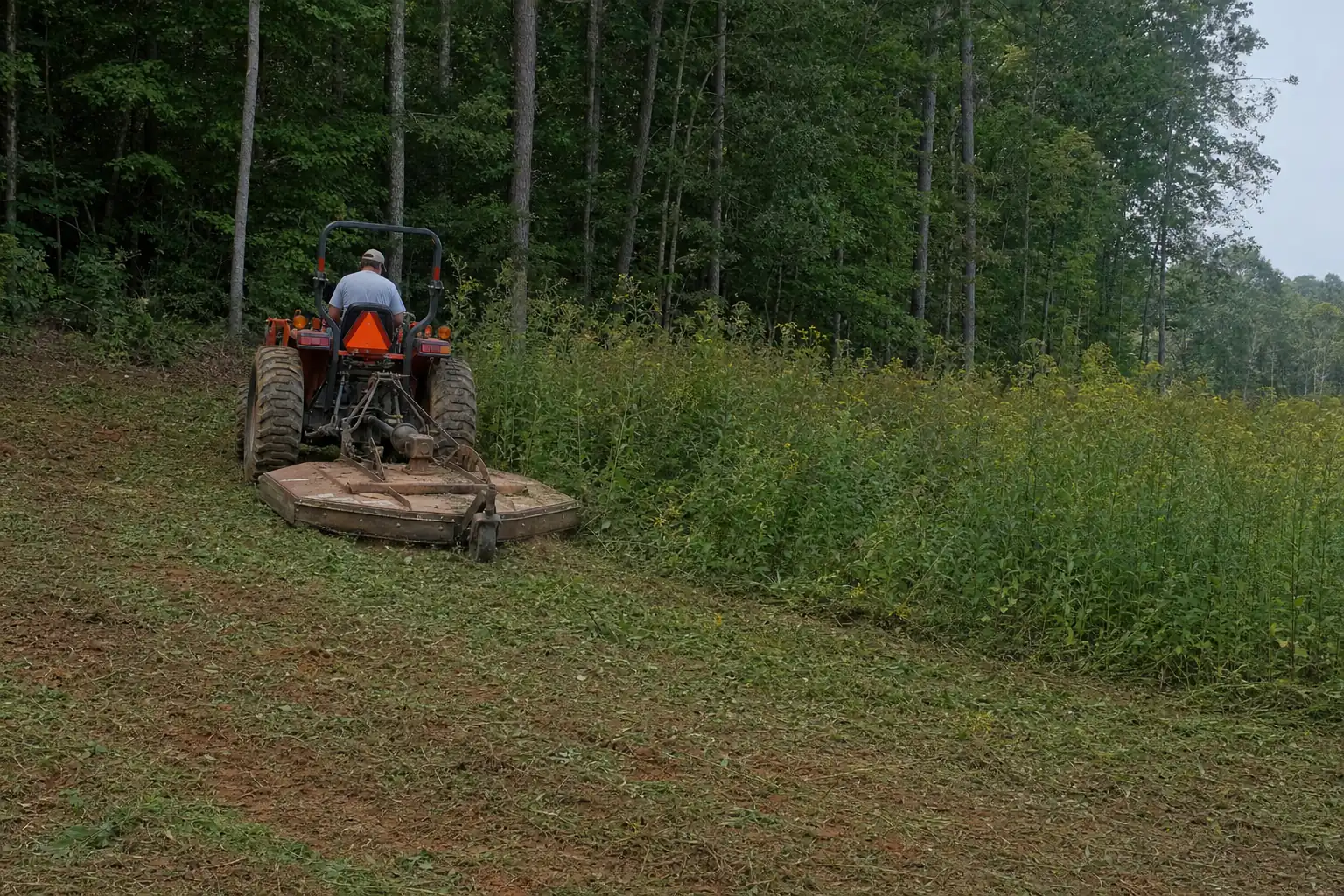
Once the privet is under control, sweetgum and briars still move into the open ground. Mowing once or twice a year keeps it open; see maintenance mowing. The full service is on the Chinese privet removal page, and the invasive plant removal hub covers the rest.
FAQ
More about privet timing
- Can privet be treated in spring?
- Yes. Forest Service trials found spring treatment about as effective as fall. Native plants are leafing out too, so the applicator works with more care around them than in winter.
- Why is summer a bad time to treat privet?
- In Forest Service trials, summer treatment controlled about 67 to 69 percent of privet, against 93 to 100 percent in spring and fall. That gap often means paying for another round.
- How long after mulching should privet be treated?
- Wait for the regrowth to leaf out. The roots send up sprouts the next growing season, and the first treatment goes on that fall or winter. Spraying bare mulched ground does nothing.