
Privet guide · 8 min read
Why Cutting Privet Doesn’t Work (and What Does)
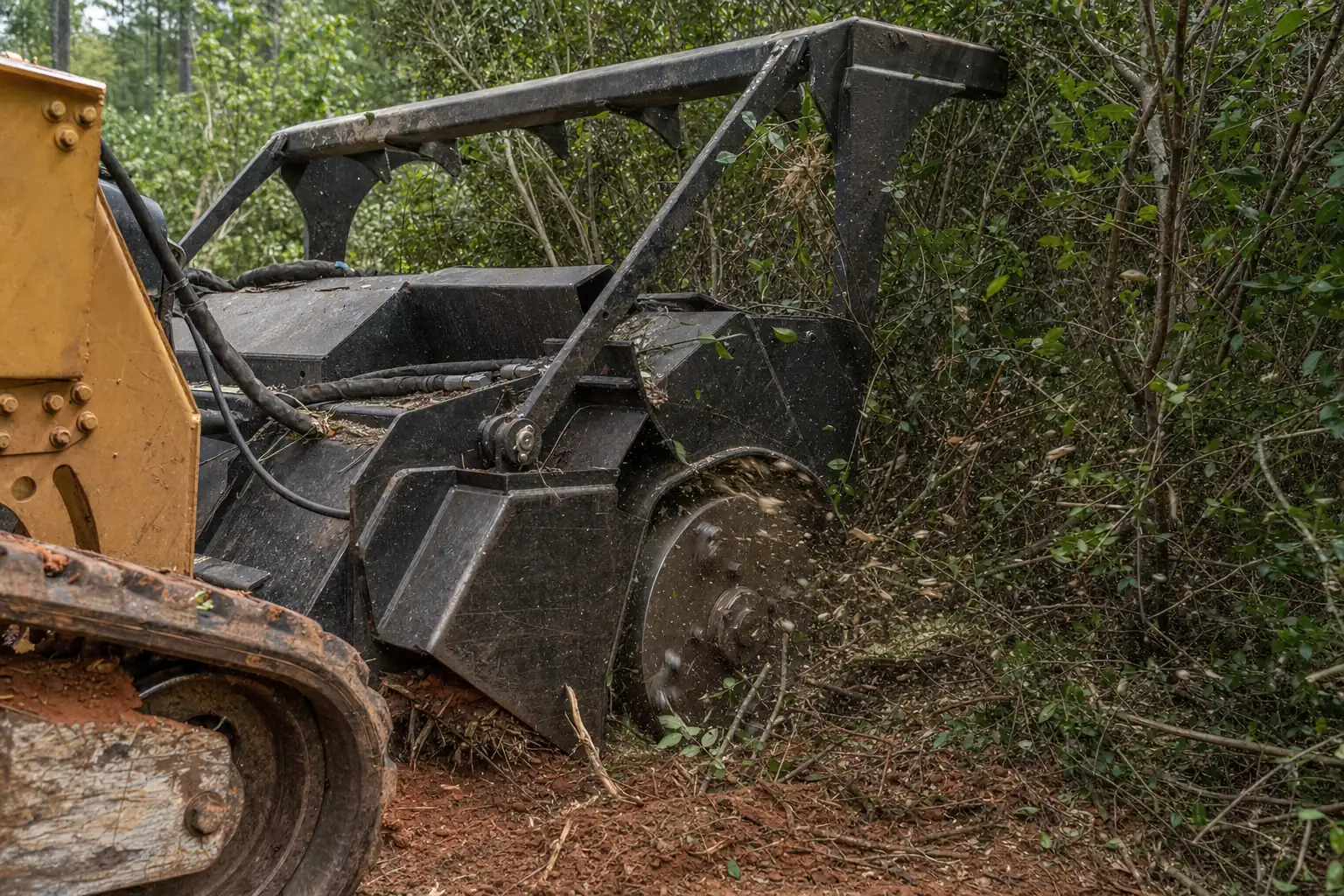
Mulching, mowing and chainsaws all level Chinese privet, and none of them kill it. The roots stay alive and send up new stems by the next spring. What holds is mulching followed by herbicide on the regrowth: in a Forest Service study in North Georgia, that pairing held privet to about 7 percent re-infestation after five years.
What happens when you cut privet
Chinese privet keeps its strength in the roots. Cut the stems at the ground with a bush hog, a chainsaw or a forestry mulcher, and the root system is still there, full of stored energy and ready to push up new growth. By the next spring, each cut stump comes back as a clump of fresh stems, and root suckers come up in the gaps between them.
That’s why so many landowners around Cumming say they “cleared the privet” two or three times. They did. The privet came back each time because nothing reached the roots. In UGA Extension’s words, brush mulching will level a privet thicket, but because it doesn’t remove the roots, regrowth will occur.
Two things add to the problem. Privet seed sits in the soil, so new seedlings keep coming up after the old plants are gone. And birds carry fresh berries in from every fence row and neighbor’s tract nearby. A plan that only deals with the plants standing today will lose ground to both.
The ways people go after privet, and what each leaves
Each method below does something useful. Used alone, the cutting methods leave the roots alive, and spraying alone leaves a dead thicket standing. Only the last row holds on acreage.
| Method | What it does | What you have a year later |
|---|---|---|
| Bush hog or mow | Knocks the thicket down to a stubble | Resprouts across the whole area, often thicker |
| Chainsaw and drag | Removes the stems, leaves a brush pile | Stumps resprouting and a pile to deal with |
| Mulch only | Grinds the thicket in place, no piles | An even flush of regrowth from the roots |
| Spray standing plants | Kills the plants it reaches | A dead brown thicket still standing, gaps where spray missed |
| Mulch, then treat | Levels the thicket, then kills the regrowth at the roots | Open woods, with seedlings to spot-treat |
Spraying a standing thicket works on scattered plants and small patches. On a solid acre of privet taller than your head, the sprayer can’t reach the middle, and what dies stays standing until it rots. Mulching first solves both problems.
Why mulching still earns its place
Mulching alone doesn’t kill privet, so it’s fair to ask why we start with it. The reason is the regrowth. UGA Extension notes that the regrowth after mulching comes up uniform, which makes it easier to control with herbicide. Instead of a wall over your head with stems of every size, the applicator faces knee-high sprouts of the same age, all leafed out and all within reach.
A forestry mulcher also leaves the ground in better shape than the other ways of knocking privet down. It grinds the thicket where it stands and spreads the chips over the clay, so there’s no burn pile, no haul-off and no bare ground left to wash. The keeper oaks, poplars and pines get flagged on the walk and the machine works around them. On light growth like privet and saplings, one machine clears about one to three acres a day.
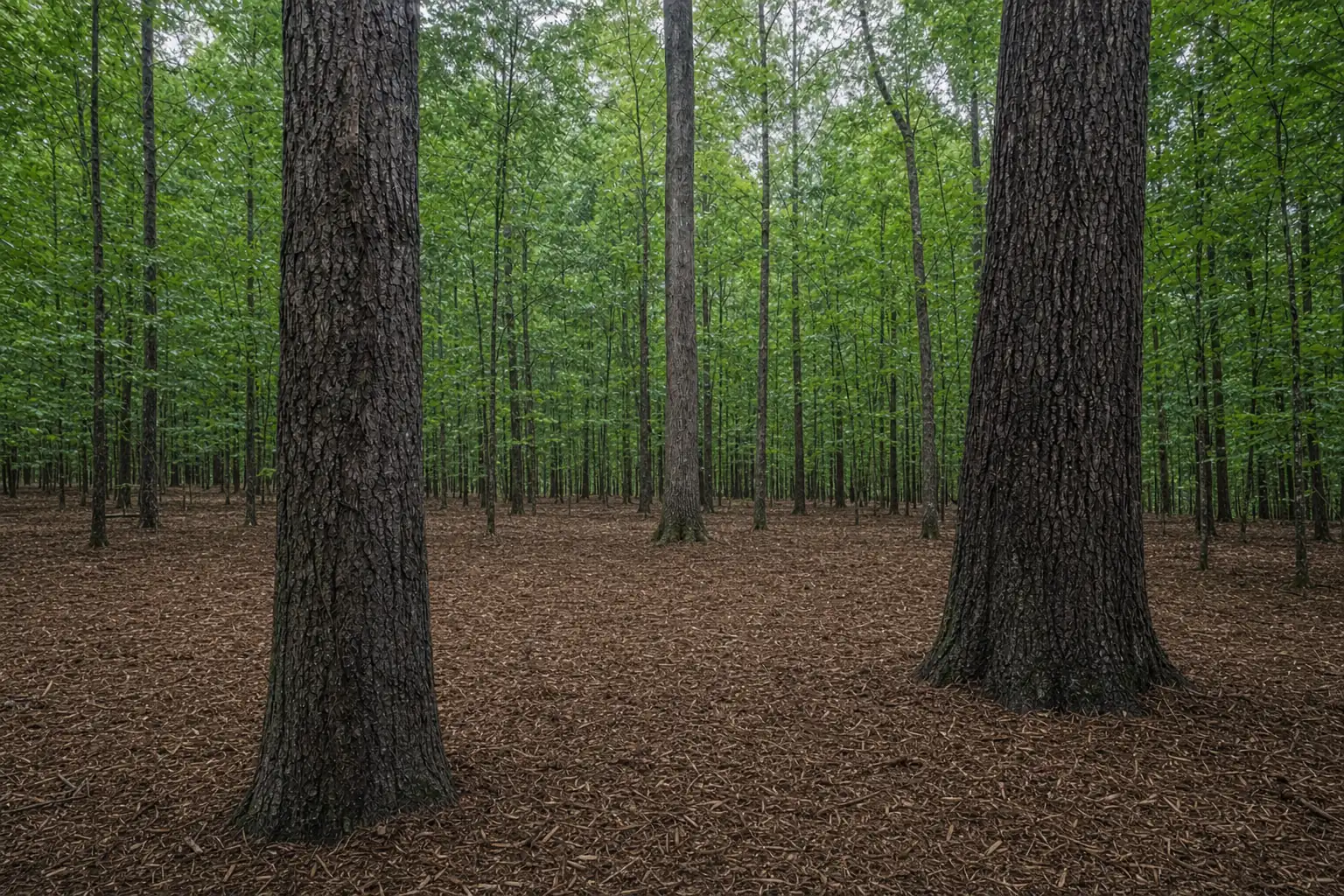
The mulching pass also lets you see the land again. Creek banks, old fences and survey pins hidden under the thicket show up, and that matters for planning the treatment as much as for using the property.
When cutting alone is the right call
Cutting has its uses, as long as you know what you’re buying. A few situations where a mower or a mulcher alone makes sense:
- You need a path this season. A trail to a deer stand, a walk-through for a surveyor or a buyer, or a way to reach the creek. Cutting opens it now, and it closes again by next summer.
- Keeping treated ground open. Once the privet roots are dead, mowing once or twice a year holds back the sweetgum and briars that move in. Mowing becomes maintenance instead of a fight.
- Getting ready for treatment. Mulching is the first step of the plan that works. It only fails when it’s the last step too.
Where cutting alone goes wrong is the expectation. If you pay for a bush hog pass thinking the privet is gone, next spring is a disappointment. If you pay for it knowing it’s a one-season fix, it’s a fair price for a season.
Three privet jobs we see around Cumming
The fence row. A long run of old pasture fence that birds have planted with privet for years. The stems are thin and the work is linear. Mulching takes a day or less, and the treatments after it are quick because the regrowth sits in one narrow strip. The neighbor’s side of the fence is usually the seed source, so the edge gets checked every year.
The understory. Five acres of mixed pine and oak with privet filling everything below the branches. The mulcher works between the trunks, around every flagged tree, and the regrowth comes up across the whole floor. This is the job the North Georgia research describes, and the one where two treatments matter most.
The creek bottom. The flat along a branch of Settingdown Creek, solid privet down to the bank. Georgia keeps a 25-foot buffer on state waters, and Forsyth County a 50-foot undisturbed buffer plus a 25-foot setback, so the plan for the strip nearest the water is settled before the machine arrives. Privet removal along creeks walks through it.
Permit thresholds, fees and buffer widths are those published by Forsyth County and the State of Georgia as of November 4, 2026. Confirm current requirements with the issuing authority before work begins. This is not legal advice.
What the North Georgia research found
Forest Service researchers tested mulching and herbicide on privet in North Georgia creek bottoms and went back to check the plots five years later. Separate Forest Service trials compared treatment seasons.
Privet research in Georgia
- About 7%
- Privet re-infestation five years after mulching plus herbicide
- 70% vs 20%
- Native plant cover on treated plots against untreated ones
- 93 to 100%
- Privet control from spring and fall treatment, against 67 to 69% in summer
- 2
- Treatments that clear most privet stands, per Georgia forestry guidance
Herbicide applications are performed by licensed applicators in accordance with the product label.
Two lessons come out of those numbers. The combination works, and it lets native plants come back on their own. And timing matters: the same treatment applied in summer did far worse than in spring or fall. Georgia’s forestry guide on invasive plants adds that for most stands, two treatments can eradicate privet, with follow-up for suckers and seedlings.
The sequence that holds
A privet job that lasts runs over at least two seasons. The machine comes once. The treatments come after, on the plant’s schedule.
- 1Walk and flagMap the privet, flag the keeper trees, mark creeks and buffers.
- 2Mulch the thicketPrivet and saplings ground in place on firm, dry ground.
- 3Let it resproutThe roots push up an even flush of stems the next growing season.
- 4Treat twiceLicensed applicators treat the regrowth, then the survivors and seedlings.
After the second treatment, a walk each year catches seedlings from seed in the soil and berries carried in by birds. Most of that is spot work. The full timeline, season by season, is in herbicide follow-up after clearing, and the best time to treat privet covers the calendar.
Timing mistakes that cost a season
- Treating in summer. Forest Service trials found summer treatment controlled about two-thirds of privet, against near-total control in spring and fall. A summer application often means paying for another round.
- Mulching with the berries on. Alabama Extension notes that mulching in fall can spread seed. When berries are heavy on the plants, we plan around it and expect more seedlings to treat.
- Waiting too long after cutting. A cut-stump treatment has to go on right after the cut. Once the stump surface dries, it takes up much less.
- Stopping after one round. The first treatment kills most of the regrowth. The second catches the plants that survived and the first wave of seedlings.
- Mulching on wet clay. A tracked machine on saturated red clay leaves ruts. We wait for dry weeks, which can move the mulching date but not the treatment calendar.
What it costs to do it right
The mulching pass is priced like other clearing. Privet, brush and saplings usually land at about $1,200 to $2,500 an acre around Cumming. Privet grown up through 4 to 8 inch trees runs about $2,500 to $4,000. Small jobs carry a $1,200 to $2,000 minimum. Herbicide treatments are quoted per treatment on the same contract, so the whole plan is on one page.
Ranges are estimates for Forsyth County and the surrounding area based on job density, terrain, access and acreage. Your written quote is the only price that applies to your property.
Cutting alone looks cheaper. Bush hog privet every year and you pay every year, and the thicket is still there. Paying once for mulching and two treatments costs more up front and less over five years. Privet removal cost per acre breaks down the numbers.
Georgia also runs an Invasive Plant Control Program for private forest landowners, which counts mechanical treatment combined with herbicide. It has acreage minimums and a per-landowner cap, and we confirm the current terms with the program office before any application. See does Georgia pay for invasive plant removal.
Program figures and sign-up windows are set annually and are current as of November 4, 2026. We confirm every figure with the Georgia Forestry Commission or NRCS before any application. This page explains how programs work; it is not a guarantee of eligibility or reimbursement.
Why one contract matters for privet
Most mulching operators sell the first visit. The resprouts next spring become your problem, and the treatment is a different company on a different schedule, if you find one at all. That split is how privet wins: the machine work happens, the follow-up doesn’t, and in two years the thicket is back.
We run the mulching and the treatments on one contract, with one point of contact. Licensed applicators do the herbicide work, following the product label. The treatment dates are written into the plan before the machine shows up.
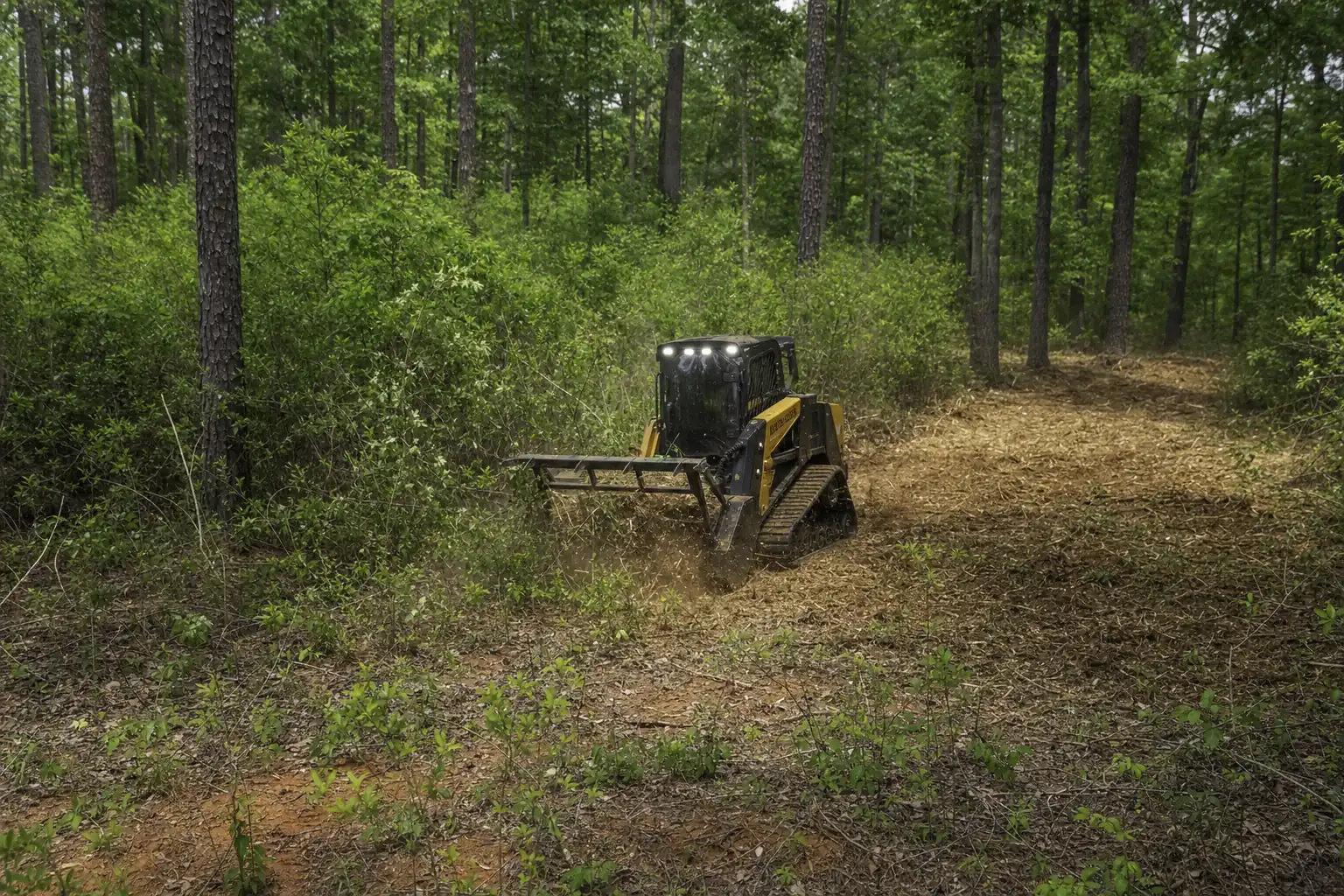 Chinese Privet Removal
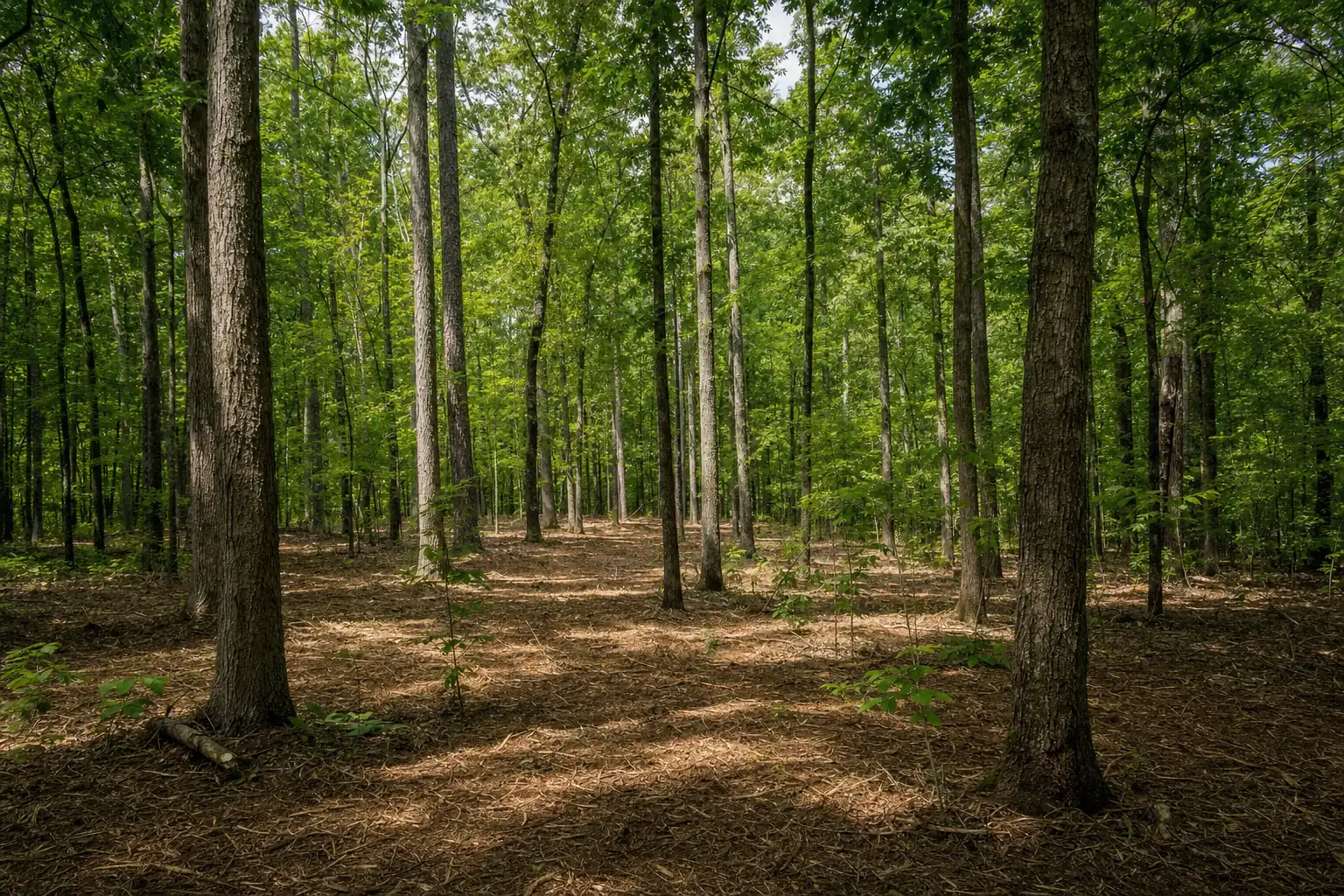 Underbrush Clearing: Open the Woods, Keep the Canopy
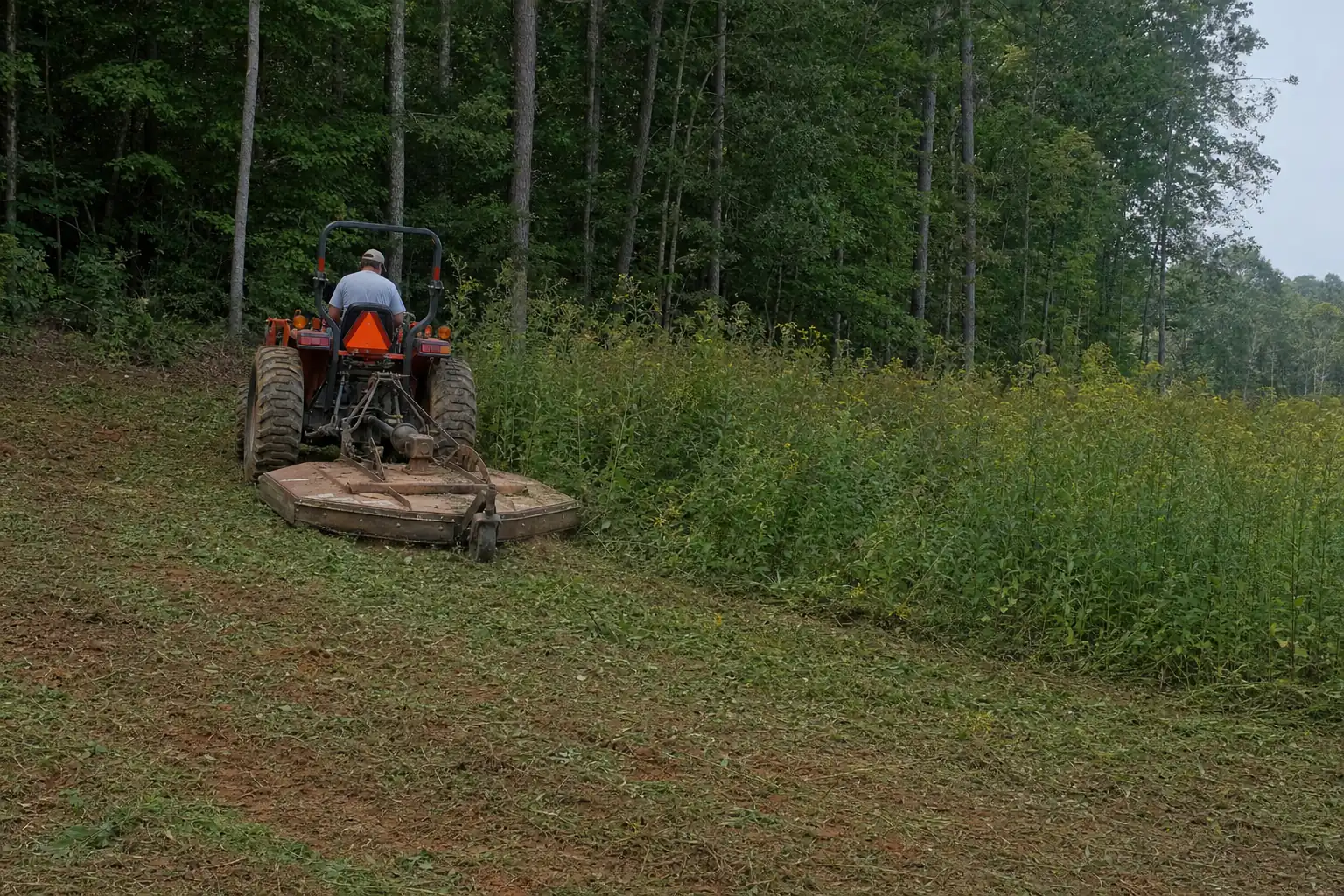 Bush Hogging and Maintenance Mowing
After the privet is gone
Ground that was under privet changes fast once the thicket is gone. In the North Georgia study, native plants covered most of the treated ground within five years. Some of what comes in, though, is sweetgum, maple and briars, which also resprout after cutting. If you want the ground kept open for a view, a trail or a field edge, plan on maintenance mowing once or twice a year.
Kudzu follows the same rule on a longer clock. Its roots run up to 9 feet deep, every root crown has to be controlled, and Georgia forestry guidance puts full eradication at three to ten years of repeated treatment. Mowing or mulching is a good first step there too, and only a first step. Does forestry mulching kill kudzu? covers the difference.
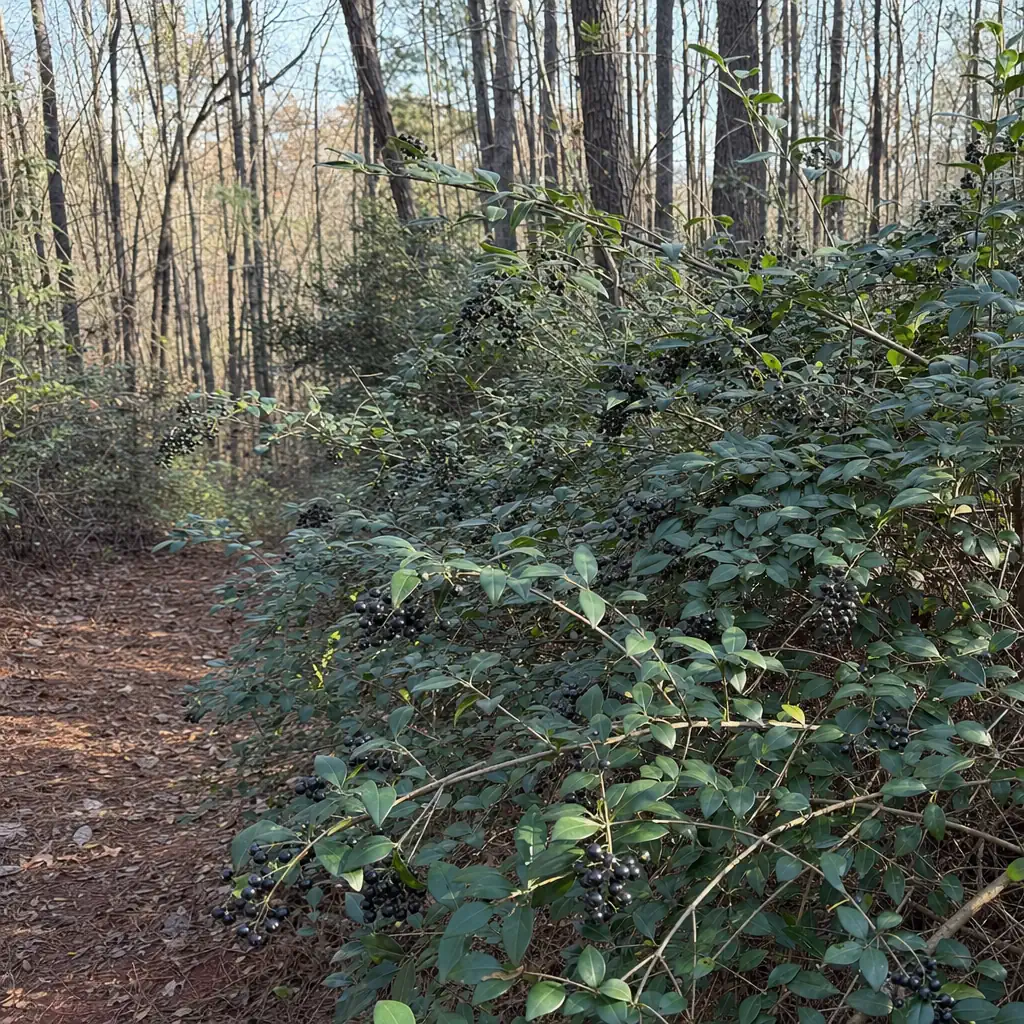
If you’re not sure the thicket on your land is privet, start with how to identify Chinese privet. For kudzu, wisteria and the rest, the invasive plant removal page covers what we clear across Forsyth County.
Keep reading