Straight answer · 3 min read
Can You Remove Privet Along a Creek Without Hurting the Water?
Yes, when the work is planned around the stream buffers. Georgia keeps a 25-foot buffer on state waters, and Forsyth County a 50-foot undisturbed buffer plus a 25-foot setback. We keep the machine out of the buffer, follow the herbicide label's rules near water, and get the county permit that clearing within 200 feet of a creek requires.
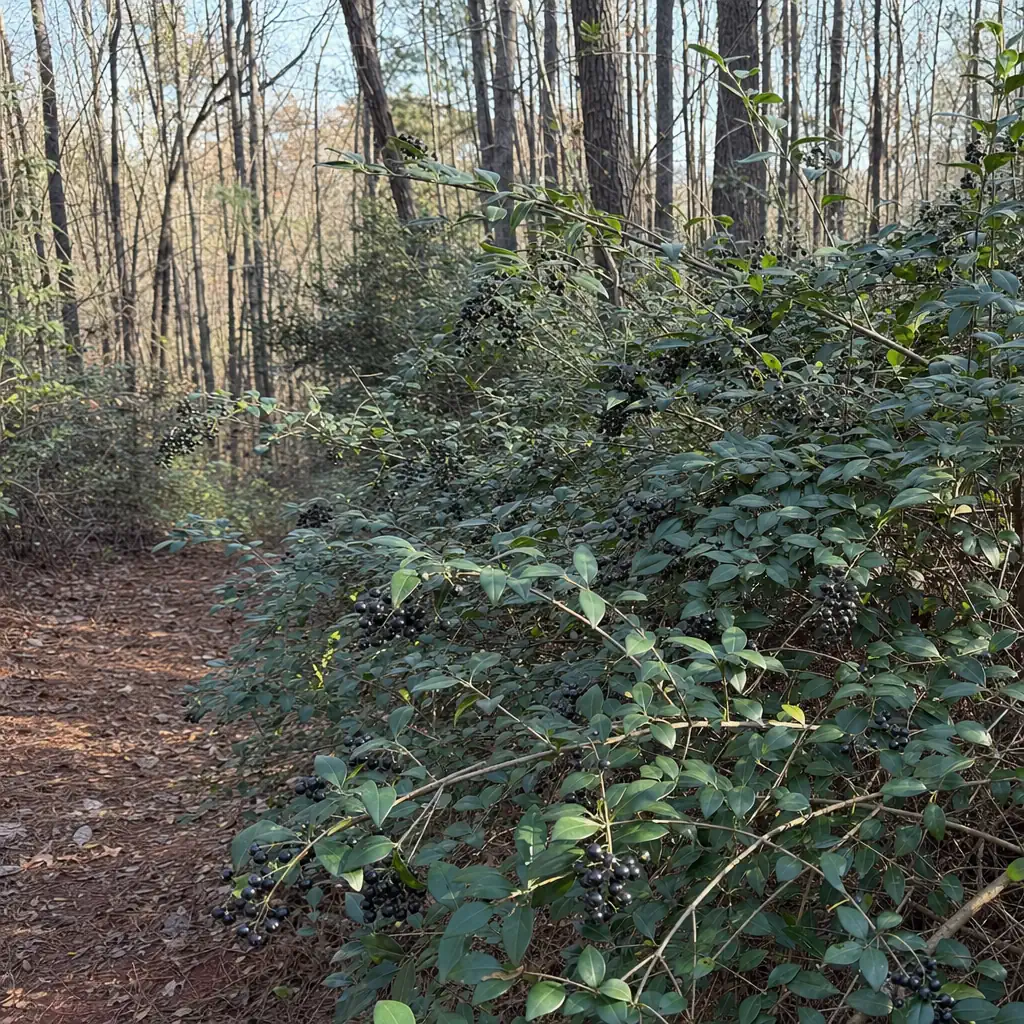
Creek bottoms grow some of the worst privet in Forsyth County. The flats along Big Creek, Settingdown Creek and the branches feeding them stay damp and shaded, and birds work the tree lines along the water. Those same strips are the ones the state and the county protect hardest, so a creek job gets planned around the law before it gets planned around the privet.
The lines along a creek
| Rule | Distance | What it means for privet work |
|---|---|---|
| Georgia state waters buffer | 25 feet | May be thinned or trimmed only while a protective vegetative cover remains |
| Forsyth County buffer | 50 feet, undisturbed | No machine work. Anything inside it waits on the county |
| Forsyth County setback | A further 25 feet | No impervious surface; machine work planned with the permit |
| County permit trigger | Within 200 feet of state waters | Clearing here needs a land disturbance permit, even under an acre |
Permit thresholds, fees and buffer widths are those published by Forsyth County and the State of Georgia as of November 4, 2026. Confirm current requirements with the issuing authority before work begins. This is not legal advice.
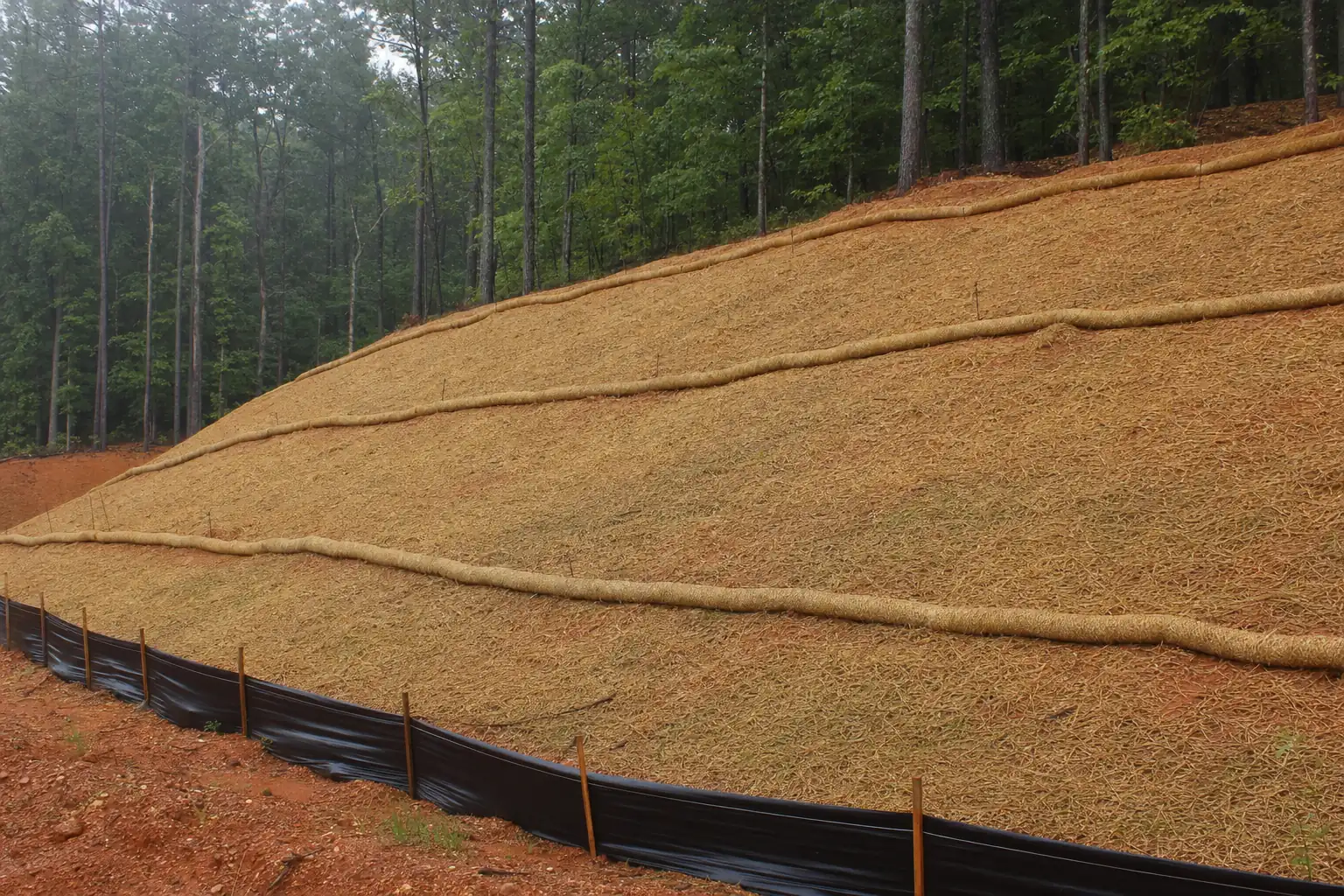
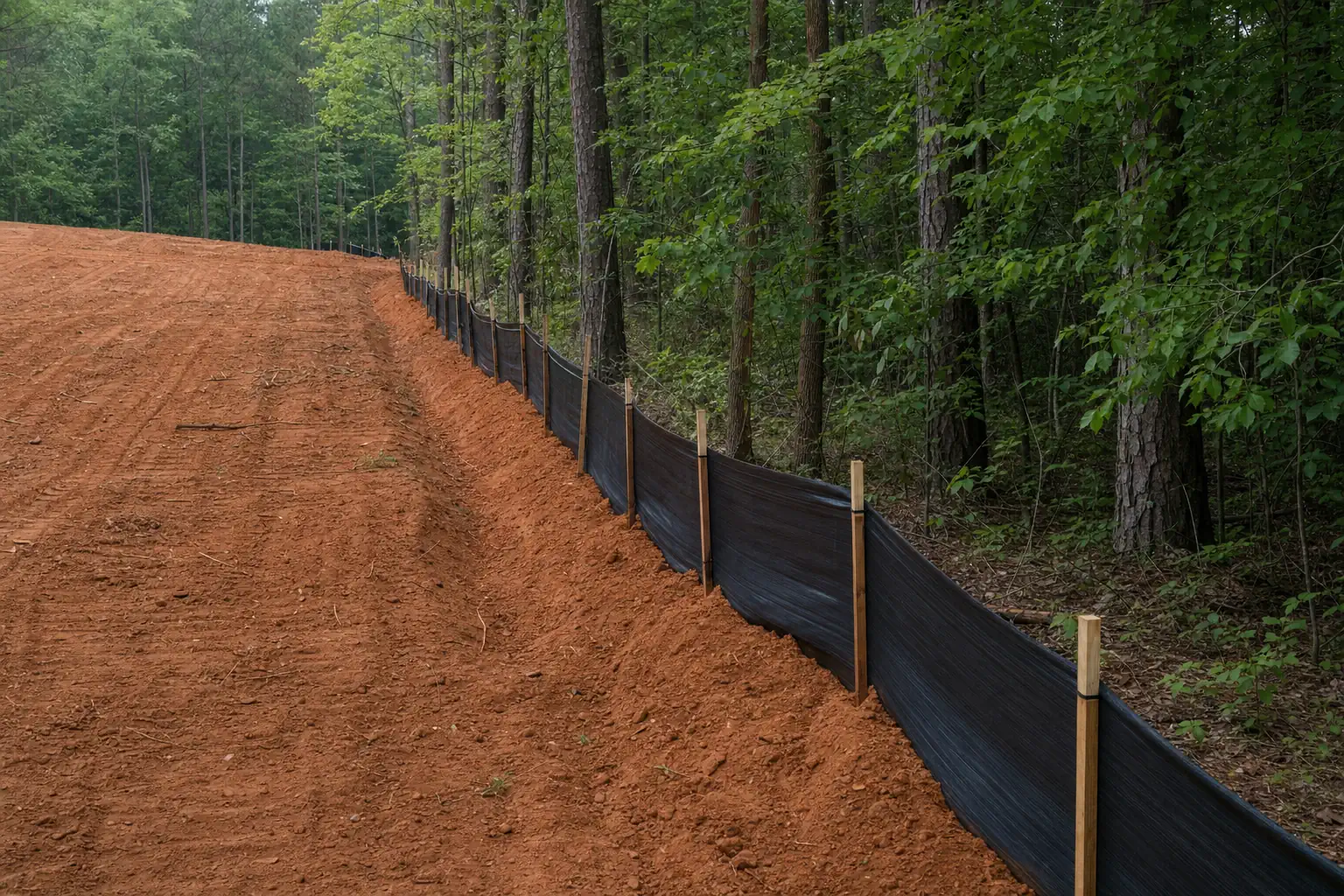
Some parts of the county that drain to a water-supply intake, including stretches of the Big Creek watershed, carry wider buffers than these. We check which rules apply to your creek on the walk, before anything gets scheduled. The county’s clearing and grubbing permit fee is $250, and a permitted site needs an approved erosion plan and silt fence in the ground before work starts. More in stream buffers and clearing near water and how close to a creek can I clear.
How we work a creek job
- 1Map the linesTop of bank, the 25 and 50-foot buffers and the setback, marked on the walk.
- 2Permit and silt fenceErosion plan approved and fence in before the machine starts.
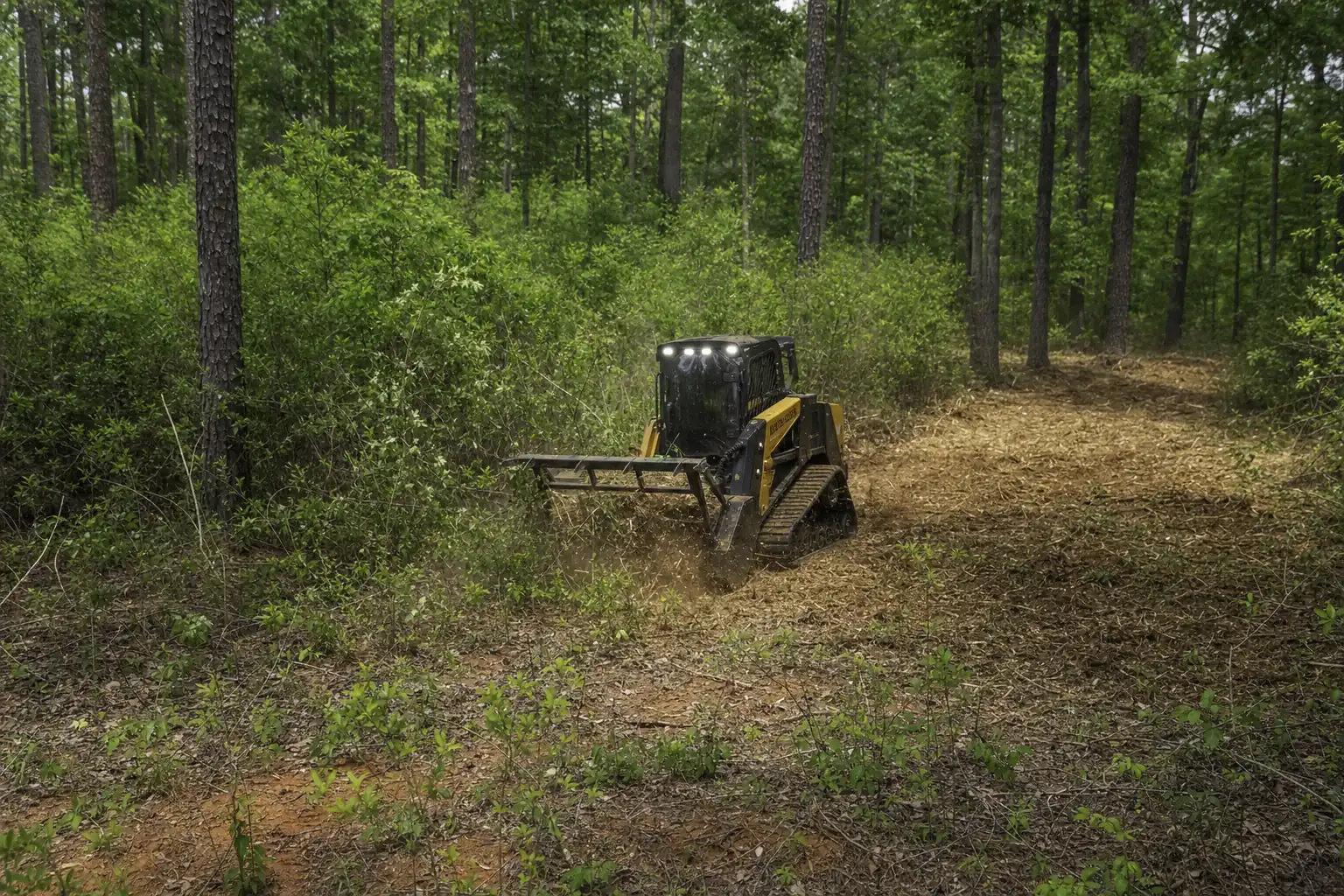
- 3Mulch outside the bufferThe privet beyond the buffer ground in place, chips left to hold the clay.
- 4Treat by the labelLicensed applicators follow the label's rules for use near water.
Privet inside the buffer is the county’s call. If the county allows hand work or treatment there, we plan it with them. If not, it stays, and we work the ground we’re allowed to reach. The machine stays out of the county buffer either way. Outside it, the mulcher grinds privet where it stands and spreads the chips over the ground, which holds red clay far better than bare soil. Where a site drains toward the creek, silt fence runs about $500 to $1,200 an acre.
Ranges are estimates for Forsyth County and the surrounding area based on job density, terrain, access and acreage. Your written quote is the only price that applies to your property.
Herbicide near water
Treating privet near a creek is where the license and the label matter most. Licensed applicators do the work, and the product label sets the rules: which products may be used near water, and how. Georgia’s forestry guidance on kudzu states the basic rule: don’t spray herbicide directly into water or let runoff carry it there. Directed spray on the regrowth keeps the treatment on the privet and off the bank.
Herbicide applications are performed by licensed applicators in accordance with the product label.
The timing helps here too. Privet is semi-evergreen, and in late fall and winter it is the green layer under bare hardwoods, which lets the applicator target it and leave the native plants alone. See the best time to treat privet.
Why it’s worth doing
A privet thicket on a creek bank shades out the native plants whose roots hold the bank. The Forest Service ran its North Georgia privet study in creek bottoms. Where privet was mulched and the regrowth treated, native plants covered about 70 percent of the ground five years later, against about 20 percent where privet stayed, and privet re-infestation held at about 7 percent. A creek bank in native cover is a healthier bank.
What we won’t do
- Run a machine in the buffer. Forsyth County’s buffer is undisturbed, and we treat it that way.
- Start before the permit. Clearing within 200 feet of state waters needs the county’s permit first, whatever the acreage.
- Leave a bank bare. The goal is native cover where the privet was, and the treatment schedule is built around letting it come back.
Once the privet beyond the buffer is under control, the ground still sprouts sweetgum and briars. Mowing once or twice a year keeps it open; see maintenance mowing. The full service is on the Chinese privet removal page and the invasive plant removal hub.
FAQ
More about privet near creeks
- Do I need a permit to remove privet near a creek?
- Usually, yes. Forsyth County exempts clearing under one acre only when it sits more than 200 feet from state waters. Closer than that, the work needs a land disturbance permit, with an erosion plan and silt fence in place first.
- Can you mulch right up to the creek bank?
- No. Forsyth County keeps a 50-foot undisturbed buffer along state waters, and we keep the machine out of it. Anything inside the buffer waits on the county.
- Is herbicide safe to use near a creek?
- Only as the label allows. Labels set which products may be used near water and how. Licensed applicators do the work, with directed spray that keeps the treatment on the privet and out of the water.
- Will taking out the privet make the bank erode?
- Not when it's done in this order. The machine stays out of the buffer, the mulch layer holds the clay outside it, and silt fence goes in where the site drains to the creek. Native plants fill in as the privet dies.