
Planning guide · 8 min read
A North Georgia Food Plot Calendar: When to Clear, Plant and Hunt
On North Georgia hunting land, plant cool-season food plots from late August into September, which means the plot has to be cleared by July so a soil test and lime have time to work. This calendar sets out the year around Cumming: walk in late winter, clear in early summer, plant before the season.
The food plot year at a glance
A plot that goes in on time was cleared months before planting day. Count back from the planting window and the clearing lands in late spring or early summer, with the walk-through before that. This is how the year runs on hunting land around Cumming and across North Georgia.
| When | On the land | What you’re doing |
|---|---|---|
| After the season closes | Thinning, TSI and firebreaks on dry ground | Walking the tract with the leaves off |
| March and April | Plots, lanes and trails flagged | Booking the clearing; warm-season plots can go in from mid-April |
| May to July | Plots cleared, stumps handled, lanes and trails cut | Pulling a soil sample once the plot is open |
| July and August | Lime spread and worked in | Mowing lanes and trail edges before bow season |
| Late August to September | Cool-season plots planted | Cereals first, then clovers and brassicas |
| The season | Machines off the property | Hunting |
The rule we work to is simple to state: plan in spring, have the plot cleared by July, plant in late August or September. A call in September usually means a plot for next year, or a small one on ground that is already open. The rest of this page goes month by month.
Late winter: walk the land with the leaves off
The weeks after the season closes are the best time to see a tract for what it is. With the leaves down you can read the ground: rock ledges, gullies, old fence wire, creek channels and the trails deer have worn between bedding and feed. Beds show in the broom sedge and honeysuckle thickets. Rubs and scrapes from the fall are still there to read.
Walk it with a map and mark what you find:
- Where you hunt from. The box stand or ladder each plot and lane will be shot from, and the route you’ll walk in.
- Where deer bed. Thick cover you will leave alone. Plots and trails go around it.
- Sun on the plot site. A plot boxed in by tall timber sits in shade much of the day and grows thin forage.
- Creeks and wet ground. Streamside zones change where a machine can work and what paperwork a plot needs.
- Access. How a trailer and a tracked machine get from the road to the plot, and where the gates are.
Late winter is also when the timber work fits. Thinning and TSI (timber stand improvement) and firebreak lines go in after the season, while the ground is dry and nobody is hunting. The catch is rain. North Georgia gets roughly 50 to 55 inches a year, and saturated red clay stops tracked machines. We wait out the wet weeks instead of rutting your trails.
Spring: plan the plots and book the machine
By March you should know how many plots you want, where they go, and how you will plant them. That last question decides the clearing. A clover plot you mow and frost-seed for years can keep its stumps at the mulch line. A plot you disk and replant every fall needs the stumps ground below grade or pulled, because a disk catches on every one of them.
Flag it before the machine shows up: plot corners, lane lines off each stand, trail routes, and the screening cover that stays. The guide to laying out trails, shooting lanes and screening cover walks through each piece, and how big a food plot should be covers sizing.
Warm-season plots, such as soybeans and peas, go in from mid-April to mid-June. If you want one this year, the ground has to be open by spring, which means clearing it over the winter. Most of our plot customers plant cool-season plots and clear in summer.
May to July: the clearing window
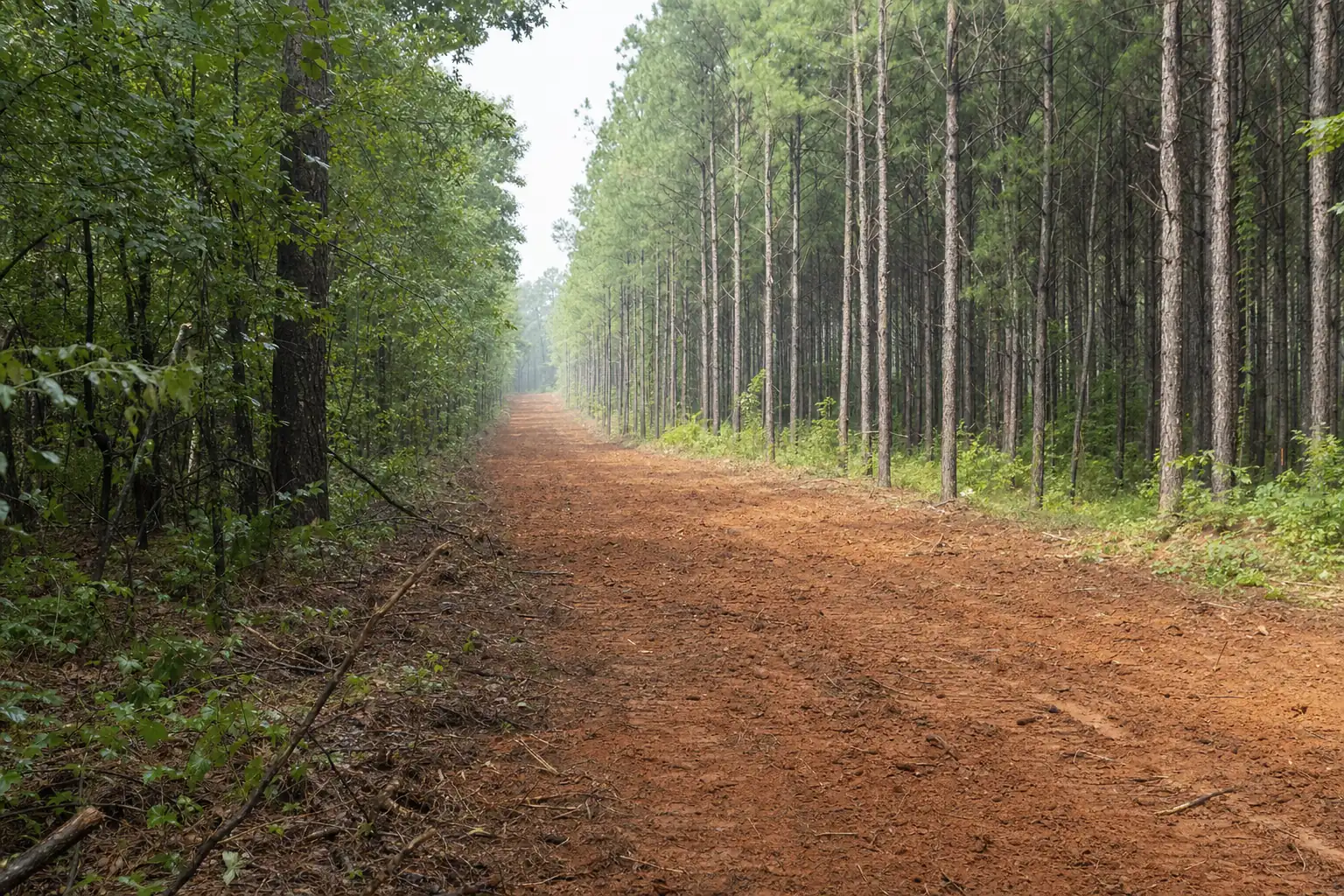
This is when we open plots, cut lanes and run trails. The work itself goes like this:
- Brush and small trees mulched. A forestry mulcher grinds privet, briars, sweetgum and trees under about 8 inches where they stand.
- Bigger trees felled first. Past 8 to 10 inches, a tree gets cut down and the trunk dealt with on the ground.
- Stumps to fit your planting. Left at the mulch line for a mowed plot, ground below grade on the seedbed for a disked one.
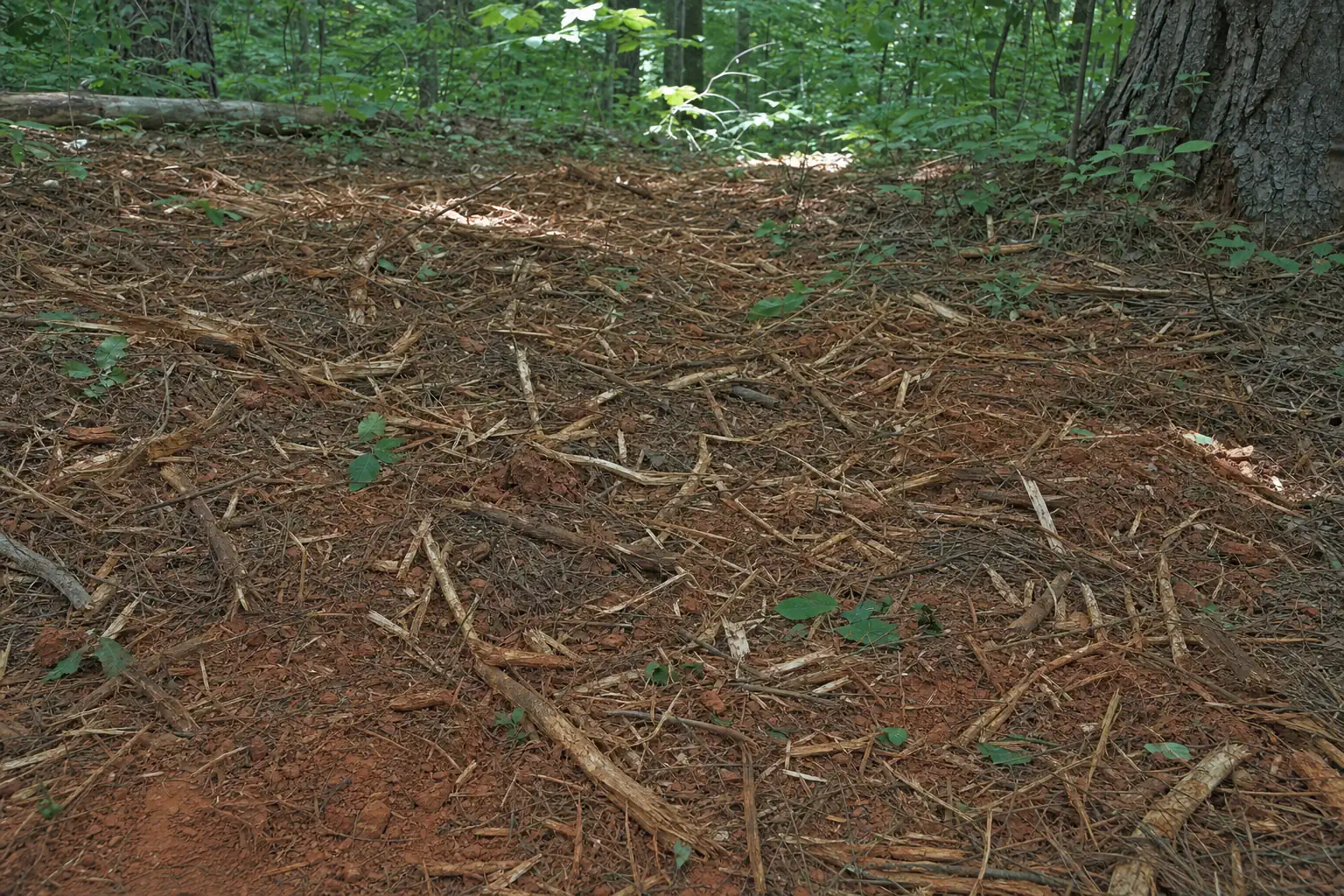
- A finish you can plant. A finer chip in a thinner layer over the plot, so lime and seed reach the clay. More in mulch depth and seeding.
- Water bars on trails. Trails on slope get berms and turnouts so summer storms don’t cut gullies down them.
Two rules shape a summer job here. Georgia’s summer burn ban covers Forsyth County from May 1 to September 30, so plot debris can’t be piled and burned; we mulch it in place anyway. And a plot can need county paperwork. Forsyth County requires a land disturbance permit for clearing an acre or more, or any clearing within 200 feet of a creek, with exemptions for farming and forestry. We work out which side of that line your plots fall on during the walk, before anything is scheduled.
Permit thresholds, fees and buffer widths are those published by Forsyth County and the State of Georgia as of November 4, 2026. Confirm current requirements with the issuing authority before work begins. This is not legal advice.
The numbers that set a summer plot job
- By July
- Plot cleared, so lime has time to work
- 8 in
- Trunk size where trees get felled before mulching
- May 1 to Sep 30
- No land-clearing burns in Forsyth County
- Late Aug to Sept
- Cool-season planting in North Georgia
July and August: soil test and lime
Pull a soil sample as soon as the plot is open, and spread the lime the test calls for. Lime needs weeks in the ground before it does much for a seedbed, which is the whole reason the clearing has to finish by July. A plot cleared in late August and limed the same week gets planted into soil that hasn’t changed yet.
Work the lime in on disked plots. On a mulched clover plot, spread it on top and let the rain carry it down. Either way, keep an eye on bare clay through the summer storms. A freshly cleared plot on a slope can wash before anything grows on it, and the trail edges above it carry water straight down if nobody set water bars.
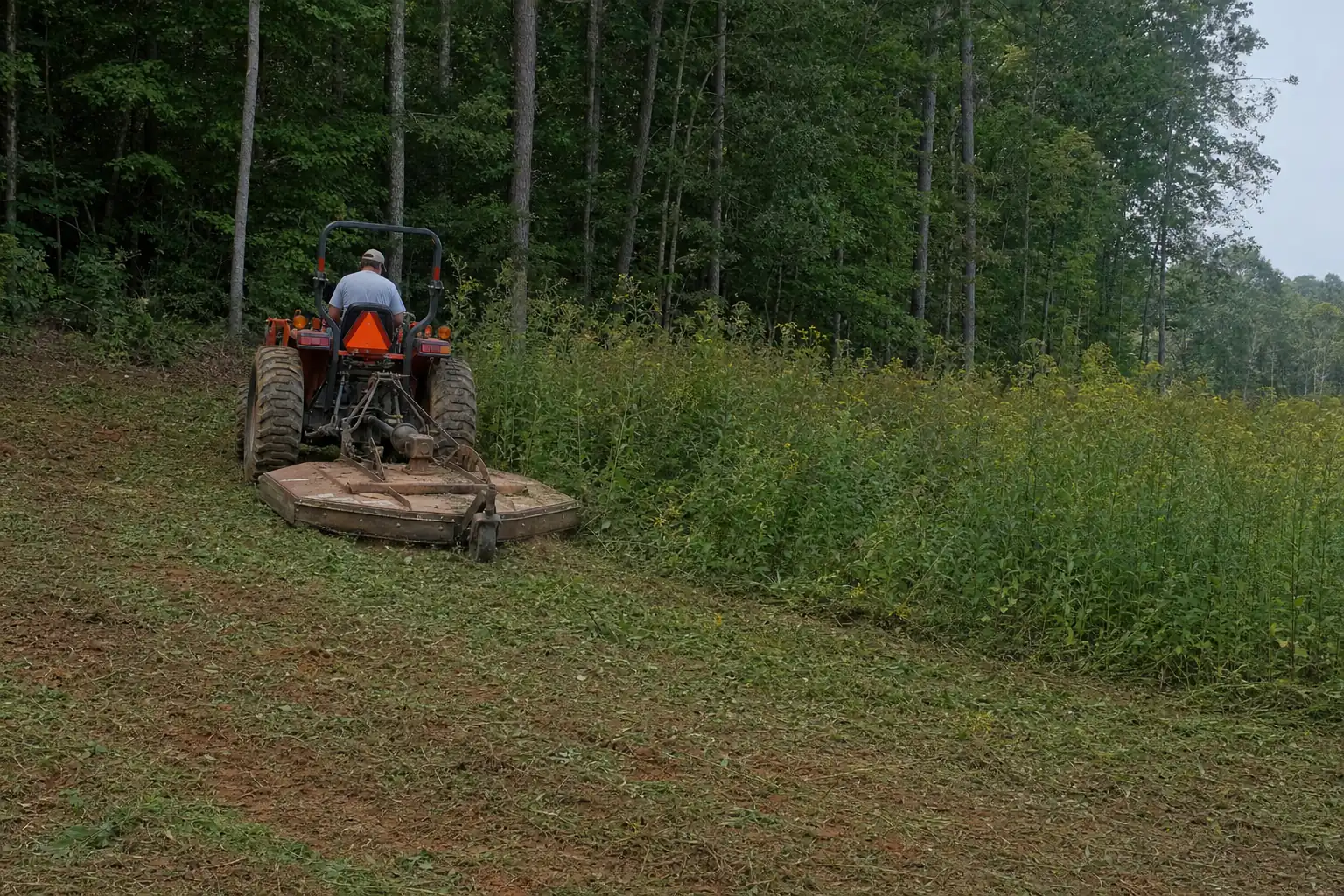
July and August are also the months to mow. Lanes and trail edges cleared last year have grown back by now, and one pass before bow season keeps them open.
Late August to October: the planting windows
Cool-season plots are the main event on North Georgia hunting land. The windows below come from a Southeast extension planting guide. North Georgia frosts earlier than middle and south Georgia, so plant toward the front of each window here.
| Plot type | Planting window | What it means for clearing |
|---|---|---|
| Cool-season cereals (wheat, oats, rye) | Mid-August to mid-October | Cleared and limed by early August |
| Clovers and brassicas | September to mid-October | Cleared by July |
| Warm-season (soybeans, peas) | Mid-April to mid-June | Cleared over the winter before |
Plant into a firm, limed seedbed after a rain if you can. A plot planted into dust in early September waits for the weather, and the weather in a dry year can push it later than you want.
The season: machines out
Once the season opens we stay off your property unless you call us in. A tracked machine running near your stands in October undoes a summer of planning. Georgia sets its archery and firearms dates each year in the state hunting regulations, and they move, so check the current regulations before you schedule any late work.
If you call late in the summer, we tell you what still fits. Lanes cut on open ground, trail edges mowed, or a small plot on ground with light brush can usually go in before the season. A new plot in standing timber usually can’t be cleared, limed and planted in time, and we’d rather book it for next summer than rush it.
What goes wrong when the calendar slips
Most plot problems we hear about trace back to a late start. Four of them come up every year:
- Planting into unlimed clay. The plot gets cleared in late August and seeded the next week. The forage comes up thin and yellow, and the lime spread that week starts working after the season is half over.
- A deep chip mat on the seedbed. A rushed job leaves coarse chips several inches deep. Seed sits on top of the mulch, dries out and never reaches soil.
- Stumps under the disk. A plot cleared for mowing gets disked anyway because the plan changed. The disk rides up on every stump and the seedbed comes out patchy.
- Noise in the woods. A machine clearing lanes near your stand in late September moves deer off the very spots you cleared it for.
None of these need a bigger budget to fix. They need the walk-through in spring and the clearing finished by July. If one of them already happened on your land, tell us on the walk and we’ll plan the fix into this year’s work.
Every summer after: keep it open
Cleared ground grows back. Sweetgum, privet, blackberry and greenbrier sprout from the roots the first spring, and plot edges creep inward every year if nobody pushes them back. Pines don’t resprout once cut; most hardwoods do.
- Lanes and trails. One mowing each summer, before bow season, keeps them shootable and quiet to walk.
- Plot edges. Mow or bush hog the margin when you work the plot.
- Firebreaks. Mow or re-disk once or twice a year so they still stop fire and still work as trails.
We run that follow-up as bush hogging and maintenance mowing, on the same contract as the clearing if you want it.
What plot clearing costs, and when to call
Plots, lanes and trails price like other mulching work, by trunk size, stem count, slope and access. Most hunting land falls in the light to medium bands.
| Work | Range |
|---|---|
| Light brush, privet, saplings | $1,200 to $2,500 per acre |
| Mixed growth, trees 4 to 8 inches | $2,500 to $4,000 per acre |
| Stump grinding on the seedbed | $400 to $800 per acre |
| Machine day rate | $1,800 to $3,000 |
| Small jobs | $1,200 to $2,000 minimum |
Ranges are estimates for Forsyth County and the surrounding area based on job density, terrain, access and acreage. Your written quote is the only price that applies to your property.
Booking in spring helps the price as well as the schedule. We can put your plots, lanes and trails on one trip with the machine, instead of a rush job in August. The hunting and timber land page covers everything else we do on a hunting tract.
- 1Call in springSend the address, a few photos and the stands you hunt from.
- 2Walk and flagPlots, lanes, trails and the cover that stays, marked with you.
- 3Clear by JulyPlots opened, stumps handled, debris mulched in place.
- 4You lime and plantThe machines are long gone by planting day.
Keep reading