Straight answer · 3 min read
Is Forestry Mulching Good for Deer Habitat?
In the right places. On North Georgia hunting land, forestry mulching opens food plot edges, shooting lanes, trails and firebreaks with no burn pile, and the floor resprouts in hardwood sprouts and briars at deer height. Mulching a whole tract makes poor habitat, because deer still need thick bedding areas and screening cover left standing.
Hunters ask this because they’ve seen a mulched tract and can’t decide whether it looks like good deer woods or a park. Both reactions are fair. What decides it is where the machine went and where it didn’t.
What a mulcher does to the woods floor
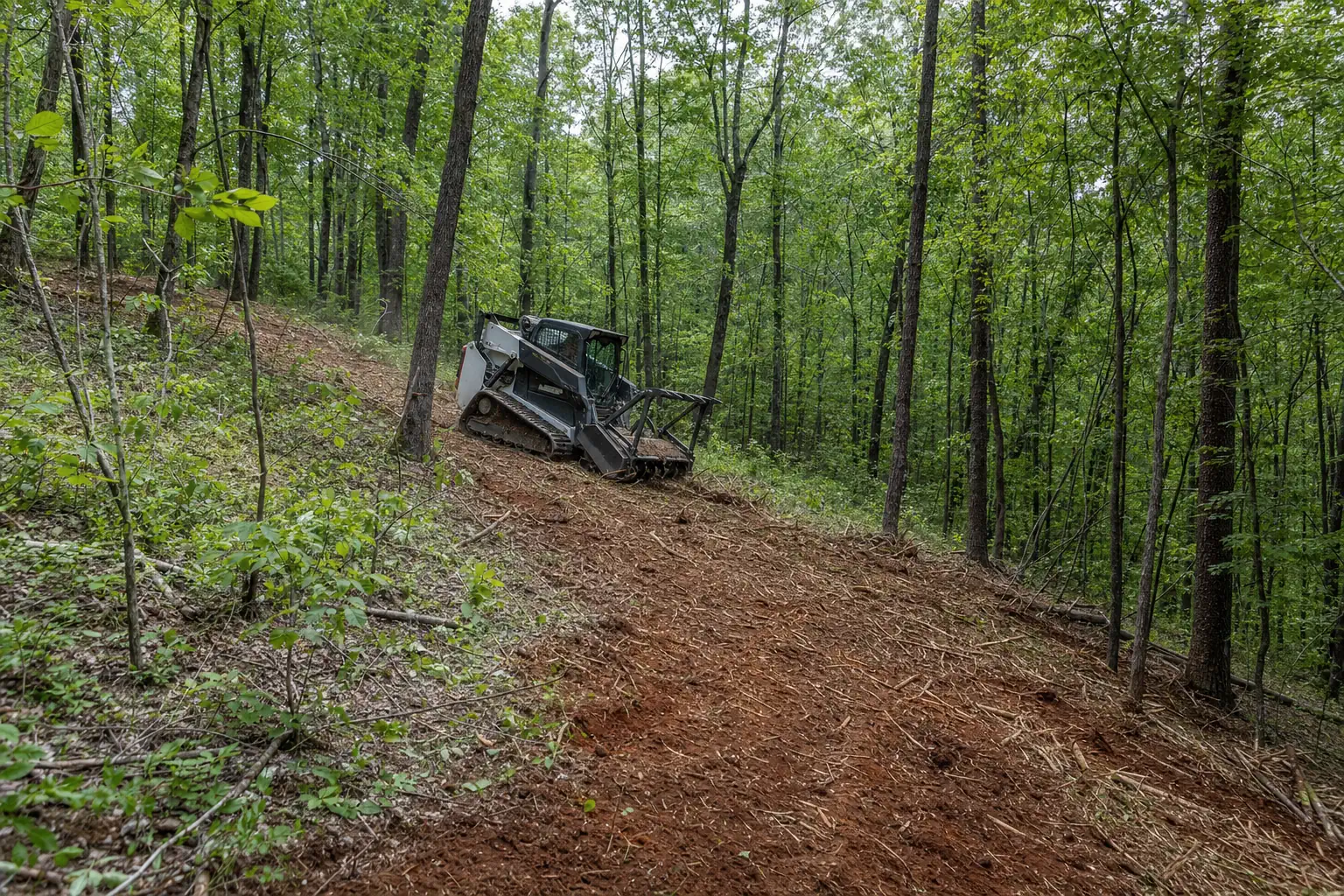
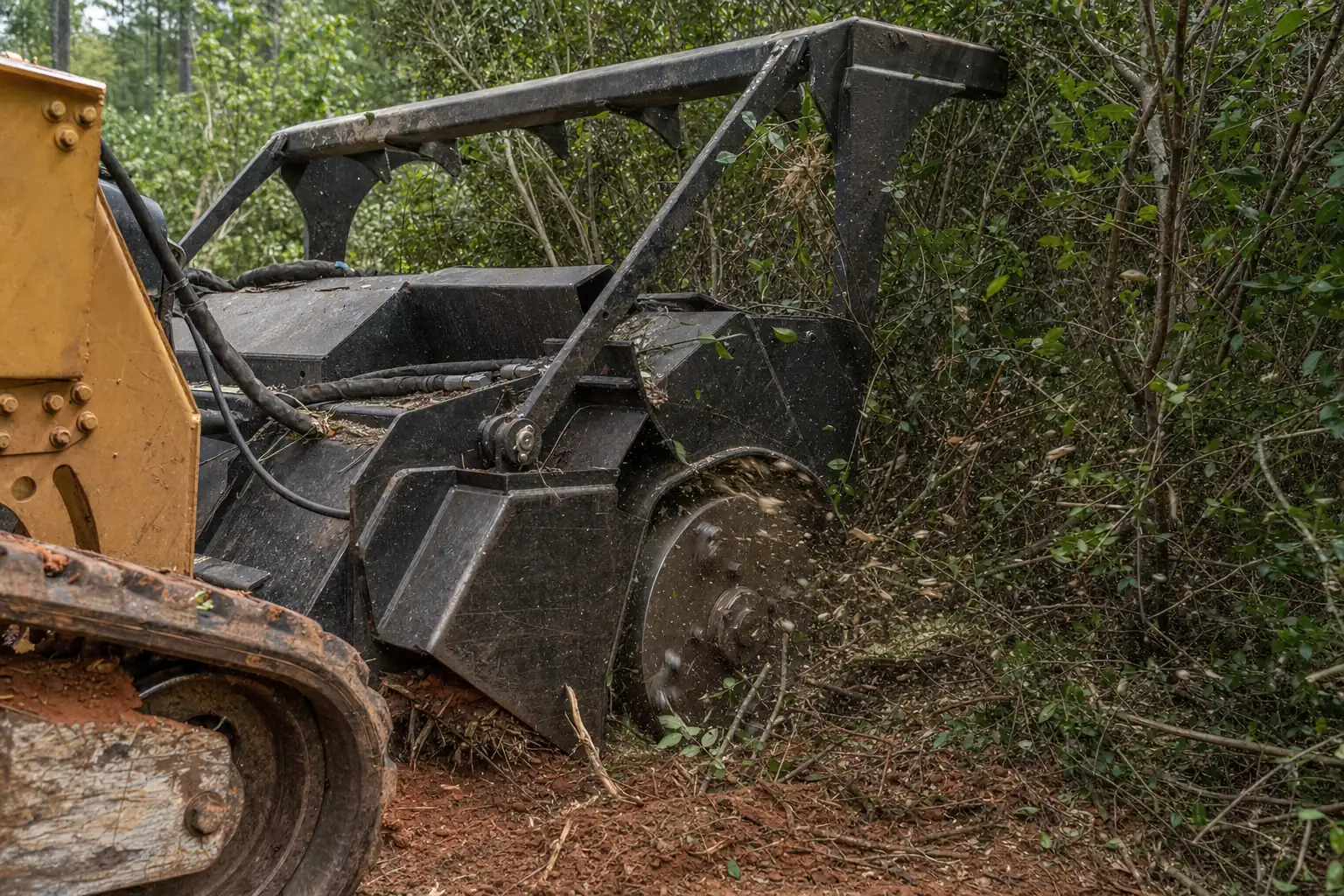
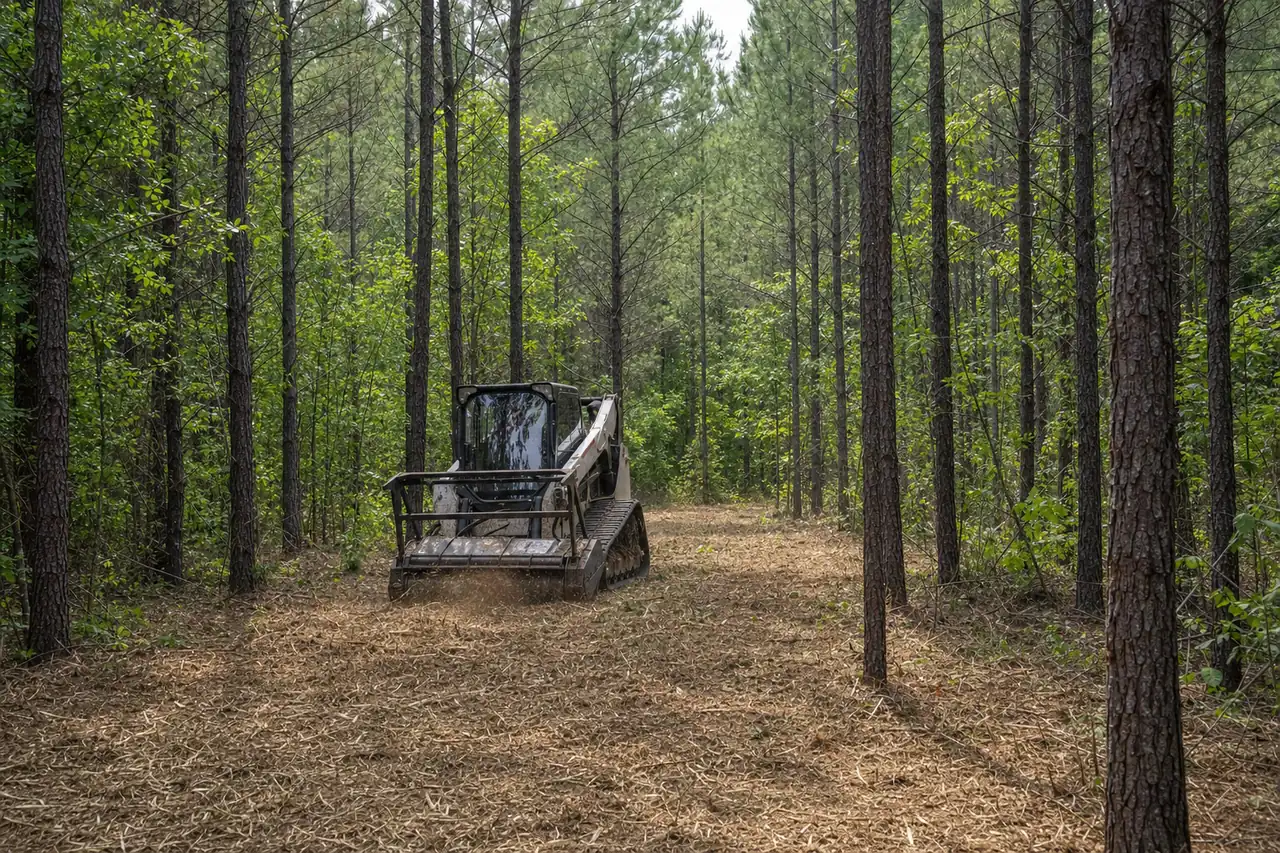
A forestry mulcher grinds brush and trees under about 8 inches where they stand and leaves the chips on the ground. Stumps end up at the mulch line. The roots stay in the soil, so most of what got mulched comes back.
- Hardwoods resprout. Sweetgum, red maple and oak send up sprouts from the stumps and roots the next spring.
- Briars and vines return. Blackberry, greenbrier and honeysuckle come back fast in the new sunlight.
- Privet comes back thick. Without a herbicide follow-up, privet resprouts into the same thicket it was.
- Pines don’t. A mulched pine stays gone.
For a season or two, that regrowth sits at deer height, and deer browse it. After that the sprouts grow past reach and the ground shades back over. Mulching by itself gives you a short burst of browse and an open floor, which is a different thing from habitat that holds deer through the year.
Where mulching helps a hunting tract
Mulching earns its keep on the openings and lines you need to hunt the land. These are the jobs it does well:
| Job | What mulching does | Watch for |
|---|---|---|
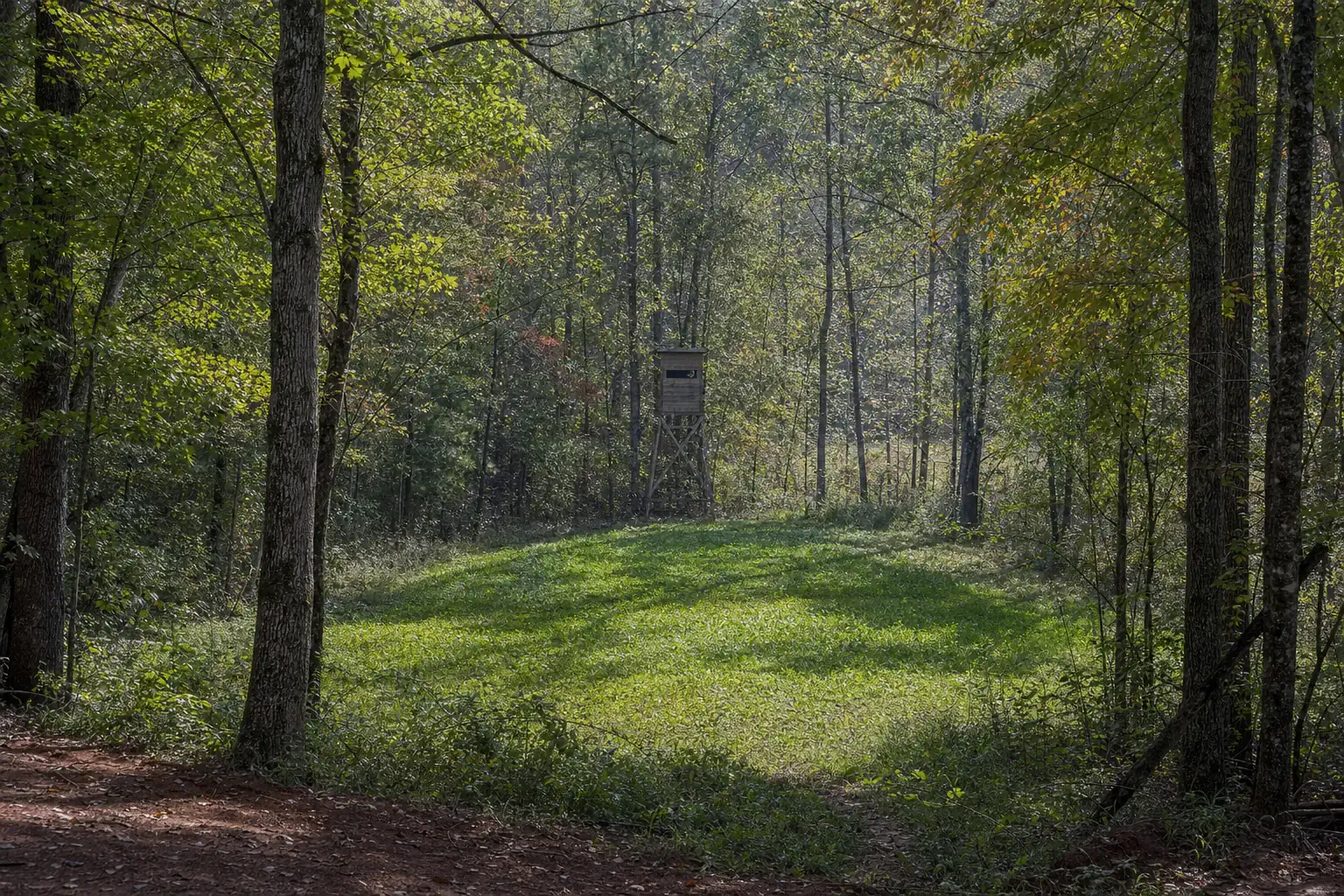
| Food plot openings | Clears brush and small trees across the plot, no burn pile | Stumps need grinding if you’ll disk |
| Plot edges | Softens a hard woods edge into brushy cover deer step out of | Leave the edge rough, not cleaned up |
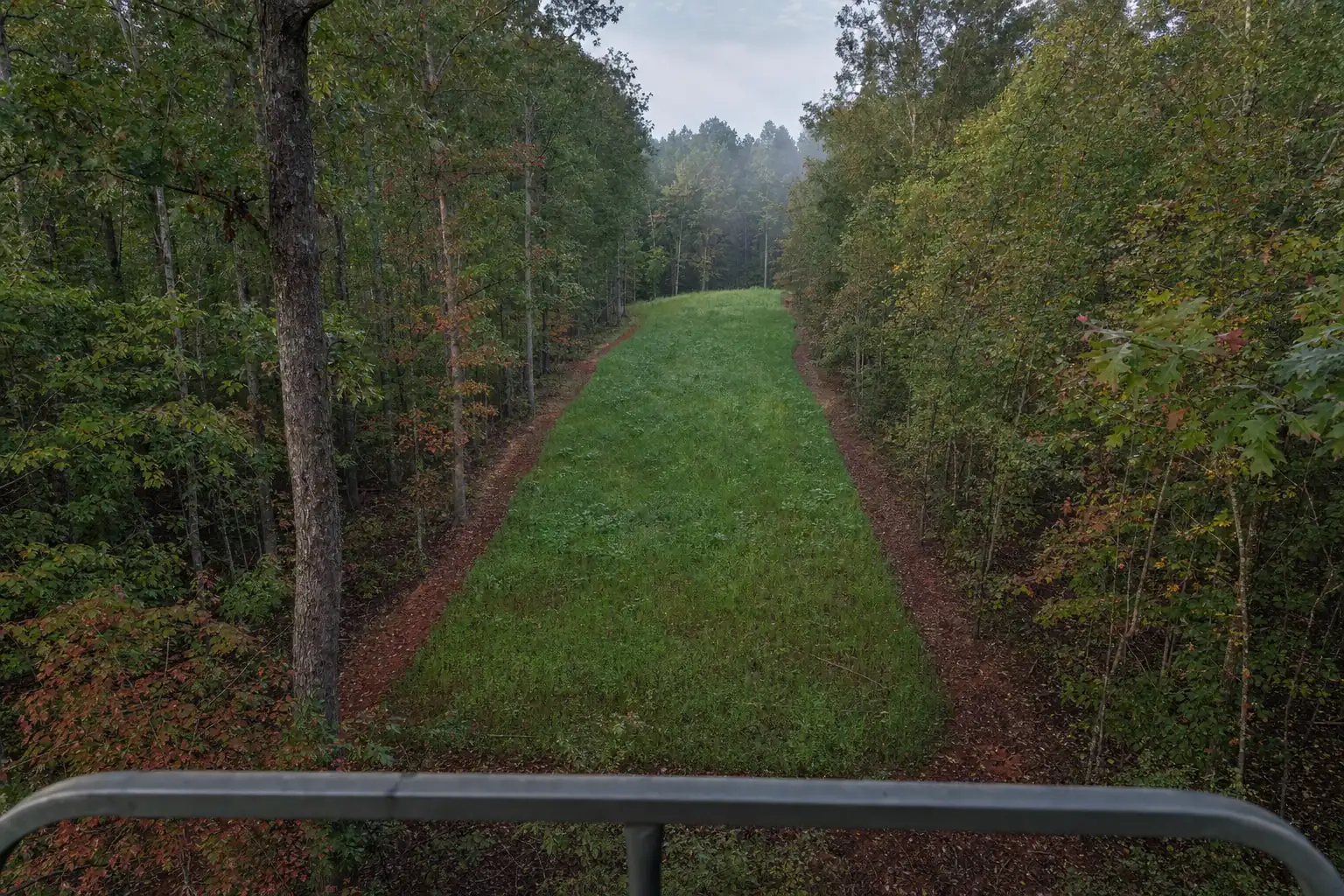
| Shooting lanes | Opens a narrow line of sight under standing timber | Lanes too wide read as roads |
| Access trails | Cuts a quiet route to the stand | Water bars on slope |
| Firebreaks | Clears the brush off a line before it’s cut to soil | Mulch still burns |
| Understory under thinned pines | Lets light reach the ground after a thinning | Follow the forester’s prescription |
The guide to laying out hunting land covers how lanes, trails and plots fit around the stands.
Where mulching hurts
Deer need thick cover to bed in and to move through in daylight. A machine on site makes it tempting to open everything up, and that’s the most common mistake we see on hunting land around Forsyth County.
- Bedding areas. Thickets, briar tangles and young pine stands where deer lie up during the day. Mulch them and the deer bed on the neighbor’s land.
- Screening cover. Thick growth along roads, property lines and the trail to your stand. It hides the plot and hides you.
- A whole tract at once. Open woods with a chip floor look tidy and hold fewer deer in daylight.
- A deep chip mat. Coarse chips piled several inches deep slow the browse and briars you were hoping for.
We flag bedding areas and screening cover on the walk and keep the machine out of them.
Mulching as part of a plan
On land managed for deer and timber, mulching works best as one tool among several. Thinning a crowded pine stand through timber stand improvement lets light reach the ground for years, which mulching alone can’t do. Firebreaks set up a prescribed burn, which a forester may plan to bring back browse on a cycle. Herbicide on privet keeps a mulched creek bottom from closing back into a privet wall.
Herbicide applications are performed by licensed applicators in accordance with the product label.
- 1Mark what staysBedding areas and screening cover flagged before anything is cut.
- 2Open what you huntPlots, lanes, trails and firebreaks mulched in place.
- 3Let light inThinning in the pine stands, to the forester's plan.
- 4Keep it workingMowing each summer and privet follow-up where needed.
Openings grow back on their own schedule. One mowing each summer before bow season keeps lanes and trails open; that’s bush hogging and maintenance mowing. Everything else we do on hunting land is on the hunting and timber land page.
What it costs
Plot, lane and trail work on most hunting land is light to mixed growth: $1,200 to $2,500 an acre for light brush, privet and saplings, and $2,500 to $4,000 for mixed growth with trees 4 to 8 inches across. Narrow work spread across a tract often goes by machine time, at $150 to $300 an hour with an operator.
Ranges are estimates for Forsyth County and the surrounding area based on job density, terrain, access and acreage. Your written quote is the only price that applies to your property.
FAQ
More about mulching and deer
- Do deer eat the regrowth after mulching?
- Yes, for a while. Sweetgum, maple and oak sprouts and briars come up at deer height the spring after mulching, and deer browse them. After a season or two the sprouts grow past reach, so the browse fades unless the ground gets mowed, burned or thinned again.
- Can I plant a food plot on mulched ground?
- Yes, if the plot gets a finer chip and a thinner layer so lime and seed reach the clay. If you plan to disk every fall, the stumps need grinding below grade first. Clear by July so lime has time to work before late August or September planting.
- Should I mulch my bedding areas?
- No. Bedding areas are the thick cover deer use during the day. Mulch them and deer move off your land in daylight. The exception is a solid privet wall with nothing under it, which a forester or biologist may prescribe opening in part.
- Does mulching kill privet?
- No. Mulching levels the thicket, but the roots stay and privet resprouts. The regrowth comes up evenly, which makes a herbicide follow-up easier. That treatment is done by licensed applicators per the label.