Straight answer · 3 min read
Which Trees Resprout After Mulching and Which Don’t?
Hardwoods resprout and pines don't. On land Sawnee Land Clearing mulches around Cumming, sweetgum, maple, oak, beech and privet send up shoots from the roots, most by the first spring, along with blackberry and greenbrier. Cut pines stay dead. Mowing once or twice a year and a privet treatment keep the ground open.
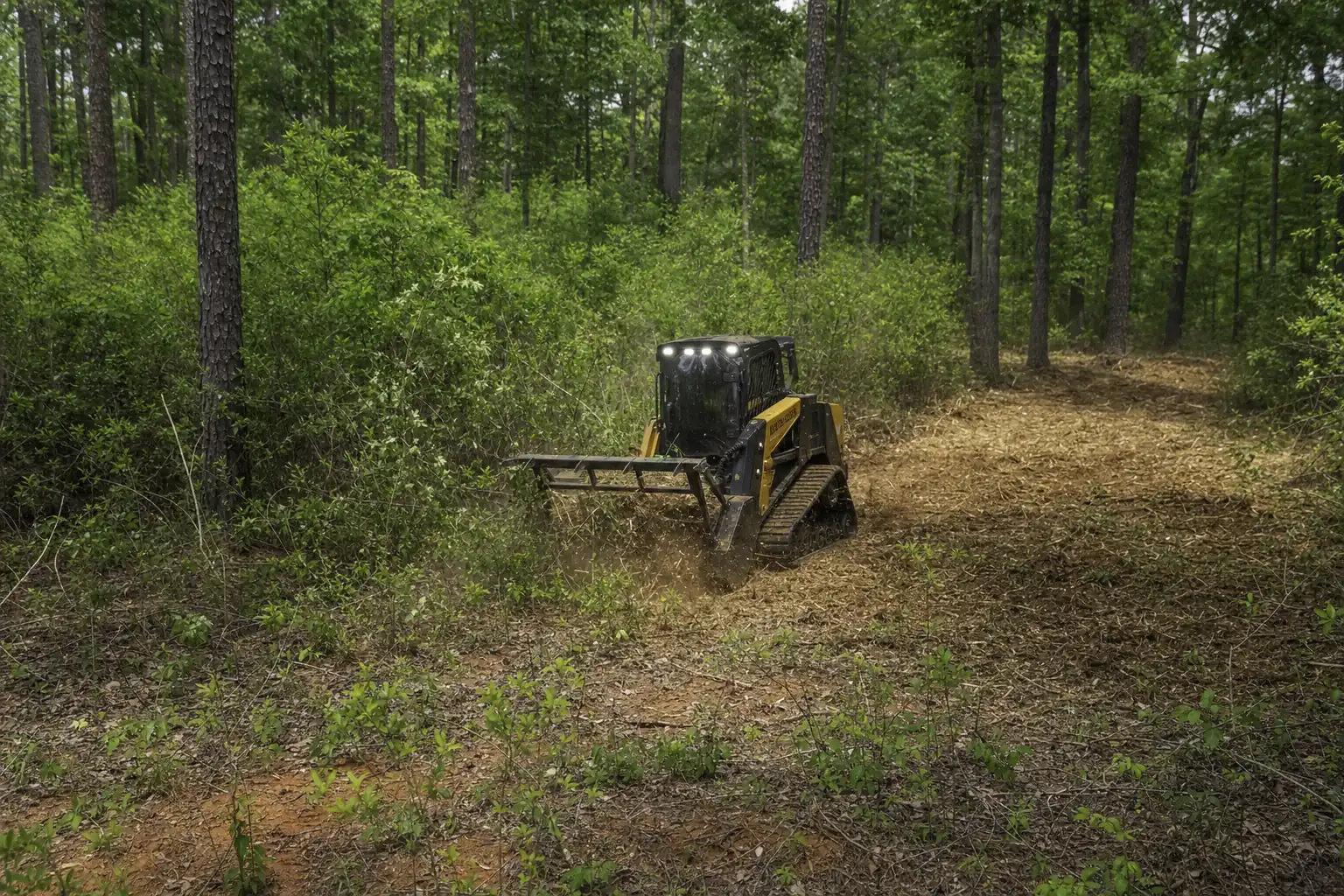
A forestry mulcher grinds the tree to the ground and leaves the root system alive. Whether that tree comes back depends on whether the species can sprout from its roots and stump. Alabama Extension says it for brush mulching: the roots stay, so sprouting is nearly certain. The list below covers the plants we see most on Forsyth County land and what the sources and landowners report about each.
What comes back and what doesn’t
| Plant | After mulching | What keeps it down |
|---|---|---|
| Sweetgum | Sprouts from the roots the first spring | Mowing once or twice a year |
| Maple | Sprouts from the roots the first spring | Mowing once or twice a year |
| Oaks | Sprout from the roots | Mowing once or twice a year |
| Beech | Landowners report root sprouts a year or two later | Mowing |
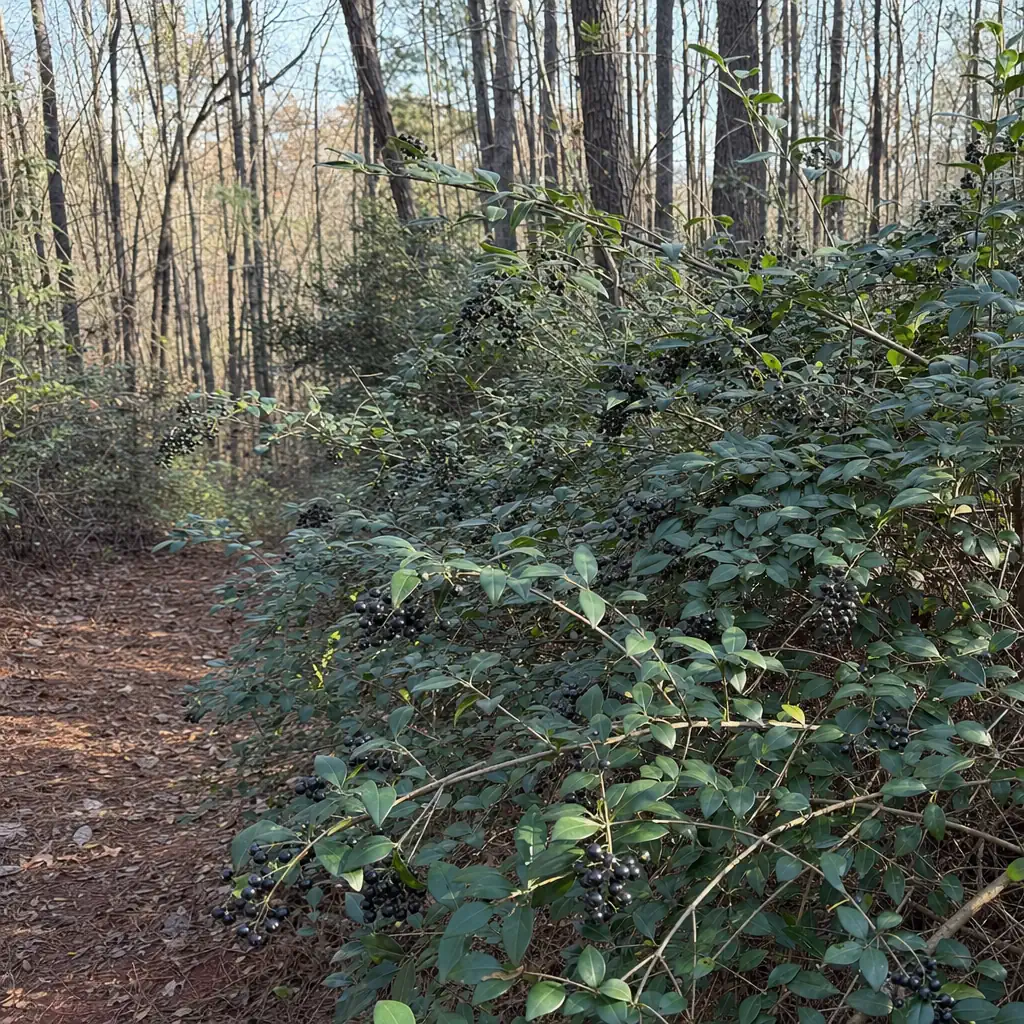
| Chinese privet | Comes back thick and even; seedlings follow | Treatment by licensed applicators |
| Blackberry and greenbrier | Back from the roots within the season | Mowing |
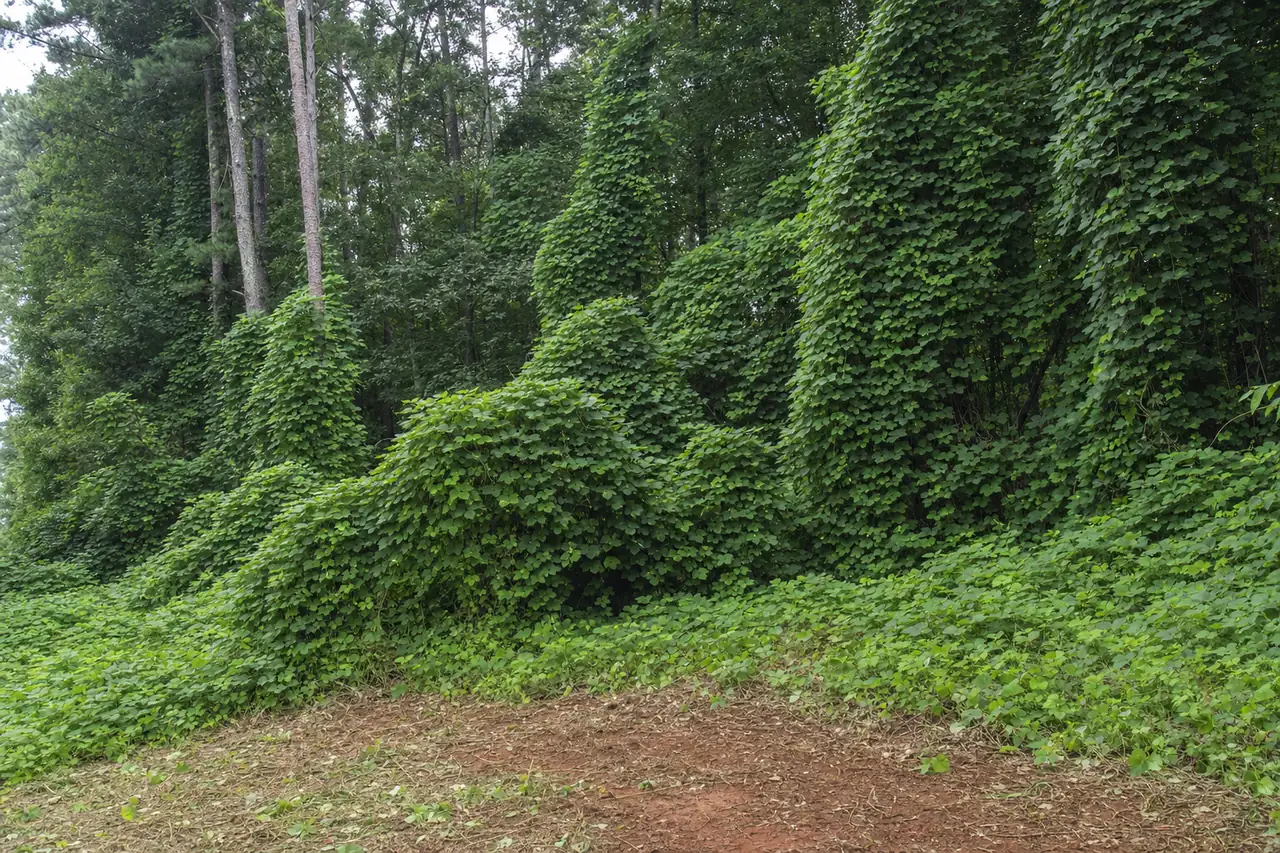
| Kudzu | Grows back from root crowns; roots reach 9 feet | Repeated treatment over 3 to 10 years |
| Pines | Cut pines don’t resprout | Nothing for the stump |
Our research didn’t cover every species. Poplar, dogwood, hickory and cedar aren’t in the sources we use, so we tell you what we see on your land at the walk instead of guessing here.
Herbicide applications are performed by licensed applicators in accordance with the product label.
Why pines stay dead
Southern pines don’t sprout from a cut stump, so a mulched pine is gone. That makes pine thickets and old pine plantings some of the cleanest ground to mulch, and a mixed stand that is mostly pine needs less upkeep than one that is mostly sweetgum. Seed from pines left standing nearby can still land on the bare spots and come up as seedlings, which mowing handles in the first years.
Privet is the one to plan around
UGA Extension notes that mulching levels a privet thicket but leaves the roots, so it regrows. The regrowth comes up uniform, though, which makes it easier to treat than an old thicket. Mulching privet in the fall can spread its seed, and seedlings show up the year after.
So privet gets a follow-up treatment, applied by licensed applicators following the label. Georgia forestry guidance says two treatments clear most stands, with spot checks for seedlings after.
Mowing alone won’t kill privet; it resprouts every time it’s cut. The Chinese privet removal page covers the full program, and spraying after mulching covers timing.
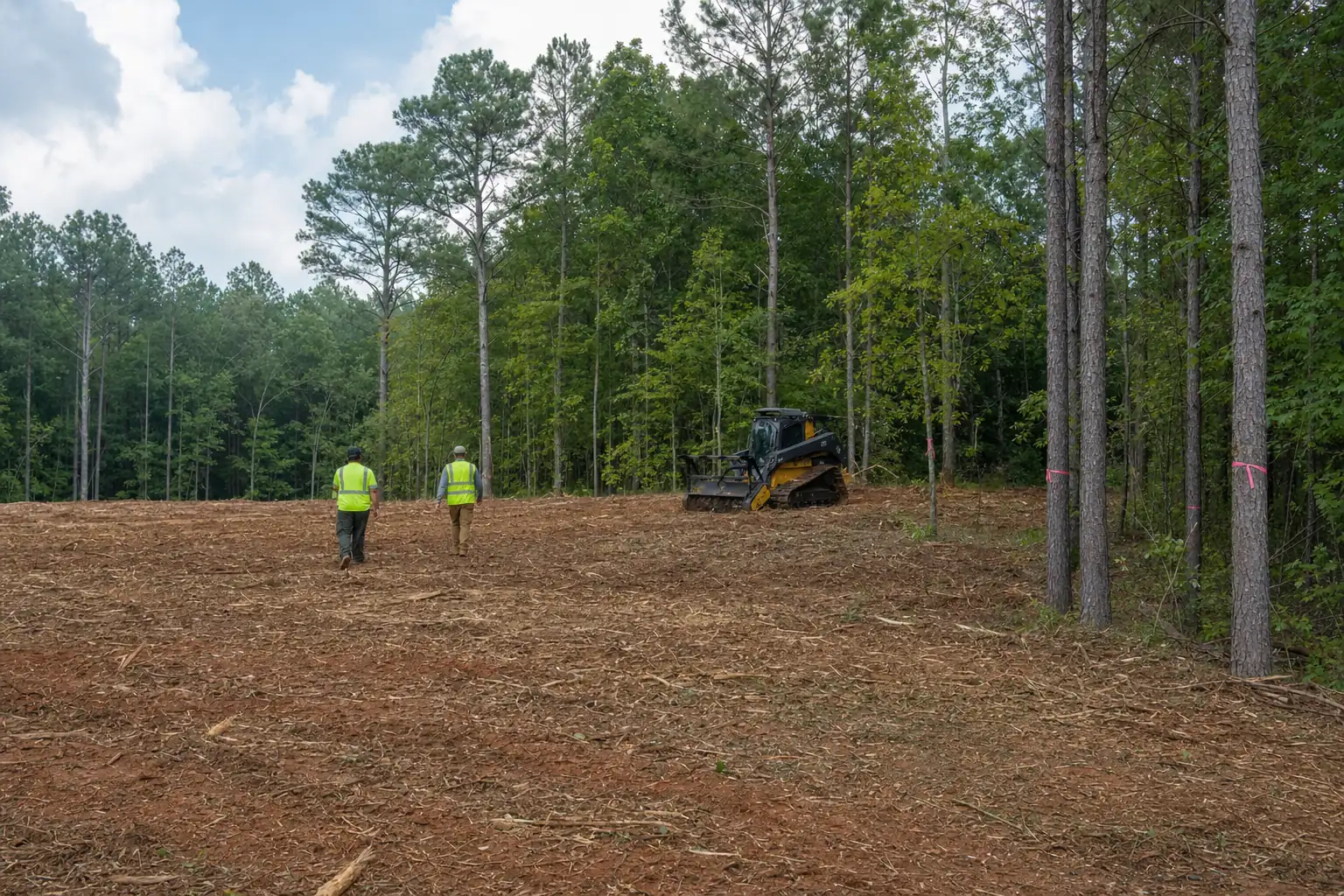
What a mulched acre looks like a year later
- 1WinterMulched ground, stumps at grade, keepers standing.
- 2First springHardwood, privet and briar sprouts come up through the chips.
- 3SummerSprouts knee-high and still soft, the right stage for a bush hog.
- 4Fall and winterA second cut where growth is fast, then privet treated in the dormant season.
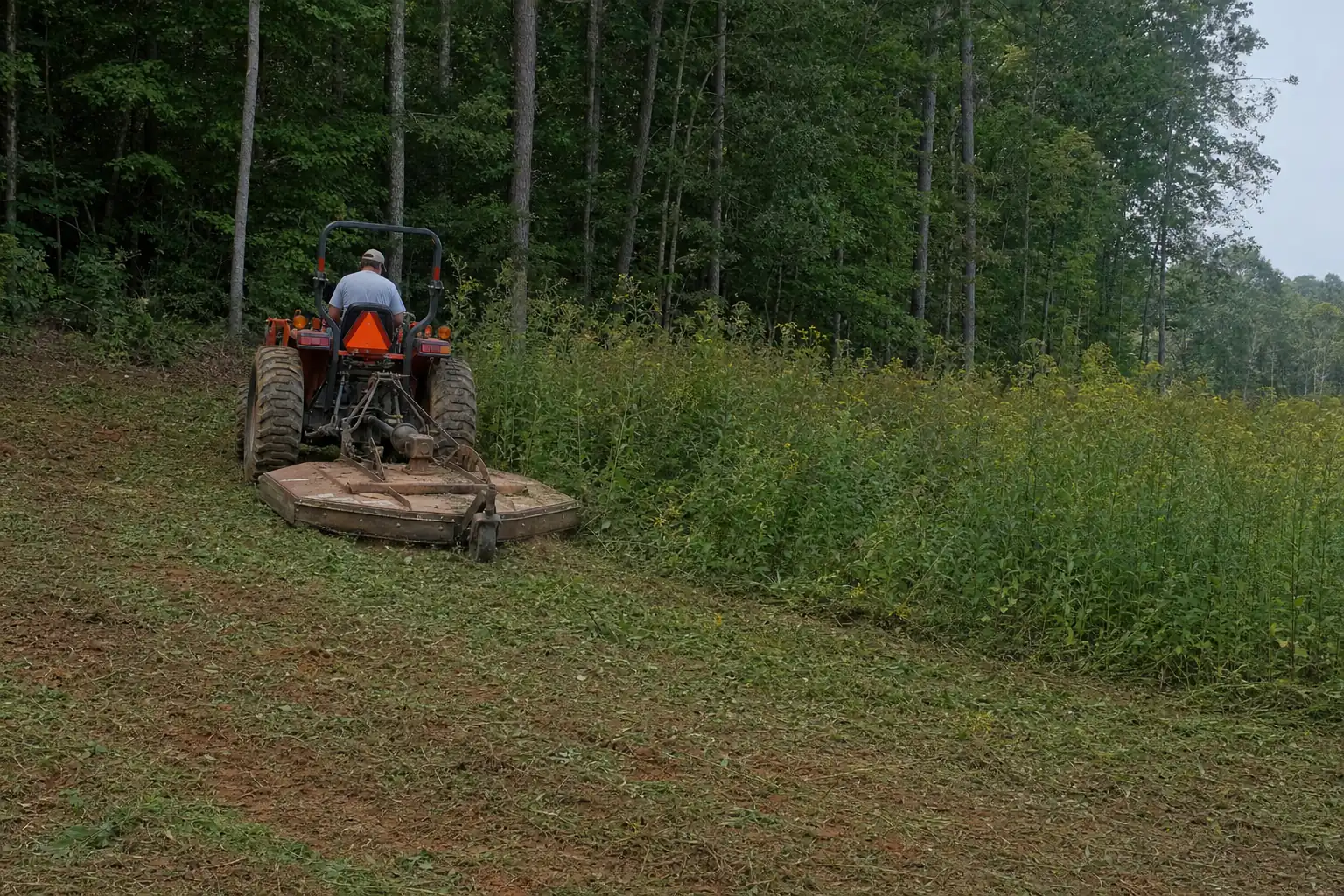
Left alone, those sprouts harden into saplings within a few years and the land needs the mulcher again. Bush hogging and maintenance mowing on an annual schedule costs less than clearing twice. The mowing frequency answer covers how many visits.
What this means for your quote
The mix on your land sets the upkeep. A pine thicket mulched for a view needs little after the first year. An old field of sweetgum and privet needs mowing twice a year at first and a privet treatment for more than one season. Mixed hardwood ground falls between. We note what we see on the walk and put the follow-up on the same contract as the clearing, so the first pass and the upkeep get planned together instead of discovered next June.
Using regrowth on purpose
Some owners want sprouts. Hunters value the browse along plot edges, and a thinned woods with young growth underneath looks different from a park. On those tracts we mulch the lanes, trails and plot edges and let the cover come back where deer bed. Mulching alone doesn’t make deer habitat, though; see forestry mulching and deer habitat. More on the method itself on the forestry mulching page.
FAQ
More about resprouting
- Will grinding the stump below grade stop it sprouting?
- Not for most hardwoods. The sprouts come from the roots, and the roots stay in the ground whether the stump is ground flush or below grade. Mowing the sprouts, or treating privet, is what keeps them down.
- How long do hardwood sprouts keep coming back?
- Our research found no fixed number of years for each species. What landowners commonly report is that regular mowing wears sprouts down over several seasons, while sprouts left alone turn back into saplings within a few years.
- Does mulching spread privet?
- It can. Alabama Extension notes that mulching privet in the fall can spread seed, and seedlings show up the year after. That is one reason privet gets a follow-up treatment for more than one season.
- Is resprouting bad for deer?
- Hunters often like the browse, but sprouting hardwood alone doesn't make good deer habitat. Mulching works best for plot edges, lanes and trails. The deer habitat answer covers it.