
Straight answer · 3 min read
Should I Spray After Mulching, and When?
Yes where privet or kudzu grew; usually not for ordinary hardwood sprouts you'll mow. Around Cumming, Sawnee Land Clearing has privet regrowth treated after it comes back even, in late fall or the dormant season, November through February. Licensed applicators do the spraying, following the label. Most privet stands need two treatments.
Spraying after mulching is a decision about what grew on the land. A mulcher cuts everything to the ground and leaves the roots alive, and most of what was there comes back. For hardwood sprouts in a field you plan to mow, the mower is enough. For privet and kudzu, mowing alone loses, and a herbicide follow-up is what holds.
Herbicide applications are performed by licensed applicators in accordance with the product label.
Which regrowth needs spraying
| What grew there | Spray? | Why |
|---|---|---|
| Chinese privet | Yes | Resprouts every time it’s cut; seed in the soil keeps coming |
| Kudzu | Yes, over several years | Roots to 9 feet; full eradication takes 3 to 10 years of repeated treatment |
| Sweetgum, maple, oak sprouts | Usually not | Mowing once or twice a year keeps them down |
| Blackberry and greenbrier | Usually not | Mowing keeps them from taking back an open field |
| Pine | No | Cut pines don’t resprout |
The resprouting answer covers each plant in more detail.
Mulch first, then wait for the regrowth
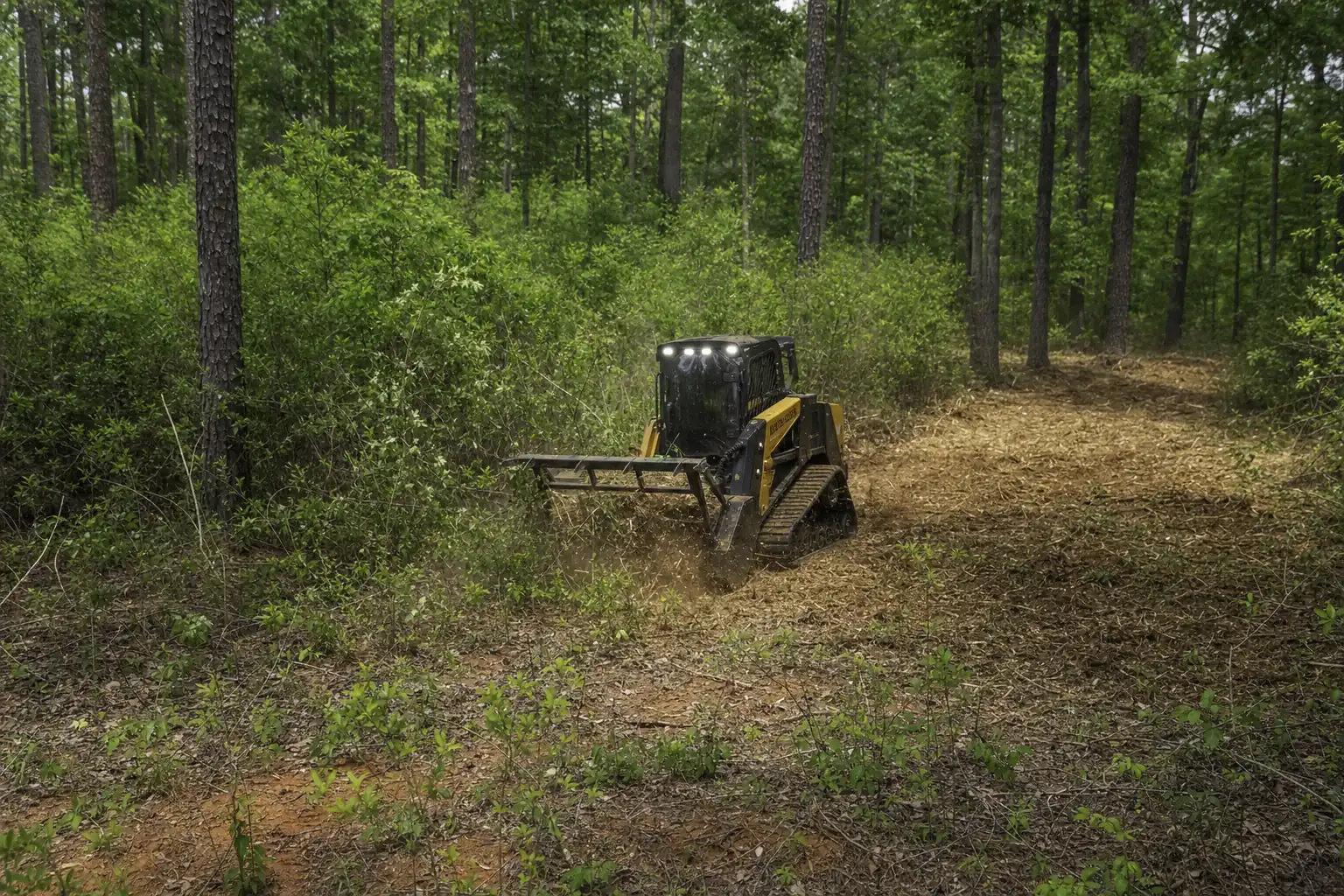
UGA Extension describes it this way: brush mulching levels a privet thicket, but because it leaves the roots, regrowth follows. That regrowth comes up uniform, which makes it easier to treat than a tall, tangled stand. So the mulcher does the heavy work and the spraying comes later, on the even flush of sprouts.
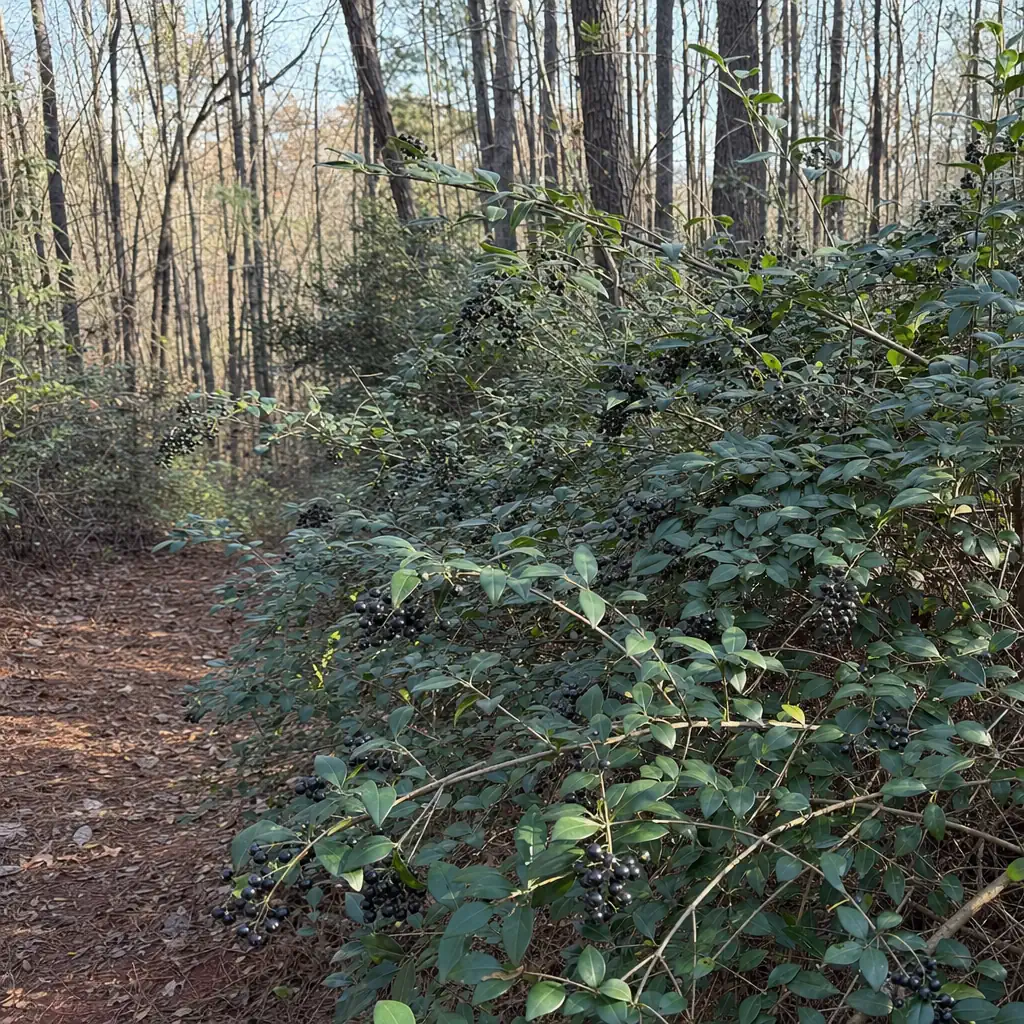
Privet is semi-evergreen and holds its leaves after the hardwoods drop theirs, so a winter walk shows where it grows and how far it has spread. We map it then, and the map sets both the mulching and the treatment areas. More in spotting Chinese privet in winter.
- 1MulchThe thicket ground to grade in any dry season.
- 2Let it regrowPrivet sprouts come up even through the growing season.
- 3First treatmentLate fall or the dormant season, November through February.
- 4Second treatmentThe next season, for suckers and new seedlings.
Timing that works
What the research says about privet
- Nov to Feb
- Dormant-season treatment window in Georgia forestry guidance
- 93 to 100%
- Privet control from spring and fall treatment
- 67 to 69%
- Privet control from summer treatment
- 2
- Treatments that eradicate most privet stands
Herbicide applications are performed by licensed applicators in accordance with the product label.
The control figures come from U.S. Forest Service trials, and the dormant-season window and the two-treatment rule from Georgia’s forestry guide to invasive plants. Alabama Extension adds a caution: mulching privet in the fall can spread its seed, so expect seedlings the year after and plan the second treatment for them.
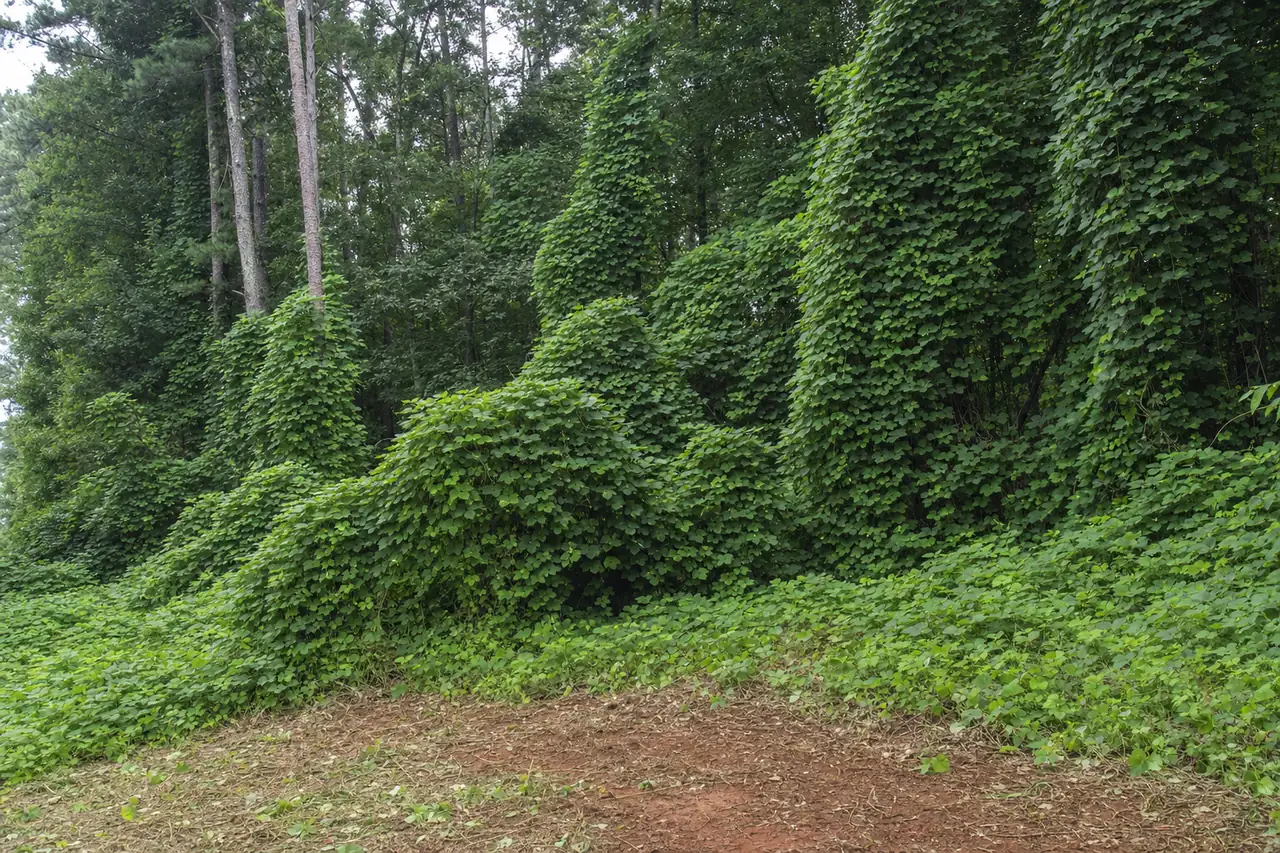
Kudzu runs on a different clock. It needs repeated treatments during the growing season over successive years, because each root crown has to be controlled. See kudzu removal.
Who sprays, and near water
On our jobs, licensed applicators apply the herbicide following the label.
Privet loves creek bottoms, and that ground carries its own rules. Forsyth County keeps a 50-foot undisturbed buffer plus a 25-foot setback along streams, on top of Georgia’s 25-foot state-waters buffer. We mark the buffers on the walk before the mulcher or anyone else goes near the water.
Permit thresholds, fees and buffer widths are those published by Forsyth County and the State of Georgia as of November 4, 2026. Confirm current requirements with the issuing authority before work begins. This is not legal advice.
Privet removal along creeks and stream buffers and clearing near water cover that ground in detail.
If you skip the follow-up
Mulched privet left untreated comes back from every root, and fast. Mowing cuts it down for a few weeks and it resprouts again. Within a couple of seasons the thicket is back, and the mulching money went to a temporary view. That is why we quote privet ground with the follow-up on the same contract instead of as an afterthought.
What the combination gets you
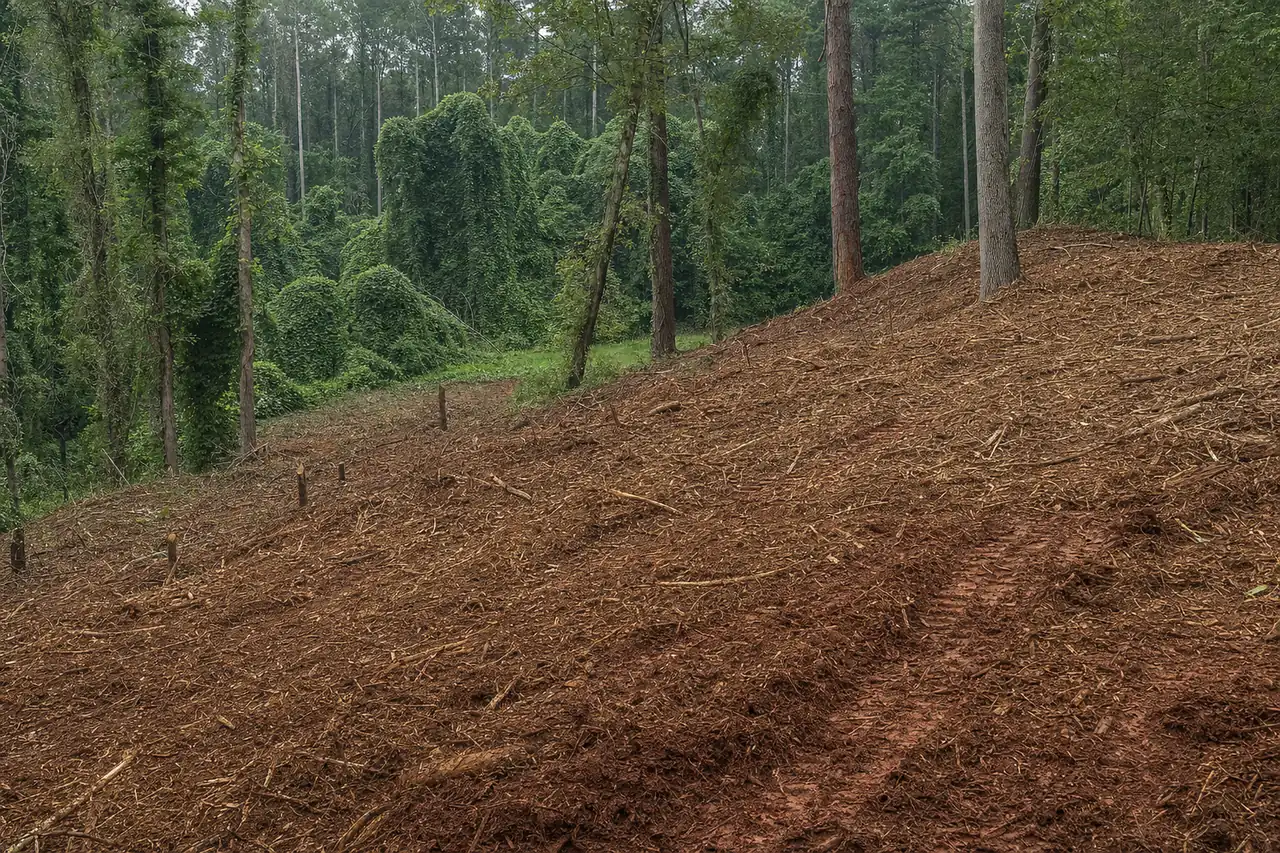
A U.S. Forest Service study on North Georgia creek bottoms paired mulching with herbicide. Five years later, privet had come back on about 7 percent of the treated ground, and native plant cover reached 70 percent against 20 percent on untreated plots. Mulching alone can’t do that.
Georgia’s Invasive Plant Control Program also counts mechanical treatment combined with herbicide as a qualifying practice, for landowners who meet its acreage rules. The program page explains who qualifies.
Program figures and sign-up windows are set annually and are current as of November 4, 2026. We confirm every figure with the Georgia Forestry Commission or NRCS before any application. This page explains how programs work; it is not a guarantee of eligibility or reimbursement.
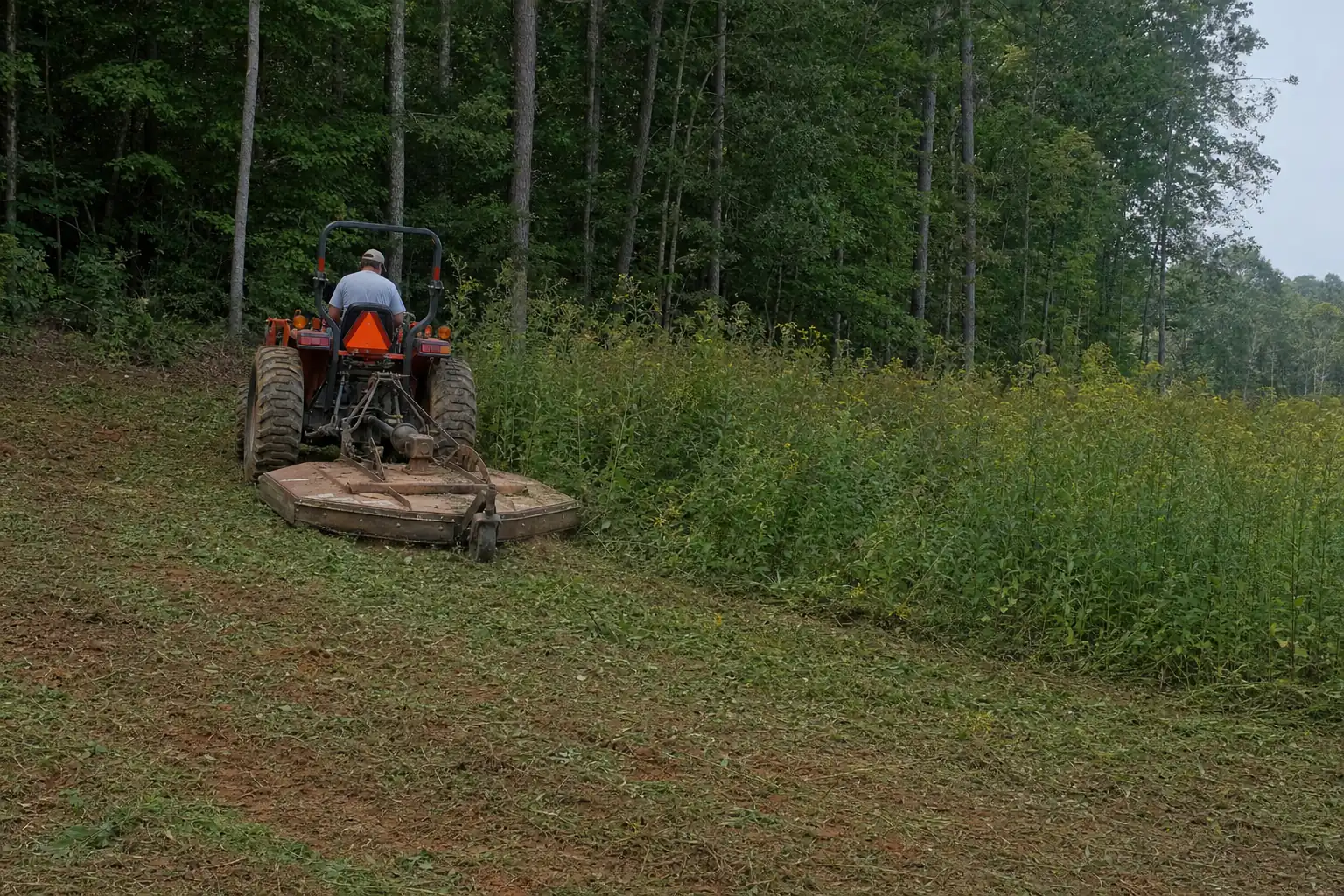
Between treatments, maintenance mowing keeps hardwood sprouts and briars down. We run the forestry mulching, the mowing and the privet follow-up on one contract.
FAQ
More about spraying after mulching
- Why not spray right after the mulcher leaves?
- There is little left to treat. Mulching takes the top growth off, and the roots send up new shoots over the next season. That regrowth comes up uniform, which UGA Extension notes makes it easier to treat than the original thicket.
- Is summer a bad time to spray privet?
- It works less well. U.S. Forest Service trials found spring and fall treatments controlled 93 to 100 percent of privet, against 67 to 69 percent in summer. Late fall and the dormant season are the usual targets.
- Do hardwood sprouts need spraying too?
- Usually not. Sweetgum, maple and oak sprouts in a field you plan to keep open give way to mowing once or twice a year. Spraying is for privet and kudzu, which outlast mowing.
- How long until the privet is gone?
- Plan on more than one season. Georgia forestry guidance says two treatments eradicate most privet stands, with follow-up for suckers and seedlings. Seed in the soil keeps coming for a while, so spot checks continue after.
Keep reading
Questions people ask next
- QHerbicide follow-up after mechanical clearing: timing and who applies it
- QWhen is the best time of year to treat privet?
- QWhich trees resprout after mulching and which don't?
- QCan you remove privet along a creek without hurting the water?
- QDoes forestry mulching kill kudzu?
- QHow do I get rid of Chinese privet permanently?