Program guide · 8 min read
The Invasive Plant Control Program
Georgia's Invasive Plant Control Program, run by the Georgia Forestry Commission, reimburses private forest landowners for controlling Chinese privet, kudzu and other listed invasive plants. Mechanical treatment combined with herbicide qualifies. The program requires a three-acre minimum treatment area, sets a minimum on the land you own, and caps payment at $10,000 per landowner.
What the program pays for
Chinese privet fills the creek bottoms and old fence rows across Forsyth County, and kudzu buries whole slopes along the road cuts. The Invasive Plant Control Program is the Georgia Forestry Commission’s cost-share program for that problem on private forest land. You treat the invasive plants with a method the program counts, you document the work, and the program reimburses you by its own terms.
The method matters. The program counts mechanical treatment combined with herbicide. A mulcher alone, or a spray rig alone, is a different job from the one the program describes.
The program figures we can confirm
- $10,000
- Most the program pays one landowner
- 3 acres
- Minimum treatment area
Program figures and sign-up windows are set annually and are current as of November 4, 2026. We confirm every figure with the Georgia Forestry Commission or NRCS before any application. This page explains how programs work; it is not a guarantee of eligibility or reimbursement.
Those figures are set by the program and can change from one year to the next. We confirm them, and the program’s other terms, with the program office before any application goes in. The cost-share hub covers the state and federal programs side by side.
Which plants it targets
Privet and kudzu are the two most landowners here are fighting. The program’s target list, as the Georgia Forestry Association has reported it, is longer: Japanese climbing fern, Chinese tallowtree, chinaberry, Callery pear (the Bradford pear and its offspring), non-native olive and wisteria. Confirm with the program office that your plant is on the current list before you plan around it.
| Plant | Where it grows here | What control takes |
|---|---|---|
| Chinese privet | Creek bottoms, fence rows, old pasture edges, under pines | Mulch or cut, then herbicide on the resprouts. Two treatments clear most stands, with spot checks for seedlings after. |
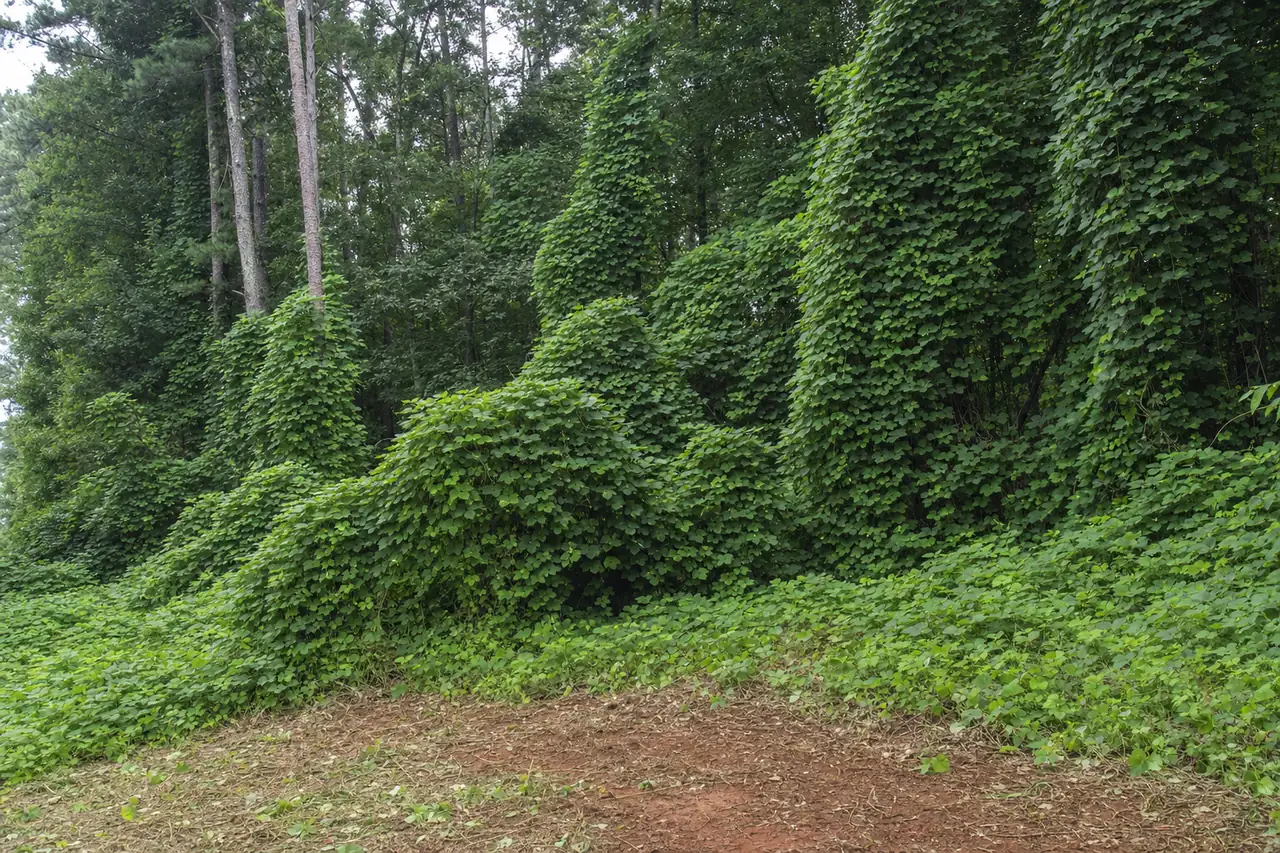
| Kudzu | Road cuts, steep slopes, forest edges, old home sites | Cut the vine mat, then treat every root crown through the growing season. Full eradication takes three to ten years of repeated treatment. |
The other species get their own guide: other invasive plants in Georgia, and why Bradford pear counts as invasive. If you aren’t sure what you’re looking at, start with how to identify Chinese privet.
Why the program counts mechanical work plus herbicide
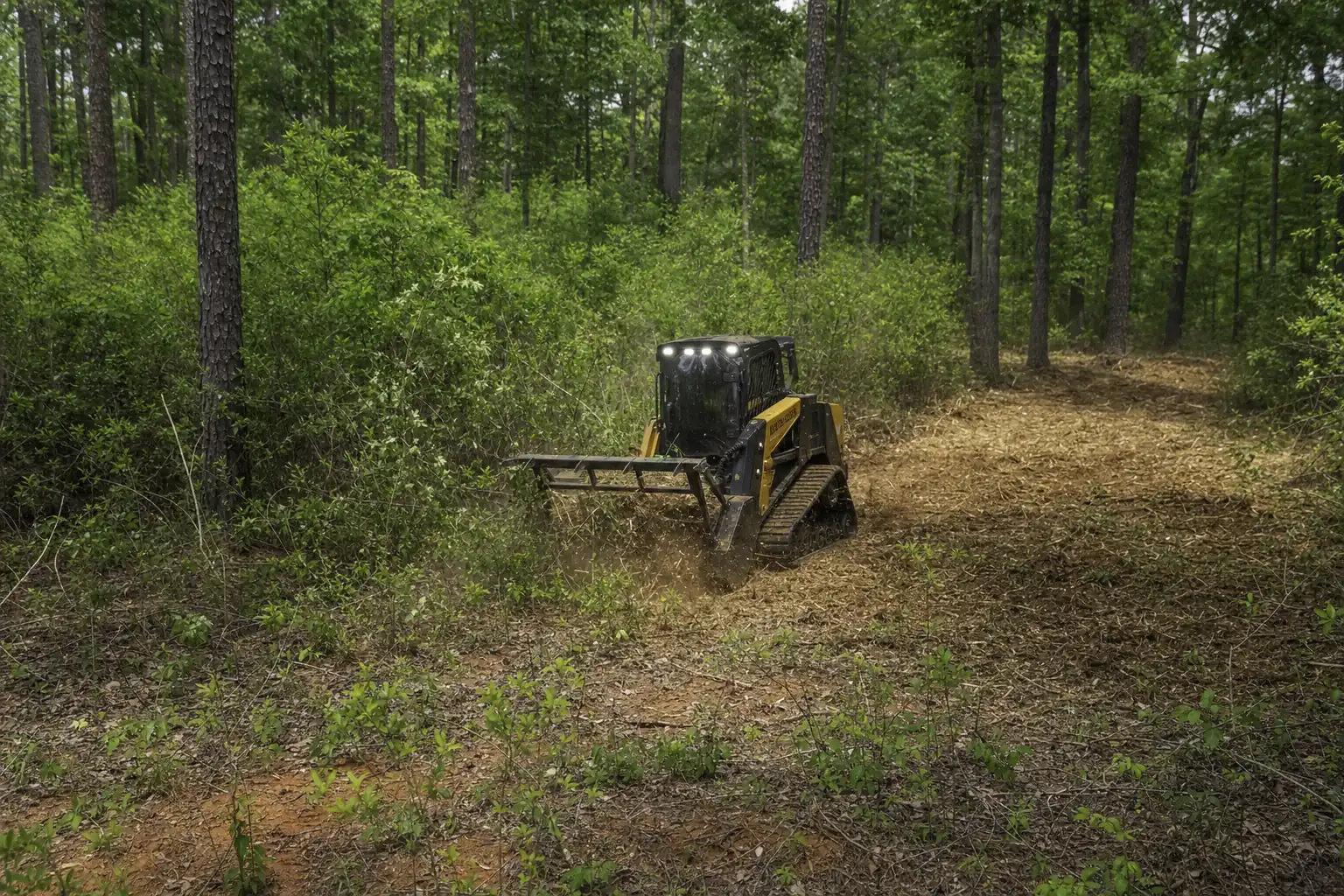
Cutting privet without treating it grows the thicket back. The roots stay alive and push up new stems by the next spring. UGA Extension notes that brush mulching levels a privet thicket but leaves the roots, and that the regrowth comes up even, which makes it easier to treat with herbicide than an old stand.
Forest Service crews tested that pairing in North Georgia creek bottoms. Plots that were mulched and then treated with herbicide held privet back five years later, and native plants covered far more of the ground than in untreated plots. That’s the logic behind the program’s method, and it’s the way we run privet work whether a program is involved or not.
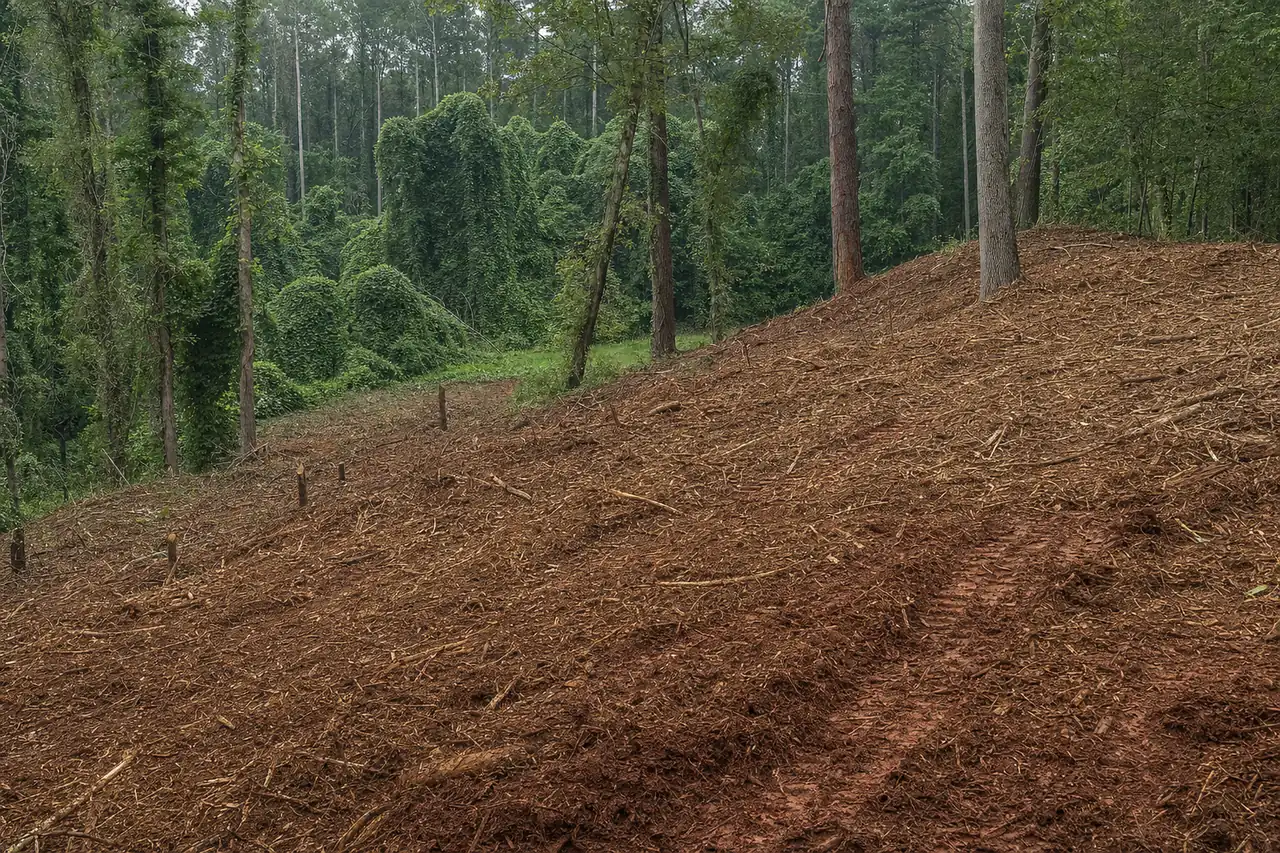
Kudzu is slower. Its roots reach 9 feet deep, and UGA and the Georgia Forestry Commission put full eradication at three to ten years of repeated treatment. Each crown has to be controlled. A program application for kudzu is the start of a multi-year plan.
Licensed applicators do the herbicide work, following the product label, including the label’s rules near water. Georgia guidance puts privet treatment in the dormant season, roughly November through February, with late fall a good time to start.
Herbicide applications are performed by licensed applicators in accordance with the product label.
Who qualifies
- Private forest landowners. The program is aimed at forest land. A privet hedge along a subdivision lot is outside it.
- An ownership minimum. The program sets a minimum on how much land you own. Published descriptions of that minimum differ, so we don’t print a number for it here. The Georgia Forestry Commission confirms what it is and how it applies to your property.
- A three-acre treatment area. The area treated has to be at least three acres.
- The right method. Mechanical treatment combined with herbicide qualifies.
On the first walk we measure the infested acres, so you know whether the treatment area clears three acres before anyone files anything. The answer on acreage minimums covers how the minimums differ from program to program.
Three privet jobs and where they stand
The same plant shows up on very different properties around Cumming. Where a job lands with the program depends on the land around it as much as on the privet.
The creek behind the subdivision. A homeowner off the 400 corridor with two wooded acres running down to a branch of Big Creek, solid privet along the water. The treatment area is under three acres, and the property is a house lot, so the program doesn’t apply. The work is still worth doing, priced as an ordinary privet removal job with the creek buffer flagged first.
The pine tract on the Etowah side. A landowner with a pine stand of several dozen acres, privet filling the understory and the creek bottom. The treatment area clears three acres with room to spare. Whether the property meets the ownership minimum is a question for the program office, and on a tract that size the answer is usually easy. This is the job the program was built for, and it often pairs with thinning or a firebreak in the same stand.
The inherited home place. An old farmstead up toward Dawsonville, the house gone, kudzu over the slope where the garden was and privet in the fence rows. Heirs often live out of state. The kudzu alone is a multi-year job, so the plan has to run for several seasons with someone checking the crowns. See estate and inherited property cleanup.
How the cap works
The program caps what it pays at $10,000 per landowner. Within that cap, it reimburses by its own terms, not as a share of whatever the contractor charged. We don’t put a reimbursement figure on a quote, and we don’t estimate one for you. The program office confirms your amount after you apply.
Two questions are worth asking the office early. First, how the cap applies if you own more than one tract. Second, how it treats a privet plan that runs across several seasons, since the follow-up herbicide rounds come a year or more after the mulching. We help you write those questions down before the call.
A privet plan on one contract
Privet control is two or three trades. The mulcher levels the thicket. A licensed applicator treats the resprouts, then comes back for the stragglers and seedlings. On a forest tract, the same plan often adds thinning in a crowded pine stand or a firebreak around it.
A single-machine operator can mulch the privet, then tells you to find an applicator and a third outfit for the firebreak. That’s three companies on three schedules, and three sets of records for one program file. We run the mulching, the herbicide rounds and any other stand work on one contract, with one point of contact. Our invoices are itemized by practice, with dates and photos, so the file shows what was done, where and when.
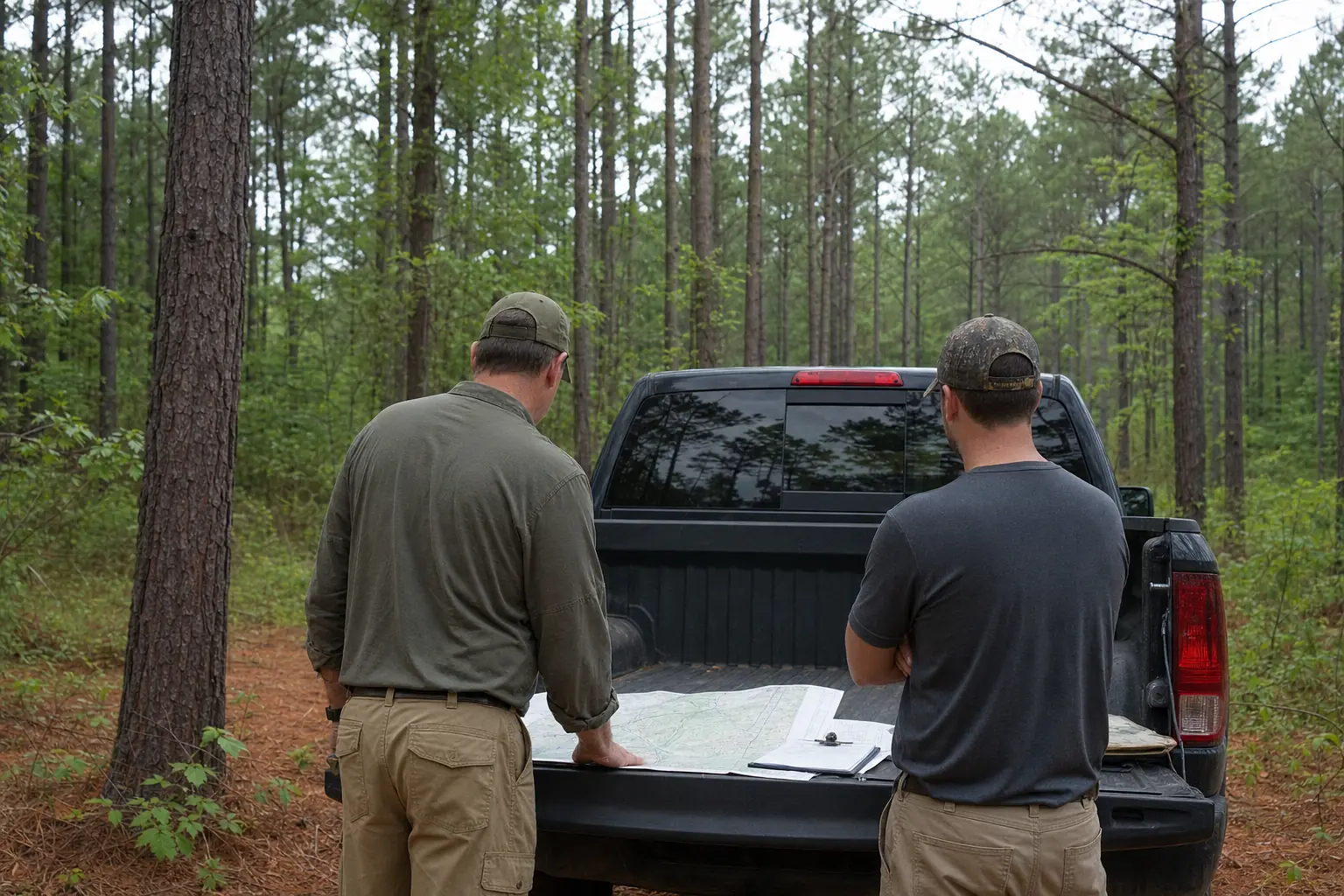
- 1Walk and measureInfested acres mapped, creeks flagged, the treatment area measured.
- 2Mulch the thicketPrivet ground in place on dry ground. No burn pile, no haul-off.
- 3Treat the resproutsLicensed applicators, per the label, in the season privet takes it up best.
- 4Check and follow upSpot treatment for seedlings, with records and photos for your file.
What the records should show
A program file needs proof the work happened as described. For invasive control, that usually means:
- The treatment area. Acres treated, on a map or sketch, so the three-acre minimum is plain.
- Both parts of the method. The mechanical work and each herbicide round, dated and on separate lines.
- Photos. The thicket before, the ground after mulching, and the stand after treatment.
We hand you all three at the finish of each phase. The program office tells you what it wants to see, and we match the records to it.
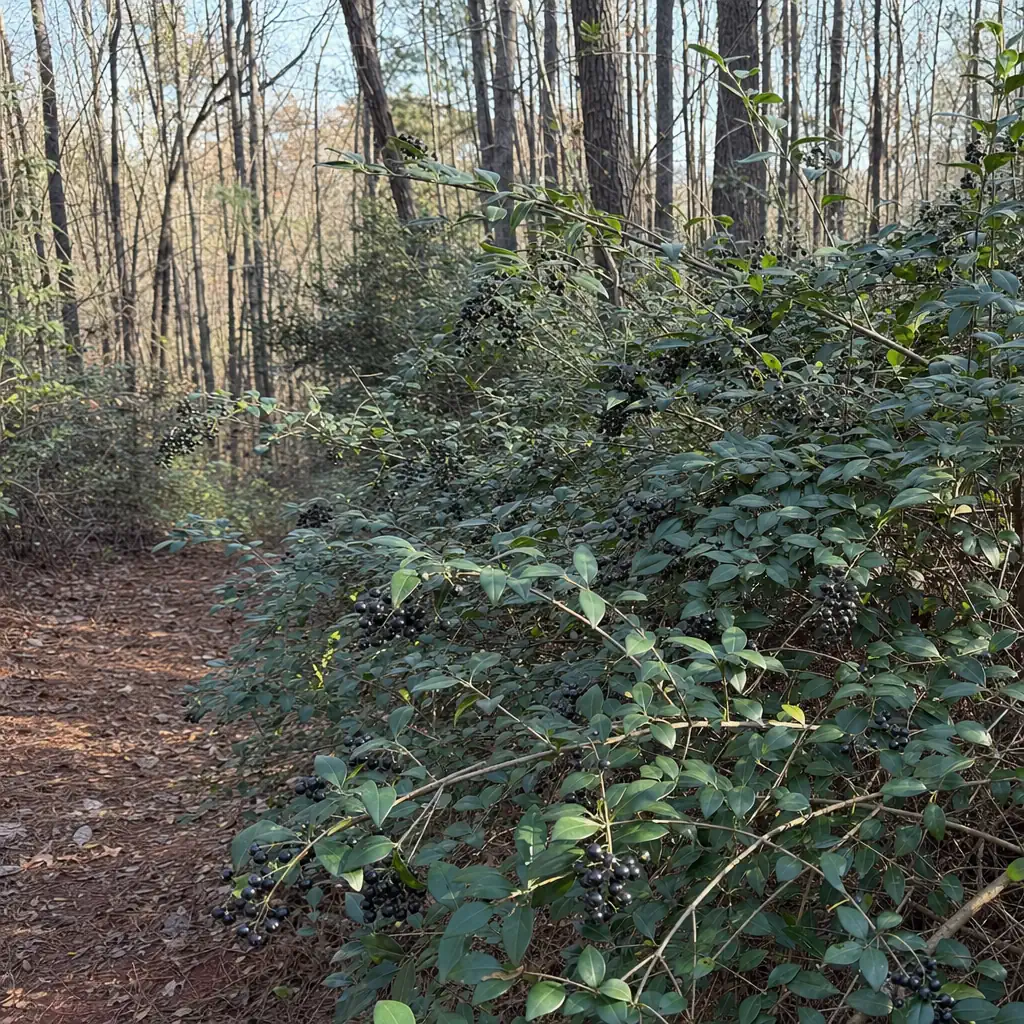
Privet along creeks
Privet grows thickest where you can least afford mistakes: along Big Creek, Settingdown Creek and the smaller branches that feed Lake Lanier. Georgia keeps a 25-foot buffer on state waters, and Forsyth County holds a 50-foot undisturbed buffer plus a 25-foot setback. Creekside privet work has to fit inside those rules, and the herbicide label sets its own limits near water.
Permit thresholds, fees and buffer widths are those published by Forsyth County and the State of Georgia as of November 4, 2026. Confirm current requirements with the issuing authority before work begins. This is not legal advice.
We flag the buffers on the walk and plan the creekside acres around them. See privet removal along creeks and stream buffers.
What the program does not pay for
- Yard and lot work. A privet hedge on a house lot, or kudzu on a lot being cleared to build, is outside a forestry program.
- Small infestations. Under three acres of treatment, the program doesn’t apply.
- One method on its own. Mulching with no herbicide, or spraying with no mechanical work, is a different method from the one the program counts.
- Our price. The program pays by its terms and its cap, never as a share of our invoice.
Mulched privet ground sprouts the next spring, and a treated stand still needs watching. On open ground you plan to keep open, add maintenance mowing once the herbicide rounds are done.
Timing and the application
The program takes applications on a yearly cycle, and the deadline can move from one year to the next. We confirm the current dates with the program office. The work usually follows acceptance, and the mulching fits a dry stretch, so the plan has to start well before the deadline.
You file the application as the landowner. Our part is the walk, the measured treatment area, the plan, the work and the itemized records. The guide to how the application works goes step by step, and using more than one program covers a tract that needs both invasive control and stand work.