
Treatment guide · 8 min read
Herbicide Follow-Up After Mechanical Clearing: Timing and Who Applies It
After a mulcher levels privet, the first herbicide treatment goes on the even regrowth the following fall or winter, and a second follows the next season. Forest Service trials found spring and fall treatment gave 93 to 100 percent privet control, against 67 to 69 percent in summer. Licensed applicators do the work, following the product label.
A treatment plan with dates, in one business day.
Why the follow-up is the part that counts
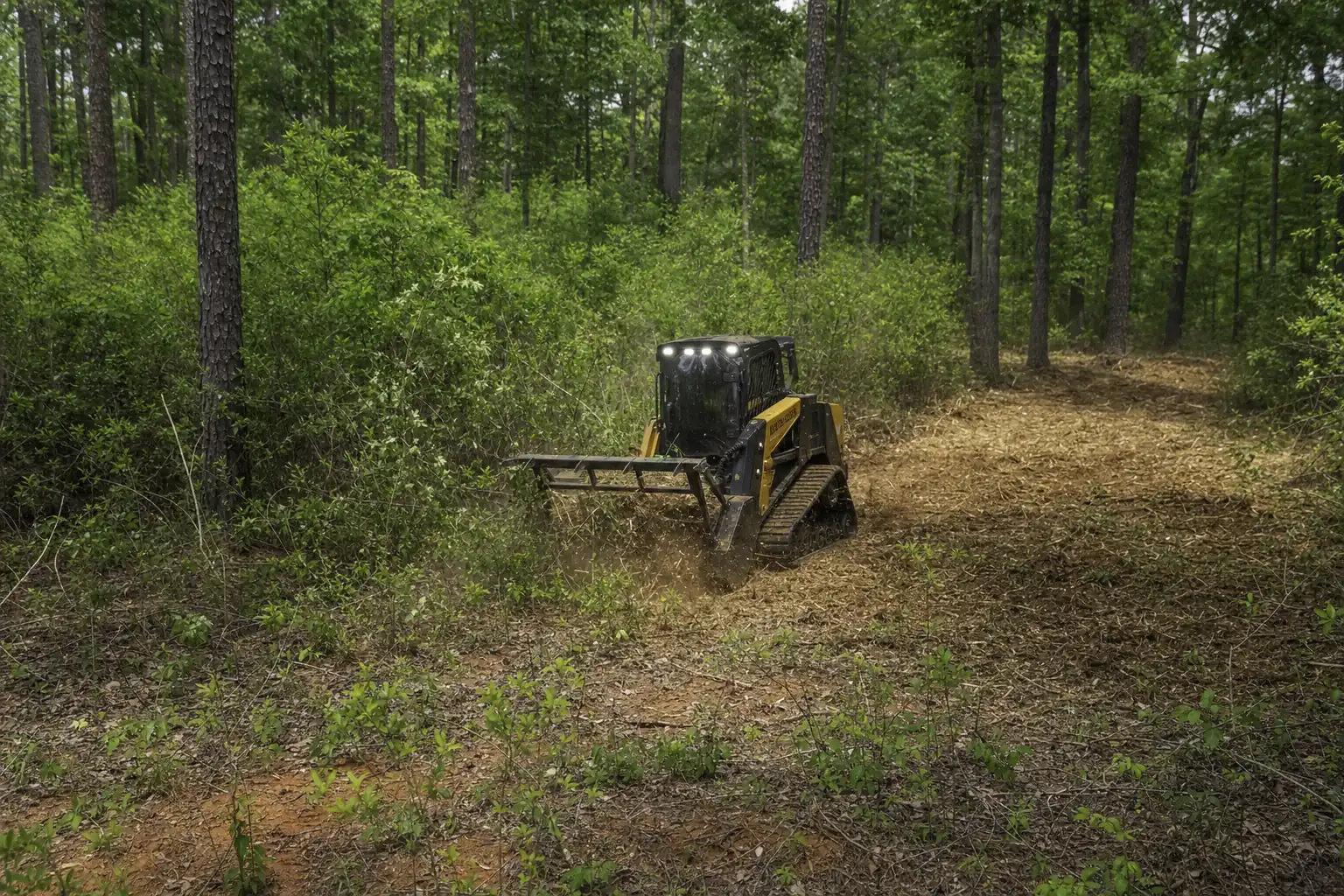
A forestry mulcher can level an acre of privet in a few hours. The roots are still alive when it leaves, and they send up new stems the next growing season. Everything that decides whether the privet is gone for good happens after that: when the regrowth gets treated, how many times, who does it, and how carefully they work around the trees and the water.
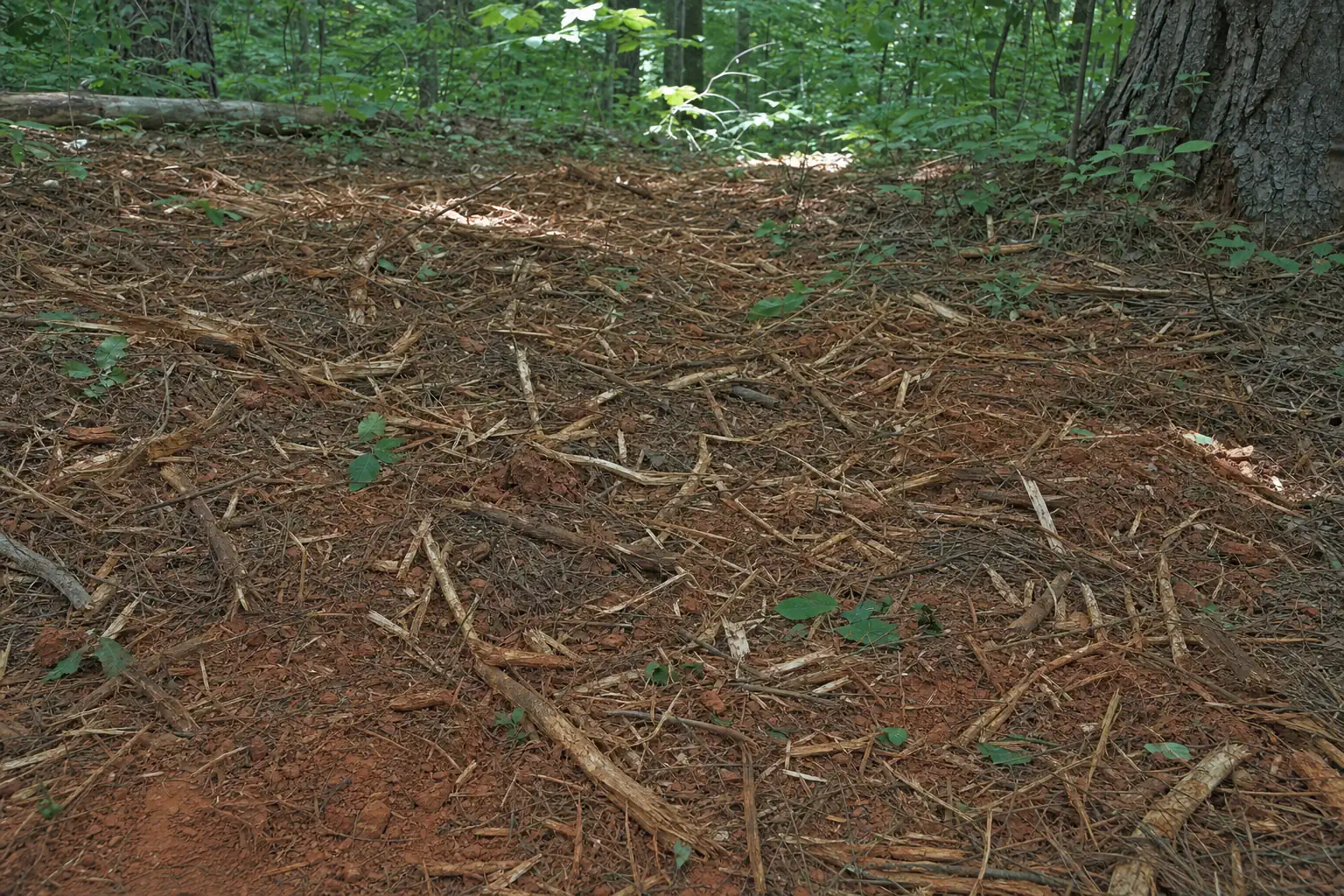
The mulching pass does make the follow-up easier. UGA Extension notes that the regrowth after mulching comes up uniform, which makes it easier to control with herbicide than an old thicket. Instead of stems of every size and height, the applicator faces one even flush of sprouts, all within reach. This guide covers the timing for privet and kudzu, how the treatments are applied, and who applies them.
Herbicide applications are performed by licensed applicators in accordance with the product label.
The timing, plant by plant
Each invasive has its own window, and treating outside it wastes a visit. These are the windows Georgia forestry and extension guidance gives for the two plants we treat most.
| Plant | Best window | Why |
|---|---|---|
| Chinese privet | Late fall through winter | Privet is semi-evergreen and still in leaf when native plants are bare. UGA Extension names late fall as the best time. |
| Chinese privet, second choice | Spring | Forest Service trials found spring and fall both gave near-total control. |
| Chinese privet, weakest | Summer | The same trials found summer treatment controlled only about two-thirds. |
| Kudzu | The growing season, every year | Kudzu drops its leaves after frost. It has to be treated while leafed out, over successive years. |
| Wisteria, bamboo, olive and others | Set by the plant and the product label | Planned on the walk, alongside the privet and kudzu schedule. |
The privet window has a practical upside. In December and January, privet sprouts are the green layer in a gray woods, so the applicator can find them and stay off the native plants that have dropped their leaves. The best time of year to treat privet goes deeper on the calendar.
What the research says about timing
- 93 to 100%
- Privet control from spring and fall treatment
- 67 to 69%
- Privet control from summer treatment
- 2
- Treatments that clear most privet stands
- 3 to 10 years
- Repeated treatment kudzu can take
Herbicide applications are performed by licensed applicators in accordance with the product label.
The privet numbers come from Forest Service trials. The two-treatment figure is from Georgia’s forestry guide on invasive plants, which says that for most stands of privet two treatments can eradicate the plant, with follow-up for suckers and seedlings. The kudzu figure is from UGA and the Georgia Forestry Commission, which put complete eradication at three to ten years of repeated treatment.
Kudzu runs on a longer clock
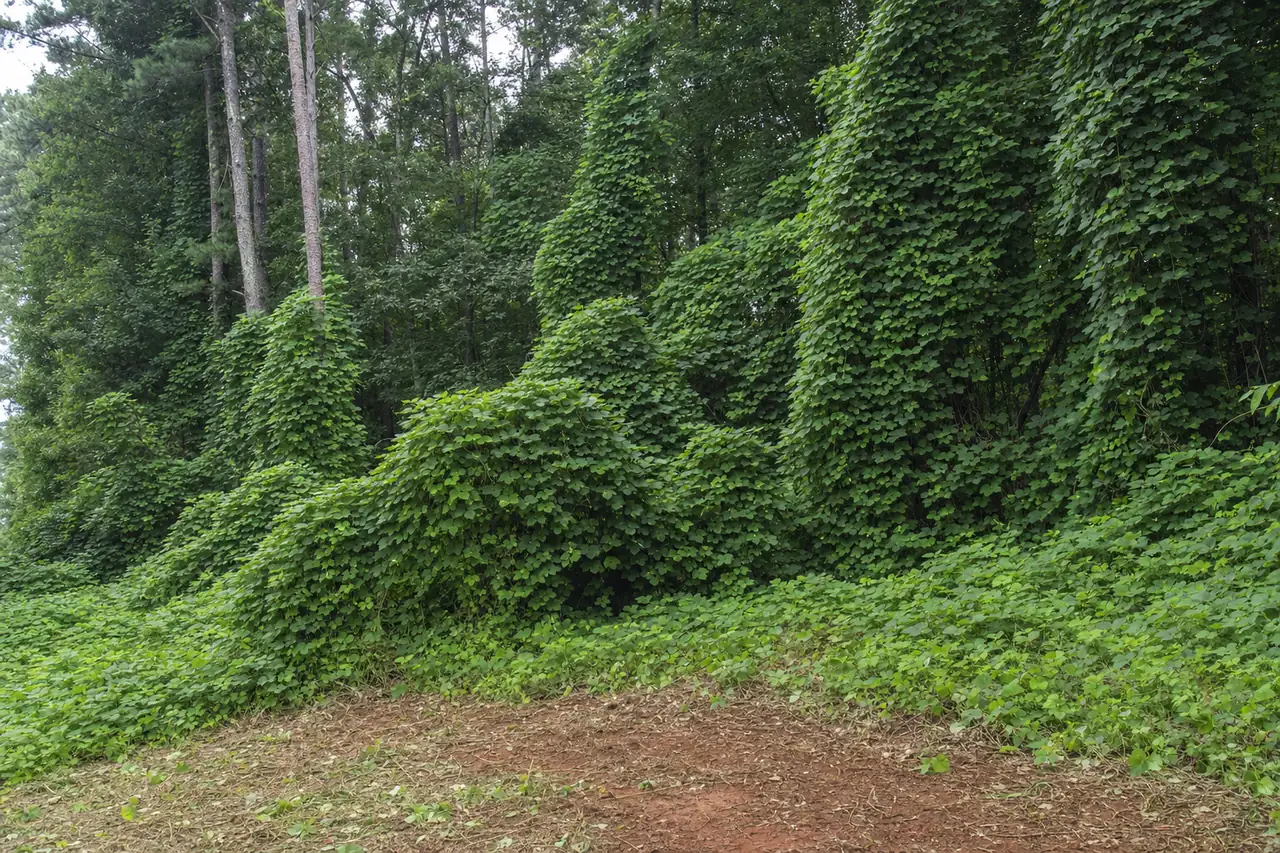
Kudzu follow-up looks different from privet in three ways. The treatment goes on in the growing season, while the vines are leafed out, because kudzu drops its leaves after the first hard frost. The work repeats every year until no crowns sprout, which Georgia forestry guidance puts at three to ten years. And every root crown has to be found and treated, because a single surviving crown spreads runners across the patch again.
Each year there are fewer crowns to find, so the visits get shorter and cheaper as the patch dies out. On a slope, the bare clay left as the kudzu dies gets strawed and seeded so it holds. Kudzu removal lays out the full program, and does forestry mulching kill kudzu answers the most common question about it.
A privet job, season by season
Here is how the calendar runs on a typical privet job around Cumming, starting from the mulching pass.
| When | What happens | Who |
|---|---|---|
| The mulching pass | Thicket ground in place on dry ground, keeper trees flagged | Machine crew |
| Next growing season | Roots send up an even flush of sprouts. Nothing gets sprayed yet. | The privet |
| That fall or winter | First treatment on the regrowth | Licensed applicators |
| The season after | Second treatment for survivors, suckers and the first seedlings | Licensed applicators |
| Years 2 to 5 | A walk each year, spot treatment of seedlings, mowing if you want it open | Our crew and applicators |
The gap between the mulching and the first treatment surprises people. The regrowth needs time to leaf out, because the treatment works through the leaves. Spraying bare mulched ground does nothing.
What to do, and not do, between visits
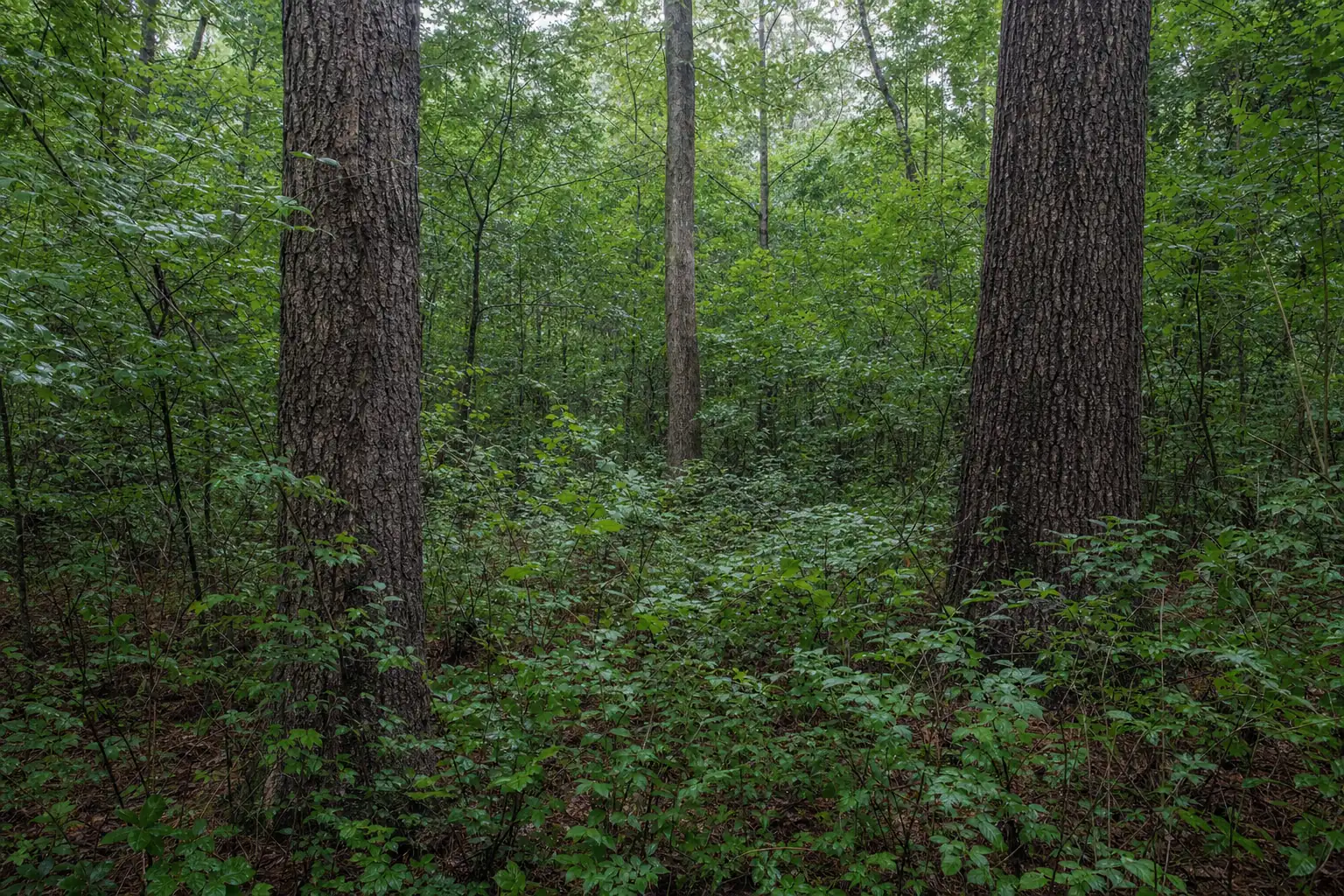
The months between the mulching and the first treatment are when well-meaning owners undo the plan. A few things help, and a few hurt.
- Don’t mow the sprouts. It looks untidy, but the treatment works through the leaves. Bush hog the regrowth a month before the applicator comes and there’s nothing for the herbicide to land on.
- Don’t spray it yourself. A store-bought sprayer on half the sprouts leaves the other half to set the schedule, and it puts herbicide near your keeper trees without a plan.
- Do walk the edges. Note where privet comes in from the neighbor’s fence row or a creek bank. Those spots get extra attention on treatment day.
- Do tell us about changes. A new garden, a well, livestock or a planned house site near the treated ground changes where and how the applicator works.
The planned dates are in the written plan, so you know when the regrowth is supposed to look rough and when it gets treated.
How the treatments are applied
The applicator picks the method by the plant, its size and what’s growing around it. Georgia’s forestry guidance describes three for privet, and the same ideas carry to most woody invasives.
- Directed spray on the leaves. The main method after mulching. The applicator sprays the regrowth from a backpack or a small tank and keeps the spray off keeper trees and native plants.
- Basal bark. A band of herbicide on the lower stem of plants too big to spray over. Useful on privet that survived the mulcher or grew up along a fence.
- Cut surface. Herbicide on a freshly cut stump. It has to go on right after the cut, while the stump can still take it up.
Georgia’s forestry guide lists glyphosate and triclopyr products for privet. Products and labels change, so the applicator chooses the product and the rate from the current label for each site. We don’t publish mixes or rates, and you shouldn’t take them from a web page either.
Who applies it, and why it matters
Licensed applicators do the herbicide work on our jobs, following the product label. That’s our rule, and it’s what the label and Georgia law expect. Georgia’s own kudzu guidance is blunt about pesticide labels: observe all directions, restrictions and precautions, because it is dangerous, wasteful and illegal to do otherwise.
The licensing matters on the ground in three places:
- Your keeper trees. A careless spray on the roots or bark of a flagged oak can hurt the tree you paid to keep. Directed spray keeps the herbicide on the target.
- Water. Labels carry their own rules for use near creeks and wet ground, and some products can’t be used there at all.
- Records. If you’re applying to a state program, it wants the work documented. A licensed applicator keeps the records that make that possible.
The treatments run on the same contract as the mulching, with one point of contact. You don’t have to find a spray company in the spring and hope they show up in the right season.
Treatment near creeks and wet ground
Privet loves creek bottoms, and some of the worst stands in the county sit along Big Creek, Settingdown Creek and their branches. Georgia keeps a 25-foot buffer along state waters, and Forsyth County keeps a 50-foot undisturbed buffer plus a 25-foot setback behind it. We map those lines on the walk, keep the machine out of the buffer, and plan any treatment near the water around the label’s rules and the county’s.
Permit thresholds, fees and buffer widths are those published by Forsyth County and the State of Georgia as of November 4, 2026. Confirm current requirements with the issuing authority before work begins. This is not legal advice.
The North Georgia research on privet was done in creek bottoms, and it found native plants covering about 70 percent of the treated ground five years later, against about 20 percent where privet stayed. Healthy native cover holds a creek bank better than a privet monoculture. The details are in privet removal along creeks.
Questions to ask whoever treats your land
Whether you hire us or someone else, these questions sort a careful applicator from a sprayer with a truck.
- Who applies the herbicide, and are they licensed for this work?
- Which product, and does its label cover this plant and this site?
- What is the plan near the creek, the ditch or the pond?
- How do you keep spray off the trees I flagged?
- When is the first treatment, and when is the second?
- What records do I get afterward?
A written quote should answer most of these before you sign. If a quote lists “spray privet” as one line with no dates, ask for the rest. What a land clearing quote should include covers the clearing side of the same question.
What the follow-up costs
The mulching pass is priced by the acre. Privet, brush and saplings usually run about $1,200 to $2,500 an acre around Cumming, and privet mixed with 4 to 8 inch trees about $2,500 to $4,000. Herbicide treatments are quoted per treatment, and kudzu treatments per season, so you see the whole plan on one page before anything starts.
Ranges are estimates for Forsyth County and the surrounding area based on job density, terrain, access and acreage. Your written quote is the only price that applies to your property.
Georgia’s Invasive Plant Control Program reimburses private forest landowners for control work that combines mechanical treatment with herbicide. It has acreage minimums and a per-landowner cap. We confirm the current terms with the program office before any application. See does Georgia pay for invasive plant removal.
Program figures and sign-up windows are set annually and are current as of November 4, 2026. We confirm every figure with the Georgia Forestry Commission or NRCS before any application. This page explains how programs work; it is not a guarantee of eligibility or reimbursement.
After the last treatment
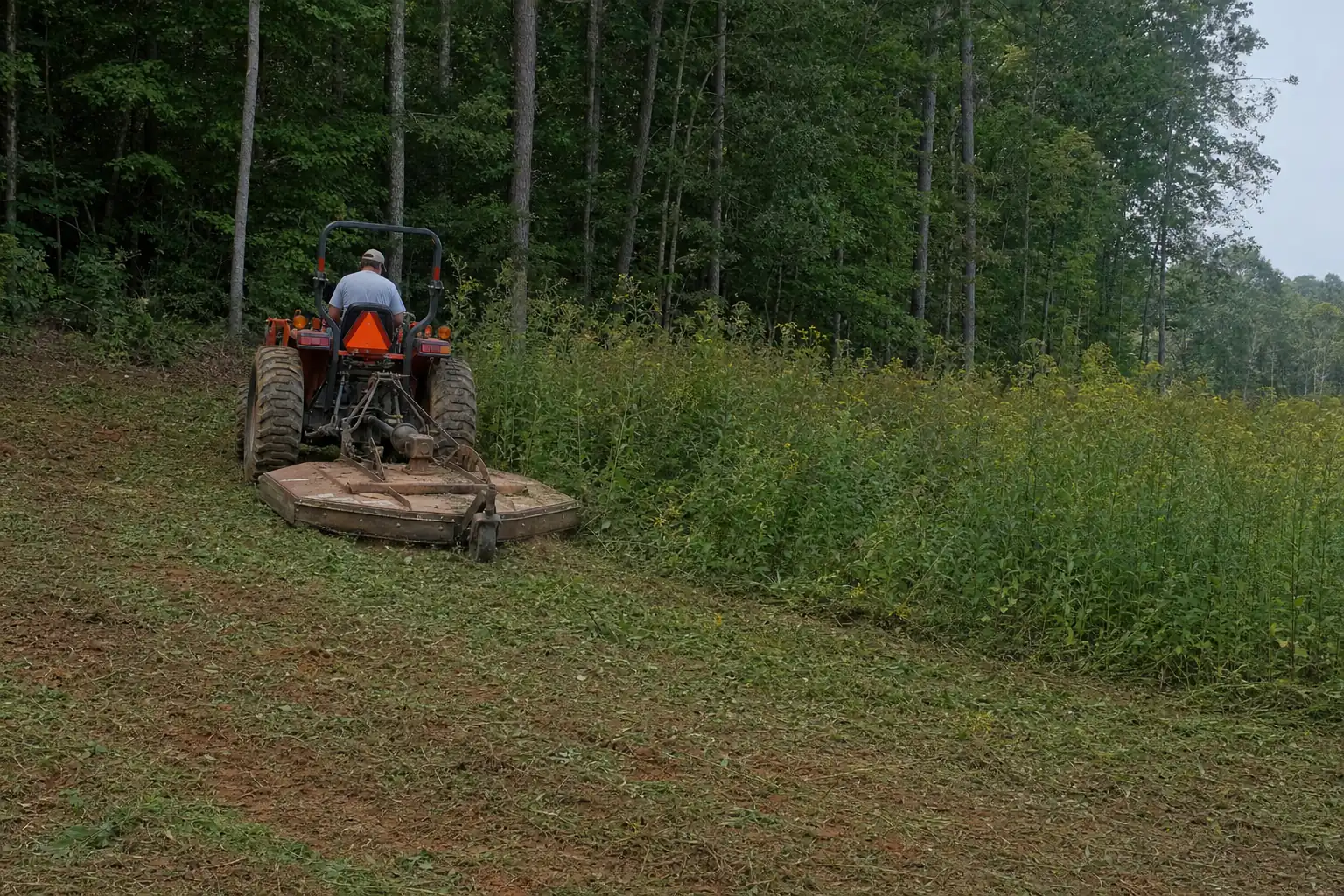
Treatment kills the plants that are there. It doesn’t stop seed already in the soil or berries carried in by birds, so expect seedlings the year after and spot work for a few seasons. A walk each winter finds them. Ground you want kept open also needs maintenance mowing once or twice a year, because sweetgum and briars move in where privet used to be.
For the reasons mulching alone fails, see why cutting privet doesn’t work. For a general look at spraying after any mulching job, see should you spray after forestry mulching. The invasive plant removal page covers the whole program.
Keep reading