Straight answer · 3 min read
How Do I Get Rid of Chinese Privet Permanently?
Mulch or cut the privet, then have licensed applicators treat the regrowth with herbicide, usually twice. In a Forest Service study in North Georgia, mulching plus herbicide held privet to about 7 percent re-infestation after five years. Seed in the soil and berries from neighbors keep coming, so plan on a winter walk and spot treatment for a few seasons.
Most landowners around Cumming who ask this have already cut their privet once or twice and watched it come back thicker. The roots are the reason. Any plan that only takes the top off leaves them alive, and the plan that works goes after the roots on purpose.
What “permanently” means with privet
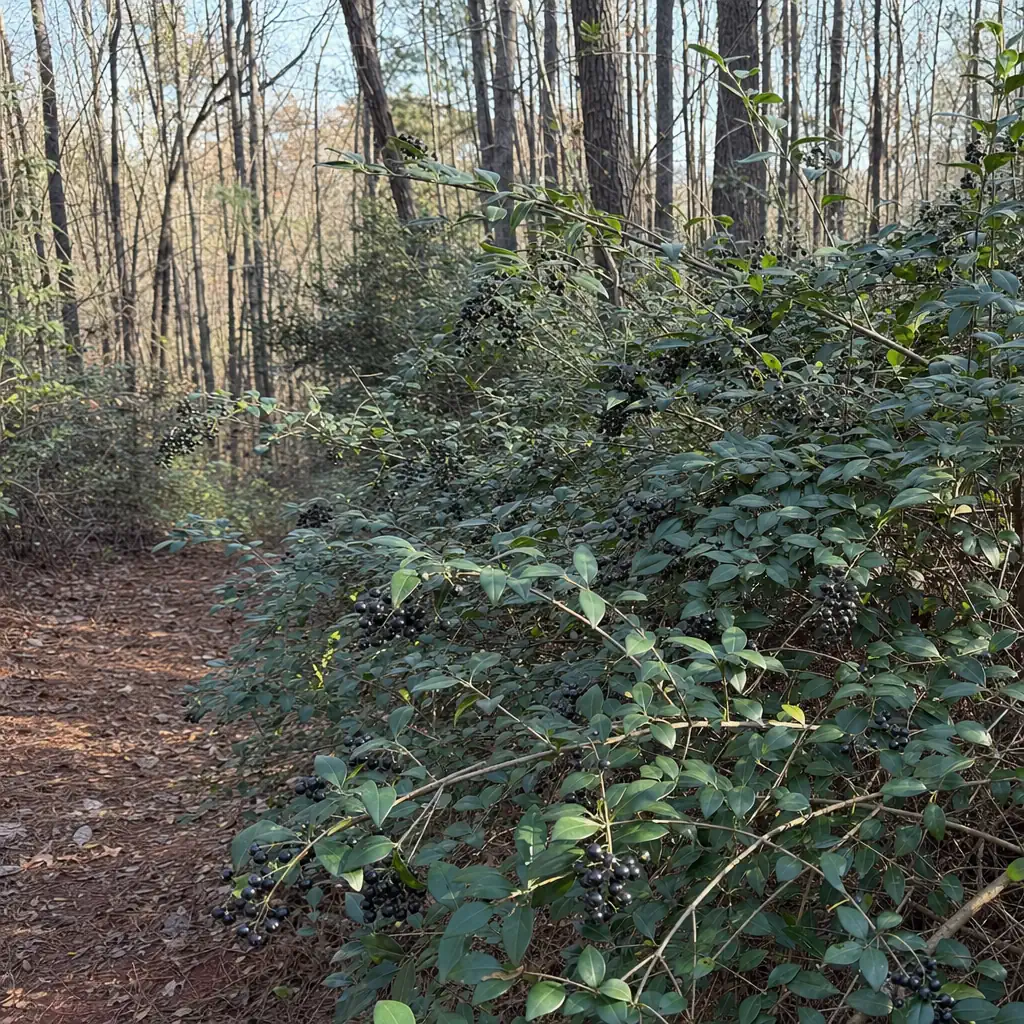
You can get rid of the privet thicket on your land for good. What you can’t do is stop birds from carrying berries in from the neighbor’s fence row, or stop seed already in the soil from sprouting for a while. So “permanent” means the thicket is dead at the roots and the seedlings that show up later get caught while they’re small.
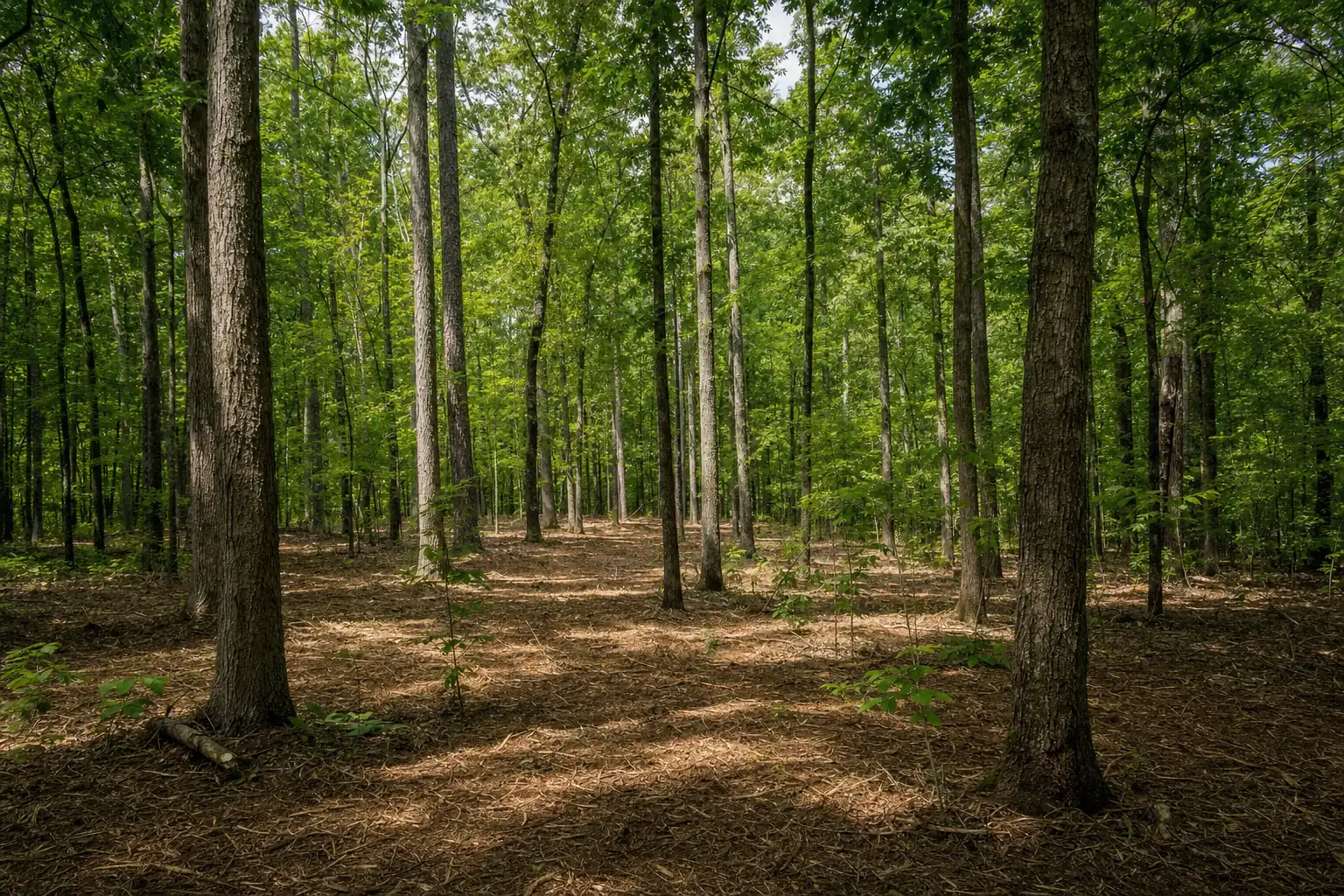
That matches what the research found. In a Forest Service study in North Georgia creek bottoms, plots that were mulched and then treated with herbicide had about 7 percent privet re-infestation five years later, and native plants covered about 70 percent of the ground, against about 20 percent where privet stayed.
Herbicide applications are performed by licensed applicators in accordance with the product label.
The plan that holds
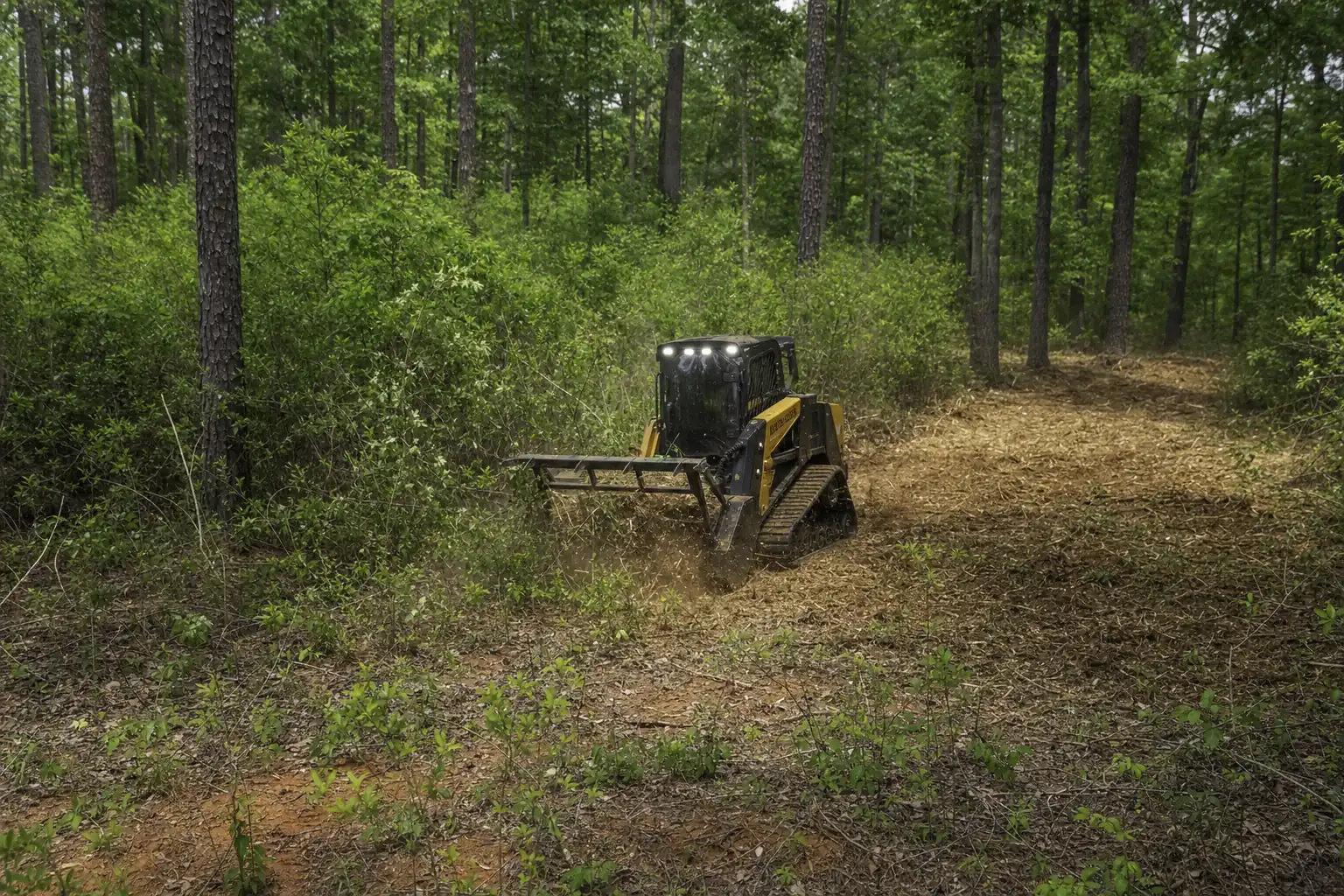
- 1Mulch the thicketA forestry mulcher grinds privet in place, around the trees you flag.
- 2Let it resproutThe roots push up an even flush of stems the next growing season.
- 3Treat twiceLicensed applicators treat the regrowth, then the survivors and seedlings.
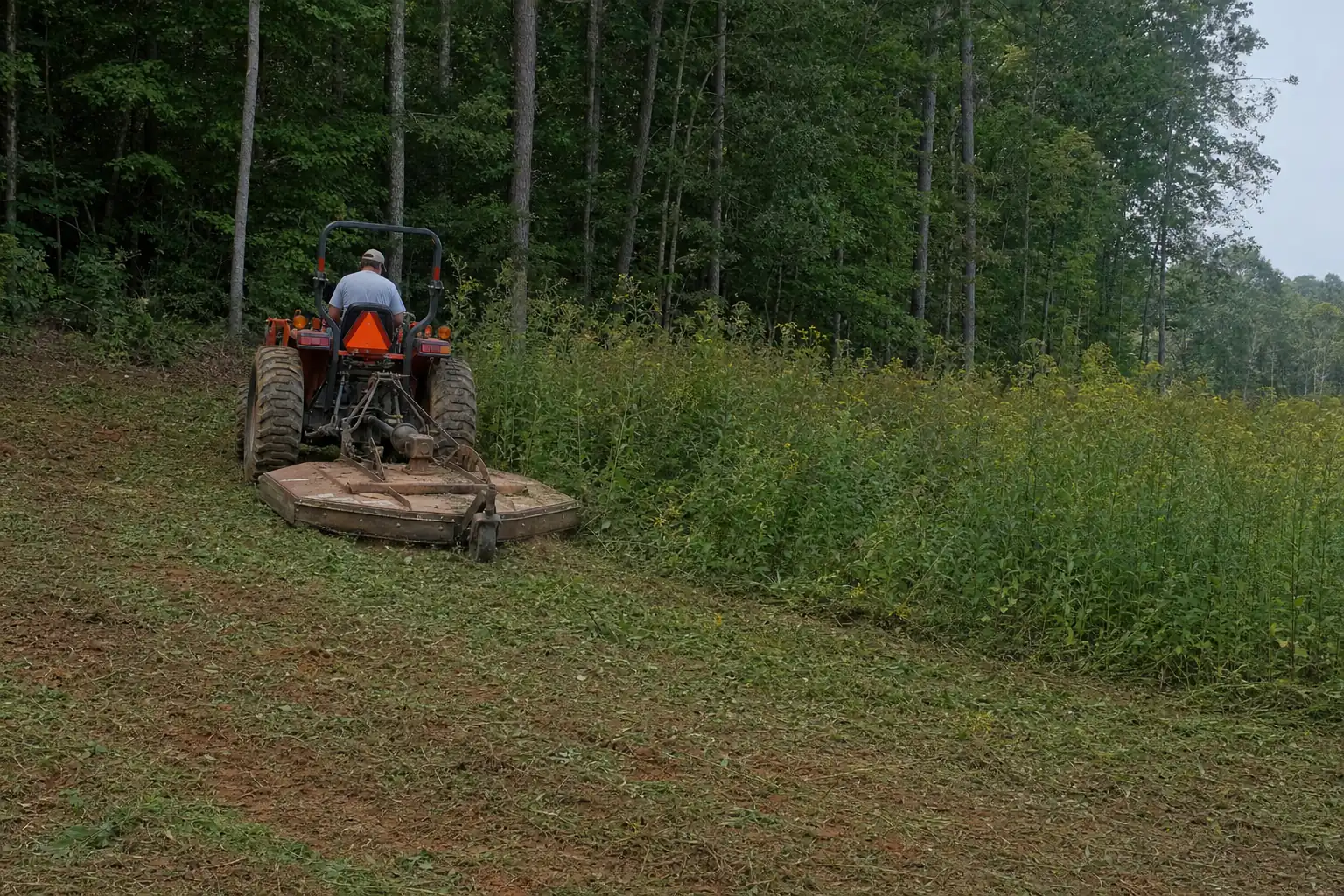
- 4Walk it yearlySpot-treat seedlings and mow where you want the ground open.
Mulching first matters because of what the regrowth looks like. UGA Extension notes that privet comes back uniform after mulching, which makes it easier to treat than an old thicket. Georgia’s forestry guide on invasive plants says two treatments can eradicate most privet stands, with follow-up for suckers and seedlings. The details of each step are in herbicide follow-up after clearing.
What doesn’t work on its own
| Method | A year later |
|---|---|
| Bush hog or mow | Resprouts from every root, often thicker |
| Chainsaw and burn pile | Stumps resprouting, a pile to deal with, and a burn ban half the year |
| Mulch only | An even crop of regrowth, alive at the roots |
| Spray the standing thicket | A dead brown wall still standing, with live plants where the spray missed |
| Mulch, then treat twice | Open woods, native plants returning, seedlings to spot-treat |
Pulling works on seedlings you can grab by hand. On an acre of established privet, it isn’t realistic. Why cutting privet doesn’t work covers the biology.
Timing that saves a season
Treat in late fall through winter if you can. UGA Extension names late fall as the best time, and privet is semi-evergreen, so it still carries leaves after the native plants have dropped theirs. Forest Service trials found spring and fall treatment gave 93 to 100 percent control, against 67 to 69 percent in summer. A summer treatment often means paying for an extra round. More in the best time to treat privet.
Creek banks and larger tracts
Two situations change the plan. Privet along a creek sits inside stream buffers set by the state and Forsyth County, so the machine work and the treatment near the water get planned around those lines before anything starts; see privet removal along creeks. And on larger forest tracts, Georgia’s Invasive Plant Control Program reimburses private landowners for control work that combines mechanical treatment with herbicide. It has acreage minimums and a per-landowner cap, and we confirm the current terms with the program office before any application.
Program figures and sign-up windows are set annually and are current as of November 4, 2026. We confirm every figure with the Georgia Forestry Commission or NRCS before any application. This page explains how programs work; it is not a guarantee of eligibility or reimbursement.
More in does Georgia pay for invasive plant removal.
Keeping it gone
Once the thicket is dead, three habits keep it that way. Walk the land each winter, when any privet seedling is the green thing under bare hardwoods. Keep an eye on the property edges, where seed from the neighbors comes in. And keep open ground mowed once or twice a year, because sweetgum and briars move into the space privet left. We set that up as maintenance mowing on the same contract as the treatments.
The mulching pass usually runs about $1,200 to $2,500 an acre for privet, brush and saplings around Cumming, and the treatments are quoted with it. See privet removal cost per acre, or the full Chinese privet removal service and the invasive plant removal hub.
Ranges are estimates for Forsyth County and the surrounding area based on job density, terrain, access and acreage. Your written quote is the only price that applies to your property.
FAQ
More about getting rid of privet
- How long does it take to get rid of privet?
- Plan on two seasons for the main work: the mulching pass, regrowth the next growing season, and two treatments after it. Seedlings keep showing up for a few years after that, so a yearly walk and spot treatment run into years two to five.
- Can I just spray the privet without mulching it?
- For scattered plants and small patches, yes. On a solid thicket, the spray can't reach the middle, and what dies stays standing as a brown wall. Mulching first gives the applicator even, knee-high regrowth to treat.
- Who applies the herbicide?
- Licensed applicators, following the product label, including the label's rules near water. The treatments run on the same contract as the mulching, so the dates are set in the plan before the machine arrives.
- Will mowing keep privet under control?
- Mowing keeps it short, and it comes back every time. Once the roots are treated, mowing once or twice a year is the right tool for keeping the ground open against sweetgum and briars.