
Hiring guide · 9 min read
What a Land Clearing Quote Should Include
A land clearing quote around Cumming should name the measured acreage, the trees that stay, what happens to stumps and debris, the finish, erosion control and the county permit, which Forsyth requires once you disturb an acre or more. It should also say what the price leaves out. Without those lines, you can't compare two quotes.
Two quotes for “clear the lot” can be two different jobs
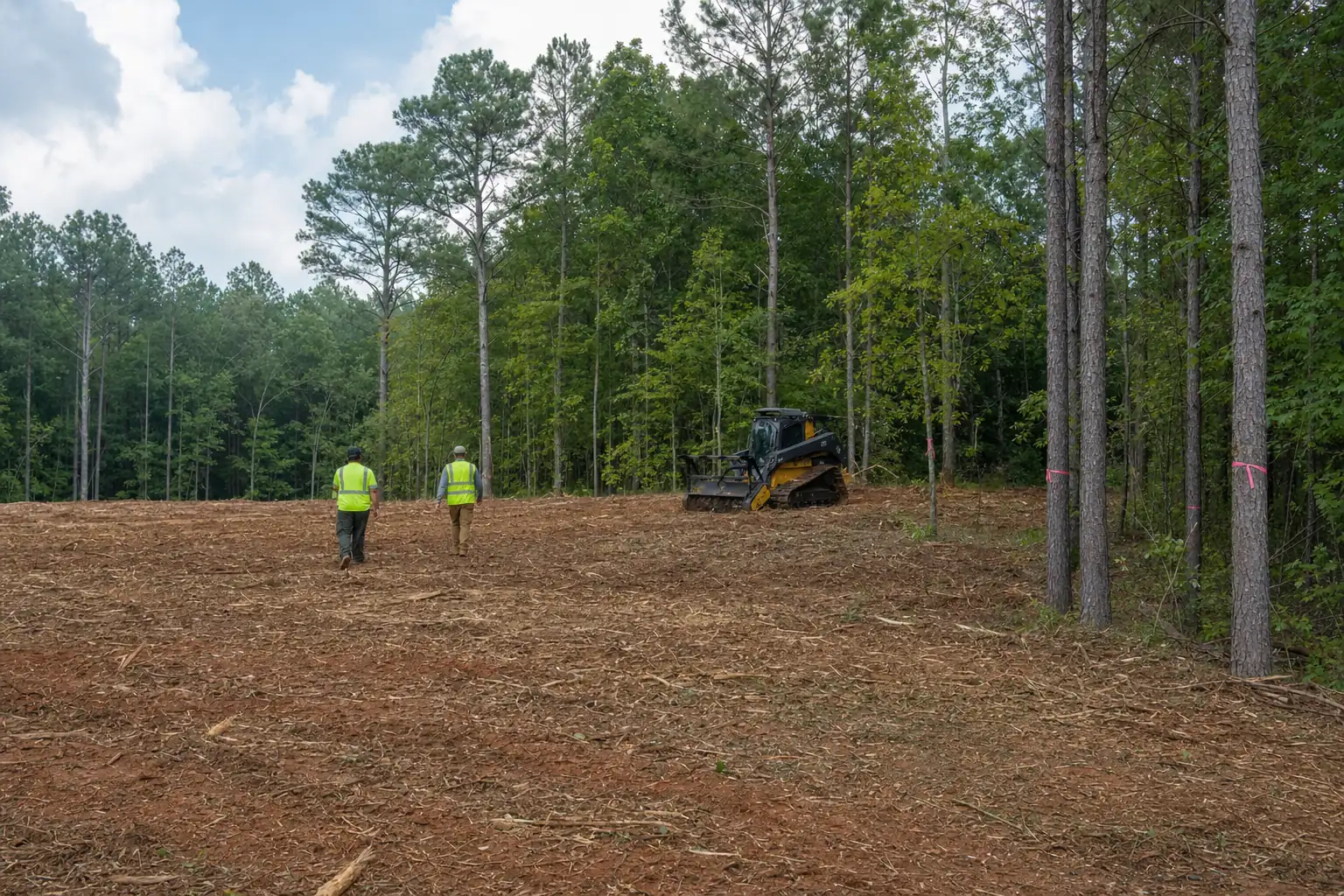
Ask three outfits to clear the same two wooded acres off a county road and you can get three numbers that look far apart. Most of the time the gap comes from what each one plans to do, and the paper doesn’t say. One means mulch the brush, grind the stumps flush and leave the chips. Another means push everything over, pull the stumps and truck it all away. A third left out the silt fence the county will ask for.
| What the contractor means | What’s left on the ground | Typical price basis |
|---|---|---|
| Forestry mulching | Chips on the ground, stumps ground flush, topsoil in place | $1,200 to $6,500+ per acre, by trunk size |
| Clear, grub and haul | Bare clay, stumps out, debris trucked off | $3,500 to $8,000 per acre |
| Mulching plus hauling | Cleared ground with the debris removed | Mulching rate plus $500 to $2,500 per acre |
Ranges are estimates for Forsyth County and the surrounding area based on job density, terrain, access and acreage. Your written quote is the only price that applies to your property.
None of those prices is wrong. They buy different finished ground. A quote earns its keep when it tells you which one you’re buying, so you can line it up against the others. For the ranges behind each method, see what land clearing costs per acre around Cumming.
The lines a complete quote carries
A written quote for clearing land should answer the questions you’d otherwise argue about on the last day of the job. Here is what each line should say and the vague version to push back on.
| Line | What it should say | Push back on |
|---|---|---|
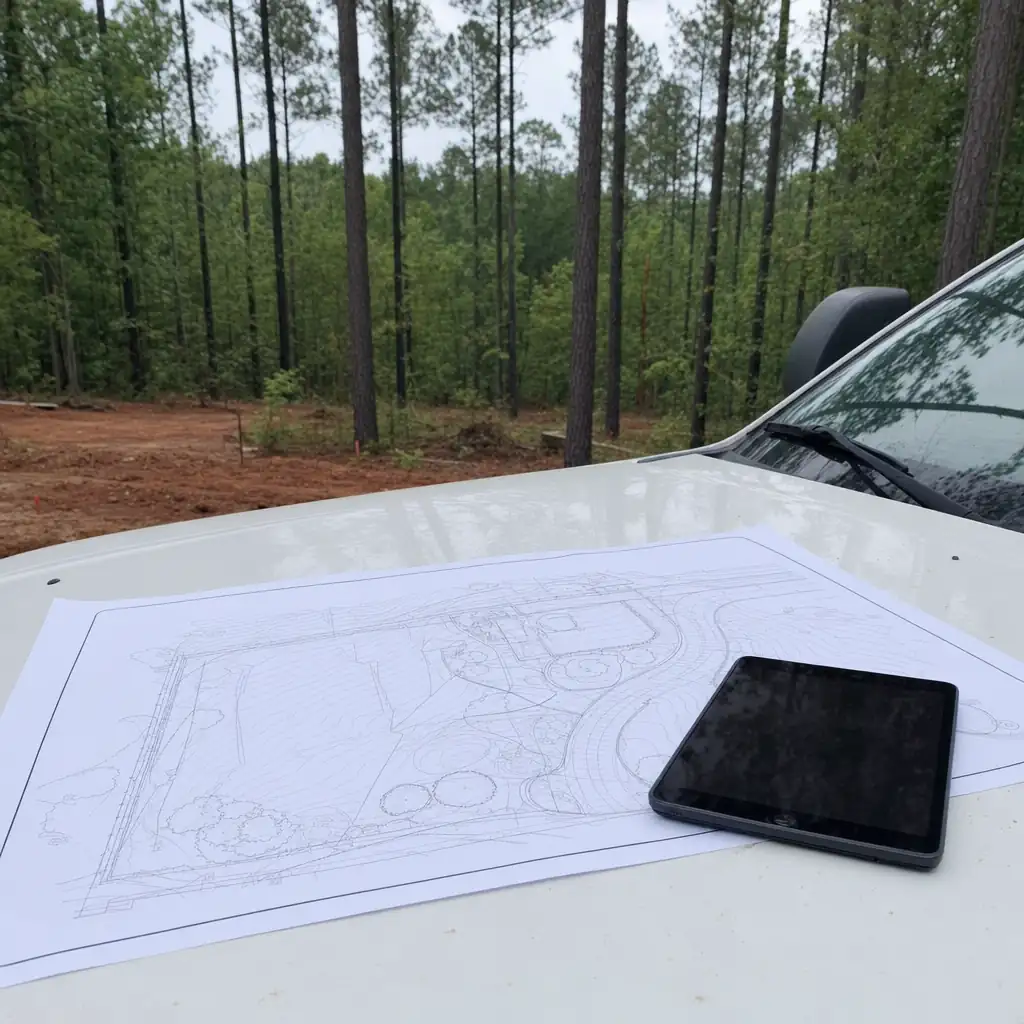
| Area | Measured acres and a map or sketch of the boundary | “Clear the lot” with no lines drawn |
| Trees that stay | Keepers flagged with you on the walk, or zones left wooded | “Save what we can” |
| Method | Which machine works which part of the land | No method named |
| Stumps | Ground flush, ground below grade or pulled, and where each applies | “Stumps handled” |
| Debris | Mulched in place, ground, hauled, or logs left for you | Nothing about where the wood goes |
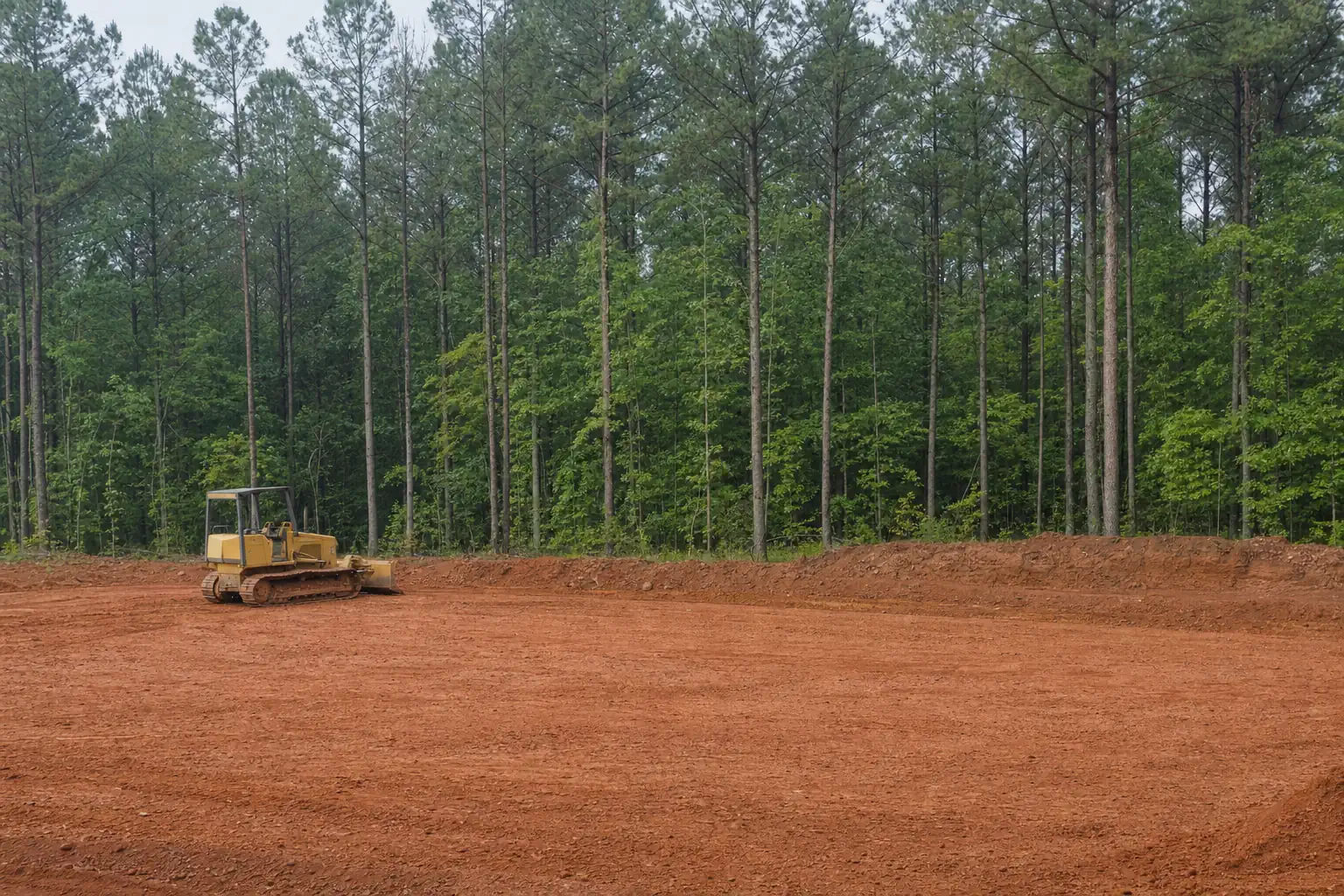
| Finish | Coarse mulch, finer chips for seeding, graded or seeded | “Cleared” |
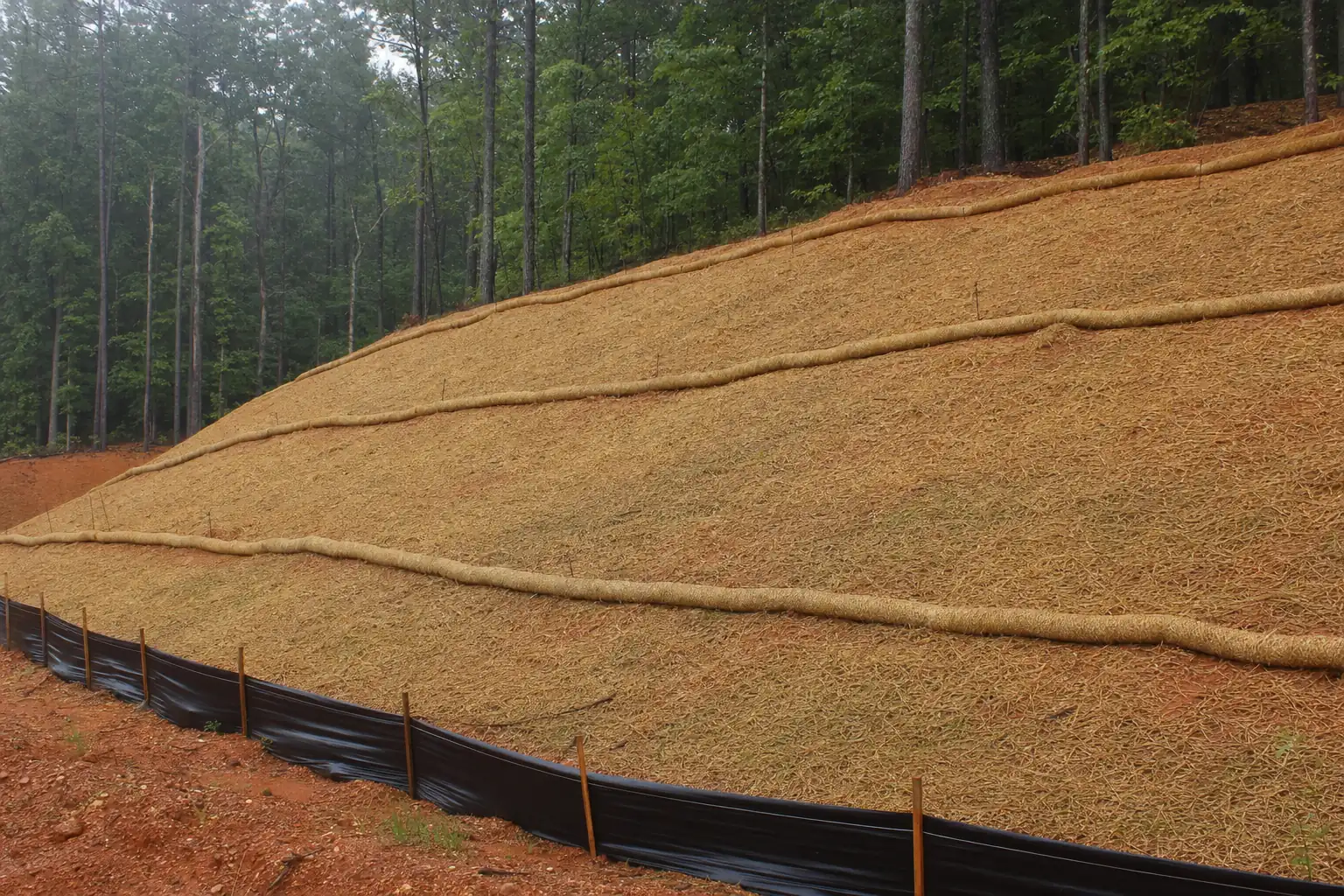
| Erosion control | Silt fence, construction exit, and who maintains them | Missing on a job of an acre or more |
| Permit | Whether one is needed, who applies, and the fee | “Customer’s responsibility” with no answer |
| Access | Gates, fences and driveway crossings, and who repairs any damage | Nothing about getting the machine in |
| Weather | What happens to the date and the price when the clay is wet | Silence |
| Exclusions | What the price leaves out, in writing | An empty line |
Our own quotes follow this list, and the same list helps you compare any contractor’s. A missing line doesn’t make the quote dishonest. It means you ask the question now instead of on site.
How the price itself should be written
Land clearing gets priced four ways, and a fair quote says which one it uses. Per-acre pricing suits open tracts where the growth is even. A flat job price suits a lot with a clear boundary. Hourly or daily machine time suits odd-shaped, storm-tangled or open-ended work where nobody can see the end from the road. Small jobs carry a minimum because the machine rides a trailer to your land whatever the size of the job.
The price bases you'll see on a quote
- $1,200 to $2,000
- Typical minimum for a small job
- $150 to $300
- Per hour for a mulcher with an operator
- $1,800 to $3,000
- Per day for a mulcher with an operator
- 4 hours
- Common minimum on hourly work
Ranges are estimates for Forsyth County and the surrounding area based on job density, terrain, access and acreage. Your written quote is the only price that applies to your property.
Hourly work isn’t a bad deal, but an hourly quote with no estimate of hours is only half a quote. Ask for the expected machine time and a ceiling the contractor will call you before passing. On a per-acre quote, ask how they measured the acres. A paced-off guess and a survey plat can differ by enough to move the total.
Stumps, debris and finish: where quotes differ most
The complaints landowners post after a bad clearing job cluster around three things: stumps left high, debris left in heaps, and chips too coarse or too deep to seed or mow. All three are finish questions, and all three belong on the quote.
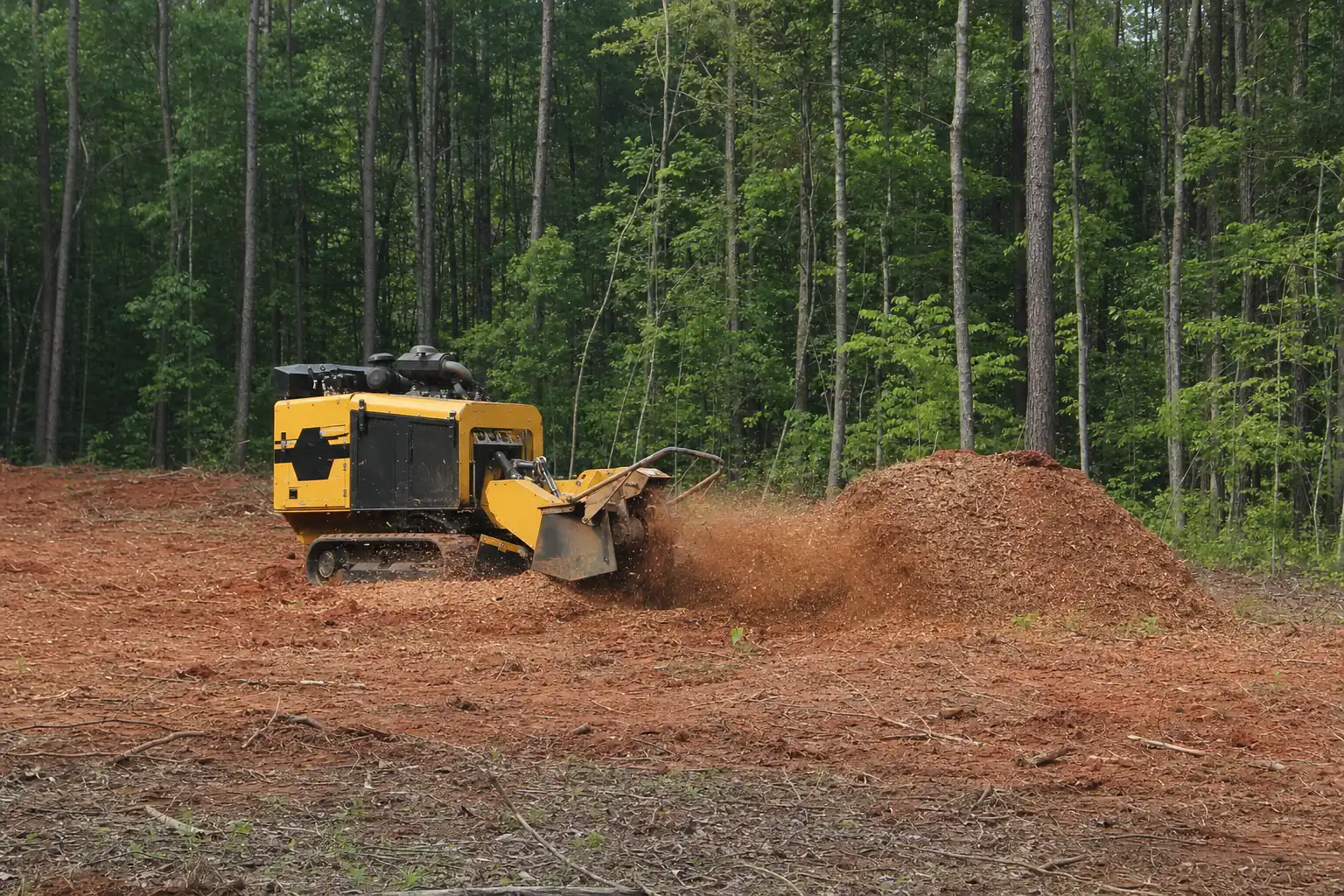
- Stumps. A forestry mulcher grinds stumps flush with the ground. Under a slab or a driveway they have to come out, which is excavator work. Grinding below grade runs $100 to $400 a stump. The quote should say which stumps get which treatment. See do stumps have to come out before a building pad.
- Debris. Mulch left in place is the cheapest answer. Old push piles and big trunks may go through a horizontal grinder. Hauling adds $500 to $2,500 an acre. A buried log pile rots and settles later. More in what happens to all the debris.
- Big trunks. Trees past 8 to 10 inches across usually get felled before the mulcher works them. The quote should say whether those trunks get mulched, ground, or cut and stacked for you as firewood.
- Chip size. If you plan to seed grass or plant a food plot, say so before the work starts. Finer chips take more passes and more time. See mulch depth and seeding.
Erosion control, the permit and 811 belong on the paper
Forsyth County treats clearing as land disturbance. Disturb an acre or more, or work within 200 feet of a creek or other state waters, and the site needs a land disturbance permit before work starts. The county’s listed fee for a clearing and grubbing permit is $250. The permit comes with an approved erosion plan, and the silt fence goes in before the first tree comes down.
Permit thresholds, fees and buffer widths are those published by Forsyth County and the State of Georgia as of November 4, 2026. Confirm current requirements with the issuing authority before work begins. This is not legal advice.
A quote for a permitted site should carry a silt fence line, often $500 to $1,200 an acre, and say who keeps it standing. Permitted sites get inspected on the permit’s schedule, at least weekly on most sites, and within 24 hours of a half-inch rain. Somebody has to do that, and the quote should name who. If stumps are coming out, the contractor should call Georgia 811 at least three business days before digging, because pulling stumps moves earth.
A single-machine operator can only quote what their machine does, so these lines often show up as “by others.” We run them on the same contract. The Forsyth County permit guide covers who needs one.
What to have ready before you ask
A contractor can only quote what they can see and what you tell them. Five things make the numbers sharper and the quotes easier to compare:
- The address and a map pin. A pin saves a wrong turn on a long gravel drive off Matt Highway or Heardsville Road.
- A plat or survey, if you have one. Pins in the ground settle the boundary before anyone argues about it.
- What the land is for. A house, a sale, a food plot and a view all call for different clearing.
- Photos. A couple of wide shots from the road and a few from inside the growth, with a trunk or two in frame for size.
- Your dates. A closing, a builder’s start or a listing date changes how the job gets scheduled.
Mention a well, a septic field, a creek or overhead lines when you first call. Each one changes where the machine can work.
Comparing quotes side by side
- 1Line them upPut the quotes next to each other, line by line, using the table on this page.
- 2Mark the gapsCircle every line a quote leaves blank or vague.
- 3Ask the questionsCall each contractor about their gaps and get the answers in writing.
- 4Check who does whatNote which pieces go to another company on another schedule.
Once the gaps are filled, the quotes usually move closer together. If one is still far below the rest, find out what it leaves out. The cheapest number is often the one that skips the silt fence or leaves the stumps under your future driveway. More on vetting the outfit itself in how to tell a land clearing company is really a forestry mulcher.
Red flags on a land clearing quote
- Nothing in writing. A number said over the tailgate protects nobody.
- “We’ll burn it.” State rules ban land-clearing burns in Forsyth County from May 1 to September 30, and the rest of the year takes permits and distance from homes. A plan that depends on burning in July doesn’t hold up. See mulching compared with burning.
- A per-acre price with no acreage. If nobody measured, the total can grow on the last day and you have nothing to point to.
- No erosion line on a big site. An acre or more with no silt fence on the quote means a stop-work order is waiting.
- An offer to clear to the water on Lake Lanier. The shoreline below the government line is Corps land. Clearing it for views or a lawn is not permitted, and the fines land on the owner.
Shoreline rules are set by the U.S. Army Corps of Engineers under the 2004 Shoreline Management Plan and were checked on November 4, 2026. A revision is in progress. Confirm with the Lake Lanier Shoreline Management Help Desk before any work near the government line.
A contractor who knows the lake will stop at the Corps line and say so. See can I clear my lot down to the water.
Cost-share and regrowth on the quote
If you own ten acres or more of forest land, some of the work may line up with a practice a Georgia cost-share program names, such as understory mulching or non-commercial thinning. The program office decides whether your job fits, and the programs pay on their own schedules, so a quote should never promise a reimbursement amount. It should itemize the work by practice so the paperwork matches the invoice. Our quotes do that. Start with Georgia’s cost-share programs.
Program figures and sign-up windows are set annually and are current as of November 4, 2026. We confirm every figure with the Georgia Forestry Commission or NRCS before any application. This page explains how programs work; it is not a guarantee of eligibility or reimbursement.
The last line worth asking for is a plan for what grows back. Sweetgum, privet and briars sprout from cleared ground within a season or two. A good quote tells you that and offers maintenance mowing or a privet follow-up, instead of letting you find out next spring.
What our quotes look like
We walk the land first, with you if you can make it. We flag the keepers, measure the area, check slope, creeks, wells and access, and note anything the permit rules touch. The written quote that follows lists clearing, stumps, debris, finish, erosion control and permit as separate lines with the exclusions spelled out. It reaches you in one business day, and the price on it is the price for your land. Questions about how we run the job are on our process page, and the whole range of clearing work is on the land clearing page.
Keep reading
Questions people ask next
- QWhat land clearing costs per acre around Cumming
- QHow do I know a land clearing company is really a forestry mulcher?
- QIs there a minimum charge for clearing a small lot?
- QDo stumps have to come out before a building pad?
- QWhat happens to all the debris
- QDo I need a permit to clear land in Forsyth County?