
Method guide · 8 min read
What Happens to All the Debris
Around Cumming, cleared brush and trees end up one of four ways: mulched in place, ground into chips by a horizontal grinder, hauled off for about $500 to $2,500 an acre, or burned under permit outside the May 1 to September 30 ban. Sawnee Land Clearing mulches or grinds on site and doesn't burn.
Four places the wood can go
Clear an acre of mixed woods off a Forsyth County road and you’re left with tons of brush, saplings, trunks and stumps. Every clearing plan has to say where that wood ends up. There are four answers, and they leave very different ground behind.
| Option | What’s left | Cost | Limits |
|---|---|---|---|
| Mulched in place | A chip layer over the ground, stumps flush | Inside the clearing price, $1,200 to $6,500+ per acre | Big trunks get felled first |
| Horizontal grinding | Chips spread or piled where you want them | Priced by the job after we see the piles | The grinder needs a firm route in |
| Hauled off | Bare ground, nothing on site | Adds $500 to $2,500 per acre | Trucks on your drive and the road |
| Burned | Ash and a scorched patch | Permits, equipment and waiting days | No land-clearing burns May 1 to Sep 30 |
Ranges are estimates for Forsyth County and the surrounding area based on job density, terrain, access and acreage. Your written quote is the only price that applies to your property.
We mulch or grind on site on nearly every job, and we don’t burn. The sections below explain why, and where hauling makes sense anyway.
Mulched in place: what the chips do
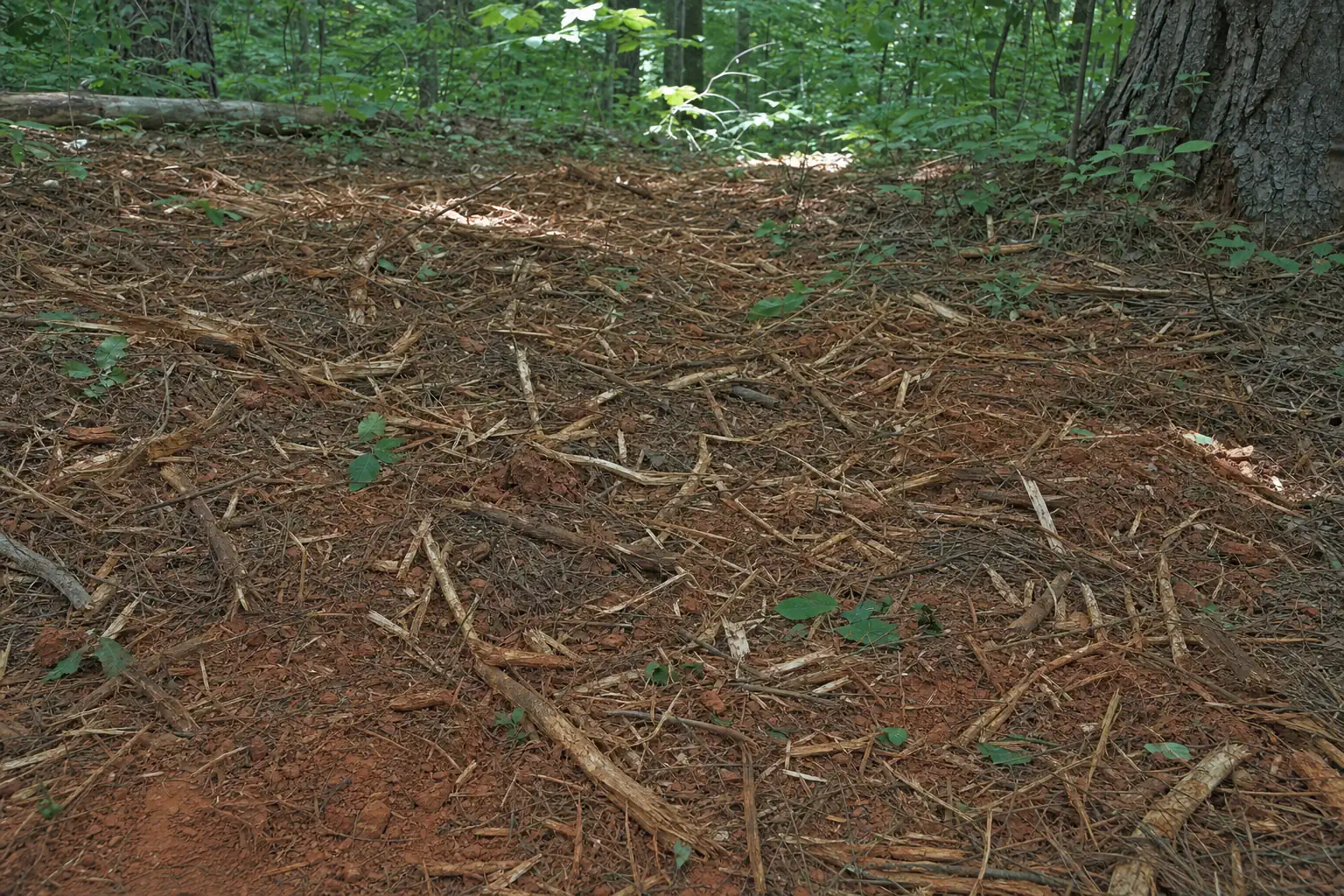
A forestry mulcher grinds brush and small trees where they stand and drops them as chips. There is no pile to deal with, no truck on your driveway and no burn permit. The chip layer covers the red clay through the first hard rains, so the slope doesn’t wash into the low side of the lot or the creek. Over a few seasons the chips break down into the soil.
Chip depth depends on how much was growing. Light brush leaves a thin layer. A dense privet thicket or a stand of 6-inch sweetgum leaves more. If you plan to seed grass or plant a food plot, tell us before the work starts: a finer chip takes extra passes but gives seed a chance. See how deep the mulch layer is and whether you can seed it. Owners also ask whether the chips draw termites to a house; that has its own answer in does forestry mulch attract termites.
Numbers behind a debris plan
- $500 to $2,500
- Per acre a haul-off adds, which mulching in place skips
- 8 to 10 in
- Trunk size where trees get felled before the mulcher works them
- $100 to $400
- Per stump to grind below grade where you will mow or plant
Ranges are estimates for Forsyth County and the surrounding area based on job density, terrain, access and acreage. Your written quote is the only price that applies to your property.
Big trunks, stumps and old push piles
A mulcher handles brush and trees up to about 8 to 10 inches across. Past that, trees get felled and the trunks dealt with on the ground. A big trunk can be mulched where it lies, fed to a horizontal grinder, or cut and stacked for you as firewood if you want the wood.
Stumps stay in the ground and get ground flush on most of the land. Under a slab or a driveway they have to come out. A pulled stump carries a ball of red clay and rock, so the excavator shakes it clean before the grinder takes it, since dirt wears down the teeth. The grinder turns the stumps into chips you can spread on bare ground or use on a trail.
Plenty of land around Cumming carries an older problem: a push pile or windrow a dozer left years ago, now grown over with briars and vines. A mulcher can’t do much with a head-high pile of logs and dirt. A horizontal grinder fed by an excavator can, and it works in any month.
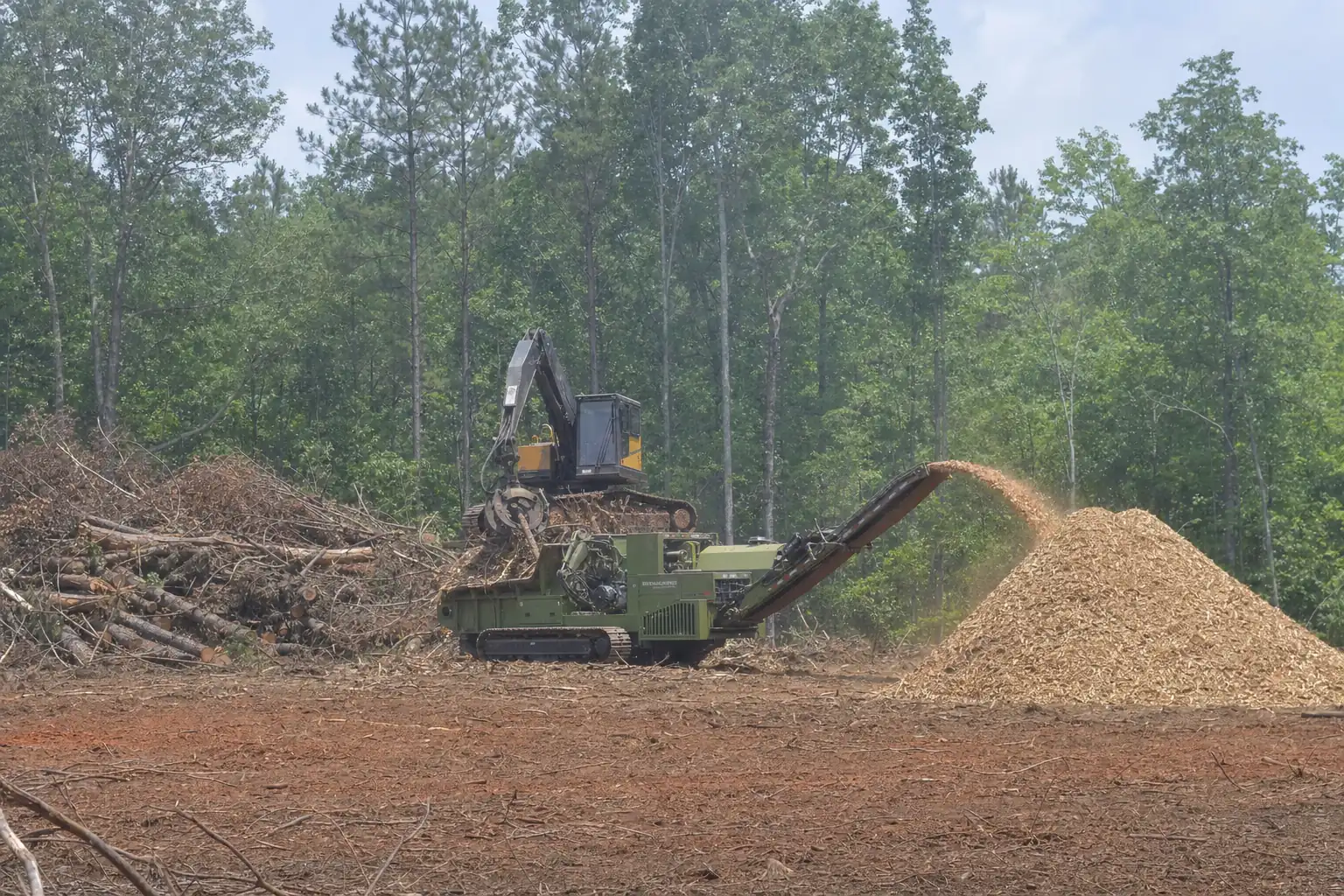
Horizontal Grinding for Debris Piles and Storm Timber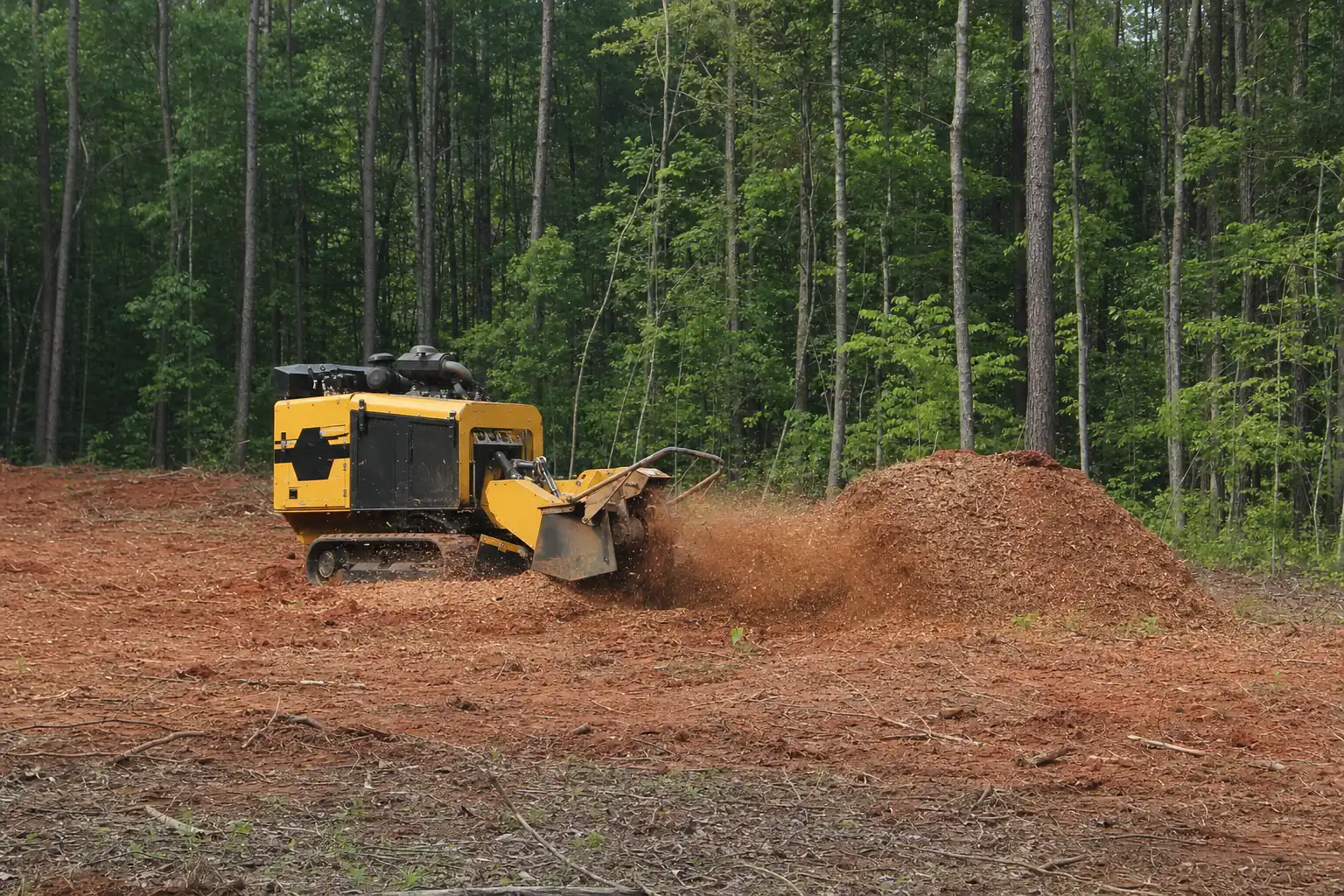 Stump Grinding, Grading and Pad Prep
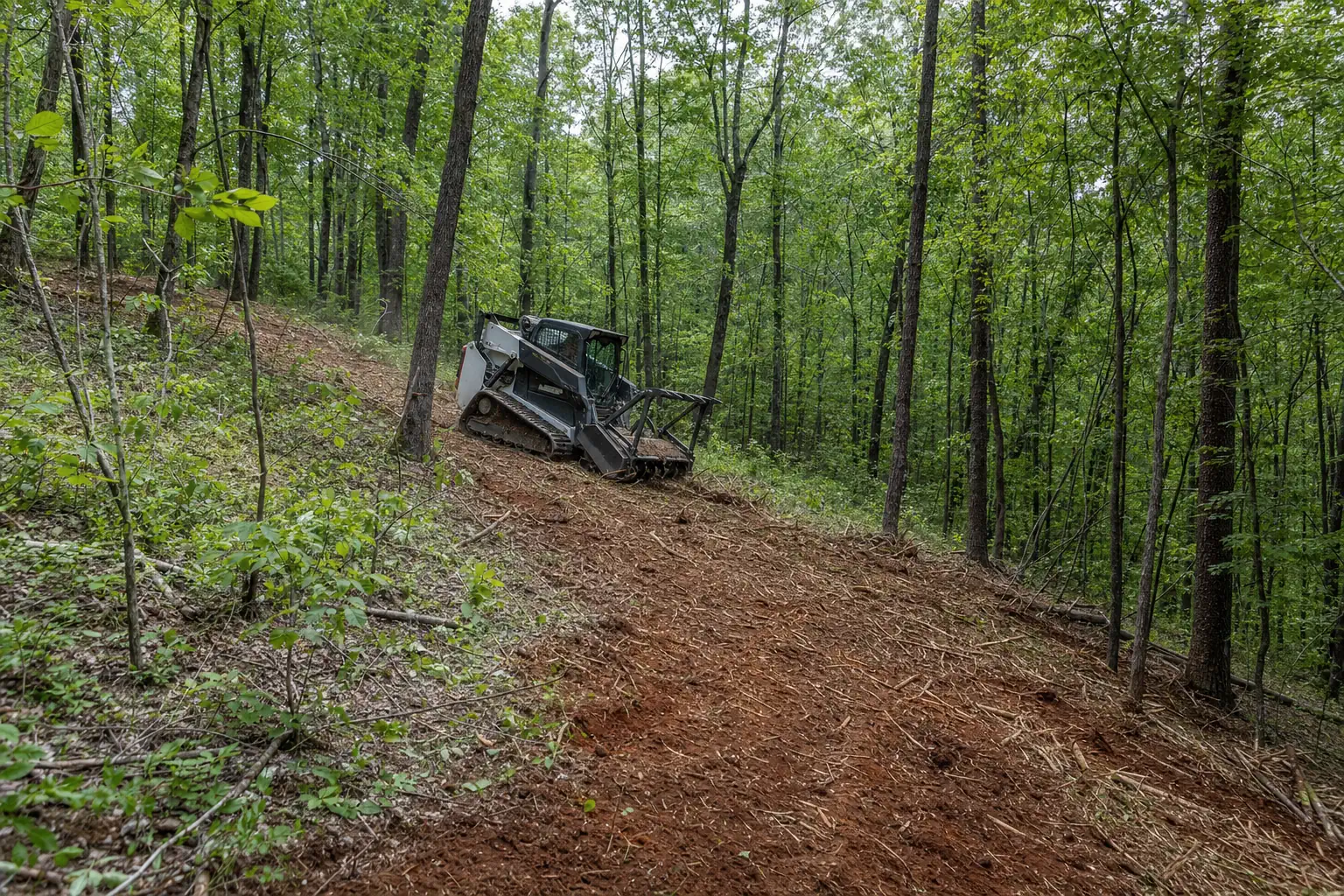 Forestry Mulching in Cumming and Forsyth County
Hauling it away
Hauling makes sense where wood can’t stay. Under a building pad or a driveway, any wood left in the ground rots and the surface settles, so stumps and root mats come out and leave the site or go through the grinder. A small lot squeezed between houses may not have room for chips the owner wants gone. Some owners want bare, clean ground for sod.
The cost is real. Trucking debris off adds about $500 to $2,500 an acre on top of the clearing. The trucks also run over your driveway and track clay onto the road, which is why permitted sites get a gravel construction exit first. A traditional clear, grub and haul job runs about $3,500 to $8,000 an acre and leaves bare clay that needs silt fence and seed to hold it. If you’re comparing that against mulching, see forestry mulching compared with bulldozing and grubbing.
Burning: the rules in Forsyth County
Burning looks free until you read the rules. Georgia’s summer open burning ban covers Forsyth County, and land-clearing debris falls under it.
Burn rules for land-clearing debris
- May 1 to Sep 30
- No land-clearing burns in Forsyth County, with or without an air curtain burner
- Oct to Apr
- Outdoor burning season, with a county fire permit first
- 1,000 ft
- Distance a land-clearing burn must keep from occupied buildings
- 300 ft
- Distance between an air curtain burner and any occupied building or public road
Permit thresholds, fees and buffer widths are those published by Forsyth County and the State of Georgia as of November 4, 2026. Confirm current requirements with the issuing authority before work begins. This is not legal advice.
The rest of the year, burning still takes paperwork and conditions. Hand-piled natural vegetation from your own yard is one thing. Debris from machine clearing falls under the state’s land-clearing burn rules and may require an air curtain destructor, a burner that runs the fire under a curtain of forced air. The county can also call a burn ban during a dry spell. On a subdivision lot in south Forsyth, the 1,000-foot distance from occupied buildings puts an open land-clearing burn out of reach on most lots.
A pile that has to wait for the season, a permit and a calm day also sits on your land for months, drying out next to the woods. We don’t burn. More detail in burn permits, the summer rules and why we don’t burn and mulching compared with burning.
Debris near creeks and on slopes
Where the debris lands matters as much as what happens to it. A push pile shoved into a draw blocks the water the next time it rains hard, and the runoff cuts a new gully around it. Brush pushed toward a creek ends up in the creek. Forsyth County keeps a 50-foot undisturbed buffer along streams, plus a 25-foot setback, and machines and piles stay out of it.
On a Piedmont slope, chips left where they fell are the cheapest erosion control you’ll get. They break the force of the rain and slow the water running downhill, which bare clay can’t do. On a steep lot near Sawnee Mountain or a bank above a Lanier cove, mulching in place often holds the ground better than anything you could truck in. Permitted sites still get silt fence on the low side; see erosion control and silt fence.
Burying it
Some clearing jobs end with the logs and stumps pushed into a hole and covered over. It’s cheap on the day and costly later. Buried wood rots, and the ground over it sinks. If that spot ever becomes a yard, a driveway or a building site, someone pays to dig it back up. If you’re buying land, a low, soft patch near an old clearing is worth asking about. We don’t bury debris.
What to ask about debris before you sign
- Where does each stump go? Ground flush, ground below grade, or pulled and then ground or hauled.
- Will any piles be left? If the answer is yes, ask where, how big, and who deals with them later.
- What size are the chips? Coarse is fine for woods. Seeding, mowing or a food plot needs finer.
- Who takes the trash? Old fence wire, tires and dumped junk turn up in Forsyth County woods. A mulcher can’t eat wire, and somebody has to haul it.
- Do you want the logs? Say so on the walk, before they go through a grinder.
Put the answers on the quote. Debris is the line most likely to start an argument on the last day of a job, and the easiest one to settle before the first.
Timber worth selling
Wood with value shouldn’t go through a mulcher. On larger tracts with merchantable pine, a timber sale can come before the clearing, and the loggers take the trunks they can sell. What they leave behind, tops, limbs and the stems too small to sell, is what we mulch or grind afterward. A consulting forester can tell you whether your stand is worth marketing and run the sale. See can I sell the timber to offset clearing cost and working with a consulting forester.
A house lot with a few dozen mixed trees usually doesn’t have enough sellable volume to bring a logging crew. That’s a call for the forester, and we’ll tell you if we think it’s worth asking.
Matching the debris plan to the job
| Job | Where the debris goes |
|---|---|
| House lot | Mulched across the lot; stumps under the pad pulled, shaken clean and ground |
| Underbrushing under big trees | All of it mulched in place under the canopy |
| Old pasture gone to sweetgum and privet | Mulched, with a finer chip where you’ll seed |
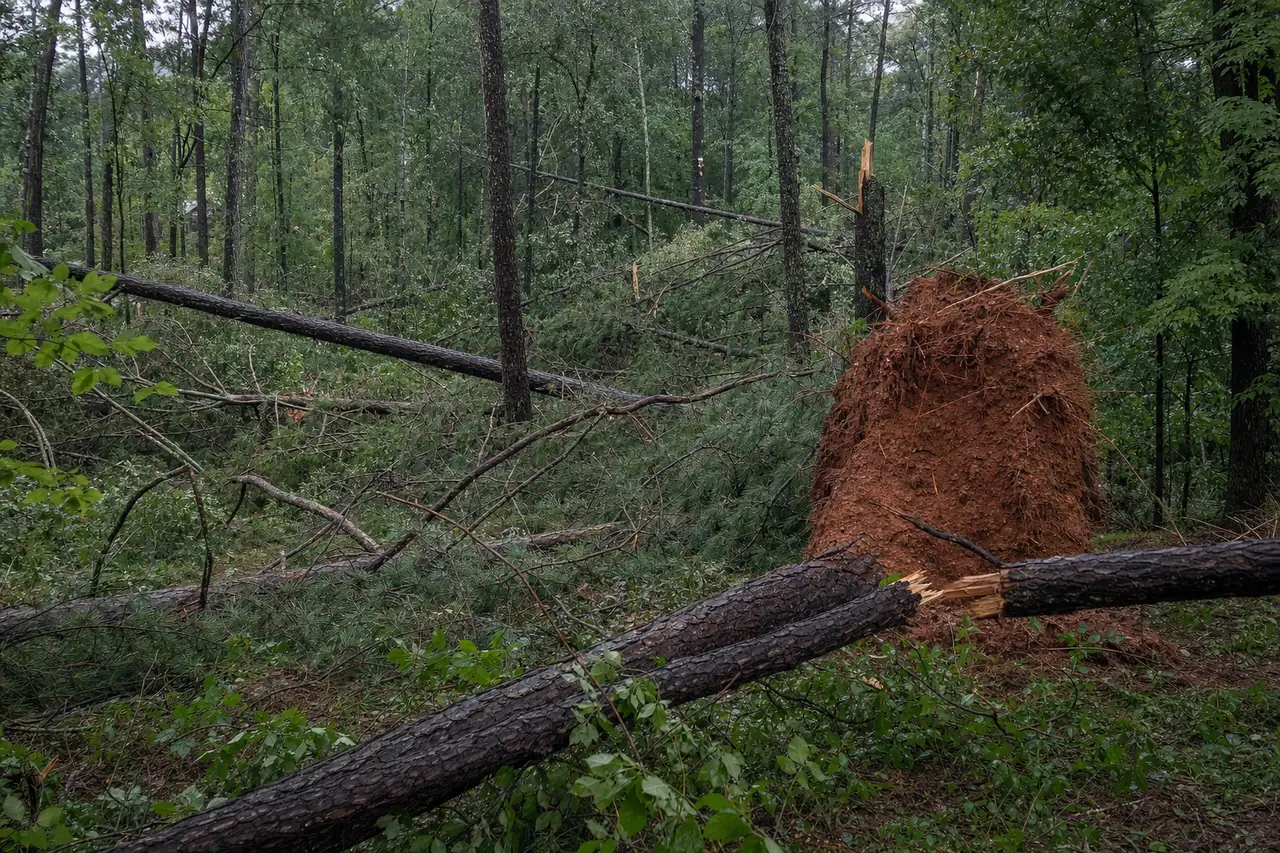
| Storm-downed timber | Cut to length and ground, or logs stacked if you want them |
| Old push piles | Pulled apart and run through a horizontal grinder |
| Merchantable pine | Sold first, then the tops and limbs mulched or ground |
Storm jobs have their own page: storm damage cleanup and downed timber removal.
On a house lot, the pad area needs clean ground for the builder, so chips that fall there get pushed out to the edges of the lot before grading. On a lake lot, every chip and log stays on your side of the government line. Nothing gets pushed, dumped or spread onto the Corps shoreline, and cutting or removing wood there takes the Corps’ written permission.
Shoreline rules are set by the U.S. Army Corps of Engineers under the 2004 Shoreline Management Plan and were checked on November 4, 2026. A revision is in progress. Confirm with the Lake Lanier Shoreline Management Help Desk before any work near the government line.
Mulch slows regrowth for a while. Sweetgum, privet and briars sprout from the roots left in the ground within a season or two, and the chips break down into the soil over a few seasons. Plan for maintenance mowing once or twice a year on anything you want to keep open. Our quotes say where every pile, trunk and stump will end up, line by line. See what a land clearing quote should include, or start from the land clearing page.
Keep reading