
Straight answer · 4 min read
Can I Sell the Timber to Offset Clearing Cost?
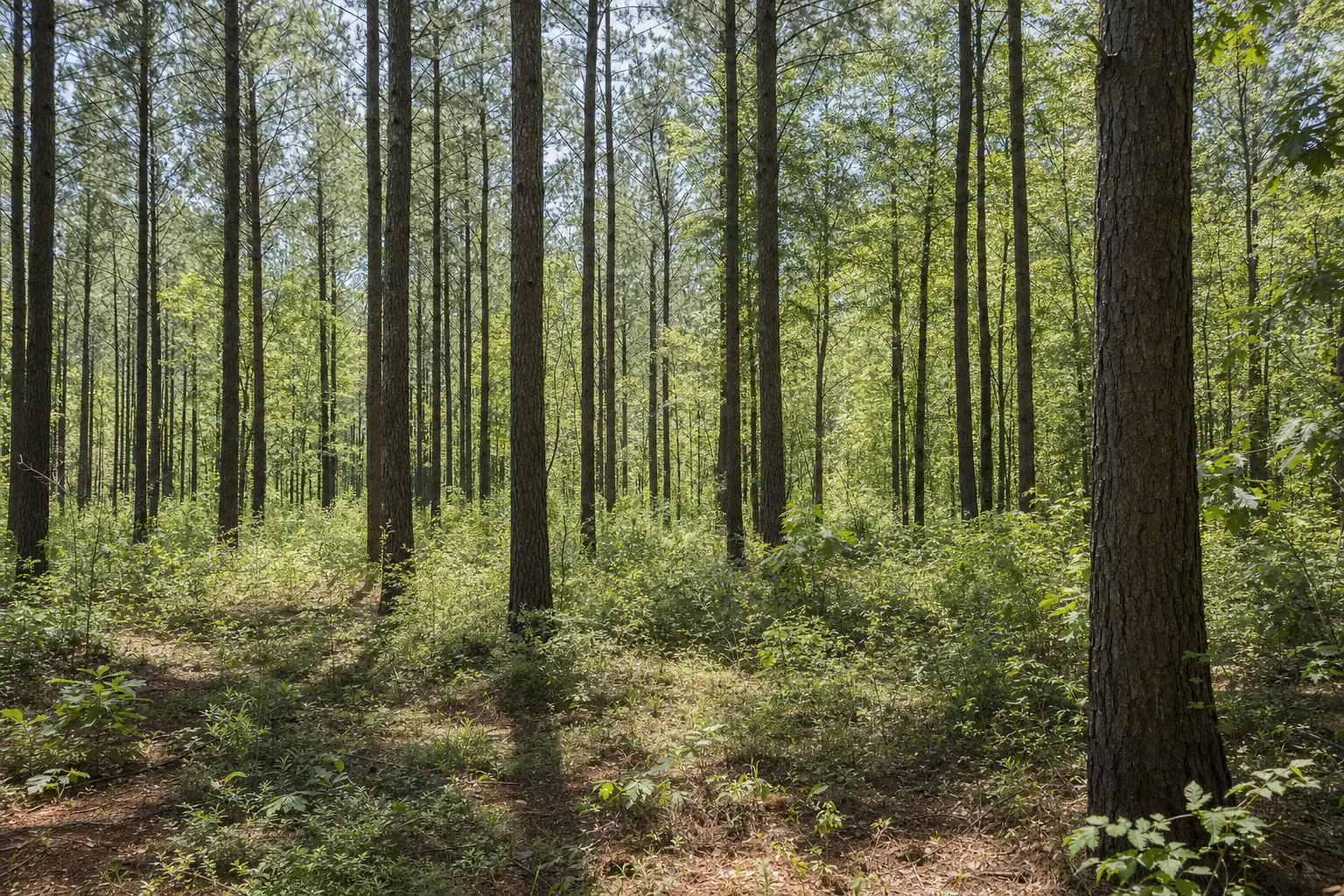
Sometimes. If your land around Cumming, Georgia carries enough pine of a size a timber buyer wants, a sale before clearing can bring money back and leave less to clear. Brush, privet, saplings and scattered trees on a house lot usually have no buyer. A consulting forester can tell you which you have before anyone cuts.
The question comes up on a lot of walks around Forsyth County, usually on land with some pine on it. Whether a sale helps depends on what the trees are, how many there are and whether a log truck can reach them. This page sets out those factors. We won’t put a dollar figure or a percentage on what a sale returns, because that depends on a measurement of your stand and on what buyers are paying the week it sells.
What makes timber worth selling
- Species. Pine of sellable size is what a timber buyer looks for first. Privet, briars and saplings have no market.
- Size. Young pines too small to sell are pre-commercial. Thinning them costs money instead of making it; see pre-commercial thinning.
- Volume. A logging crew has to move in its own equipment. A dozen pines around a house site is rarely enough wood to interest one.
- Access. A loaded log truck needs a way in and a place to turn. Steep ground, a creek crossing or a narrow drive can rule a sale out.
What usually happens to each kind of tree
| What’s on the land | Buyer interest | What happens to it |
|---|---|---|
| A stand of sizable pine over several acres | Often worth a forester’s look | Sold and harvested first, then the rest cleared |
| Scattered big pines on a house lot | Usually too little volume | Felled; logs decked if you line up a buyer |
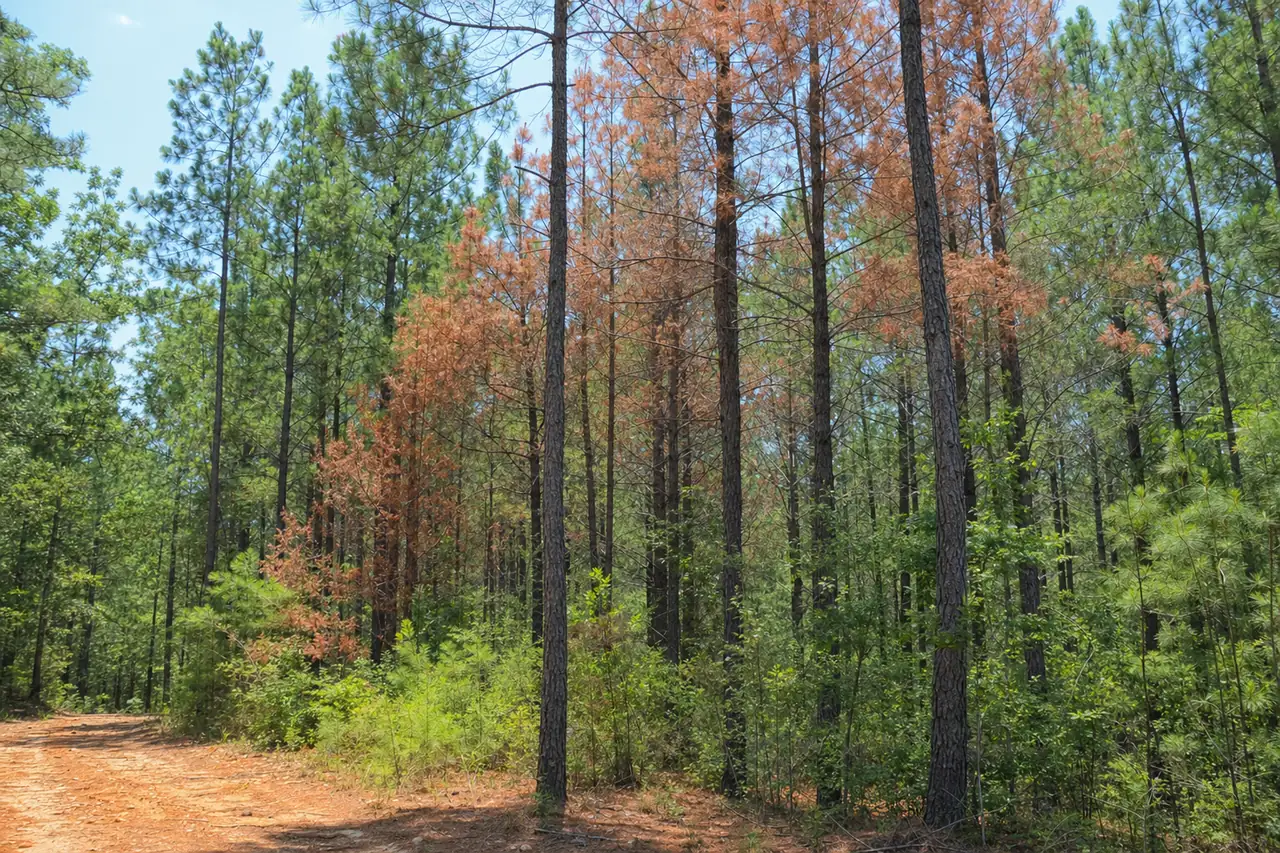
| Beetle-killed or storm-downed pine | Possible salvage, if handled quickly | Sellable logs sorted, tops mulched |
| Brush, privet and saplings | None | Mulched in place |
Start with a consulting forester
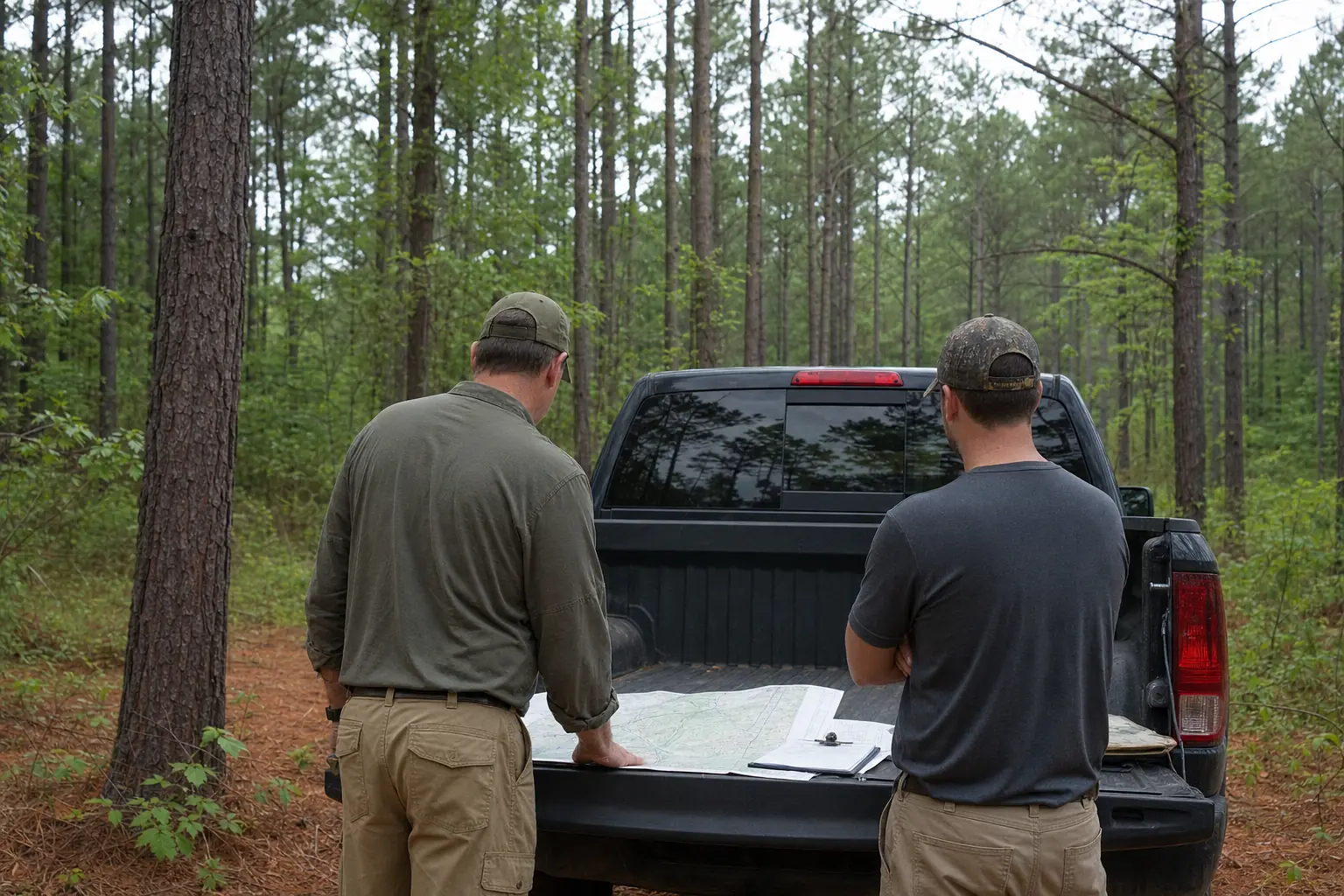
A consulting forester works for the landowner. They walk the stand, estimate the volume and put the sale out to more than one buyer. We don’t value timber. When a forester is involved, we plan the clearing around the harvest and work to their marks. See working with a consulting forester.
When a timber sale doesn’t fit
A sale works best when the land has real volume and you don’t need it cleared by a set date. It fits poorly in a few common cases:
- A house lot. The trees in the footprint and driveway are too few to sell, and the big ones around the house are often the ones you want to keep.
- A closing date. Marking, selling and harvesting add a step before clearing can start. If the builder is waiting, we fell the trees and deck any sellable logs as part of the job.
- Shade and screening. Selling the pine off a homesite also sells the shade and the screen from the road.
Check the Forsyth County rules before anyone cuts
Timber harvesting and forestry work are permitted in Forsyth County only in agricultural zoning districts. Property that has been clear cut is not eligible for rezoning for three years. Forestry is exempt from the county’s land disturbance permit, but if forestry work disturbs a stream buffer, no other land-disturbing activity except normal forest management is allowed on the whole property for three years.
Permit thresholds, fees and buffer widths are those published by Forsyth County and the State of Georgia as of November 4, 2026. Confirm current requirements with the issuing authority before work begins. This is not legal advice.
If you plan to build, subdivide or sell to someone who will, those rules matter more than the timber check. Talk to the county before a harvest, and tell us the plan on the walk. More in tree removal permits in Forsyth County.
What’s left after the timber truck leaves
- 1Forester and saleStand measured, timber marked and sold to a buyer.
- 2HarvestThe logger cuts and hauls the merchantable wood.
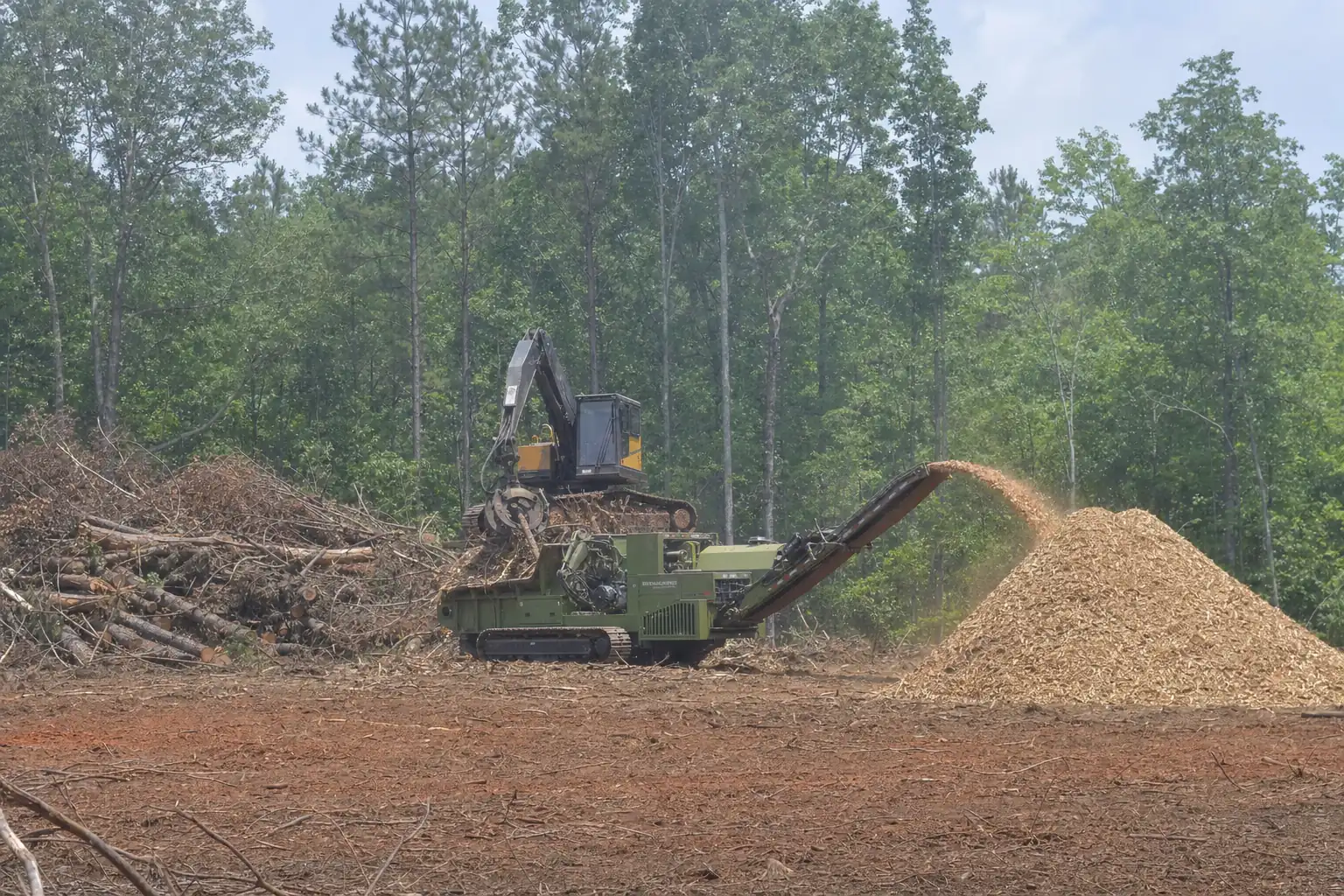
- 3Clean up the cut-overTops, limbs and leftover stems mulched, and slash piles ground.
- 4Finish the groundStumps ground or pulled where needed, silt fence where required.
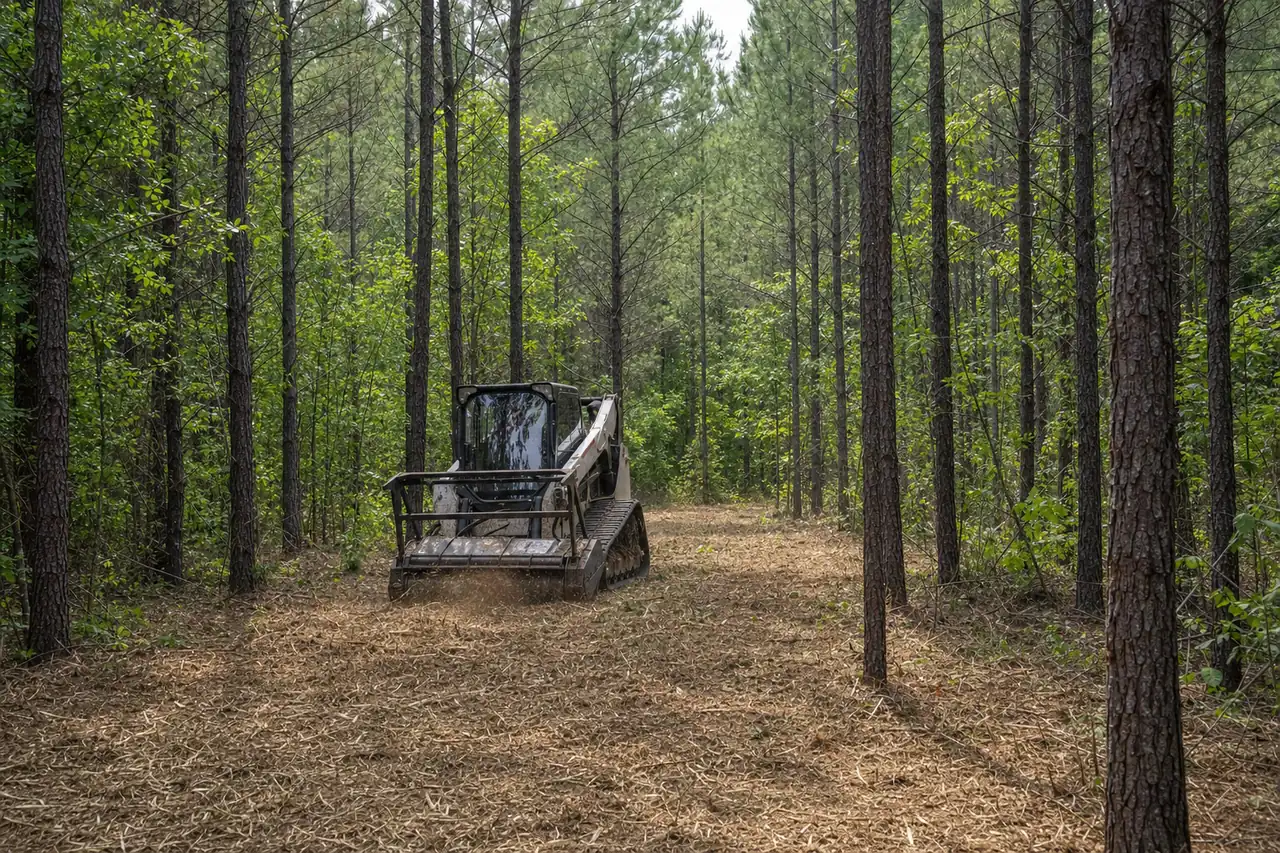
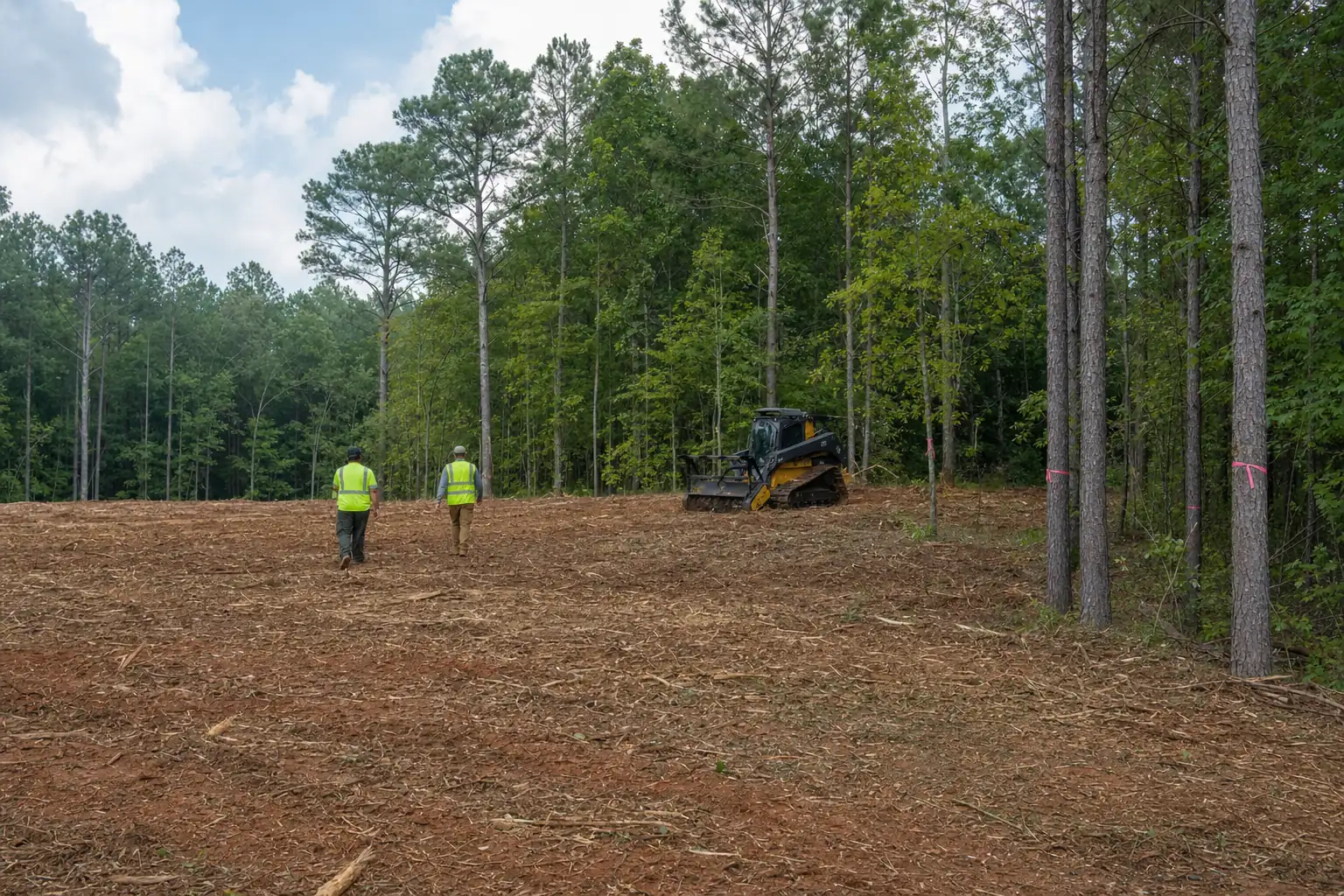
A cut-over tract carries heavy slash, and that adds machine hours to the clearing that follows. We mulch the tops and limbs in place and run old piles through a horizontal grinder instead of burning them. Forest land that stays in trees may fit post-harvest site prep, and Georgia’s forest programs list site preparation on tracts of ten acres or more; see Georgia’s cost-share programs.
Program figures and sign-up windows are set annually and are current as of November 4, 2026. We confirm every figure with the Georgia Forestry Commission or NRCS before any application. This page explains how programs work; it is not a guarantee of eligibility or reimbursement.
Open ground after a harvest fills with sweetgum, briars and privet within a season or two. Plan for maintenance mowing or replanting. The full picture of what clearing involves is on our land clearing page.
FAQ
More about timber and clearing
- How much is my timber worth?
- We can't tell you, and a number from anyone who hasn't measured the stand is a guess. A consulting forester cruises the timber, estimates the volume by product and can put the sale out to buyers.
- Will a logger clear the land in exchange for the timber?
- A logger takes the wood a mill buys. Tops, limbs, brush, small stems and stumps stay behind, so a logged tract still needs clearing before it's a pasture, a homesite or open woods.
- Can you set aside logs from my lot for a buyer?
- Yes. When a job has sellable logs, we sort them from the tops and deck them where a log truck can load, for a buyer you or your forester line up. Everything else gets mulched in place.
Keep reading