Straight answer · 4 min read
What Is Pre-Commercial Thinning and When Is It Worth It?
Pre-commercial thinning is cutting small, crowded trees that have no market value yet, so the best stems in a young pine stand get the light and water to grow. In North Georgia it's worth it on a dense stand you'll hold for timber, cut to a forester's basal area target, with the stems mulched in place.
Pre-commercial thinning sits early in the life of a pine stand, years before anyone sells a log from it. It costs money instead of making money, which is why landowners want to know whether it pays off.
What it is, and how it differs from a commercial thinning
A young pine stand, planted or seeded in naturally after a harvest, often comes up far thicker than the land can grow into sawtimber. The trees compete for light and water, crowns stay small, and the whole stand grows slowly. Pre-commercial thinning cuts out a share of those small stems so the best ones have room.
| Pre-commercial thinning | Commercial thinning | |
|---|---|---|
| Tree size | Too small to sell | Big enough for a timber buyer |
| Money | Costs the landowner | Brings in a check |
| Cut trees | Mulched or left where they fall | Hauled to a mill |
| Who does it | A mulching crew, to a forester’s prescription | A logger, under a timber sale contract |
Foresters write the prescription to a target, usually a basal area or a number of stems per acre. Basal area is the square feet of trunk per acre measured at chest height; it tells the forester how crowded the stand is.
Signs your stand may need it
- You can’t walk through it. Pines so close together you have to turn sideways.
- Small crowns on thin trunks. Tall, skinny trees with a tuft of green at the top.
- Dead lower limbs and dead small trees. The stand has started thinning itself, slowly and unevenly.
- Hardwood and privet in the gaps. Sweetgum and privet crowding in wherever a pine died.
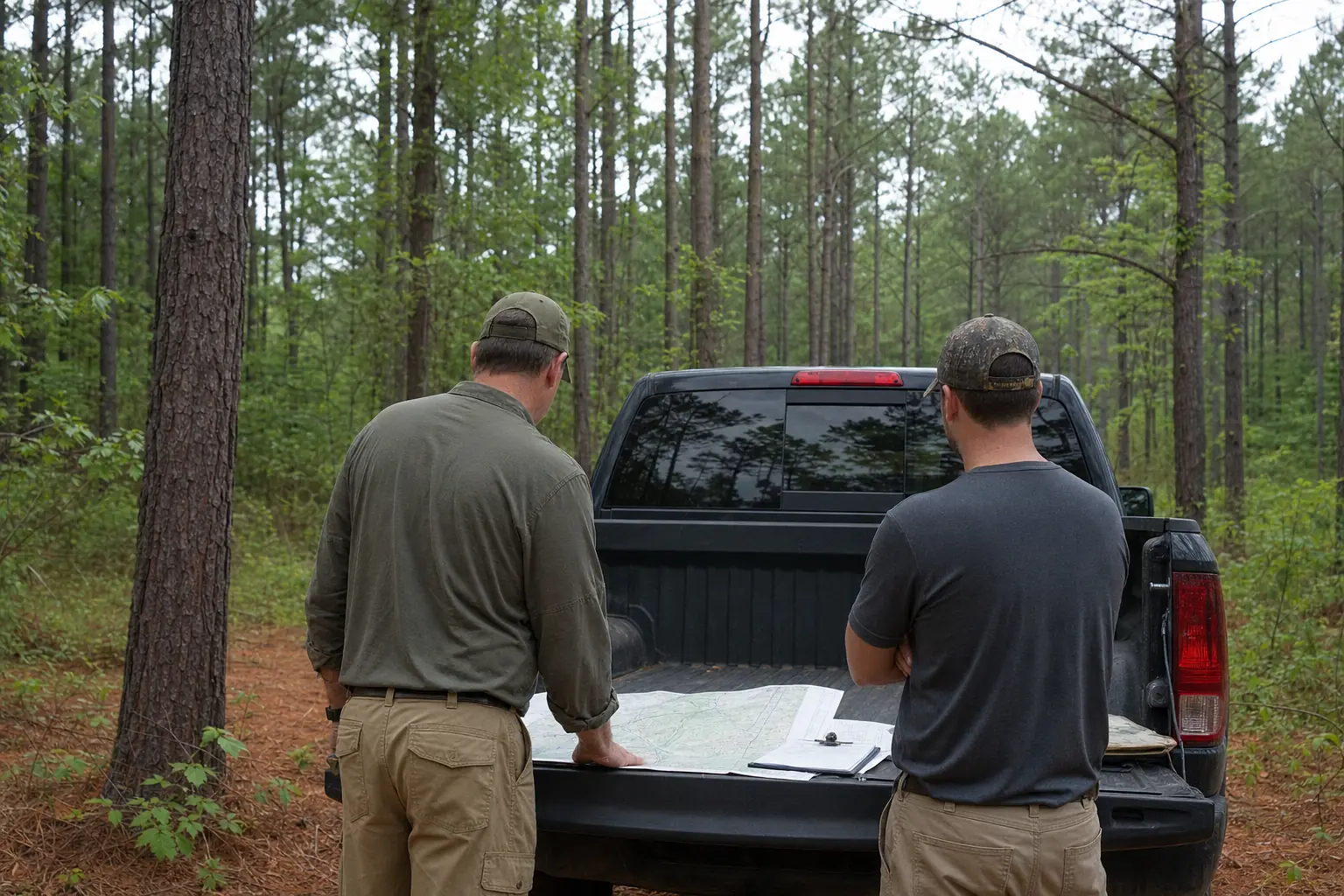
Those are reasons to call a consulting forester to cruise the stand. The forester decides whether it needs thinning now, whether it can wait for a commercial thinning, or whether it’s fine as it is.
When it’s worth it, and when it isn’t
- Worth it: a dense young stand you plan to hold for timber, where the trees won’t reach a sale-size thinning without help.
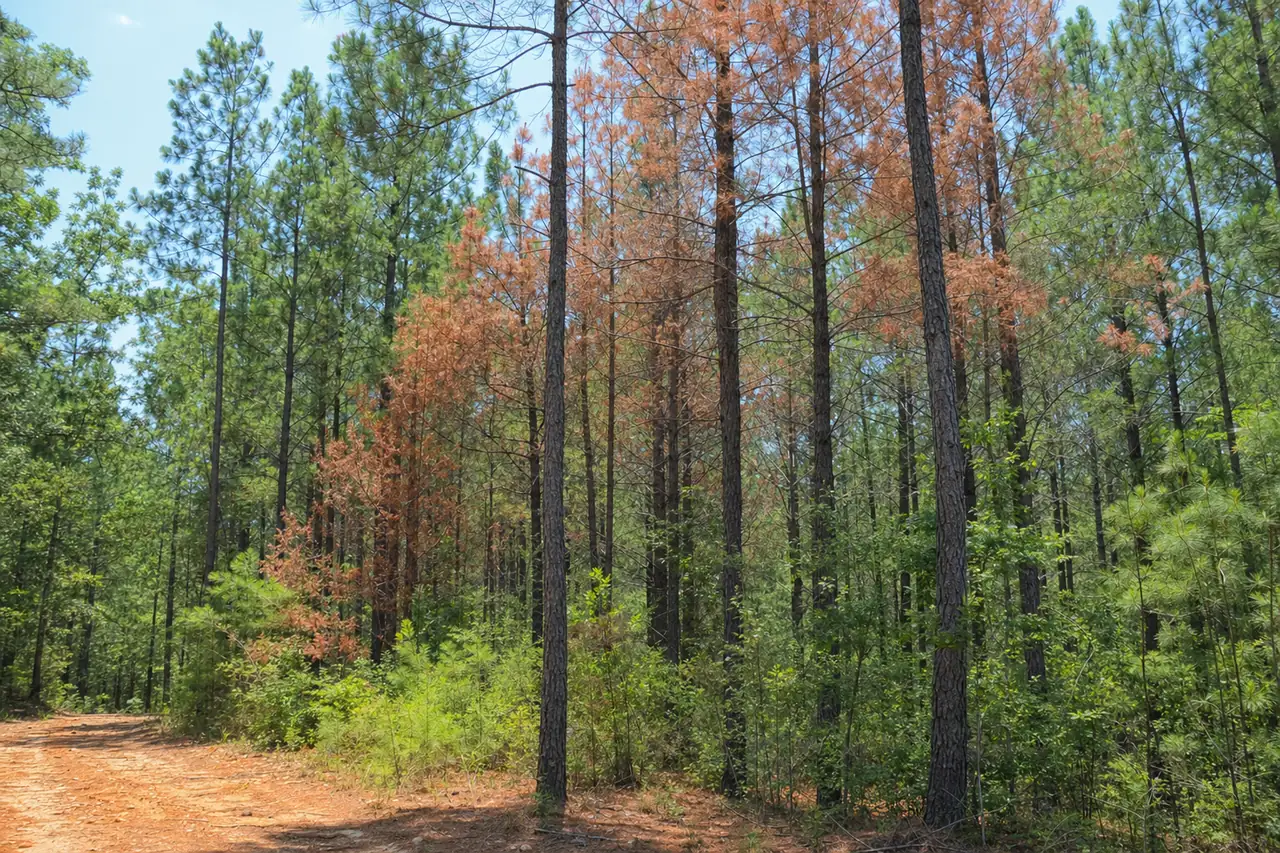
- Worth it: crowded pines in a county with beetle activity. Thinning crowded stands is one of the prevention steps Georgia’s foresters recommend against southern pine beetle; see signs of southern pine beetle.
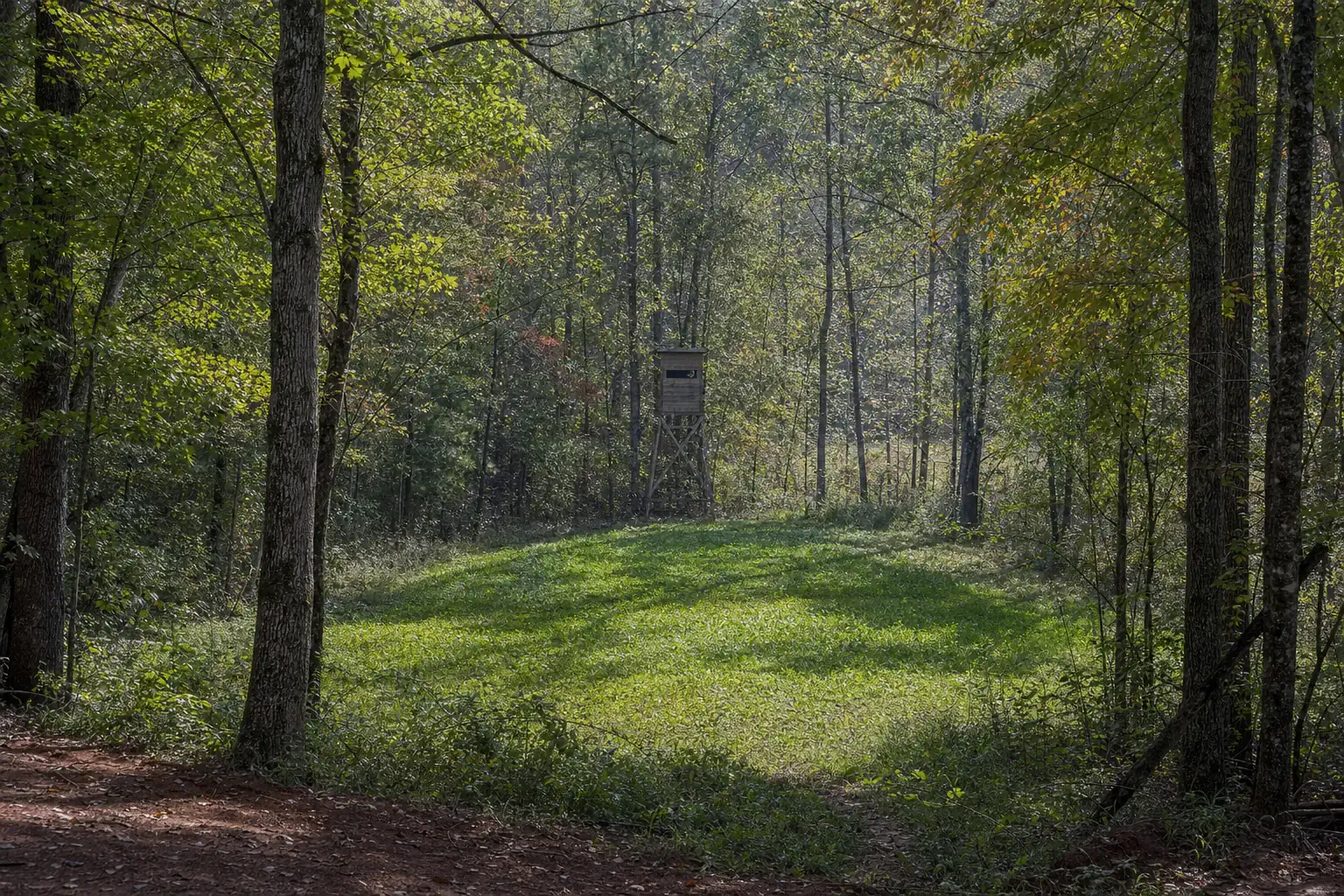
- Worth it: hunting land, where opening the stand lets light reach the ground for browse and cover.
- Not worth it: a stand close to sale size, where a commercial thinning would do the same job and pay you for it.
- Not worth it: land headed for development in the next few years.
How the work gets done
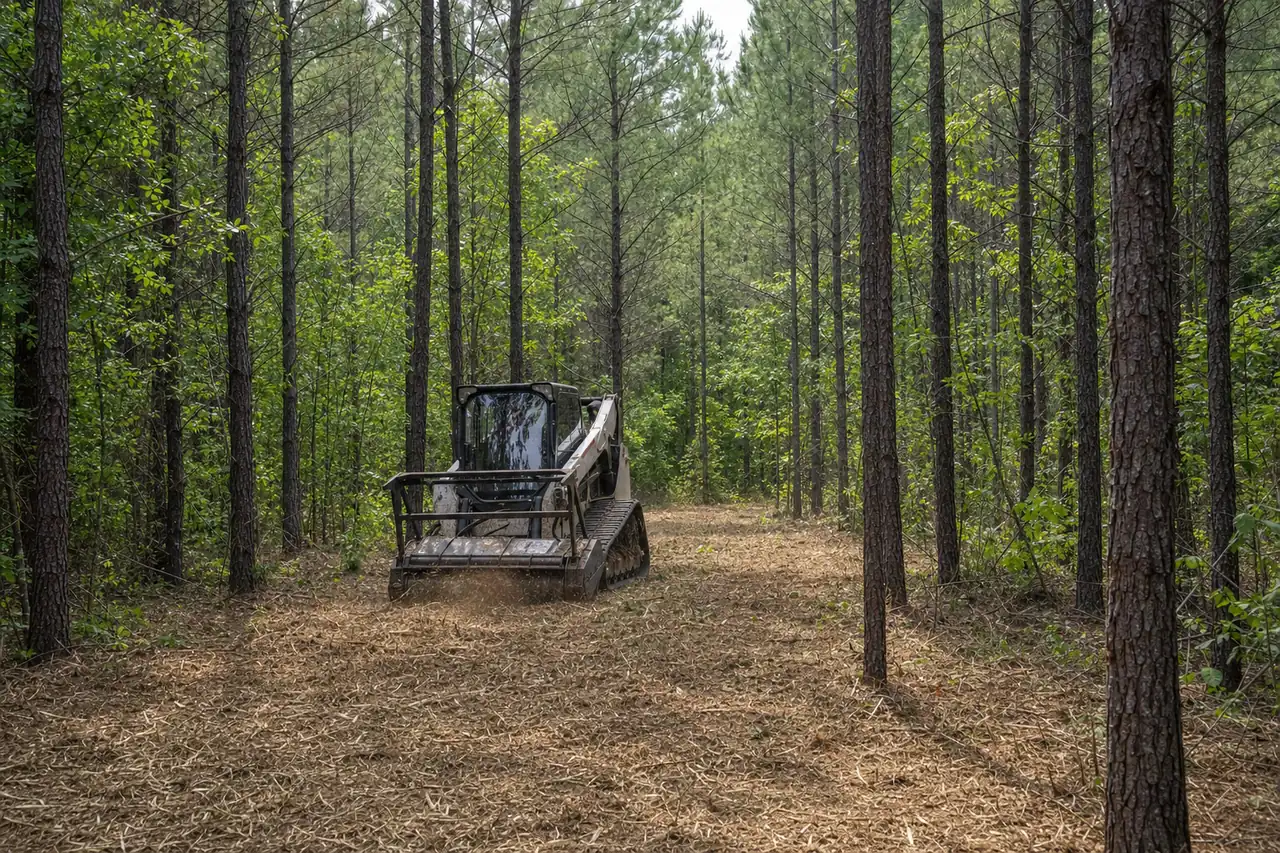
Most pre-commercial thinning around Forsyth County goes faster and cleaner with a forestry mulcher than with saws. The mulcher grinds the cut stems where they stand, so nothing is left lying in the stand to trip the next crew or feed a fire.
- 1Read the prescriptionTarget basal area or spacing, marks, and the forester's notes.
- 2Flag the creeksStreamside management zones marked and kept out of the work.
- 3Thin to the marksCut stems mulched in place, keepers left without bark scrapes.
- 4Walk it with the foresterThe stand checked against the prescription, with records for the file.
Machine time depends on stem size. A mulcher spends about 3.5 hours an acre where the biggest stems are 4 inches, and about 10.5 hours where they reach 12 inches. Most pre-commercial work is in the smaller stems, which is light to mixed-band mulching: about $1,200 to $2,500 an acre for saplings under 4 inches, and $2,500 to $4,000 for stems 4 to 8 inches.
Ranges are estimates for Forsyth County and the surrounding area based on job density, terrain, access and acreage. Your written quote is the only price that applies to your property.
Thinned stands put light on the ground, and the sweetgum, red maple and privet underneath respond. Plan on a follow-up, such as a release treatment applied by licensed applicators, or the hardwoods crowd the pines again.
Herbicide applications are performed by licensed applicators in accordance with the product label.
Where firebreaks or log decks are open ground, mowing keeps them open.
Georgia pays toward non-commercial thinning
Georgia’s Resilient Forest Incentives Program lists non-commercial thinning on its published schedule at $130 an acre, with a ten-acre minimum and a sign-up window of June 15 to July 3. Federal EQIP lists Forest Stand Improvement among Georgia’s forestry practices.
Program figures and sign-up windows are set annually and are current as of November 4, 2026. We confirm every figure with the Georgia Forestry Commission or NRCS before any application. This page explains how programs work; it is not a guarantee of eligibility or reimbursement.
The programs pay by their own schedules, and the program office decides whether your work fits a practice. We confirm the figures with the program office before you apply. More in does Georgia pay for thinning or firebreaks and on the cost-share hub. The full service is on timber stand improvement, part of our hunting and timber land work.
FAQ
More about pre-commercial thinning
- What age should pines be for pre-commercial thinning?
- Your forester decides by the stand, not by a birthday. The usual trigger is a young stand too crowded to grow, with trees still too small for a timber buyer. Once the trees reach sale size, a commercial thinning does the job and pays you instead.
- What happens to the trees you cut?
- We mulch them in place. A forestry mulcher grinds the cut stems where they stand, so nothing is left lying in the stand and nothing gets burned. The trees you keep stay standing without bark scrapes.
- Will the hardwoods come back after thinning?
- Yes. Sweetgum, red maple and privet under the pines respond to the new light and resprout. A forester may prescribe a follow-up release treatment, done by licensed applicators per the label, to keep them from crowding the pines again.
- Do I need a forester for pre-commercial thinning?
- We recommend one. A forester measures the stand, sets the basal area target and marks the trees, which keeps the thinning from taking too much or too little. If you don't have one, we can explain how to find one.