
Cost-share answer · 3 min read
Does Georgia Pay for Thinning or Firebreaks?
For some forest land, yes. Georgia's Resilient Forest Incentives Program publishes a per-acre schedule that includes non-commercial thinning, with a ten-acre minimum and a yearly sign-up window, and federal EQIP lists Firebreak and Forest Stand Improvement among Georgia's forestry practices. Each program pays by its own schedule, never as a share of a contractor's price.
Landowners usually hear about this from a neighbor or a forester, and the details get garbled along the way. What follows is what the programs publish, what they name, and how the money moves. It leaves out what we can’t confirm.
What Georgia’s state program lists
The Georgia Forestry Commission runs the Resilient Forest Incentives Program for private forest landowners. It publishes a per-acre schedule for named forestry practices. These are the ones that match work we do on hunting and timber land:
| Practice | Published schedule | Related work |
|---|---|---|
| Non-commercial thinning | $130 per acre | Pre-commercial thinning of crowded pines |
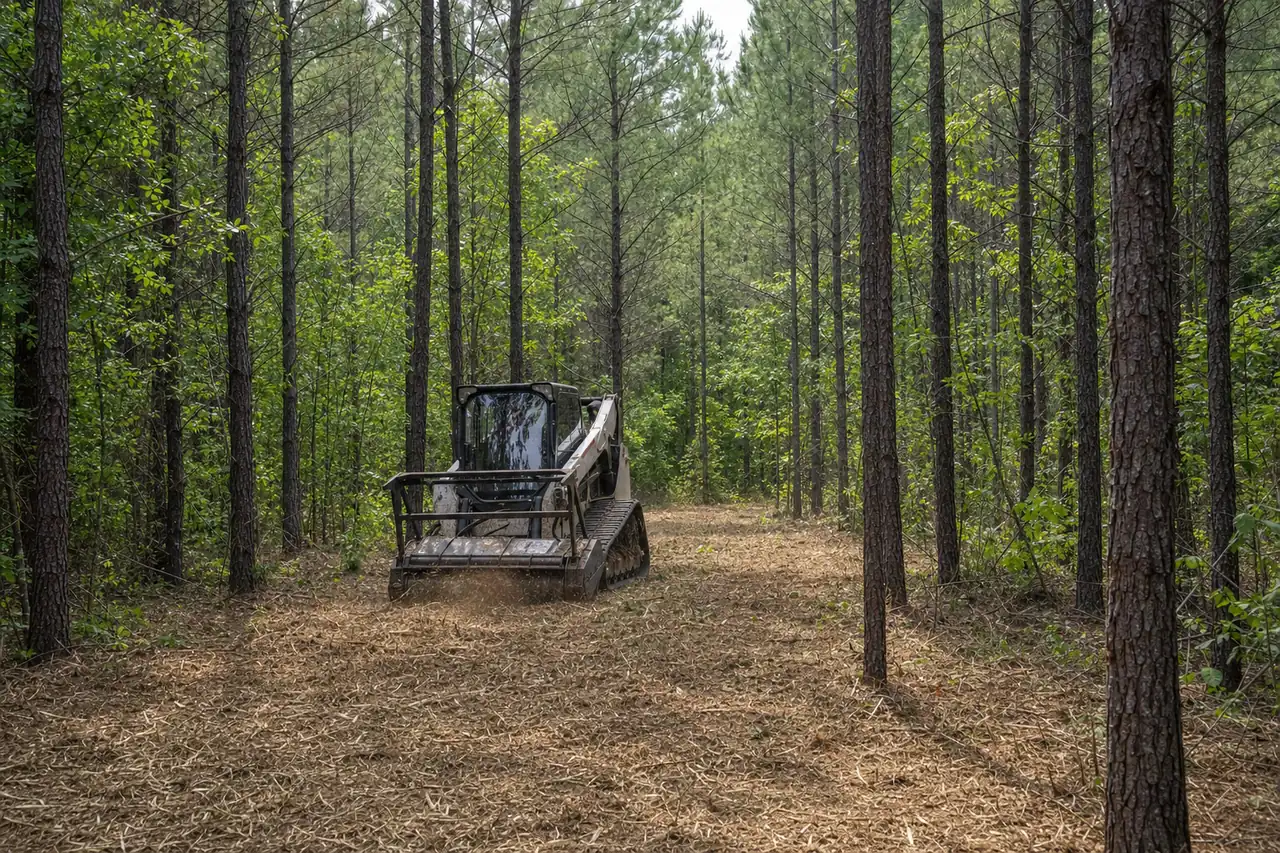
| Understory mulching | $150 per acre | Brush under a standing canopy ground in place |
| Site preparation | On the schedule | A cut-over tract readied for planting |
| Minimum practice size | Ten acres | Smaller jobs fall outside the program |
| Sign-up window | June 15 to July 3 | Dates can change from year to year |
Program figures and sign-up windows are set annually and are current as of November 4, 2026. We confirm every figure with the Georgia Forestry Commission or NRCS before any application. This page explains how programs work; it is not a guarantee of eligibility or reimbursement.
For firebreaks, the federal program below names a practice of its own.
What federal EQIP lists
The federal Environmental Quality Incentives Program, EQIP, run by USDA’s Natural Resources Conservation Service, operates in Georgia for forest landowners. Its Georgia forestry practice list has seventeen practices. Four of them describe work we do:
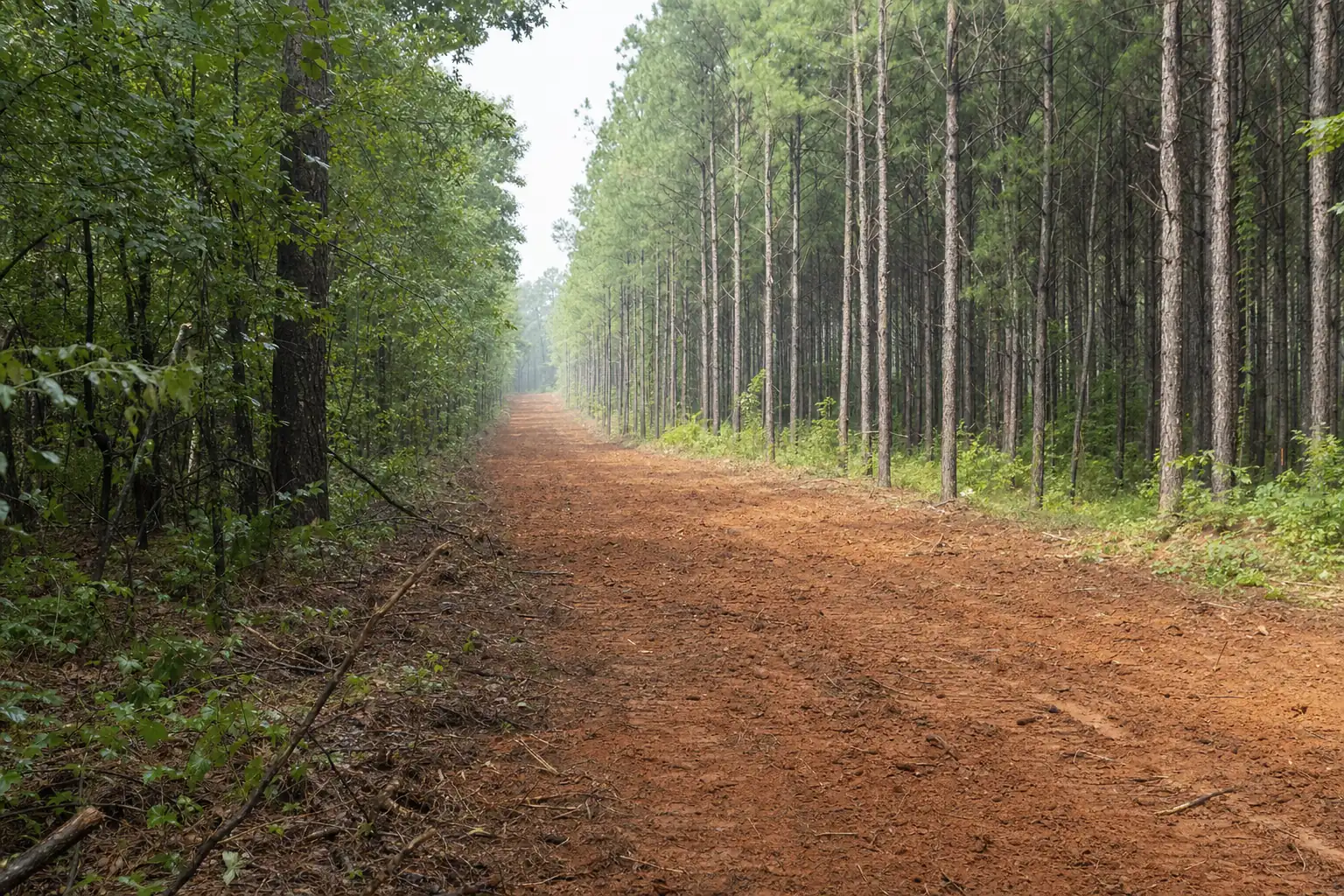
- Firebreak. A strip of bare or vegetated ground that slows or stops fire. Related service: firebreak installation.
- Forest Stand Improvement. Work in an existing stand to improve the trees you keep, such as thinning. Related service: timber stand improvement.
- Brush Management. Reducing woody plants and brush.
- Tree and Shrub Site Preparation. Readying a site for planting.
We describe what each practice covers and stop there. NRCS writes the standards, and NRCS decides whether a job meets them. We don’t publish EQIP payment rates. You apply through your local USDA Service Center.
How the money works
- You apply, and the payment comes to you. The landowner is the applicant. We don’t apply on your behalf.
- The program’s schedule sets the amount. Programs pay by their own published rates and rules. They don’t pay a share of our price, and we won’t put a reimbursement figure on your quote.
- Timing is the program’s call. Each program sets its own rules on when work can start. Ask the program office before any work begins.
- Records matter. The program asks for documentation of the finished work. We itemize invoices by practice and photograph the work for your file.
We confirm current figures, minimums and dates with the program office before any application. If a number on this page and the program’s own page disagree, the program’s page wins.
What these programs don’t pay for
These are forestry programs. A house lot, a lawn or a building pad falls outside them, and so does forest land under the acreage minimum. Food plots, shooting lanes and ATV trails aren’t among the practices named on this page. A firebreak that doubles as a trail is still a firebreak, but the program office decides whether your line fits the practice.
One more program can touch thinning. Georgia runs a Southern Pine Beetle Prevention Program for prevention work such as thinning crowded pines, and for restoring stands after a beetle spot. Its terms change by cycle and aren’t in our confirmed figures, so we describe it without numbers and check the current terms with the program office before you apply. See the pine beetle prevention program.
How the process runs with us
- 1Walk the landAcreage, stand type, creeks, and the work you want done.
- 2Match the practicesWhich named practices fit your acres, and which program lists each.
- 3You applyIn the sign-up window, after we confirm current terms with the program office.
- 4The work, one contractThinning, firebreaks and understory work on one schedule, records kept by practice.
A realistic plan for a timber tract spans several practices: thinning, firebreaks, understory work, sometimes invasive plant control. Each needs a different machine or crew. A single-machine operator has to tell you to hire three companies. We run the whole plan on one contract, with one point of contact your forester can call. If you don’t have a forester, see working with a consulting forester.
Thinned and mulched ground grows back in sweetgum and briars, and firebreaks need mowing or re-disking once or twice a year to keep working. The full program guide is Does Georgia pay you to clear your land?, and the rest of our timber work is on the hunting and timber land hub.
FAQ
More about thinning and firebreak cost-share
- How much will a program pay on my job?
- The program decides, by its own published schedule and rules. It doesn't pay a share of our price, and we won't put a reimbursement figure on your quote. The program office confirms your amount after you apply.
- Do I need ten acres?
- For the Resilient Forest Incentives Program, yes: its minimum practice size is ten acres. EQIP sets its own terms through your local USDA Service Center. Minimum acreage for cost-share.
- When is the sign-up window?
- The Resilient Forest Incentives Program sign-up runs June 15 to July 3. Dates can change from year to year, so we check them with the program office before you apply. Sign-up dates.
- Do you fill out the application for me?
- No. The landowner applies. We walk the land, match the work to the practices each program names, confirm current terms with the program office, and keep itemized records by practice for your file. Cost-share paperwork.
Keep reading