
Program guide · 8 min read
Georgia’s Southern Pine Beetle Prevention Program
Georgia's Southern Pine Beetle Prevention Program, run by the Georgia Forestry Commission, reimburses private landowners for prevention work in pine stands, such as non-commercial thinning, release and prescribed burning, and for restoring stands after an outbreak. Its rates, cap and dates change by cycle, so we confirm the current terms with the Commission before you apply.
What the program is for
Southern pine beetles kill pines in patches the trade calls spots. Once a spot starts, the beetles move from the dead trees into the green ones at its edge, and the spot grows until someone cuts it out. The cheaper fight is the one before the beetles arrive.
The Georgia Forestry Commission runs a Southern Pine Beetle Prevention Program for that fight. It has two sides. Prevention pays private landowners for work that leaves a pine stand less open to attack. Restoration pays for bringing a stand back after an outbreak. You apply as the landowner, and the program reimburses you by its own terms once the work is done and documented.
Program figures and sign-up windows are set annually and are current as of November 4, 2026. We confirm every figure with the Georgia Forestry Commission or NRCS before any application. This page explains how programs work; it is not a guarantee of eligibility or reimbursement.
We don’t publish this program’s figures. Its rates, its cap and its dates change by cycle, and we haven’t confirmed the current ones against the Commission’s own terms. We confirm them with the program office before any application. The cost-share hub shows the state program figures we can confirm.
Why beetle work is on the rise here
Beetle activity jumped across Georgia in 2024. UGA’s Bugwood center counted spots rising from 273 in 2023 to over 1,600 in 2024, and Georgia Farm Bureau reported more than 50 spots in Cherokee County, next door to Forsyth. The heaviest activity that year sat west of us, in Bartow, Carroll, Paulding and Coweta counties.
The guidance on prevention is consistent: thin crowded pine stands, and use prescribed fire where a forester calls for it. A loblolly stand planted thick on an old field off Matt Highway and never thinned is the kind of stand foresters worry about. That’s the work this program names.
The practices the program names
The program lists practices under prevention and under restoration. The table describes each one and who does that kind of work. Whether your job fits a practice is the Commission’s decision.
| Practice | What it covers | Who does it |
|---|---|---|
| Non-commercial thinning (prevention) | Cutting small, crowded pines that have no market value, so the stand carries fewer, stronger trees | Our timber stand improvement work, to the forester’s marks |
| Release (prevention) | Freeing young pines from the hardwoods and brush crowding them | We do the mechanical side. Herbicide release goes to licensed applicators. |
| Prescribed burning (prevention) | A planned, controlled fire through a pine stand | A burn crew under the forester’s plan. We cut the firebreaks. |
| Restoration | Bringing a stand back after an outbreak | Site prep on the killed ground, then the forester’s replant plan |
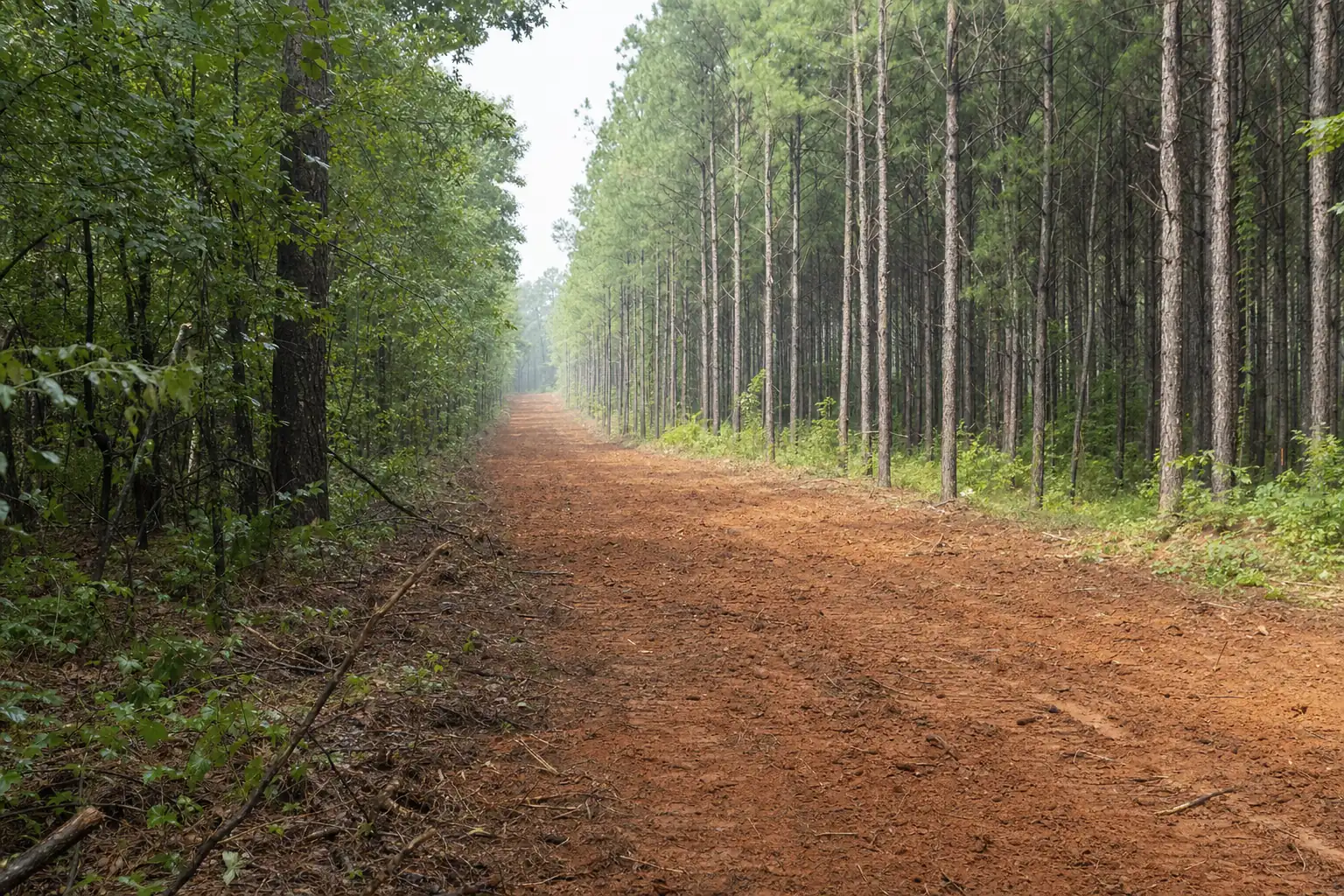
We don’t burn. Prescribed forestry burning is exempt from Georgia’s summer burn ban, but it is a forester’s call and a burn crew’s job. Our part is the line around the burn unit, cut to mineral soil, with water bars on slope. See firebreak installation.
Herbicide applications are performed by licensed applicators in accordance with the product label.
Is your stand a candidate?
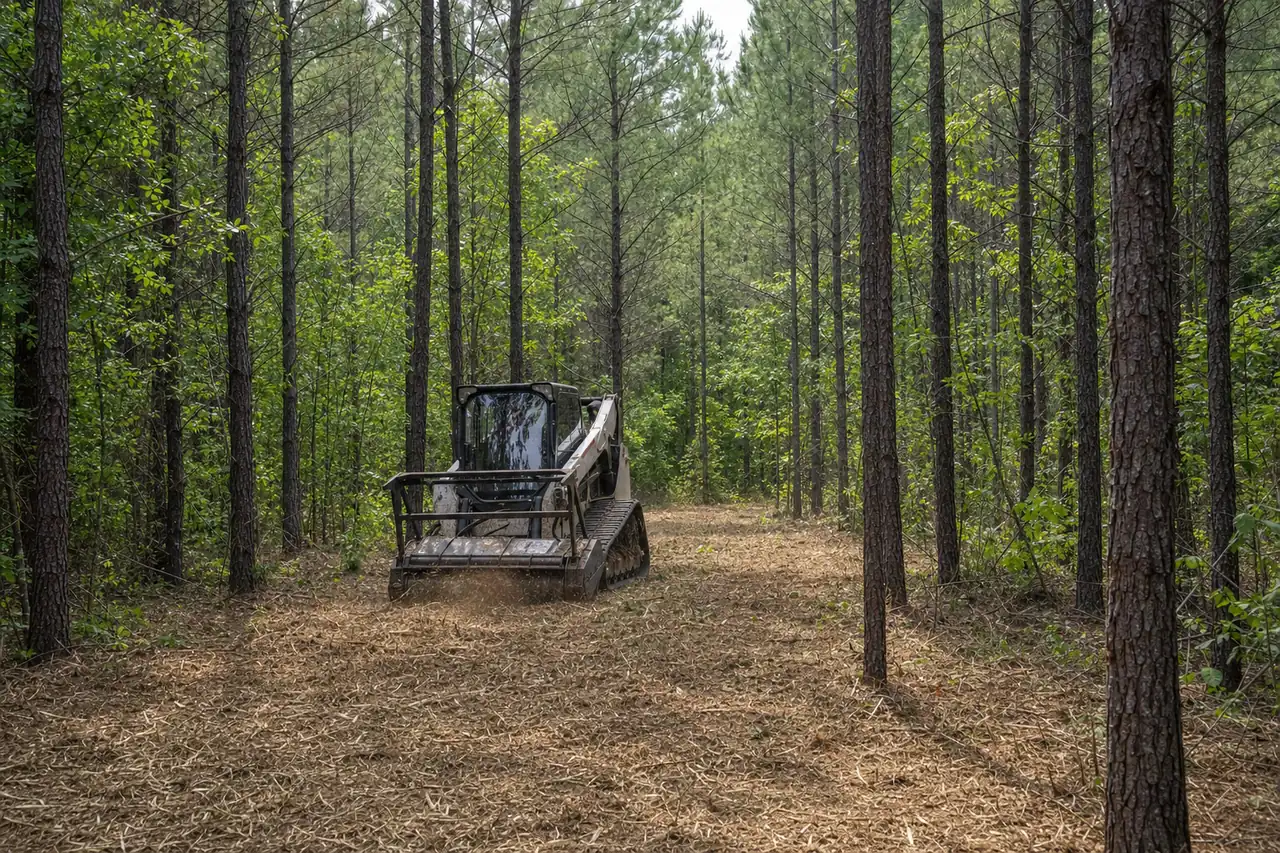
You can judge a lot from a walk through your own pines before anyone else sees them. A stand that would benefit from prevention work usually shows some of these:
- Small crowns. Thin green tops on tall, skinny trunks, with the crowns touching or tangled.
- Dead lower limbs. Dead branches high up the trunk, because the stand shades itself out.
- Too many stems. You can’t walk a straight line through it, and trees lean on each other.
- Hardwoods crowding in. Sweetgum and red maple pushing up between young pines, which is the case release work is meant for.
- A history nobody knows. A planted stand on inherited land that nobody has thinned since it went in.
Any of those is a reason to have a forester cruise the stand. A forester measures basal area, the square feet of trunk per acre, and writes a prescription that says how many stems should come out and which ones. That prescription is what we cut to, and it shows the program office the same plan. See working with a consulting forester and pre-commercial thinning.
Prevention, salvage and restoration
These are three different jobs, and landowners mix them up when they first find dead pines.
- Prevention happens in a green, healthy stand before any beetles show up. Thinning is the main tool. This is what the program’s prevention side names.
- Salvage happens when a spot is active. The Georgia Forestry Commission’s direct control is to cut the infested trees plus a buffer strip of green, uninfested pines next to the newest attacks, quickly, then remove the wood or leave it on the ground. That’s our southern pine beetle salvage service, and speed matters more than paperwork.
- Restoration comes after the spot is dealt with: getting pine back on the ground the beetles killed.
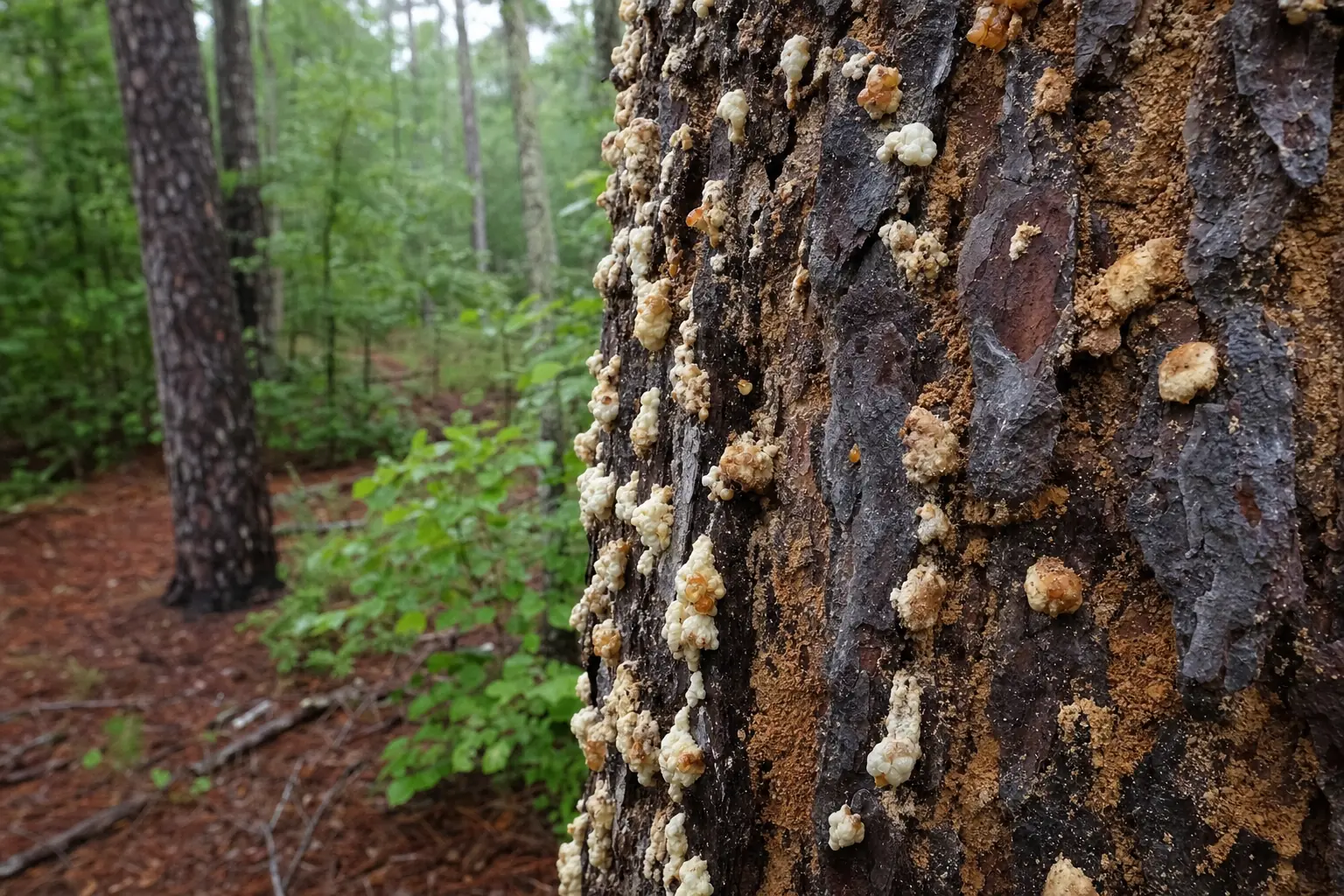
If you have an active spot, don’t wait on a program to cut it. Call the Georgia Forestry Commission or your forester, get the cut line marked, and ask the office how restoration work afterward fits the program. If you aren’t sure what you’re looking at, the signs are popcorn-size pitch tubes on the bark, boring dust in the bark crevices, and crowns fading from green to yellow to red to brown. See how to know if you have southern pine beetles and how fast they spread.
Who qualifies
The program is for private landowners with pine stands. Like the other state programs, it sets its own minimums, a per-landowner cap and its own sign-up period. We leave those numbers off this page until they’re confirmed for the current cycle, and we confirm them with the program office before you apply.
A few pines in a yard, or a wooded house lot, falls outside a forestry program. The landowners this program fits are the ones with real pine acreage: a planted stand, a natural loblolly stand on an old field, a tract a forester manages for timber. The answers on who qualifies and acreage minimums cover the other programs’ rules.
Timing and the cycle
The program runs by cycle, and its sign-up period has moved from one year to the next. Treat any date you see online for it as unconfirmed until the Commission confirms it. We check before you plan around it.
The work itself has its own calendar. Thinning goes in on dry ground, since tracked machines on saturated red clay leave ruts on a Piedmont slope. Firebreaks go in before the burn season your forester plans. Restoration site prep on dry ground in late summer or fall leaves the tract ready for winter planting. Start planning in the season before you want the work done, and the program window and the ground conditions can line up.
If beetles hit your stand after you’ve applied, deal with the spot first. Cut the infested trees and the buffer, then call the program office and tell it what changed. A plan written for prevention in a green stand may need to become a restoration plan for part of it, and the office decides how that affects your application. We keep the salvage work on its own lines, separate from the program practices, so the records stay clear either way.
One stand, several kinds of work
A pine stand rarely needs only one thing. A forester’s beetle plan for a forty-acre tract might call for thinning in the crowded block, release in the younger block where sweetgum is taking over, firebreaks around both for a future burn, and privet treatment along the creek. If a spot hits a neighbor’s stand, add salvage and restoration to the list.
A single-machine operator does one of those. For the rest, you’re told to hire someone else, and you end up coordinating three companies and collecting separate records for your program file. We run the whole plan on one contract, with one point of contact your forester can call. Our invoices are itemized by practice, with acres, dates and photos, so the file is easy to follow.
Timber Stand Improvement and Post-Harvest Site Prep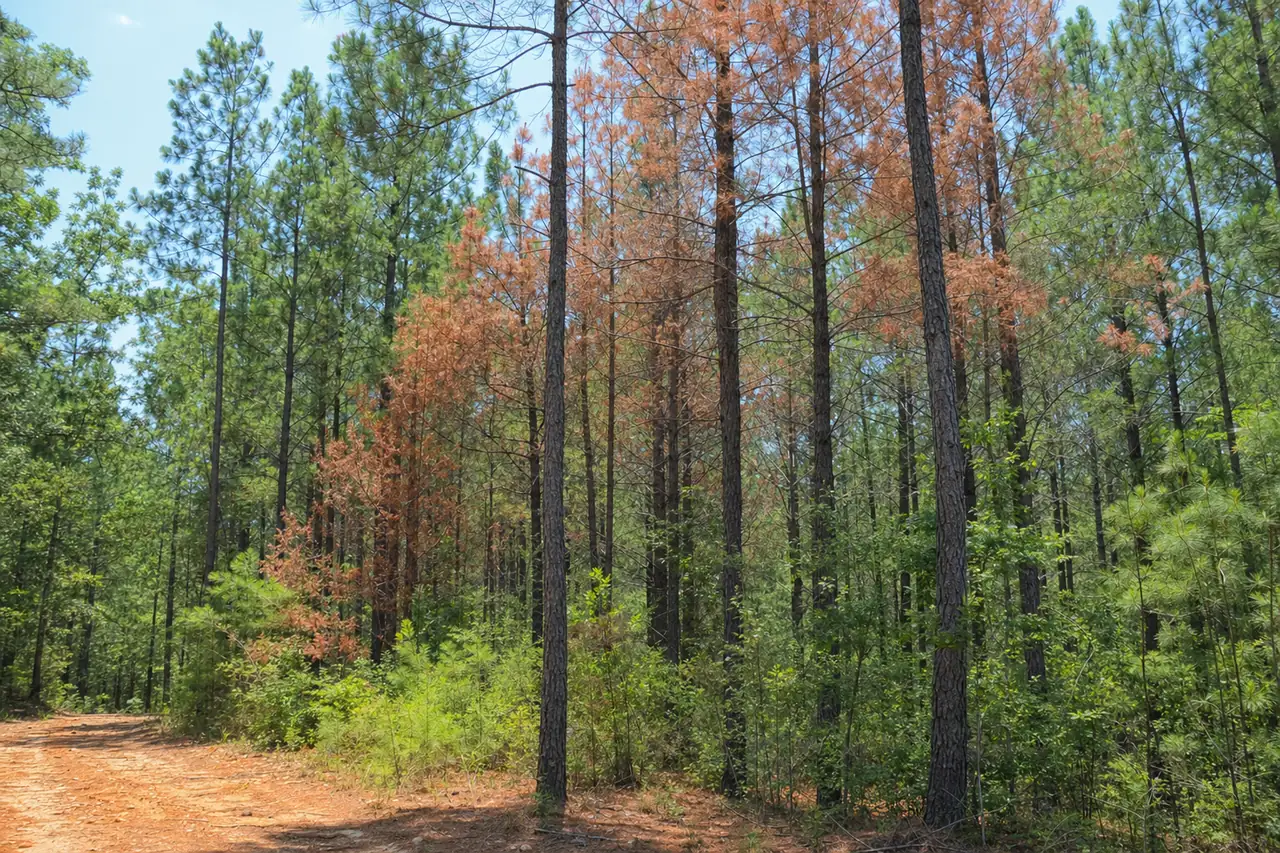 Southern Pine Beetle Salvage
 Firebreak Installation
The same stand and other programs
Thinning shows up on more than one program’s list. Georgia’s Resilient Forest Incentives Program schedule lists non-commercial thinning, and federal EQIP lists Forest Stand Improvement among Georgia’s forestry practices. See federal conservation programs.
Which program fits which acres, and whether the same work can count under more than one, is for the program offices to say. Ask before you file. We keep the work separated by stand and by practice, so the records match whatever the offices decide. More in can one property use more than one program.
Before you apply
- Walk the pines, and note the crowded blocks, the hardwood competition and any dead or fading trees.
- Have a forester cruise the stand and write a prescription if thinning or release is likely.
- Walk the land with us to match the work to the program’s practices and set aside anything that doesn’t fit.
- Confirm the current cycle’s dates, rates, cap and minimums with the program office. We do this with you.
- File in the sign-up period, and schedule the work after acceptance on dry ground.
- Keep the itemized invoices by practice, the map and the before-and-after photos for the claim.
The application and the decision are yours and the Commission’s. Our part is the walk, the plan, the work and the records. The step-by-step guide to how the application works covers the rest.
What the program does not cover
- Yard trees. A dead pine over the house is tree service work, and outside a forestry program.
- Development clearing. Pines cleared for a house, a pad or a driveway are outside it.
- Our price. The program pays by its own terms, never as a share of our invoice, and we don’t put a reimbursement figure on a quote.
Thinned stands and released ground sprout hardwoods within a season or two. Plan a follow-up pass in the stand, and mowing on the firebreaks and woods roads to keep them open.
Keep reading