Straight answer · 3 min read
How Do I Know If I Have Southern Pine Beetles?
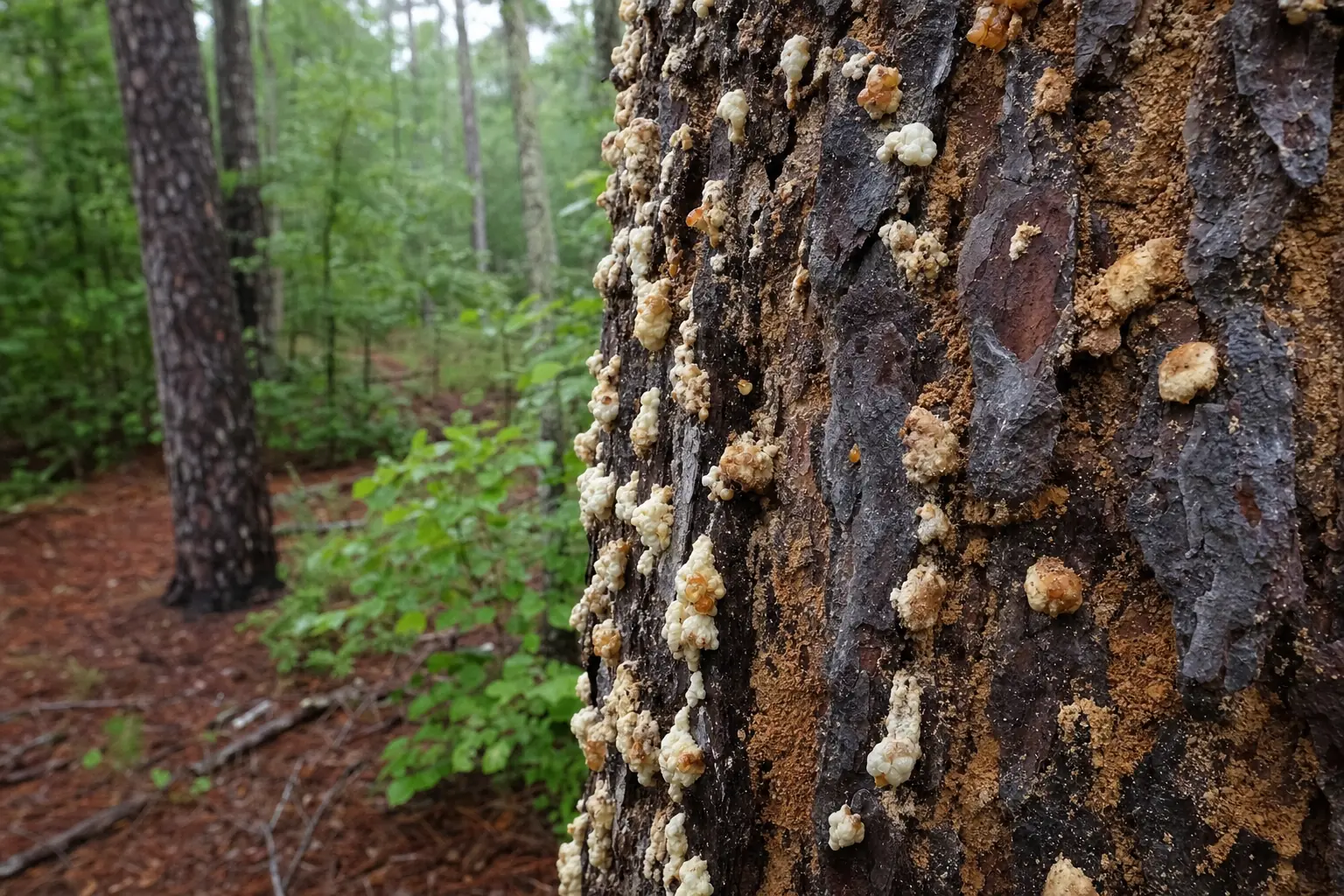
Look for popcorn-size pitch tubes in the bark crevices, fine boring dust, and crowns fading from green to yellow to red in a cluster of pines. On North Georgia land, check the green trees at the edge of the patch: that's where southern pine beetles are working now, and the Georgia Forestry Commission's control is to cut quickly.
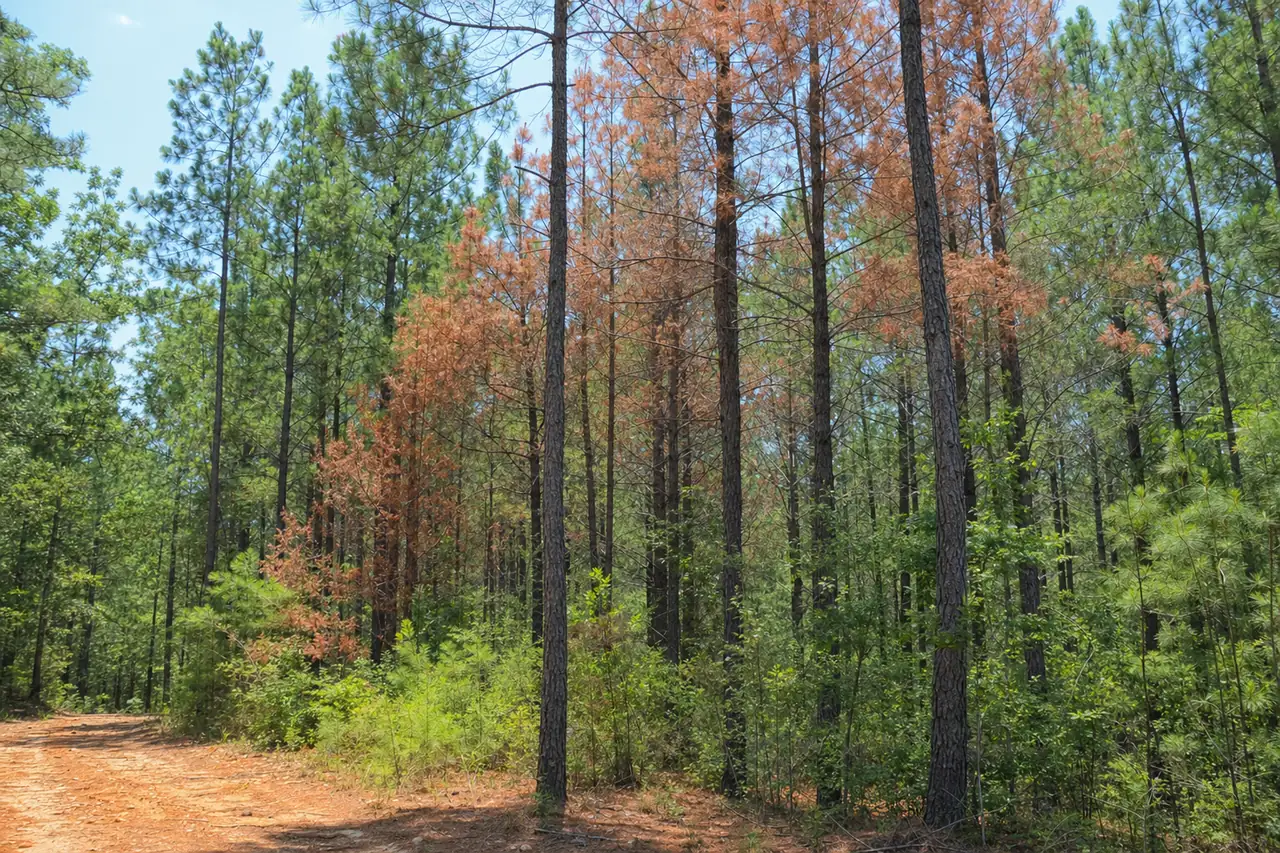
Most landowners notice a beetle spot from the road: a patch of pines gone yellow or red in an otherwise green stand. By then the beetles have usually moved on from those trees. The trees worth checking are the green ones around the patch.
The four signs
The Georgia Forestry Commission and UGA describe the same set of signs. Check for them in this order, on the trees at the edge of any fading patch.
| Sign | What it looks like | Where to look |
|---|---|---|
| Pitch tubes | Lumps of resin the size of popcorn or a dime, where beetles bored in | Bark crevices on the trunk |
| Boring dust | Fine dust like sawdust, pushed out by beetles tunneling under the bark | Caught in bark crevices and around the base of the tree |
| Fading crown | Needles turning green to yellow, then red, then brown | The top of the tree; some trees drop green needles first |
| A spot that grows | Dead pines in the middle, fading ones around them, green ones at the edge | From the road, a drone photo or a ridge across the hollow |
Pitch tubes on a green pine next to dying ones are the clearest sign the beetles are active right now. A single brown pine on its own can die of other causes. What points to southern pine beetle is the pattern: a cluster that keeps getting bigger.
Check the edge, not the brown trees
By the time a pine’s crown turns red, the beetles that killed it have usually left for the trees beside it. A spot spreads outward from its newest attacks. So when you walk a spot:
- Start at the edge. Look at the green and yellowing pines next to the dead ones.
- Look up the trunk. Pitch tubes and boring dust show in the bark crevices. Binoculars help on tall trees.
- Take two photos. One wide shot of the patch, one close shot of the bark on a green tree at its edge.
- Note the size. Count the dead and fading trees, or pace the patch, so you can tell next week whether it grew.
Beetle activity near Forsyth County
Georgia went from a quiet stretch to a bad year in 2024. Spots across the state rose from 273 in 2023 to more than 1,600 in 2024, with the heaviest activity west of Atlanta in Bartow, Carroll, Paulding and Coweta counties. Cherokee County, on Forsyth’s northwest line, had more than 50 spots.
- 273
- Beetle spots in Georgia in 2023
- 1,600+
- Beetle spots in Georgia in 2024
- 50+
- Spots in Cherokee County in 2024
The prevention Georgia’s foresters recommend is thinning crowded pine stands and prescribed fire, which is one more reason to keep up with thinning a young stand.
What to do once you see the signs
Move quickly. The Georgia Forestry Commission’s direct control is to cut the infested trees plus a buffer strip of green, uninfested pines next to the newest attacks, then either remove the wood or leave it on the ground. GFC doesn’t publish a fixed number of days to act, and we won’t make one up. The answer is as soon as the spot is confirmed. See how fast pine beetles spread.
- Send photos to us, and to your consulting forester if you have one.
- Walk the spot together and flag the infested trees and the buffer.
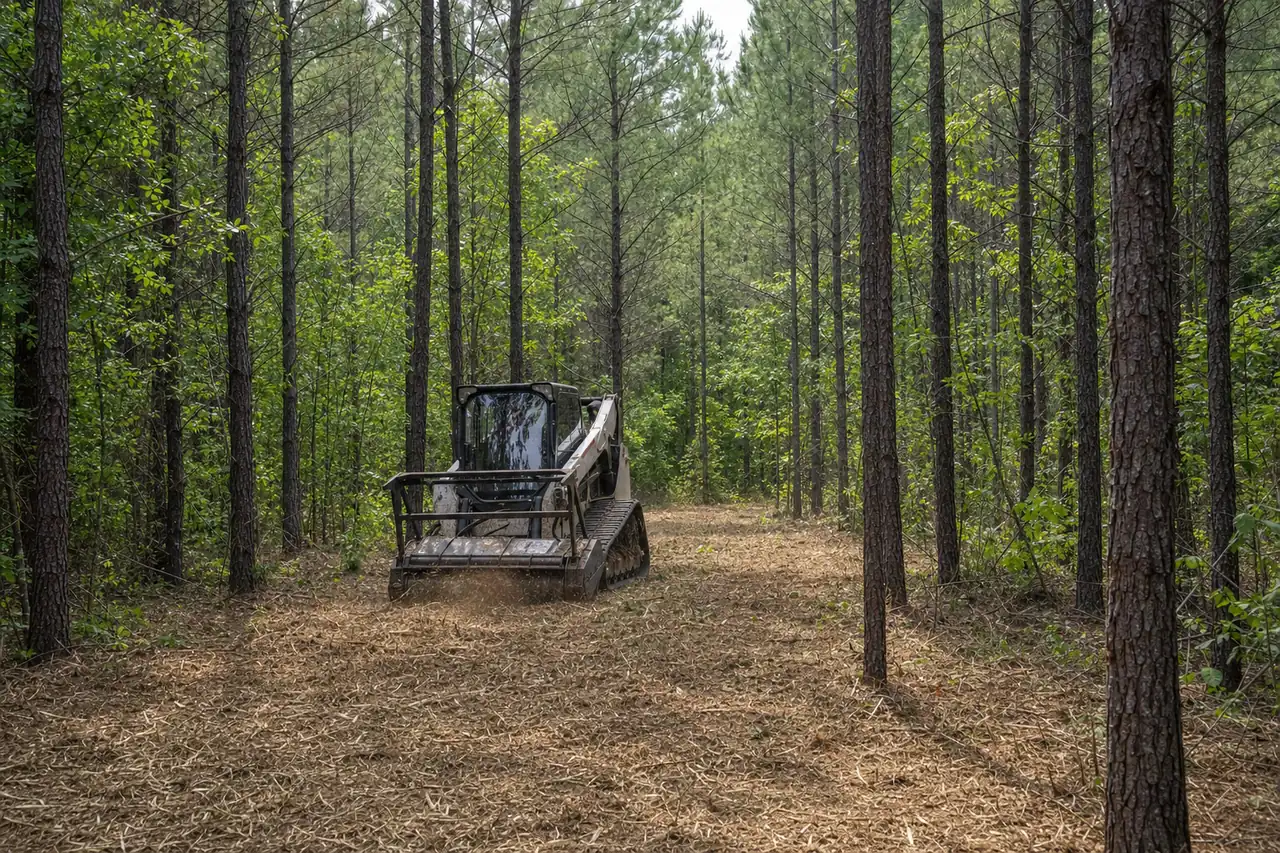
- Cut the spot and the buffer. Sellable logs get decked for a buyer; tops and small stems get mulched in place.
- Plan what comes next: replanting the gap, thinning the rest of the stand, or a firebreak.
One rule to know before you cut. Forsyth County’s tree ordinance applies on property that needs a land disturbance permit, and it exempts removing dead, diseased or infested trees with written confirmation from the Georgia Forestry Commission or the county arborist. If your land is in that situation, get the confirmation in writing before the cut.
Permit thresholds, fees and buffer widths are those published by Forsyth County and the State of Georgia as of November 4, 2026. Confirm current requirements with the issuing authority before work begins. This is not legal advice.
We don’t burn the slash. Land-clearing burns are banned in Forsyth County from May 1 to September 30, and mulching in place leaves no pile. The opening the spot leaves behind fills with sweetgum and briars the next spring unless you replant or keep it mowed. The full service is on the southern pine beetle salvage page, and the rest of our timber work is on the hunting and timber land hub.
FAQ
More about spotting pine beetles
- What do pitch tubes look like?
- Lumps of resin about the size of popcorn or a dime, stuck in the bark crevices where a beetle bored in. Several on a green pine next to dying ones mean the beetles are working in that tree now.
- Do the green trees around the spot have to be cut?
- Usually, yes. The Georgia Forestry Commission's control is to cut the infested trees plus a buffer strip of green, uninfested pines next to the newest attacks. Cutting only the brown trees leaves the beetles in the green ones at the edge.
- Is one dead pine a beetle spot?
- Not necessarily. A single pine can die of other causes. Southern pine beetle shows as a pattern: a cluster of dead and fading pines that keeps growing outward. Check the green trees around it for pitch tubes and boring dust.
- Who can confirm southern pine beetle?
- A consulting forester or the Georgia Forestry Commission. If your property is under Forsyth County's tree ordinance, get written confirmation from the Commission or the county arborist before removing infested trees.