
Timber guide · 8 min read
Working With a Consulting Forester
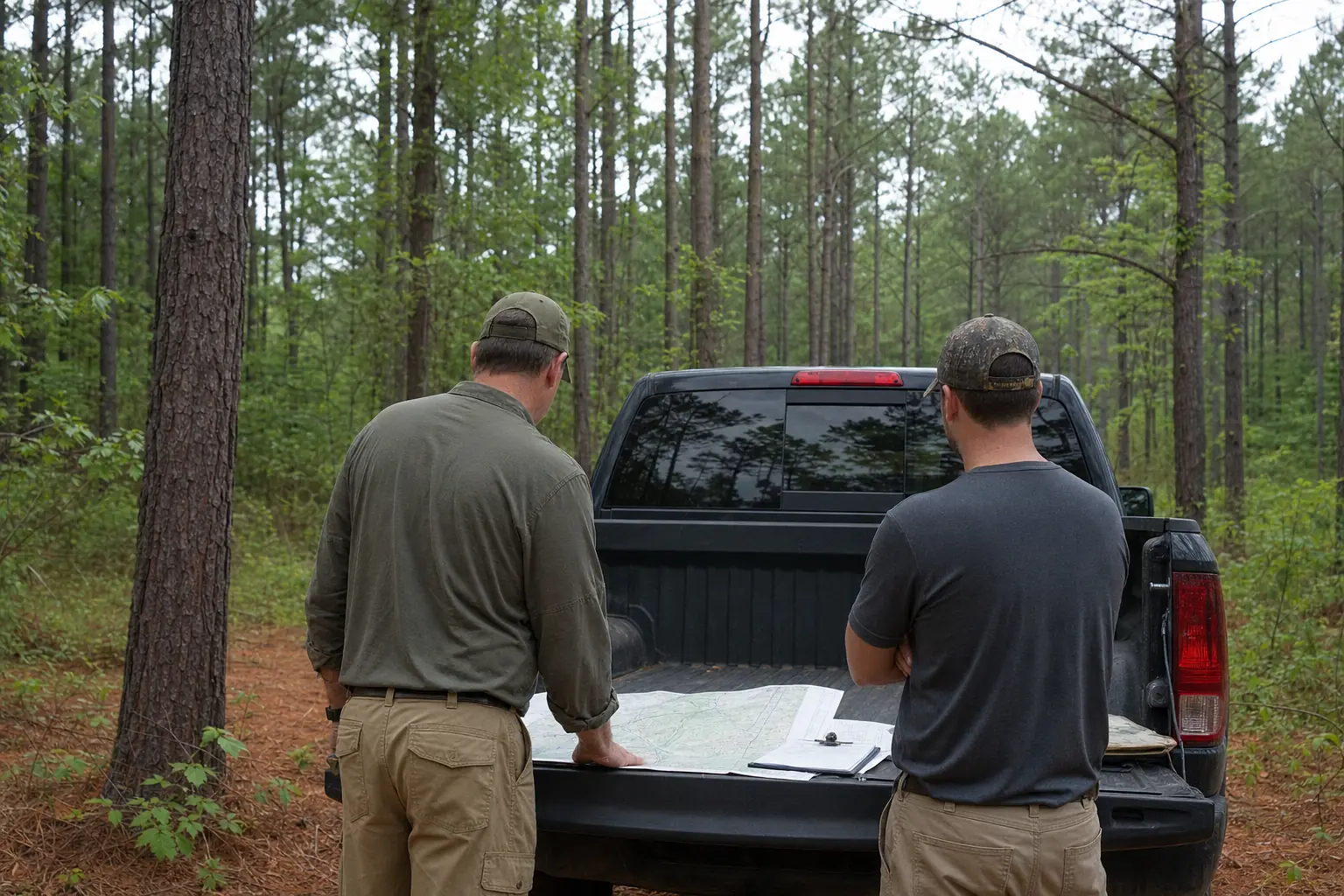
A consulting forester in Georgia works for the landowner: cruising the timber, writing a management plan and a stand prescription with a target basal area, marking trees and running timber sales. This guide covers when you need one around Forsyth County, how to read the prescription, and how a crew like ours carries it out.
What a consulting forester does for you
A consulting forester works for the landowner, not for a mill or a logging company. On a tract around Cumming or out toward the Etowah side of the county, that usually means four jobs:
- Cruising the timber. Walking the stand with plots and instruments to measure what’s growing: species, size, stems per acre and volume.
- Writing a plan. A management plan for the whole property, and a prescription for each stand that says what work to do and when.
- Marking the work. Paint on the trees to cut or to keep, flags on the streamside management zones, and lines on a map.
- Selling timber. Setting up a timber sale, getting bids from buyers and watching the harvest so the logger follows the contract.
Two terms show up in almost every prescription. Basal area is the square feet of trunk cross-section per acre, measured at chest height; it tells the forester how crowded a stand is. The SMZ, or streamside management zone, is the protected strip along a creek where machine work and cutting are limited. If you understand those two, you can read most of a forester’s plan.
When you should call one
Not every job needs a forester. A food plot, a shooting lane or underbrushing behind the house doesn’t. Timber work usually does, because someone has to decide which trees stay and what the stand should look like in twenty years. Call a forester when:
- You’re thinking of selling timber. A forester knows what the wood is worth and runs the sale so you get bids instead of one offer.
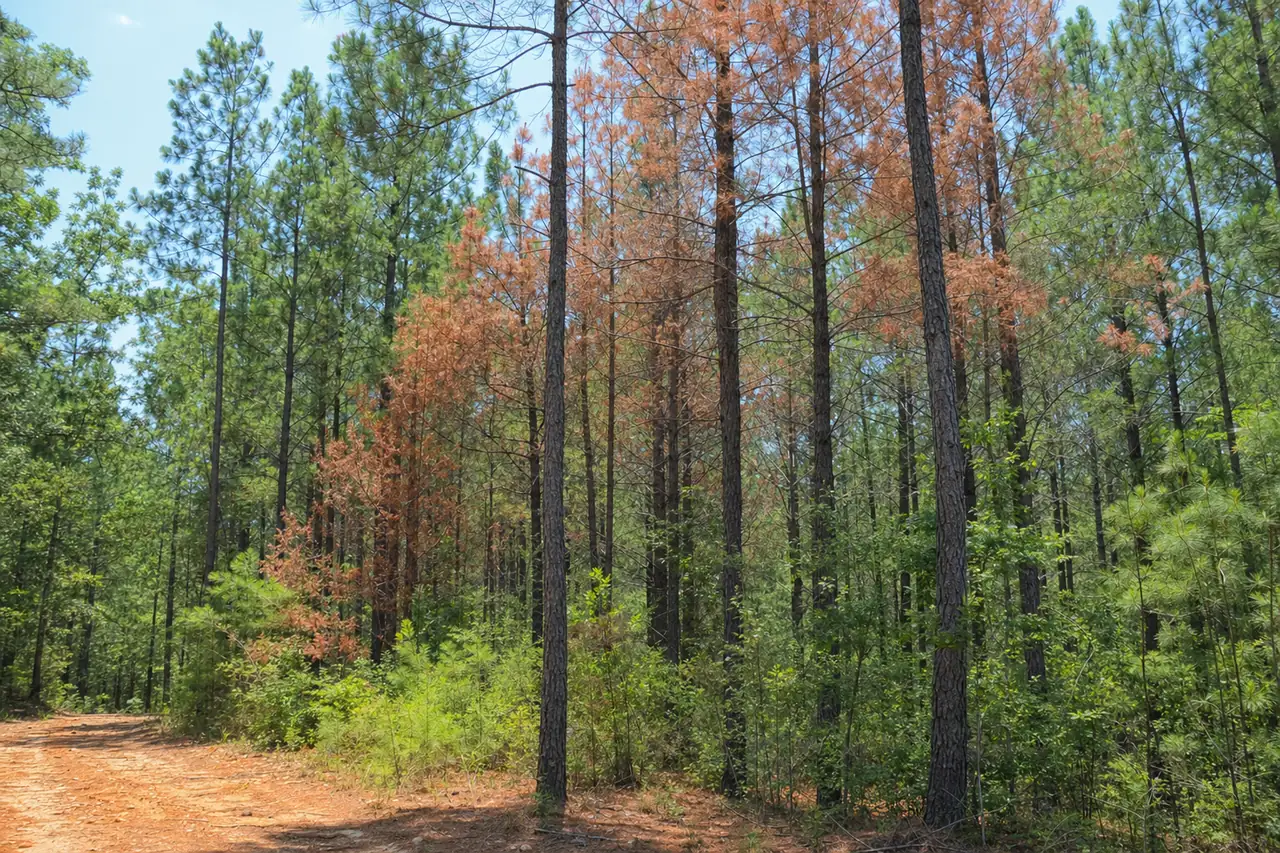
- A pine stand looks crowded. Small crowns, thin trees and dead lower limbs mean the stand may need pre-commercial thinning or a commercial thinning.
- The tract was just cut. A cut-over tract needs a plan for site prep and replanting before the sweetgum takes it.
- Pines are dying in a patch. A southern pine beetle spot needs someone to mark the cut line fast. See signs of southern pine beetle.
- You want cost-share. The state and federal programs pay for named forestry practices, and a written plan makes it clear which practices fit your land.
- You inherited timberland. A stand nobody has managed in years needs a plan before anyone cuts anything.
What a prescription tells the crew
We work from the forester’s written prescription and the paint on the trees. A good prescription answers every question a crew would otherwise have to guess at.
| In the prescription | What it means on the ground |
|---|---|
| Target basal area | How much trunk the stand should carry after thinning, so how many stems come out |
| Leave-tree marks or cut-tree marks | Which trees stay and which go, painted on the bark |
| SMZ boundaries | Where the machine stops near creeks, flagged before work starts |
| Understory treatment | Whether brush and small hardwoods under the canopy get mulched |
| Firebreaks and burn units | Where lines go if the plan calls for prescribed fire |
| Timing | Which season the work fits, and what has to happen first |
If the prescription leaves something open, such as what to do with hardwoods over 8 inches inside a pine stand, we ask the forester before the machine gets there, not after.
How we work with your forester
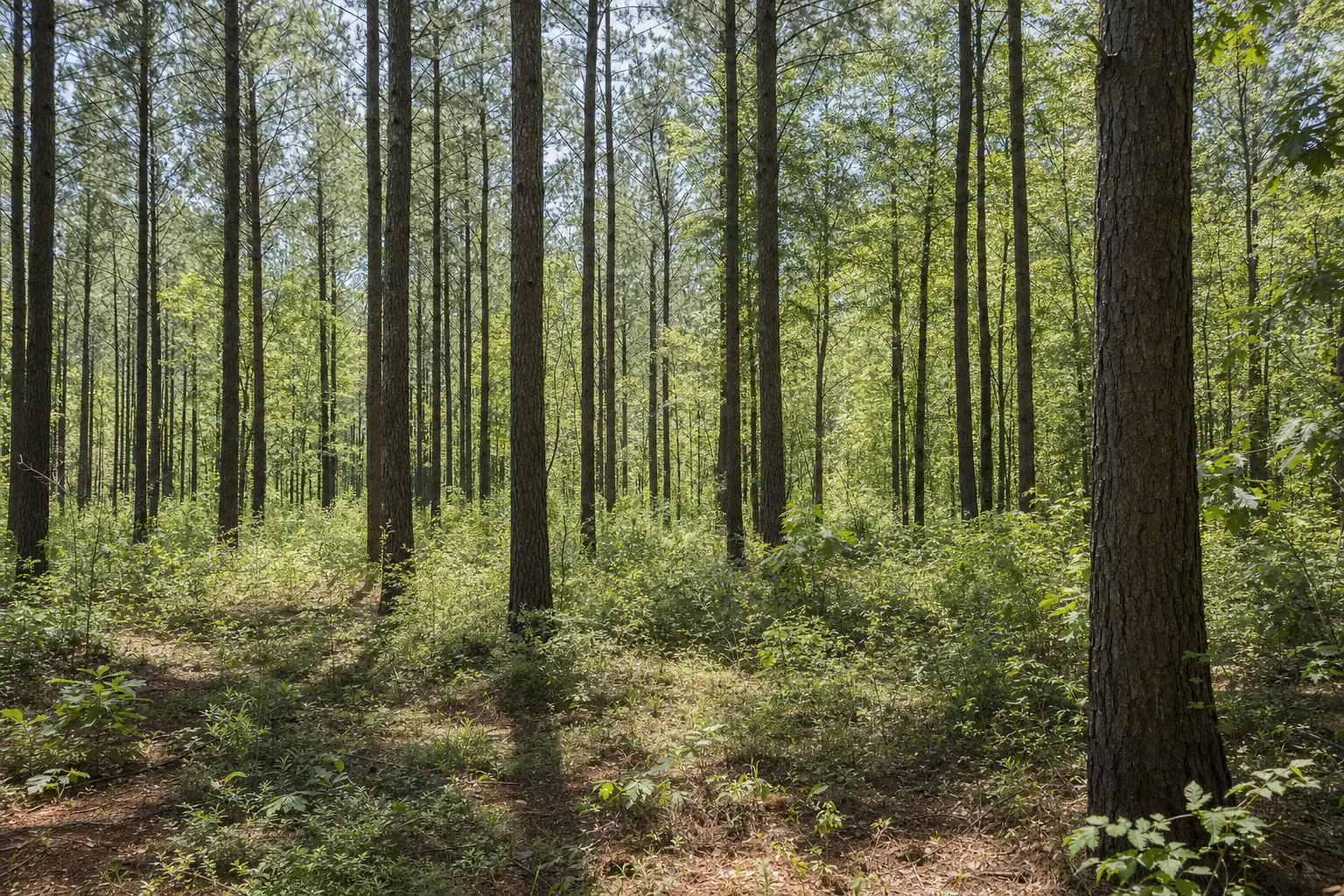
Foresters plan the work and inspect it. Most don’t run machines. That’s where we come in, and the job runs the same way each time:
- 1Read the planPrescription, marks, SMZs and notes, walked on the ground with you or the forester.
- 2Flag the creeksSMZ edges and crossings marked so no machine works inside them.
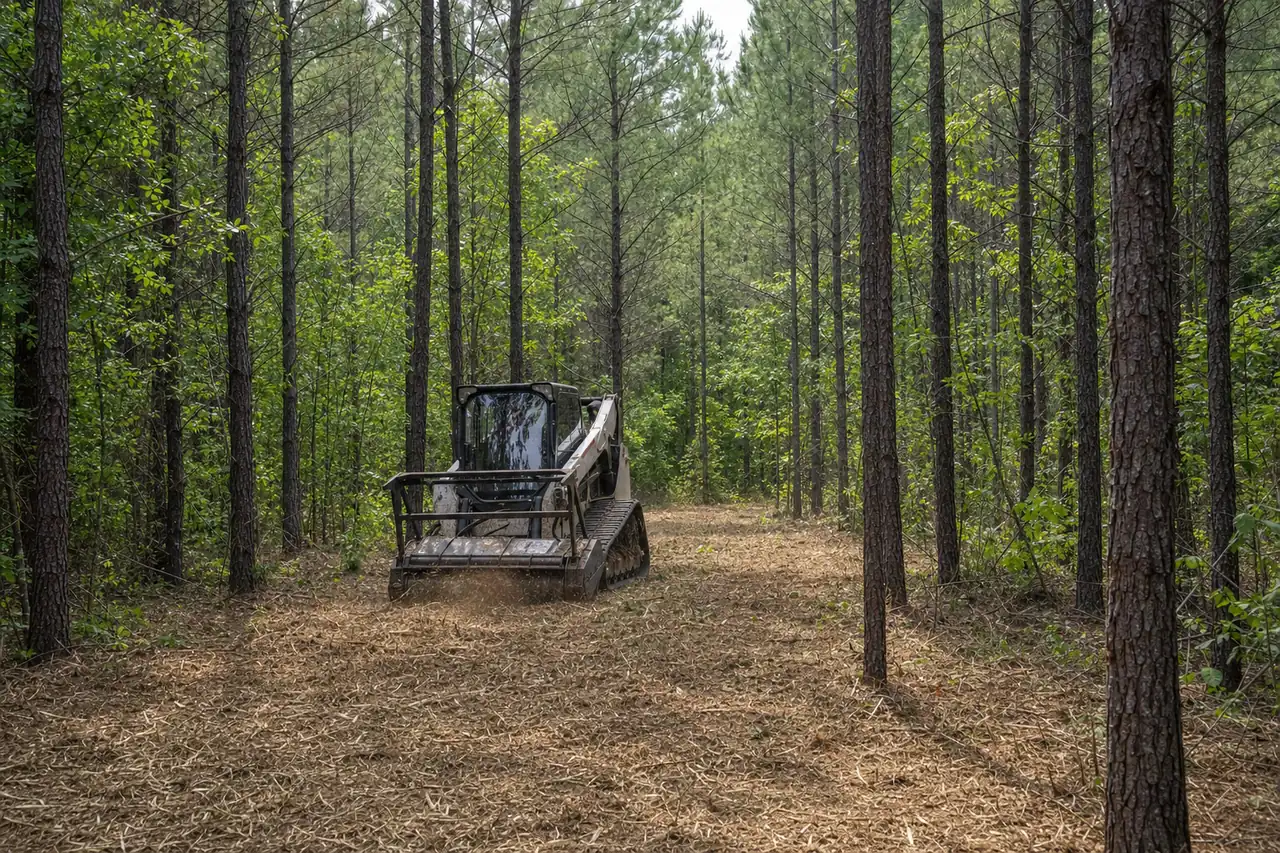
- 3Do the workThinning, understory mulching, firebreaks or site prep, to the marks.
- 4Check it togetherThe stand walked against the prescription, with photos and records for the file.
We keep itemized records by practice: acres thinned, acres of understory mulched, feet of firebreak. Foresters need those for the stand file, and cost-share programs ask for them when you claim. The service pages for timber stand improvement and post-harvest site prep and firebreak installation go into the work itself.
A realistic forestry plan calls for several kinds of work: thinning, understory mulching, firebreaks, privet treatment, sometimes a culvert or a woods road. A single-machine operator does one of those and tells you to hire someone else for the rest, which leaves you or your forester coordinating three companies.
We run the whole prescription on one contract, with one point of contact your forester can call. The thinned stems get mulched where they fall. The firebreaks go in on the same trip. Invasive work, such as Chinese privet removal in the creek bottoms, can follow on the same schedule, with herbicide applied by licensed applicators.
After a harvest: site prep and the replant
The months after a timber harvest decide what grows on the tract for decades. Leave a cut-over alone and sweetgum, red maple, privet and blackberry take it within a couple of seasons. A forester plans the site prep and the replant before the logger leaves, and the plan usually covers:
- Slash. Tops, limbs and cull stems left behind. We mulch them flat so a planting crew can walk the rows, instead of raking them into windrows or piles to burn.
- Leftover stems. Small and crooked trees the logger didn’t take, cut and mulched so they don’t shade the seedlings.
- Hardwood sprouts. Sweetgum and maple resprout from the stumps. The forester may call for a herbicide release later, applied by licensed applicators per the label.
- Log decks and skid trails. Rutted clay graded back and stabilized, with water bars on slopes so the trails don’t gully.
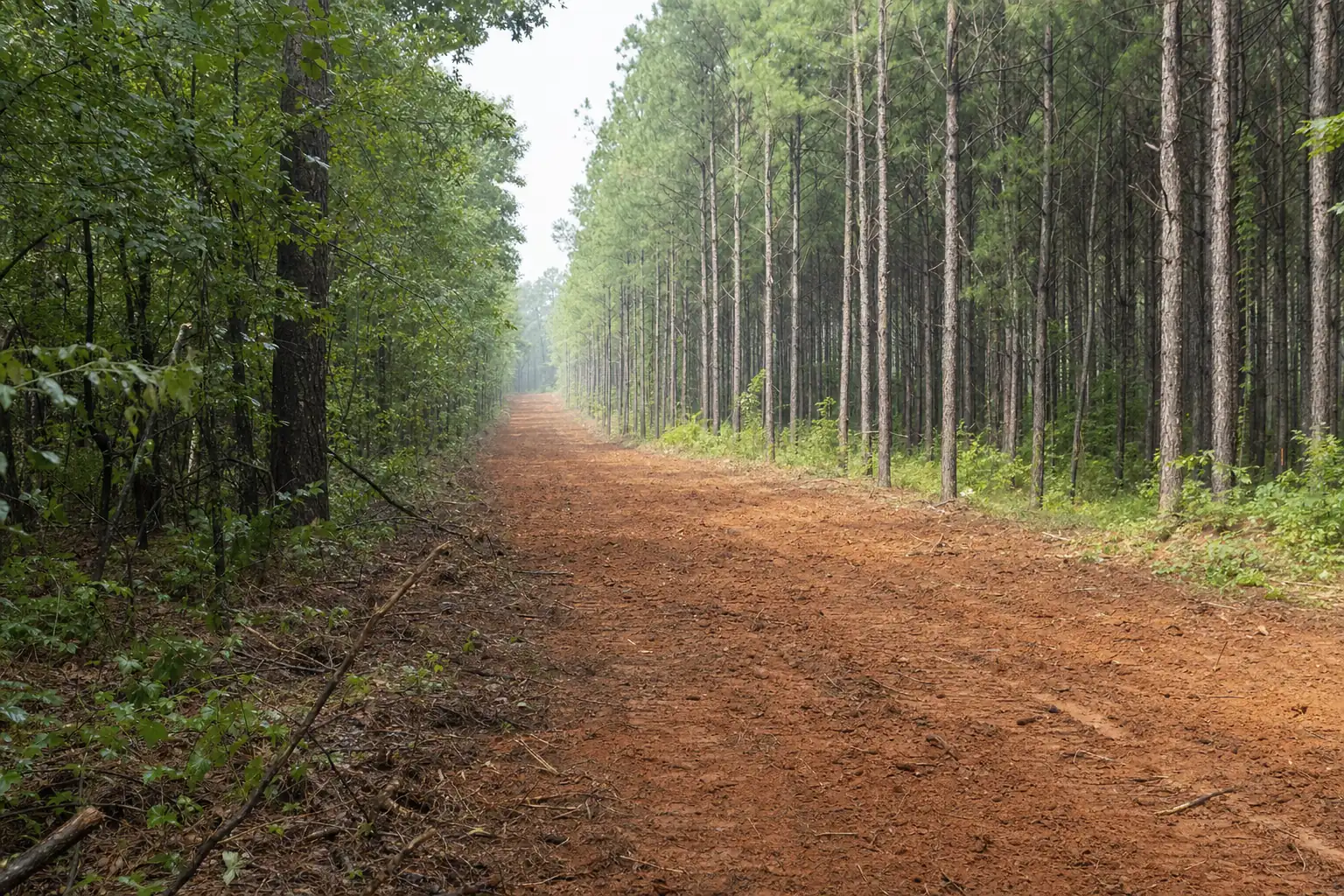
- Lines for the future. Firebreaks around the new stand, so the forester can prescribe a burn when the pines are big enough.
Herbicide applications are performed by licensed applicators in accordance with the product label.
Timing matters here. Site prep on dry ground in late summer or fall leaves the tract ready for winter planting. Wet winter clay can push the machine work back, so book it as soon as the harvest date is set.
Hunting and timber on the same plan
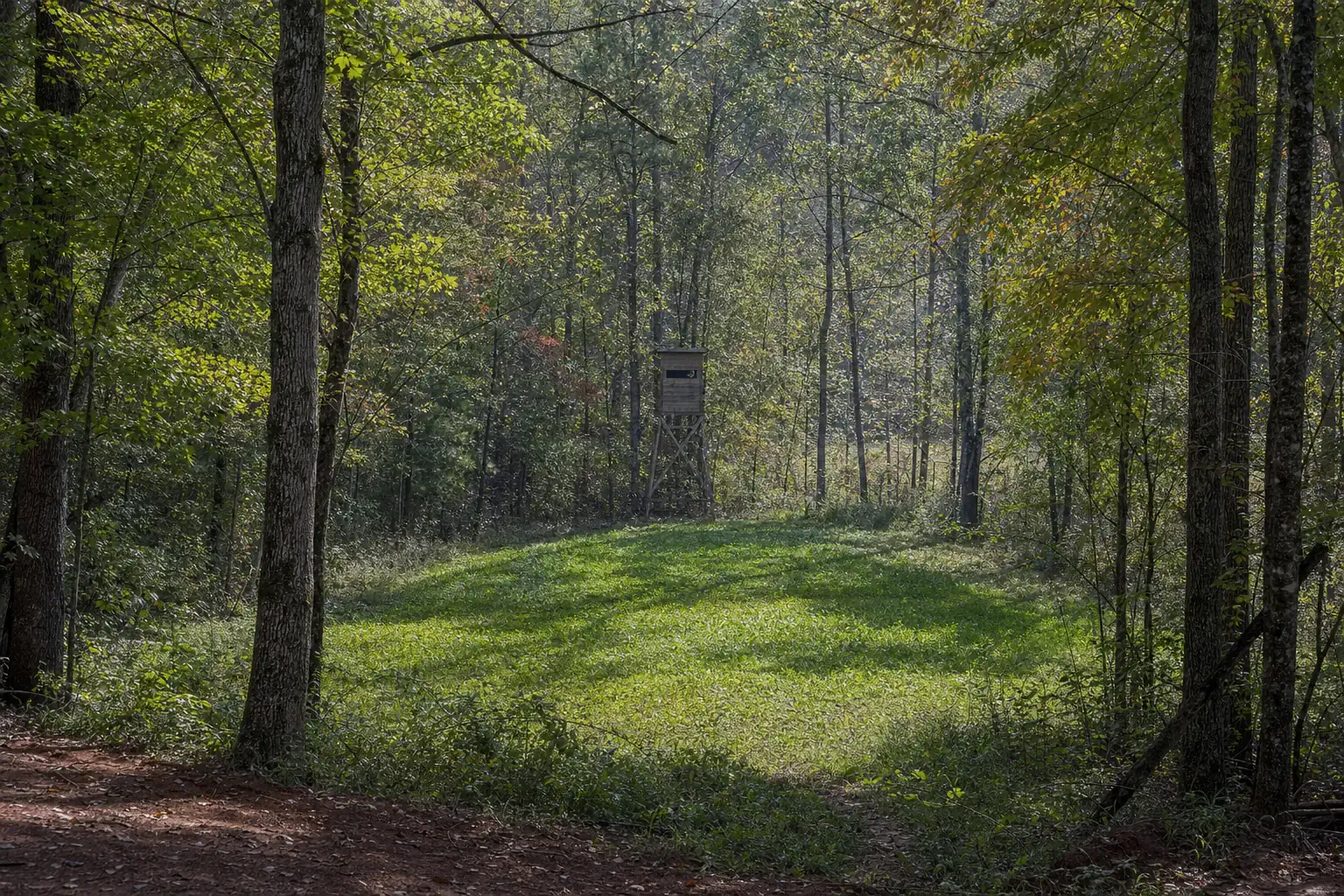
Most of our timber customers hunt the same land. A forester can write the plan with both in mind: thinning that lets light reach the ground for browse, firebreaks that double as quiet trails, a log deck that becomes a food plot, and thick cover left along the creeks. Tell the forester how you hunt the property before the plan is written. The guides on laying out hunting land and the food plot calendar help you put it into words.
Where the plan meets Forsyth County’s rules
Forestry gets different treatment from land development here, and a forester will plan around these points:
- Forestry is exempt from the land disturbance permit. Forsyth County’s erosion ordinance exempts forestry land management practices, including harvesting. The catch: if forestry work disturbs a stream buffer, no other land disturbance except normal forest management is allowed on the whole property for three years.
- Buffers still apply. Georgia keeps a 25-foot buffer along state waters, and Forsyth County holds a 50-foot undisturbed buffer plus a 25-foot setback. That is one reason the SMZ flags go up first.
- Zoning matters for harvests. The county allows timber harvesting and forest management only in agricultural zoning districts, and a clear-cut property can’t be rezoned for three years.
- Infested trees. The county’s tree ordinance exempts removing dead, diseased or infested trees with written confirmation from the Georgia Forestry Commission or the county arborist.
Permit thresholds, fees and buffer widths are those published by Forsyth County and the State of Georgia as of November 4, 2026. Confirm current requirements with the issuing authority before work begins. This is not legal advice.
If your land is headed for a house or a subdivision in the next few years, tell the forester and tell us. A forestry job and a development job follow different rules, and the three-year limits can change your timeline.
Foresters and cost-share programs
Georgia pays private landowners toward some forestry practices on forest land, and a forester’s plan is often where you first see which ones fit. Georgia’s Resilient Forest Incentives Program publishes a per-acre schedule for practices including non-commercial thinning, understory mulching and site preparation, with a ten-acre minimum and a sign-up window of June 15 to July 3. Federal EQIP, applied for through your local USDA Service Center, lists Forest Stand Improvement, Firebreak, Brush Management and Tree and Shrub Site Preparation among Georgia’s forestry practices.
Program figures and sign-up windows are set annually and are current as of November 4, 2026. We confirm every figure with the Georgia Forestry Commission or NRCS before any application. This page explains how programs work; it is not a guarantee of eligibility or reimbursement.
The programs pay by their own schedules, not as a share of anyone’s invoice, and the program office decides whether your work fits a practice. We confirm the current figures with the program office before you apply. Start with does Georgia pay for thinning or firebreaks or the full guide to Georgia’s cost-share programs.
Finding and hiring a consulting forester
There’s no single list that tells you who is good. Landowners around here usually find a forester through a neighbor with timber, a county extension agent, or the contractor who works their land. When you talk to one, ask:
- How do you charge for a management plan, for marking a thinning, and for a timber sale?
- Have you worked Piedmont pine and mixed hardwood stands in Forsyth, Dawson or Cherokee County?
- Will you mark the trees yourself, and will you inspect the work when it’s done?
- How do you handle SMZs and creek crossings on a property like mine?
- Can you help me see which cost-share practices fit before the sign-up window?
- Can I talk to two landowners you’ve worked for?
If you don’t have a forester yet and call us about stand work, we’ll tell you plainly whether the job needs one. For thinning, site prep after a harvest or a timber sale, it usually does.
What forestry work costs
Stand work prices by stem size and stem count more than by acreage. A mulcher spends about 3.5 hours an acre where the biggest stems are 4 inches, and about 10.5 hours where they reach 12 inches.
| Stand | Per acre |
|---|---|
| Light understory, saplings under 4 inches | $1,200 to $2,500 |
| Mixed stems, 4 to 8 inches | $2,500 to $4,000 |
| Dense hardwood, 8 to 12 inches and up | $4,000 to $6,500+ |
| Machine day rate | $1,800 to $3,000 a day |
Ranges are estimates for Forsyth County and the surrounding area based on job density, terrain, access and acreage. Your written quote is the only price that applies to your property.
Larger tracts price lower per acre because hauling the machine in costs the same for 10 acres as for 60. The thinned ground and the mulched understory grow back in sweetgum and briars over time, and open areas such as log decks and firebreaks need mowing to stay open. The hunting and timber land hub covers the rest of what we do on forest land.
Keep reading