
Straight answer · 3 min read
How Close to a Creek Can I Clear?
Fifty feet from the stream, in most of unincorporated Forsyth County. The county keeps a 50-foot undisturbed buffer along streams plus a 25-foot setback where nothing impervious goes. Georgia sets a 25-foot buffer on all state waters, some water-supply watersheds go wider, and any clearing within 200 feet of state waters needs a county permit.
Clearing up to the buffer, quoted in one business day.
Creeks run through most tracts in Forsyth County. The east two-thirds of the county drains to the Chattahoochee and Lake Lanier, much of it through Big Creek and the lake’s arms. The northwest third drains to the Etowah through Settingdown Creek and its branches. If water runs across your land, a buffer runs alongside it.
The buffers, layer by layer
Three sets of rules stack along a creek here: the state’s, the county’s, and in some places a water-supply watershed overlay. The widest one that applies sets your line.
| Rule | Width | Where it applies |
|---|---|---|
| Georgia state-waters buffer | 25 ft | All state waters |
| Georgia trout-stream buffer | 50 ft | Designated trout streams |
| Forsyth County stream buffer | 50 ft undisturbed + 25 ft impervious setback | Streams in unincorporated Forsyth County |
| City of Cumming stream buffer | Set by the city | Inside city limits; the city issues its own permit |
| Water-supply watershed and river corridor overlays | Wider than the county buffer | Parts of the Big Creek watershed and land along the Etowah; we check your parcel against the official overlay |
Permit thresholds, fees and buffer widths are those published by Forsyth County and the State of Georgia as of November 4, 2026. Confirm current requirements with the issuing authority before work begins. This is not legal advice.
What undisturbed means for a clearing job
The county’s 50-foot buffer is undisturbed ground. We treat it as a strip no machine enters: no mulching, no grubbing, no pushing brush into it. Georgia’s own 25-foot buffer allows thinning or trimming as long as a protective vegetative cover remains, but in unincorporated Forsyth that strip sits inside the county’s wider undisturbed buffer.
The 25-foot setback beyond the buffer limits what gets built. Pavement, roofs and other impervious surfaces stay out of it. On a creek lot that decides where a house pad or driveway can go, and it’s worth knowing before you pay for a site plan.
The 200-foot permit line
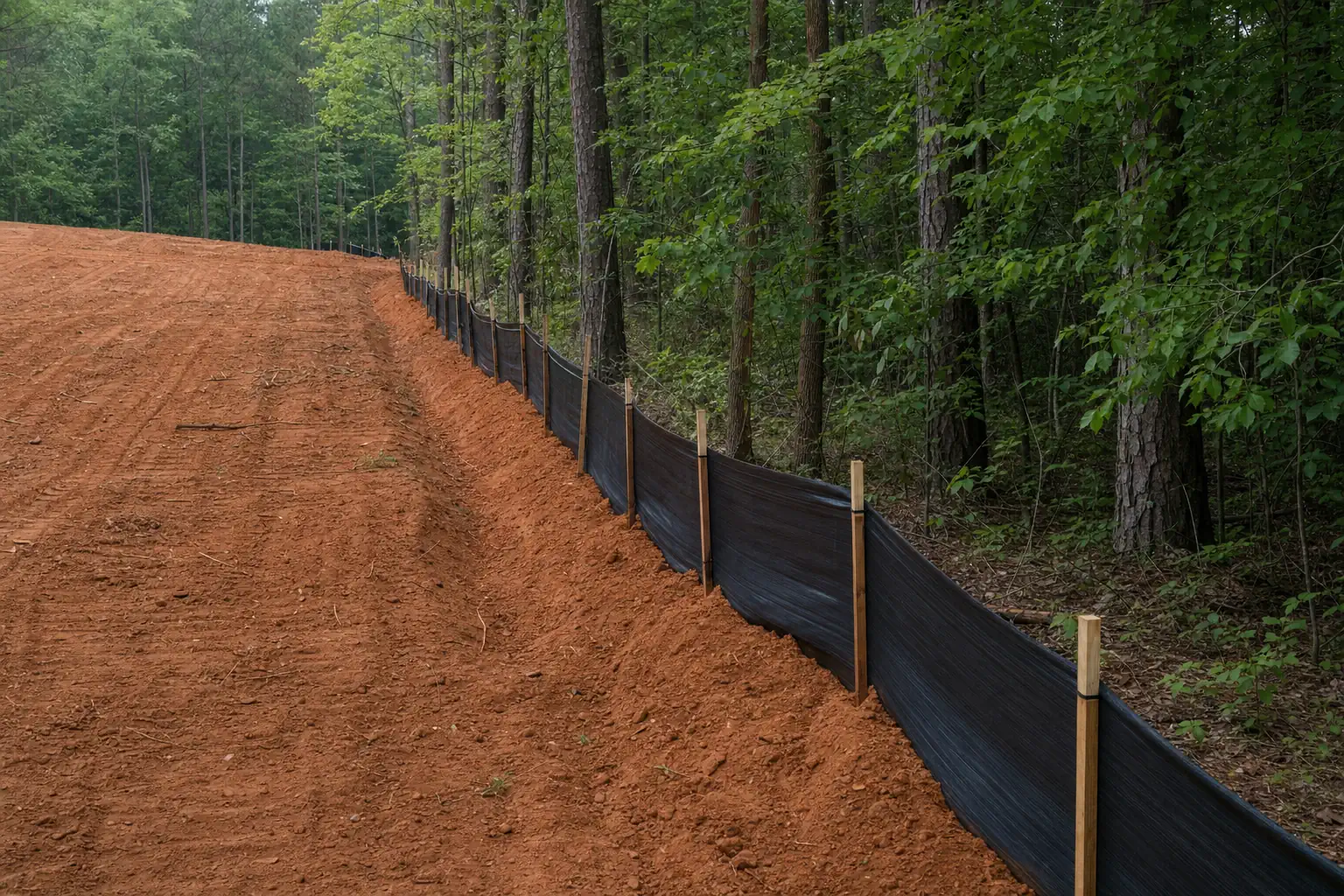
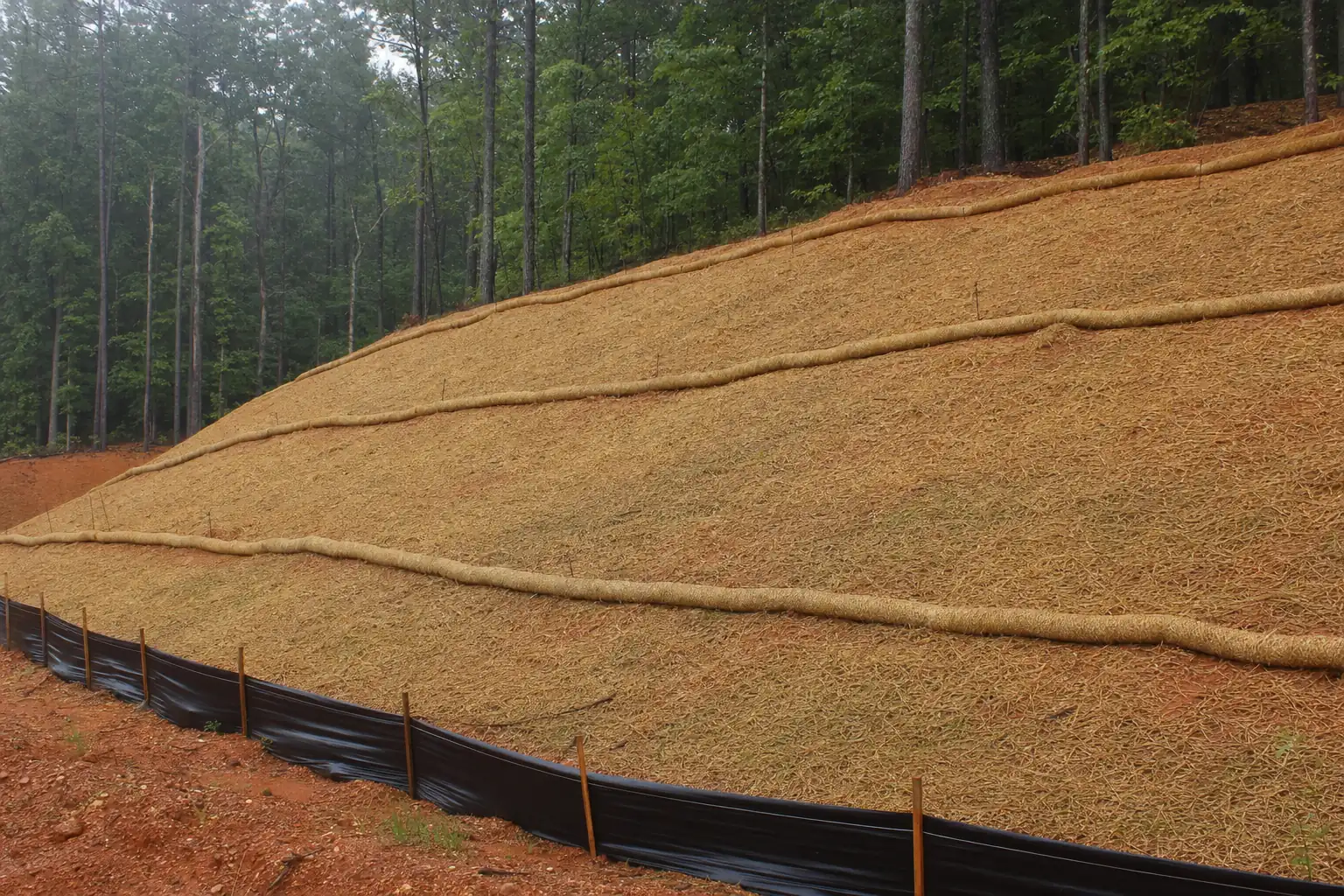
Separate from the buffer, Forsyth County requires a land disturbance permit for any clearing within 200 feet of state waters, even on a job under an acre. The clearing and grubbing permit fee is $250. The permit needs an approved erosion plan, and silt fence goes in on the low side before the first tree comes down. More in do I need a permit to clear less than an acre.
The numbers along a Forsyth County creek
- 50 ft
- County undisturbed buffer along streams
- 25 ft
- Impervious setback beyond the county buffer
- 25 ft
- Georgia's buffer on all state waters
- 200 ft
- Distance from state waters where any clearing needs a permit
What it costs to get it wrong
Forsyth County’s soil erosion ordinance sets a minimum fine of $1,000 a day where state or county buffers are impacted, and the owner has to revegetate the buffer on top of it.
Timber work carries its own catch. Forestry is exempt from the land disturbance permit, but if forestry work disturbs a buffer, no land-disturbing activity other than normal forest management is allowed on the entire property for three years. A logging job that cuts through a creek bottom can hold up a homesite on the same tract until that clock runs out.
How we work along a creek
- 1Find the waterCreeks, branches and the lake located on the walk, with the 200-foot line noted.
- 2Flag the bufferThe buffer edge flagged on the ground before any machine arrives.
- 3Fence the low sideSilt fence between the clearing and the creek wherever the slope runs toward it.
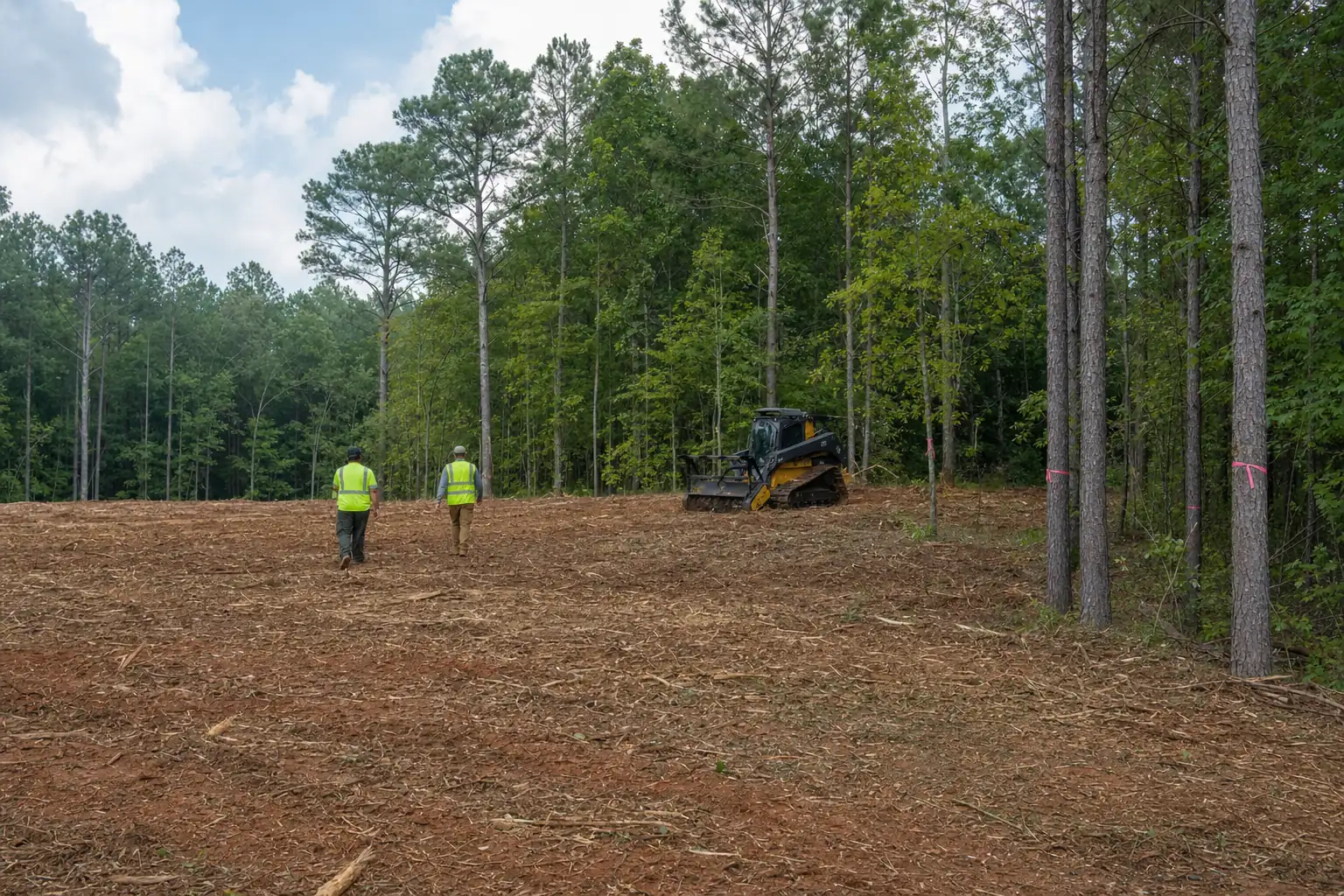
- 4Clear to the flagsThe mulcher works up to the buffer line and leaves the ground covered.
Mulching suits creek land. It leaves chips on the ground right up to the buffer, so the strip outside the buffer isn’t bare clay pointed at the water. Brush comes back within a season or two, and maintenance mowing keeps the cleared side open without touching the buffer. If privet has taken over a creek bottom, read privet removal along creeks before anyone cuts. The longer guide is creeks, stream buffers and clearing near water, and the county’s other rules are on the erosion control and permits page.
FAQ
More about clearing near creeks
- Can I clear brush inside the creek buffer?
- Treat the county's 50-foot buffer as off limits to machines. Georgia's 25-foot buffer allows thinning or trimming if a protective vegetative cover remains, but in unincorporated Forsyth the county buffer is wider and undisturbed. Ask the county before any work inside it.
- Where is the buffer measured from?
- Georgia measures its 25-foot buffer from the point where normal stream flow has wrested the vegetation away, which on most creeks is the edge of the bank. The City of Cumming measures its buffer from the top of the bank.
- Do I need a permit to clear near a creek?
- Within 200 feet of state waters, yes, even on a job under an acre. The county's clearing and grubbing permit fee is $250, and the permit needs an approved erosion plan and silt fence in the ground before work starts.
- Does the buffer change inside Cumming city limits?
- The City of Cumming sets its own stream buffers and issues its own land disturbance permit, so a lot inside city limits follows the city's rules, not the county's. Parts of the Big Creek watershed carry wider buffers. We check which rules cover your parcel on the walk.
Keep reading