Straight answer · 3 min read
Do I Need Silt Fence for a Small Clearing Job?
Sometimes. In Forsyth County, a clearing job under one acre and more than 200 feet from state waters is exempt from the land disturbance permit, but the county's minimum erosion practices still apply. On a slope above a road, a creek or a neighbor, we fence the low side anyway.
A small-job quote, fence included where it's needed.
Small covers a lot of ground. A half-acre house lot off a county road, a strip of privet behind a back fence and a quarter acre opened for a shop all count. Whether yours needs silt fence comes down to how much ground the work disturbs, how close it sits to water, and where the rain goes when it leaves the lot.
When the rules require it
| Your job | County permit | Erosion control |
|---|---|---|
| Under 1 acre, more than 200 feet from state waters | Exempt | The county’s minimum erosion practices; fence where the slope calls for it |
| Under 1 acre, within 200 feet of a creek, pond or lake | Required | Fence and controls to the approved erosion plan |
| Under 1 acre, part of a larger plan of 1 acre or more | Required | Fence and controls to the approved erosion plan |
| 1 acre or more | Required, plus state stormwater coverage | Fence, exits and cover to the plan, inspected on the permit’s schedule |
Permit thresholds, fees and buffer widths are those published by Forsyth County and the State of Georgia as of November 4, 2026. Confirm current requirements with the issuing authority before work begins. This is not legal advice.
A “larger plan” catches people. Clearing a half acre now as phase one of a two-acre homesite counts as part of the two acres. The details are in do I need a permit to clear less than an acre.
What the exemption leaves in place
The exemption covers the permit. Forsyth County’s ordinance still applies its minimum erosion practices to exempt work, and the under-one-acre exemption expects sediment to stay on your property. Clay in the road ditch or the neighbor’s yard is still your problem.
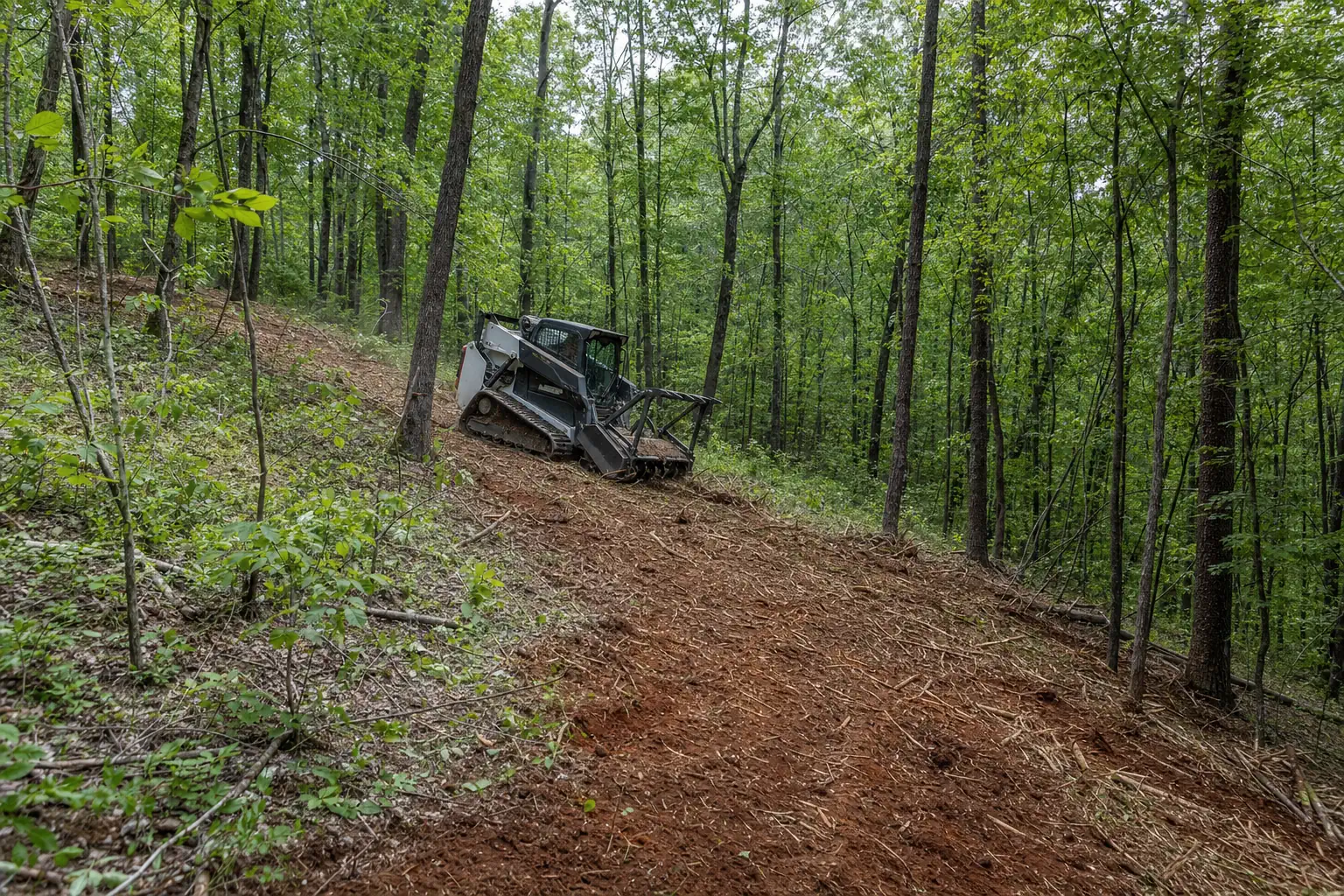
Red clay doesn’t hold on a bare slope. Forsyth County gets roughly 50 to 55 inches of rain a year, and one hard storm on a scraped half acre can carry it into the road ditch and the nearest creek. The slope matters more than the acreage on a small job: a flat quarter acre in a pasture and a quarter acre pitched toward Big Creek are different jobs.
How we decide on a small job
- 1MeasureAcreage the work will disturb, checked on the walk.
- 2Find the waterDistance to the nearest creek, pond or lake, and whether it falls within 200 feet.
- 3Read the slopeWhere rain leaves the lot, and what sits below it: road, ditch, creek or neighbor.
- 4Pick the controlsMulch cover alone, or silt fence on the low side, plus a gravel exit where trucks reach pavement.
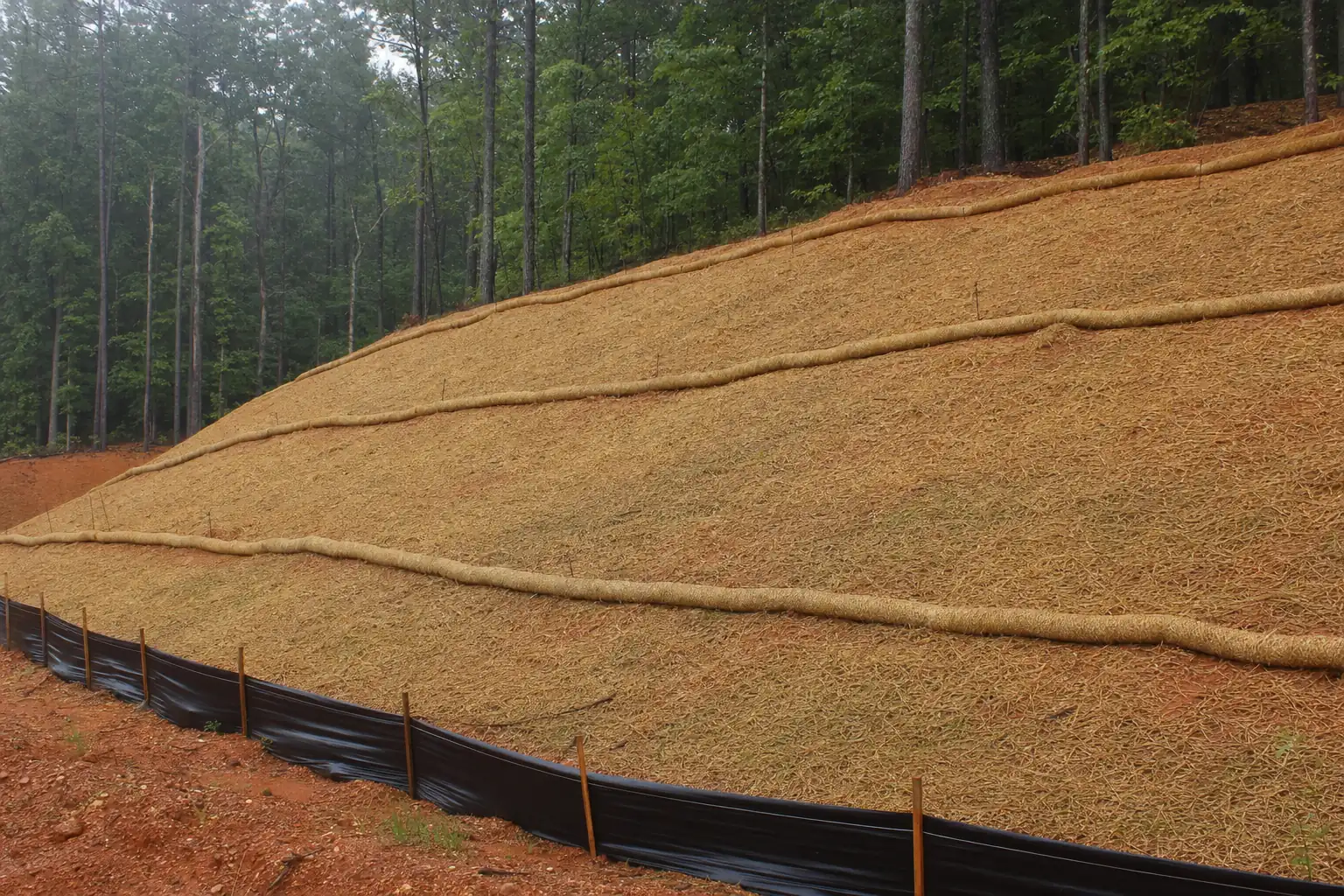
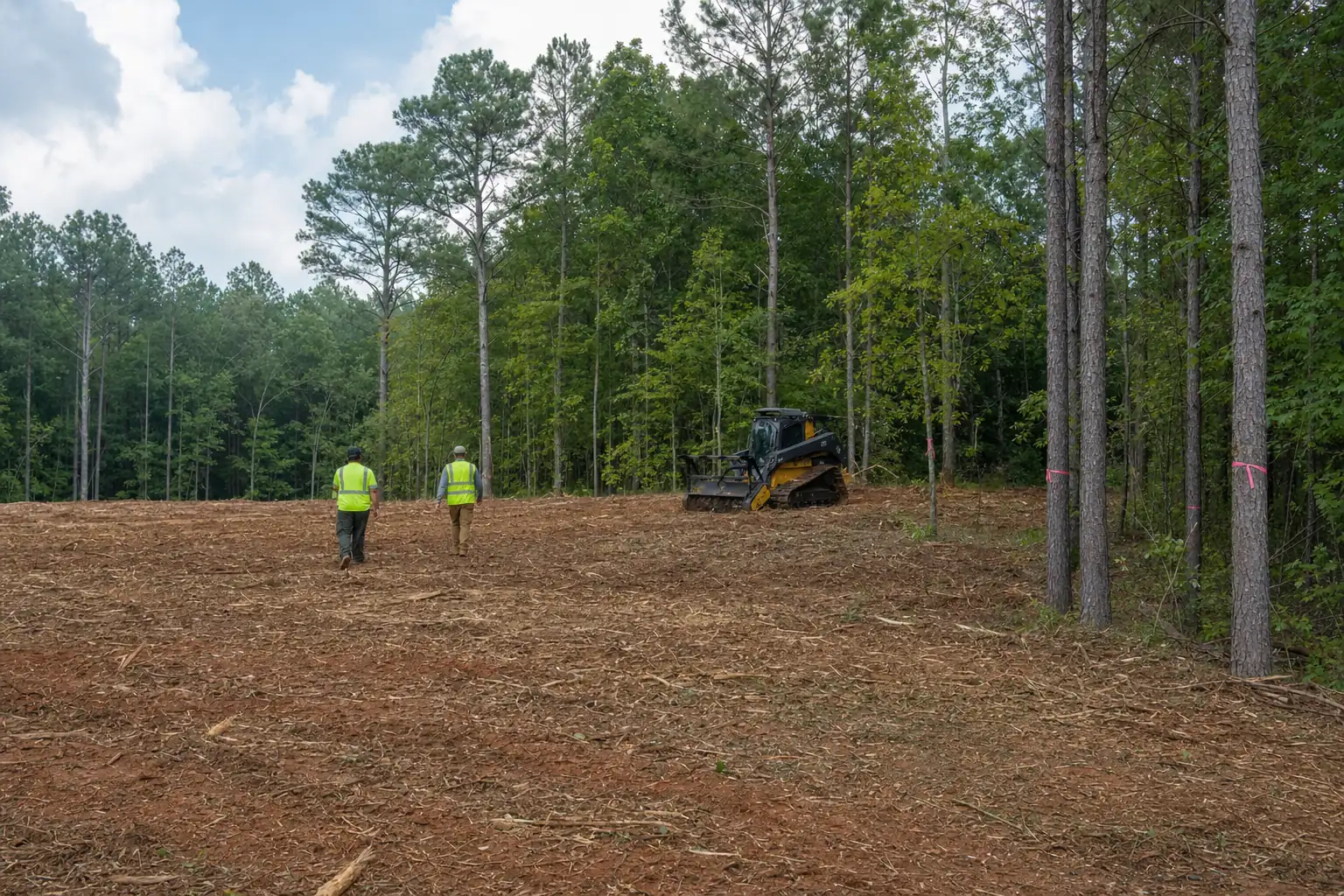
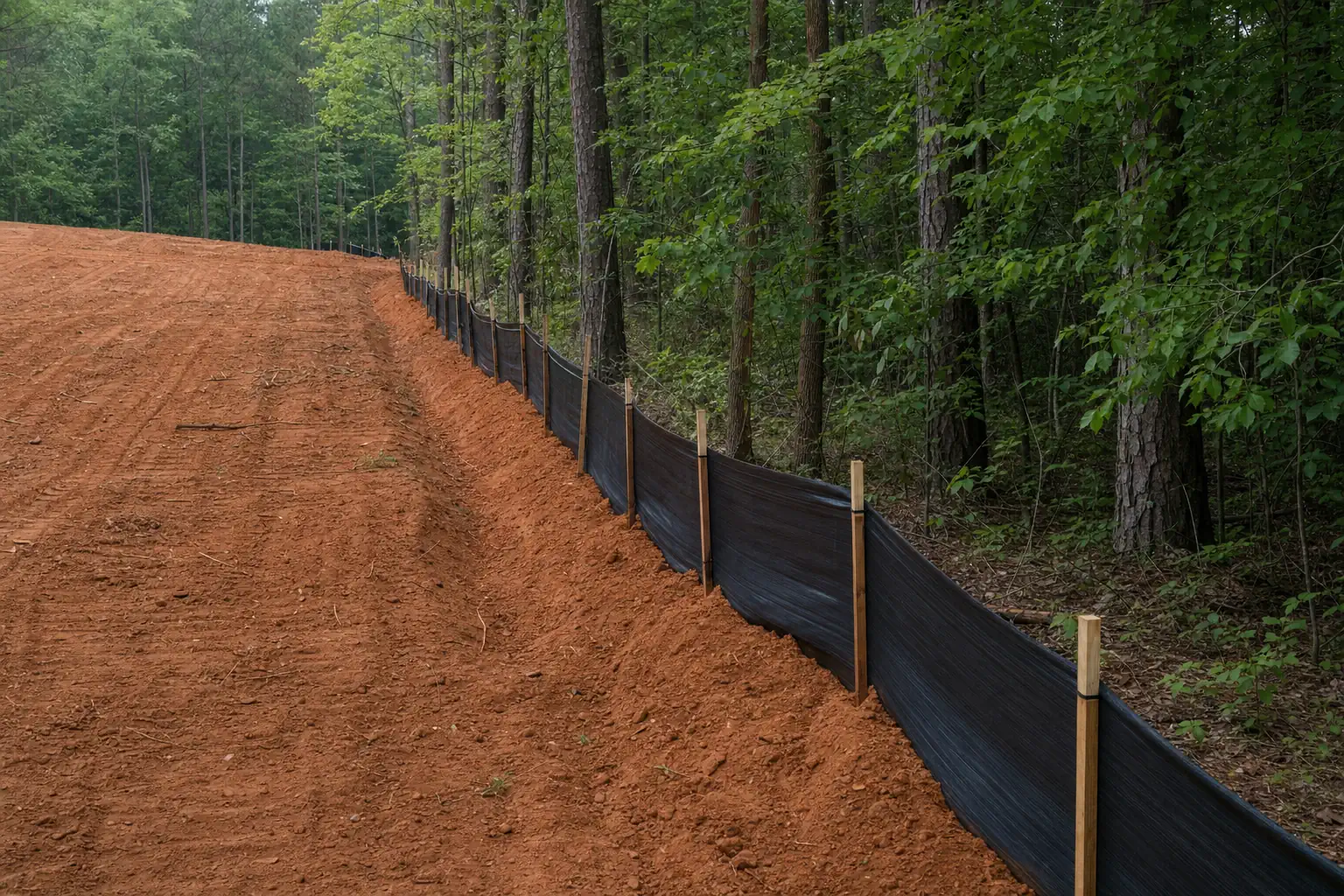
Most small mulching jobs leave a mat of chips on the ground, and that cover does much of the work. Flat ground with mulch on it and nothing downhill often needs no fence. A sloped lot draining toward a road or creek gets fence on the low side. If stumps come out or a pad gets graded, the ground goes bare, and bare ground on a slope gets straw and fence.
What fence adds to a small job
Silt fence and erosion control run about $500 to $1,200 an acre. Small clearing jobs usually carry a $1,200 to $2,000 minimum for the clearing itself, because the machine costs the same to haul out for a quarter acre as for a full one.
Ranges are estimates for Forsyth County and the surrounding area based on job density, terrain, access and acreage. Your written quote is the only price that applies to your property.
On our quotes the fence is a line on the same contract as the clearing, installed before the first tree comes down and pulled when the ground holds. See erosion control and silt fence installation for how it goes in, and the minimum charge for a small lot for how small jobs are priced.
After the clearing
A cleared lot doesn’t stay cleared. Privet, sweetgum and blackberry come back within a season or two unless the ground gets built on, grazed or mowed, so plan for maintenance mowing. Once the regrowth and the mulch hold the soil, the fence comes out. For lot clearing ahead of a build, the fence stays until the builder’s work holds the ground, and we pull it when you call. The county’s wider rules are on the erosion control and permits page.
FAQ
More about silt fence on small jobs
- Does mulching count as erosion control?
- It helps. Mulch from the clearing covers the ground and holds clay through the first rains, and on flat, exempt ground it is often all the cover a site needs. It does not replace silt fence where a permit and an erosion plan call for fence.
- Who decides whether my small job is exempt?
- Forsyth County runs the land disturbance permit through its Department of Planning and Community Development. We measure the acreage and the distance to the nearest creek on the walk and tell you which side of the line the job falls on before you sign.
- What happens to the fence when the job is done?
- It comes out once grass or the next trade's work holds the ground. Pulling it before that leaves bare clay with nothing below it to catch the next storm.
- Do I need a gravel construction exit on a small job?
- Where trucks drive from bare ground onto a paved road, a gravel exit keeps clay off the pavement. On a mulching job where only the machine and its trailer come and go, we decide on the walk.