
Straight answer · 3 min read
How Often Are Erosion Control Inspections Required?
At least weekly on most sites, and within 24 hours of a half-inch rain. That is the inspection schedule on permitted clearing sites in Georgia, set by the state's NPDES construction stormwater permit, which covers sites disturbing an acre or more. Certified personnel do the inspections and keep the records.
Erosion control kept inspection-ready, quoted in one business day.
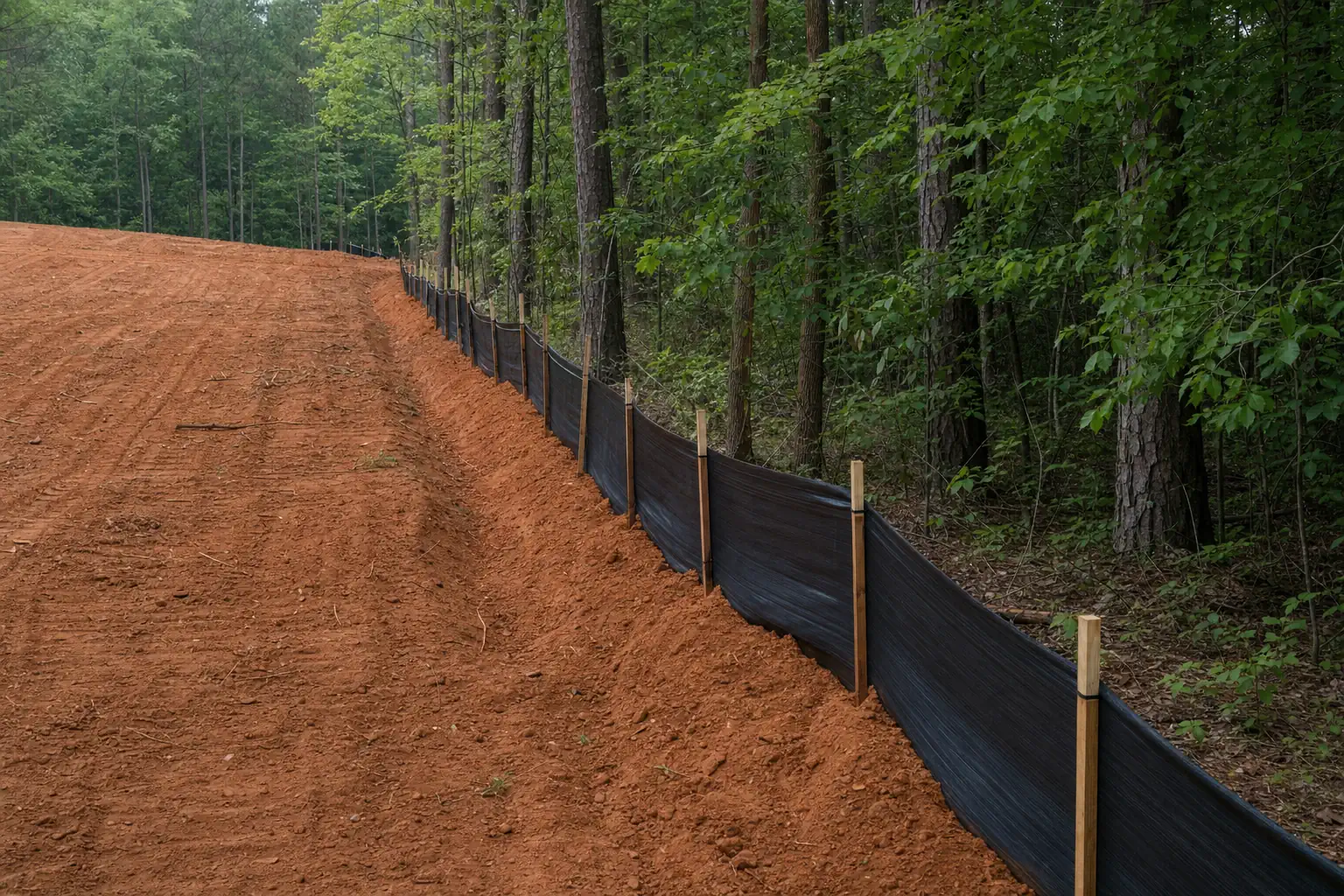
Installing silt fence is one day’s work. Keeping it working is the rest of the job. A Friday night storm can lay a section flat or bury the uphill side in red clay, and the inspection schedule exists so someone finds that and fixes it before the clay reaches the road or the creek.
The schedule, and what sets it
Georgia covers construction sites under three general NPDES stormwater permits: one for stand-alone sites, one for infrastructure projects and one for common developments such as subdivisions. The state reissued all three in 2023. The inspection schedule runs on the permit’s terms, which on most sites means at least weekly, and within 24 hours of a half-inch rain.
The inspection rules on a permitted site
- Weekly
- At least, on most permitted sites
- 24 hours
- Deadline to inspect after a half-inch rain
- 1 acre
- Disturbance that brings state permit coverage
- 7 days
- Longest bare ground can sit idle before the county requires it stabilized
Permit thresholds, fees and buffer widths are those published by Forsyth County and the State of Georgia as of November 4, 2026. Confirm current requirements with the issuing authority before work begins. This is not legal advice.
Some permits and approved alternative schedules set a different interval, so the permit coverage on your site decides the exact cadence. The half-inch rain trigger is the one that catches people out. Red clay sheds water fast, and Forsyth County gets roughly 50 to 55 inches of rain a year, so in a wet month the rain inspections can outnumber the weekly ones.
Who does the inspecting
The permit calls for certified personnel. Georgia law requires each permitted site to have at least one person in responsible charge who holds the Georgia Soil and Water Conservation Commission’s Level IA certification, and Forsyth County’s ordinance requires that person on site whenever land is being disturbed. Regulatory inspectors carry a separate Level IB certification, and the county’s Department of Engineering enforces the local ordinance.
The permit also calls for water sampling for turbidity after rains of a half inch or more. That is the engineer’s and the permittee’s paperwork. Ours is keeping the controls in shape so the samples and inspections have nothing to report.
What an inspection looks at
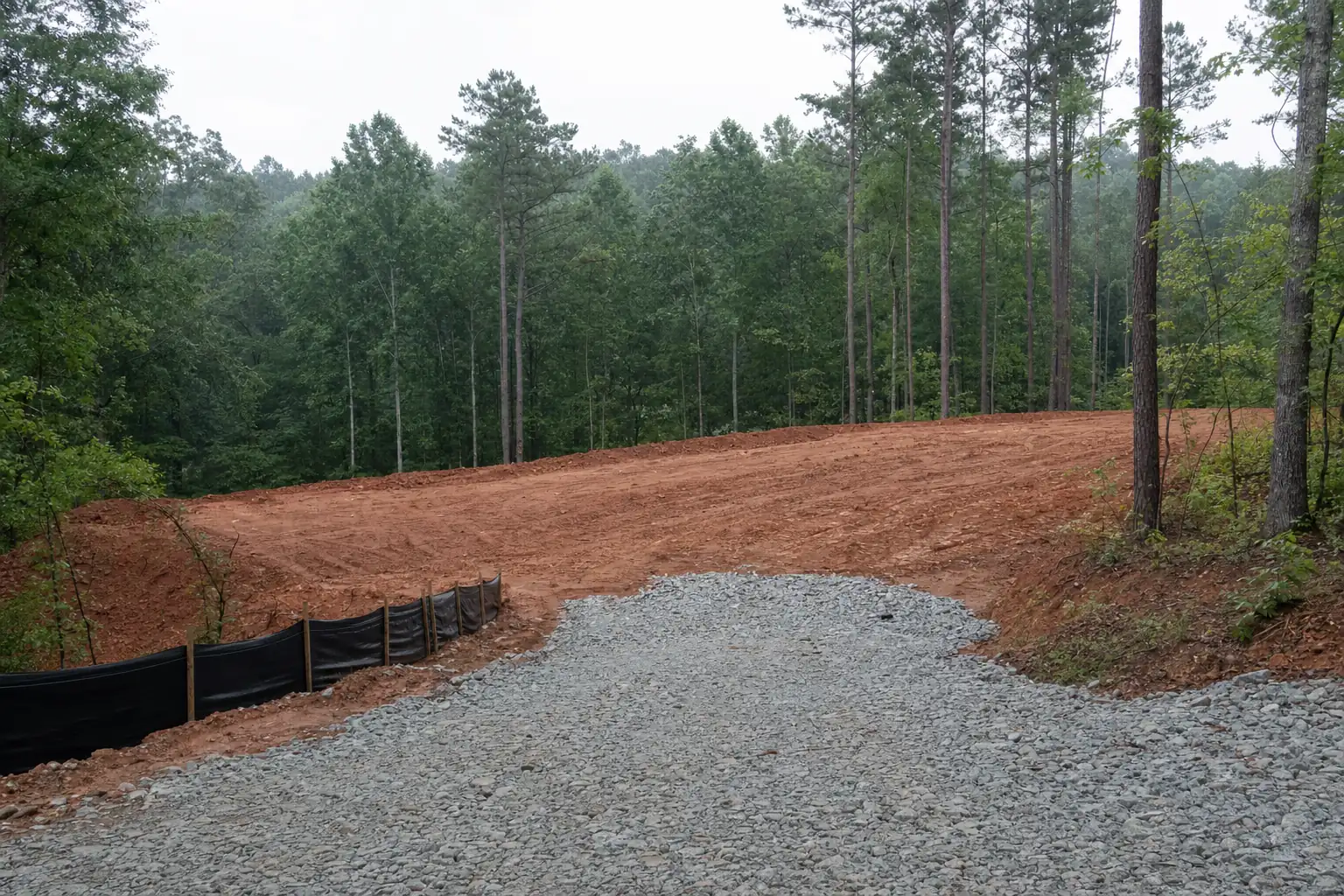
- Silt fence. Still standing, still trenched in, and not full of clay on the uphill side.
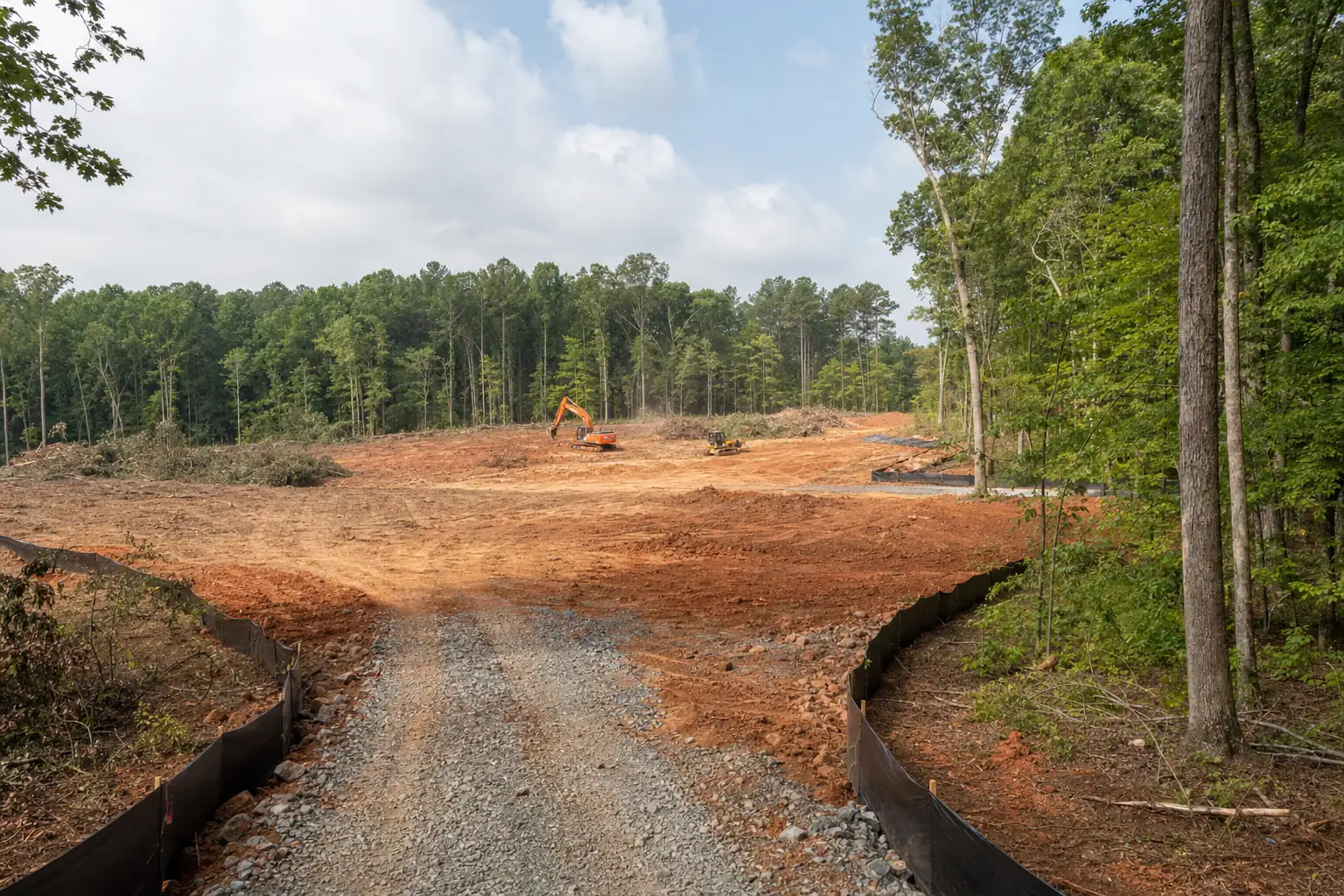
- Construction exit. Gravel still knocking clay off tires before trucks reach the county road.
- The road. No red clay tracked onto the pavement past the site entrance.
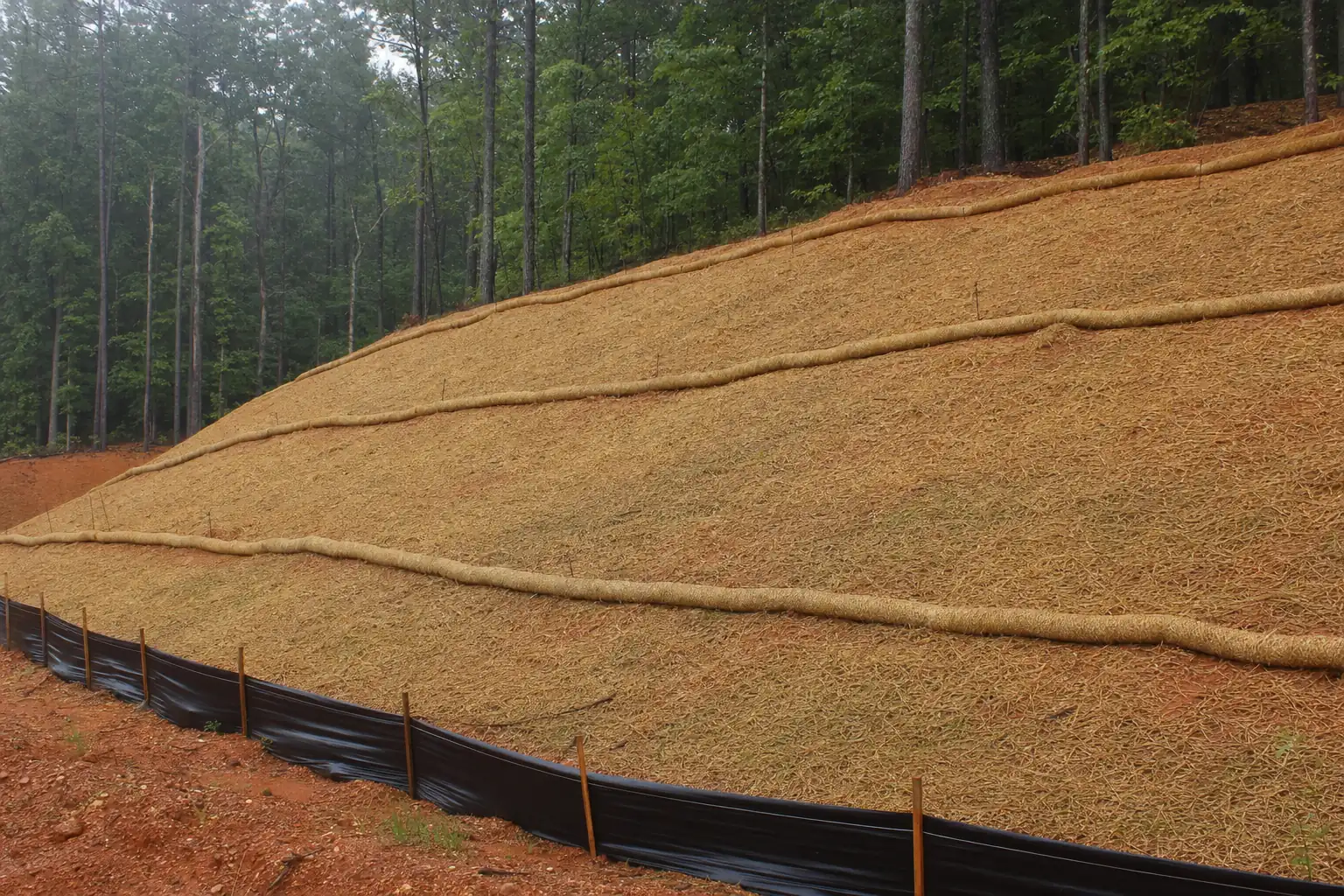
- Bare ground. Areas left idle more than 7 days covered, as the county requires.
- Buffers. Flagged stream buffers untouched by machines.
- The plan. Controls in the places the approved erosion plan shows them.
The plan itself is drawn to the state’s erosion manual. More on that in what is the Georgia Green Book.
How we keep a site ready between inspections
- 1After every big rainWe walk the fence line and the exit, starting at the low side where water leaves the lot.
- 2Reset and clean outSagging sections reset, sediment dug out from behind the fence, the exit topped up with stone.
- 3Cover bare groundMulch left from the clearing, and straw on cuts and pads the dozer left bare.
- 4Hand backControls standing and working when the site goes to your builder or the next trade.
Mulching helps. A forestry mulcher leaves a mat of chips everywhere the pad and drive don’t go, so a mulched site has far less bare clay for the fence to hold back than a scraped one. Wet ground also changes the schedule on our side: we don’t run tracked machines on saturated clay, which is covered in clearing land on wet red clay.
Why builders hand this to the clearing contractor
On most jobs, the clearing outfit leaves and the builder inherits the fence. When the same contractor runs the clearing and the erosion control and silt fence, the people who placed the fence are the ones walking it after a storm. That is the one-contract point for builders and developers, and it’s why our development clearing quotes carry the erosion control as a line on the same contract. The full set of county rules sits on the erosion control and permits page.
FAQ
More about erosion control inspections
- Is the inspection schedule the same on every site?
- No. Most sites inspect at least weekly and within 24 hours of a half-inch rain. Georgia issues separate permits for stand-alone sites, infrastructure projects and common developments, and some sites run on an approved alternative schedule, so your permit coverage sets the exact cadence.
- Does a small exempt job need inspections?
- A job exempt from the land disturbance permit has no permit inspection schedule. The county's minimum erosion practices still apply, and we walk the fence on small jobs after heavy rain the same way we do on permitted ones.
- Who keeps the inspection records?
- The certified personnel who do the inspections keep the records under the permit. On jobs where we run the erosion control, our part is keeping the fence, exits and cover in working shape between inspections.
- What happens if an inspection finds a problem?
- The controls get fixed. Forsyth County's soil erosion ordinance allows administrative fines of up to $1,000 a day per violation, so a sagging fence repaired the morning after a storm costs far less than one left for a week.
Keep reading