
Straight answer · 3 min read
What Is the Georgia Green Book?
The Georgia Green Book is the Manual for Erosion and Sediment Control in Georgia, the state's standard for erosion plans and the controls on site. The Georgia Soil and Water Conservation Commission lists the 2016 edition as current. In Forsyth County, any clearing that needs a land disturbance permit needs an erosion plan drawn to it.
Clearing built to your erosion plan, quoted in one business day.
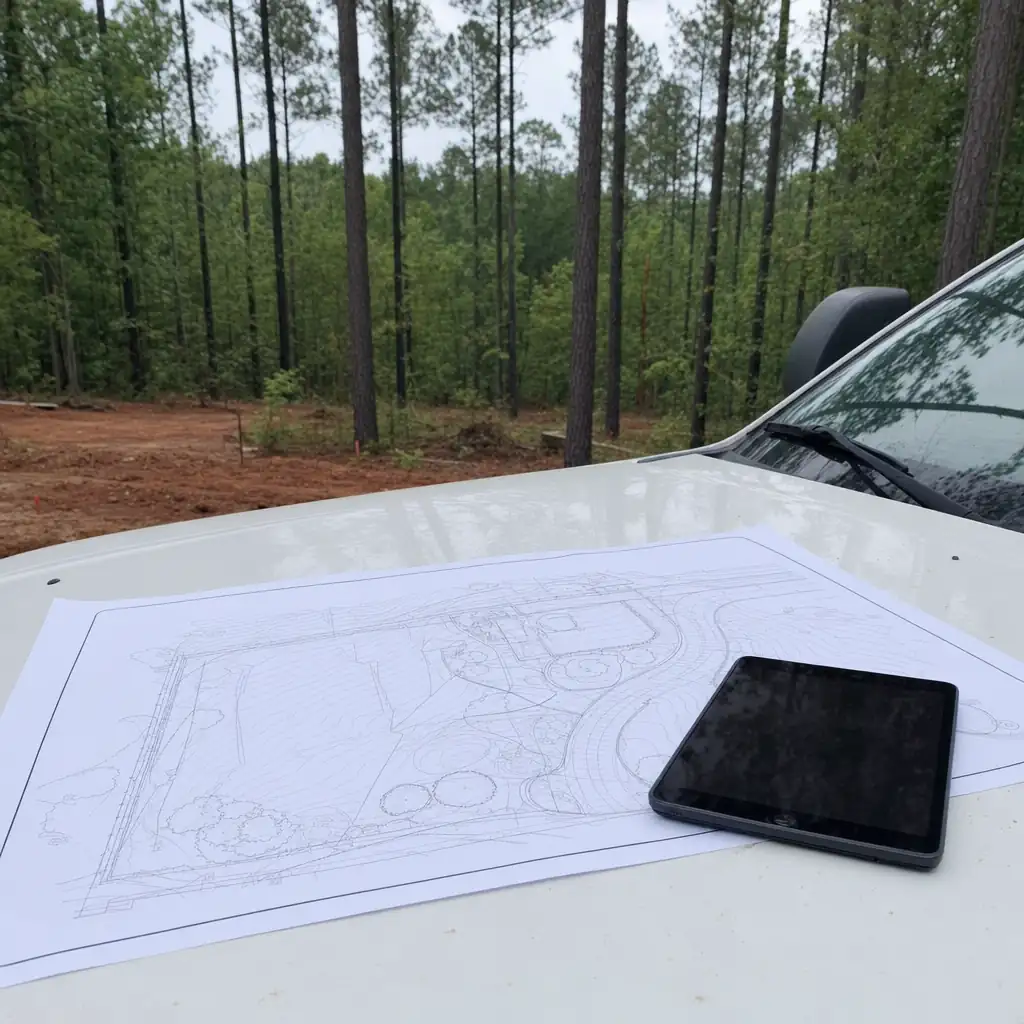
Nobody on a job site uses the full title. Engineers, county reviewers and erosion crews call it the Green Book. If you’re building on wooded land in Forsyth County you may never open it, but the plan your engineer draws and the silt fence we trench in both come out of it.
What the Green Book covers
The manual sets Georgia’s standards for the practices that keep soil on a construction site. Silt fence, gravel construction exits and cover for bare slopes all have specs in it, along with the rest of the controls an erosion plan can call for. Engineers draw erosion, sedimentation and pollution control plans to it, and reviewers check those plans against it.
The law behind it is Georgia’s Erosion and Sedimentation Act of 1975. The state certifies local issuing authorities to run the permits (in unincorporated Forsyth County, that’s the county), and erosion plans go to the local Soil and Water Conservation District for review.
When your land needs a plan drawn to it
A Green Book plan comes with the land disturbance permit. In Forsyth County that means clearing that disturbs an acre or more, or clearing within 200 feet of a creek, lake or other state waters. Sites of an acre or more also need coverage under Georgia’s NPDES construction stormwater permit. The county’s clearing and grubbing permit fee is $250, and the state’s NPDES fee runs up to $80 per disturbed acre.
Permit thresholds, fees and buffer widths are those published by Forsyth County and the State of Georgia as of November 4, 2026. Confirm current requirements with the issuing authority before work begins. This is not legal advice.
A job under an acre and away from water is exempt from the permit. The county’s minimum erosion practices still apply to it, and the Green Book is still the reference for how to build them. More in what a land disturbance permit is.
Who works from it on a permitted job
| Who | Certification | What they do with the manual |
|---|---|---|
| Plan designer | GSWCC Level II | Draws the erosion, sedimentation and pollution control plan to it |
| County and the conservation district | Issuing authority and plan reviewer | Review the plan before the permit issues |
| Person in responsible charge | GSWCC Level IA | On site whenever land is being disturbed; keeps the controls matching the plan |
| Inspectors | GSWCC Level IB | Check the site against the plan and the permit |
| Machine operators and installers | Level I awareness seminar | Build the fence, exits and cover the plan shows |
A Level I card does not stand in for Level IA. Every permitted site needs at least one Level IA person in responsible charge.
What a plan drawn to it shows
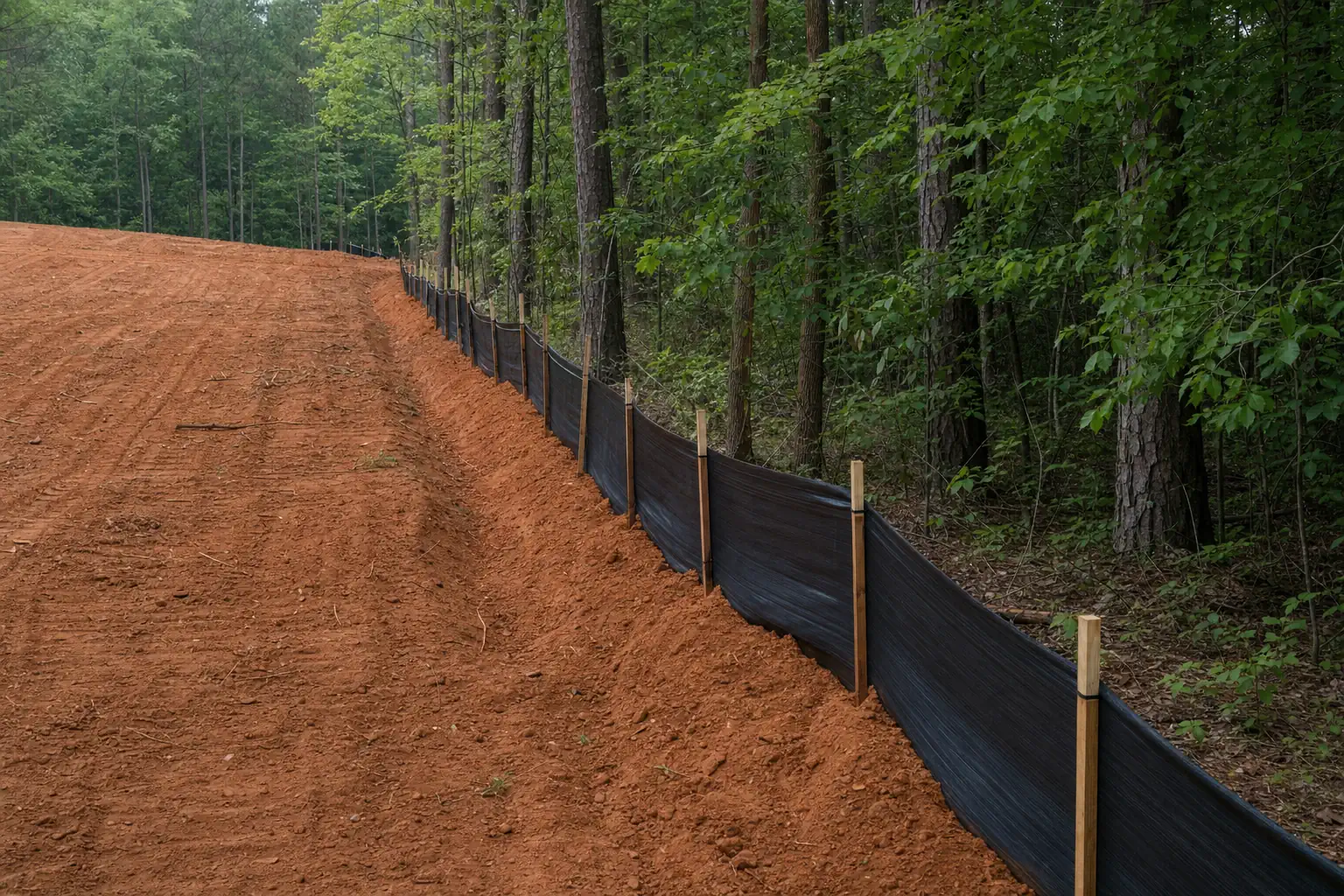
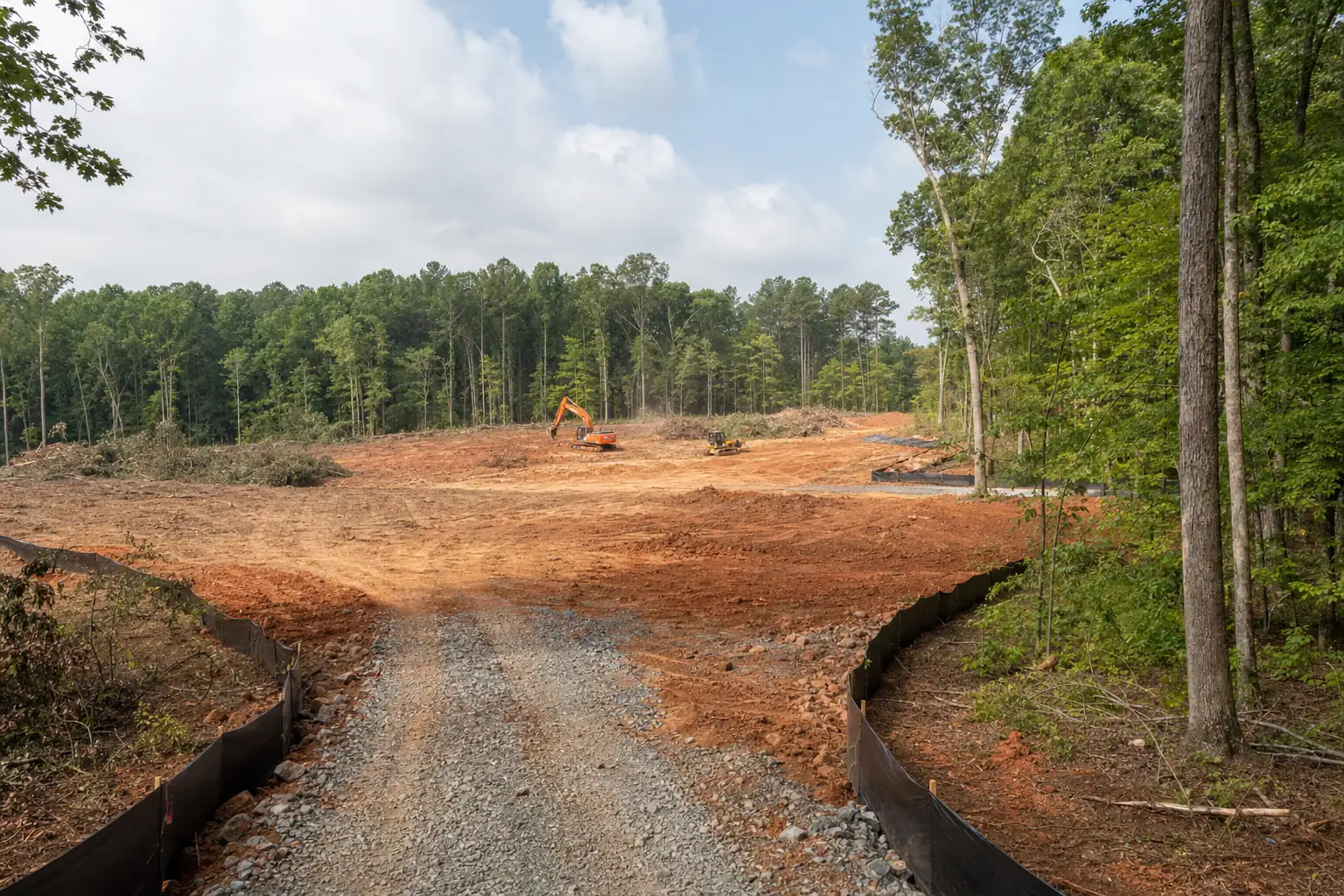
- Silt fence. Where it runs, usually along the low side where water leaves the site.
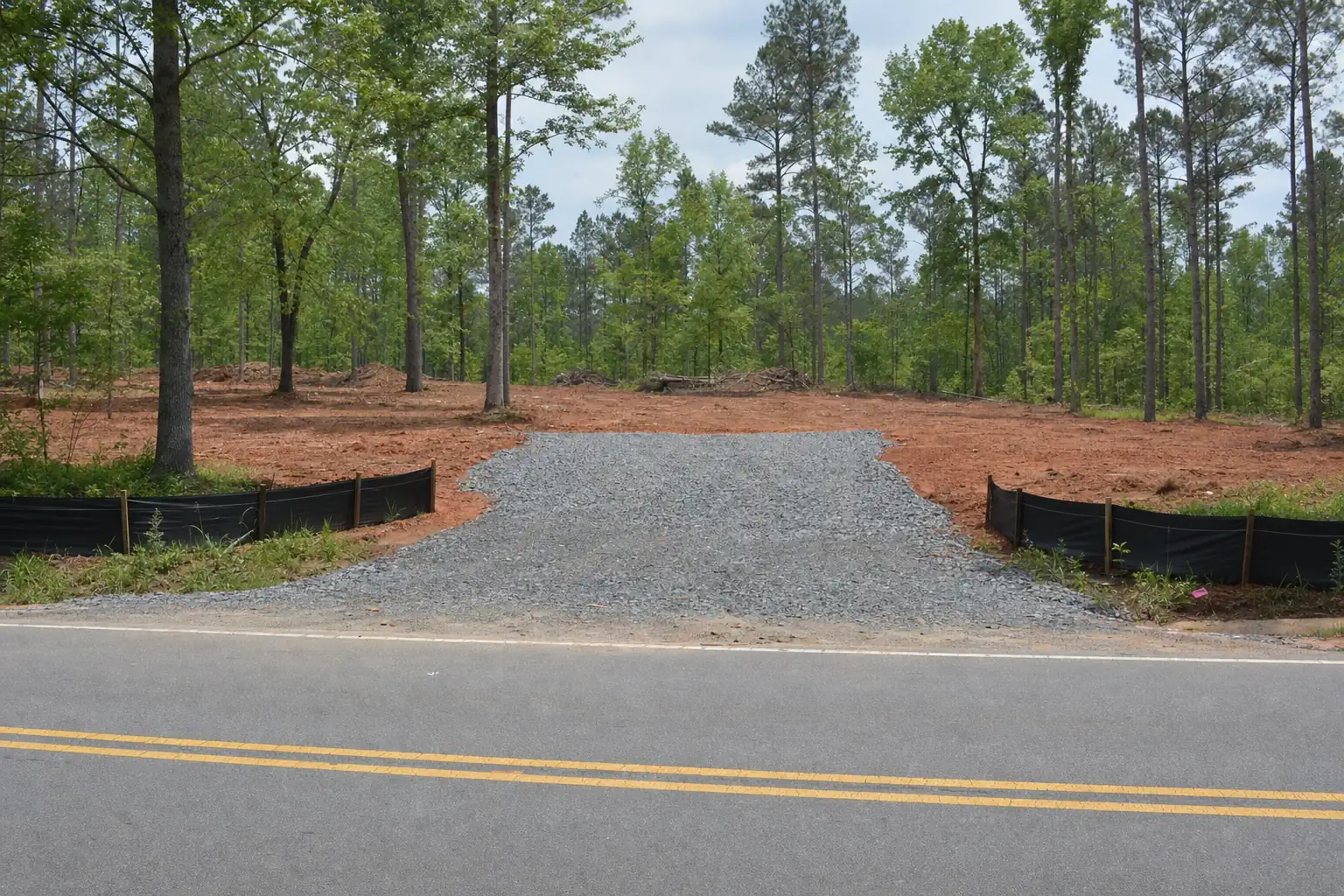
- Construction exits. The gravel pad where trucks reach the road, so clay stays off the pavement.
- Buffers. The stream buffers that stay undisturbed, drawn on the plan and flagged on the ground.
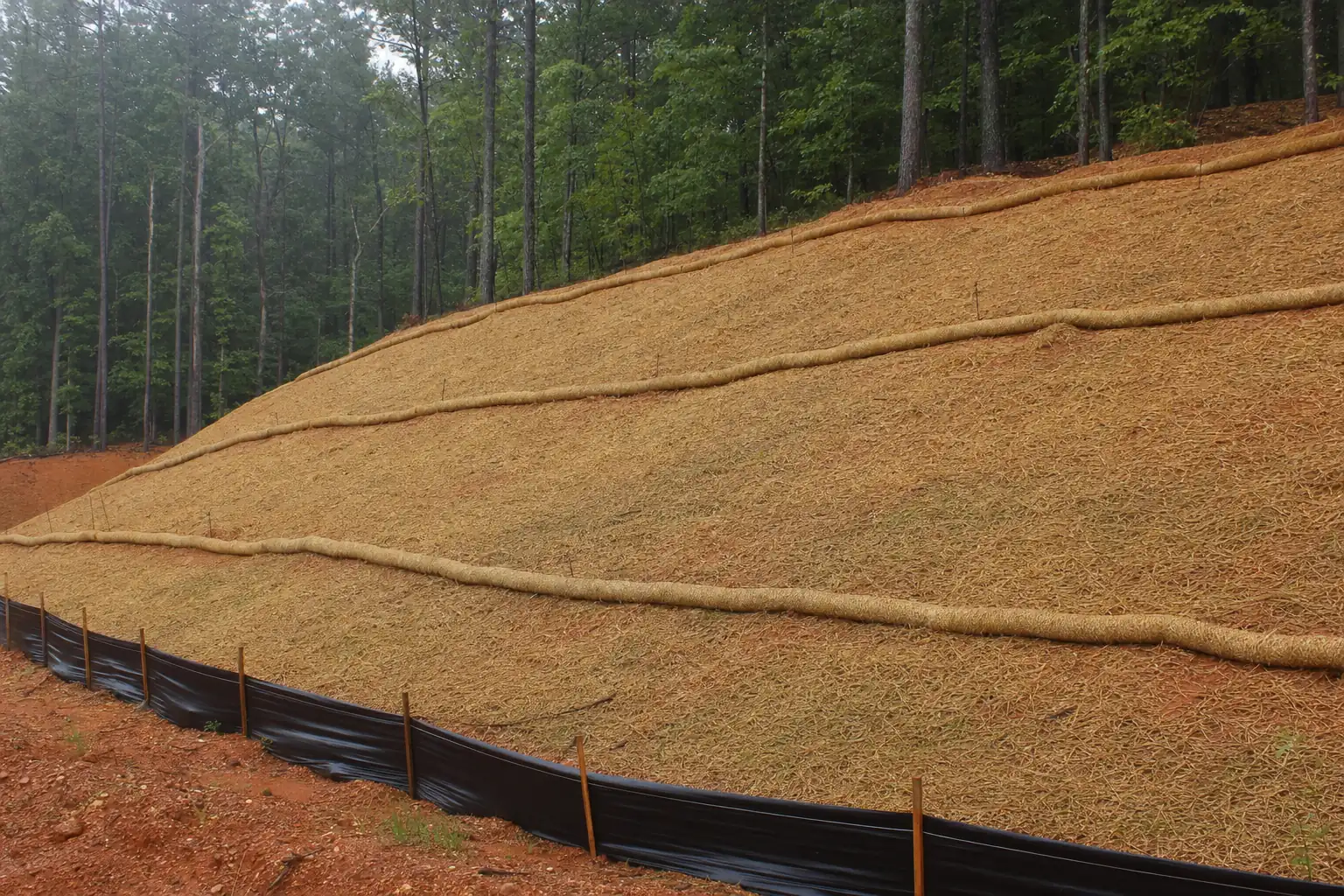
- Cover and sequence. How bare ground gets covered, and which controls go in before clearing starts.
In Forsyth County the plan set also carries a tree protection or replacement plan. That piece comes from the county’s tree ordinance, not the Green Book.
How we build to the plan
- 1Read the planWe walk the site with the approved plan and find every fence line, exit and buffer on the ground.
- 2Controls firstSilt fence on the low side and the gravel exit at the road go in before any clearing.
- 3Clear inside the linesMachines stay above the fence and out of flagged buffers.
- 4Keep it workingFence walked after heavy rain, sediment cleaned out, sagging sections reset.
We mulch brush in place, which leaves a mat of chips everywhere the pad and drive don’t go. In a county that gets roughly 50 to 55 inches of rain a year, less bare clay means less for the fence to catch. Clearing and silt fence installation sit on one contract, so the crew that clears your land is the one keeping the controls up. For the full set of state and county rules, start with erosion control requirements, explained for landowners or the erosion control and permits overview.
FAQ
More about the Green Book
- Do I need to read the Green Book to clear my land?
- No. The engineer who draws your erosion plan works from it, and the county reviews the plan against it. Your part is hiring a contractor who builds the controls the plan shows and keeps them working until the ground holds.
- Which edition of the Green Book is current?
- The Georgia Soil and Water Conservation Commission lists the 2016 edition of the Manual for Erosion and Sediment Control in Georgia, in effect since January 1, 2016. Your engineer confirms the edition the county expects when the plan is drawn.
- Does a small clearing job have to follow the Green Book?
- A job under an acre and more than 200 feet from state waters needs no permit and no formal plan. The county's minimum erosion practices still apply, and on a slope we fence the low side anyway.
- Who certifies the people who install erosion controls?
- The Georgia Soil and Water Conservation Commission. Each permitted site needs a Level IA certified person in responsible charge. Equipment operators and installation crews working under the permittee attend the Level I awareness seminar.
Keep reading
Questions people ask next
- QErosion control requirements, explained for landowners
- QWhat is a land disturbance permit and who issues it?
- QHow often are erosion control inspections required?
- QDo I need silt fence for a small clearing job?
- QDo you need a permit to clear land in Forsyth County?
- QCreeks, stream buffers and clearing near water