Straight answer · 3 min read
What Is a Land Disturbance Permit and Who Issues It in Forsyth County?
A land disturbance permit is Forsyth County's approval to clear, grade or otherwise disturb land under its soil erosion ordinance. In unincorporated Forsyth, the Department of Planning and Community Development reviews the plans and the Department of Engineering hands over the permit. Clearing that disturbs 1 acre or more, or sits within 200 feet of state waters, needs one.
Clearing quote with the permit question answered.
Forsyth County is the Local Issuing Authority for Georgia’s erosion law in the unincorporated county, certified by Georgia EPD to review erosion plans and issue permits for clearing and grading. The permit is how the county checks that a site has a workable erosion plan before anyone opens up the ground.
What the permit covers
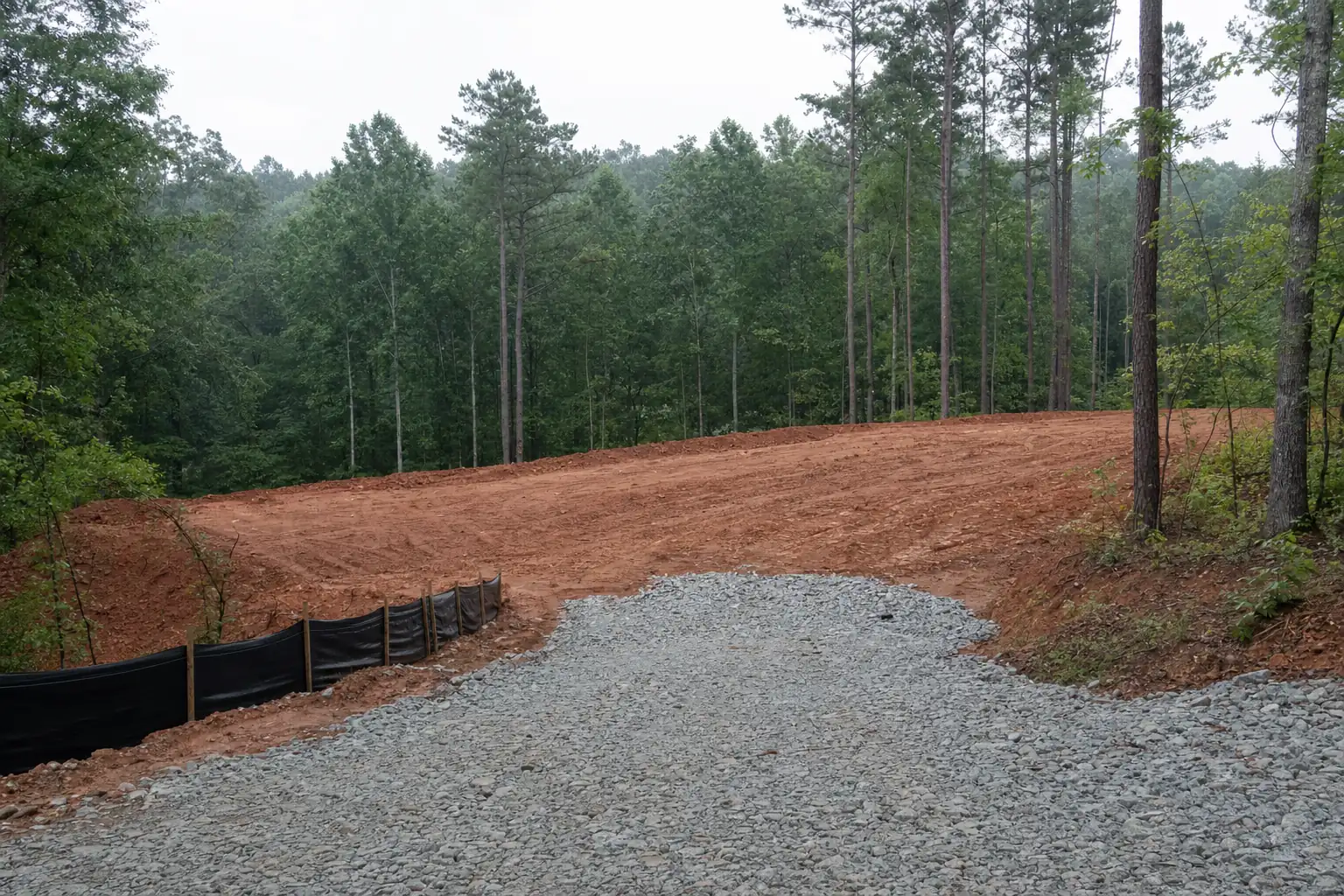
The county’s definition of land-disturbing activity includes grading, scraping, excavating or filling land, clearing vegetation, and any construction. It leaves out ordinary maintenance and landscaping, home gardens, yard and grounds upkeep, repairs or minor changes to a single-family home, and cutting firewood for your own use.
Clearing is named on the list, so a forestry mulcher working through an acre of brush counts the same as a dozer. The county’s rule is that all land-disturbing activity needs plan review and a permit before work begins, unless an exemption applies. The full list of exemptions is in do you need a permit to clear land in Forsyth County.
Who does what
| Step | Who handles it |
|---|---|
| Plan submittal and review | Department of Planning and Community Development, 2435 Freedom Parkway, Cumming |
| State stormwater coverage | Georgia EPD, through a Notice of Intent filed before the county permit issues |
| Permit handover | Department of Engineering, at a pre-construction meeting |
| Enforcement | Department of Engineering |
| Land inside Cumming city limits | City of Cumming Planning and Zoning Department |
Permit thresholds, fees and buffer widths are those published by Forsyth County and the State of Georgia as of November 4, 2026. Confirm current requirements with the issuing authority before work begins. This is not legal advice.
What goes into the application
The county asks for more than a form. A permitted clearing job needs:
- A full civil set. Plans prepared by a licensed professional.
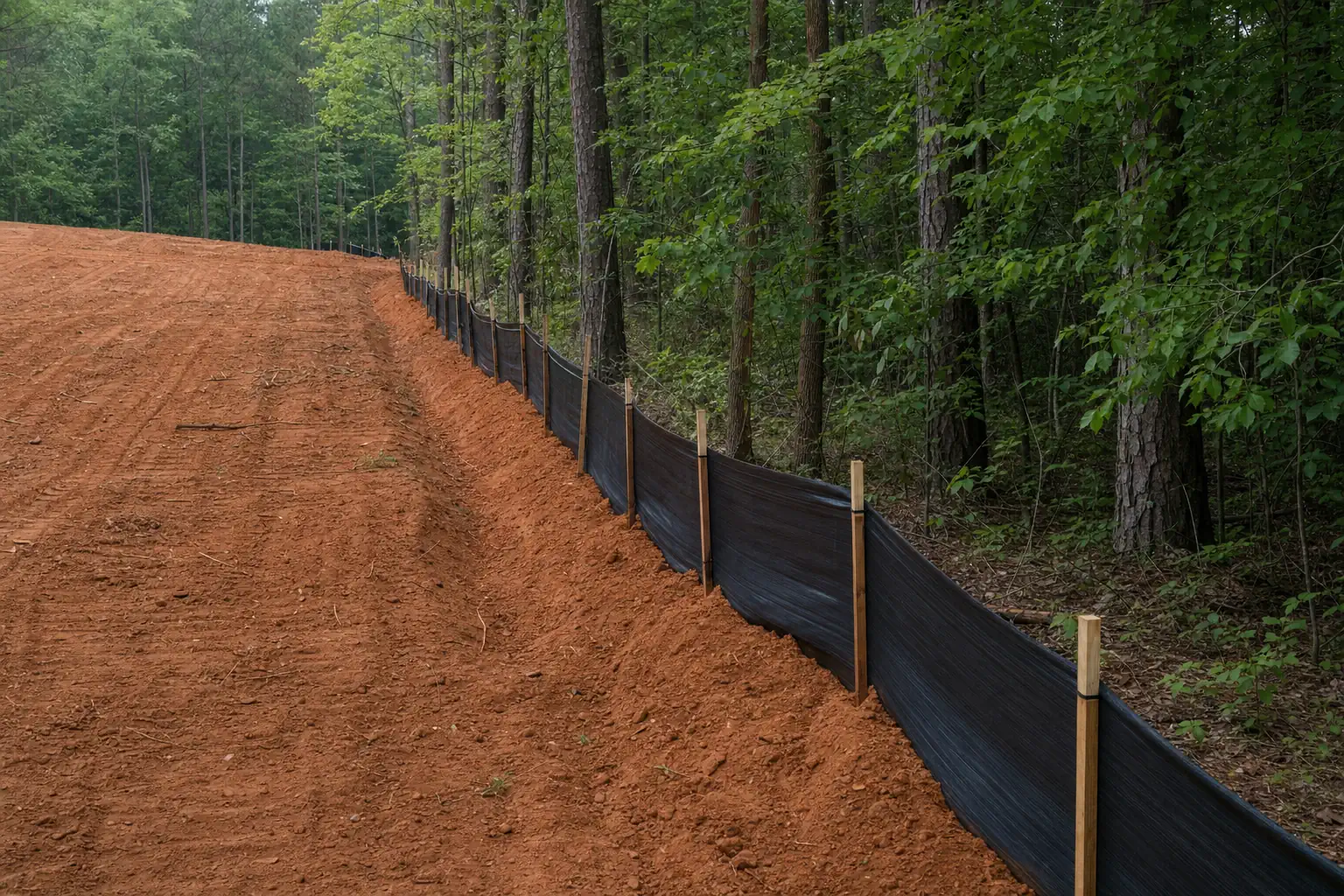
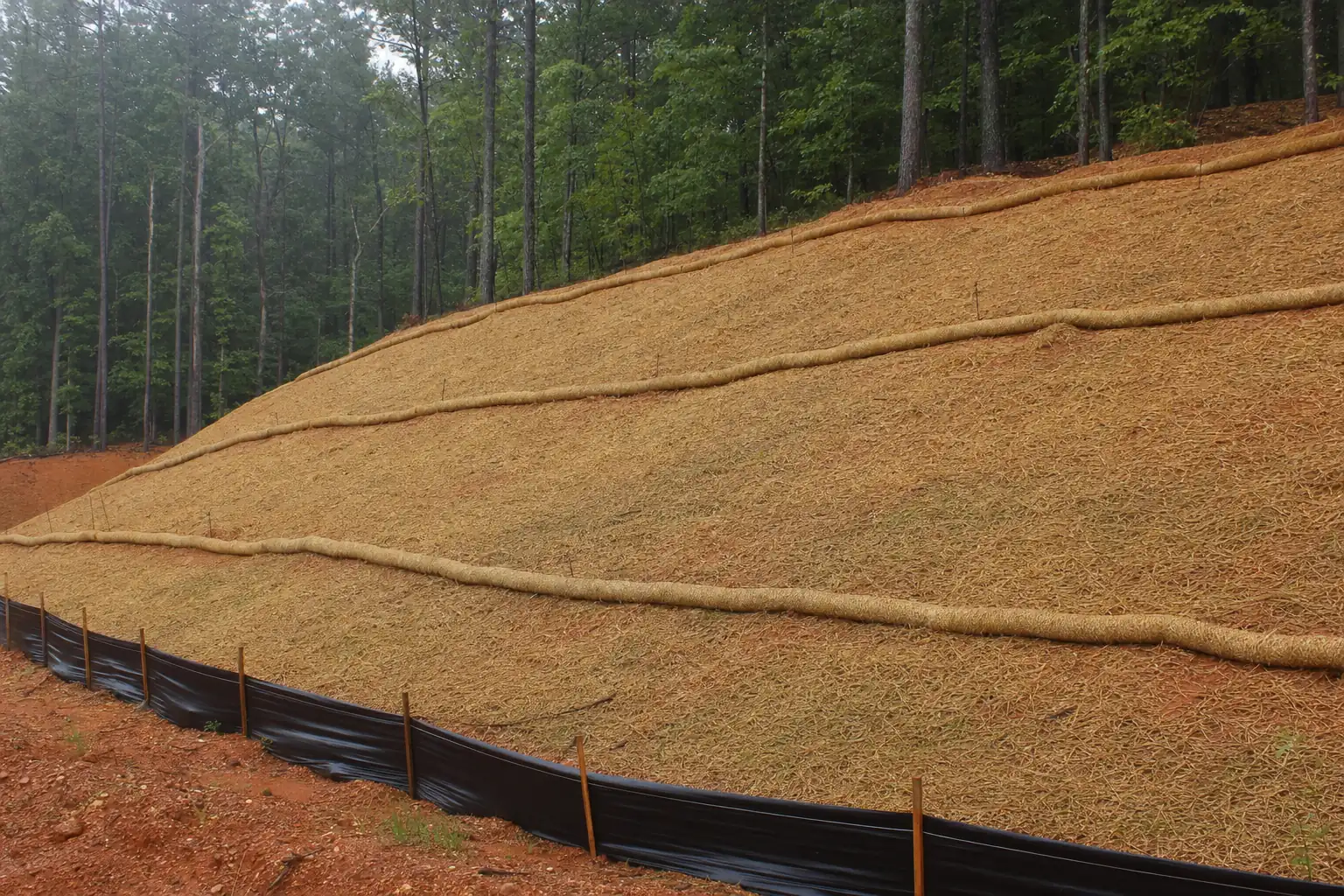
- An erosion plan. Silt fence, construction exits, cover and buffers, drawn to the state’s erosion manual, the Green Book.
- A tree plan. Tree protection or replacement by a registered landscape architect, urban forester or arborist.
- State coverage. Proof of the Notice of Intent to Georgia EPD, with the county’s portion of the NPDES fee.
- The fee. $250 for a clearing and grubbing or grading permit.
Your engineer or surveyor prepares and submits the plans. On our jobs, we build the controls those plans show.
When a clearing job needs one
Most clearing jobs here sort out on three questions. Does the job disturb 1 acre or more? Is any of the work within 200 feet of the bank of state waters? Is it part of a larger plan that adds up to an acre or more? A yes to any of them means a permit. Small jobs away from water are exempt, though the county’s minimum erosion practices still apply. The small-job cases are in do I need a permit to clear less than an acre.
What working without one costs
The county’s erosion ordinance sets fines of up to $1,000 a day per violation, or up to $2,500 a day through a Magistrate Court citation. Working without a permit carries a minimum of $250 a day, and work that impacts a state or county stream buffer carries a minimum of $1,000 a day plus revegetating the buffer. The work also stops until the permit and the controls are in place, which on a build schedule can cost more than the fines.
What the permit changes on the job
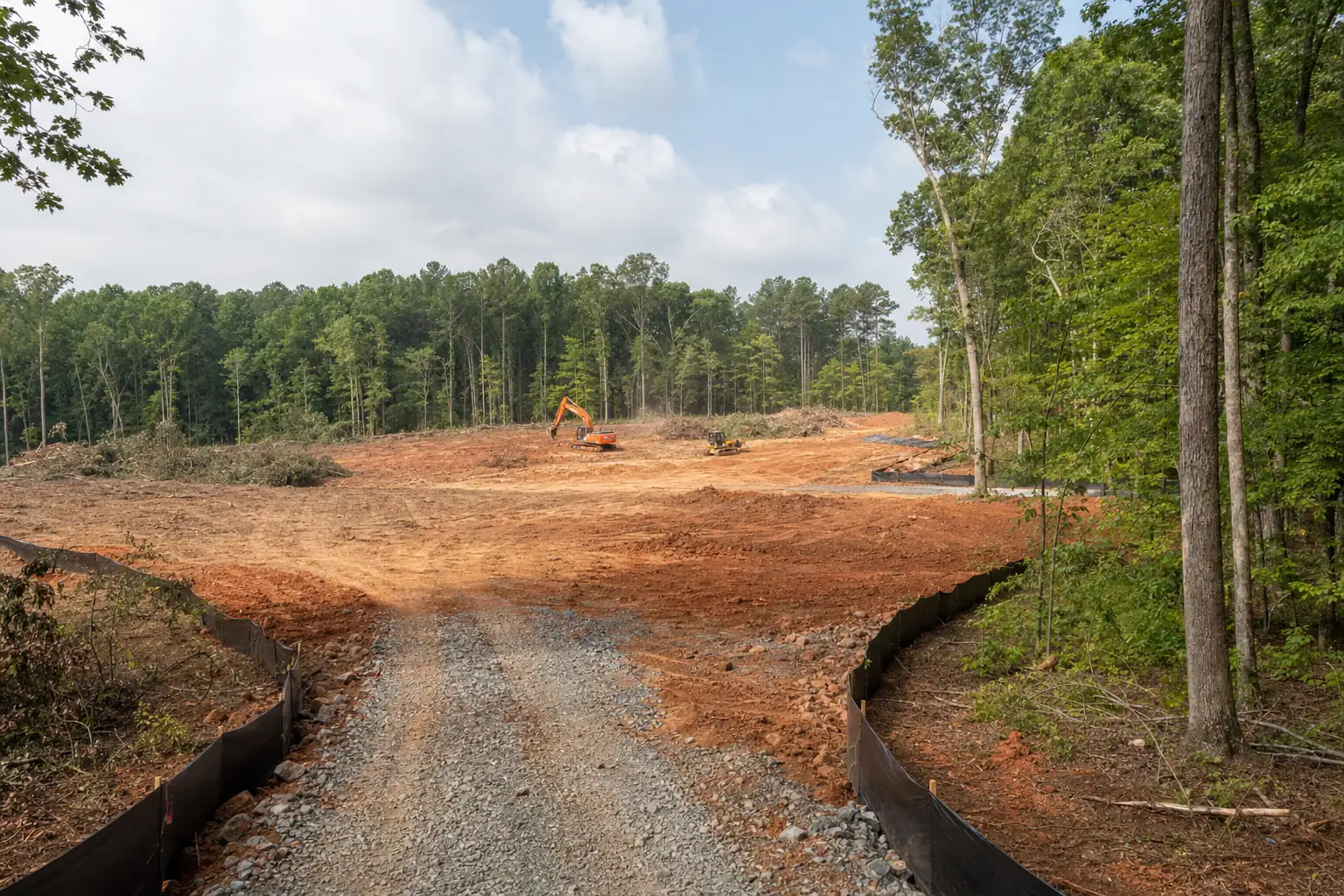
- 1Controls firstSilt fence and the construction exit go in before any clearing.
- 2Certified person on siteSomeone with Level IA certification is in responsible charge whenever land is disturbed.
- 3InspectionsAt least weekly on most sites, and within 24 hours of a half-inch rain.
- 4StabilizeBare ground gets covered before the controls come out.
We run the clearing and the silt fence and erosion control on one contract, so the controls stay in working shape between inspections. Cleared ground grows back within a season or two unless it gets built on or mowed, so plan for maintenance mowing. The rest of the rules are on the erosion control and permits page.
FAQ
More about land disturbance permits
- How much does a land disturbance permit cost in Forsyth County?
- The county lists $250 for a clearing and grubbing or grading permit. Sites of an acre or more also pay the state NPDES fee, up to $80 per disturbed acre. The engineering and erosion plan behind the application usually cost more than either fee.
- Do I need a permit if the job is only mulching, with no grading?
- The same thresholds apply. The county counts clearing of vegetation as land disturbance, so mulching brush on an acre or more, or within 200 feet of state waters, needs a permit just as grading would.
- How long does plan review take?
- The county takes submittals weekly, with a Monday 5 p.m. deadline, and returns comments within nine business days. The total time depends on how many rounds of comments the plans need before approval.
- Does the City of Cumming use the county's permit?
- No. Land inside Cumming's city limits gets its land disturbance permit from the City of Cumming through its Planning and Zoning Department. We confirm the city's current requirements before we quote a job there.
- Is the county permit the same as the state stormwater permit?
- No. Forsyth County issues the land disturbance permit. Georgia EPD covers sites of an acre or more under its NPDES construction stormwater permit, which takes a Notice of Intent and a fee of up to $80 per disturbed acre. A permitted site of an acre or more needs both.