
Ground guide · 8 min read
Mulching on Red Clay and Slope: Why Ground Pressure Matters Here
Forsyth County sits on Piedmont red clay over weathered granite and gneiss and gets roughly 50 to 55 inches of rain a year. A tracked mulcher spreads its weight and drives on its own mulch, so firm clay holds it. Soaked clay ruts under any machine. Sawnee Land Clearing schedules around wet weeks and leaves slopes covered.
The ground around Cumming
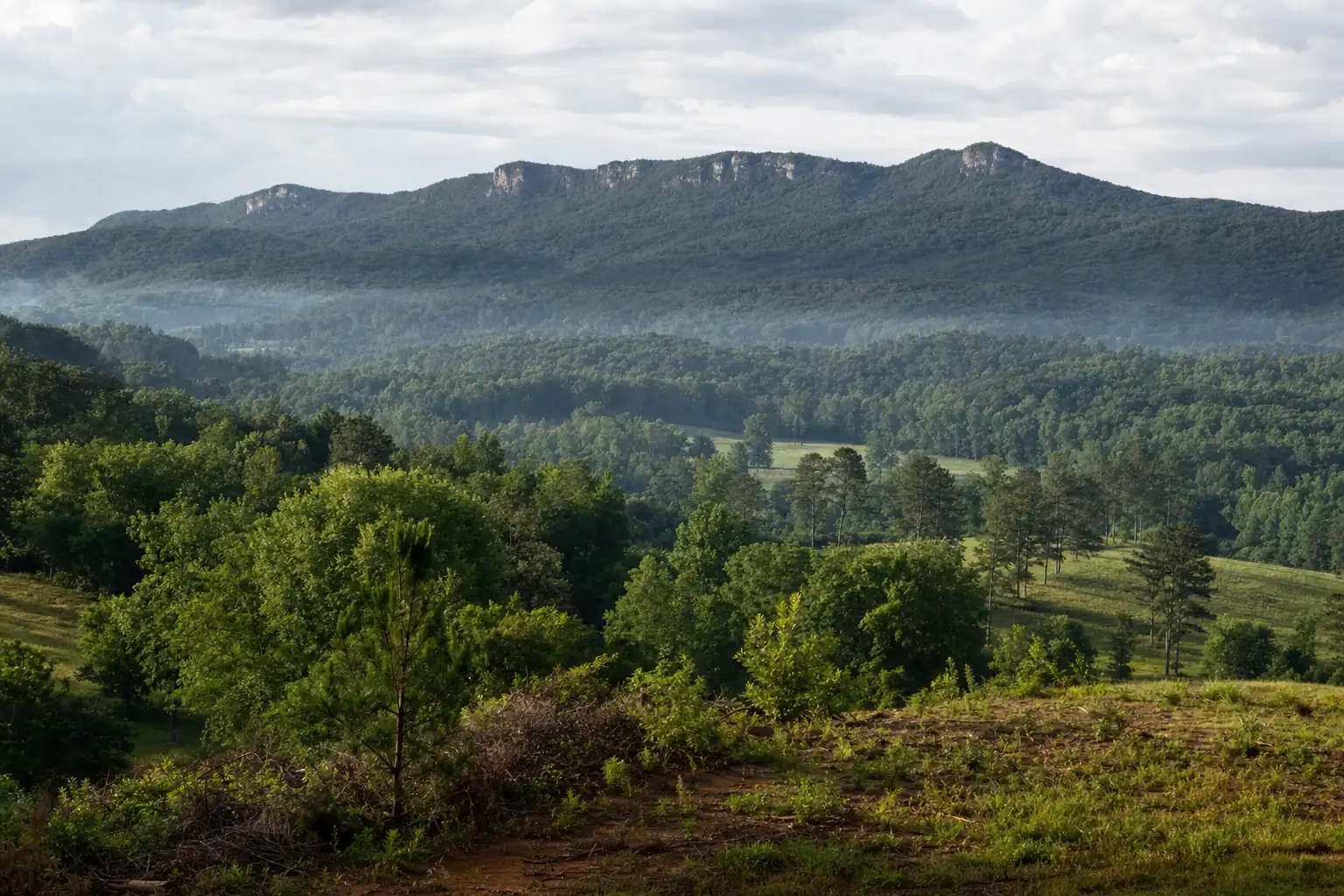
Dig a foot into most land in Forsyth County and you hit red clay: Piedmont subsoil weathered out of granite and gneiss. The county sits where the Piedmont runs up into the Blue Ridge foothills, so the land rolls. Ridges like Sawnee Mountain, creek draws running down to Big Creek and Settingdown Creek, gullies cut into old farm fields, and rock showing on the steeper sides.
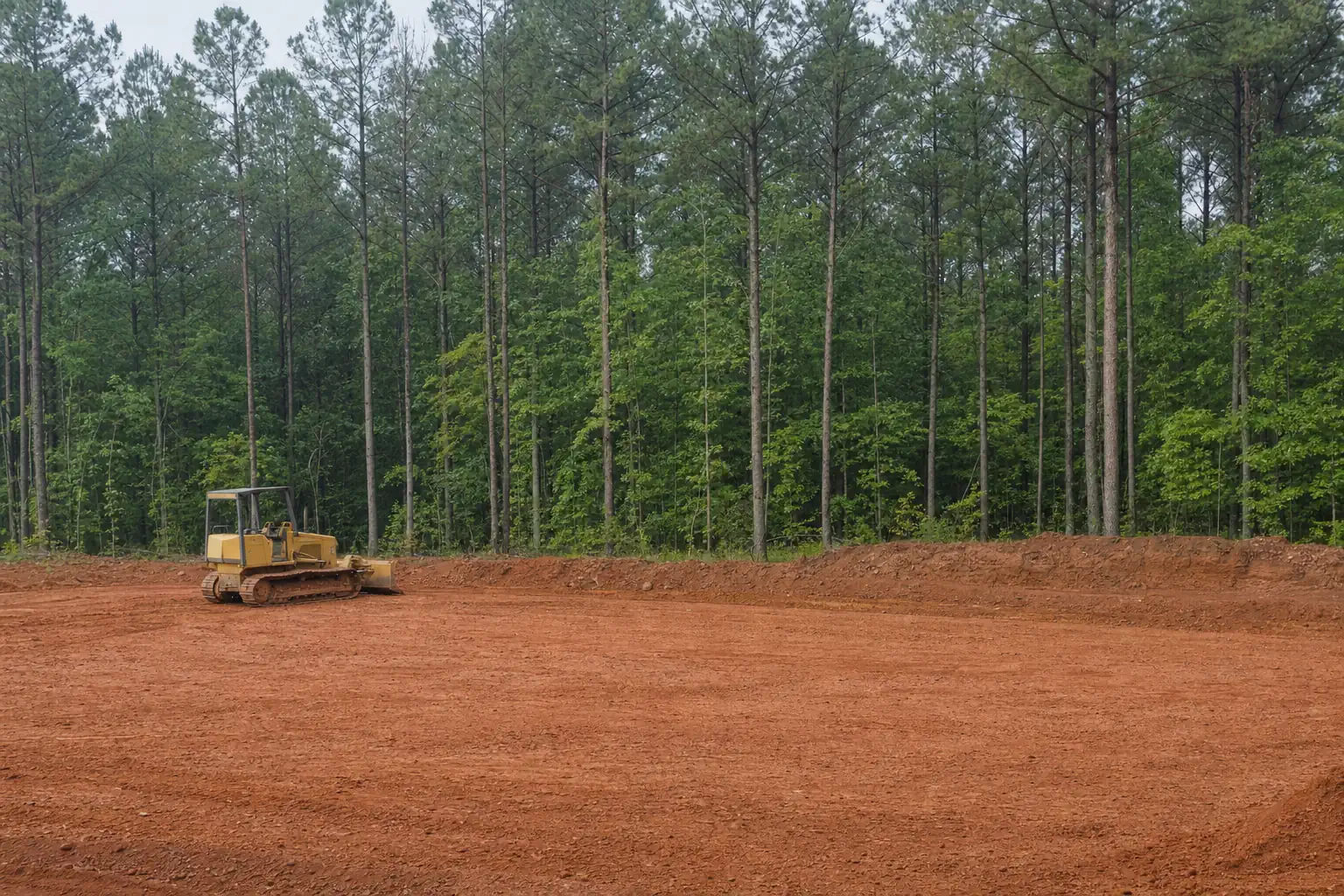
Firm red clay is good working ground. It holds a tracked machine, it doesn’t blow away, and it drains off a slope. Wet red clay is the opposite: slick, soft and quick to rut. With roughly 50 to 55 inches of rain a year, a clearing job around here spends a fair share of its calendar waiting on the clay.
The ground a mulcher works here
- 50 to 55 in
- Rain a year on Forsyth County red clay
- Over 15%
- Slope that puts a job in the heavy price band
- Mid-Nov to early Mar
- Dormant season, when leaf-off shows the ground
Every one of those shapes how the job runs: which machine, which week, which direction the operator works, and how the ground gets left. The rest of the method is on the forestry mulching page.
What ground pressure means
Ground pressure is the machine’s weight divided by the area of track touching the ground. Two machines of the same weight can press on the soil very differently: one on narrow tracks or tires pushes its weight into a small footprint, and one on long, wide tracks spreads it out. Lower ground pressure means the machine floats on soft soil instead of sinking into it.
Forestry mulchers run on tracks for that reason. A mulcher has one more advantage: it lays down its own mat. The drum throws chips in front of the machine, and the tracks drive over that layer of mulch instead of bare soil. On firm clay, a mulching job leaves the ground covered and intact.
Tires are the comparison most owners know. A farm tractor on tires puts its weight on four small patches of ground, which is why a tractor sinks in a soft field that a tracked machine crosses. The same logic runs through every visit to your land: the trailer stays on firm ground, the machine walks in on its tracks, and anything on tires waits for dry weather.
Manufacturers publish a ground pressure figure for each model. The crews that deliver our jobs bring different machines, so we don’t print one number here. If it matters on your ground, ask us which machine is coming and we’ll put it on the quote. The equipment page covers the machine classes.
Why wet clay is the limit
Low ground pressure helps. It doesn’t beat saturated clay. Once red clay is soaked, it loses its strength, and any tracked machine, light or heavy, starts to sink and spin. The tracks cut ruts, push clay into ridges and pack the soil under them. Ruts on a slope turn into channels that carry the next rain downhill.
Packed, rutted soil also hurts the trees you’re keeping. Their roots need air in the soil, and a machine working soaked ground squeezes it out. Georgia’s forestry best management practices and NRCS guidance both recognize wet-weather rutting as a risk to the site.
So we don’t run on soaked clay. When the ground is too wet, the job moves to the next dry stretch. That can move a start date. It doesn’t change the price, and it doesn’t leave you paying someone to grade out ruts later. More in clearing land on wet red clay and will land clearing leave ruts.
Working slope
Slope slows a mulcher. On flat ground the operator can drive straight lines and keep the drum in the brush. On a Piedmont hillside every pass is slower, the machine has to be positioned with care, and rock and old gullies hide under the brush until the drum finds them. Ground steeper than about 15 percent usually prices in the heavy band whatever is growing on it.
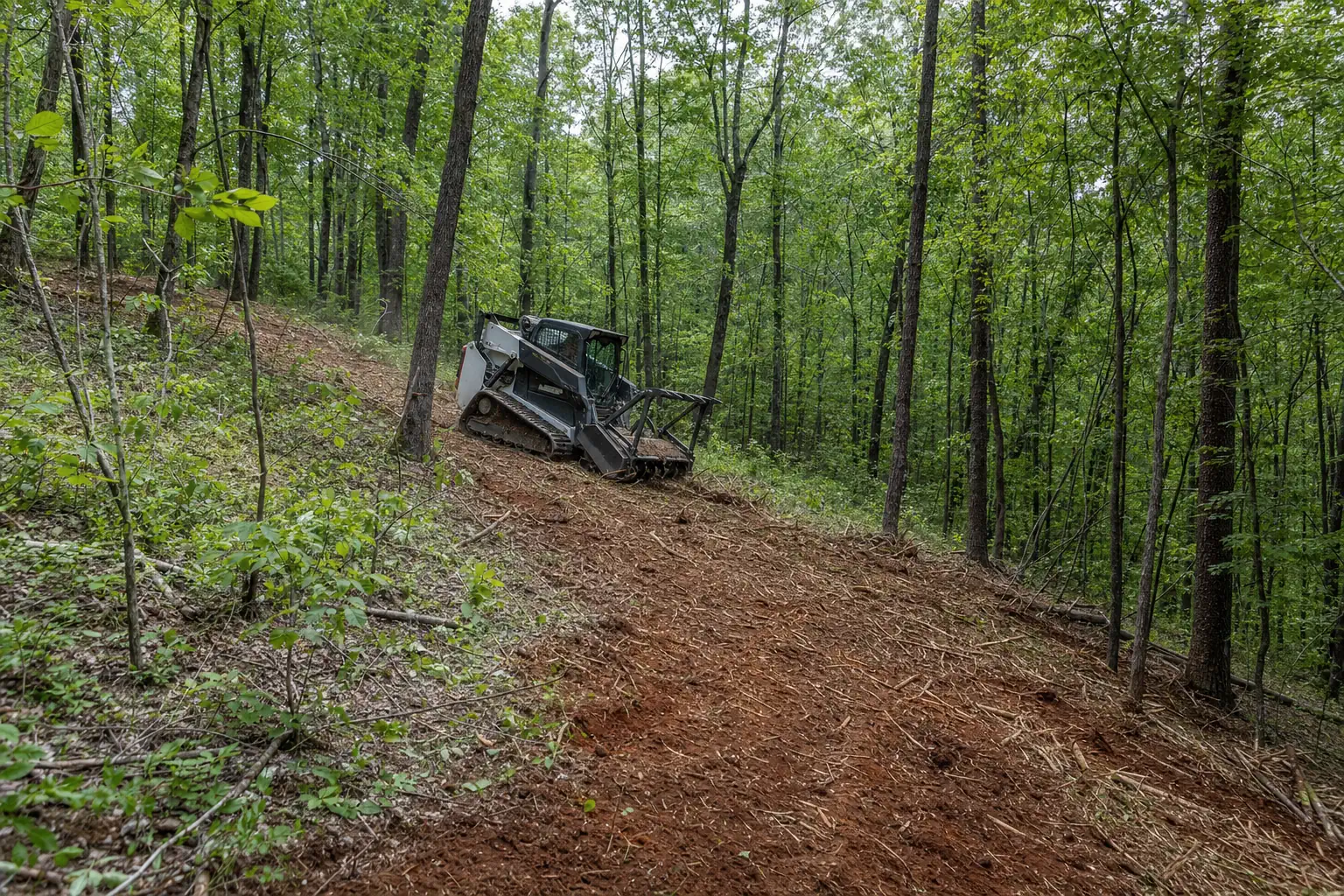
A compact track loader with a mulching head handles most of the slope work around Cumming: it is compact, it maneuvers between trunks, and it can reach banks a bigger machine can’t. Where a slope is too steep for a machine to work safely, we leave it standing. Leaving the steepest ground in brush is often the right call anyway, since that is the ground most likely to wash.
Mulch holds the clay
Clearing on slope comes down to what the rain hits afterward. Bare clay sheds water, and the water takes the clay with it. A layer of chips soaks up the first rain, slows what runs off, and keeps raindrops from hitting bare soil.
| How it was cleared | What’s on the surface | What the rain does |
|---|---|---|
| Forestry mulched | Chips over undisturbed soil, stumps and roots in place | Soaks in and slows; little soil moves |
| Dozed and grubbed | Bare clay, root holes, loose fill | Runs off and carries clay unless fenced, strawed and seeded |
| Burned piles | Bare push area and an ash patch | Runs off the bare ground the same way |
| Mulched on soaked clay | Ruts under the chips | Follows the ruts downhill |
The last row is why the schedule matters as much as the machine. The roots left in the ground by mulching also keep holding soil while they rot, which a grubbed slope loses on day one. The chip layer breaks down over a few seasons; by then grass, mowing or new growth has taken over the job. See mulching compared with bulldozing.
Creeks, buffers and permits
Slope in Forsyth County usually runs down to water, and the county’s rules start at the creek. Georgia keeps a 25-foot buffer along state waters. Forsyth County keeps a 50-foot undisturbed buffer plus a 25-foot setback on top of it. Clearing within 200 feet of state waters, or disturbing an acre or more, needs a county land disturbance permit, with a listed clearing and grubbing fee of $250.
Permit thresholds, fees and buffer widths are those published by Forsyth County and the State of Georgia as of November 4, 2026. Confirm current requirements with the issuing authority before work begins. This is not legal advice.
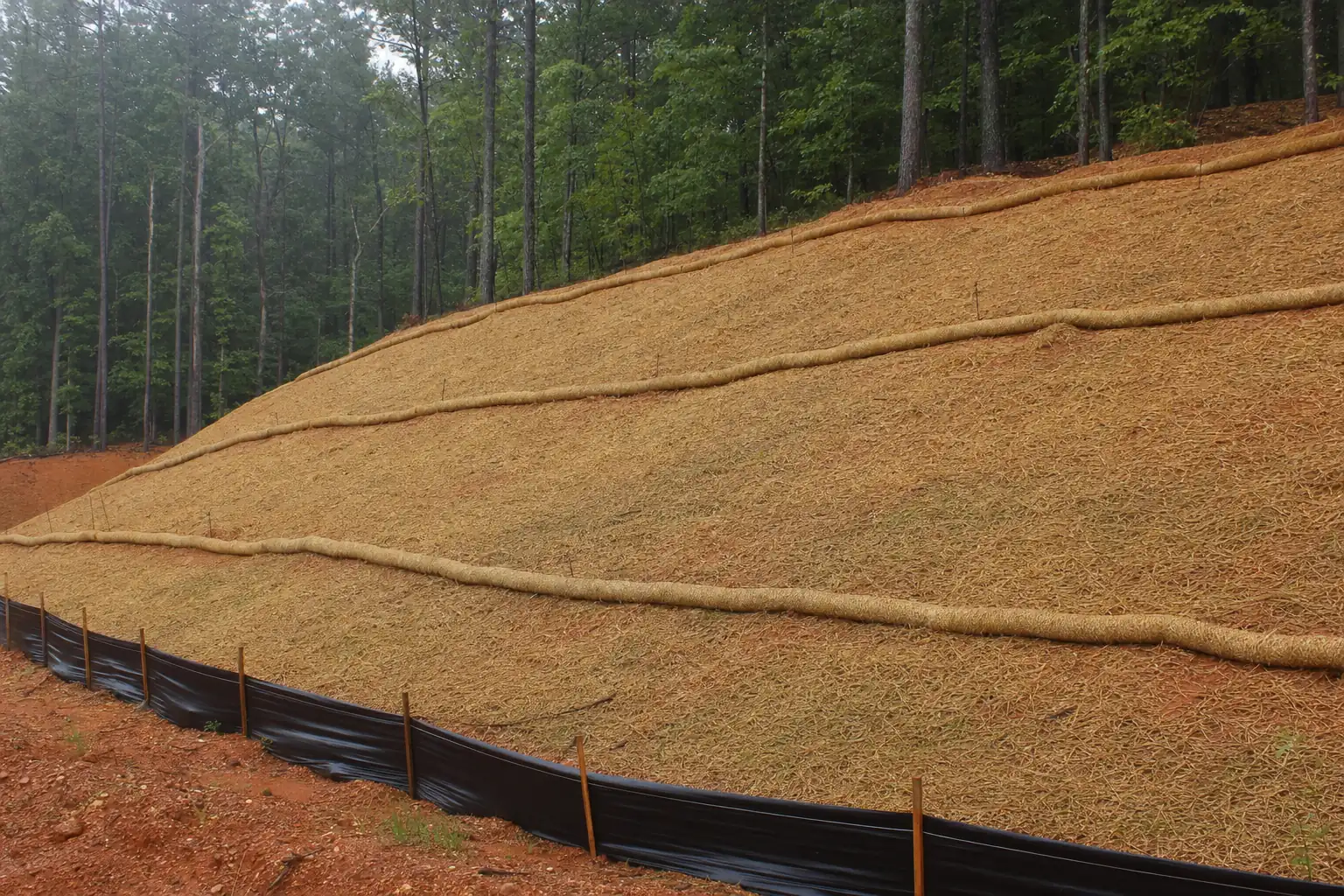
A permitted site gets silt fence on the downhill side before work starts, and inspections on the permit’s schedule: at least weekly on most sites, and within 24 hours of a half-inch rain. Bare ground that sits idle more than seven days has to be stabilized. We flag the buffer on the walk, keep the machine out of it, and set the erosion control on the same contract. See how close to a creek can I clear.
 Erosion Control and Silt Fence Installation
 Underbrush Clearing: Open the Woods, Keep the Canopy
 Site Preparation: Pads, Driveways, Utility Runs, Staging
Scheduling around the rain
Dry weeks are the cheapest weeks, because the machine works full days instead of waiting on the ground. Late fall and winter are often the easiest stretch around here: the leaves are down, so rock, old fence and junk show before the drum finds them, and cool days are easier on the crew in a thicket. A dry summer week works fine too. Here is how we handle the weather on a booked job:
- 1Check the groundWe look at recent rain and walk the wettest spot before the trailer leaves.
- 2Start on the high groundRidges and well-drained ground first, bottoms and draws last.
- 3Stop when it rutsIf the tracks start cutting in, the machine parks and we reschedule.
- 4Tell you the dayYou hear about a weather move the morning we see it, not after.
A job that gets three dry days in a row finishes in three days. A job that gets one dry day a week takes longer on the calendar and the same on the invoice. See the best time of year to clear land.
Getting in and out
Much of the damage on a clearing job happens at the gate. A loaded trailer is the heaviest thing that visits your land, and it rides on tires. We unload where the ground is firm, usually at the road or on a gravel drive, and walk the machine in on its tracks from there.
A soft dirt drive or a pasture gate across wet ground is where most ruts start, so we look at the route in on the walk and plan around it. On permitted sites, a gravel construction exit goes in at the entrance before work starts. It knocks the clay off tires and tracks so it stays on the site and off the county road, and it’s part of the erosion plan the inspector checks. We set it on the same contract as the clearing; see erosion control and silt fence.
If your land has a septic field, a well or buried lines along the route in, tell us before the walk. We mark them and keep the machine and the trailer off them.
When the ground says no
Some ground shouldn’t see a machine at all, or only in the driest weeks of the year:
- Springs and seeps. Wet spots that stay wet in August. We mark them on the walk and work around them.
- Creek bottoms. Low ground along a branch that floods after storms, often inside the buffer anyway.
- Raw gullies. Old erosion cuts from farming days, with steep walls a tracked machine can tip into.
- The steepest banks. Ground too steep to work safely, and most likely to wash once cleared.
Leaving those areas in brush costs you less and protects the rest of the job. We’d rather tell you that on the walk than leave a rutted bottom behind.
After the clearing
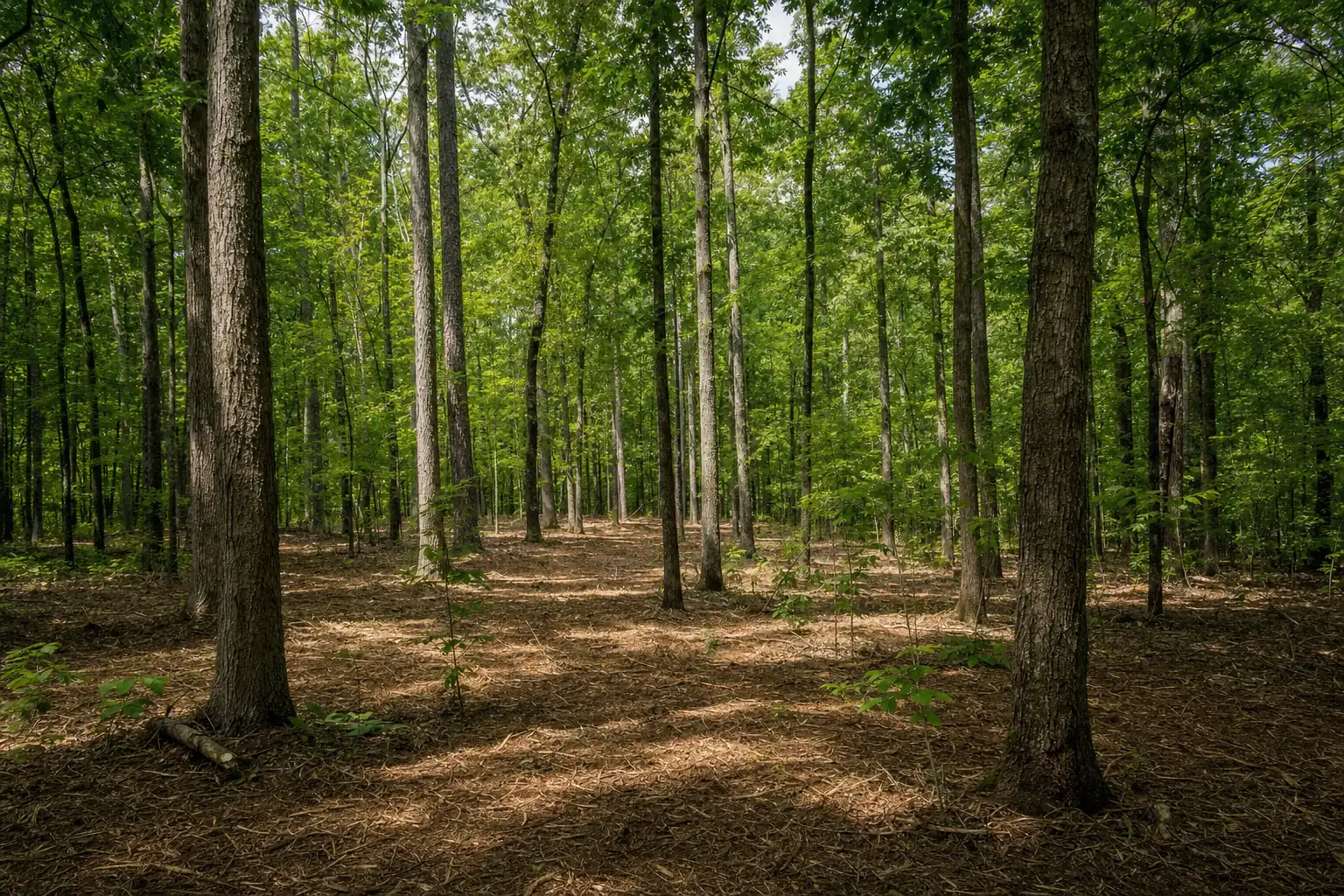
A mulched slope grows back. Sweetgum, maple, oak and privet sprout from the roots the first spring, and cut pines don’t. On slope that regrowth helps hold the clay, and mowing once or twice a year keeps it from turning back into woods. Mowing a steep bank needs dry ground for the same reason mulching does. See bush hogging and maintenance mowing and will it grow back.
If you plan to seed a mulched slope, ask for a finer chip and a thinner layer so seed can reach the soil. Mulch depth and seeding has the detail.