
Straight answer · 3 min read
Will the Machines Leave Ruts?
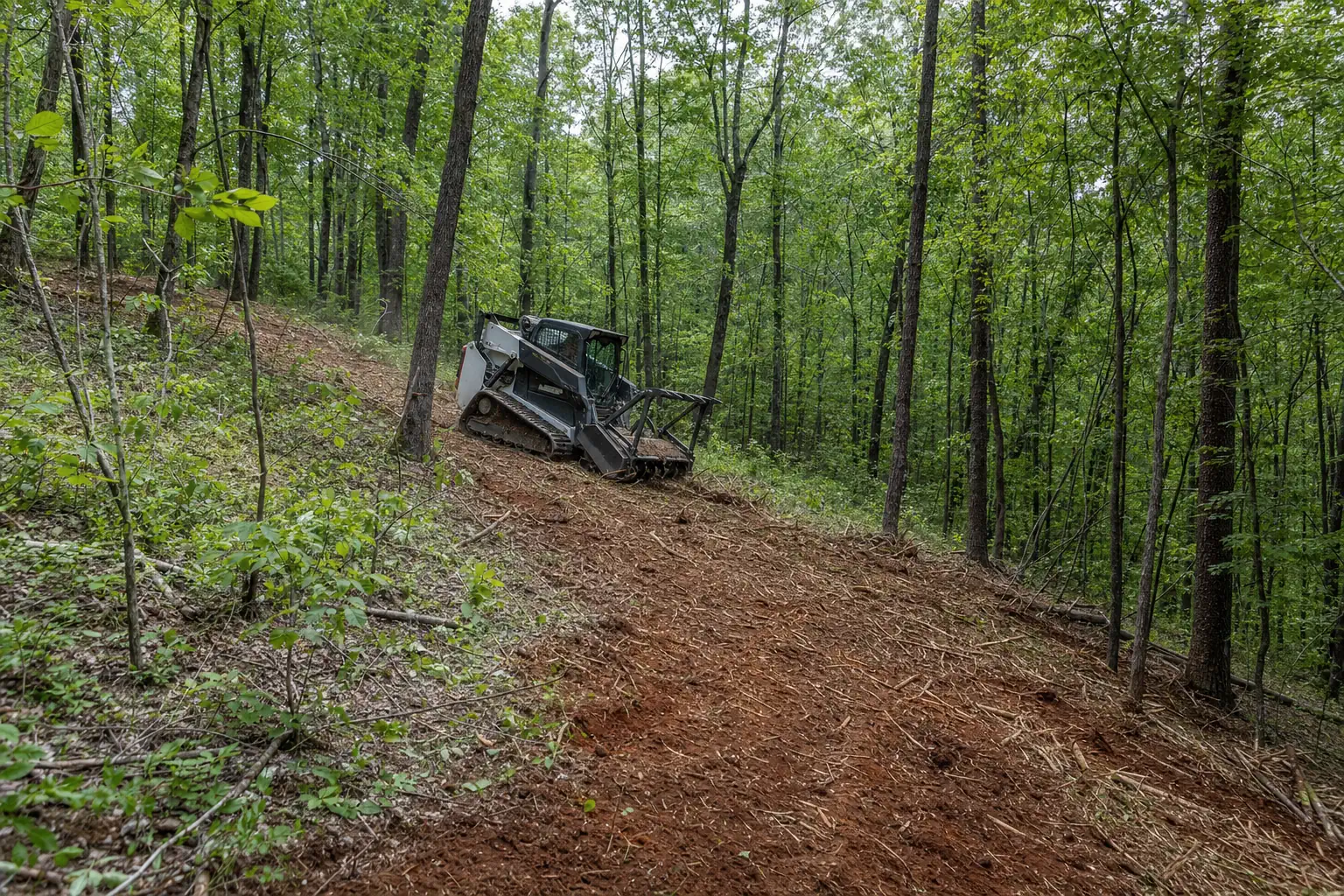
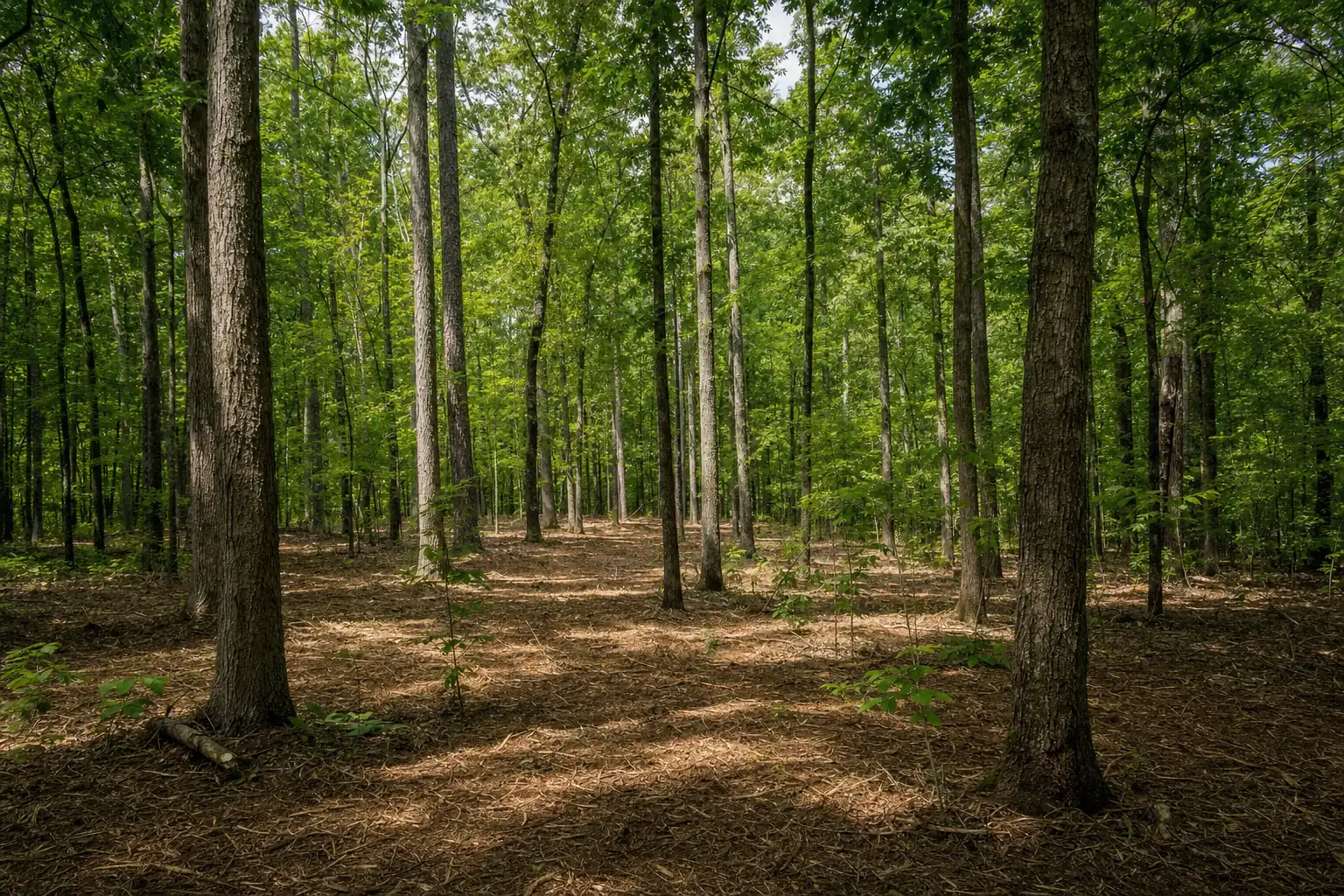
Not on firm ground. Sawnee Land Clearing runs forestry mulchers around Cumming on tracks that spread the machine's weight, and the machine drives on the layer of mulch it lays down. Ruts come from working saturated red clay, so when the ground is soaked we move the date. Expect faint track prints in the chips, not furrows.
A clearing quote that says how the ground is left.
Ruts and dead keeper trees are two of the most common complaints landowners post after a clearing job, and the two often go together. Both come from heavy equipment on the wrong ground at the wrong time. This page covers where ruts come from on Forsyth County land and how a mulching job avoids them.
Where ruts come from
- Saturated clay. Piedmont red clay carries a tracked machine when it’s firm. Soaked, it gives way under the tracks, and each pass cuts deeper. Most ruts on cleared land start here.
- Dozing and grubbing. A dozer pushes trees over, rips out stumps and scrapes the topsoil off with them. What’s left is bare clay with root holes, and the next rain finds every low spot.
- Skidding logs. Logs dragged out on the same trails, load after load, wear those trails into troughs.
- One path in and out. The gate, the staging spot by the trailer and the line to the work area get the most passes on any job.
- Turning on slope. A tracked machine that pivots hard on a steep, damp hillside tears the surface where it spins.
Mulching, dozing and logging compared
| Method | What touches the ground | What it usually leaves |
|---|---|---|
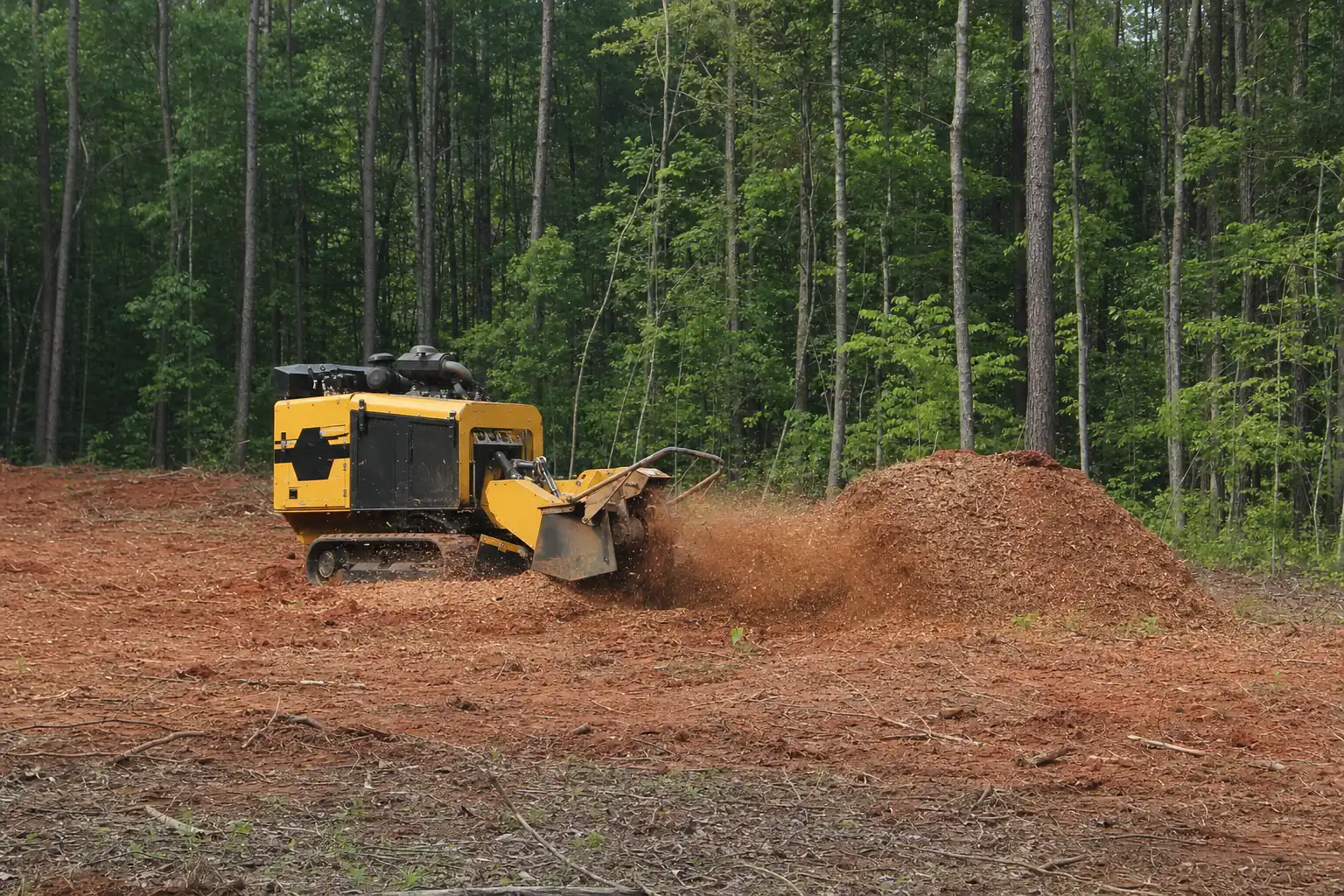
| Forestry mulching | Tracks running on the mulch mat the machine lays down | Chips over the clay, stumps ground flush, topsoil in place |
| Dozer and grubbing | A blade and tracks on bare, scraped clay | Bare clay, root holes, stumps out, a debris pile |
| Logging with skidders | Wheels and dragged logs on the same trails | Rutted skid trails and scattered tops |
Dozing is the right tool under a building pad, where stumps and roots have to come out anyway. Everywhere else it leaves you more bare ground to stabilize. See mulching compared with bulldozing.
Where the risk sits on your land
We look for these on the walk-through, before the machine comes off the trailer:
- The way in. A soft yard or a gravel drive with clay showing through. We plan the route and mark the septic field and well.
- Creek bottoms and seeps. They stay wet long after the slopes dry, so they get worked last or on a dry week.
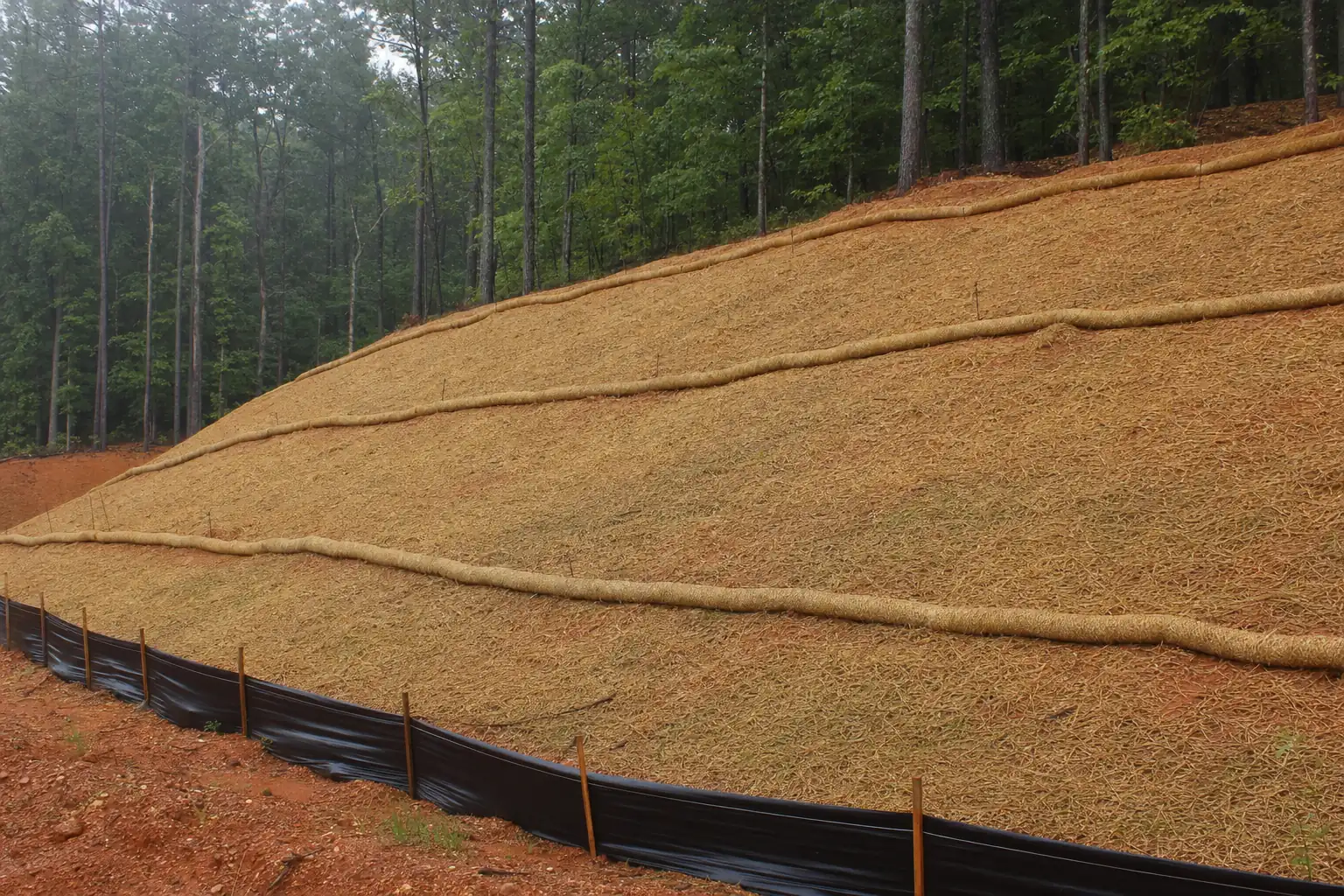
- Slopes. Ground over about 15 percent gets worked when it’s dry, and the mulch stays on it.
- Around keeper trees. A rut inside a root zone cuts roots. We keep the machine off soaked ground near anything you flagged.
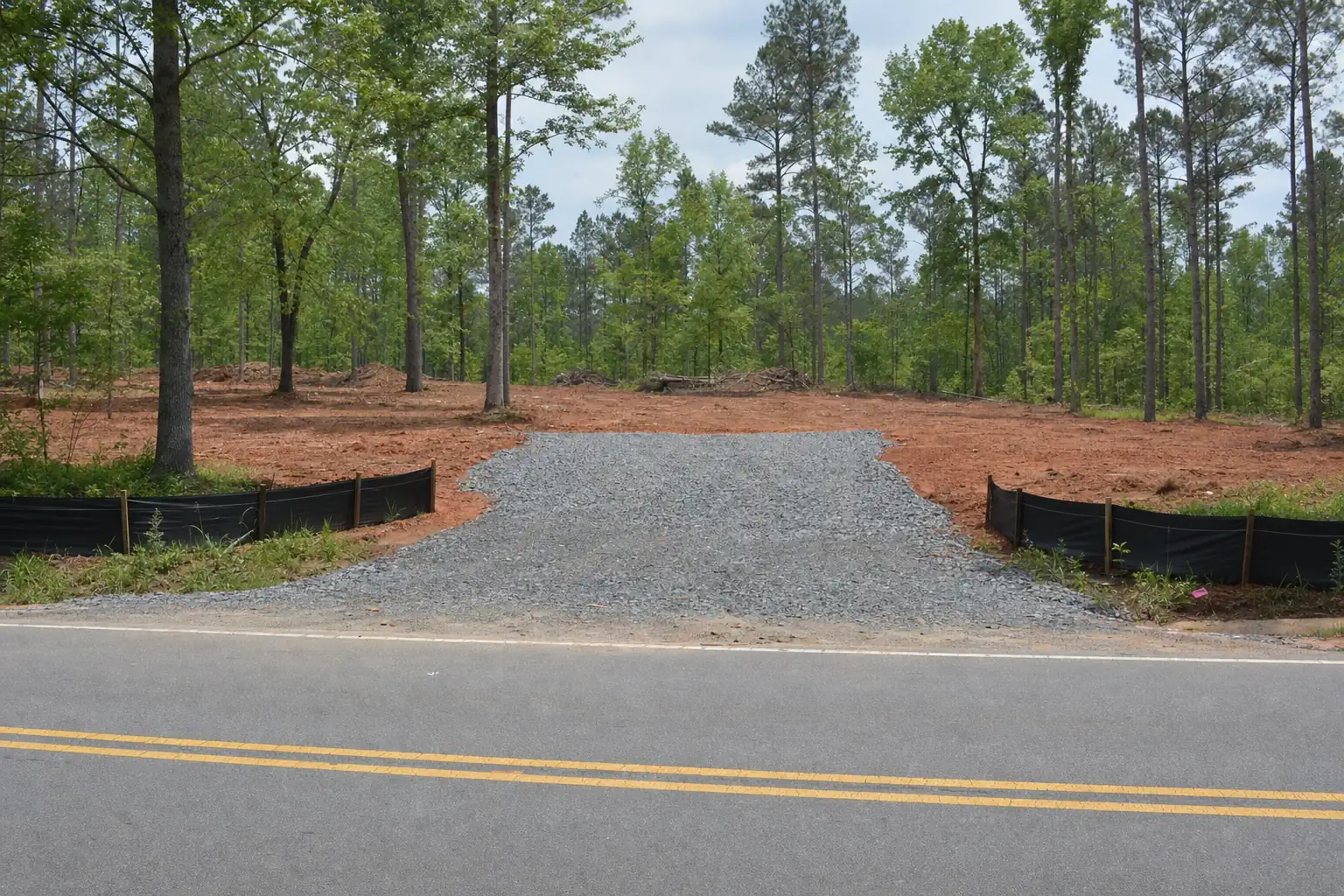
On a site under a county land disturbance permit, the silt fence and construction exit go in before the first tree. That keeps the busiest path on the job on gravel instead of clay.
How we keep a job off soft ground
- 1Plan the routeOn the walk-through we pick the way in, the trailer spot and the soft places to avoid.
- 2Check it that morningIf the clay is soaked, you hear from us before the trailer leaves.
- 3Firm ground firstRidges and open slopes get worked first, creek bottoms last.
- 4Stop when it poursIf heavy rain comes in mid-job, the machine parks on high ground and waits.
Waiting on the ground can cost a few days on the calendar, which is cheaper than regrading a rutted acre.
What fixing ruts costs
Shallow track marks in mulch fill in on their own as the chips settle. Ruts deep enough to trip on are grading work, and grading runs about $1,200 to $3,500 an acre where a whole area needs it. Rutted ground on a slope also channels water, and stopping a gully that’s already started can mean silt fence at $500 to $1,200 an acre on top.
Ranges are estimates for Forsyth County and the surrounding area based on job density, terrain, access and acreage. Your written quote is the only price that applies to your property.
The cheaper path is to work firm ground in the first place, even when that moves the date. A low quote that ignores the weather often turns into a grading bill later. More in clearing on wet red clay.
Get the finish in writing
A good quote says how the ground will look when the machine leaves: mulch left in place, stump height, the trees that stay and how weather delays are handled. Ours list those line by line, and anyone you call should do the same. See what a land clearing quote should include, or start from the land clearing overview.
Whatever the ground looks like on the last day, it won’t stay that way. Sweetgum, privet and briars sprout through the mulch the first spring, so plan for maintenance mowing.
FAQ
More about ruts and ground damage
- Will the machine tear up my lawn or driveway on the way in?
- It can mark a soft lawn, so we pick the route in on the walk-through. The machine comes in on the firmest line, stays off the septic field and well, and waits if the yard is soaked.
- Do ruts hurt the trees I'm keeping?
- Yes. Ruts inside a tree's root zone cut and pack the roots, and the damage often shows up later as a thinning crown. We keep the machine off soaked ground near the trees you flag.
- Can you clear a steep slope without rutting it?
- Yes, when it's dry. Slopes over about 15 percent are slower work and price in the heavy band. We clear them on firm ground and leave the mulch on them to hold the clay.
- What happens if it rains in the middle of the job?
- The machine stops and parks on firm ground. We come back when the soft spots have dried out and tell you the new date the day we see it.
Keep reading
Questions people ask next
- QCan you clear land in the rain or on wet red clay?
- QCan you keep the big trees and clear the rest?
- QForestry mulching compared with bulldozing and grubbing
- QMulching on red clay and slope
- QThe best time of year to clear land in North Georgia
- QHow do I know a land clearing company is really a forestry mulcher?