
Straight answer · 3 min read
How Do I Know a Land Clearing Company Is Really a Forestry Mulcher?
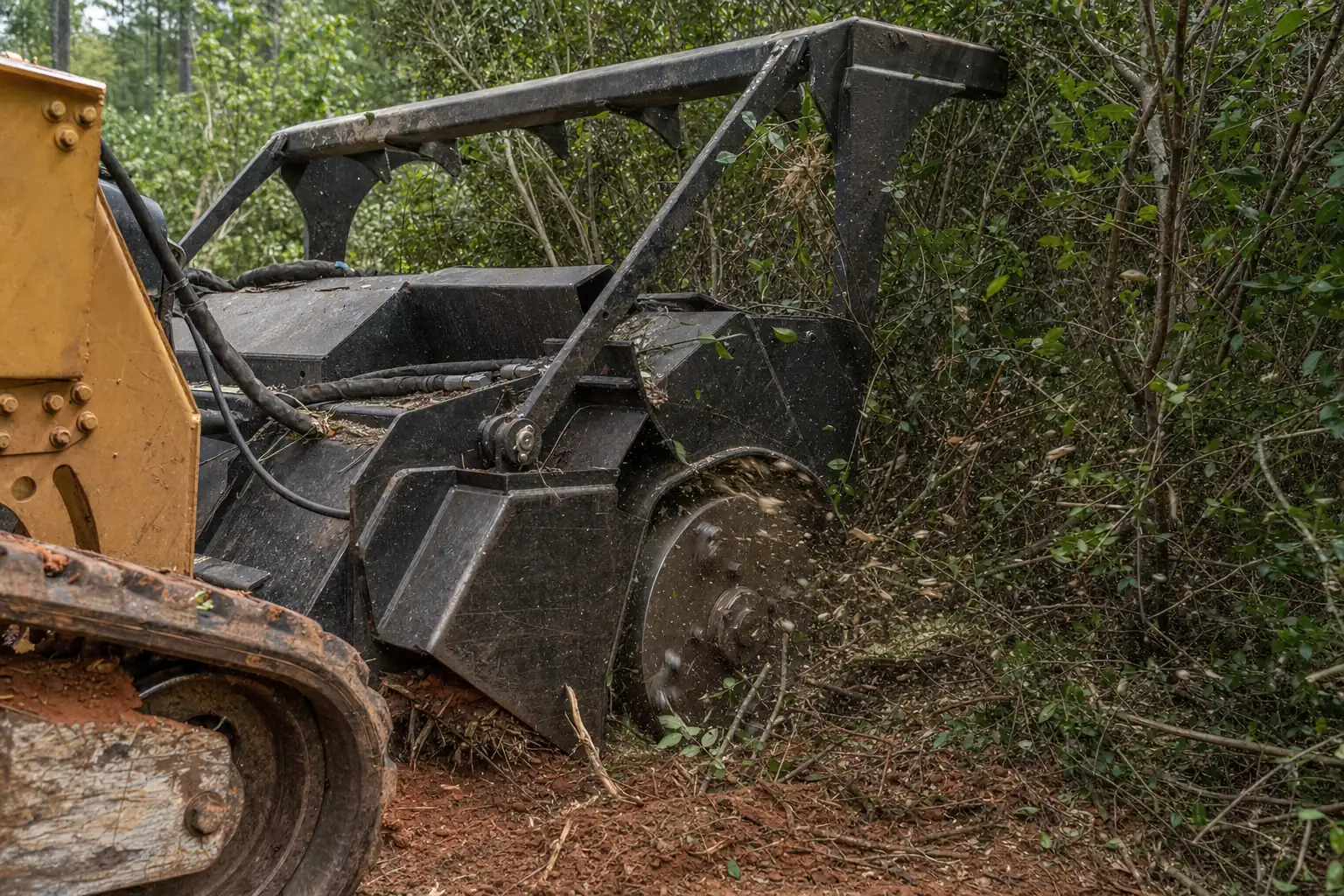
Ask what machine comes to your land and what the ground looks like when it leaves. A forestry mulcher is a drum head on a tracked loader or forestry tractor that grinds standing brush and trees into chips and leaves them as cover. Around Cumming, a plan built on burn piles or hauling everything off is a different job.
Plenty of outfits list forestry mulching among their services. Landowners in North Georgia who’ve hired one put it this way: many claim to be forestry mulchers and aren’t. You find out after the machine leaves, when big pieces lie on the ground, stumps stand a foot high and logs sit pushed into piles or buried. A few questions before you sign will tell you what you’re getting.
Seven questions to ask before you sign
| Ask | A straight answer | Watch for |
|---|---|---|
| What machine comes to my land? | A mulching head on a tracked loader or forestry tractor, sized to your trunks | A bush hog, a chipper, or “we’ll see” |
| What happens to the debris? | Mulched where it stands and left as cover | Burn piles, or haul fees nobody mentioned |
| How high are stumps left? | Ground flush, or below grade where you’ll mow | No answer, or stumps at knee height |
| How coarse is the chip? | Coarse left in place, finer if you plan to seed | Not discussed |
| Which trees stay? | Flagged with you on a walk | “Whatever we can work around” |
| What if it rains? | The date moves when the clay is soaked | Booked days run regardless |
| Who handles silt fence and the permit? | Named on the quote as its own line | Left to you |
The burn question matters more here than in most places. Georgia’s rules ban land-clearing burns in Forsyth County from May 1 to September 30, and a job that disturbs an acre or more, or works within 200 feet of a creek, needs a county land disturbance permit with silt fence in before the first tree.
Permit thresholds, fees and buffer widths are those published by Forsyth County and the State of Georgia as of November 4, 2026. Confirm current requirements with the issuing authority before work begins. This is not legal advice.
Look at what the finished ground should be
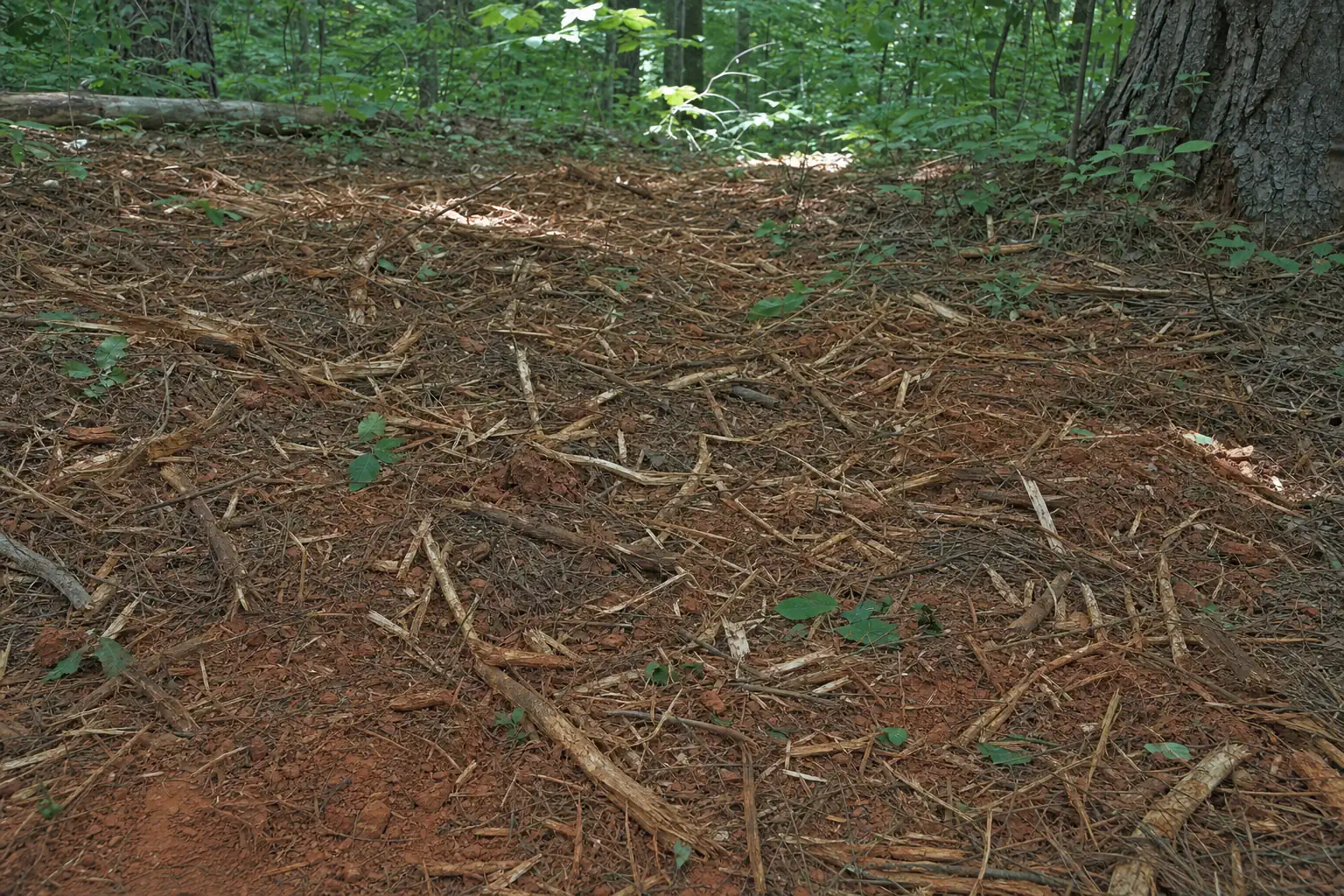
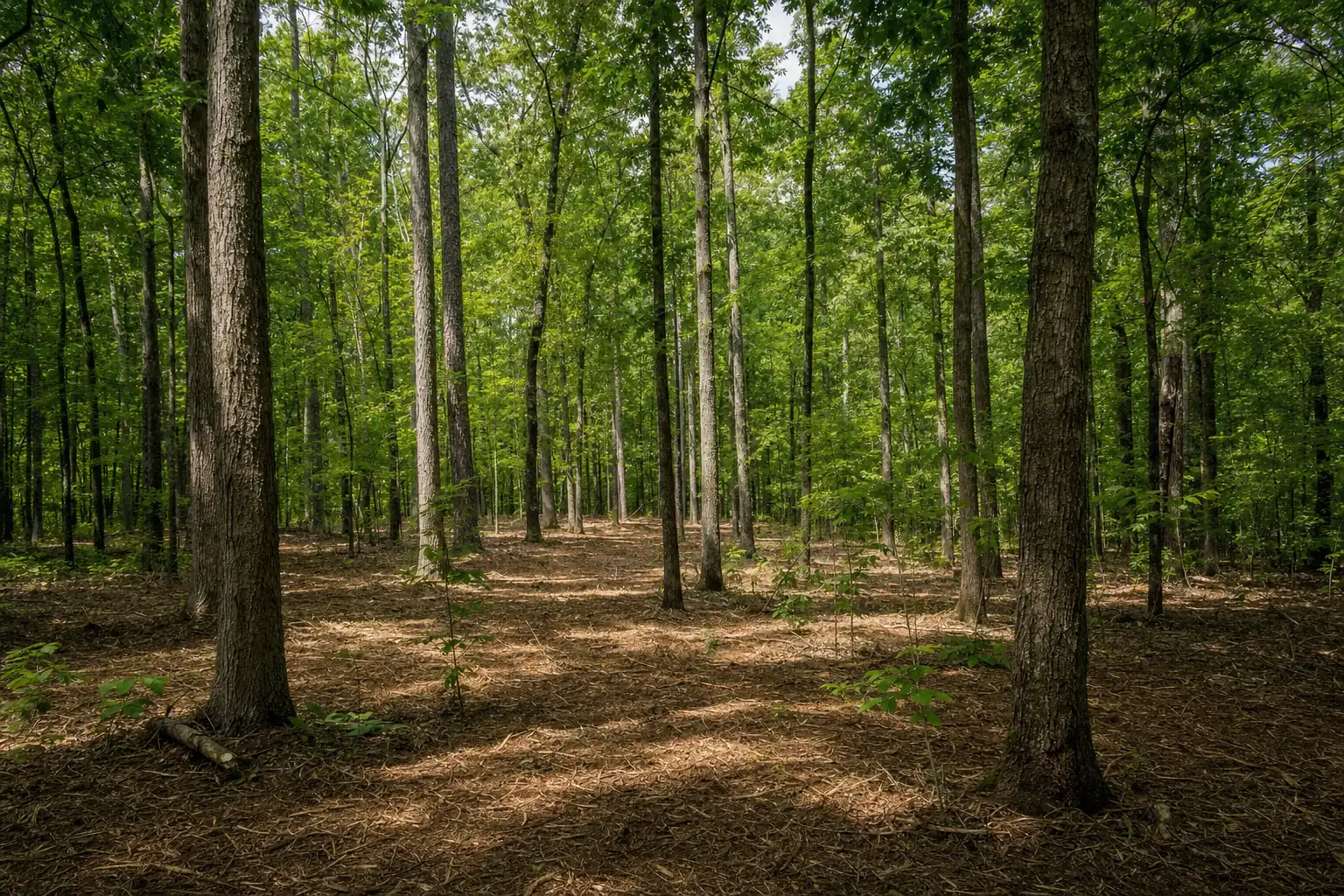
A mulched acre has a layer of chips over the clay, stumps ground to the surface, and the trees you flagged still standing with their bark intact. You shouldn’t see windrows of logs, burn scars, furrows from the tracks, or limbs as long as your arm lying around. If a contractor describes the finish differently, ask why. More on the machine itself in how a forestry mulcher works.
Get the finish in writing
A vague scope is a regular complaint in landowner forums. Put these on the quote before anyone unloads a machine:
- The acreage, measured, and a map or sketch of the area to clear
- The trees that stay, flagged on the walk
- Stump height, line by line
- Chip size and the finish: left in place, seeded, graded or hauled
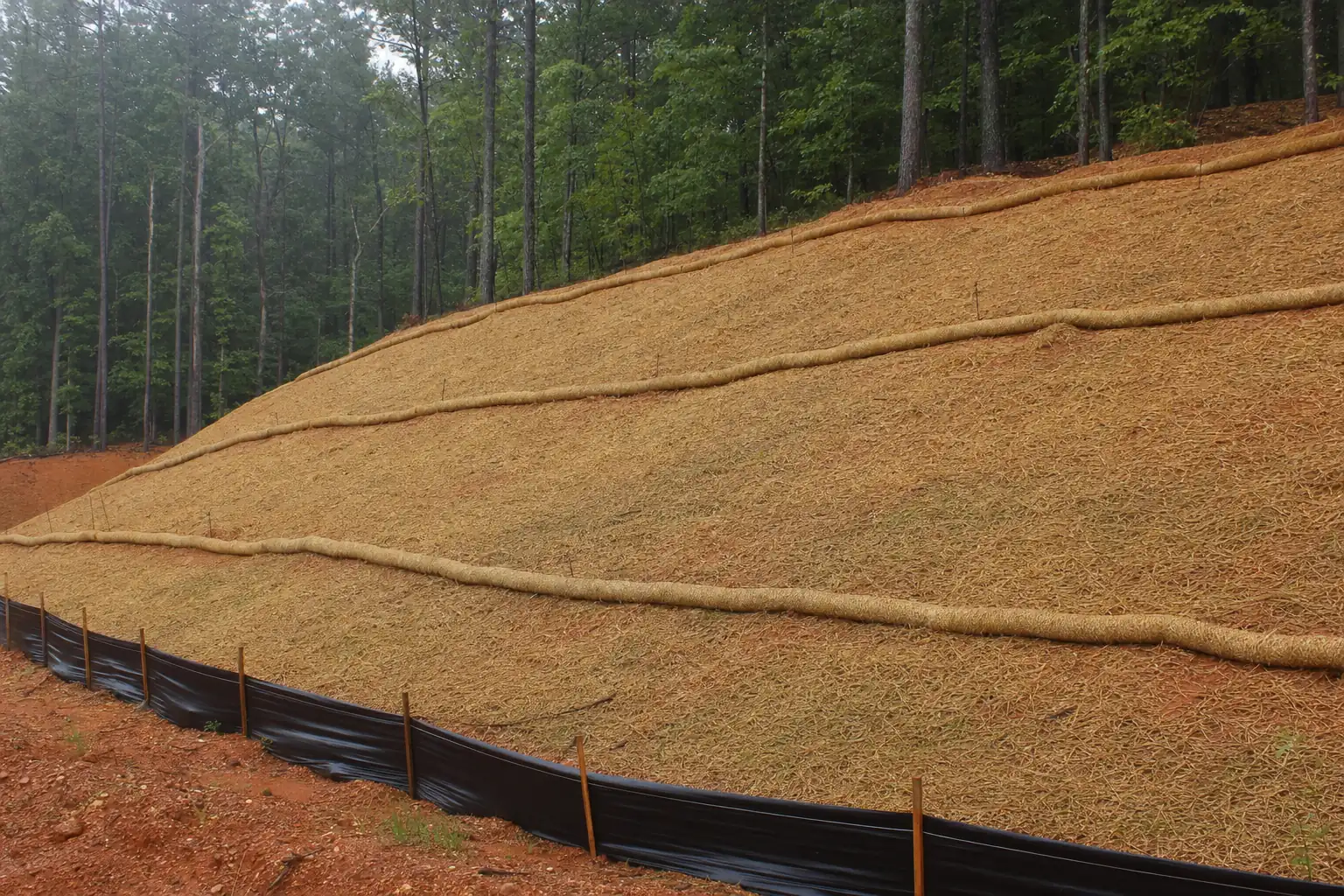
- Silt fence, construction exit and permit, if the site needs them
- How weather delays are handled and what isn’t included
Our quotes spell these out, and you should expect the same from anyone you call. See what a land clearing quote should include.
Compare the whole job, not the per-acre number
Forestry mulching around Cumming runs about $1,200 to $2,500 an acre for light brush, $2,500 to $4,000 for mixed growth with 4 to 8 inch trees, and $4,000 to $6,500 or more for dense hardwood. Small jobs carry a $1,200 to $2,000 minimum.
Ranges are estimates for Forsyth County and the surrounding area based on job density, terrain, access and acreage. Your written quote is the only price that applies to your property.
A low number usually leaves something out: the stumps under a future pad, the silt fence on a permitted site, or the walk-through. A single-machine operator can do good work inside its lane, and still has to send you elsewhere for erosion control, stump removal and grading. We run all of it on one contract, so the price you compare covers the whole job. How we manage the crews is on our quality and warranty page.
Ask what happens next spring
An honest contractor tells you the land grows back. Sweetgum, maple, oak and privet resprout from the roots after mulching; cut pines don’t. Expect a straight answer about maintenance mowing and a privet follow-up. If the pitch says the brush is gone for good, keep looking. The rest of what we do is on the land clearing page.
FAQ
More about choosing a clearing contractor
- Is a bush hog the same as a forestry mulcher?
- No. A bush hog is a rotary mower behind a tractor. It cuts grass, weeds and light brush. A forestry mulcher grinds saplings and trees up to about 8 inches standing, plus the brush around them.
- Does a forestry mulching job need a burn permit?
- No. Everything is mulched where it stands, so there's no pile to burn. If a quote mentions burning, ask why, and remember Forsyth County bans land-clearing burns from May 1 to September 30.
- How big a tree should a mulcher handle?
- About 8 inches across standing. Past 8 to 10 inches, trees usually get felled first and the trunk is dealt with on the ground. A contractor who says the machine takes anything is guessing.
- Should a contractor walk the land before pricing it?
- Yes, for anything past a simple job. Photos get you a ballpark. The walk finds the trunk sizes, slope, creeks, wet spots and the trees you want kept, and those set the real price. We walk the land before every written quote.
- Who will run the machine on my land?
- Ask every contractor that question. Our jobs run on crews we schedule and manage under one contract, including subcontracted crews, and you deal with one point of contact the whole way through.
Keep reading