
Straight answer · 3 min read
Forestry Mulching vs Bush Hogging: Which Do I Need?
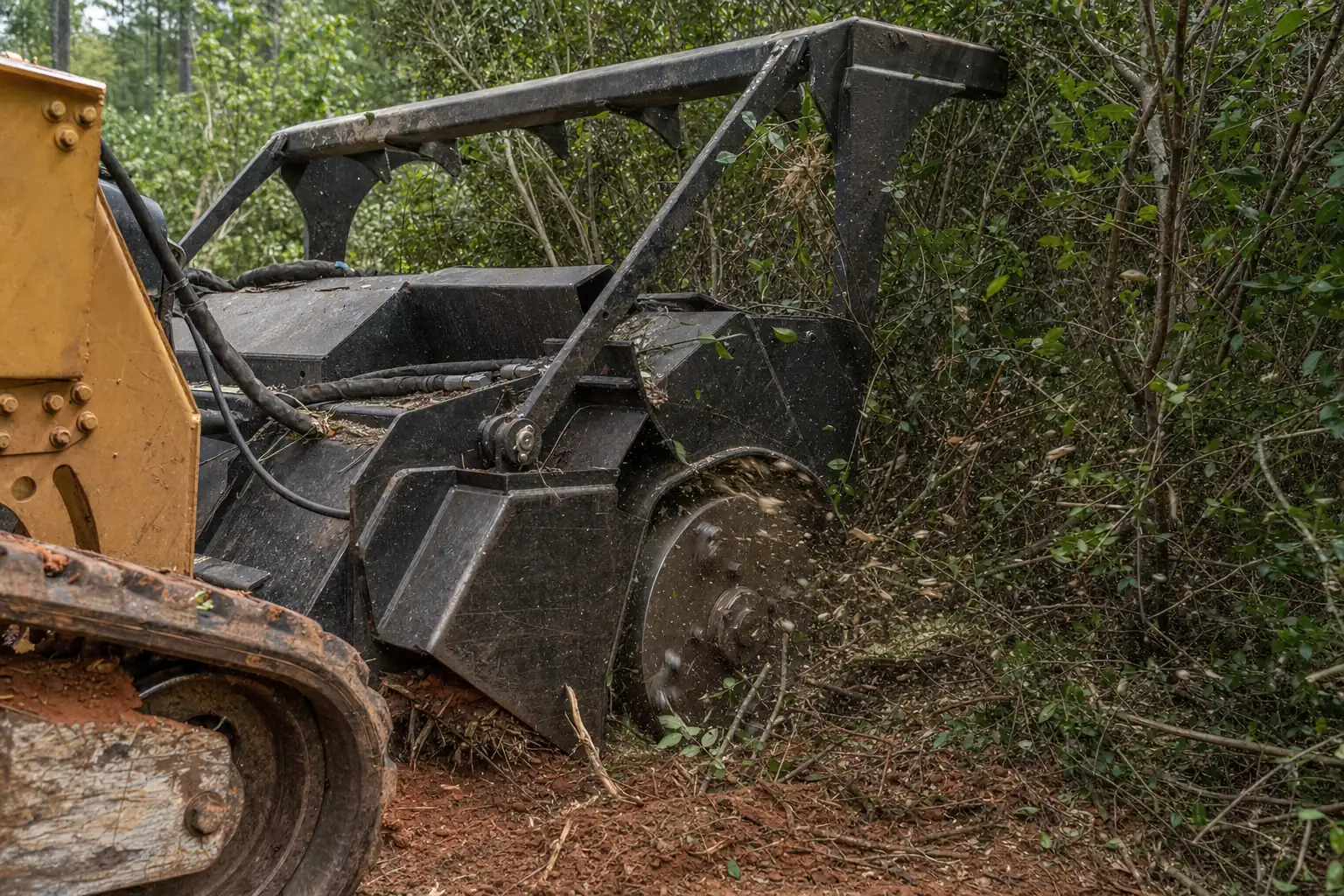
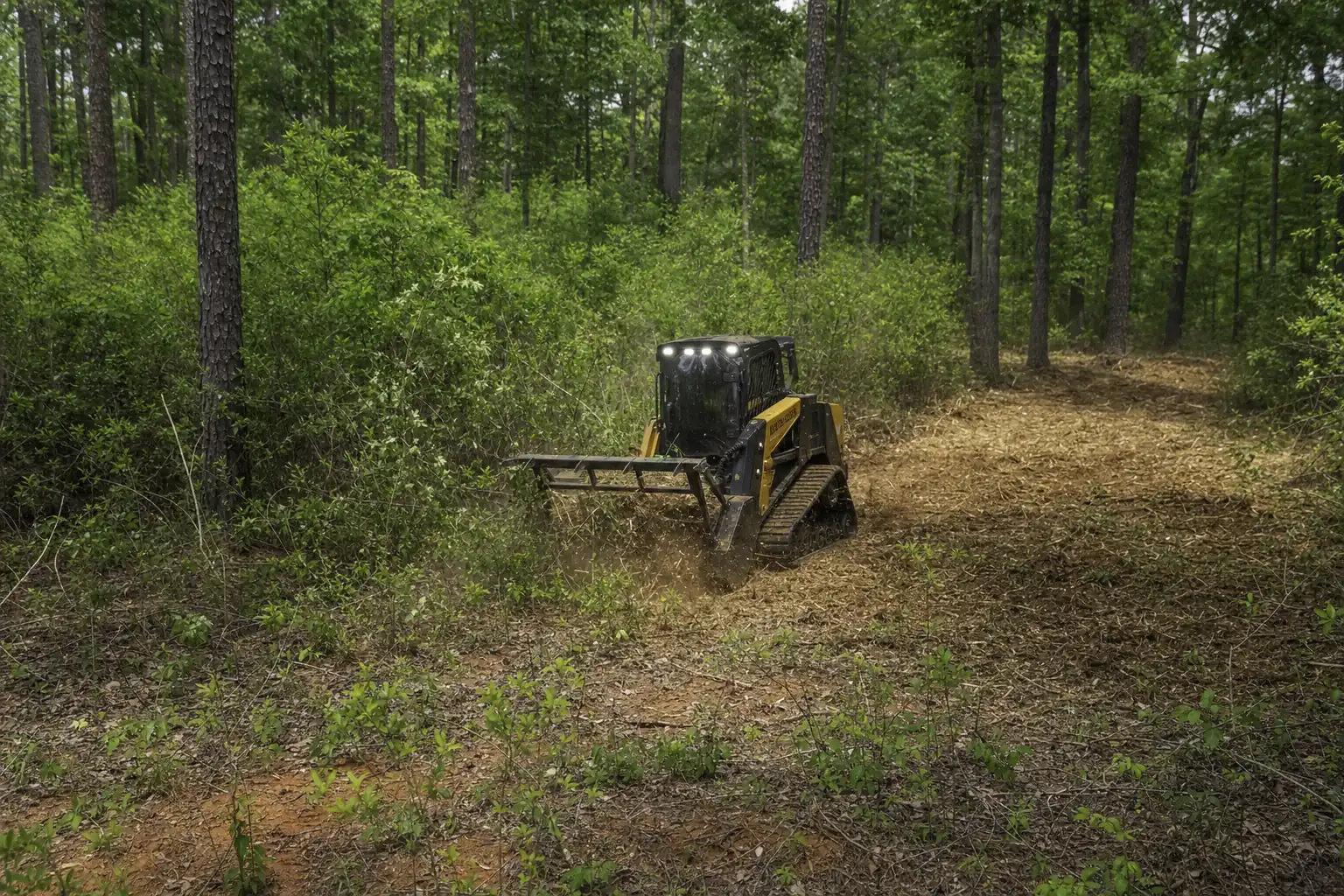
Bush hogging if the land is grass, weeds, briars and soft first-year sprouts. Forestry mulching if saplings and trees have moved in. Sawnee Land Clearing's mulchers take trees to about 8 inches around Cumming; a bush hog stops at woody stems. Many owners mulch once, then bush hog once or twice a year.
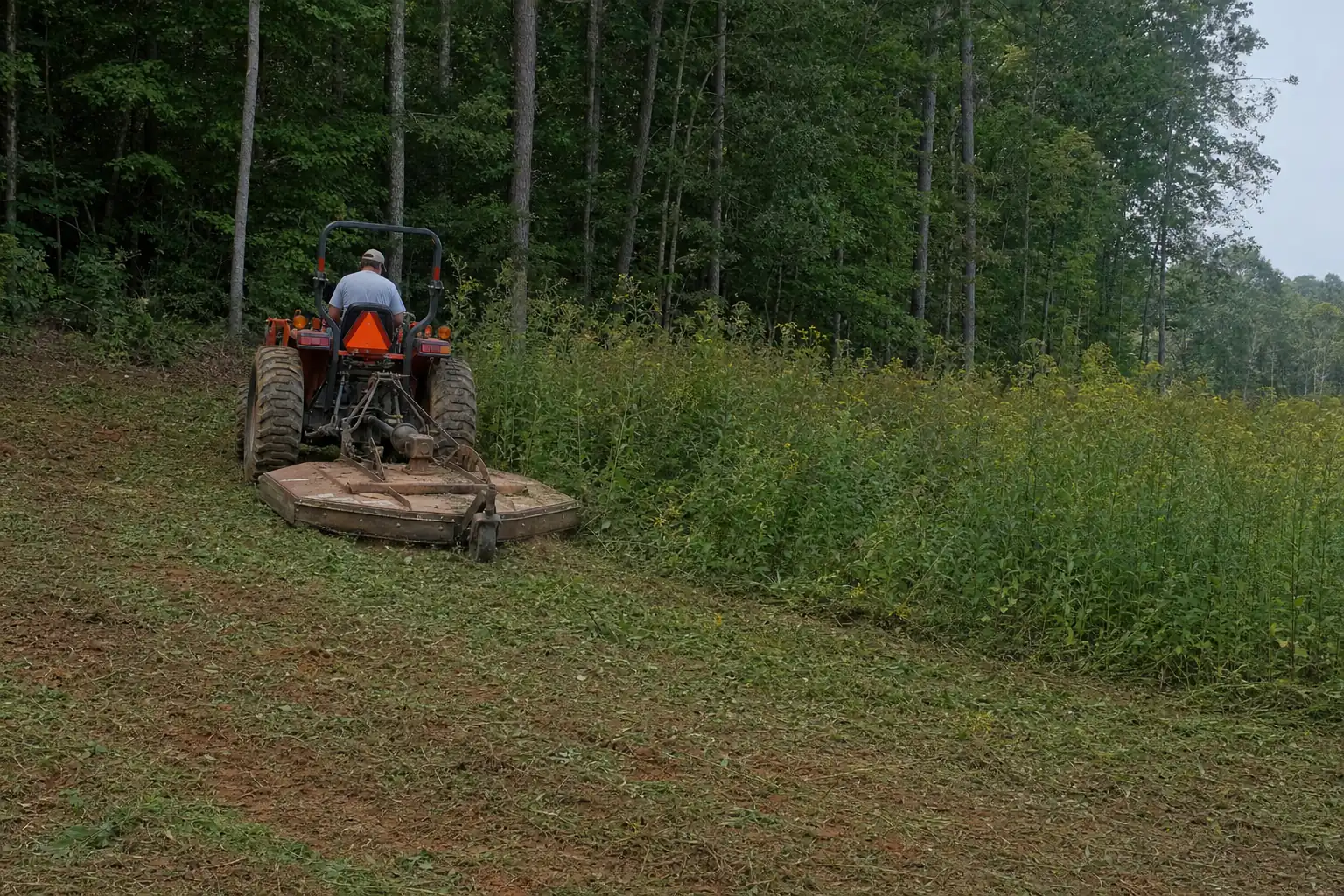
Both machines cut vegetation to the ground, so people use the names loosely. They are built for different stages of the same land. A bush hog keeps open ground open. A forestry mulcher takes back ground that has already gone to woods.
The two machines side by side
| Forestry mulcher | Bush hog | |
|---|---|---|
| The machine | A toothed drum on a compact track loader or a mulching tractor | A rotary cutter pulled behind a farm tractor |
| What it cuts | Brush, privet, saplings and trees to about 8 inches | Grass, weeds, briars and soft sprouts |
| What it leaves | A chip layer, stumps ground to grade | Cut stubble and clippings |
| How long it lasts | Sprouts return the first spring | Grass and briars return in weeks |
| How it’s priced | Per acre or machine time, from $1,200 an acre | Per visit, quoted after the walk |
Ranges are estimates for Forsyth County and the surrounding area based on job density, terrain, access and acreage. Your written quote is the only price that applies to your property.
Walk the land and look at the stems
The quickest test is the thickest woody stem in the area you want open. If you can bend it over with your hand or step it down, a bush hog will cut it. If it is a sapling you’d need a saw for, the first pass is a mulcher.
- Bush hog ground. A hay field or pasture that missed a year or two of mowing. Grass, weeds, blackberry and greenbrier, with sweetgum sprouts no thicker than a pencil.
- Mulcher ground. An old field that went five years or more without a cut. Sweetgum, pine and maple saplings head-high and up, privet in solid stands, blackberry canes as thick as a thumb.
- Both. Most overgrown homestead acreage around Cumming. The mulcher clears the woody growth once, then the bush hog keeps it that way.
Why a bush hog fails on woody growth
A rotary cutter spins two blades on a vertical shaft. It shears soft stems. Push it into hardened saplings and the blades hit wood instead of shearing it, the tractor rides up over the stems, and the stumps left behind are ragged spikes at shin height. Those spikes are hard on tires and on the next pass. A mulcher’s drum grinds the whole stem from the top down until it reaches the ground.
Jobs we see around Cumming, and which machine
The horse pasture gone rough. Fence lines grown up in privet and blackberry, the middle still mostly grass. The fence rows get the mulcher; the open field gets a bush hog. More in reclaiming a horse pasture.
The inherited homestead. Fields nobody has cut since the family moved away, now sweetgum and pine saplings with privet along the edges. That is mulcher work first, then a mowing schedule so it doesn’t happen again.
The hunting tract. Plot edges, lanes and trails mowed before the season with a bush hog. New plots and lanes cut through standing timber need the mulcher. See food plot and hunting land clearing.
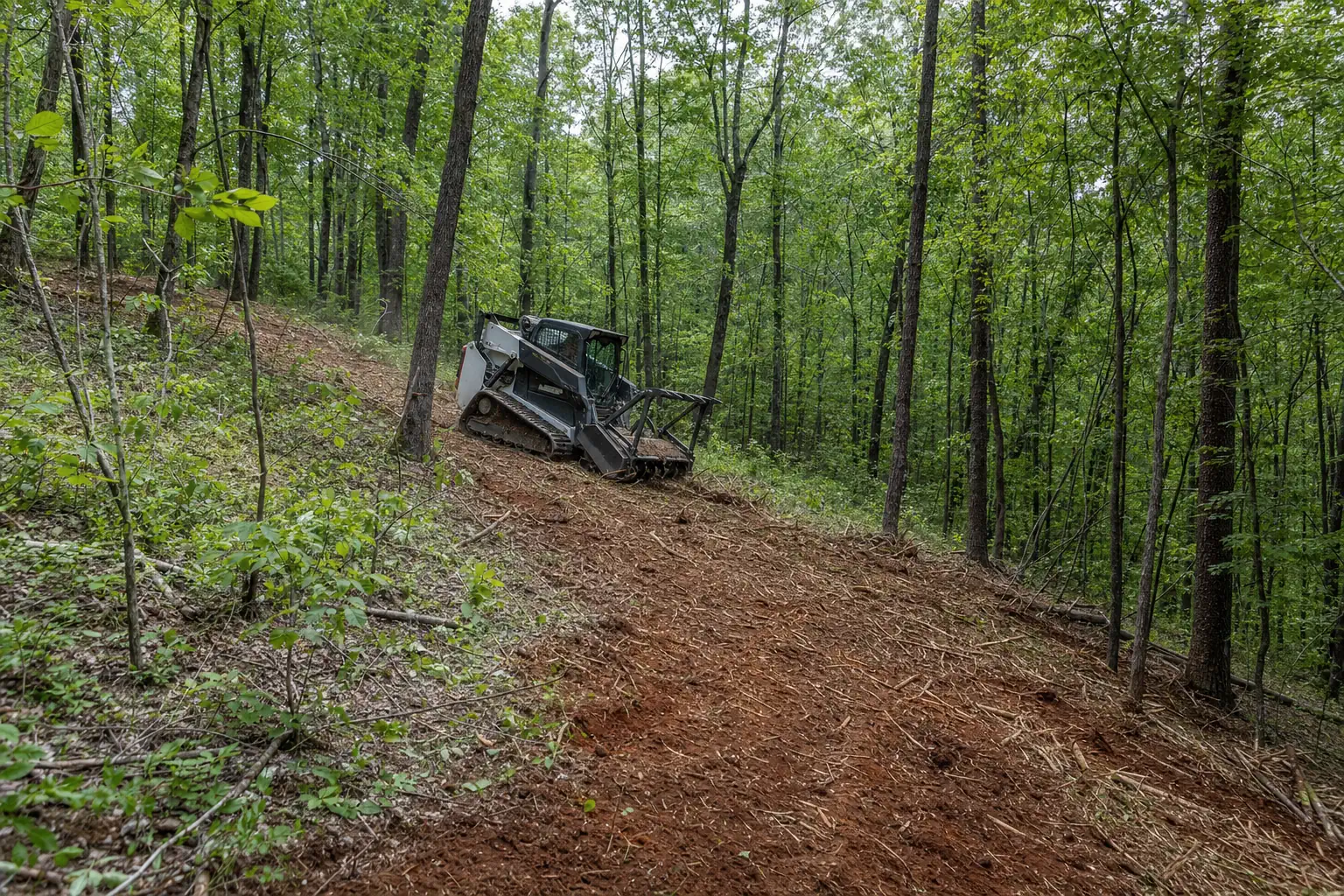
The wooded lot under big trees. Neither machine mows here. Opening woods under a canopy is underbrush clearing with the mulcher, working between the trunks you keep.
The usual order: mulch once, mow after
- 1Mulch the woody growthSaplings, privet and brush ground to grade, keepers left standing.
- 2First springHardwood stumps and privet send up sprouts from the roots.
- 3Summer and fall cutsA bush hog takes the sprouts down before they harden.
- 4Treat the privetLicensed applicators spray privet regrowth per the label in the dormant season.
Herbicide applications are performed by licensed applicators in accordance with the product label.
Skip the mowing and the sprouts become saplings again within a few years. Then the land needs the mulcher a second time, at the mulching price. An annual bush hogging and maintenance mowing arrangement costs less than clearing twice. The mowing frequency answer covers how often.
One contract for both
A mowing-only operator can’t help when the saplings are past a bush hog, and a mulcher-only operator leaves after the first pass. We run the forestry mulching, the mowing and the privet follow-up on one contract, so the same map covers what gets cleared, what gets mowed and when. Send a few photos of the thickest growth and we’ll tell you which machine your land needs first.
FAQ
More about mulching and bush hogging
- Can a bush hog cut small trees?
- Soft sprouts and thin whips, yes. Once saplings harden into wood, a rotary cutter bounces off them or tears them ragged. That ground needs a forestry mulcher first.
- What does each one cost?
- Mulching runs about $1,200 to $2,500 an acre for light brush and saplings, more as trunks get bigger. Bush hogging is quoted per visit after we walk the ground, because acreage, slope, stumps and time since the last cut all vary.
- Can I bush hog land right after it's mulched?
- Yes. Mulched stumps sit at ground level, so a bush hog can cross the ground. Most owners wait for the first spring sprouts and cut them in summer before they harden.
- Will either one kill privet?
- No. Both cut privet off at the ground and it resprouts from the roots. A dormant-season treatment of the regrowth, applied by licensed applicators per the label, is what gets ahead of it.
Keep reading