Milton Horse Pasture Reclamation: Fence Lines, Briars and Saplings
Reclaiming a Milton horse pasture starts on foot: old wire and posts marked, shade trees and the road screen flagged. Then the briars, privet and saplings get mulched to the ground with a finish thin enough to seed, and the fence lines are cut to width. A first-year mowing plan keeps the grass ahead of the regrowth.
Reviewed by the Sawnee Land Clearing team·Last updated
A Milton horse farm loses a paddock the same way every time. The horses get moved, or the barn goes quiet for a few seasons, and nobody mows the back field. Blackberry comes first. Then privet along the woods edge, then sweetgum saplings shooting up through the briars. By the time the owner wants the paddock back, the fence has disappeared into a wall of brush and a mower can’t get through.
Most of Milton is zoned AG-1, with one-acre minimum lots on septic, and a lot of that land is pasture and woods edge. That’s why so much of our work there is the same three jobs: paddocks won back from the briars, fence lines found and reopened, and a screen of trees kept along the road.
Milton sits at the top of Fulton County, 10 miles southwest of our base in Cumming. The steps below are how a pasture job usually runs there, from the first walk to the second spring.
Walk the fence before the machine runs
Old pasture hides wire. Barbed wire sagging into the briars, woven wire buried under leaf litter, T-posts lying flat, a gate nobody has opened in years. Wire wraps around a mulching head and stops it, and that repair costs more than an hour of walking.
So the job starts on foot. We walk the paddock and the fence lines with you, find the old wire and posts by hand and mark them. While we walk, you flag what stays:
Shade trees in the paddock. The oak or two the horses stand under in July.
Trees on the fence line. Including anything on the neighbor’s side, which stays standing.
The screen along the road. The wooded strip between the house and the traffic.
Wet spots and the creek. Where the machine stays off soaked ground, and where a buffer starts.
We also settle the practical part. You move the horses off the paddock we’re working, and we agree on the gates and the route the machine takes in.
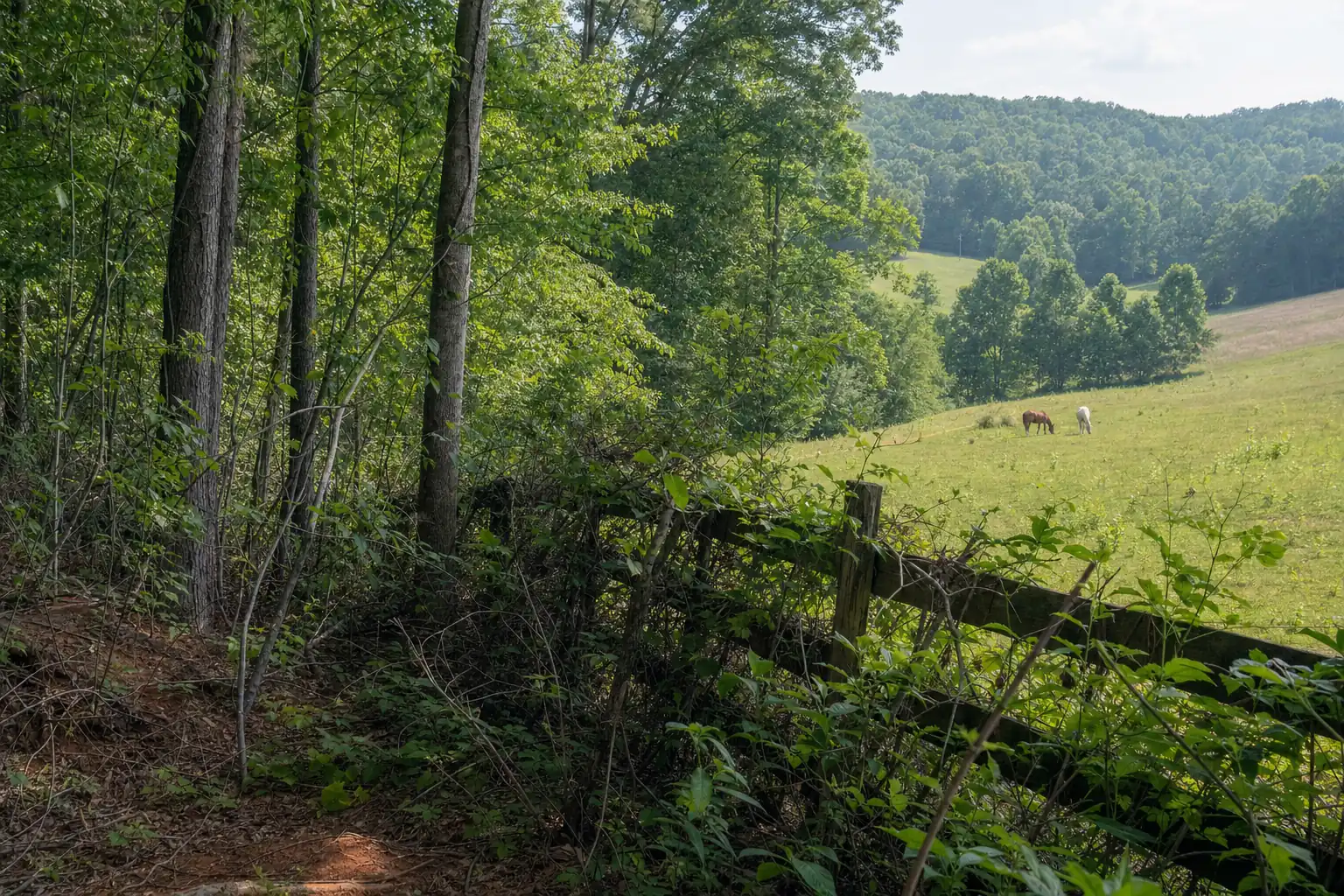
A Milton paddock gone to blackberry and sweetgum, with the old fence buried in it. The wire and posts get marked before any machine runs.
Reopening the fence lines
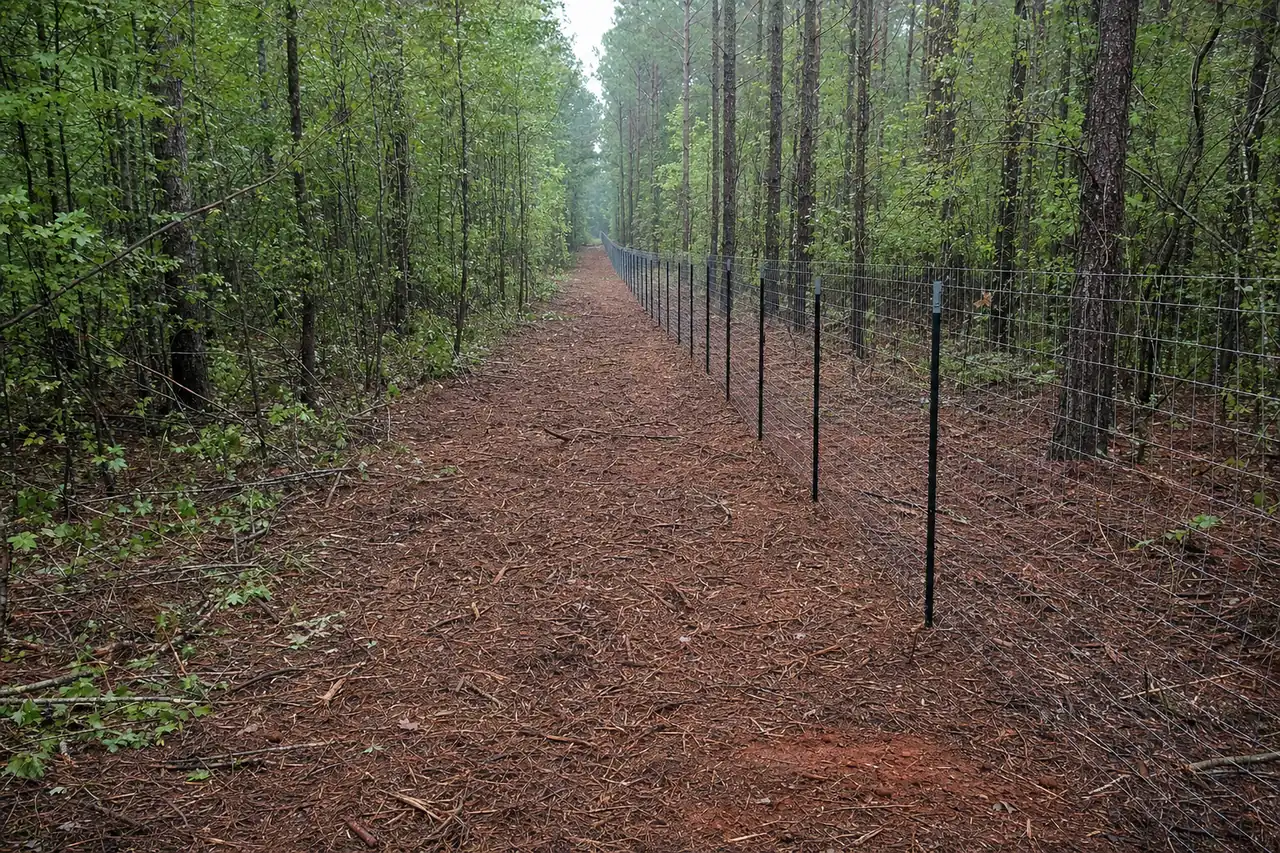
A fence line is a strip, not a field. We cut it wide enough for a post driver and a truck with wire, on the line you flag, and mulch it flat so the new posts go in straight. Trees that stand on the line stay unless you tell us otherwise, and the brush and saplings between them come out.
Fence lines price by length and strip width more than by the acre, so a long line through light brush can cost less than one small paddock full of saplings. If you’re not sure where the property line runs, have it surveyed before the fence goes back up. We’ll cut a sight line for the surveyor first. See fence line and survey line clearing.
Winning the paddock back
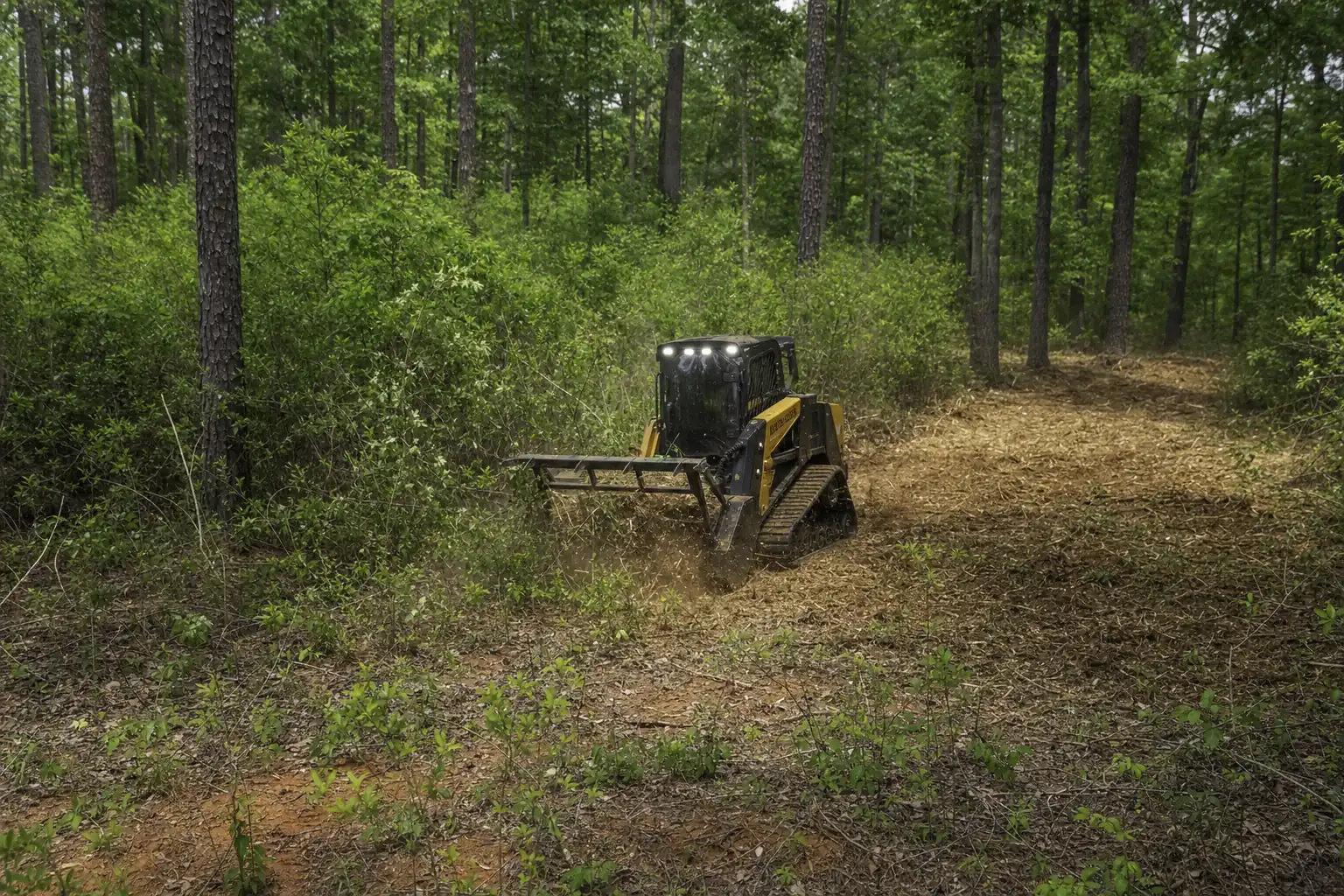
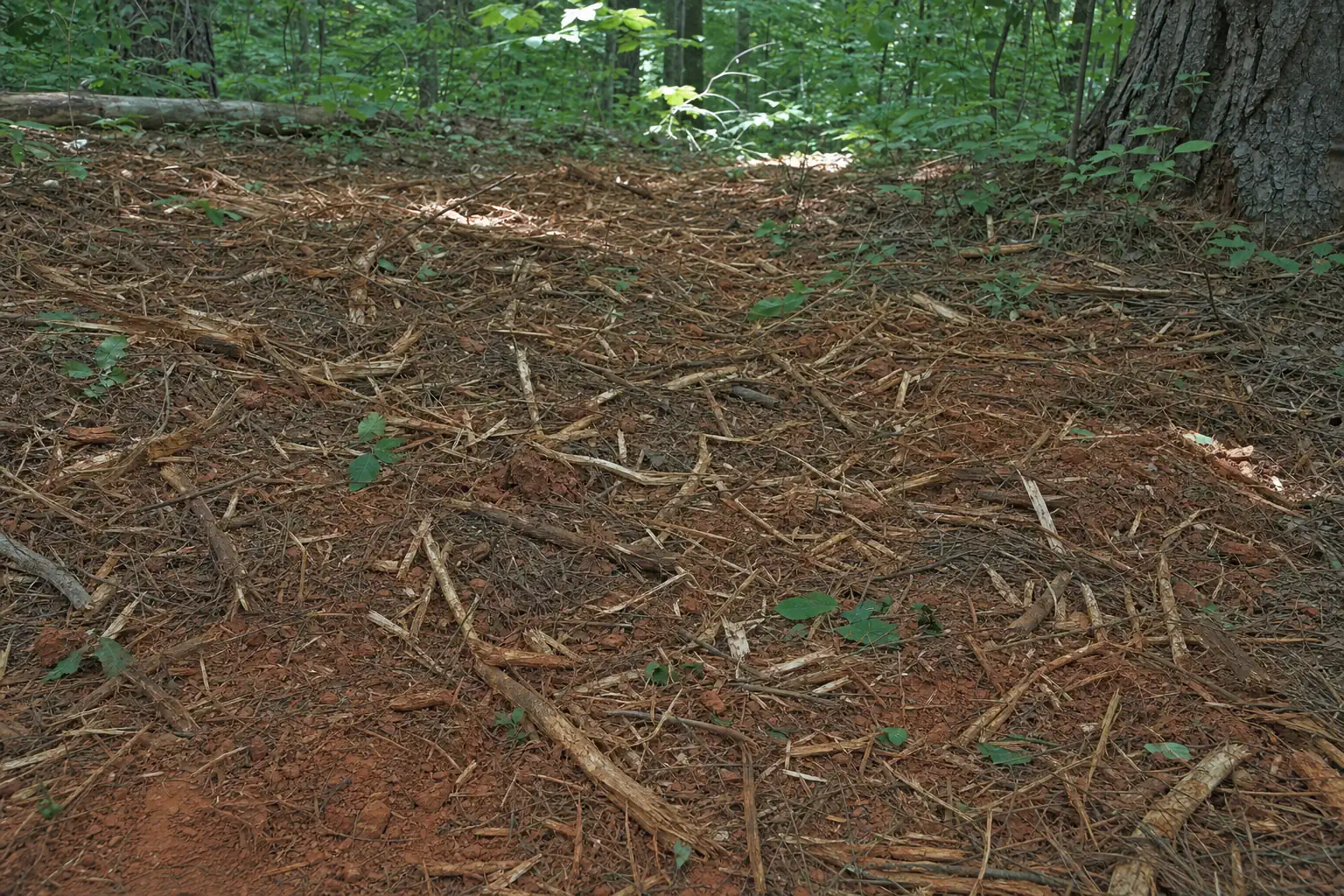
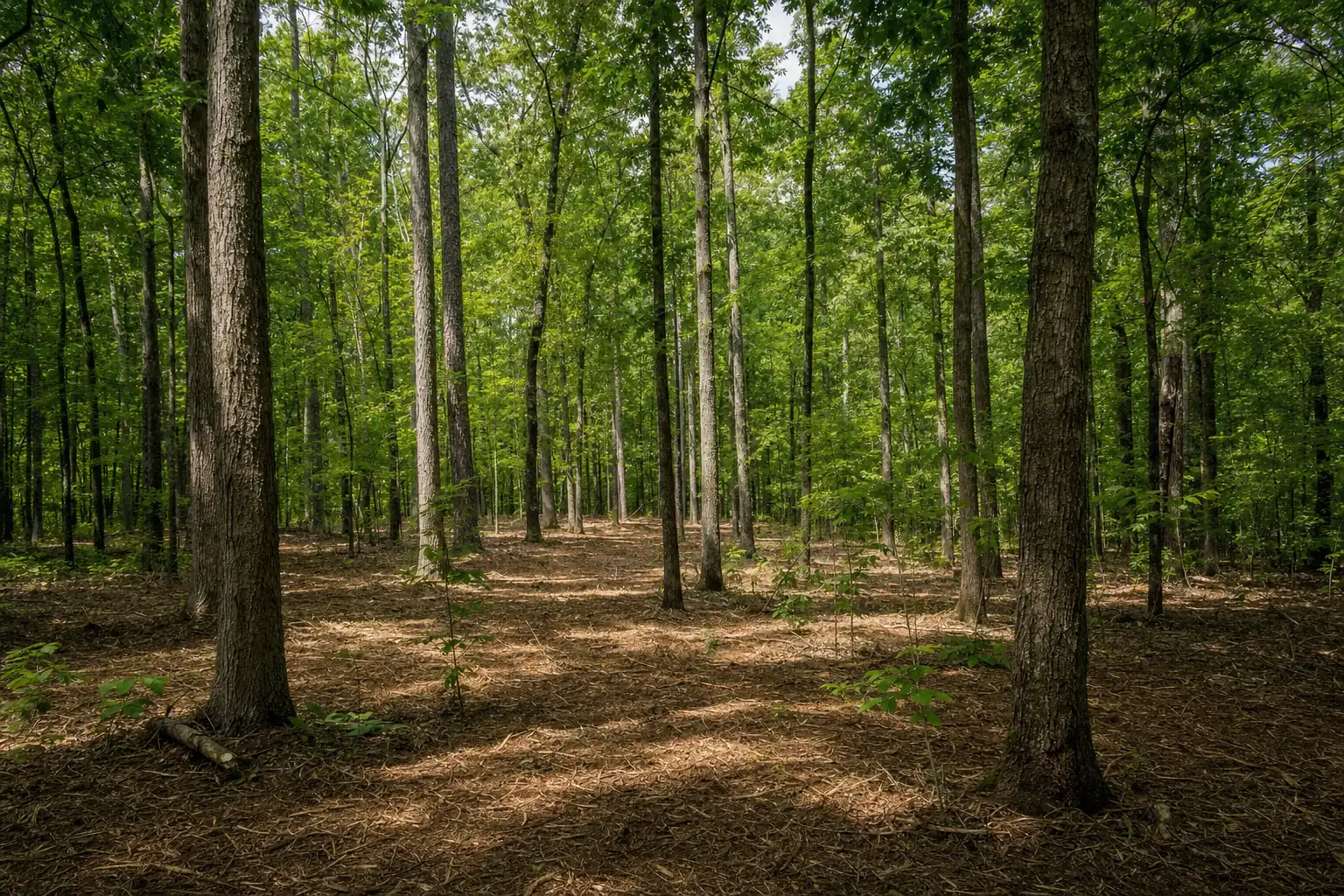
In the paddock, the mulcher grinds briars, privet and saplings to the ground and leaves the chips on the clay. For a pasture, the chips matter. Seed has to touch soil to grow, so we grind finer and spread the mulch thinner where you plan to seed. Tell us where the grass goes before the machine starts. A fine, thin finish costs less to make on the first pass than to fix later.
Reclaiming a Milton paddock: who does what
Stage
What we do
What you do
Before work
Walk, mark wire and posts, flag keepers
Move the horses, open the gates
Mulching
Briars and saplings to the ground, seeding finish where grass goes
Decide where the paddock edges sit
Stumps
Ground below grade where you plan to cut hay or finish-mow
Tell us which areas get mowed close
Grass
Lime, seed and straw on slopes, if you put them on the quote
Or seed it yourself once the mulching is done
First year
Mowing passes and the privet treatment
Keep the horses off until the grass takes
A rough pasture can live with stumps ground at grade. A field you’ll cut for hay needs them below grade so equipment can cross. The steps and the finishing costs are laid out in can a mulched field become pasture or lawn? and the chip layer itself in mulch depth and seeding.
The screen along the road
Plenty of Milton owners want a wooded strip between the house and Birmingham Highway or Arnold Mill Road. Often that strip is half privet. We mulch the privet and brush under the trees, leave the trees standing, and leave enough low growth near the road to keep the screen doing its job. Where a creek runs through the strip, we stop at the buffer.
The rules change at the county line
Milton is in Fulton County. The Forsyth permit fees and buffers on most of our pages don’t apply there. Georgia’s erosion law does: disturbing an acre or more, or clearing within 200 feet of state waters, can require a permit, and the state keeps a 25-foot buffer along creeks and other state waters.
Permit thresholds, fees and buffer widths are those published by Forsyth County and the State of Georgia as of November 4, 2026. Confirm current requirements with the issuing authority before work begins. This is not legal advice.
Whether a pasture job counts as an agricultural operation, and whether any wider local buffer applies to your parcel, is the local issuing authority’s call. We confirm both before we quote, and we keep the machine out of the buffer either way. See do I need a permit to clear less than an acre?
What reclamation costs
How long the field sat idle sets most of the price. Two seasons of briars mulch fast. Twenty years of saplings take far longer.
Estimated ranges around Milton
$1,200 to $2,500
Per acre for light brush, privet and saplings
$2,500 to $4,000
Per acre for mixed growth, trees 4 to 8 inches
$4,000 to $6,500+
Per acre for dense hardwood, 8 to 12 inches and up
$1,200 to $2,000
Minimum on a small job
Ranges are estimates for Forsyth County and the surrounding area based on job density, terrain, access and acreage. Your written quote is the only price that applies to your property.
Wire in the brush adds walking time. Shade trees and a screen add careful work around trunks. A typical paddock-and-fence job takes one to three days of mulching. The ranges in detail are in land clearing cost per acre.
The briars and sweetgum you mulched still have live roots. They send up sprouts the first spring, right through the new grass. The goal for the first year is to keep the grass ahead of them.
1First springSprouts come up across the paddock and along the fence strips.
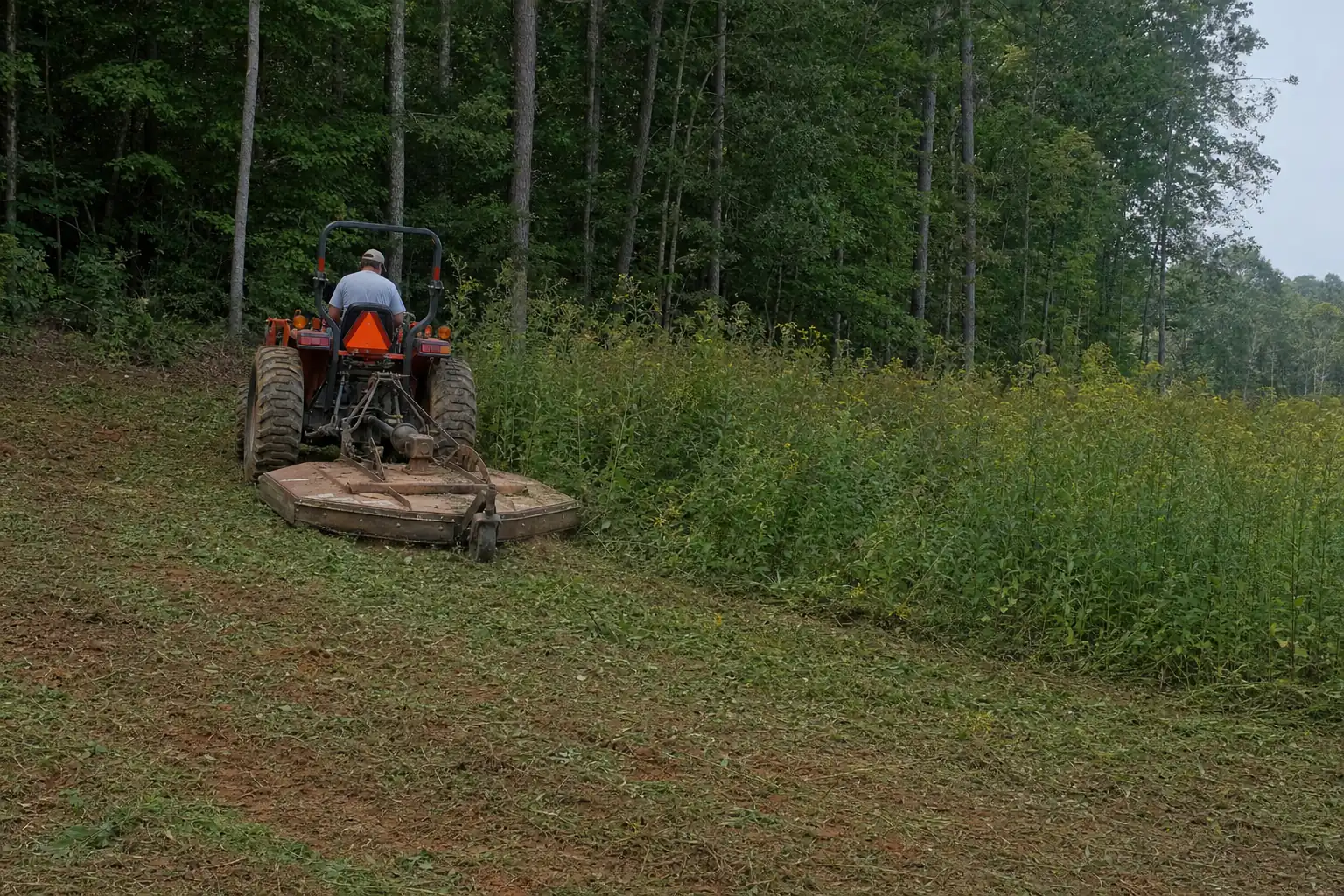
2SummerA bush hog pass before the sprouts harden into wood.
3FallA second pass where the ground grows fast, plus the fence lines.
4Dormant seasonPrivet resprouts treated by licensed applicators, November to February.
Herbicide applications are performed by licensed applicators in accordance with the product label.
Mowing wears down most hardwood sprouts over a few seasons, and grazing helps once the grass is established. Privet outlasts mowing and needs the dormant-season treatment, often for more than one year. We put the paddocks, fence lines and the road screen on one map, set the visits for the year, and come back on schedule through an annual mowing arrangement. How many passes your field needs is covered in how often to bush hog cleared land.
The local detail for the area, from AG-1 zoning to the ZIP codes we cover, is on our Milton service area page. The forestry mulching hub covers the machine work itself.
Tell us where the land is, what's growing on it and what you want it to be. Add a few photos if you have them. We'll call within one business day with what it takes and what it costs.

 Bush Hogging and Maintenance Mowing
 Chinese Privet Removal
 Forestry Mulching
 Forestry Mulching