What Happens After the Mulcher Leaves: Regrowth and Maintenance
Mulched land around Cumming grows back. Sweetgum, maple, oak and privet sprout from the roots the first spring, and briars return within a season. One or two mowing passes a year, plus a dormant-season privet treatment where privet was, keep the ground open. Here is what the first year looks like and how we plan the upkeep.
Reviewed by the Sawnee Land Clearing team·Last updated
A tract gets mulched in the fall or winter. Through the cold months it looks the way the owner hoped: open ground, a layer of chips, the big trees standing clear. Then April comes, and the phone rings. Green shoots are coming up all over the mulched area, and the owner wants to know if something went wrong.
Nothing went wrong. That is what mulched land in North Georgia does in its first spring. The question worth asking is what you want the land to look like in three years, because the answer to that sets the plan.
Why it comes back
A forestry mulcher cuts every plant at the ground and grinds the stump to grade. It doesn’t dig. The roots stay in the clay with the energy the plant stored in them, and most hardwoods and shrubs answer by pushing up new shoots from the root crown and the roots.
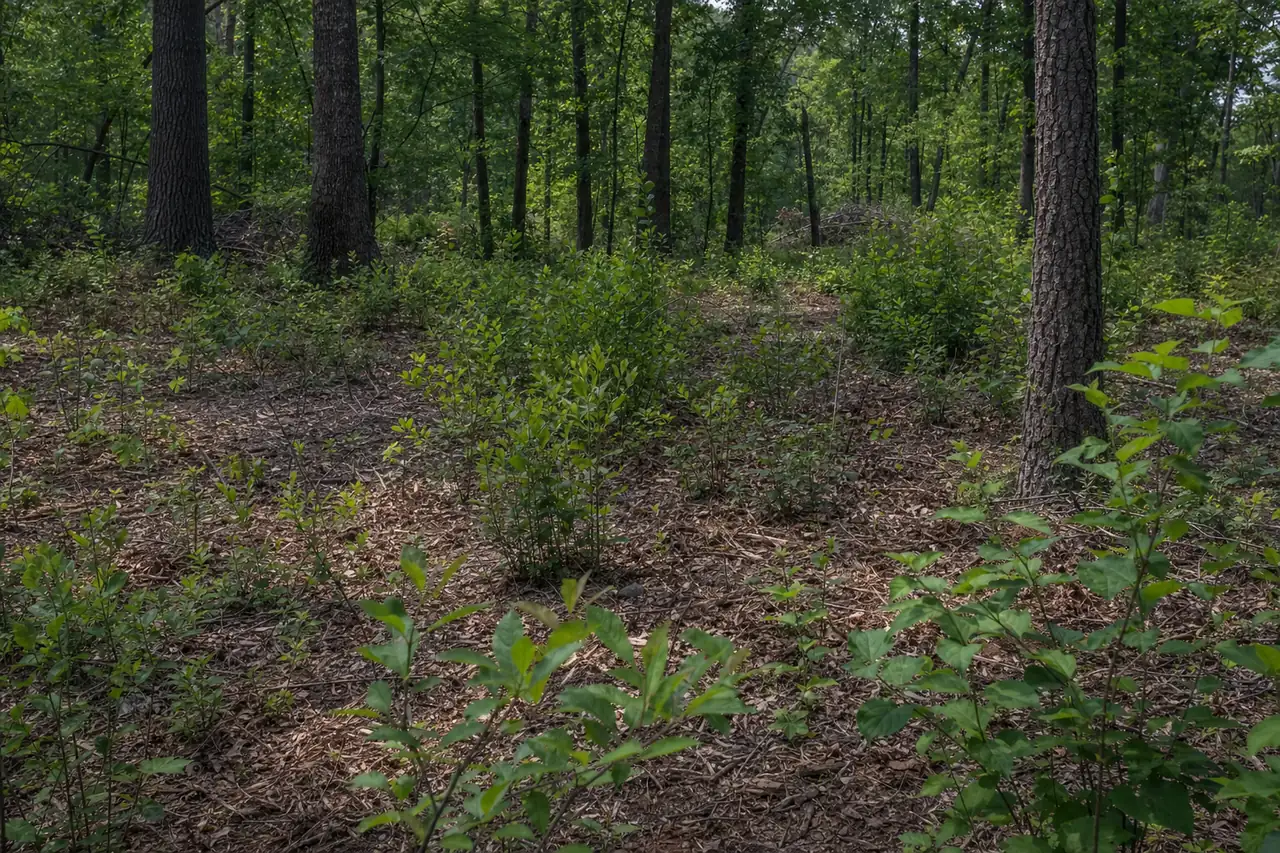
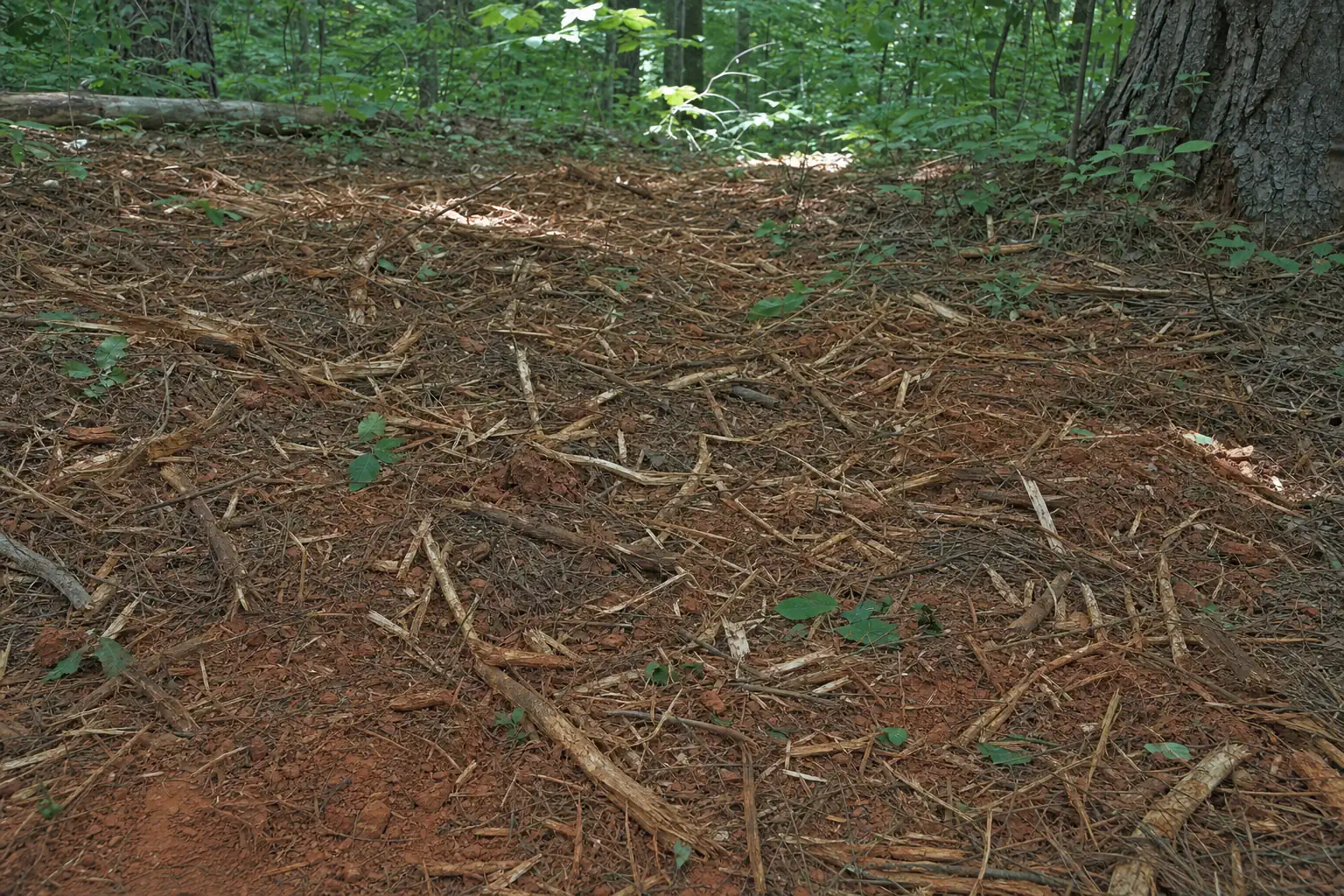
One growing season after mulching: sweetgum and privet sprouts coming up through the chips, the keeper trees still standing.
The chip layer slows seedlings that have to come up through it. It does nothing to a sprout from a live root, which has the whole root system feeding it. Sweetgum, red maple, oak, privet and briars all come back. A cut pine doesn’t. The full species list is in which trees resprout after mulching, and the longer explanation is in will it grow back?
The first year, season by season
Here is how the first year usually goes on Forsyth County ground after a fall or winter mulching job:
1First springSprouts push up from ground stumps and roots across the mulched area.
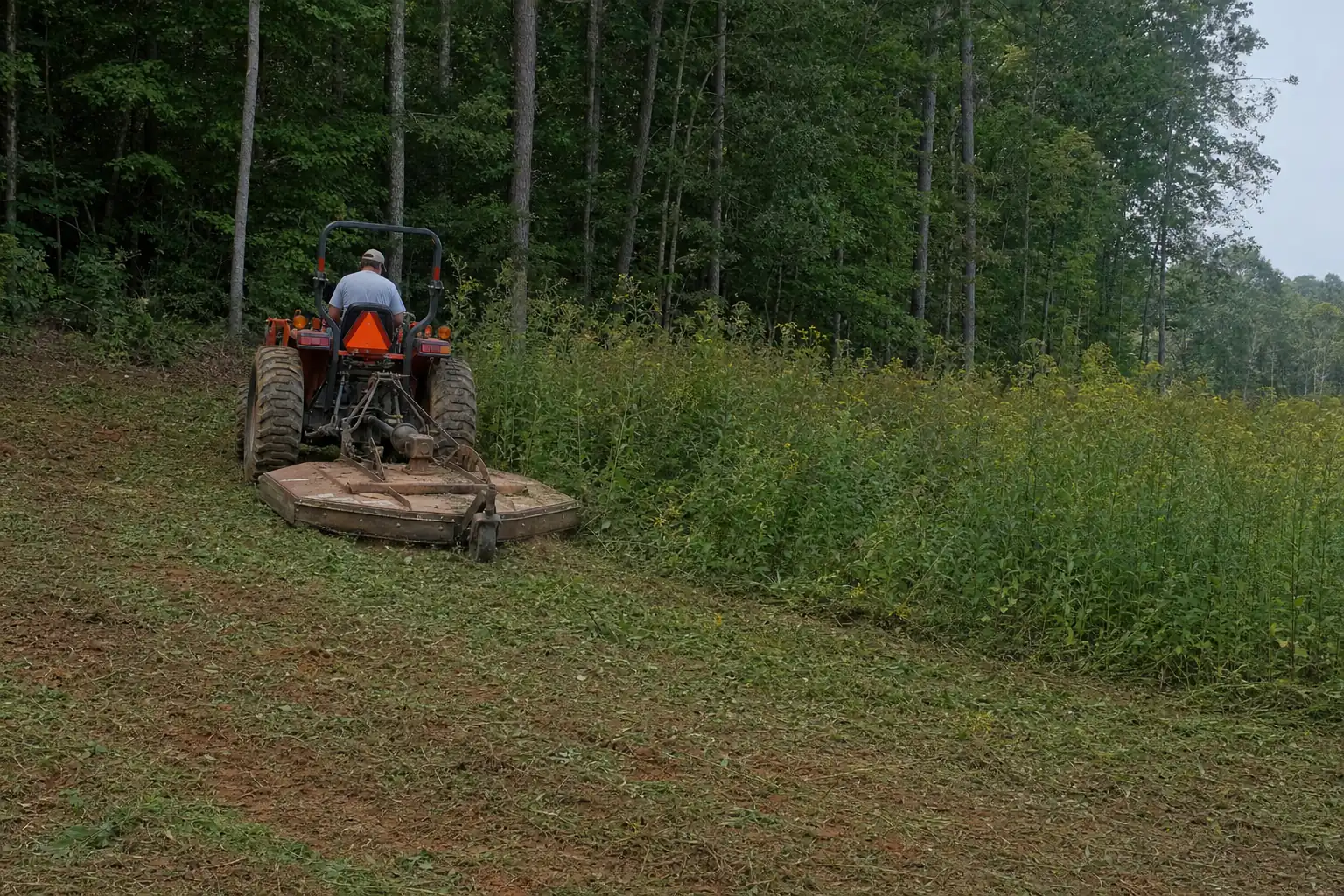
2SummerSprouts and briars put on height. Mow before they harden into wood.
3FallA second mowing pass where the ground grows fast, plus trails and plot edges.
4Dormant seasonPrivet resprouts treated November to February by licensed applicators.
The sprouts come up even and close to the ground, which is the good news. A field of knee-high sprouts is easy to mow. A thicket of ten-year-old privet and sweetgum takes a mulcher.
Three ways to keep the ground open
Every plan we set up is some mix of these three. Which one leads depends on what the land is for.
Keeping mulched land open
Approach
Works best for
What it takes
Mow it
Fields, back acres, trails, firebreaks, food plot edges
One or two bush hog passes a year, timed before sprouts turn woody
Use it
Pasture, lawn, a garden, a building site
Grazing, seeding or construction that keeps the ground busy
Treat it
Privet and kudzu, which outlast mowing
Dormant-season herbicide on the resprouts, more than one year running
Herbicide applications are performed by licensed applicators in accordance with the product label.
Mowing alone keeps most hardwood sprouts in check, because cutting them back year after year wears the roots down. Privet is the exception. It answers every cut with more stems, so on privet ground the mowing buys time and the treatment does the real work. See should I spray after mulching, and when?
If you want grass instead of sprouts, the mulch layer matters. Seed needs soil contact, so the plan for a lawn or pasture starts at the clearing, with how fine the chip is left. That is covered in can a mulched field become pasture or lawn?
Fields, woods and house lots grow back differently
Where the clearing happened changes how hard the regrowth pushes.
Open fields and back acres. Full sun, nothing shading the stumps. This is where sprouts come back fastest and where one or two mowing passes a year matter most.
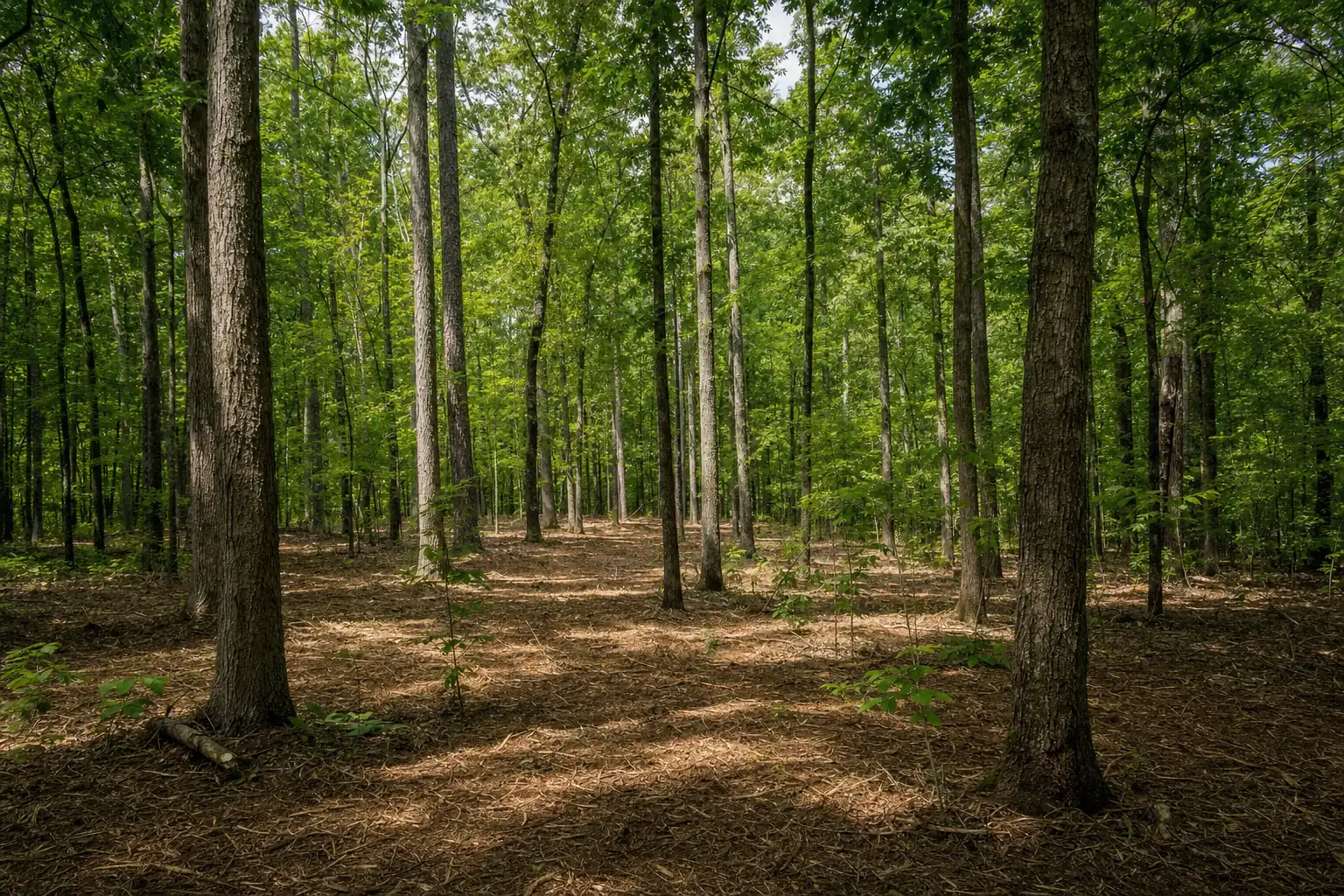
Underbrushed woods. When the big trees stay, their shade usually slows what comes back underneath. The understory still fills in over a few seasons, so plan a pass every year or two to keep the view through the trunks.
House lots and building pads. Under the slab and the driveway, the stumps get pulled, and pulled roots don’t sprout. The margins around the house behave like any other mulched ground, so the yard edges need the same upkeep as a field.
What waiting costs
Skip a summer and the sprouts keep going. A season or two of growth turns soft green shoots into woody stems that a rotary cutter beats on instead of cutting cleanly. Leave it longer and the ground is back to brush and saplings, and the next visit is a mulching job again, priced like the first one.
Keeping the first clearing paid off
First spring
When the sprouts show up on mulched ground
1 to 2 passes
Bush hog visits a year that keep most fields open
Nov to Feb
When privet resprouts get treated
Years
How long kudzu roots take to wear down
The cheapest acre to keep open is the one that never goes back to woods. That is why we set up the upkeep plan before we leave, not after the owner calls in April.
On the final walk of a clearing job, we go over what will come back on your ground and what you want the land to be. Then we write it down:
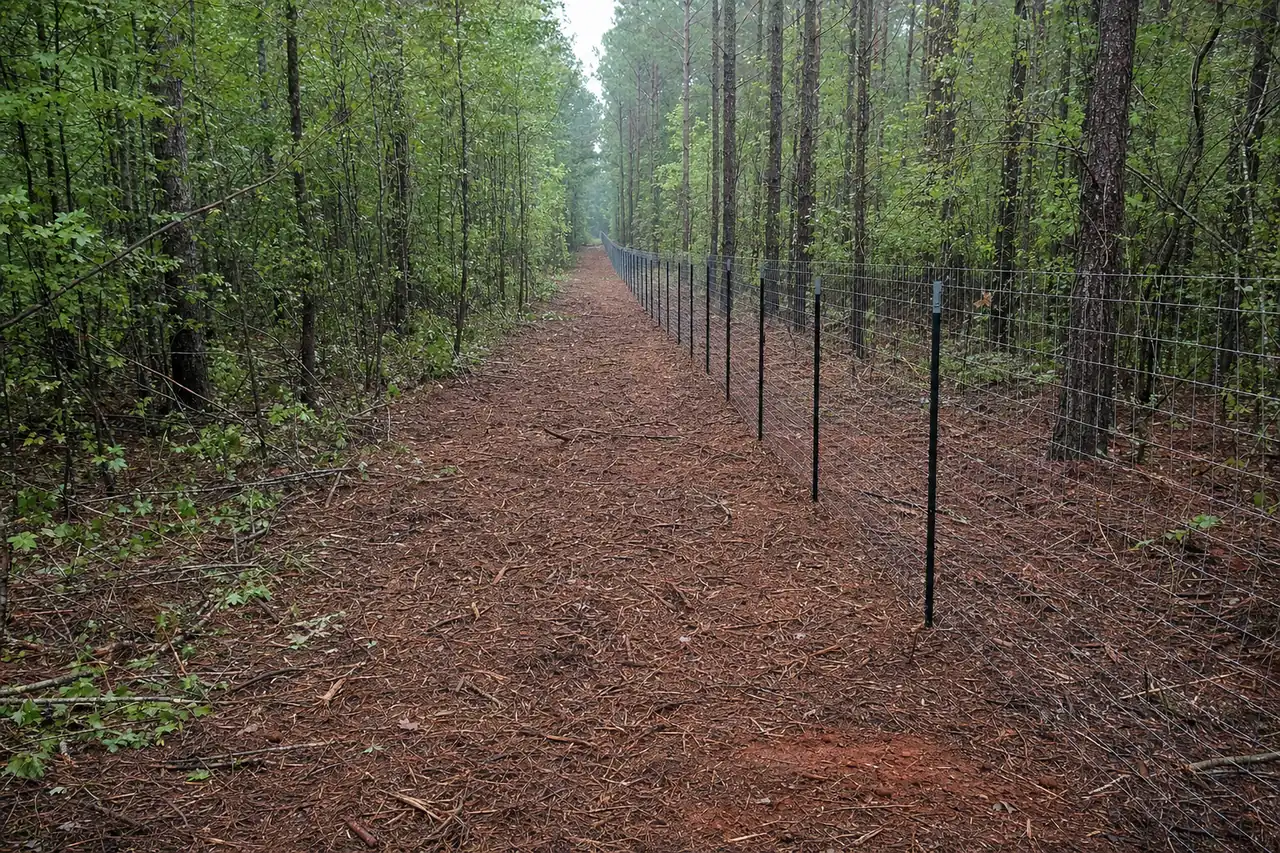
A map. The fields, trails, fence lines and firebreaks to keep open, with wet spots and stumps marked.
The visits. How many passes a year, roughly when, and what each one covers.
The privet and kudzu plan, if either was on the ground before.
Photos after each visit, for owners who live out of town.
An annual arrangement puts your property on our calendar with the visits, the areas and the price agreed up front. You don’t have to remember to call, and the land doesn’t get away from you. Mowing is quoted per visit after the walk; see how often cleared land should be bush hogged for what most fields need.
The short version for your land
Expect green the first spring. Mow before summer growth turns woody, and again in the fall where the ground grows fast. Treat privet in the dormant season, for more than one year. Use the ground if you can. Do those things and the clearing you paid for stays a clearing, which is the whole reason we mulch in place instead of scraping the land bare.
Tell us where the land is, what's growing on it and what you want it to be. Add a few photos if you have them. We'll call within one business day with what it takes and what it costs.

 Forestry Mulching
 Forestry Mulching
 Forestry Mulching