Why We Mulch in Place Instead of Burning or Hauling
We grind brush and small trees where they stand because it suits the land around Cumming better than the alternatives. Burning in Forsyth County waits on a county permit, the May 1 to September 30 ban and distance from houses. Hauling adds trucks and cost and leaves bare red clay. A chip layer stays put and holds the slope.
Reviewed by the Sawnee Land Clearing team·Last updated
Partway through most walk-throughs, the owner looks at the thicket we’re about to take down and asks where it all goes. Some expect a dozer and a burn pile, because that’s how the land next door got cleared years ago. Others picture a line of dump trucks on the driveway. A few want the logs for firewood.
On most jobs, our answer is that the brush stays. A forestry mulcher grinds it where it stands and lays it back on the ground as chips. We made that our default for reasons that come from the clay, the rain and the rules in Forsyth County, and we set it aside where the ground calls for something else.
Burning: a pile that waits for the calendar
Burning looks free on paper. In Forsyth County it comes with a calendar and a tape measure. The state’s summer open burning ban covers the county, and land-clearing debris can’t be burned from May 1 to September 30. The rest of the year takes a county fire permit, a burn day, and a pile at least 1,000 feet from any occupied building, the neighbor’s house included.
Permit thresholds, fees and buffer widths are those published by Forsyth County and the State of Georgia as of November 4, 2026. Confirm current requirements with the issuing authority before work begins. This is not legal advice.
On a subdivision lot off the 400 corridor there’s rarely a spot that far from every house. Even where there is, somebody has to build the pile first, which means a dozer pushing trees and stumps into windrows and dragging clay along with them. Stumps balled in red clay burn poorly. A lot cleared in May can hold its pile until October, drying out beside the woods, and whatever doesn’t burn clean gets hauled anyway.
Hauling: trucks on the drive and bare clay behind them
Hauling solves the pile by putting it on a truck. Trucking debris off adds about $500 to $2,500 an acre on top of the clearing, and a full clear, grub and haul job runs about $3,500 to $8,000 an acre around Cumming. Forestry mulching runs $1,200 to $6,500 or more an acre, with trunk size setting where in that range your land falls.
Ranges are estimates for Forsyth County and the surrounding area based on job density, terrain, access and acreage. Your written quote is the only price that applies to your property.
The money is half of it. Loaded trucks run over your driveway and track clay onto the road, which is why a permitted site gets a gravel construction exit before the first load leaves. Once the stumps, roots and brush are gone, bare clay is all that’s left. On a slope that clay moves in the first hard rain, so a haul job usually ends with silt fence, straw and seed to hold ground that held itself a month earlier.
What the chips do on red clay
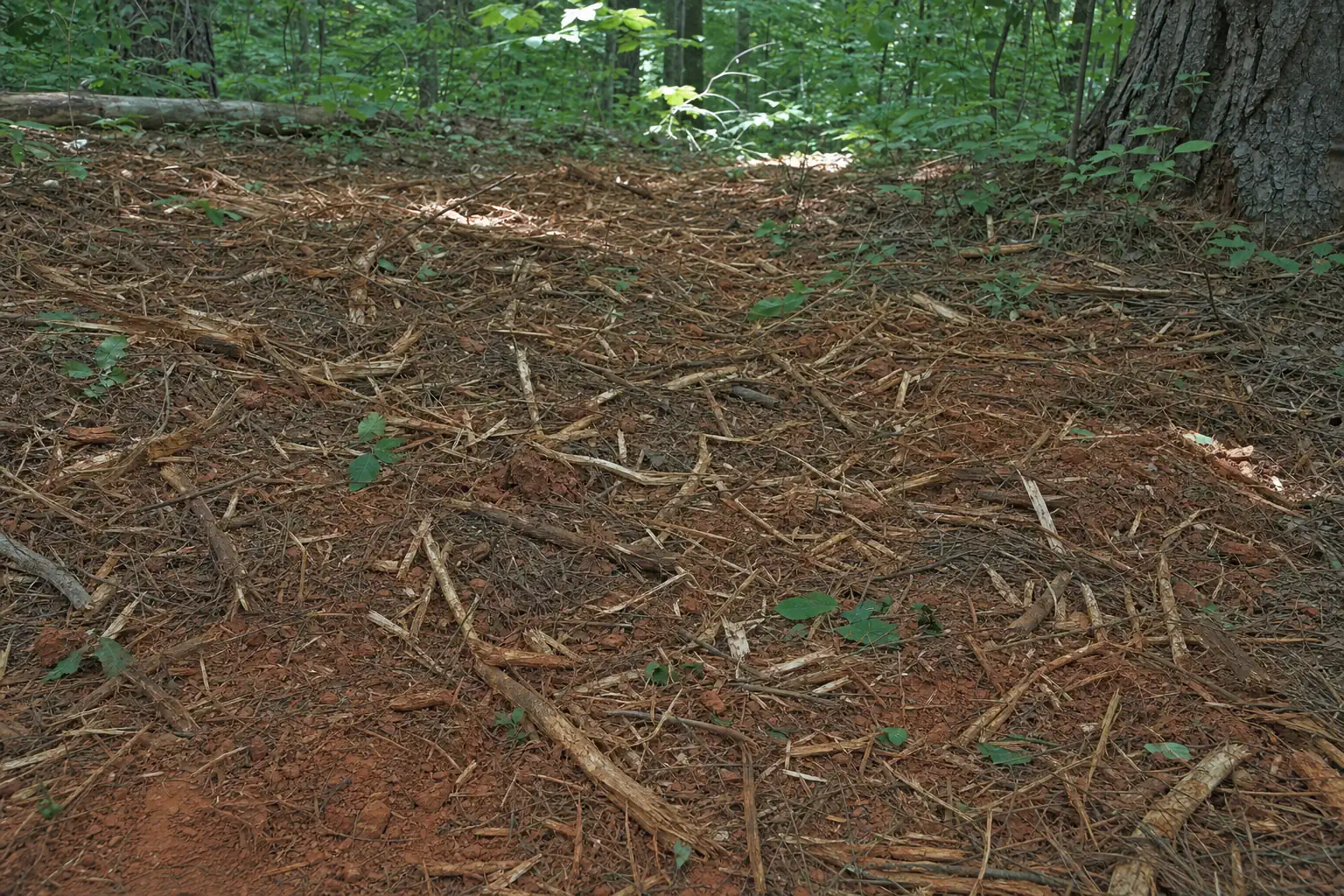
Forsyth County sits on Piedmont red clay and gets 50 to 55 inches of rain a year. Bare clay on a slope sheds that rain fast and takes soil with it. A layer of chips breaks the force of the drops, soaks up part of the water and slows what runs downhill. On a steep lot near Sawnee Mountain or a bank above a creek, the mulch the machine leaves behind is the cheapest erosion control you’ll get.
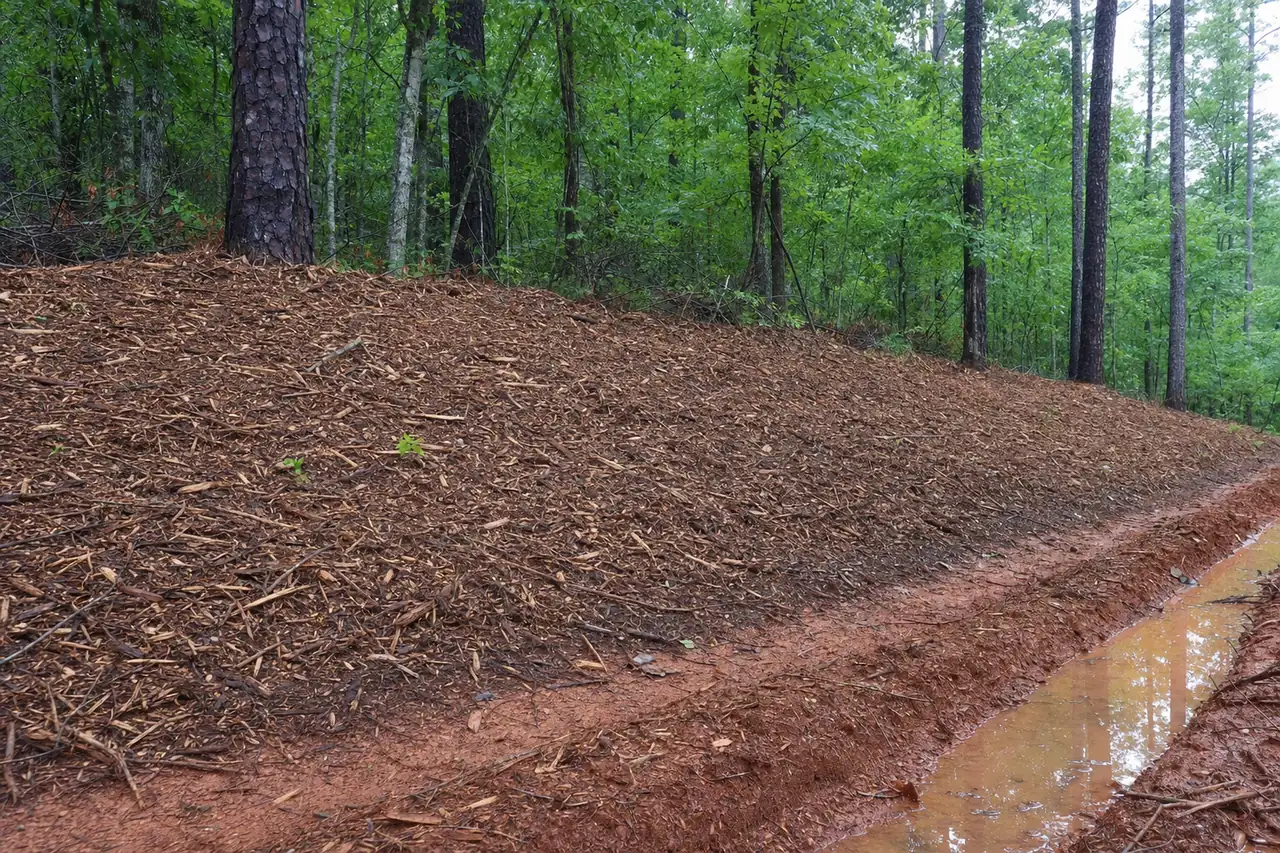
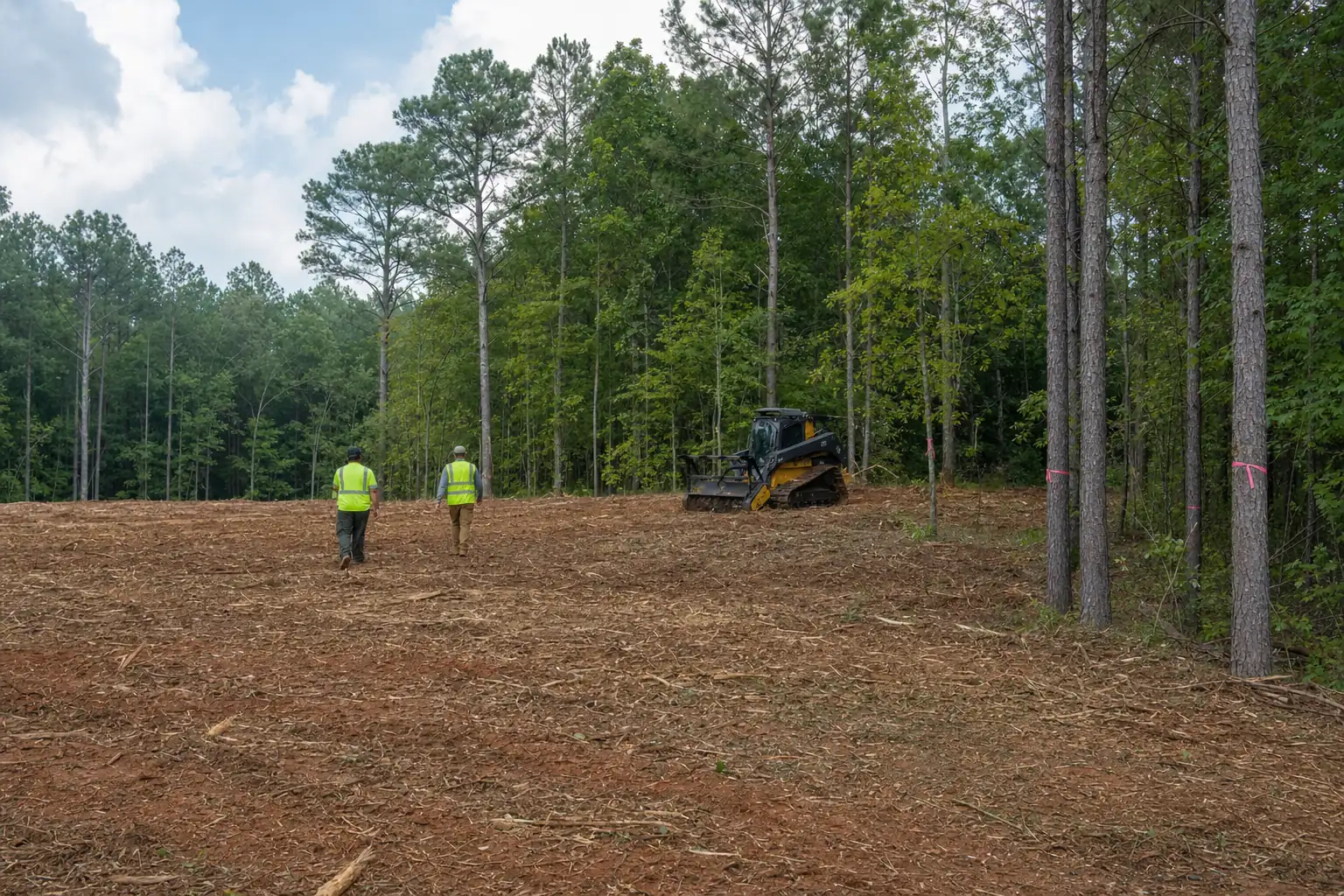
A fresh chip layer on a cleared slope near Cumming: the brush that stood here is now the cover that keeps the clay in place.
The mulcher doesn’t dig. It grinds stumps to grade and leaves the roots in the ground, and those roots keep holding the soil while the chips break down over a few seasons. The tracks spread the machine’s weight and run on the mat it lays down, so firm ground comes through without ruts. Soaked clay is different, and we wait those weeks out.
Chip depth follows what was growing. Light brush leaves a thin layer; a privet thicket or a stand of 6-inch sweetgum leaves more. If you plan to seed, tell us on the walk, because a finer chip takes extra passes. Owners with a house nearby sometimes ask about bugs, and that has its own answer in does mulch left on the ground attract termites.
The three options, the week after
What each debris method leaves on land around Cumming
Method
Your ground the week after
What it took
Mulched in place
Chips over the clay, stumps flush, keeper trees standing
A mulcher on a dry week, no burn permit
Pushed and burned
A bare push area, an ash patch, or a pile still waiting for October
A dozer, a county fire permit, burn days and 1,000 feet from homes
Hauled off
Bare clay, stumps out, nothing left on site
Trucks, a construction exit and $500 to $2,500 an acre on top
For most wooded acreage, the first row is the cheapest of the three and the only one that leaves the ground covered.
Where we don’t mulch in place
Mulching is the default, and it has limits. We point them out on the walk.
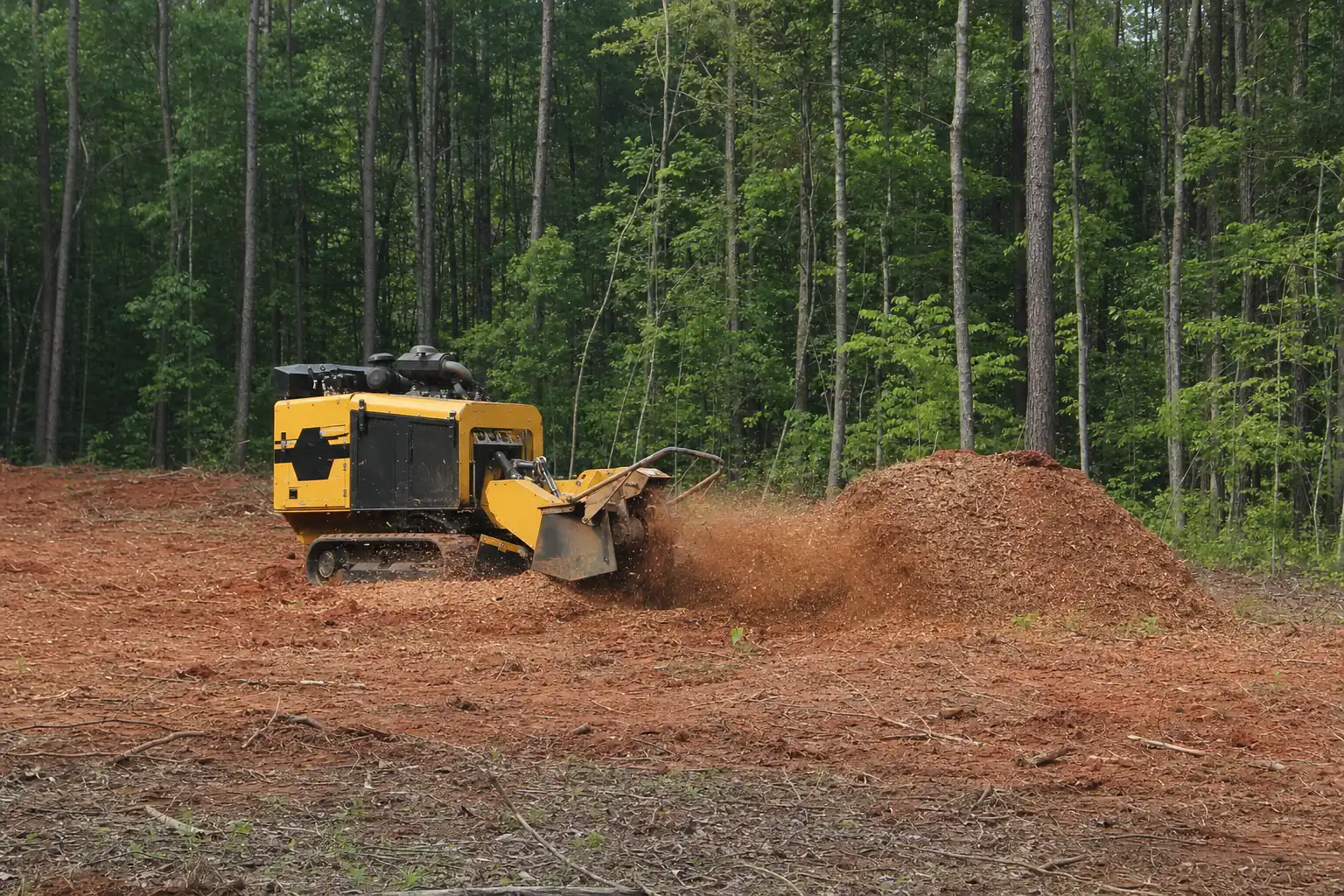
Under a slab or a driveway. Wood left in the ground rots and the surface settles. Stumps and root mats under the pad come out with an excavator, get shaken clean of clay, and go through a grinder or off site. See do stumps have to come out before a building pad.
Big trunks. A mulcher takes trees up to about 8 inches standing. Past 8 to 10 inches, trees get felled first, and the trunks are mulched on the ground, run through a horizontal grinder, or cut and stacked for you as firewood.
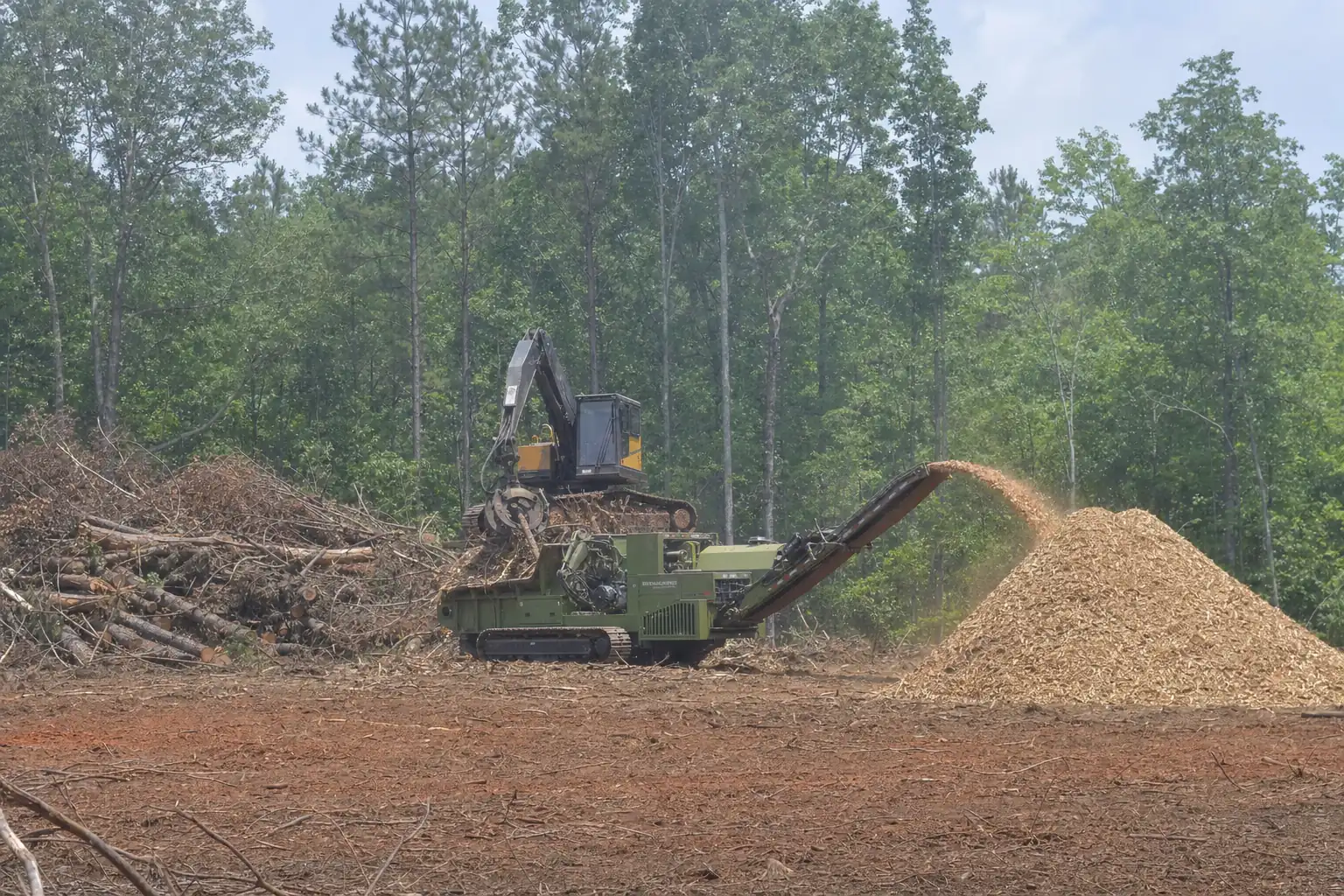
Old push piles. A head-high windrow of logs and dirt from somebody else’s dozer job is too much for a mulcher. A horizontal grinder fed by an excavator turns it into chips we spread on site.
Timber worth selling. Merchantable pine goes to a timber buyer first. We mulch the tops and limbs the loggers leave.
A small lot where the owner wants bare ground for sod may still call for some hauling. When it does, the quote says so, line by line. Every place the wood can end up is covered in what happens to all the debris.
Leaving roots in the ground has a cost, and we say so before the job. Sweetgum, maple, oak and privet sprout from those roots the first spring. Cut pines don’t. A dozer job grows back too, from roots it missed and seed landing on the bare clay. On mulched ground the sprouts come up even and low, which a bush hog handles in a pass. Plan on one or two mowing passes a year on anything you want kept open; see bush hogging and maintenance mowing.
What it means on your land
For wooded acreage, house-lot margins, fence lines and trails around Cumming, mulching in place costs least and treats the ground best. No pile sits through the summer, no trucks cross your drive, and the slope stays covered. Where the ground has to be bare or the wood has value, we bring other machines on the same contract and mulch the rest.
If you’re weighing the method for your own tract, is forestry mulching worth it runs through the cases where it pays and where it doesn’t. The machine and the ranges are on the forestry mulching page.
Tell us where the land is, what's growing on it and what you want it to be. Add a few photos if you have them. We'll call within one business day with what it takes and what it costs.

 Horizontal Grinding for Debris Piles and Storm Timber
 Stump Grinding, Grading and Pad Prep
 Underbrush Clearing: Open the Woods, Keep the Canopy
 Forestry Mulching
 Forestry Mulching