Burn rules guide · 8 min read
Burn Permits, the Summer Rules, and Why We Don’t Burn
Forsyth County is one of 54 Georgia counties under the state's summer open burning ban, which stops land-clearing burns from May 1 to September 30. The rest of the year, machine-cleared debris needs a land-clearing permit and has to burn at least 1,000 feet from occupied structures. Sawnee Land Clearing doesn't burn: we mulch or grind debris on site.
The summer ban: May 1 to September 30
Georgia EPD runs a summer open burning ban during ozone season in 54 counties, and Forsyth County is on the list. From May 1 through September 30, the ban prohibits burning yard debris and land-clearing debris. The state rule text names Forsyth directly.
Permit thresholds, fees and buffer widths are those published by Forsyth County and the State of Georgia as of November 4, 2026. Confirm current requirements with the issuing authority before work begins. This is not legal advice.
The ban has three exceptions: agricultural burning, prescribed burning for forestry, and campfires. A clearing job fits none of them. During those five months, no land-clearing burn is allowed in Forsyth County, with or without an air curtain destructor. A lot cleared in June with a burn pile in the plan sits with that pile until October.
Prescribed burning in a managed pine stand is a different activity with its own rules. If that’s what you have in mind, start with firebreak installation, because the fire lines go in before any burn.
October through April: the rules by type of burn
Outside the summer ban, what you can burn depends on how the debris got piled and what equipment burns it. Georgia’s open burning rule treats hand piles, machine-cleared debris and air curtain burning as separate cases.
| Type of burn | Permit | Main conditions |
|---|---|---|
| Hand-piled natural vegetation from your own property | No state permit for hand piles; Forsyth County Fire handles outdoor burning permits from October to April | Burned on the premises, unless a local ordinance prohibits it |
| Open burning of machine-cleared debris | Georgia Forestry Commission land-clearing permit, good for the current day only | At least 1,000 feet from occupied structures; one pile up to 60 by 60 feet per 9-acre area |
| Air curtain destructor | Land-clearing permit; the rules may require one | At least 300 feet from any occupied structure or public road; one per 10 acres; wood relatively free of soil; lit after 10 a.m., out one hour before sunset |
| Any land-clearing burn, May 1 to September 30 | None available | Not allowed in Forsyth County |
On top of the season, the Georgia Forestry Commission can issue drought burn bans, and Forsyth County can issue its own. A drought ban can close burning even inside burn season.
A hand-pile permit doesn’t cover a cleared lot
Georgia stopped requiring a permit for hand-piled natural vegetation, and a lot of people read that as “brush burning is permit-free now.” The Forestry Commission’s own wording is narrower. A hand-piled burn doesn’t include debris from machine clearing. Once a machine has pushed, cut or piled the material, it falls under EPD’s land-clearing burn rules and may require an air curtain destructor.
That covers nearly every clearing job. A dozer pile of pine tops and stumps, or brush a skid steer stacked at the edge of a lot, is machine-cleared debris whoever lights it. The homeowner raking leaves and fallen limbs into a pile in the backyard is the case the hand-pile rule was written for.
The distances that rule out most lots
Burn rules that decide land clearing in Forsyth County
- May 1 to Sept 30
- Summer ban on land-clearing burns in Forsyth County
- 1,000 ft
- Distance from occupied structures for an open land-clearing burn
- 300 ft
- Air curtain destructor distance from occupied structures and public roads
- 1 day
- How long a Forestry Commission online permit lasts
A thousand feet is a long way in Forsyth County. In the subdivision belt around Cumming and down the 400 corridor, 1,000 feet in every direction from a pile usually reaches somebody’s house. The air curtain destructor brings the distance down to 300 feet, but it adds a machine on site, and it’s limited to wood relatively free of soil, which leaves out stumps pulled with clay in their roots.
Only larger acreage well away from neighbors can meet these distances. Even there, the burn waits for a permit day, a weather day and the end of the summer ban.
What burning costs beyond the permit
The permit fee is the small part. Burning a cleared lot carries costs that don’t show on a quote:
- Calendar time. No burns for five months a year, permits for one day at a time, and drought bans on top. Debris piles can sit for months.
- Stumps that won’t burn clean. Stumps carry clay in their roots, smolder, and leave a half-burned pile someone still has to haul.
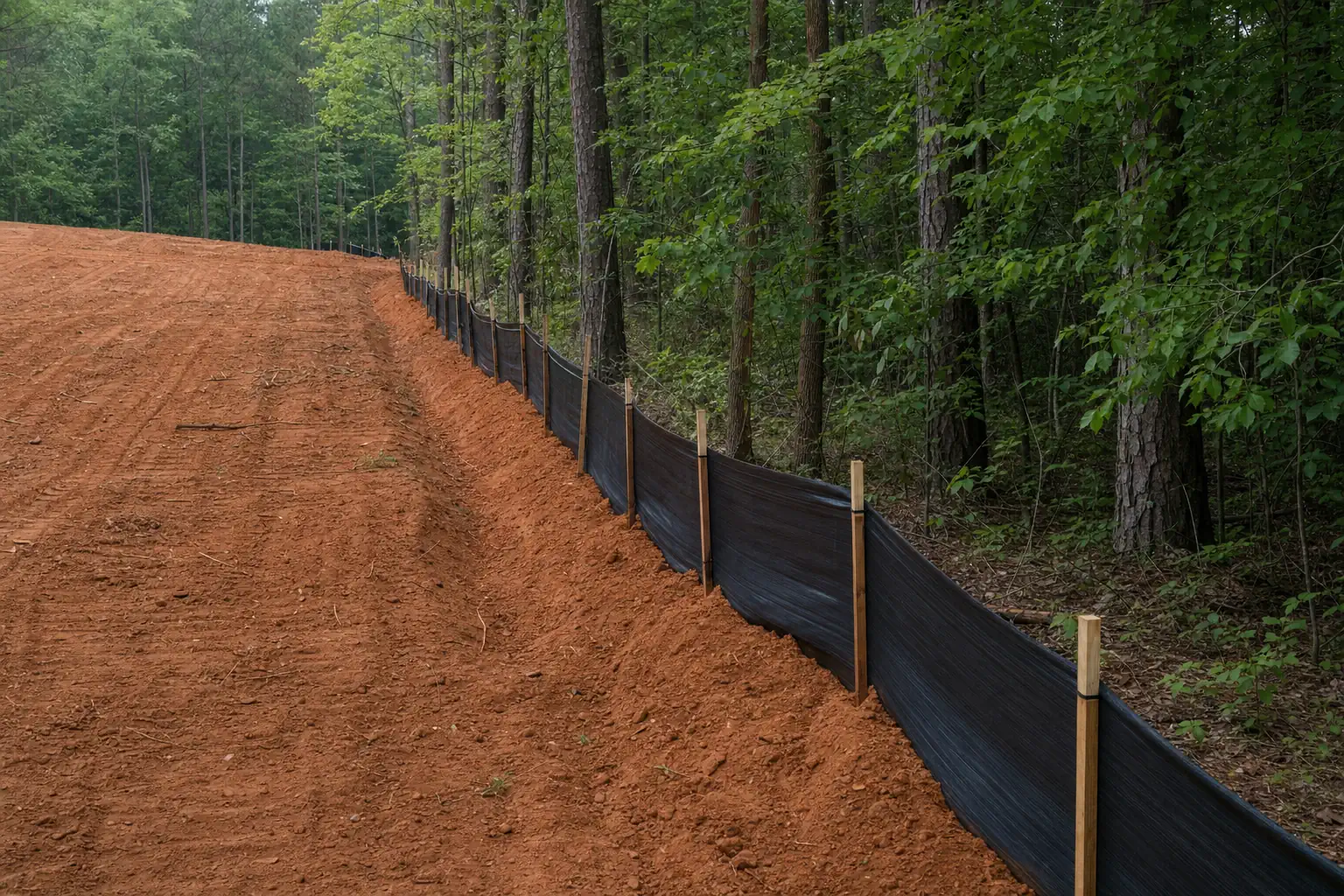
- Bare ground. Burn piles usually come from dozing, which scrapes the topsoil off with the brush and leaves clay for the next rain.
- The neighbors. Smoke drifts into subdivisions, and a fire that escapes on a dry, windy day is yours to answer for.
Fire on dry ground is also a real risk here in a drought year. More on that in wildfire risk in Forsyth County.
Questions for a contractor who plans to burn
If a quote you’re comparing includes burning the debris, ask these before you sign:
- Which permit, and whose name is on it? Machine-cleared debris needs a land-clearing permit for the day of the burn.
- Which months? Anything scheduled between May 1 and September 30 can’t burn in Forsyth County.
- How far is the nearest occupied house? Under 1,000 feet rules out an open burn; under 300 feet rules out an air curtain destructor too.
- What happens to the stumps and the ash? If the answer is hauling, that cost belongs on the quote.
A quote that skips these questions can leave you with a cleared lot and a pile you can’t legally burn for months.
Why we don’t burn
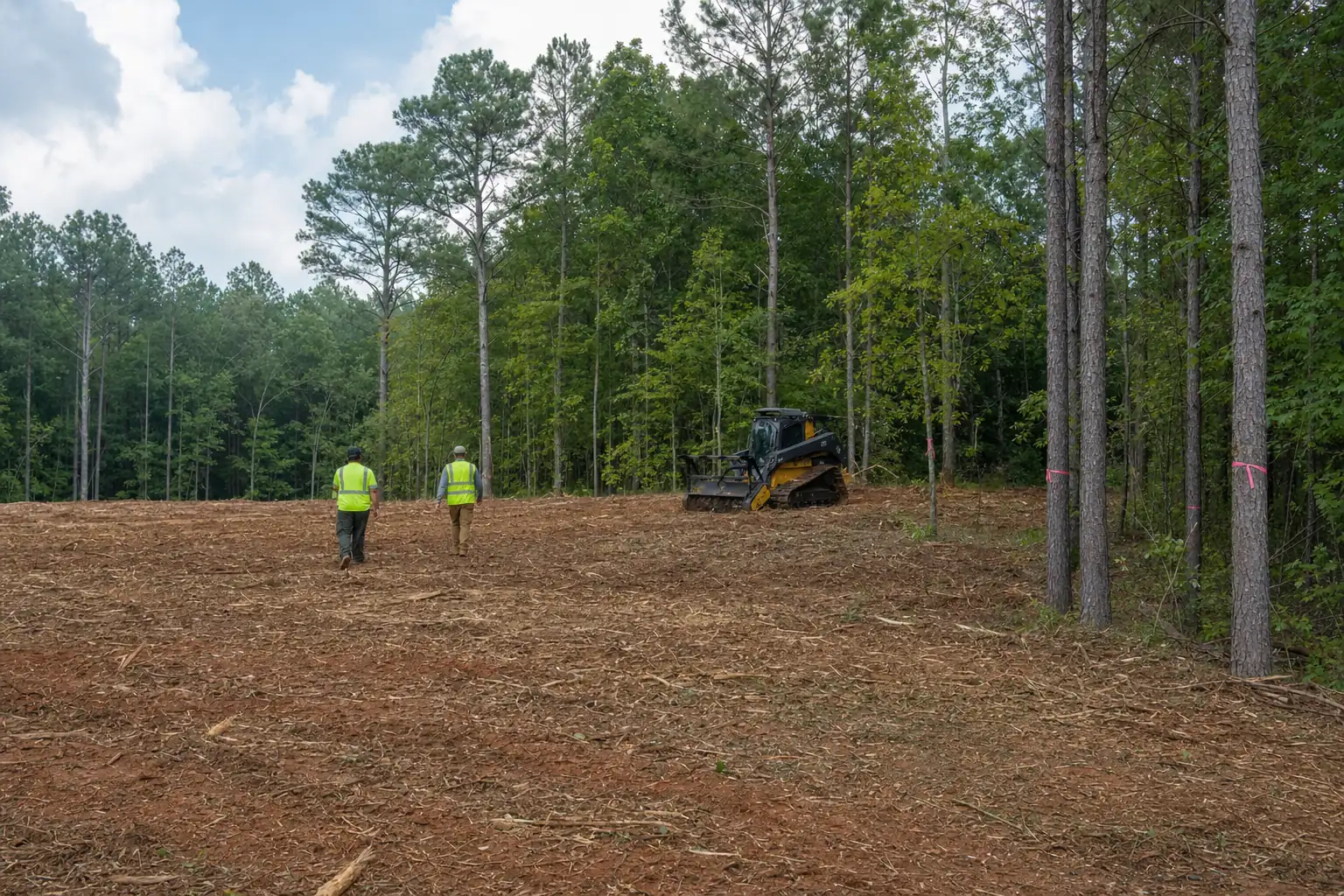
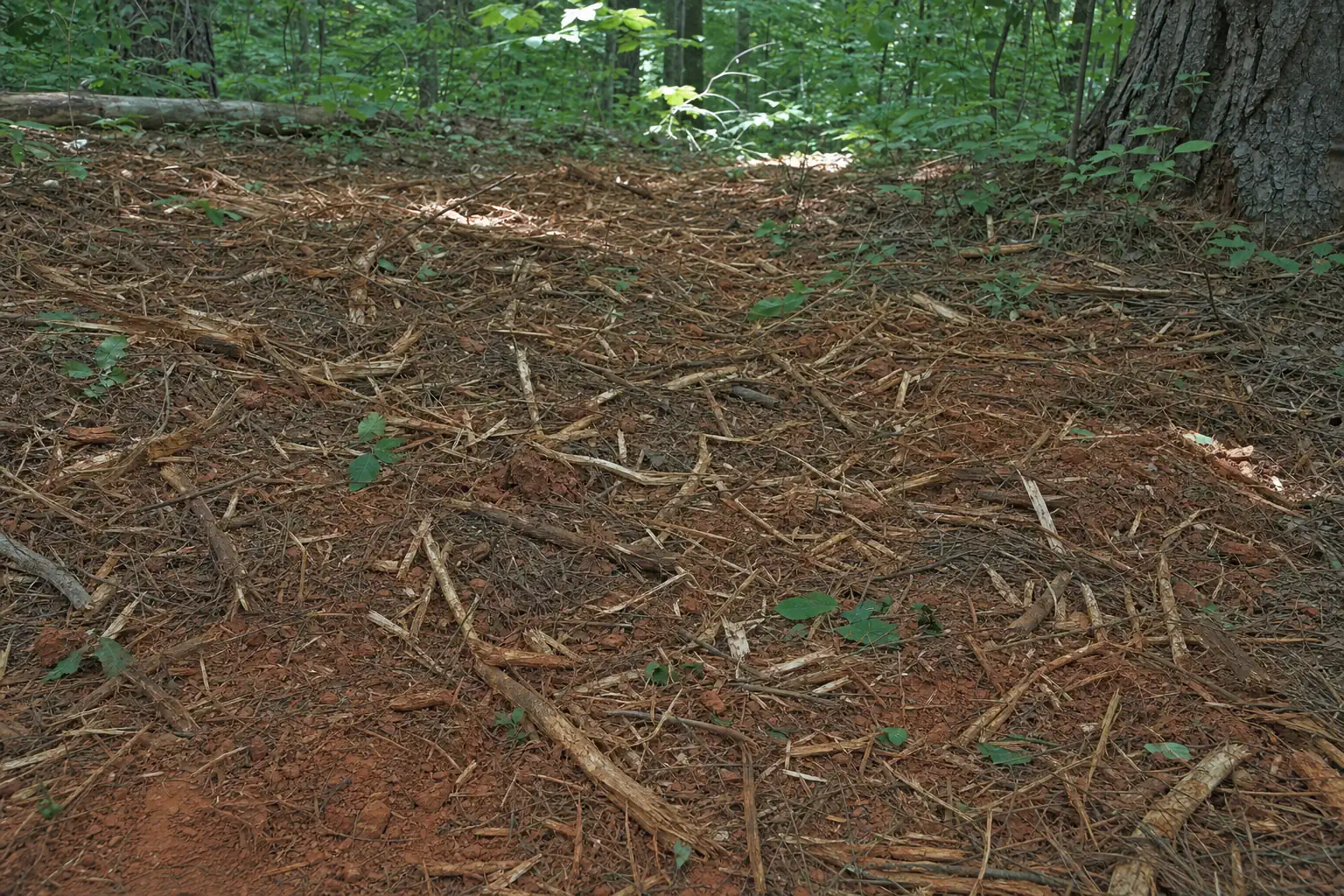
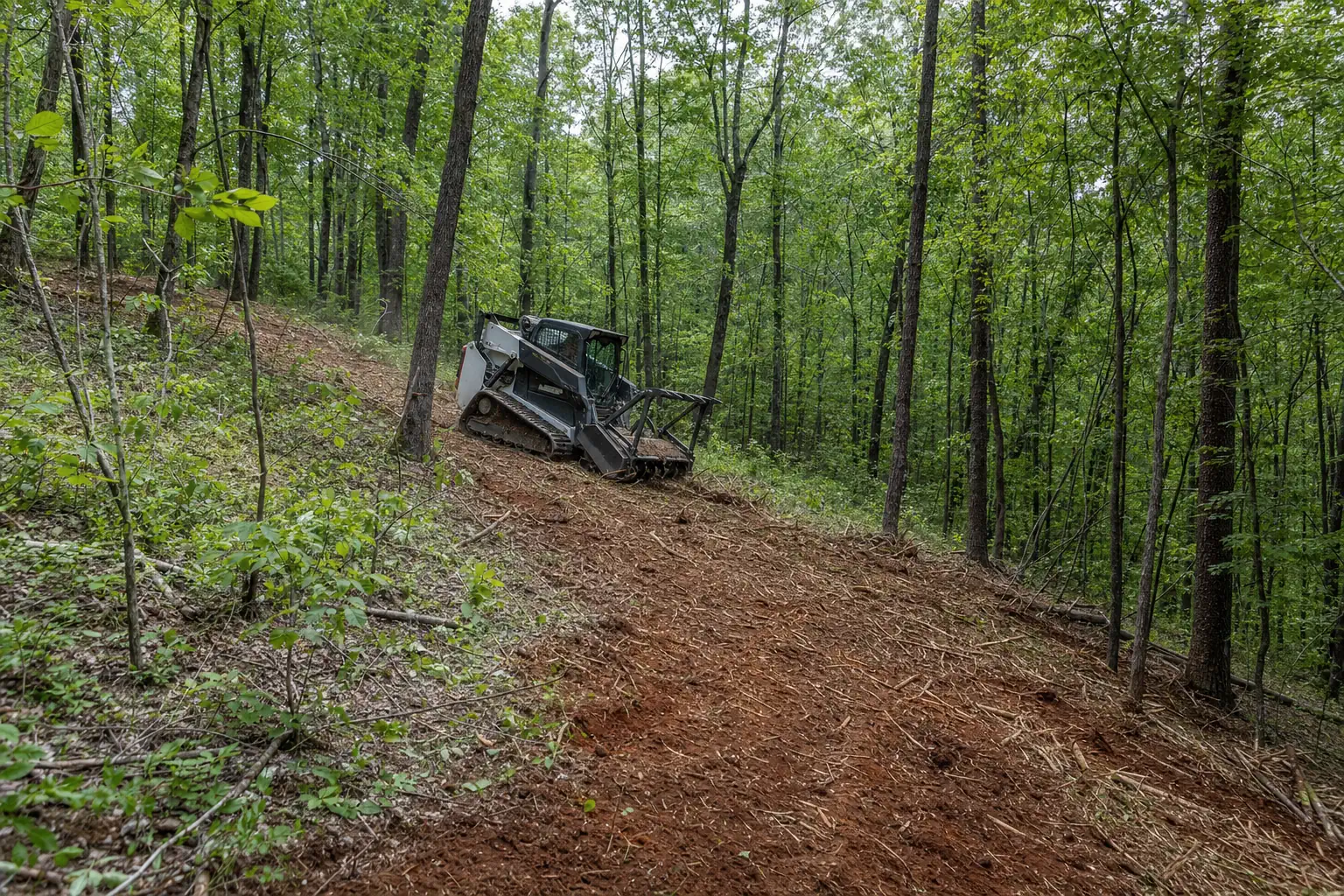
Forestry mulching sidesteps the burn permit, the summer ban, the weather window and the liability. The mulcher grinds brush and trees where they stand and leaves the chips on the ground as a mat over the clay. With no pile to burn, the job can run in any month, and wet ground is what moves the start date.
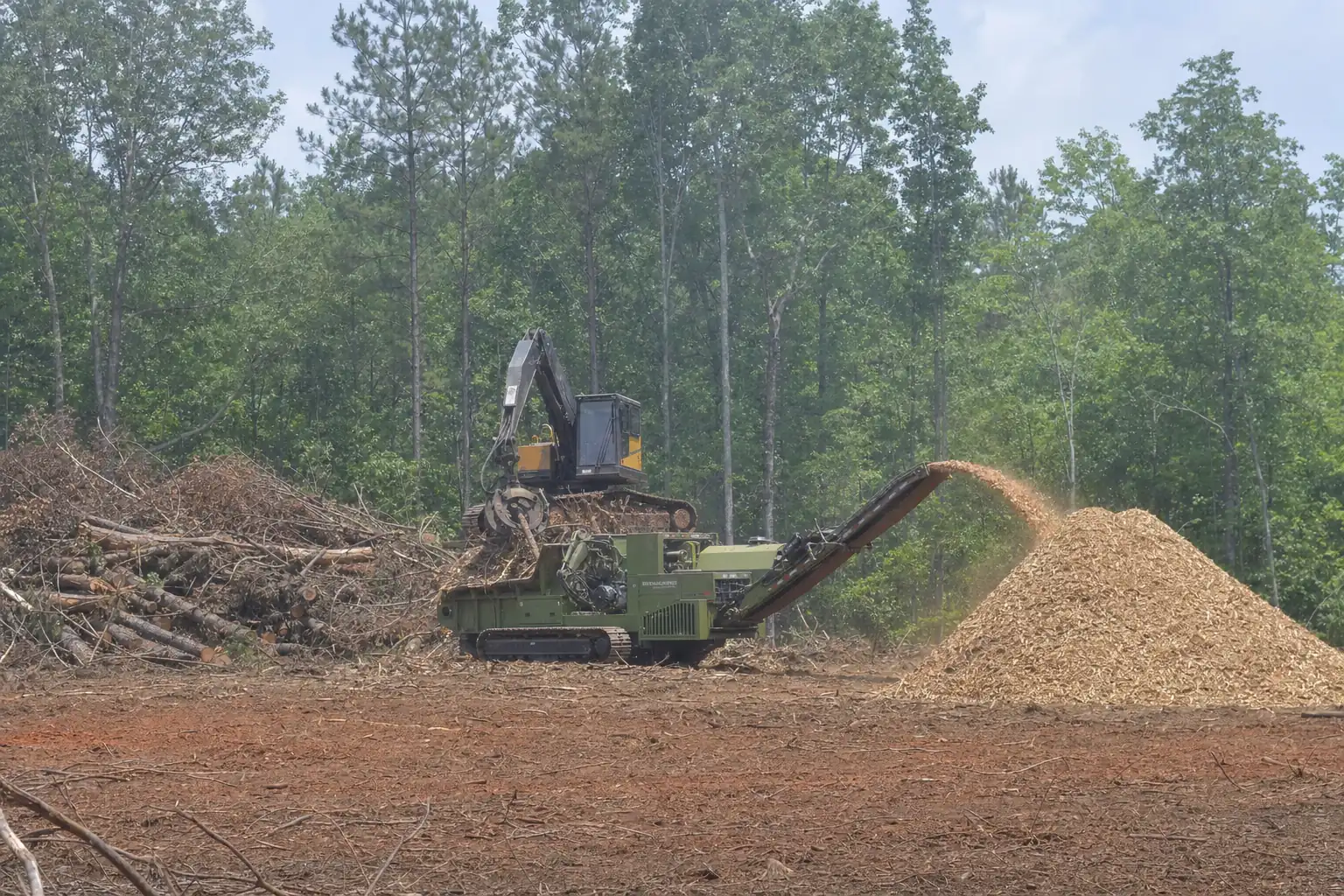
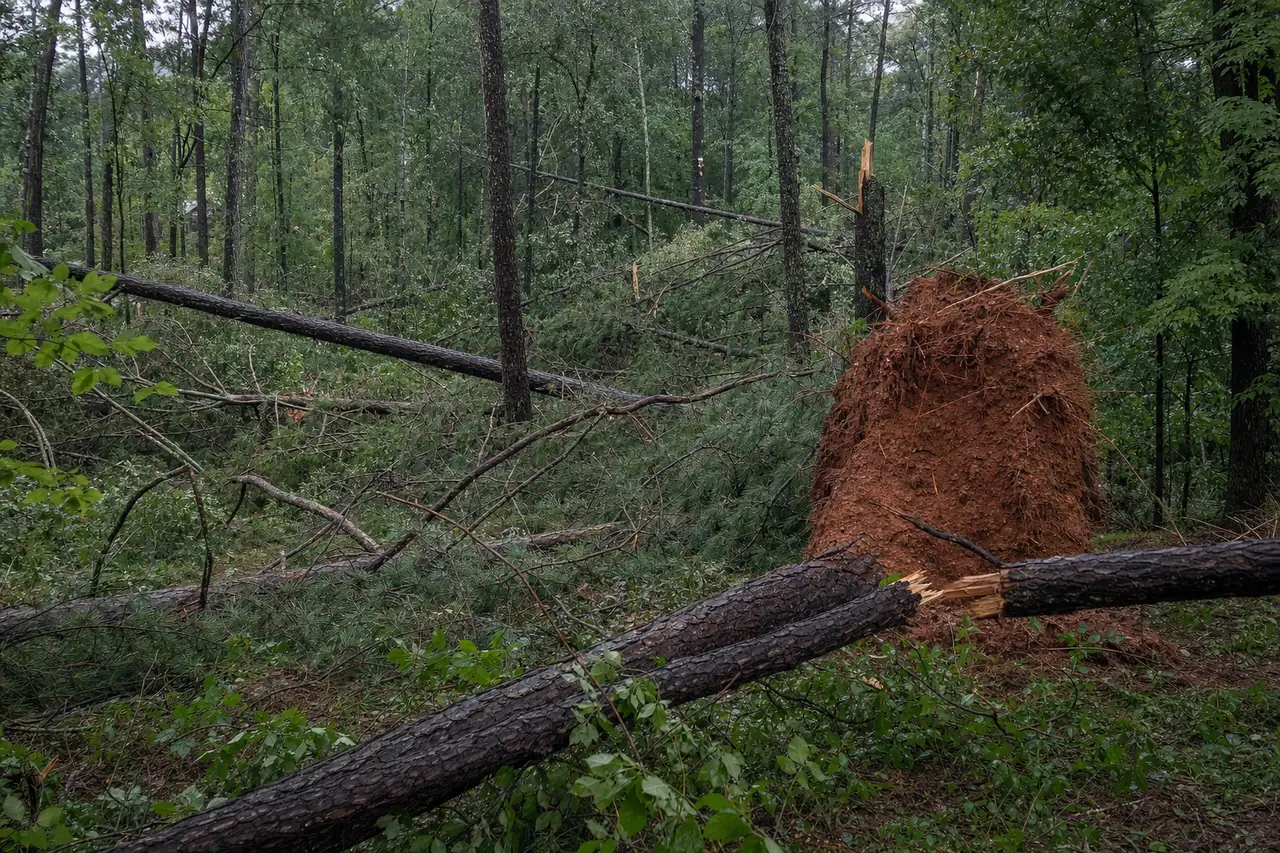
On jobs that leave piles anyway, such as storm-downed timber, an old dozer windrow or debris from stump removal under a pad, a horizontal grinder turns the pile into chips on site. The chips can stay as cover or go out by the truckload. See horizontal grinding.
The summer ban hits some jobs harder than others:
- Food plots. A fall plot should be cleared by July so it can be worked and planted in late August or September. Debris from a July clearing can’t burn until October, after the planting window. See the North Georgia food plot calendar.
- Storm timber. Summer storms drop pines in the middle of the ban. A pile of downed trunks left until October is fuel sitting on the ground all summer. See storm damage cleanup.
- Build schedules. A builder with a summer start can’t wait on a burn window. Mulching and grinding keep the clearing on the builder’s calendar.
A burn pile and a mulched lot, side by side
On a typical wooded lot near Cumming, the two approaches part ways as soon as the trees are down.
| Question | Clear and burn | Mulch in place |
|---|---|---|
| Months the job can finish | October to April, on permit days | Any dry week of the year |
| Permits for the debris | Land-clearing burn permit, one day at a time | None for the debris |
| Distance from neighbors | 1,000 feet, or 300 with an air curtain destructor | No set distance |
| Stumps | Pulled, piled and often hauled | Ground flush where nothing gets built |
| Ground left behind | Scraped clay and ash patches | A chip layer over the topsoil |
Pads and driveways still need stumps out and bare ground, mulched or not. Everywhere else on the lot, the mulch layer is the erosion cover too.
What happens to the debris instead
These are the three ways debris leaves a cleared site with us, and what each costs on our quotes around Cumming.
| Method | What’s left on the ground | Typical cost |
|---|---|---|
| Forestry mulching | A mulch layer, stumps ground flush, topsoil in place | $1,200 to $6,500+ per acre, clearing included |
| Horizontal grinding of piles | Chips spread on site or hauled | Quoted by the pile or the day after the walk |
| Hauling debris away | Bare ground where the debris was | $500 to $2,500 per acre on top of clearing |
Ranges are estimates for Forsyth County and the surrounding area based on job density, terrain, access and acreage. Your written quote is the only price that applies to your property.
The full comparison is in forestry mulching compared with burning and what happens to all the debris.
If you’re burning your own yard debris
Plenty of landowners still burn leaves and limbs from their own yard in the winter. If that’s you, the rules are short:
- Check the season. Nothing between May 1 and September 30.
- Check the county. Forsyth County Fire handles outdoor burning permits from October through April, and runs a burn-day line for the day’s status.
- Check for a drought ban. The Forestry Commission or the county can close burning on short notice.
- Keep it to hand piles. Anything a machine cleared or piled falls under the land-clearing rules.
A clearing job of any size belongs in the last category, which is why we take burning out of the plan from the start.
How we handle debris on a clearing job
- 1Walk the landWe look at what's growing, what's already piled and where it can go.
- 2Mulch in placeStanding brush and trees ground to chips where they stand.
- 3Grind the pilesOld windrows, storm timber and stump piles go through the grinder.
- 4Leave cover or haulChips stay on the clay, or go out by the load if the site needs it bare.
 Forestry Mulching in Cumming and Forsyth CountyHorizontal Grinding for Debris Piles and Storm Timber
 Storm Damage Cleanup and Downed Timber Removal
Mulched ground grows back. Brush and sprouts return within a season or two unless the land gets used or mowed, so budget for maintenance mowing. The other rules that touch a clearing job here, from permits to creek buffers, are on the erosion control and permits page.