Fire guide · 9 min read
Wildfire Risk at the Wooded Edge of Forsyth County
In Forsyth County the wildfire risk sits where back yards meet the woods: county fire officials name brush fires at that edge as the main local concern, and a 2007 fire burned 9 acres on Sawnee Mountain near homes. This guide covers how fire moves through North Georgia woods and the work that cuts the fuel.
Why the wooded edge is the risk here
Forsyth County grew faster than any county in Georgia through the 2010s, and much of that growth went into subdivisions and acreage homes cut into the woods. About 100,000 people live on unincorporated land with Cumming addresses. A lot of them have a back yard that ends at a wall of privet, pine and hardwood that nobody has worked in decades.
That edge is where the county’s fire officials put their attention. They name brush fires where the woods meet the houses as the main local concern, more than large forest fires. Sawnee Mountain has already shown what that looks like: a 2007 brush fire burned 9 acres on its eastern slope, near homes.
Fire at the edge of Forsyth County
- 9 acres
- Burned by a 2007 brush fire on Sawnee Mountain's eastern slope, near homes
- About 100,000
- People on unincorporated land with Cumming addresses
- May 1 to Sep 30
- No land-clearing burns in Forsyth County
- Apr 24, 2026
- County burn ban issued during a dry spell
Permit thresholds, fees and buffer widths are those published by Forsyth County and the State of Georgia as of November 4, 2026. Confirm current requirements with the issuing authority before work begins. This is not legal advice.
North Georgia gets roughly 50 to 55 inches of rain a year, and the woods stay green most of it. Dry spells still come, and the county can call a burn ban during one. A ground fire on a dry, windy afternoon can run through leaf litter and privet into a back yard faster than a fire truck reaches the end of a long gravel drive.
How fire moves through North Georgia woods
Most fires at the wooded edge start on the ground and move by what’s in front of them. Fire crews think about fuel in three layers:
- Ground fuel. Dry leaves, pine straw, dead limbs, brush piles. This is what carries a fire across the woods floor.
- Ladder fuel. Privet, vines, small trees and low dead limbs that connect the ground to the canopy. A fire climbs them the way you’d climb a ladder.
- Crowns. The tops of the trees. A fire that reaches them throws embers and is far harder to stop.
Two things around here speed a fire up. Slope is the first: fire runs uphill faster than it moves on flat ground, because the flames preheat the fuel above them. A house at the top of a wooded Piedmont ridge, or on the flank of Sawnee Mountain, sits above its fuel. Wind is the second: it pushes flames into the next patch of fuel and carries embers ahead of the fire.
The useful point for a landowner is that you can’t change the slope or the weather, but you can change the fuel. Cutting out the ladder layer and breaking up the ground layer near the house is most of what wildfire work on private land comes down to.
What the fuel looks like on a typical tract
Walk the edge of most wooded lots in Forsyth County and you’ll find some mix of these:
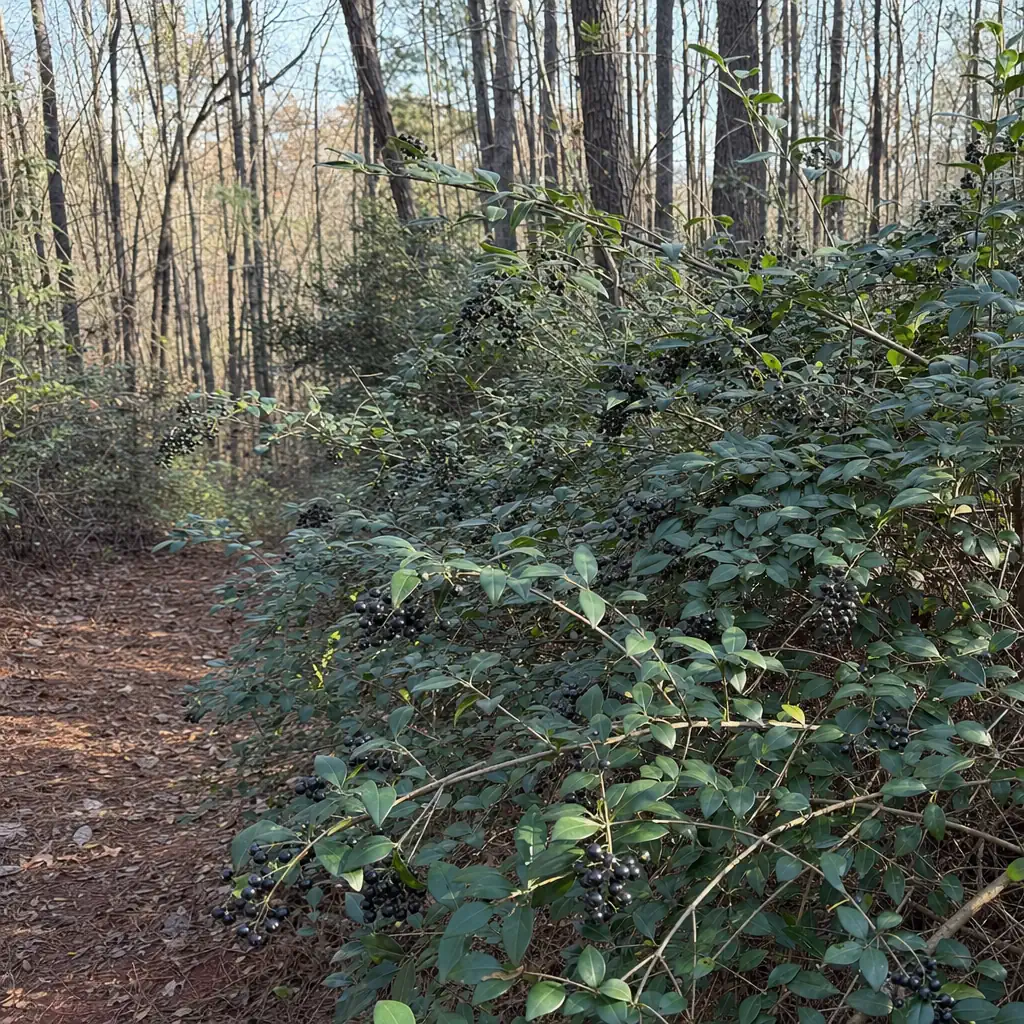
- Privet thickets. Chinese privet grows into a dense wall under the trees, keeps leaves through much of the winter and fills the ladder layer from the ground up.
- Vines in the trees. Kudzu, honeysuckle, wisteria and greenbrier climb into the canopy. Dead kudzu in winter is dry fuel draped over everything it covers.
- Pine straw and leaf litter. Years of it, deep against fences, sheds and the back of the house.
- Brush piles. Old piles from a past clearing job or storm cleanup, dry and loose.
- Dead pines. Standing dead trees from a southern pine beetle spot or a storm, dry and ready to drop embers. See signs of southern pine beetle.
Three zones, three kinds of work
Think about your property in three bands moving out from the house. Each one gets a different kind of work, and only the outer two need a machine.
| Zone | What to do | Who usually does it |
|---|---|---|
| Around the house | Clear gutters, move pine straw beds and firewood away from walls, keep the yard mowed | You |
| Where the yard meets the woods | Mulch the privet, vines and small trees; keep the big trees; break up brush piles | A mulching crew |
| The woods beyond | Firebreaks around the timber, thinning crowded pines, prescribed fire where a forester plans it | A crew working to a forester’s plan |
Most homeowners on an acre or two only need the first two zones. Larger tracts with timber need all three, and that’s where a consulting forester earns a place.
Underbrushing the edge behind the house
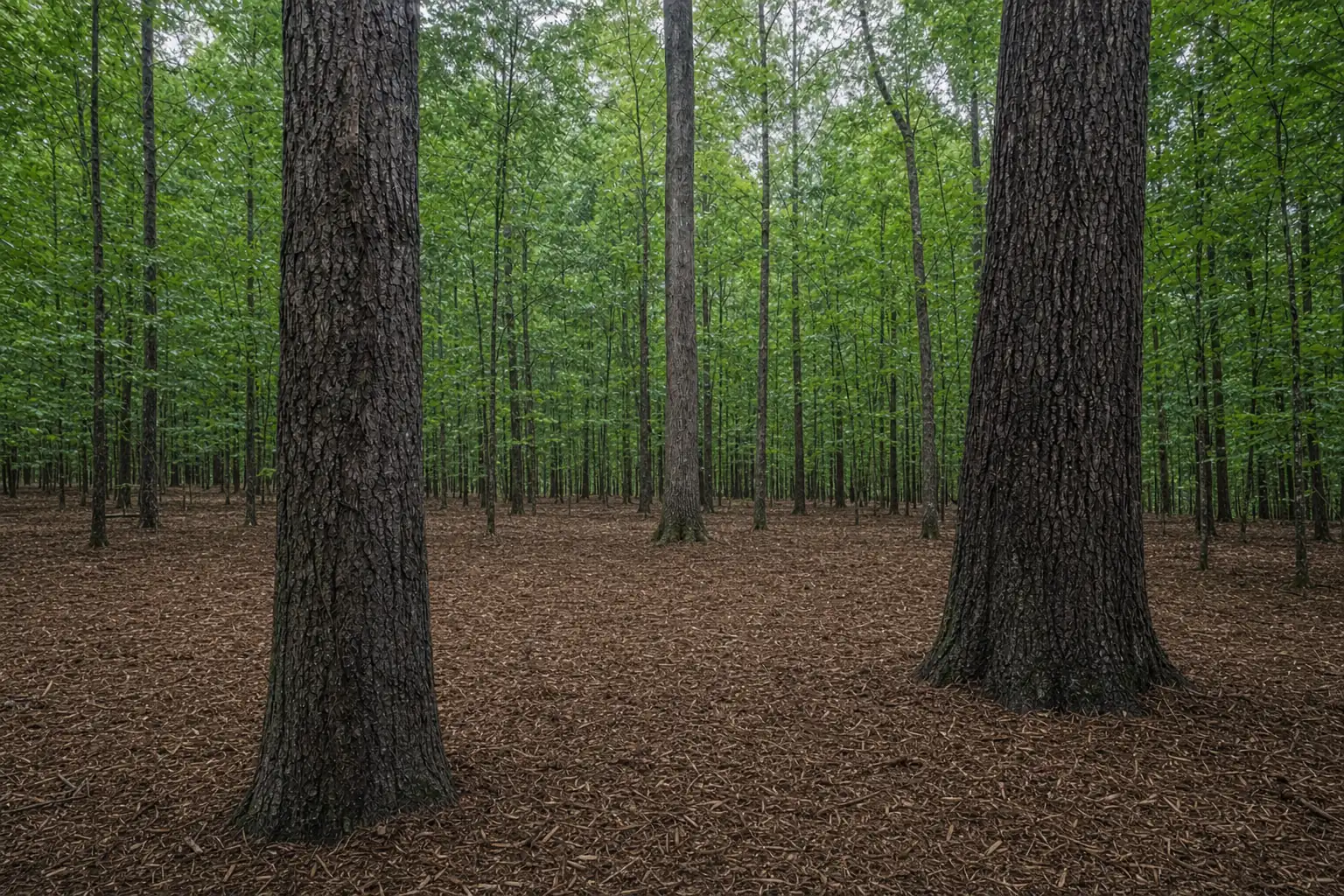
The main job at the wooded edge is underbrush clearing. A forestry mulcher grinds the privet, vines, saplings and small trees under the canopy where they stand, and leaves the big oaks and pines alone. You end up with open woods you can see through, with the ladder fuel gone and the canopy intact.
We flag the trees you keep on the walk. Then we cut the brush back from the yard edge, take out the small trees that crowd the big ones, and break up old brush piles. Low dead limbs on the keepers can come off too.
A word on the mulch itself. Mulch still burns. A thin layer of chips on the woods floor carries a much smaller fire than the privet it replaced, and it holds the red clay through the first rains. Close to the house, keep the chip layer thin, and keep mulch beds away from the walls. The chips break down over a few seasons.
Firebreaks on larger tracts
On five acres and up, or on any tract with a pine stand, a firebreak gives a fire somewhere to stop and gives the fire department somewhere to work from. There are two kinds:
- Bare-soil lines. Bladed or disked down to mineral soil, so a ground fire has nothing to carry it across. Stand perimeters and prescribed burn units get these.
- Green lines. Mowed or mulched low, with the soil left covered. They slow a fire by cutting the fuel, and they suit the house edge and slopes where bare red clay would wash.
Every line on a slope needs water bars, angled berms that turn rain off into the woods, or the first summer storm cuts a gully down it. More on widths in how wide a firebreak should be, and on the work itself in firebreak installation. Federal EQIP lists Firebreak among Georgia’s forestry practices for forest land; the cost-share guide explains how those programs work.
Program figures and sign-up windows are set annually and are current as of November 4, 2026. We confirm every figure with the Georgia Forestry Commission or NRCS before any application. This page explains how programs work; it is not a guarantee of eligibility or reimbursement.
The drive, the ridge and the fire truck
Fuel is half the problem on a wooded acreage home. Access is the other half. Many homes around Cumming, up toward Hightower and Matt, and along the ridges off Sawnee Mountain sit at the end of a long gravel drive through the woods. When a brush fire starts, the fire department has to get a truck down that drive and turn it around.
- Brush along the drive. Privet and saplings creep in from both sides until the drive is a tunnel. A truck that scrapes through brush on the way in has fuel on both sides on the way out.
- Limbs over the drive. Low limbs that clear a pickup can stop a fire truck.
- A place to turn. A cleared, firm spot near the house where a large vehicle can turn around.
- A gate wide enough. A gate sized for a car slows down anything bigger.
We widen and open up wooded drives as access road and driveway clearing, often on the same trip as the edge work behind the house. A drive cleared wide on a slope needs its ditches and water bars kept working, so the red clay doesn’t wash into the gravel.
Brush piles, burning and the county rules
The old way to clean up a wooded edge was to push the brush into a pile and burn it. Around here that is a poor fit for fire risk and for the rules:
- The summer ban. Georgia bans land-clearing burns in Forsyth County from May 1 to September 30. Prescribed forestry burns are exempt.
- The rest of the year. Outdoor burning runs October to April with a permit from Forsyth County Fire before any open burn, and the county can call a burn ban in a dry spell.
- Machine-piled debris. The Georgia Forestry Commission’s hand-piled permit doesn’t cover debris from machine clearing. That falls under the state’s land-clearing burn rules and may require an air curtain destructor.
Permit thresholds, fees and buffer widths are those published by Forsyth County and the State of Georgia as of November 4, 2026. Confirm current requirements with the issuing authority before work begins. This is not legal advice.
We don’t burn. The brush gets mulched in place, so there’s no pile left at the woods edge to dry out and wait for a spark. See mulching compared with burning and burn permits for land clearing.
Two other rules come up at the wooded edge. Forsyth County’s tree ordinance exempts a homeowner removing trees on their own property outside the required zoning buffer. And work near a creek runs into stream buffers: 25 feet under state law, and a 50-foot undisturbed buffer plus a 25-foot setback under the county’s rules. We mark both on the walk.
Keeping the edge clean
An underbrushed edge grows back. Privet, sweetgum, red maple and greenbrier sprout from the roots the spring after mulching, and within a few seasons the ladder layer is filling in again. Two things hold it:
- Mowing. Once or twice a year along the yard edge and on green firebreaks keeps sprouts short. That’s bush hogging and maintenance mowing.
- Herbicide on privet. Privet comes back from the roots after mulching. A follow-up treatment on the sprouts, done by licensed applicators per the label, is what keeps it gone. See Chinese privet removal.
Herbicide applications are performed by licensed applicators in accordance with the product label.
What edge work costs
Underbrushing the wooded edge is light-band mulching on most lots: privet, vines and saplings with the big trees kept. Firebreaks and odd-shaped edges often go by machine time.
| Work | Range |
|---|---|
| Light brush, privet, saplings | $1,200 to $2,500 per acre |
| Mixed growth, trees 4 to 8 inches | $2,500 to $4,000 per acre |
| Mulcher with operator | $150 to $300 an hour |
| Small jobs | $1,200 to $2,000 minimum |
Ranges are estimates for Forsyth County and the surrounding area based on job density, terrain, access and acreage. Your written quote is the only price that applies to your property.
Most edge jobs behind a house are a half acre to a couple of acres, so the small-job minimum often applies. The hunting and timber land page covers firebreak and stand work on larger tracts.
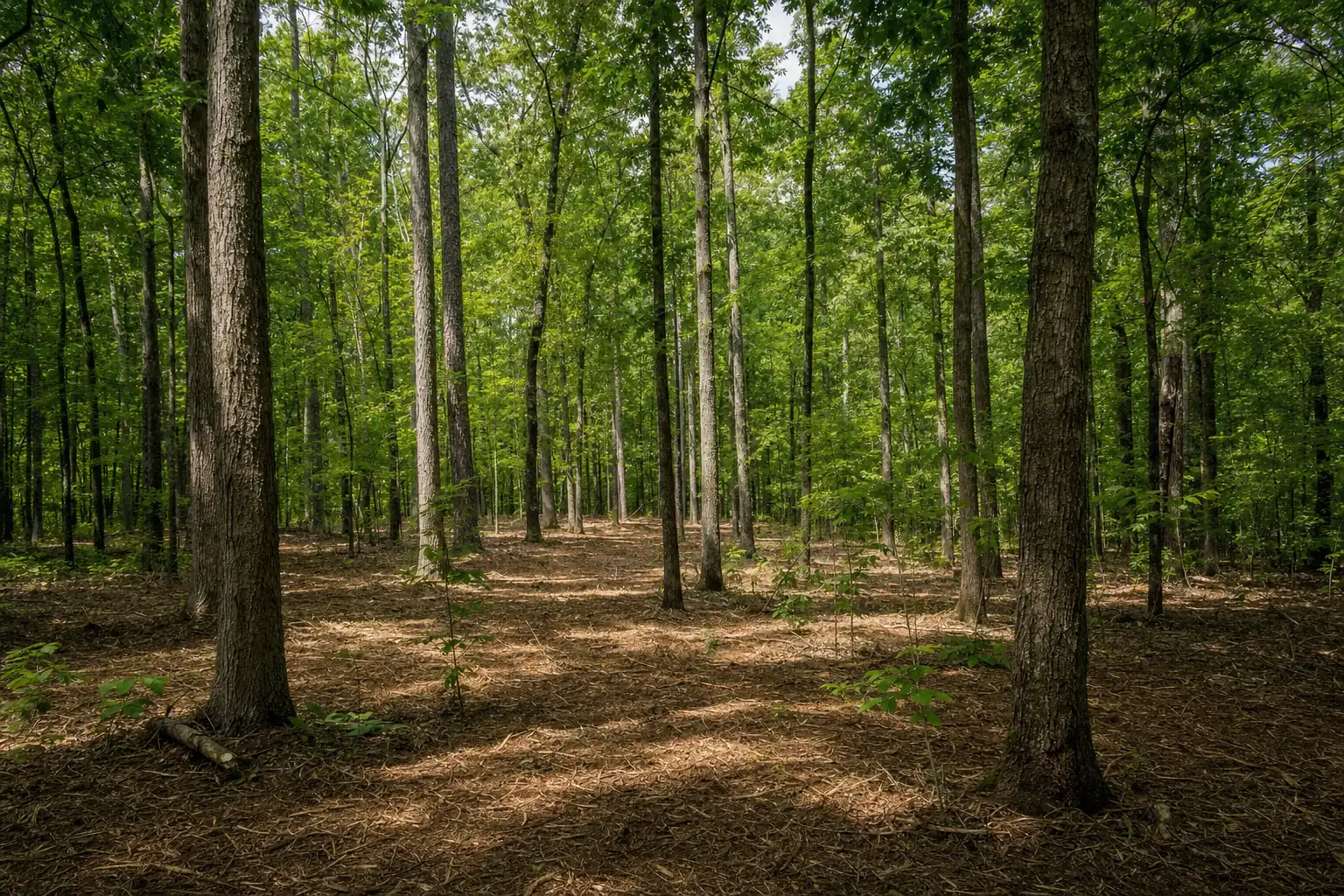
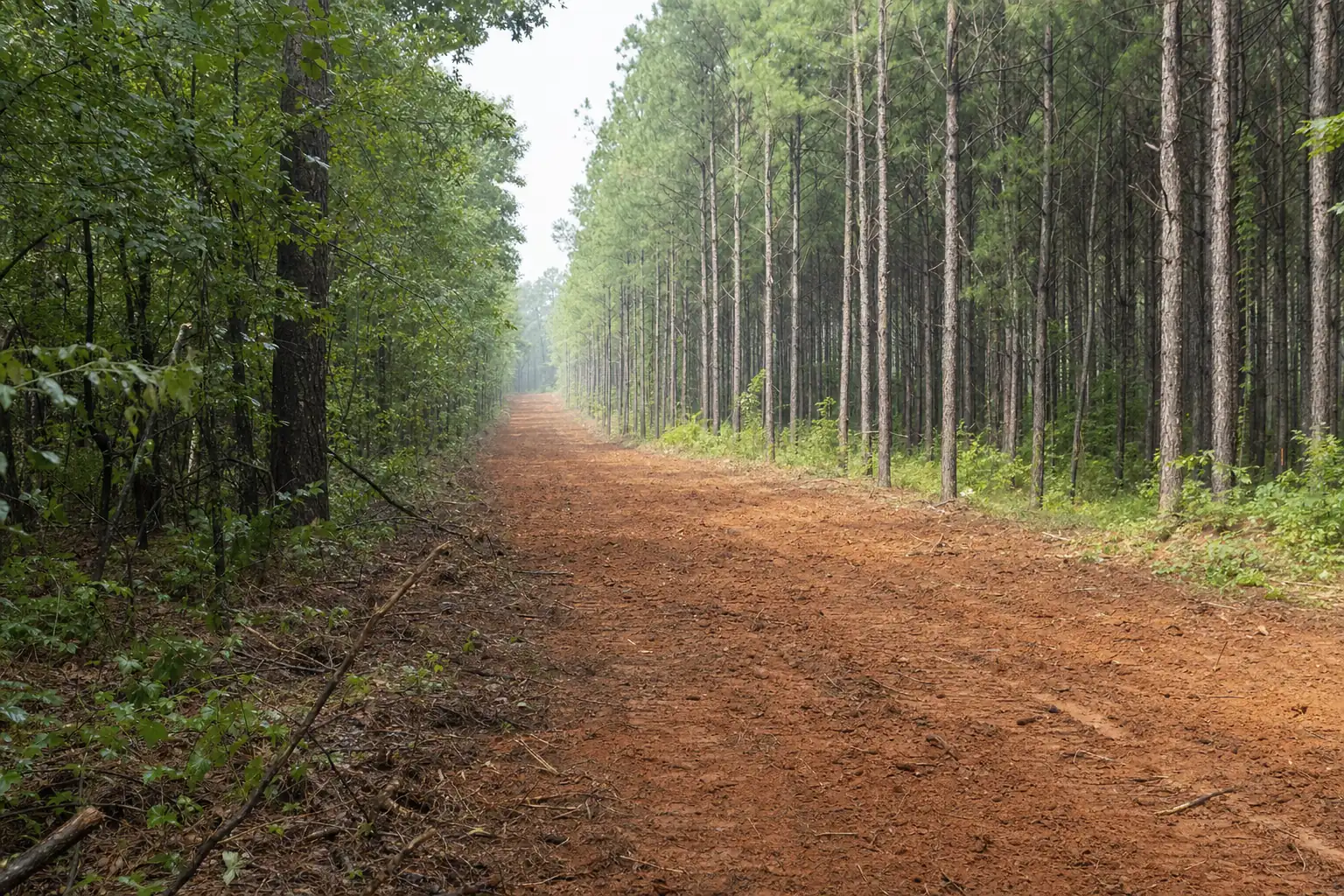
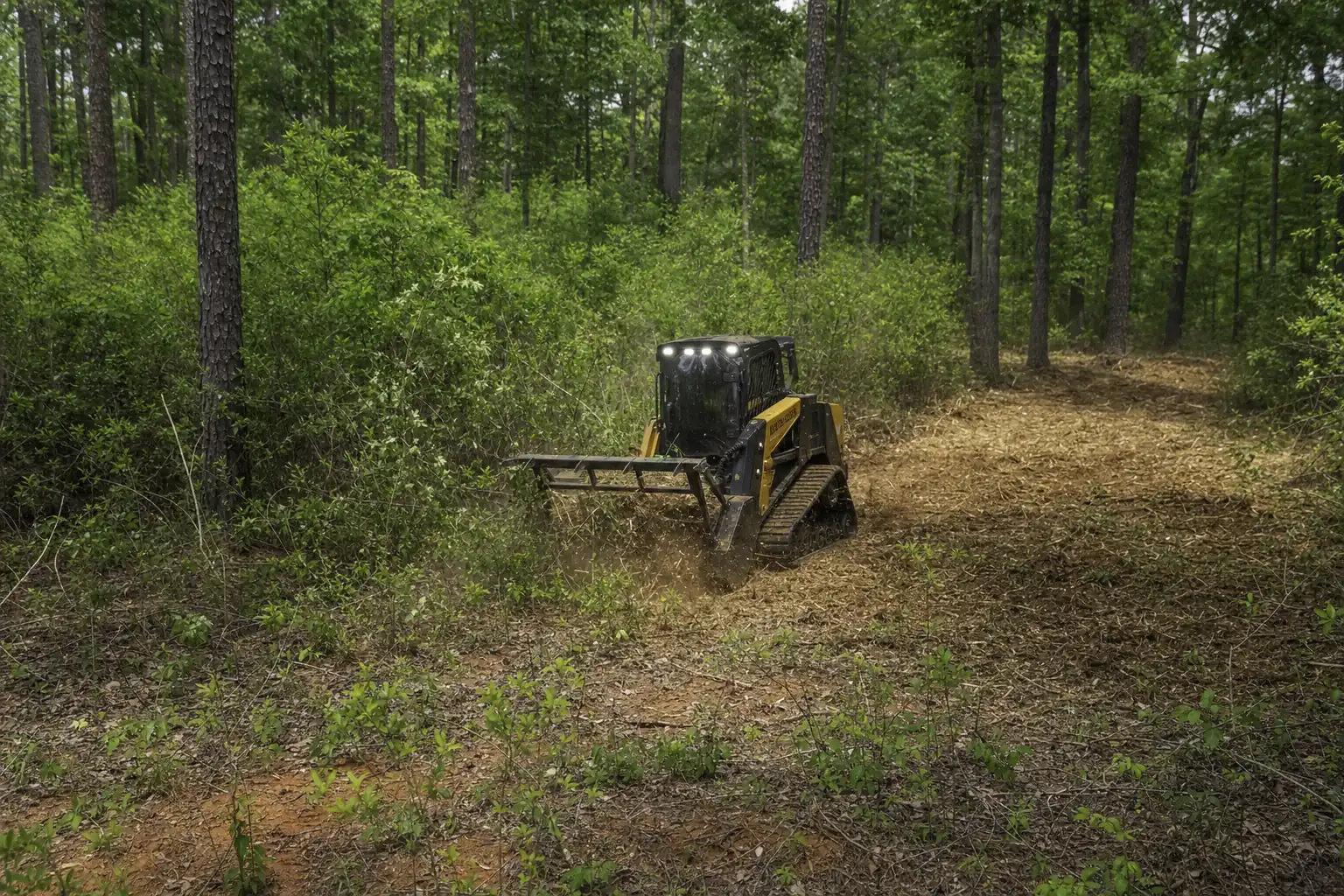
- 1Send photosThe woods line behind the house and the address.
- 2Walk and flagKeeper trees, brush piles, slope, creeks and where a line should go.
- 3Mulch the edgePrivet, vines and small trees ground in place, nothing burned.
- 4Keep it openMowing and privet follow-up on a schedule you choose.