
Comparison guide · 8 min read
Forestry Mulching Compared With Burning
Forsyth County bans land-clearing burns from May 1 to September 30. The rest of the year a burn needs a county fire permit and has to sit at least 1,000 feet from occupied buildings. Forestry mulching needs no burn permit and runs in any dry week. This guide compares the two on rules, ground, risk and cost.
The burn rules in Forsyth County
For a long time, clearing land in North Georgia meant a dozer, a pile and a match. The rules have tightened since. Forsyth County is one of 54 Georgia counties under the state’s summer open burning ban, and the county and the state both put conditions on burning in the months it is allowed.
Burning land-clearing debris in Forsyth County
- May 1 to Sep 30
- No land-clearing burns, with or without an air curtain burner
- Oct to Apr
- Outdoor burning season, with a county fire permit first
- 1,000 ft
- Gap a land-clearing burn must keep from occupied buildings
- 300 ft
- Gap between an air curtain burner and any occupied building or public road
Permit thresholds, fees and buffer widths are those published by Forsyth County and the State of Georgia as of November 4, 2026. Confirm current requirements with the issuing authority before work begins. This is not legal advice.
The summer ban runs through ozone season. It stops yard debris and land-clearing burns. Agricultural burning and prescribed burning in the woods are separate and have their own rules. In the October to April season, Forsyth County Fire issues the permit, and you check the burn-day line before you light anything. During a drought the county or the Georgia Forestry Commission can shut burning down entirely;
The burn permit guide has the full rules and who to call.
Hand piles and machine piles are different burns
Georgia treats a pile of yard brush you raked up by hand differently from a pile a machine pushed together. A hand-piled burn of natural vegetation no longer needs a state permit. Debris from machine clearing falls under the state’s land-clearing burn rules, and those are stricter:
- Distance. At least 1,000 feet from any occupied building, which rules out most lots around Cumming.
- Pile size. One pile, no bigger than 60 by 60 feet, for each 9-acre area.
- Air curtain burners. Closer burns need an air curtain destructor, a burner box or pit with a fan blowing a curtain of air over the fire. It still has to sit 300 feet from occupied buildings and public roads, only one is allowed per 10 acres, and it can only take wood that is fairly free of soil.
- Hours. An air curtain burn starts after 10 a.m. and has to be out an hour before sunset.
- Permits by the day. Georgia Forestry Commission permits for land-clearing burns are good for the day they are issued.
What 1,000 feet means on a real lot
An acre is about 208 feet on a side. A thousand feet is close to five of those lengths, and the distance counts from any occupied building, including the neighbor’s. On a five-acre lot in a subdivision off the 400 corridor, there is usually no spot that far from every house. Even on a 20-acre tract out toward Matt or Hightower, a house on the next road over can rule out the open pile.
That leaves three choices: rent an air curtain burner and meet its rules, haul the debris away, or don’t make a pile in the first place.
What a burn job takes on the ground
A burn pile starts with a dozer. The machine pushes trees, stumps and brush into windrows, and it takes clay with them. Stumps balled in red clay burn poorly, which is why the state limits air curtain burners to wood that is fairly free of soil. The ground under the push area ends up bare, and the ground under the pile ends up as a patch of baked soil and ash.
Then the job waits. The pile sits until the season opens, the permit is in hand, the wind is right and there is no drought ban. In Forsyth County, a lot cleared in May can hold its pile until October. A pile that doesn’t burn clean gets pushed together and lit again, and whatever is left gets hauled anyway.
The dozer side of that job is covered in mulching compared with bulldozing.
What mulching does instead
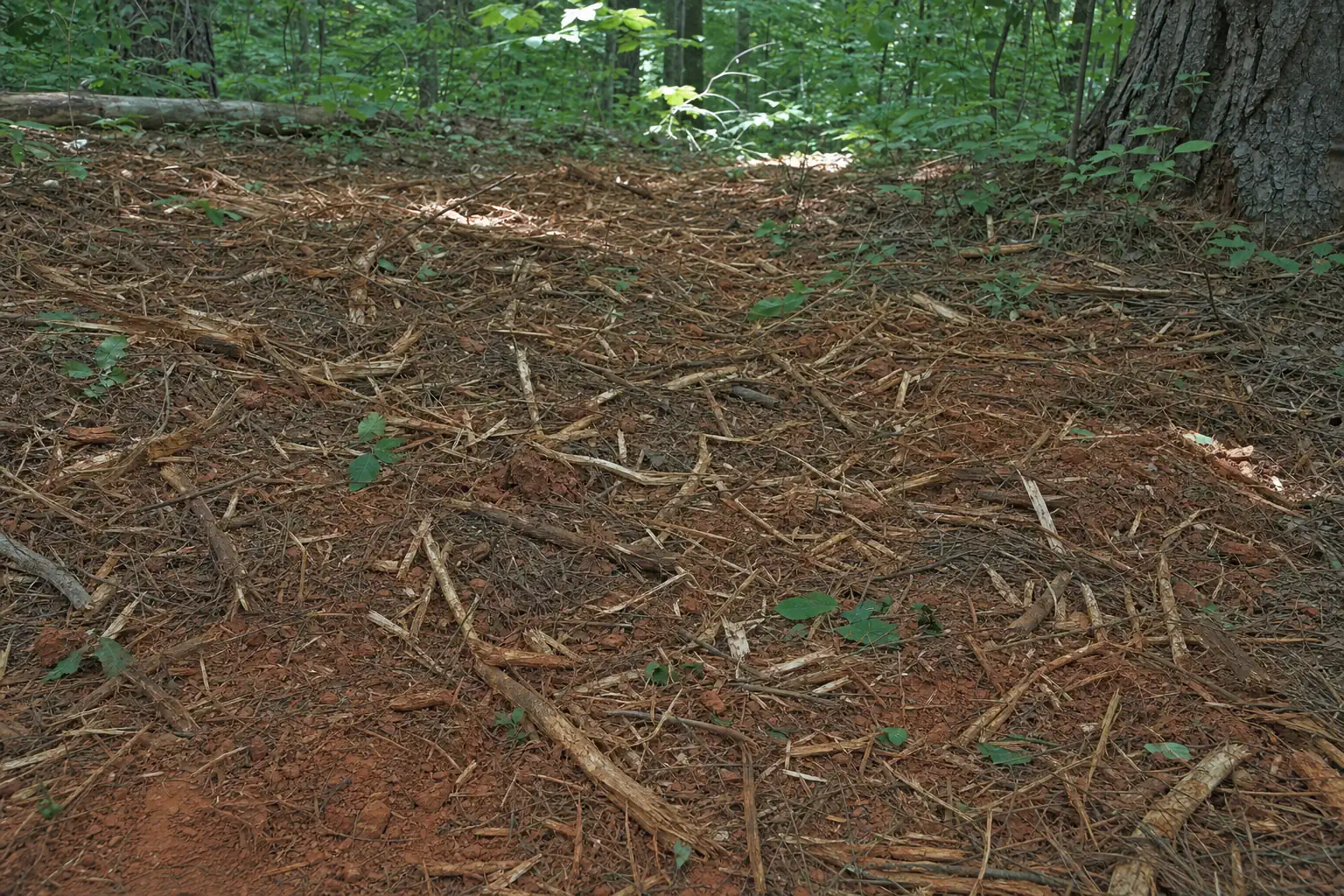
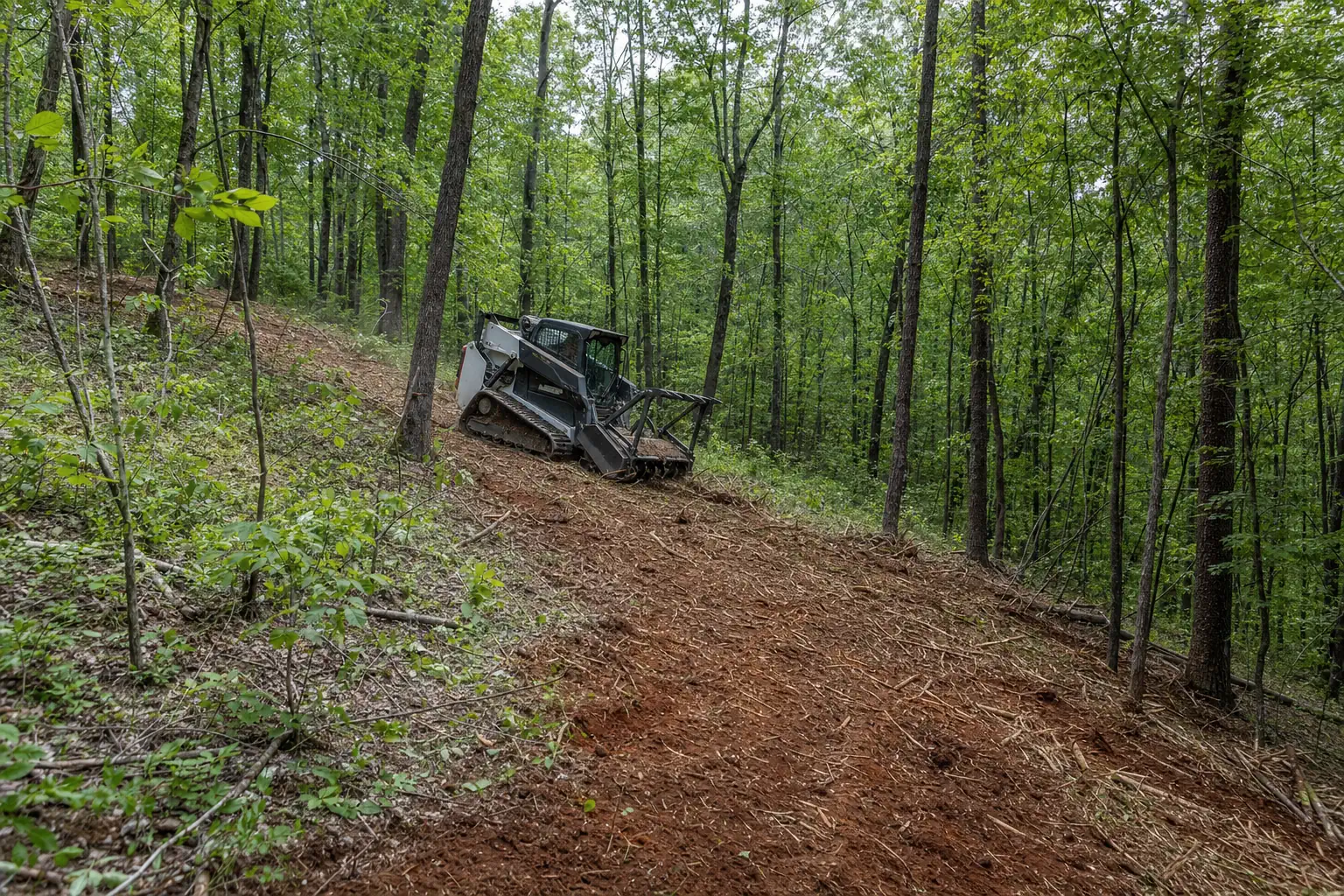
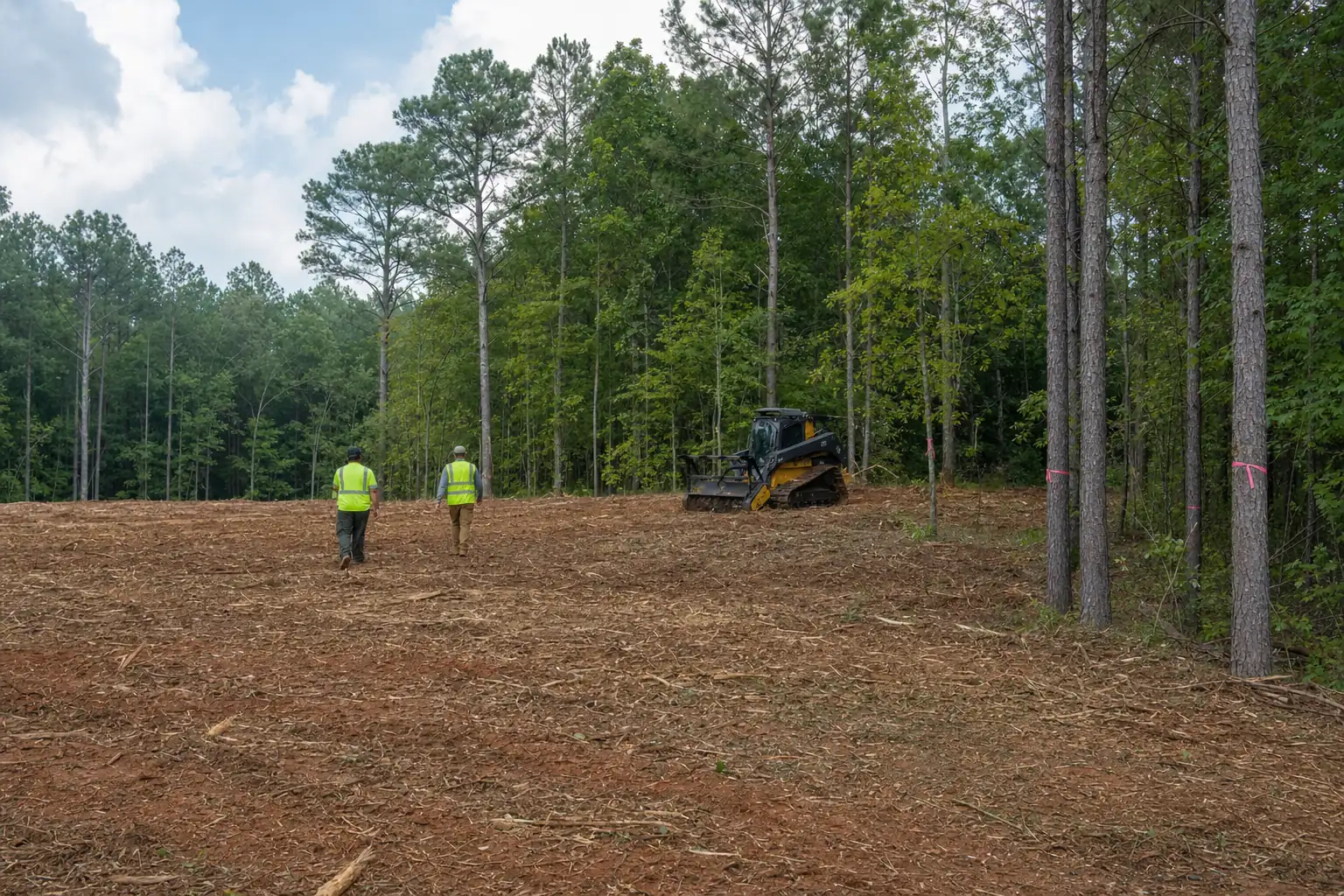
A forestry mulcher grinds brush and trees up to about 8 inches where they stand and spreads the chips across the ground. Nothing gets piled, so nothing needs a burn permit, a burn day or a fire watch. The calendar question becomes whether the clay is dry enough for a tracked machine, not whether the county allows burning that month.
The chips cover the soil, soak up rain and slow runoff on slope while the ground settles. They break down over a few seasons. Trees past 8 to 10 inches get felled and worked on the ground, or kept. On larger jobs with heavy timber, the trunks can go through a horizontal grinder and come out as chips on the same ground, so the job still ends with no pile. More on the machine in how a forestry mulcher works.
A year of clearing, burn or mulch
| Months | Burning land-clearing debris | Forestry mulching |
|---|---|---|
| October to April | Allowed with a county permit, on burn days, with the distance rules | Runs on dry weeks; leaf-off shows rock, old fence and junk |
| May 1 to September 30 | Banned, air curtain burner or not | Runs on dry ground |
| Drought bans | Shut down until lifted | Runs; dry clay is the best working ground |
| Wet weeks | Piles too wet to burn clean | Waits; we don’t run tracks on soaked clay |
Winter is the easier mulching season around here because of leaf-off and cooler working days, but a dry summer week works too. For a builder with a closing date or a hunter who needs plots open by late summer, that difference decides the schedule. See the best time of year to clear land.
Side by side
| Forestry mulching | Dozer, pile and burn | |
|---|---|---|
| Burn permit | None | County permit; state rules for machine piles |
| Months it can run | Any dry week | October to April, burn days only |
| Ground left | Mulch cover, topsoil in place | Bare push area, ash patch under the pile |
| Stumps | Ground to grade | Pulled and piled, often burn poorly |
| Smoke | None | On every burn day, close to neighbors |
| Escape risk | None from debris | A pile that can get away in wind |
| Per acre | $1,200 to $6,500+ | Dozer clearing; burning replaces the haul line |
Ranges are estimates for Forsyth County and the surrounding area based on job density, terrain, access and acreage. Your written quote is the only price that applies to your property.
Burning is sold as the cheap option because it skips the hauling, which runs about $500 to $2,500 an acre. It doesn’t skip the dozer work, the waiting, or the cleanup of what doesn’t burn. On most land around Cumming, mulching costs less and leaves better ground. See forestry mulching cost per acre.
Smoke, neighbors and fire risk
Forsyth County is no longer rural on every side. Subdivisions sit against wooded tracts from Big Creek to Coal Mountain, and a burn pile on one property is smoke in a dozen backyards. County fire officials name brush fires at the edge between woods and neighborhoods as the main local fire concern. In 2007 a brush fire burned 9 acres on the eastern slope of Sawnee Mountain near homes.
If a land-clearing burn escapes, the person who lit it owns the result. Mulching takes that risk off the table, and with it the neighbor calls to the fire department. The wildfire risk guide covers what owners of wooded land can do about fire.
Piles already on your land
Plenty of land around Cumming carries an old windrow or push pile from someone else’s dozer job: logs, stumps and dirt that never got burned, now grown over with privet and vines. A forestry mulcher can’t eat a pile like that. A horizontal grinder can. It turns the pile into chips we spread on site, with no burn permit and no trucks.
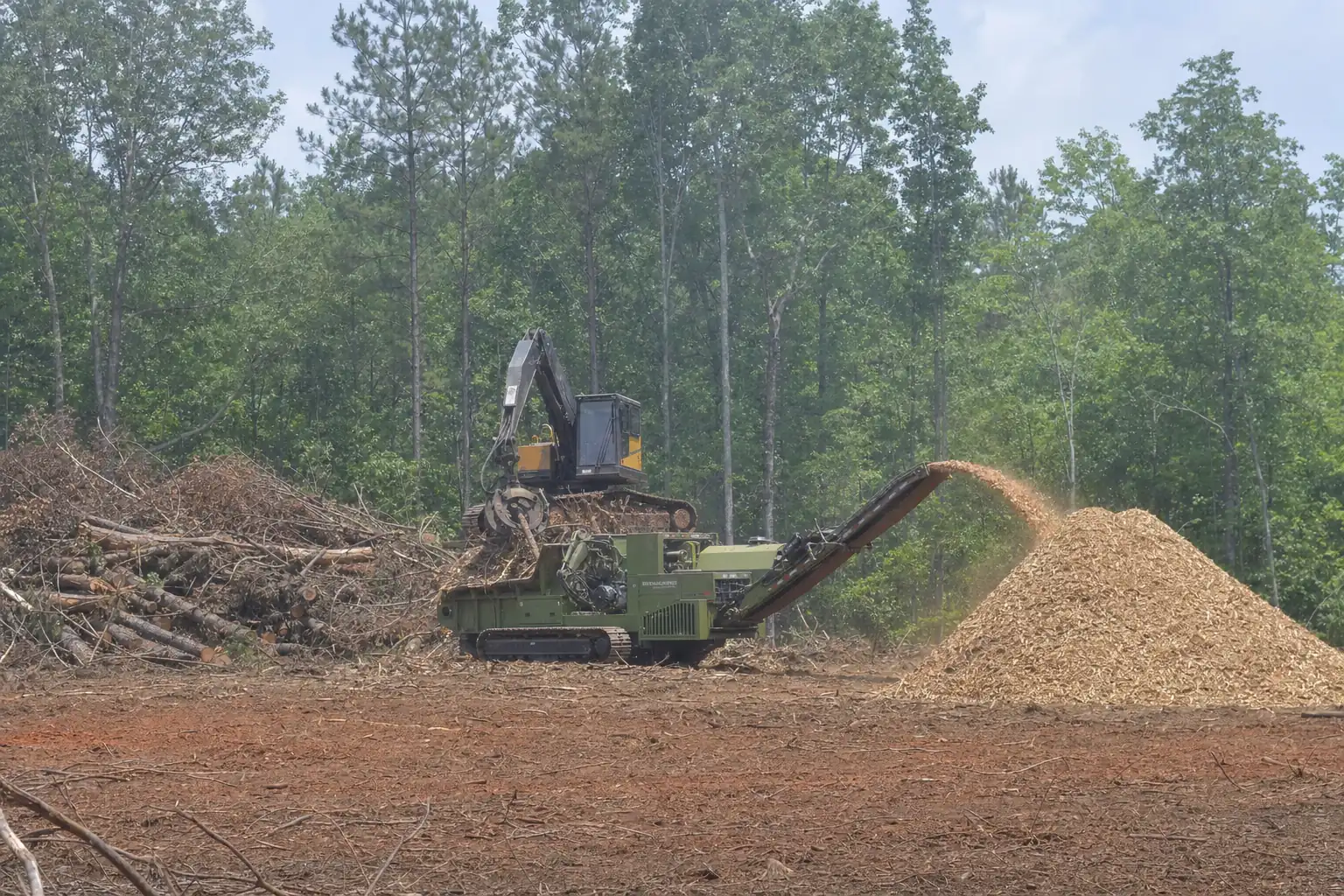
Storm timber goes the same way. Downed pines get worked from a machine, the tops mulched in place and the trunks ground. See horizontal grinding and storm damage cleanup.
Horizontal Grinding for Debris Piles and Storm Timber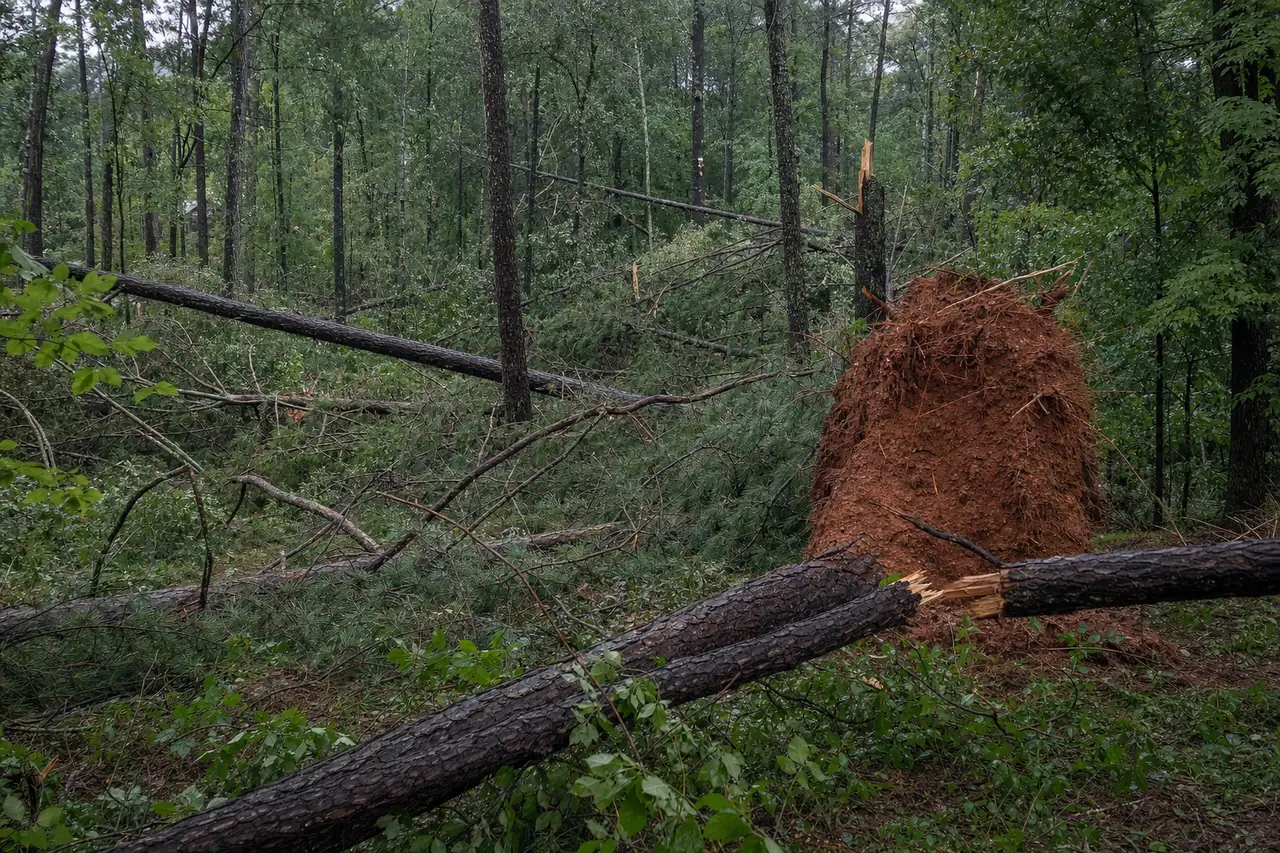 Storm Damage Cleanup and Downed Timber Removal
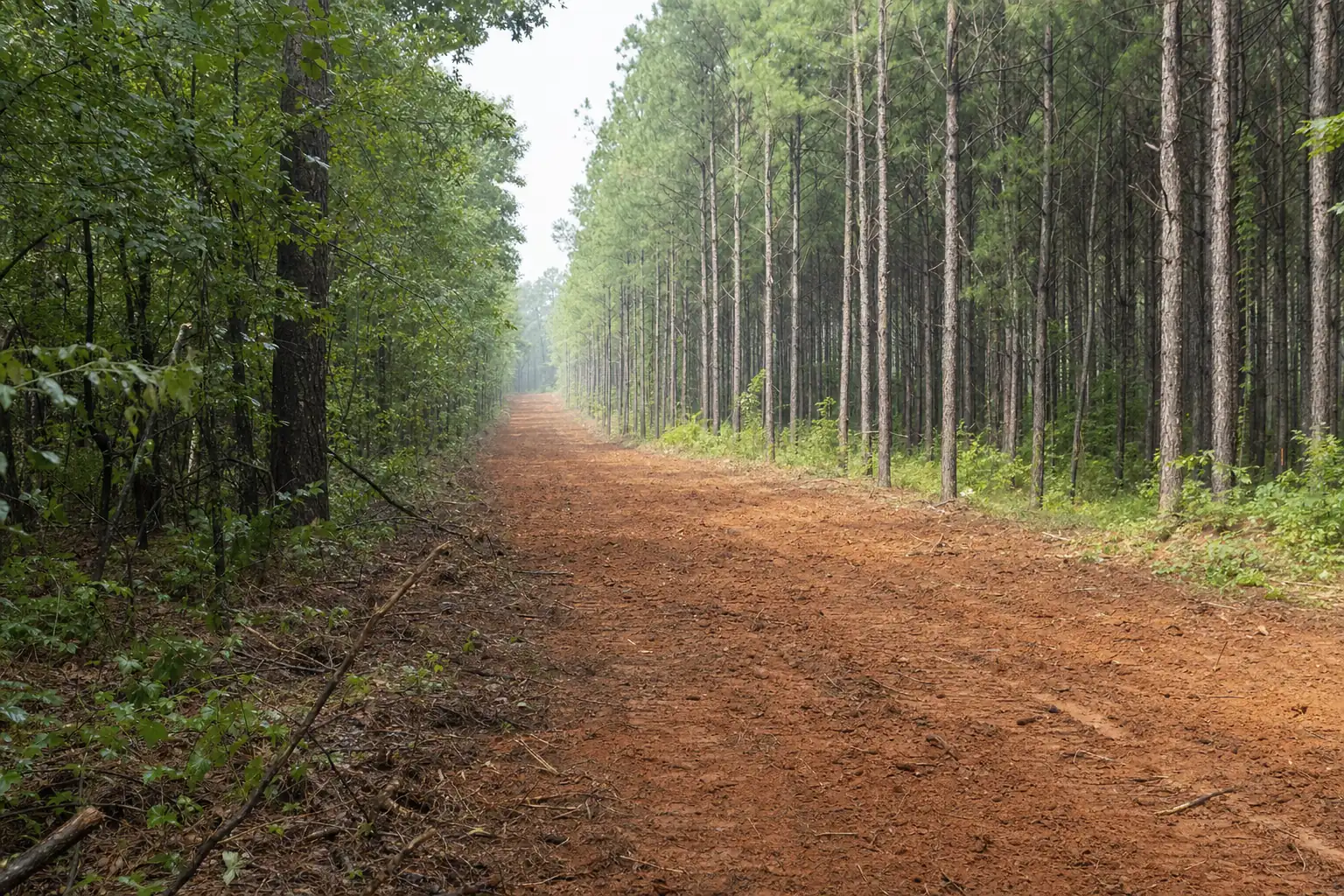 Firebreak Installation
Where fire still belongs
Fire still has a place in Georgia woods, in the pine stands. Foresters prescribe controlled burns in pine stands to thin the understory and cut wildfire fuel, and the summer ban doesn’t cover prescribed forestry burning. A trained burn crew runs those burns under a plan.
Our part is the ground work that comes before: mulching the understory down to a level a burn can handle, and cutting firebreaks to bare soil around the burn units. See firebreak installation. We don’t burn debris, and we don’t run prescribed fire.
If you own pine timber and a consulting forester has written a management plan, the plan sets which stands get burned, when, and where the breaks go. We work from that map so the mulching, the breaks and the burn crew line up. See working with a consulting forester.
Regrowth after either one
Neither method kills the roots left in the ground. Mulched hardwoods resprout from their roots the first spring: sweetgum, maple, oak and privet all come back, and cut pines don’t. Ground cleared by dozer and fire grows back too, from roots left behind and from seed that lands on the bare clay.
Mowing once or twice a year keeps cleared land open; see bush hogging and maintenance mowing and will it grow back.
If a contractor plans to burn
Some outfits around North Georgia still quote dozer-and-burn jobs. If you get one of those quotes, ask these before you sign:
- Who pulls the burn permit, and who is responsible if the burn escapes?
- Where will the pile sit, and is that spot 1,000 feet from every occupied building?
- If the pile is closer, will they bring an air curtain burner?
- What happens to the pile if the job finishes between May 1 and September 30?
- Who hauls the stumps and dirt that don’t burn, and is that in the price?
- What happens to the bare ground under the push area and the pile?
Burning brush yourself
Plenty of owners clear a little at a time and burn what they rake up. A hand-piled pile of natural vegetation from your own property doesn’t need a state permit, but in Forsyth County you still need the county’s permit in the October to April season, and the summer ban covers yard debris too. Once a machine does the clearing, the pile falls under the land-clearing rules above. If the brush is past what you can rake and pile by hand, it is a mulching job.
A quote that answers all six is a fair comparison. The rest of the method is on the forestry mulching page.
Keep reading