
Method guide · 8 min read
How a Forestry Mulcher Works (and What It Can’t Do)
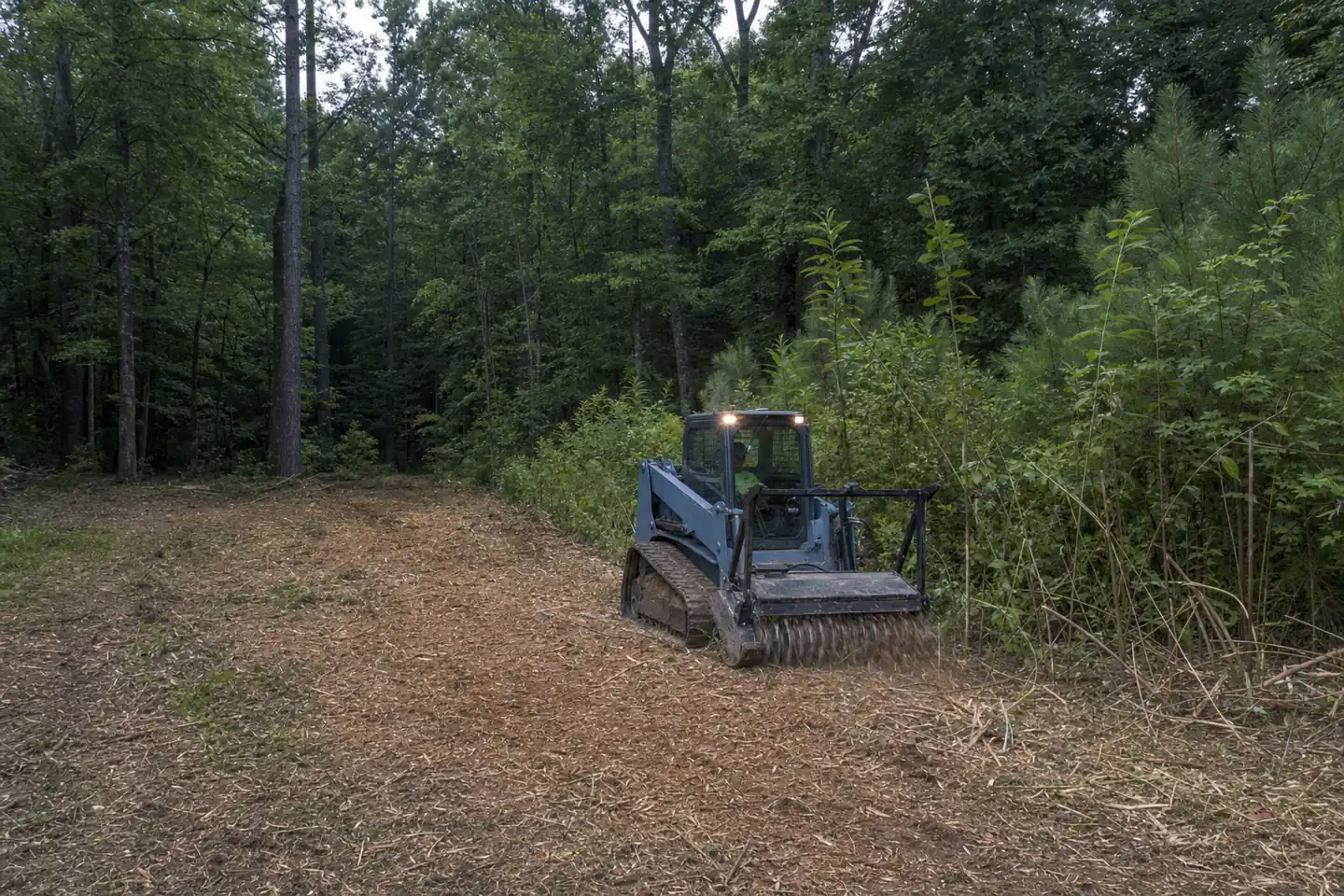
A forestry mulcher is a spinning drum of steel teeth on a tracked machine. It grinds brush and trees up to about 8 inches across where they stand, grinds the stumps to grade and leaves the chips on the ground. This guide covers how Sawnee Land Clearing runs one around Cumming, and the jobs it can't do.
The machine: a mulching head on a tracked carrier
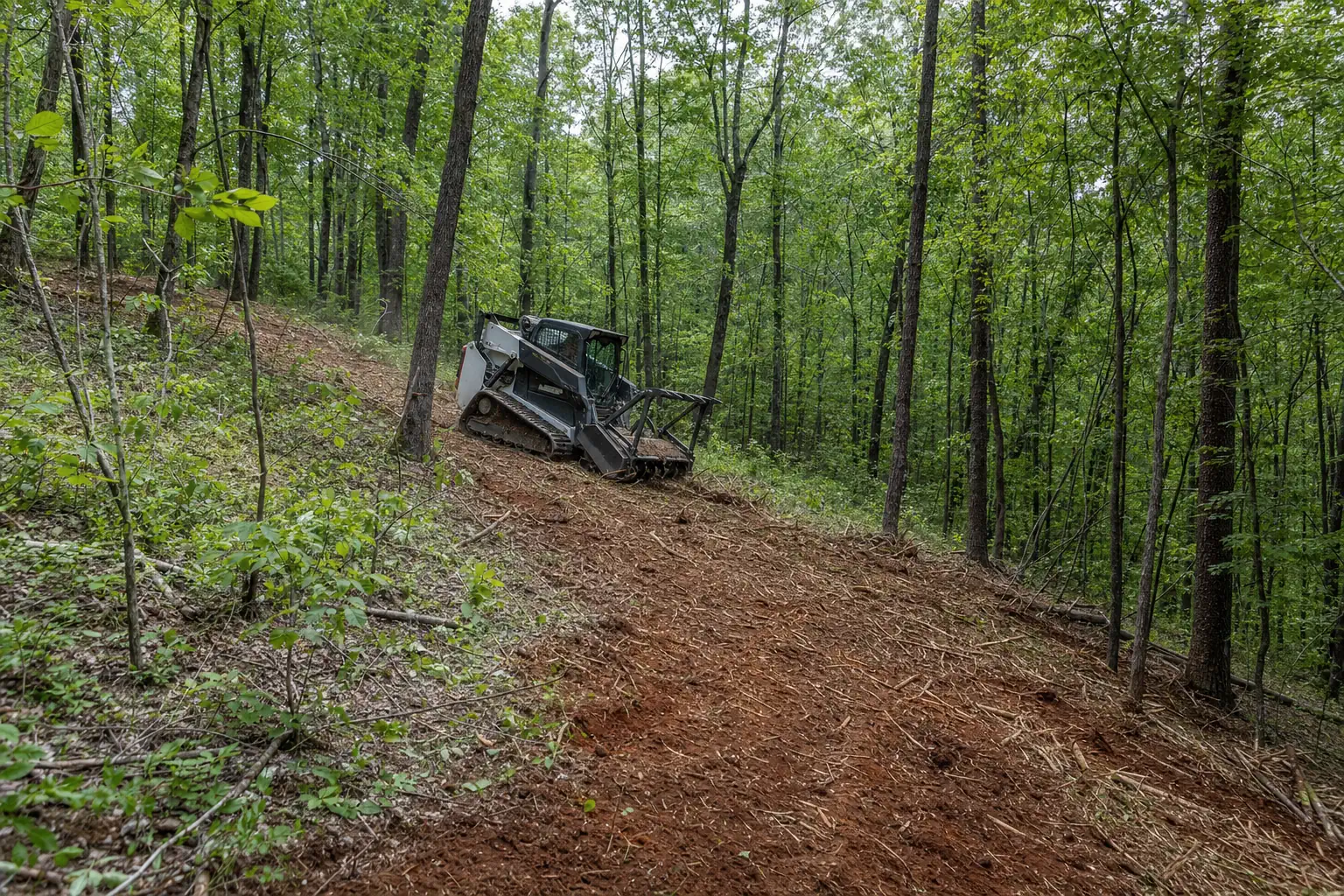
Every forestry mulcher has two parts. The head is a steel drum lined with teeth, spinning inside a housing on the front of the machine. The carrier is whatever drives it. On house lots, edges and slopes around Cumming the carrier is usually a compact track loader with a mulching head on its arms. On bigger tracts a purpose-built mulching tractor does the same work with more power behind the drum.
Both run on tracks. Tracks spread the machine’s weight over a long footprint, and once the drum starts laying chips down, the machine drives on its own mulch. That is why a mulcher can work firm red clay without tearing it up, and why it stops when the clay is soaked. The guide to mulching on red clay and slope covers the ground side of that.
The crews that deliver our jobs bring their own machines, so we describe the class of machine here and not a brand. If the make and model matter to you, ask for them on your quote. The equipment page lays out the machine classes we use for each kind of work.
What happens in one pass
The operator lowers the spinning drum onto standing brush and saplings and walks the machine forward. The teeth shred the stems from the top down and throw the chips onto the ground in front of the tracks. Small trees go straight through the head. Bigger trees get chewed down in stages, then the operator grinds the stump to ground level and moves on.
- 1Walk and flagWe tie ribbon on every tree that stays and mark corners, creeks and wet spots.
- 2Mulch the brushThe drum grinds briars, privet and saplings where they stand, working around the flags.
- 3Fell the big stemsTrunks past about 8 inches get cut first and the tops fed to the head on the ground.
- 4Grind to gradeStumps get ground to ground level and the chips spread across the cleared area.
Nothing gets piled, pushed or loaded on a truck.
Trunk size sets the pace
A mulcher takes standing trees up to about 8 inches across. Past 8 to 10 inches, the tree usually gets felled first and the trunk worked on the ground, or it stays standing, which is often the better choice for a big oak or poplar. The size of the biggest stems decides how long an acre takes far more than the acre count does.
How trunk size changes machine time
- About 8 in
- Largest trunk a mulcher takes standing
- 3.5 hrs
- Per acre where the biggest stems are 4 inches
- 10.5 hrs
- Per acre where they reach 12 inches
- 1 to 3 acres
- Light brush one machine clears in a day
The two hour figures come from a published production study of forestry mulchers. The same acre takes three times as long when the trunks triple in size. Here is what that looks like in a working day:
| What’s growing | What you see walking it | Per machine day |
|---|---|---|
| Light brush | Briars, privet, vines, saplings under 4 inches | 1 to 3 acres |
| Mixed saplings | Pine and hardwood with trunks 4 to 8 inches | About an acre |
| Dense hardwood | Trunks 8 inches and up, close together | Less than an acre |
Wet ground slows all three rows. More on that below and in how many acres can be cleared in a day.
What the ground looks like after
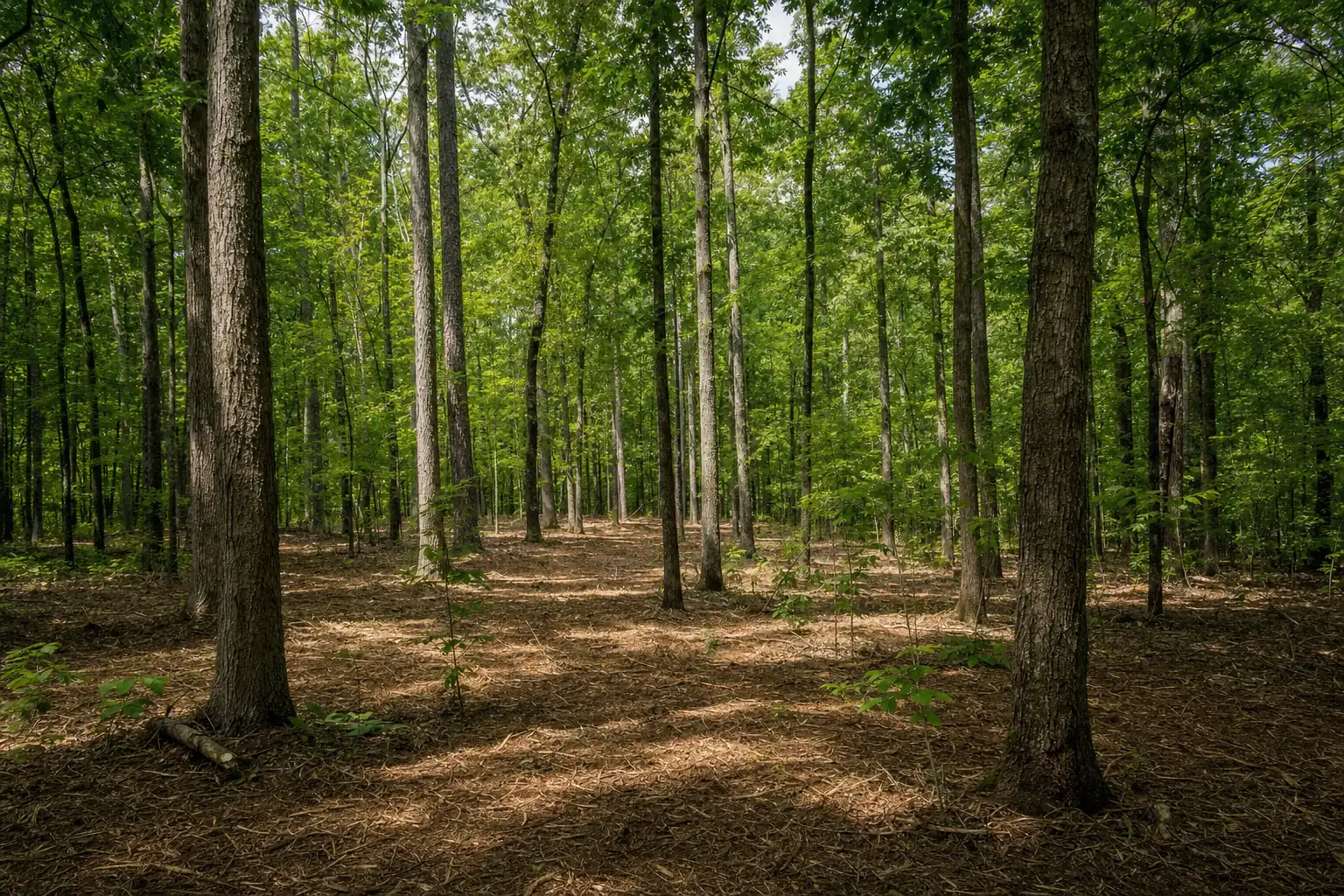
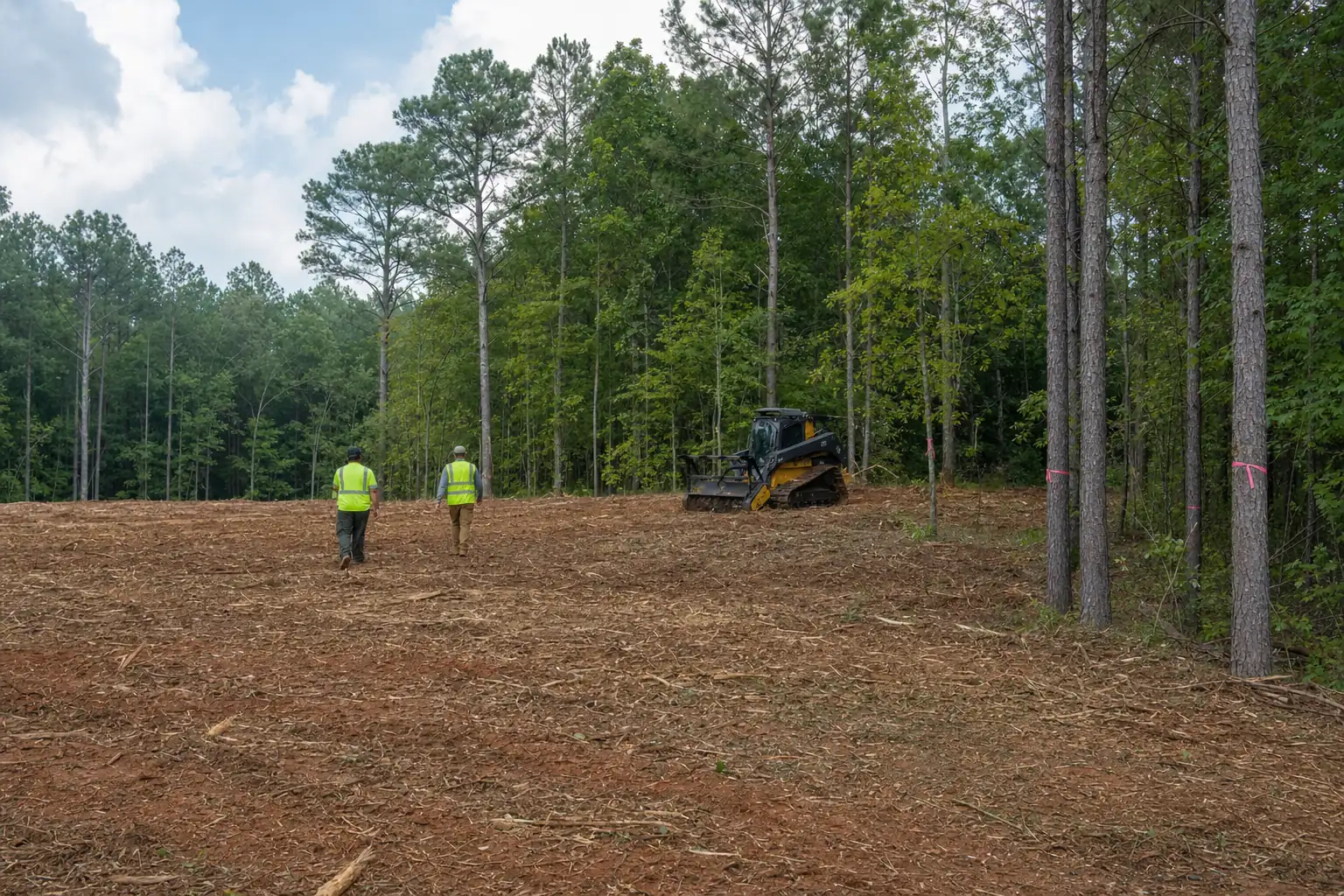
A mulched acre has a layer of chips across the soil, stumps ground to grade, and the trees you flagged still standing with their root zones undisturbed. You can walk it, drive a side-by-side across it, or mow it later.
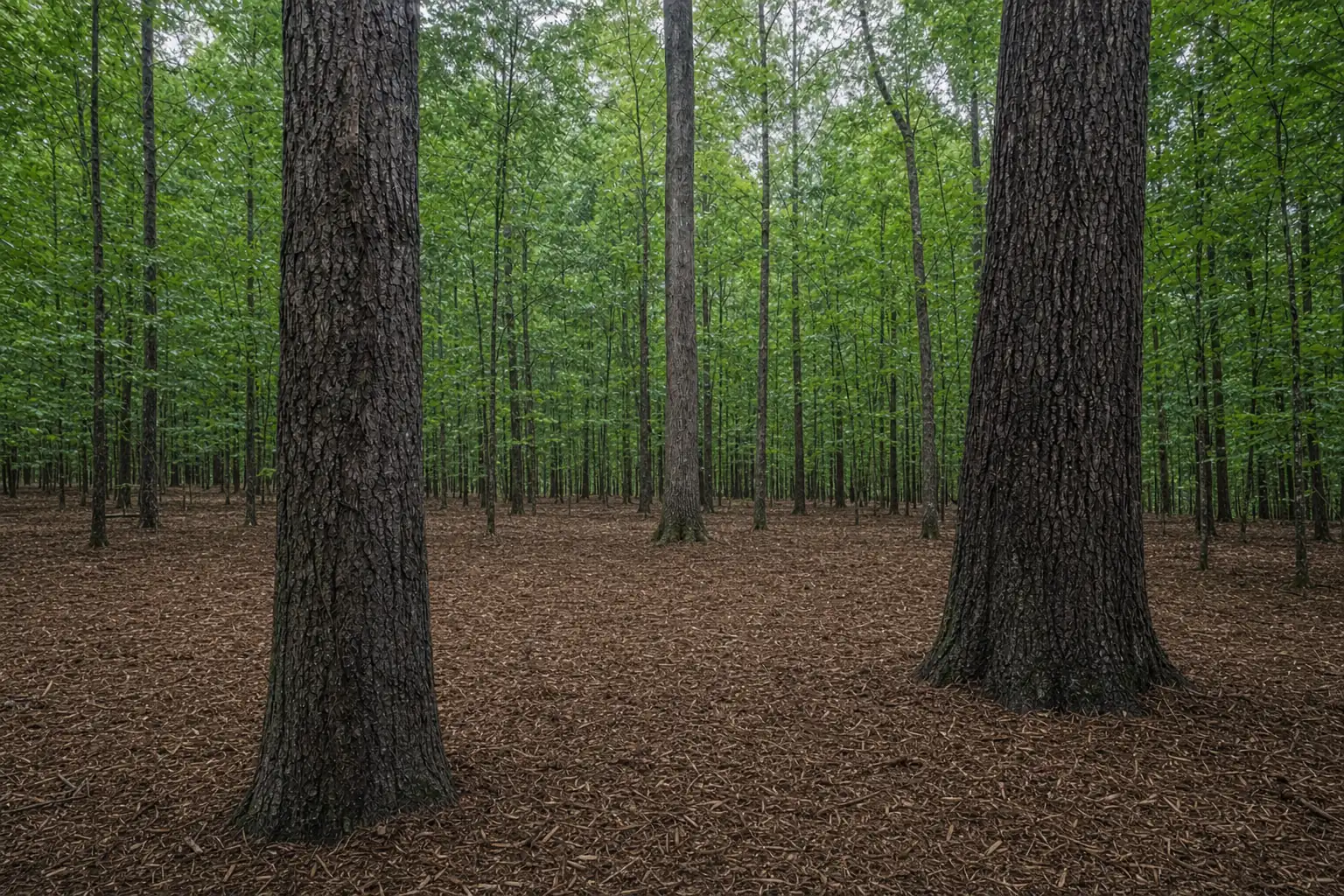
The chip layer matters on Forsyth County ground. It soaks up rain, slows runoff on slope and holds the red clay in place while the area settles. It breaks down over a few seasons. Depth depends on how much was growing: a thick privet stand leaves more chips than scattered briars. If you plan to seed, ask for a finer chip and a thinner layer, which takes more passes. Mulch depth and seeding has the detail.
What a forestry mulcher can’t do
The machine has hard limits. Some of them come from the head, some from the ground, and one from biology. We name them on the walk so nobody finds them out after the machine leaves.
| The job | Why the mulcher falls short | What we bring instead |
|---|---|---|
| Big trunks | Past 8 to 10 inches the drum slows to a crawl | Fell first, or keep the tree |
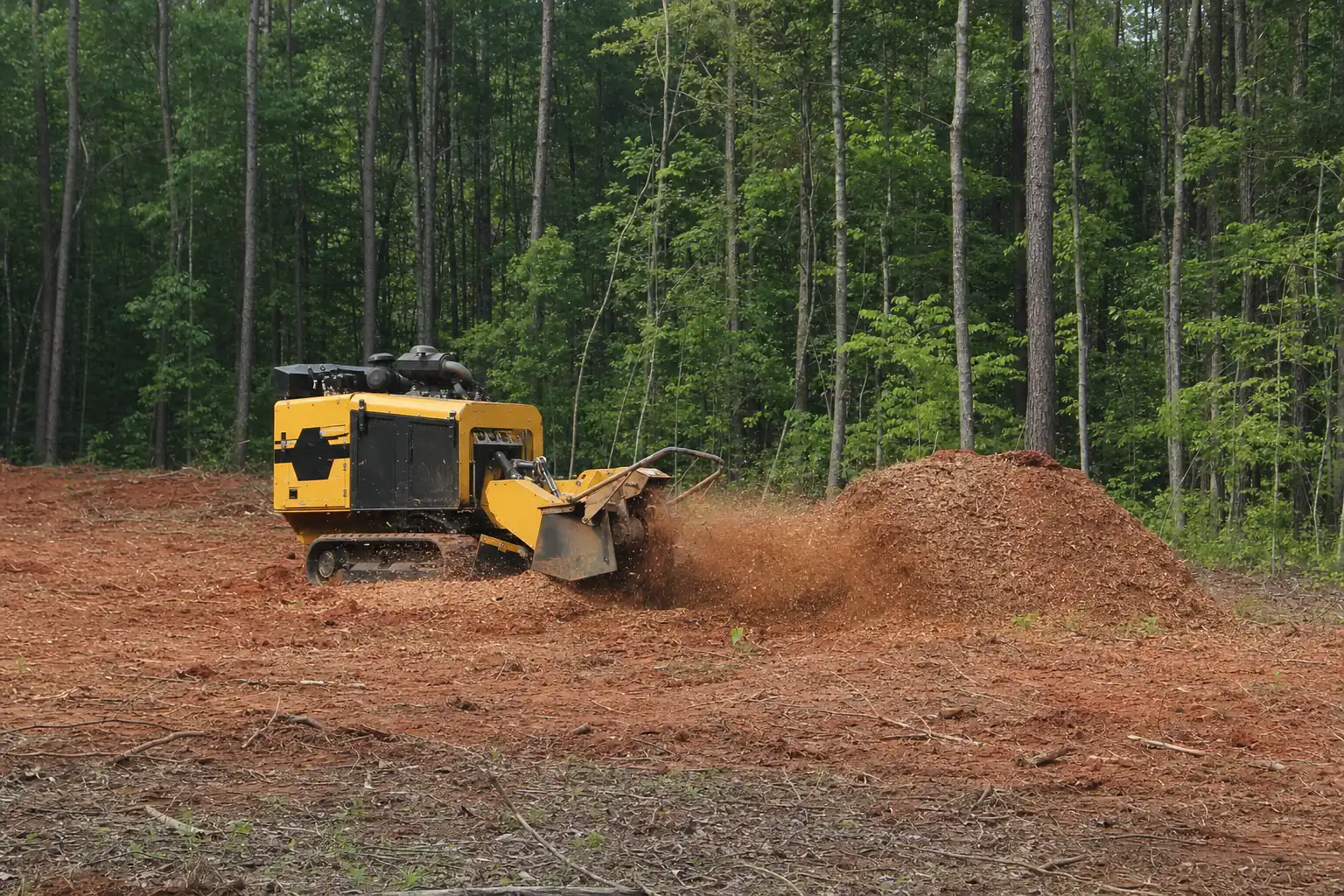
| Stumps out under a pad | It grinds stumps to grade; the roots stay in the soil | Excavator to pull them |
| Bare, graded ground | It leaves mulch and doesn’t move dirt | Dozer or grading after mulching |
| Saturated clay | Soaked clay ruts under any tracked machine | Wait for a dry week |
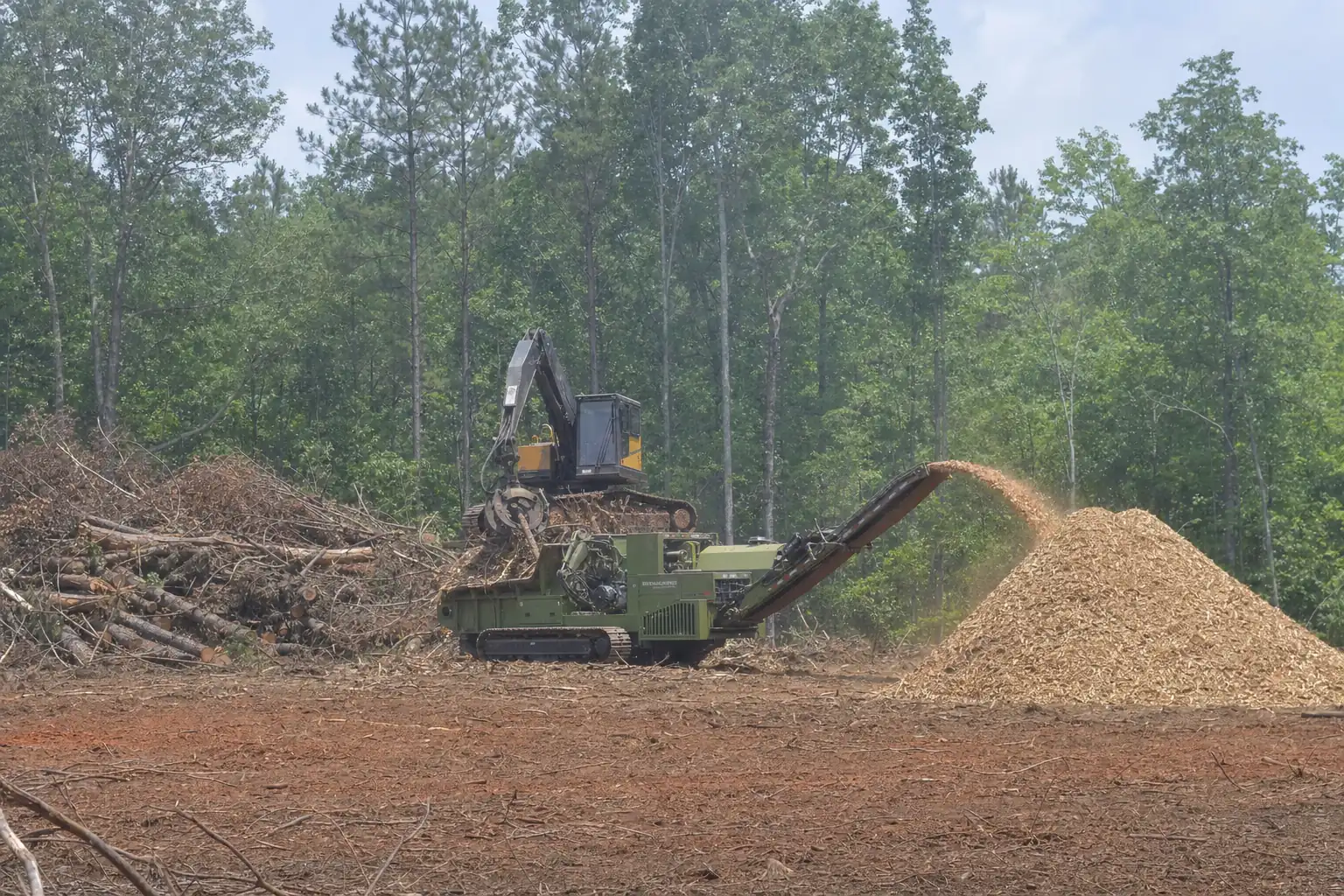
| Old push piles | Piles of logs and dirt are too much for the head | Horizontal grinder |
| Killing roots | It cuts the plant at the ground and leaves the roots alive | Mowing and a privet treatment |
A stump ground flush under a future slab will rot and settle, so the footprint of a house always gets grubbed. The rest of the lot can stay mulched. Two pages go deeper: does forestry mulching remove stumps and mulching compared with bulldozing.
 Stump Grinding, Grading and Pad Prep
 Horizontal Grinding for Debris Piles and Storm Timber
 Underbrush Clearing: Open the Woods, Keep the Canopy
Where a mulcher earns its keep around Cumming
Most overgrown land in Forsyth County is the kind of ground a mulcher was built for: old pasture gone to sweetgum and privet, woods with a choked understory, lots where the builder wants to see the slope before drawing the house. The machine does its best work on these jobs:
- Underbrushing. Briars, privet and saplings ground out under the big trees so you can see through the woods and walk them. The canopy stays. See underbrush clearing.
- House lots. The lot opened up with keepers flagged, stumps flush, and only the footprint left for the excavator later. See lot clearing.
- Privet thickets. A wall of privet along a creek or fence row leveled in a day or two, so the resprouts come back even and treatable.
- Trails, lanes and plot edges. Narrow work through hunting land with no piles left in the woods.
- Fence and survey lines. A strip opened along the line so a surveyor can see pin to pin or a fence crew can set posts.
- Firebreaks. Brush mulched off the line before it gets taken down to soil.
The common thread is land you want to keep and use, with the soil left where it is. When the plan calls for bare ground, a mulcher does the first part and other machines finish it.
Mulcher, bush hog or chainsaw crew
People call all three land clearing. They do different work. A bush hog is a rotary mower behind a tractor: it cuts grass, weeds, briars and soft sprouts, and it bounces off anything woody. A chainsaw crew drops trees but leaves the brush, the tops and the stumps for someone else. A mulcher handles the brush, the saplings and the small trees in one pass and leaves nothing to pick up.
Many owners use two of them in order: mulch once to take the land back, then bush hog once or twice a year to keep it open. Mulching or bush hogging helps you pick.
Working around the trees you keep
A dozer pushes through a stand. A mulcher can work between trunks, which is the reason people hire one. Before the machine starts we walk the land with you and tie flagging on every tree that stays, down to the dogwoods along the drive if you want them. The operator grinds around the flags and keeps the head off the root flare of each keeper.
Selective work takes longer than clearing everything. Twenty flagged oaks on an acre add careful passes, and that time shows up in the price. Most owners decide it is worth it: shade, value and a lot that looks settled the day the machine leaves. Keep the big trees, clear the rest covers how to choose.
What it costs
Mulching around Cumming is priced by the acre on bigger jobs and by machine time on small or uneven ones. These are our estimates for Forsyth County and the towns around it.
| Growth or job | Price |
|---|---|
| Light brush, privet, saplings | $1,200 to $2,500 an acre |
| Mixed growth, trees 4 to 8 inches | $2,500 to $4,000 an acre |
| Dense hardwood, 8 to 12 inches and up | $4,000 to $6,500+ an acre |
| Machine time with an operator | $150 to $300 an hour |
| Small jobs | $1,200 to $2,000 minimum |
Ranges are estimates for Forsyth County and the surrounding area based on job density, terrain, access and acreage. Your written quote is the only price that applies to your property.
The breakdown by band is in forestry mulching cost per acre, and hourly and day rates are in cost per hour or per day.
It grows back
Because the roots stay in the ground, hardwoods resprout. Sweetgum, maple, oak and privet push up new shoots the first spring after mulching. Cut pines don’t come back. The sprouts come up even and close to the ground, which makes them easy to mow and easier to treat than the original thicket.
Plan on mowing once or twice a year after the first pass, plus a dormant-season privet treatment where privet was the problem. We set that up before we leave; see bush hogging and maintenance mowing and the full answer in will it grow back.
Put the finish in writing
The common complaints about mulching jobs come from things nobody wrote down: stumps left high, chips too coarse to mow, a keeper tree scraped, a log pile buried under the mulch. A good quote spells out:
- Stump height. Ground to grade, or below grade where you plan to mow, disk or seed.
- Chip size. Coarse for woods and trails, finer for ground you plan to seed.
- Keeper zones. Which trees stay, flagged with you, and how close the machine works to them.
- Edges. Your property line, any creek buffer and any slope left alone.
- Wet weather. What happens to the schedule when the clay is soaked.
We write all of that into ours. The full list is in what a land clearing quote should include, and the rest of the method is on the forestry mulching page.
Keep reading