
Straight answer · 3 min read
How Many Acres Can Be Cleared in a Day?
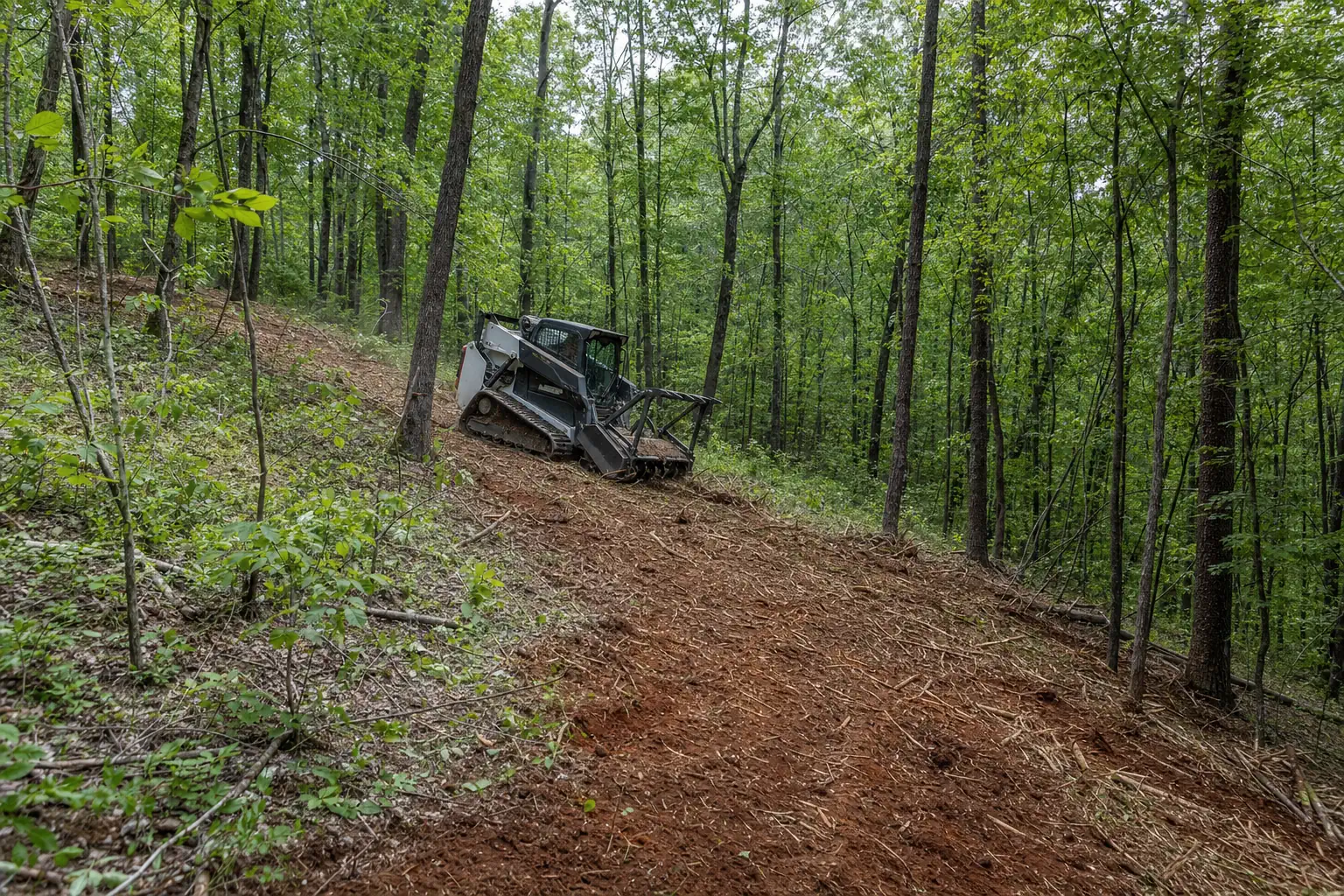
One Sawnee Land Clearing mulcher clears about 1 to 3 acres a day of light brush and saplings around Cumming, Georgia, about an acre a day of mixed growth with 4 to 8 inch trees, and less than an acre of dense hardwood 8 inches and up. Trunk size, slope and wet red clay set the pace more than acreage.
Acres per day is the first thing people ask and the least reliable number in the trade. The same machine and operator can finish three acres of briars by mid-afternoon and spend the whole next day on one acre of hardwood across the road. Here is what sets the pace on land clearing jobs around Forsyth County, and how to plan around it.
Acres a day, by what’s growing
| What’s growing | Acres a day | Five acres takes |
|---|---|---|
| Light: briars, privet, saplings under 4 inches | 1 to 3 | 2 to 5 days |
| Medium: mixed pine and hardwood, 4 to 8 inches | About 1 | About 5 days |
| Heavy: dense hardwood 8 inches and up | Less than 1 | More than 5 days |
These are machine days. A light acre in the morning and a heavy acre in the afternoon on the same tract average out somewhere in between, which is why we quote the days for your land after walking it.
Why trunk size beats acreage
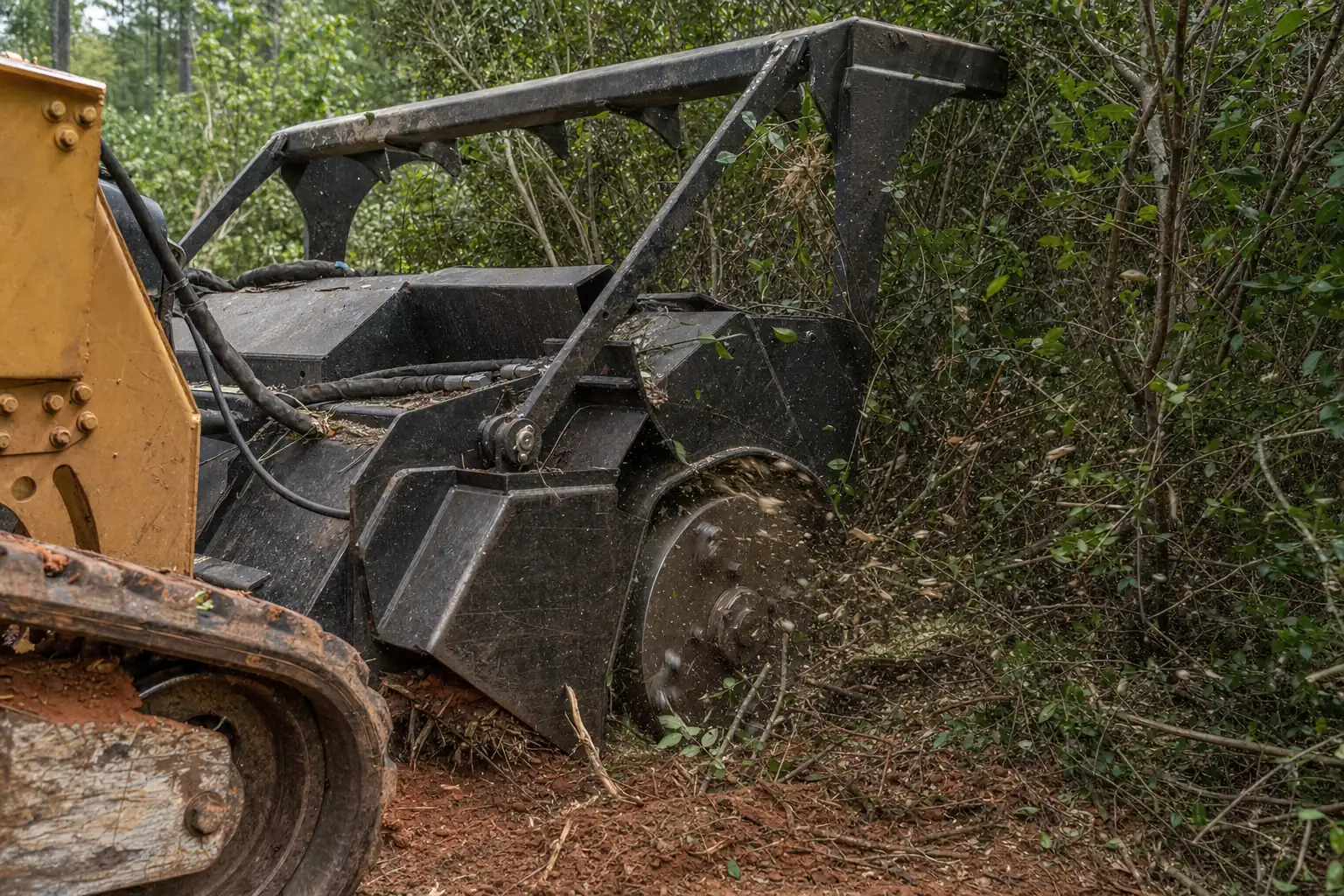
Forestry contractors measure work in what the trade calls inch-acres: the size of the biggest trunks multiplied by the ground they cover. A mulcher chews a 3-inch sweetgum in seconds and spends minutes on a 12-inch oak. Past 8 to 10 inches, a tree usually gets felled first and the trunk dealt with on the ground.
Machine time on one acre
- 3.5 hrs
- Per acre where the biggest stems are 4 inches
- 10.5 hrs
- Per acre where they reach 12 inches
- 8 to 10 in
- Trunk size where trees usually get felled first
The first two figures come from a published production study of forestry mulchers. Same acre, three times the machine time. When you send photos, the trunks tell us more about the schedule than the acreage does.
What else slows a day down
- Slope. Piedmont ridges, gullies and rock under the clay make every pass slower.
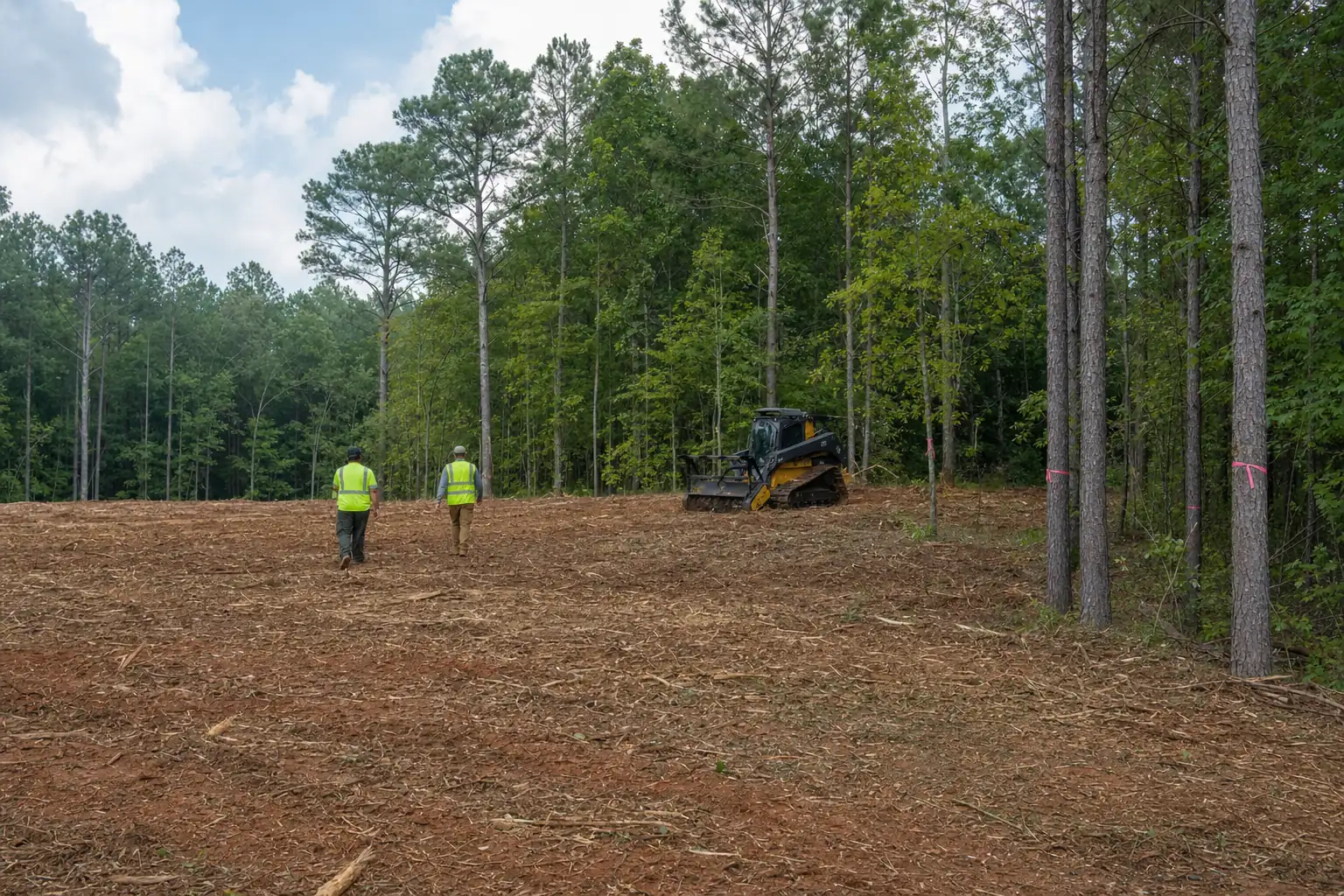
- Keeper trees. Working around twenty flagged oaks takes longer than clearing everything. It is usually worth the time.
- Access. A gate the trailer can’t clear or a long walk from the road eats into the morning.
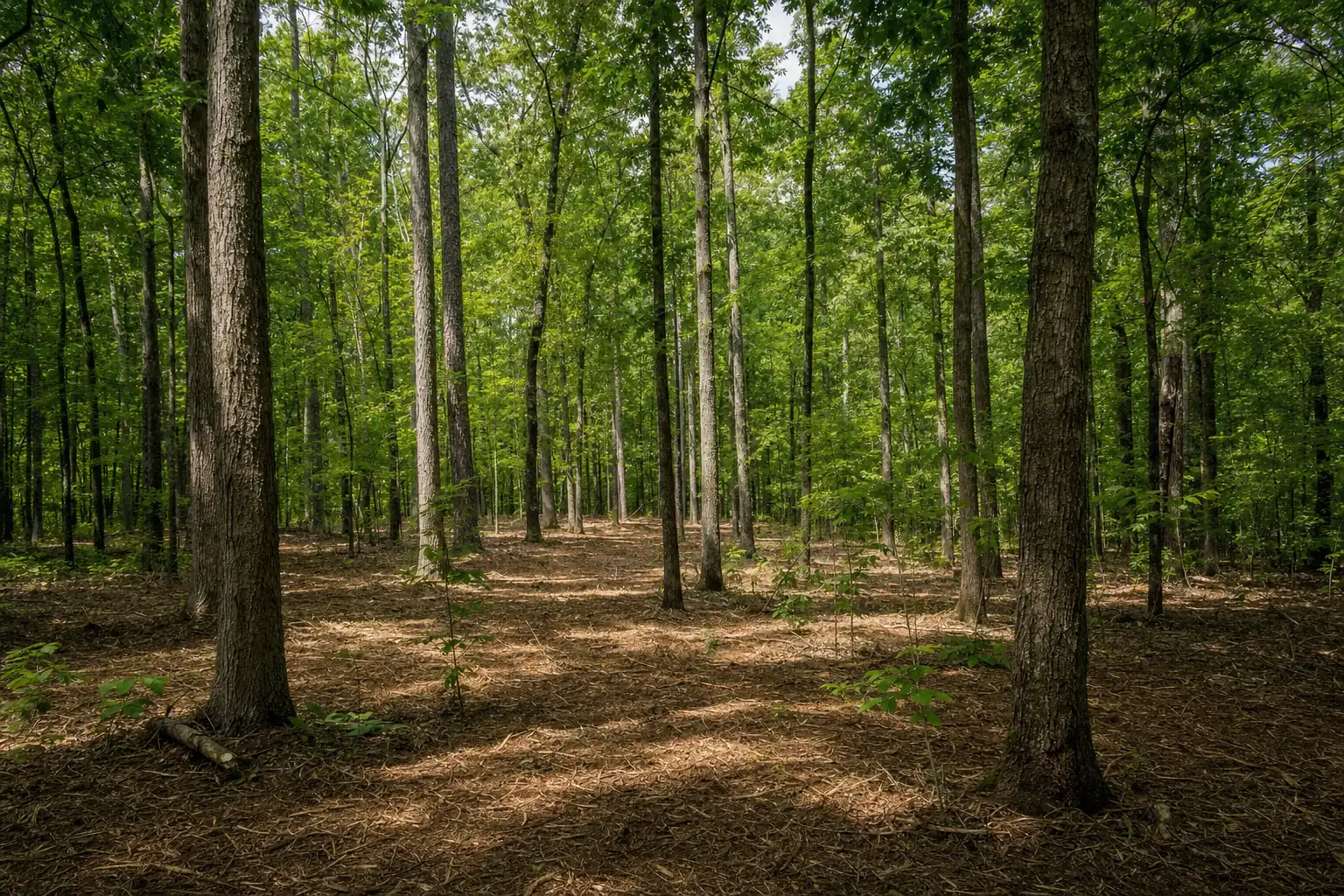
- Finish. A finer chip for seeding means more passes than coarse mulch left as it falls.
- Wet clay. Saturated red clay stops tracked machines until it firms up.
Machine days and calendar days
A job quoted at four machine days rarely finishes in four calendar days. Rain is the usual reason: we don’t run tracked machines on saturated clay, because the ruts cost grading money to fix. Dry spells in late fall and winter tend to keep the calendar close to the machine count. On a permitted site, the erosion plan has to be approved and the silt fence in before clearing starts, and that paperwork sets the start date more than the machine does. See how long land clearing takes and the best time of year to clear land.
Reading a fast promise
An acres-per-day figure usually describes a good day on easy ground. A fast day can mean stumps left high, big pieces lying in the mulch, or logs pushed into the woods line instead of ground up. Those show up the first time you try to mow.
Ask any contractor for the finish in writing: stump height, chip size, which trees stay, and what happens to trunks too big to mulch. A slower day that leaves ground you can walk and mow costs less than a fast one you pay to fix. More in how to vet a land clearing company.
Bigger tracts, bigger machines
Most lots and homesites get a compact track loader with a mulching head, which fits between keeper trees and works slopes without tearing up the ground. On large open tracts, a purpose-built mulching tractor covers more ground in a day. We match the machine to the land on the walk. More on the machines in forestry mulching.
Cleared ground starts growing back the first spring. Sweetgum, privet and briars return within a season or two unless the land gets mowed or used, so plan for maintenance mowing once the clearing is done.
FAQ
More about clearing speed
- How long does it take to clear one acre?
- Light brush on one acre is often a half day to a day of machine time. Dense hardwood with 12-inch trunks can take a day and a half of machine time or more, before any stump or grading work.
- Do you clear in the rain?
- Not on saturated clay. Tracked machines rut wet red clay, and the ruts cost grading money to fix. We wait for the ground to firm up, which moves the date but not the price. See clearing on wet red clay.
- How many days does ten acres take?
- Ten acres of light brush is roughly four to ten machine days for one mulcher, and mixed growth closer to ten. Dense hardwood runs longer. Add weather days on top, and the permit and silt fence that ten acres usually requires before work starts.
Keep reading
Questions people ask next
- QHow long does land clearing take? Acreage, density and weather
- QHow much does it cost to clear 5 acres?
- QWhat size trees can a forestry mulcher handle?
- QHow much does forestry mulching cost per hour or per day?
- QWill the machines leave ruts?
- QHow do I know a land clearing company is really a forestry mulcher?