
Schedule guide · 8 min read
How Long Does Land Clearing Take? Acreage, Density and Weather
One acre of light brush around Cumming takes a forestry mulcher about half a day to a day. Mixed growth runs about an acre a day, and dense hardwood with 12-inch trunks can take a day and a half or more. Trunk size and wet red clay move the schedule more than acreage, and permitted sites add paperwork first.
Machine time by what’s growing
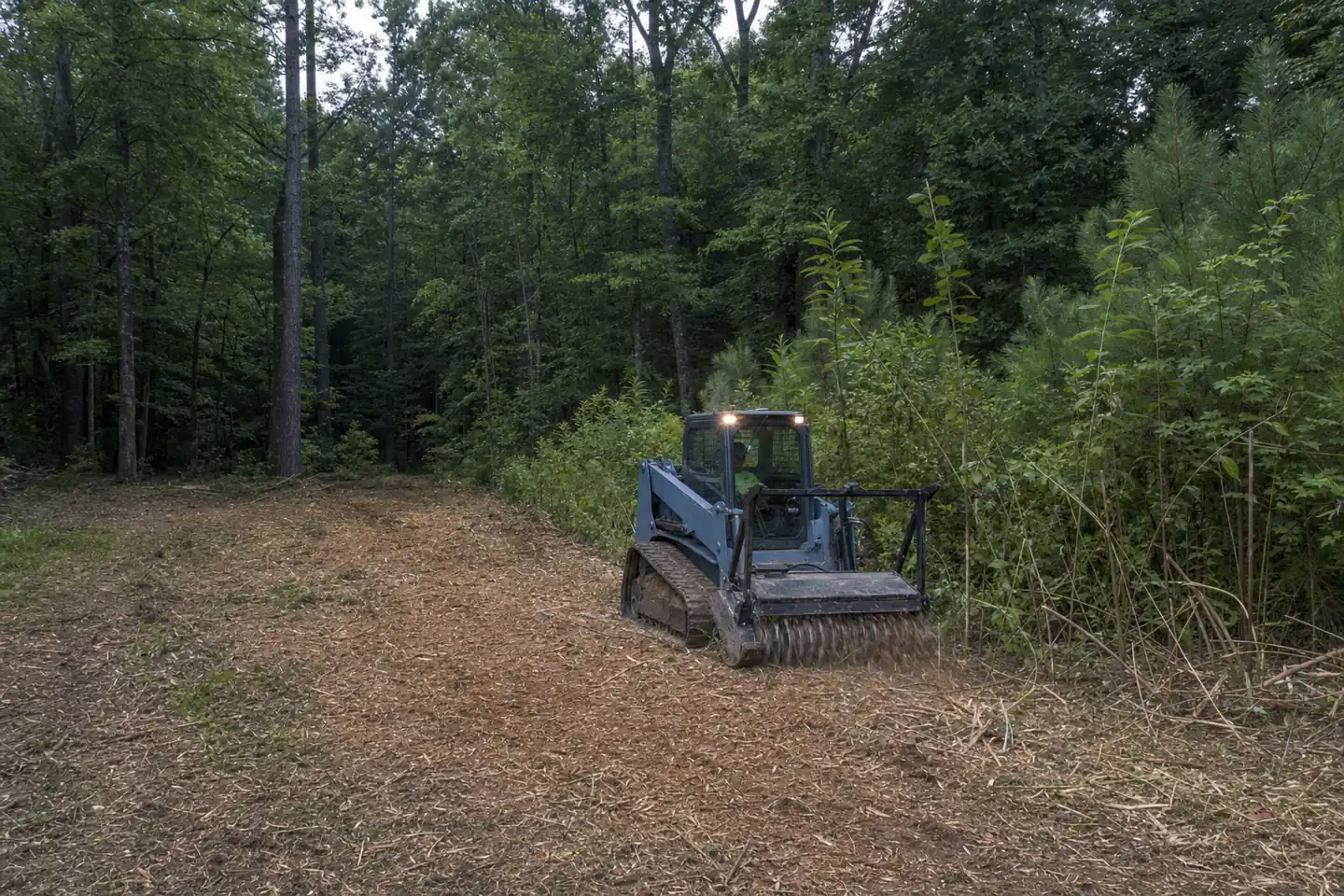
The time to clear an acre depends on what stands on it. A forestry mulcher eats briars and saplings at a walking pace and slows to a crawl on big hardwood. These are one-machine figures for forestry mulching around Cumming, on dry ground.
| What’s growing | What it looks like | Acres a day | One acre takes |
|---|---|---|---|
| Light | Briars, privet, vines and saplings under 4 inches | 1 to 3 acres | Half a day to a day |
| Medium | Mixed pine and hardwood, trunks 4 to 8 inches | About 1 acre | About a day |
| Heavy | Dense hardwood 8 to 12 inches and up, steep ground or rock | Less than 1 acre | A day and a half or more |
| Underbrushing | Brush and saplings under a kept canopy | 1 to 3 acres | Half a day to a day |
A day here means a working day of machine time. The calendar time from your first call to a cleared acre is longer, and the sections further down cover why. For the cost side of the same bands, see what land clearing costs per acre around Cumming.
Trunk size matters more than acreage
Two acres of privet and two acres of 10-inch oaks are different jobs, and the second takes several times longer. Forestry contractors measure in what the trade calls inch-acres: the size of the biggest trunks multiplied by the ground they cover. A published production study of forestry mulchers put it in hours.
Same acre, different trunks
- 3.5 hrs
- Per acre where the biggest stems are 4 inches
- 10.5 hrs
- Per acre where they reach 12 inches
- 8 to 10 in
- Trunk size where trees usually get felled before mulching
Run those numbers on two acres. Where the biggest stems are 4 inches, that’s about 7 hours of machine time, one long day. Where they reach 12 inches, it’s about 21 hours, closer to three days. Same acreage, same machine.
Past 8 to 10 inches, a tree usually comes down first and the trunk gets dealt with on the ground, which adds steps. When you send photos, put a trunk or two in the frame with something for scale. That tells us more about the schedule than the acreage does. More in what size trees a forestry mulcher can handle and how many acres can be cleared in a day.
Other things that stretch the clock
- Slope. A tracked machine works slower across Piedmont slopes and around gullies. Ground over 15 percent usually lands in the heavy band whatever grows on it.
- Rock. Rock under the clay or showing in the cuts slows the mulcher and can damage the teeth, so the operator works around it.
- Keeper trees. Working around twenty flagged oaks takes longer than clearing everything, and most owners think the trees are worth it.
- Stumps. Ground flush is part of the mulching pass. Pulling stumps under a pad is excavator work, and it adds a day or more.
- Finish. A finer chip for seeding or a food plot takes extra passes over the same ground.
- Access. A gate the trailer can’t clear, a long walk from the road or a soft drive eats time at both ends of the day.
- Junk in the woods. Old fence wire and dumped trash have to come out by hand before the mulcher can run.
Why small jobs don’t scale down evenly
Every job carries time that has nothing to do with acreage. The machine rides a trailer to your land, gets unloaded and warmed up, and the operator walks the flags and the line before the first pass. At the end there are finishing passes, a walk-through and loading up. On ten acres that overhead disappears into the week. On half an acre it can be a third of the day.
That’s why small jobs carry a minimum, about $1,200 to $2,000 for a half-acre or less, and why hourly work often comes with a 4-hour minimum. It’s also why a second, separate trip for a small add-on costs more than doing it during the first visit. If you think you’ll want the fence line or the trail opened too, say so before the machine leaves. See is there a minimum charge for clearing a small lot.
Ranges are estimates for Forsyth County and the surrounding area based on job density, terrain, access and acreage. Your written quote is the only price that applies to your property.
Typical jobs, start to finish
These are machine-time ranges for jobs we see around Cumming, worked out from the production rates above. Your walk sets the real number.
| Job | Machine time | What decides it |
|---|---|---|
| Half-acre lot, light brush | Half a day to a day | Access and how many trees stay |
| Wooded house lot | 1 to 3 days | Trunk size, slope, keepers |
| 1 to 2 acre homesite, pad and drive | About a week | Silt fence, stumps out, grading, driveway |
| Five acres of mixed growth | About five days | Trunk size across the tract |
| Ten acres of underbrushing | About 4 to 10 days | How thick the privet and saplings stand |
| Driveway through woods | A day to several days | Length, slope and stumps under the travel lane |
| Storm-downed trees | A short day to several days | A few trees across a drive, or a flattened stand |
Each of these has its own page: lot clearing, site preparation, what five acres cost and storm cleanup.
The calendar before the machine arrives
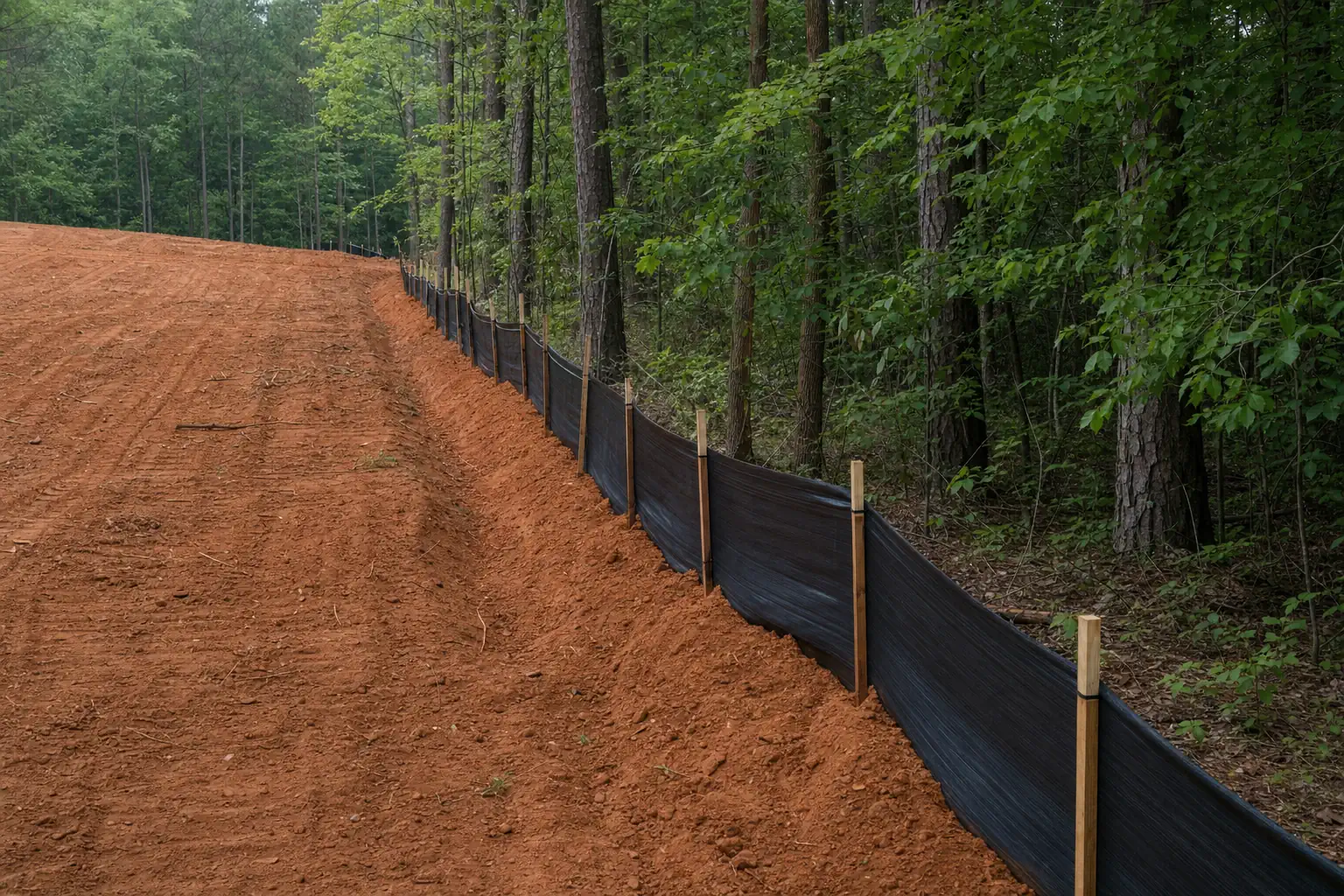
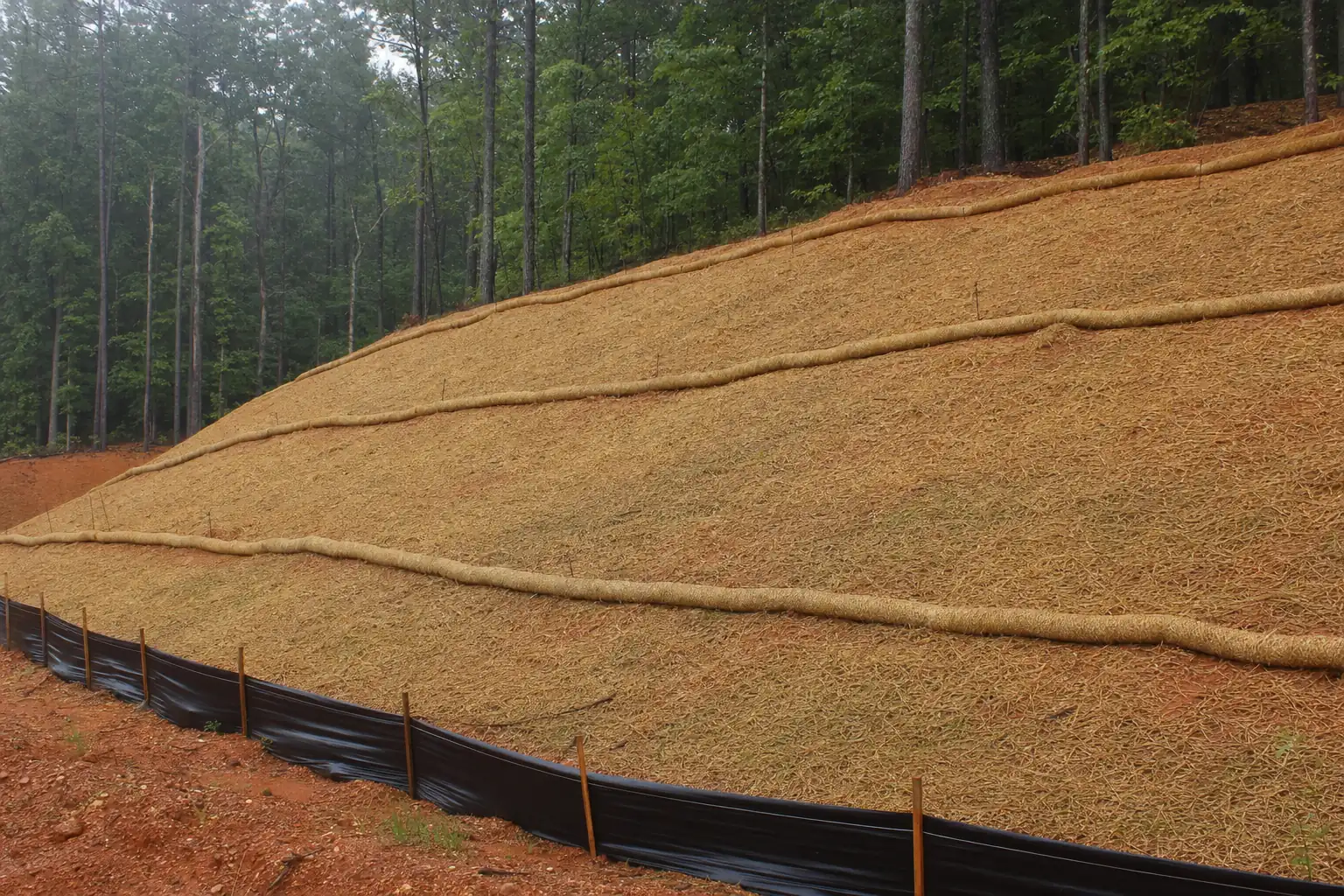
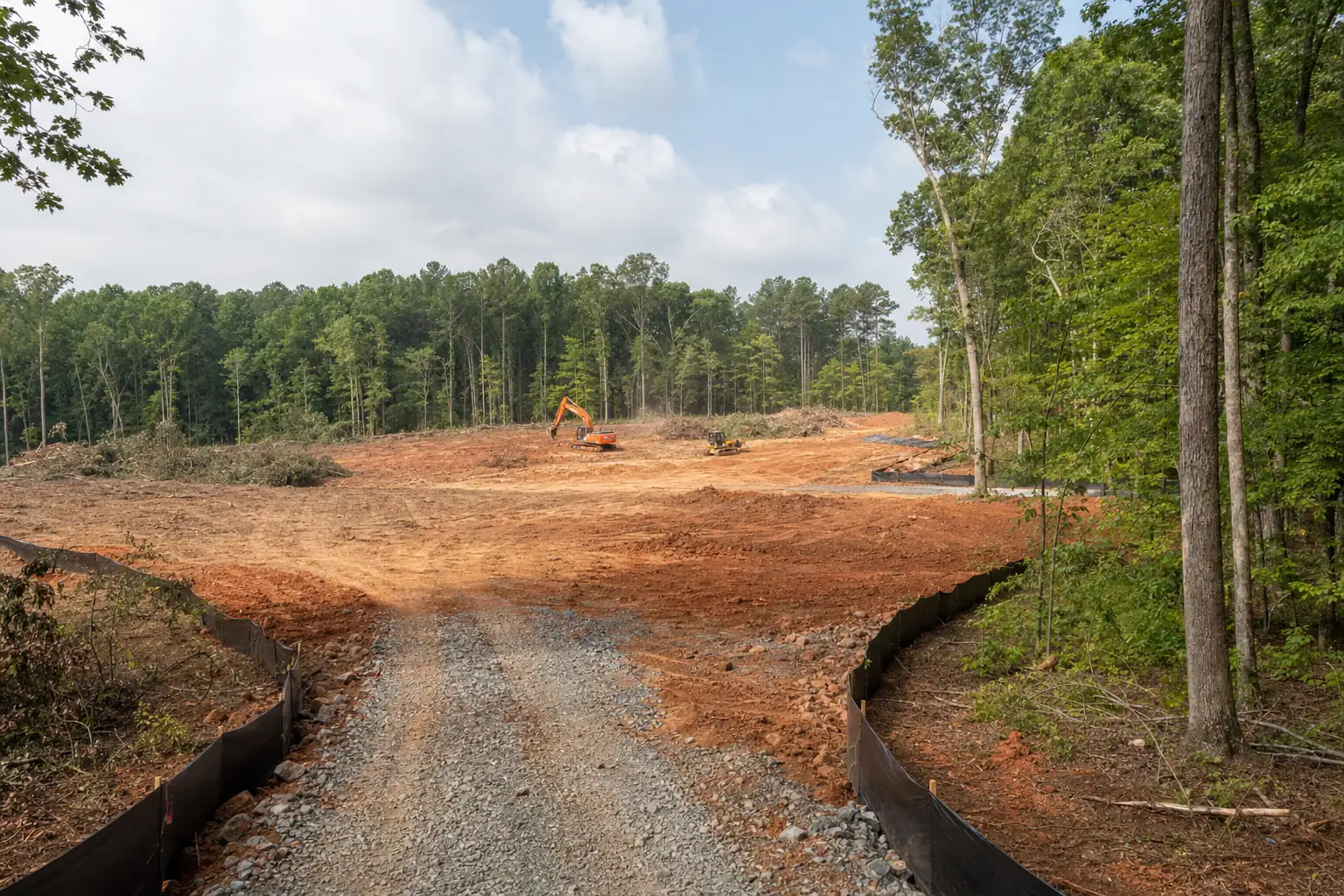
On a small job with no permit, the machine can follow the quote as soon as the schedule and the ground allow. A site that disturbs an acre or more, or works within 200 feet of a creek, needs a Forsyth County land disturbance permit first. The permit comes with plan review and an approved erosion plan, so it adds time before the start date, not to the machine time. The silt fence goes in before the first tree.
The county wants a full set of plans prepared by a licensed professional, including a tree protection plan, before it issues the permit. If you already have a surveyor or an engineer on a building project, the clearing usually rides on their plans. If you don’t, start that conversation early, because the paperwork tends to set the date more than the machine does.
Permit thresholds, fees and buffer widths are those published by Forsyth County and the State of Georgia as of November 4, 2026. Confirm current requirements with the issuing authority before work begins. This is not legal advice.
- 1Walk and quoteWe walk the land and send a written quote in one business day.
- 2Permit, if neededPlan review and an approved erosion plan before any clearing on a permitted site.
- 3811 before diggingGeorgia 811 asks for at least three business days before we pull stumps or grade.
- 4Silt fence firstErosion control in on day one, then the clearing starts.
If your job has a hard date, such as a closing or a builder’s start, tell us on the first call so we can work backward from it. The Forsyth County permit guide covers who needs one.
Weather is the biggest variable
Cumming gets roughly 50 to 55 inches of rain a year. Saturated red clay won’t hold a tracked machine without rutting, so we wait for it to firm up. That moves the date, not the price. In a wet winter, a job with three days of machine time can stretch across a few weeks of calendar, and we’ll tell you the day we see it coming.
During a wet spell we don’t leave a job hanging without word. On mixed ground the machine works the high, well-drained parts first and comes back to the low side and the creek bottom once they firm up. Ruts in wet clay take grading money to fix and can damage the roots of the trees you meant to keep, so waiting a few days is the cheaper choice. See will the machines leave ruts.
Dry weeks run fastest. Late fall and winter bring leaf-off, which shows rock and old fence before the machine finds them, but they also bring rain that dries slowly. Summer is often dry enough to run full days. Mulching keeps going through the May 1 to September 30 ban on land-clearing burns in Forsyth County, because there’s no pile to burn. More in the best time of year to clear land and clearing on wet red clay.
Bigger tracts
The per-acre rates hold on bigger ground, and a bigger tract spreads the trailer trip across more acres. On large, open tracts a bigger tracked mulching tractor can cover more ground in a day than a compact loader with a mulcher head. On mixed tracts the compact machine can work near the house and the keepers while the bigger one takes the open ground.
Large jobs usually run in phases: the driveway first, so every other crew can get in, then the homesite, then the rest. A tract headed for a timber sale gets cut first and cleared after the loggers leave. A job tied to a cost-share program follows the program’s calendar, which starts with a sign-up window and acceptance before the work. See selling timber to offset clearing cost, how the cost-share application works and commercial and development clearing.
Program figures and sign-up windows are set annually and are current as of November 4, 2026. We confirm every figure with the Georgia Forestry Commission or NRCS before any application. This page explains how programs work; it is not a guarantee of eligibility or reimbursement.
After the machine leaves
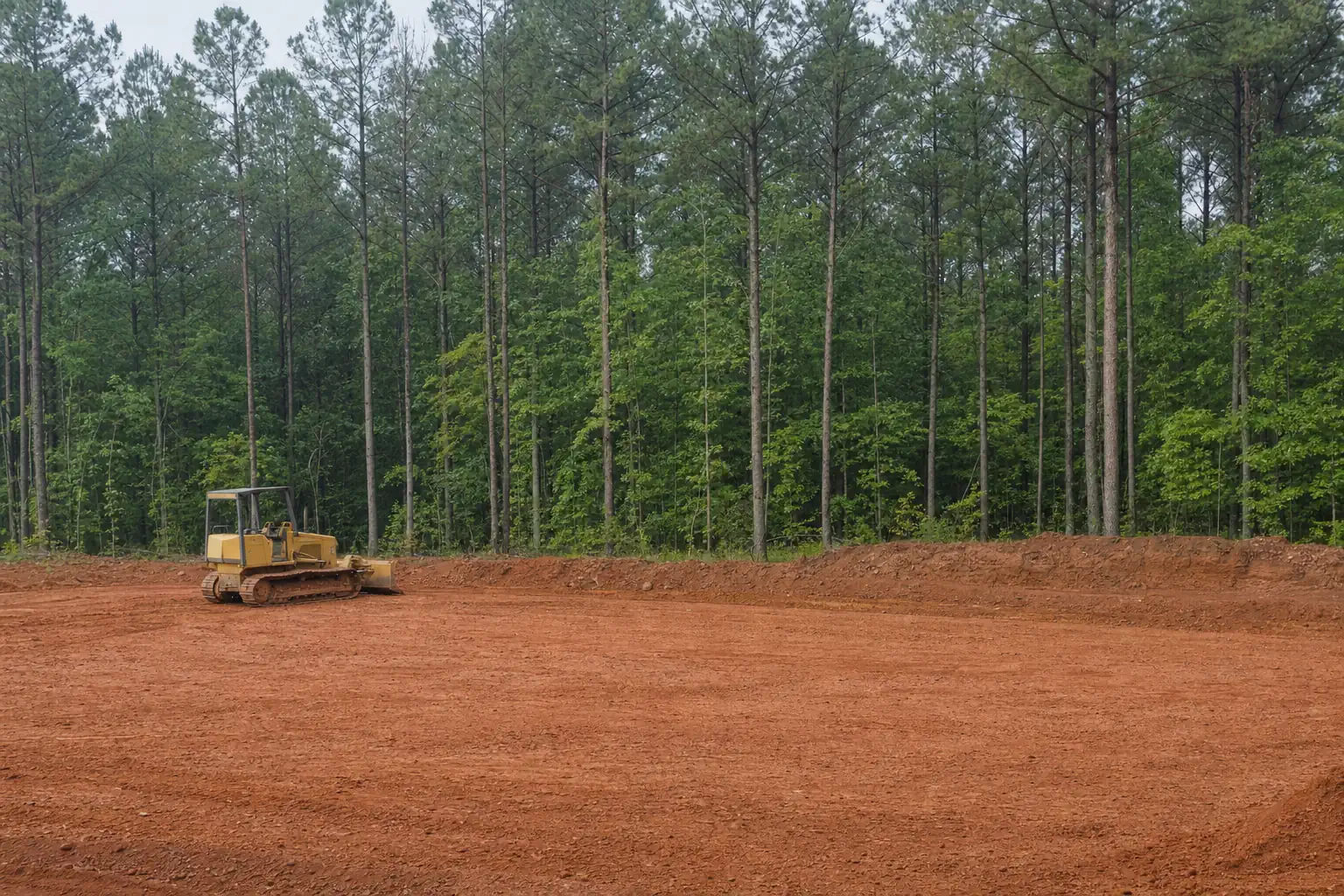
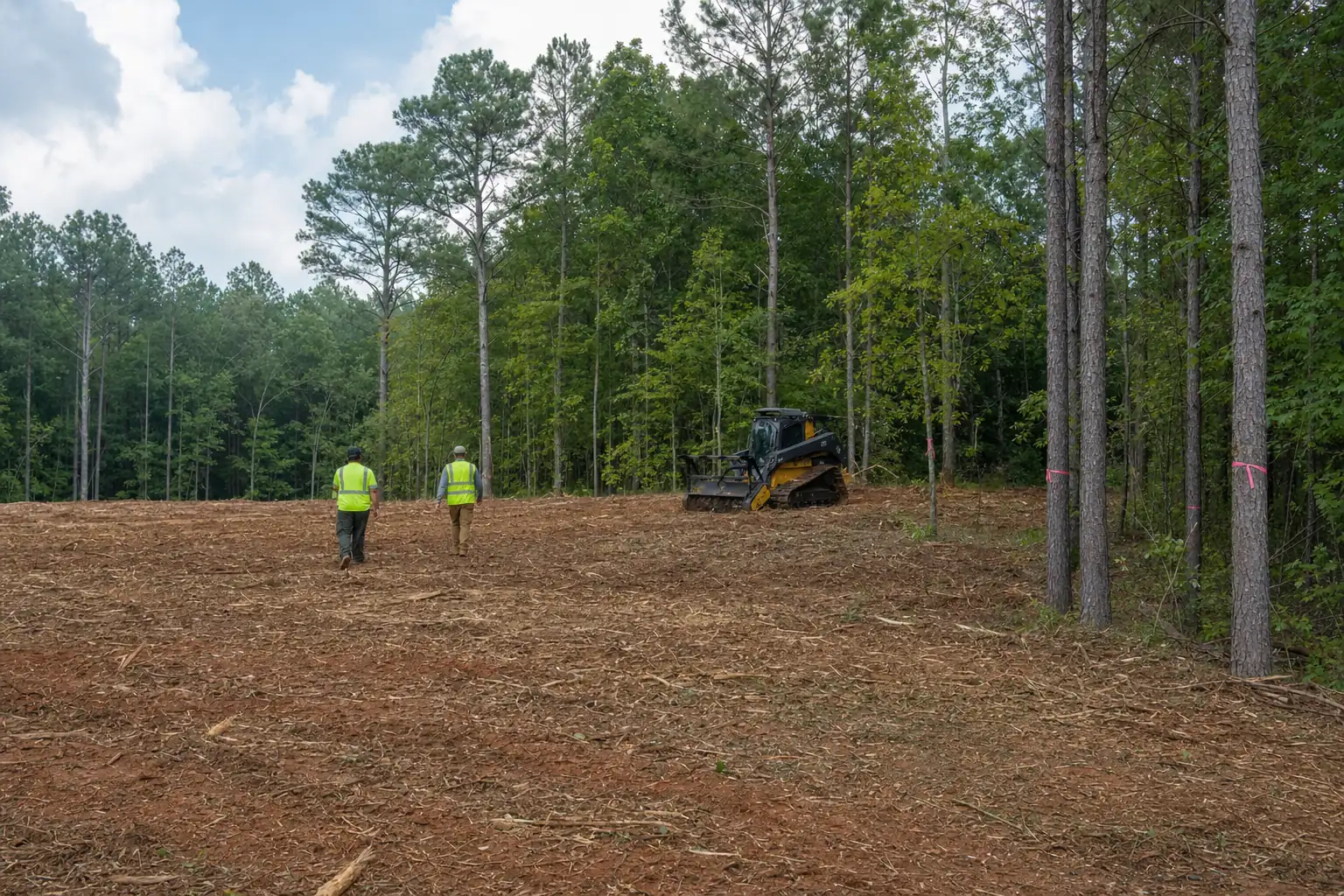
We walk the land again when the clearing is done, with you if you can make it, and send photos if you’re out of state. Mulched ground is ready to use the day we leave. A pad still needs its grading before the builder starts.
Out-of-state owners clearing an inherited property don’t need to be there for any of it; see estate and inherited property cleanup. Agents listing wooded land can usually photograph it the week the machine leaves.
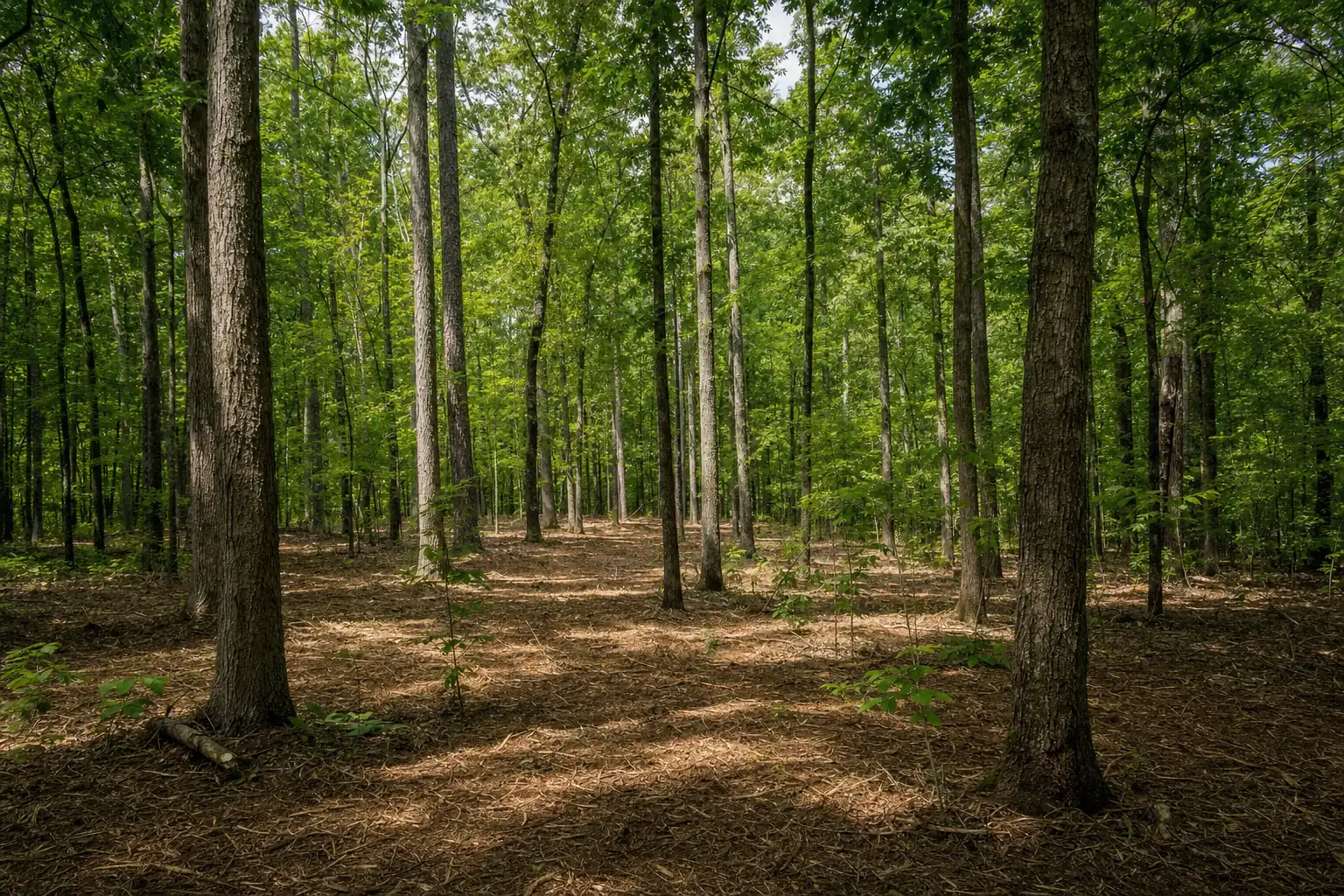
The land doesn’t stay the way we left it. Sweetgum, privet and briars sprout back from the roots within a season or two. Plan a mowing pass the first summer and one or two a year after. See bush hogging and maintenance mowing.
Getting a time estimate for your land
We need the address, what you plan to do with the land, and a few photos: wide shots from the road and a couple from inside the growth with a trunk in frame. If you have a plat, send it. We walk the land, measure the acres, check trunk size, slope, creeks and access, and send a written quote that lists the machine time with the price. See what a land clearing quote should include, or start from the land clearing page.
Keep reading