
Straight answer · 3 min read
What Size Trees Can a Forestry Mulcher Handle?
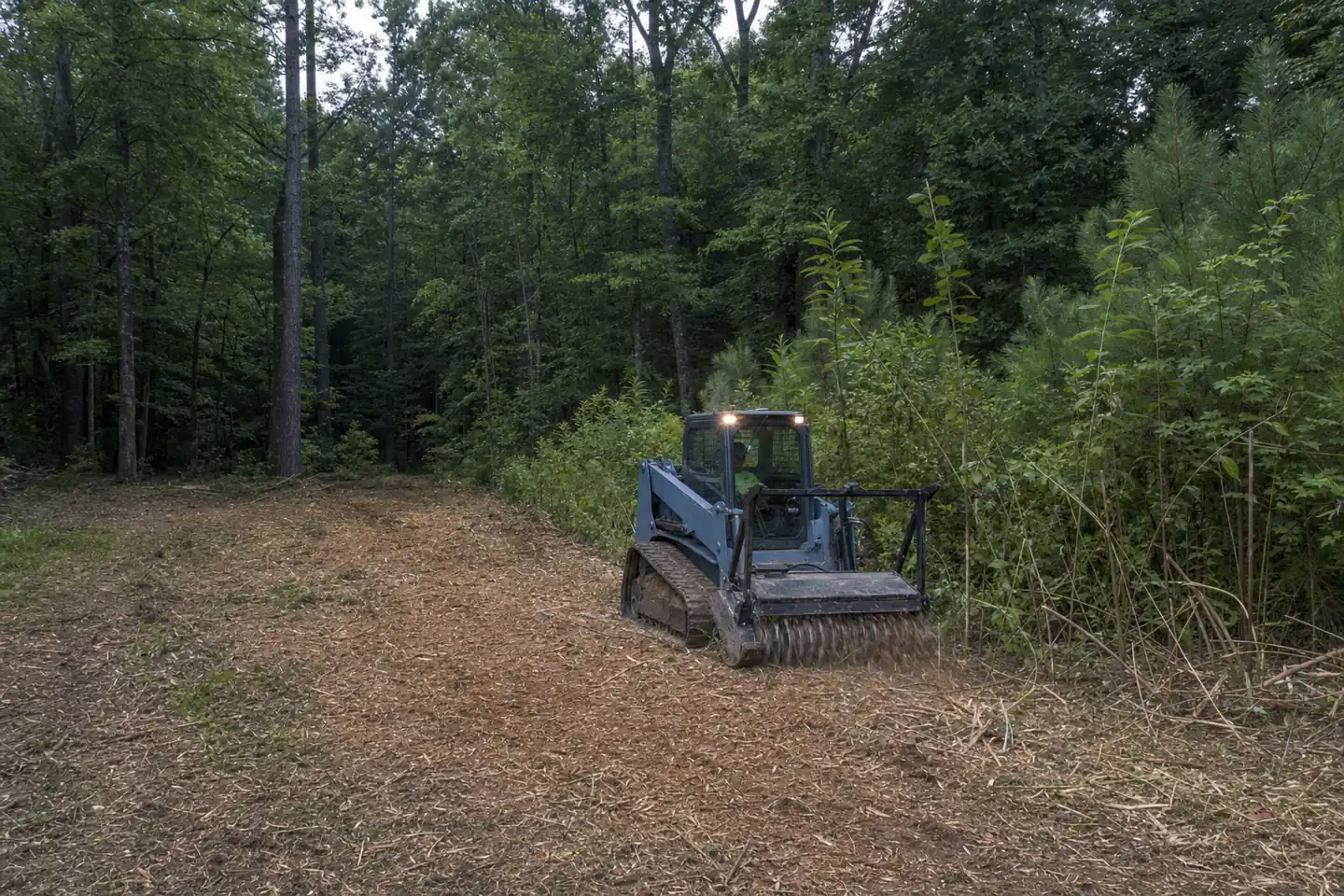
About 8 inches across at the trunk, standing. Sawnee Land Clearing's mulchers around Cumming grind brush, saplings and trees to about that size where they grow. Trees past 8 to 10 inches get felled first and the tops mulched on the ground, or they stay, which is often the better call for a big hardwood.
The 8-inch figure is a working limit, not a hard stop. A mulcher can chew into bigger wood, but it slows to a crawl, burns through teeth and costs you machine hours. Here is how trunk size plays out on forestry mulching jobs around Cumming.
What the mulcher takes and what it doesn’t
| Trunk across | What the mulcher does | Price band per acre |
|---|---|---|
| Under 4 inches | Grinds it standing in seconds: briars, privet, sweetgum whips | $1,200 to $2,500 |
| 4 to 8 inches | Grinds it standing, slower with every inch | $2,500 to $4,000 |
| 8 to 12 inches and up | Felled first, top and limbs mulched on the ground, or kept | $4,000 to $6,500+ |
Ranges are estimates for Forsyth County and the surrounding area based on job density, terrain, access and acreage. Your written quote is the only price that applies to your property.
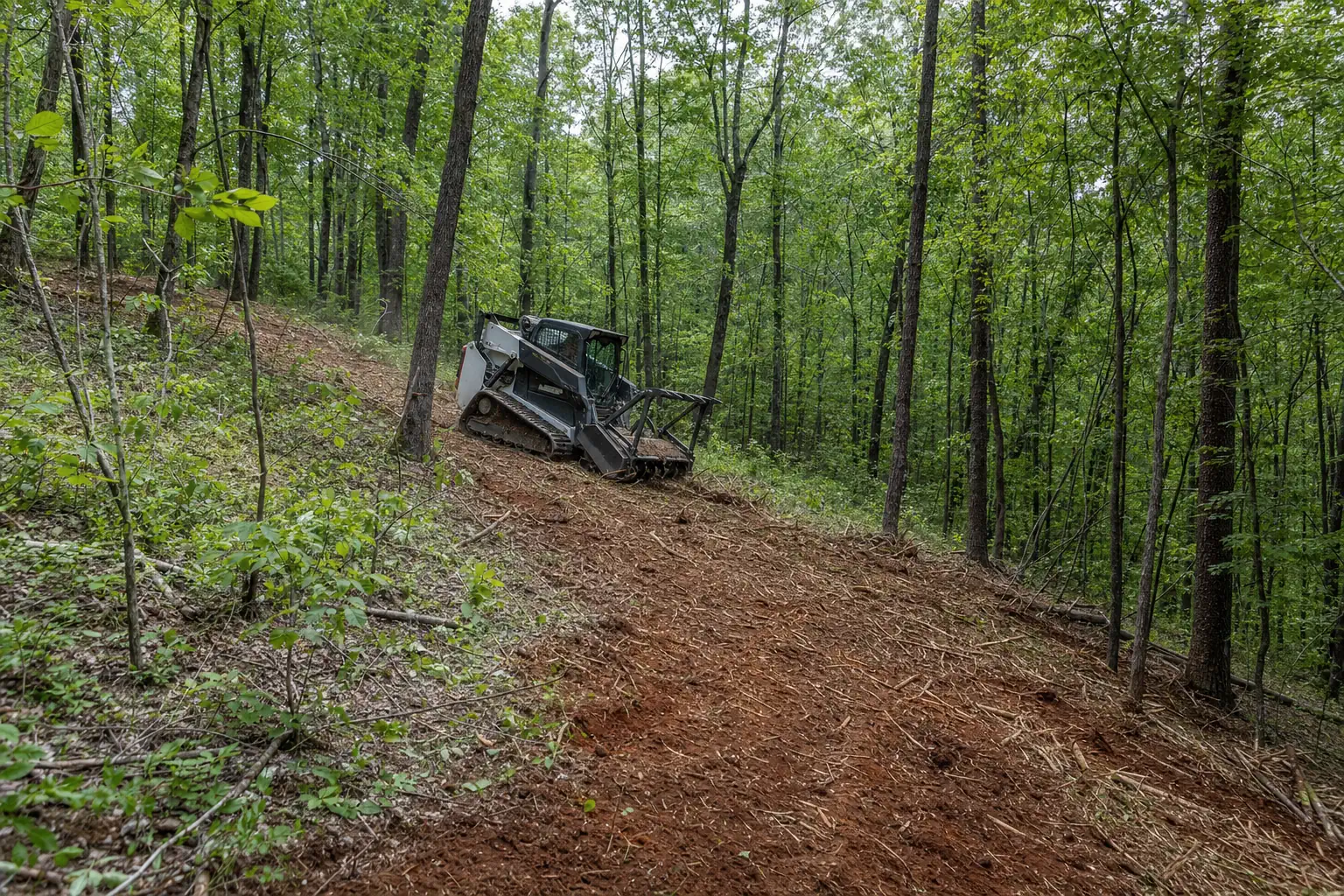
On most jobs the mulcher is a drum head on a compact track loader in the 75 to 120 horsepower class. Bigger tracts get a purpose-built mulching tractor with more power. Either machine works best on the growth that makes up most overgrown land in Forsyth County: privet, briars, sweetgum and pine saplings, and mixed second growth.
Why each inch costs more
The drum has to cut through the whole trunk to drop a tree, so a 10-inch oak holds far more wood than a 5-inch one. Contractors call this inch-acres: the size of the biggest stems times the ground they cover.
Machine time on one acre
- 3.5 hrs
- Where the biggest stems are 4 inches
- 10.5 hrs
- Where they reach 12 inches
- About 8 in
- Largest trunk a mulcher takes standing
- 8 to 10 in
- Where trees usually get felled first
The first two figures come from a published production study of forestry mulchers. Same acre, three times the machine time. That is why our quotes start with the trunks, and why machine time by the hour or day makes sense on uneven ground.
What happens to the big trees
Trees past 8 to 10 inches have two paths:
- Keep them. A big oak or poplar is shade, screening and value, and the mulcher works around it. On many lots this is the right call, and it costs less. See keeping the big trees and clearing the rest.
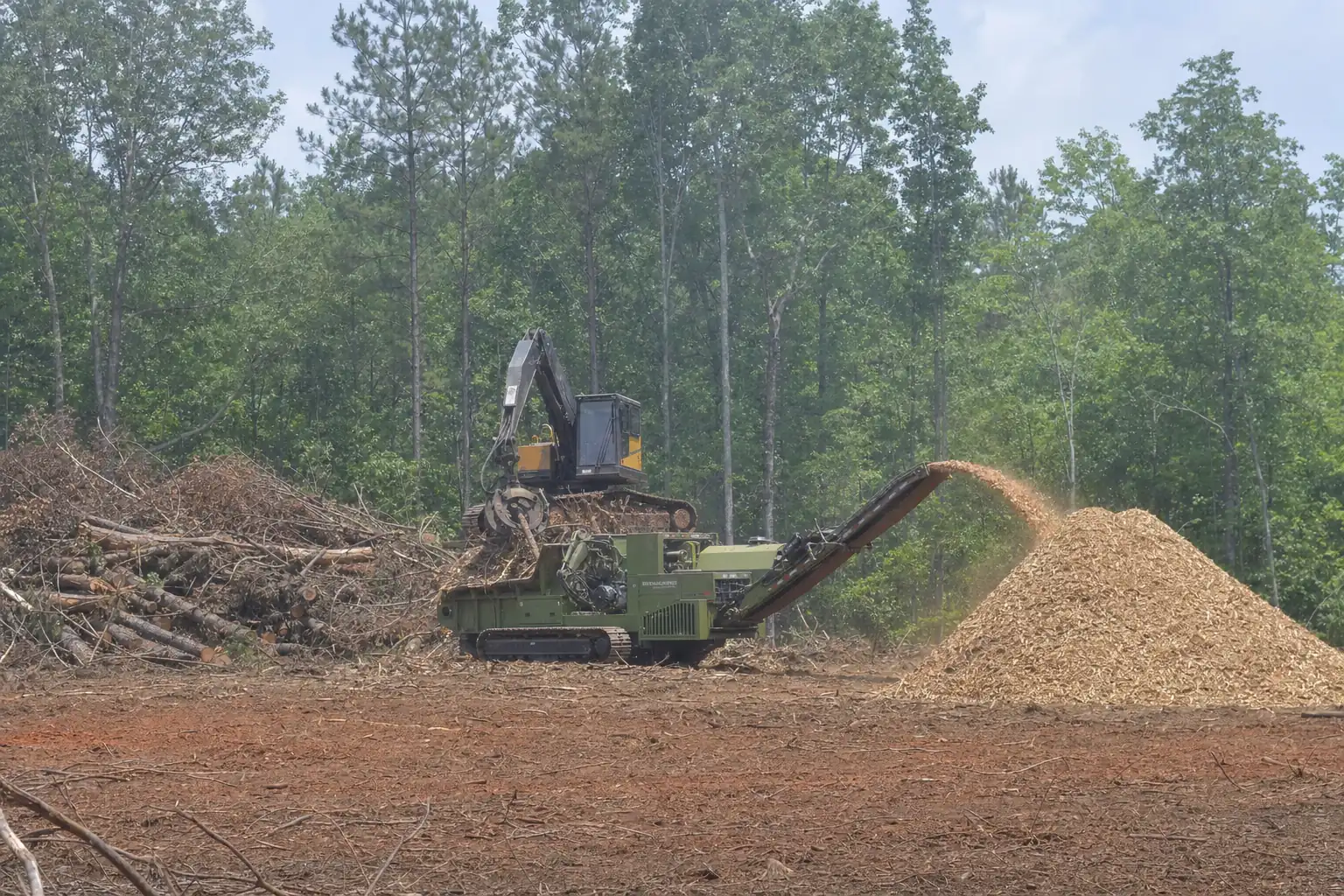
- Fell them first. A saw drops the tree, the mulcher works the top and limbs, and the trunk gets dealt with on the ground. Where there are many logs or storm-downed trunks, a horizontal grinder handles the volume.
Under a house pad or driveway, big trees and their stumps come out with an excavator. That is site work, priced apart from the mulching.
What goes wrong when a crew pushes past the limit
Landowners who post about bad mulching jobs tend to describe the same few results. Most trace back to a machine running trees it was too small for, or a crew rushing to finish on a flat price.
- Big pieces left behind. Half-ground trunks and chunks too large to mow over, scattered across the acre.
- Logs buried in the mulch. Felled trunks pushed into a pile and covered with chips instead of dealt with.
- Tall stumps. Stumps cut high because grinding a big one to grade takes time the quote didn’t allow.
- Thinning sold as clearing. The small stuff ground out, the 8-inch trees left standing, and no one said so up front.
The fix is a quote that names the largest trunk size coming out, how the bigger trees get handled, stump height and chip size. Our guide to what a quote should include lists the rest, and how to vet a land clearing company covers what to ask before you sign.
What we look at on the walk
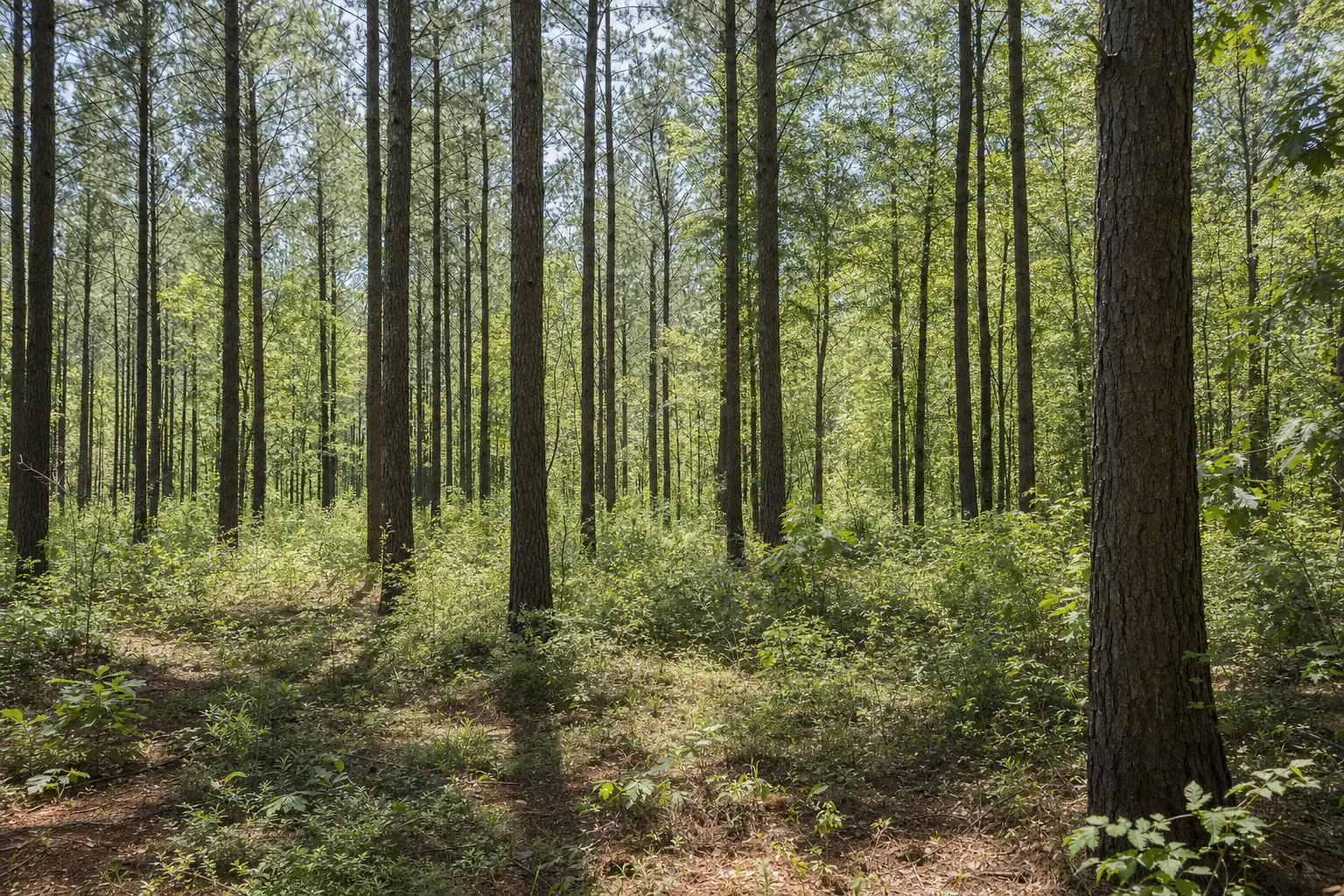
We walk the land with you, flag what stays and count the trunks past 8 inches in the area you want open. Slope, rock and wet clay matter too: a 6-inch tree on a steep, rocky Piedmont slope takes longer than the same tree on flat ground. Saturated clay stops tracked work altogether, so a soggy week can move the start date.
A mulched acre grows back from the roots of the hardwoods, whatever size they were, so plan on maintenance mowing once or twice a year after the first pass.
FAQ
More about trunk size
- Can a mulcher take down a 12-inch tree?
- Not standing, as a rule. A 12-inch hardwood gets felled first, then the mulcher works the top and limbs on the ground. Expect that ground to price in the heavy band, $4,000 to $6,500 or more an acre.
- Do pines and hardwoods mulch the same?
- Trunk size matters more than species. A 6-inch pine and a 6-inch oak both fall inside what the mulcher takes standing. The difference shows up later: cut pines don't come back, and the hardwoods resprout from the roots.
- How do I measure trunk size for a quote?
- Measure across the trunk at about chest height, or wrap a tape around it and divide by three. A photo with a tape or a boot next to the trunk works too. We look at the biggest trees first.
- Will the mulcher damage the big trees I keep?
- The operator works around every tree you flag, and the tracks stay out of the ground near the trunks. Mulching leaves roots and soil in place, which is easier on keepers than a dozer.
Keep reading