Straight answer · 3 min read
How Deep Is the Mulch Layer and Can I Seed Grass on It?
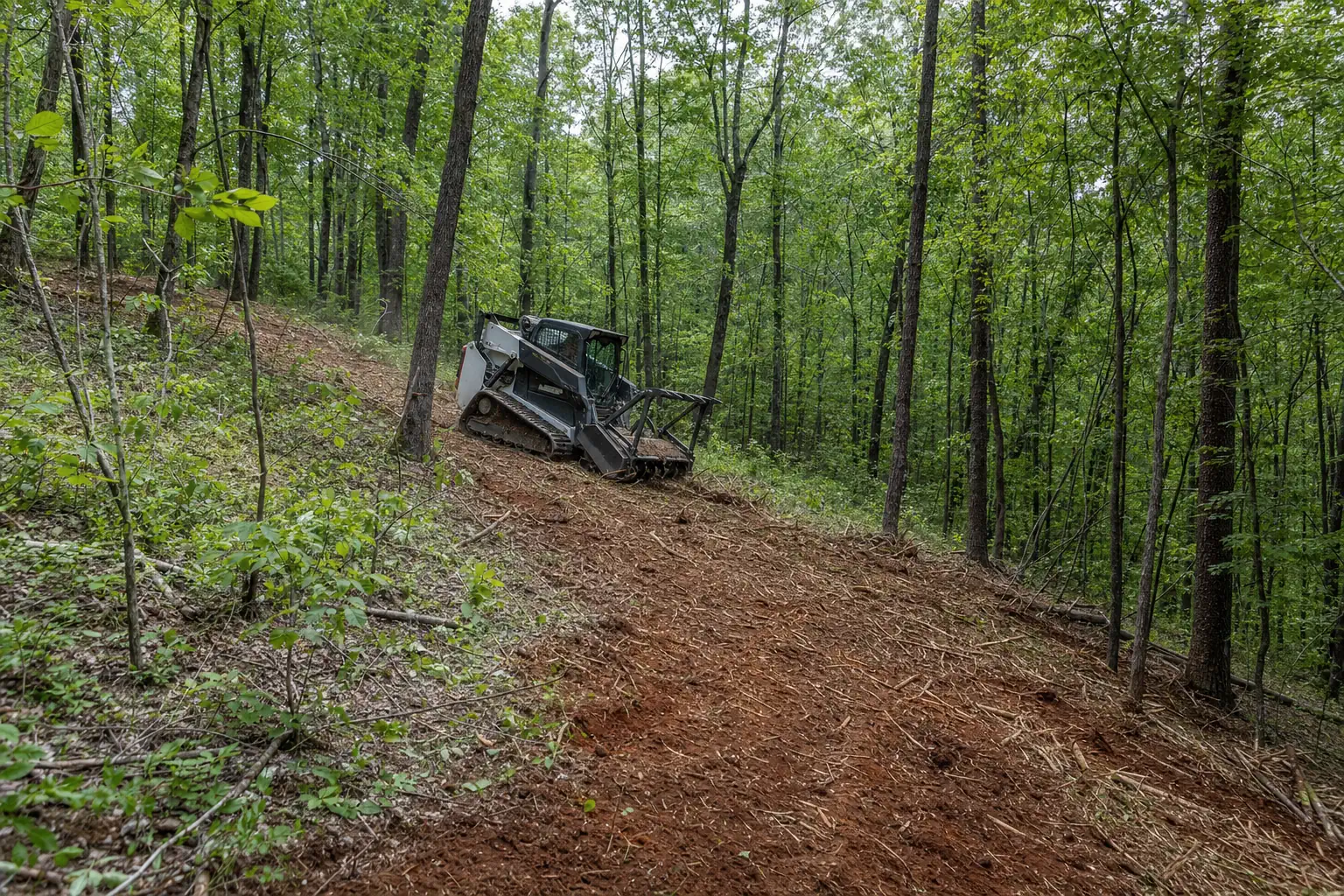
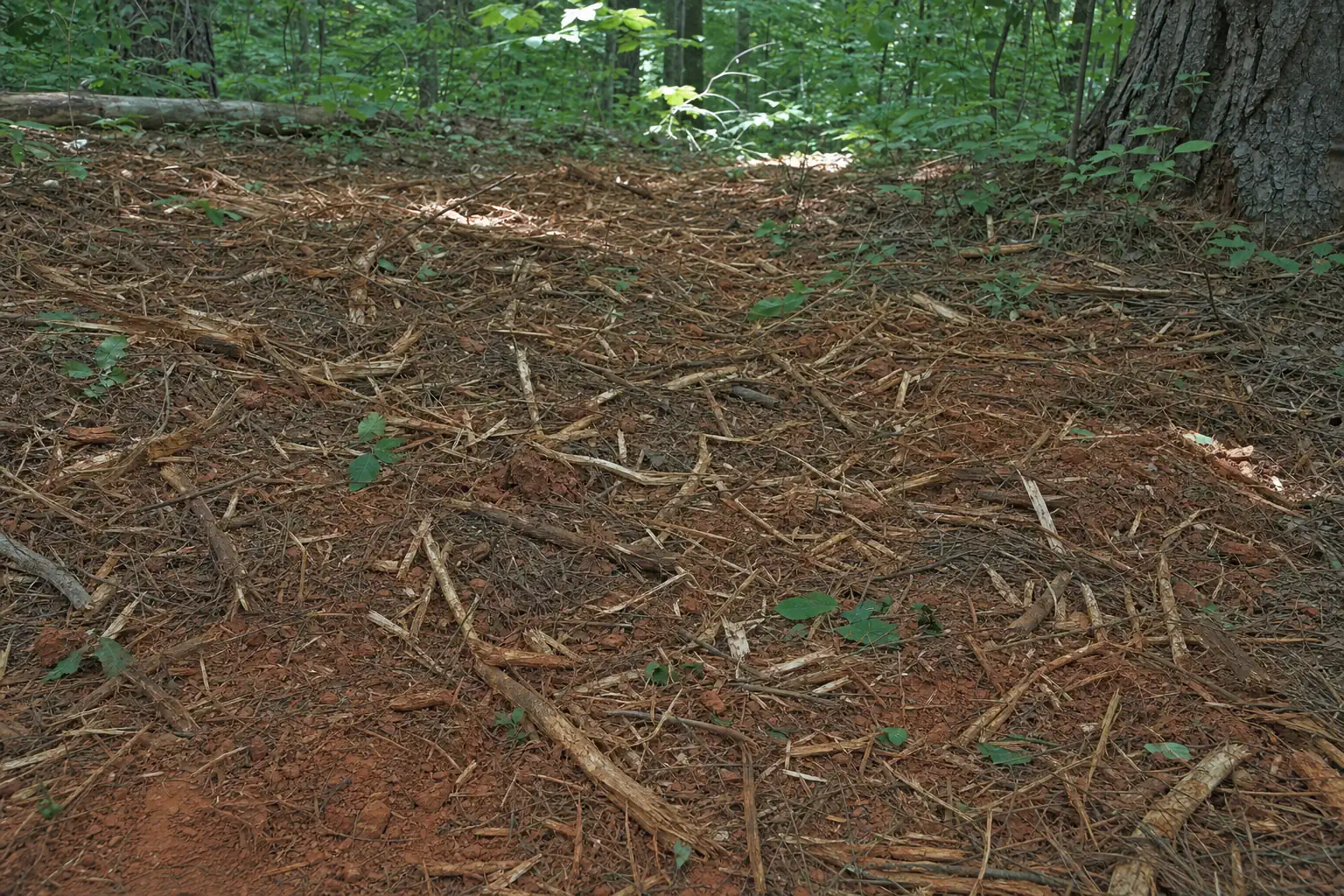
It depends on what was growing. Sawnee Land Clearing's mulchers leave a thin scatter of chips where light brush stood around Cumming and a thicker mat where a dense stand was ground. Grass seed takes where chips are thin and the seed reaches the soil. Where you plan to seed, ask for a finer chip and a thinner layer.
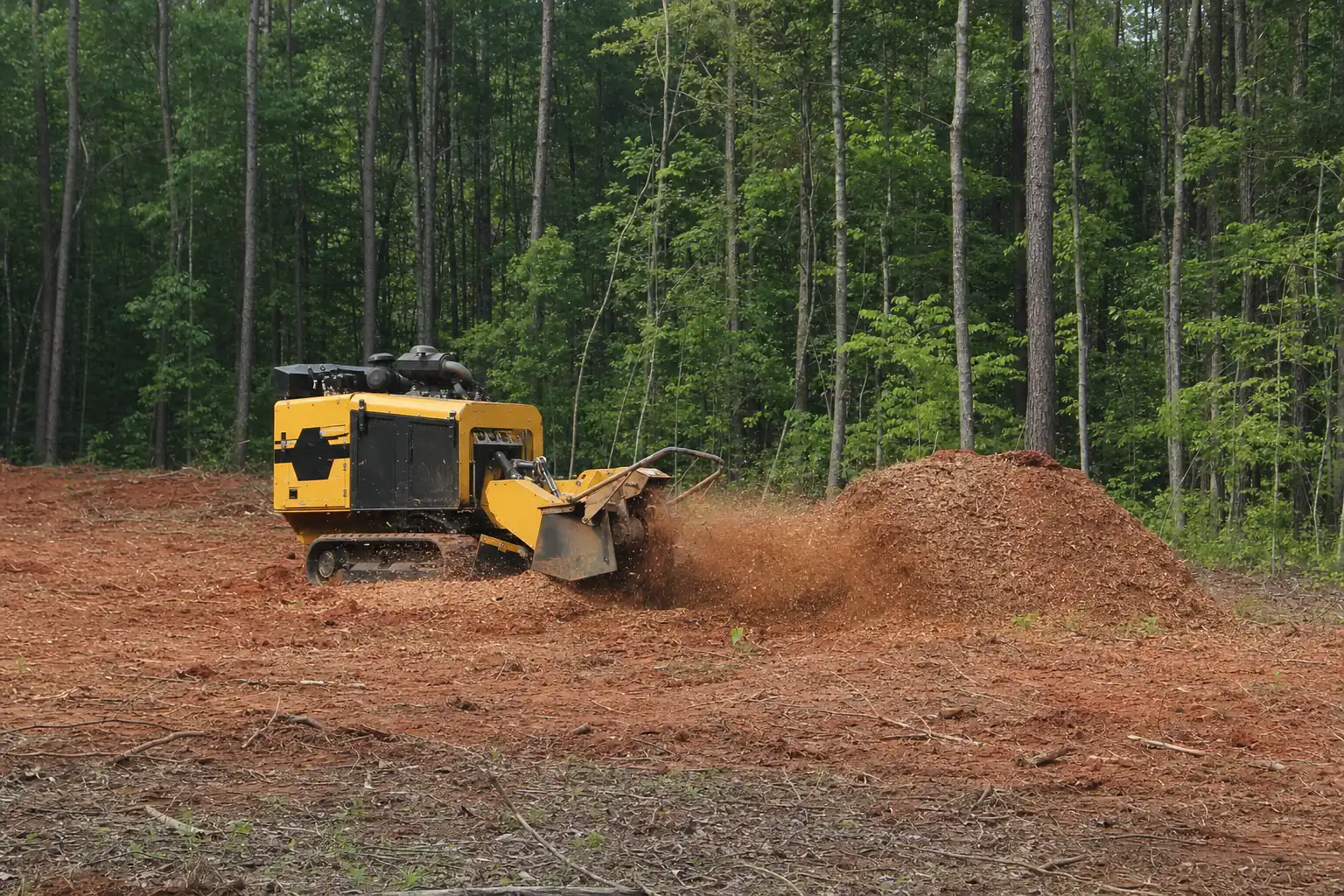
A forestry mulcher turns everything it cuts into chips and drops them where the plant stood. So the chip layer is a record of what grew there. An acre of briars and scattered saplings leaves a thin scatter with soil showing through. An acre of solid privet or 6-inch sweetgum leaves a mat you can’t see the ground under. We don’t put a single inch figure on it, because the same acre can have both.
What sets the depth
- How much was standing. More wood per acre means more chips per acre. Dense thickets and stands of bigger saplings leave the deepest layer.
- Trunk size. Felled trees past 8 to 10 inches have their tops and limbs mulched on the ground, which piles chips in that spot.
- Chip size. Coarse chips stack loose and look deep. More passes make finer chips that lie flatter and closer to the soil.
- Where the operator spreads them. A good operator spreads chips across the acre instead of leaving windrows at the edges.
Pick the finish before the machine starts
The cheapest finish is coarse mulch left as it falls, and for woods, trails and hunting land that is the right one. Ground you plan to seed needs a different finish, and it is easier to do on the first pass than to fix after.
| Finish | What you get | Good for |
|---|---|---|
| Coarse, left as it falls | Lowest cost, deepest cover, stumps at grade | Woods, underbrushing, trails, slopes |
| Finer chip, thinner layer | More passes; chips spread so soil shows | Food plots, rough pasture, seeded edges |
| Stumps below grade | $100 to $400 a stump so a mower or disk can cross | Lawn, hay, pasture, plots you’ll disk |
| Chips hauled off | $500 to $2,500 an acre; bare soil | A lawn that has to go in this season |
Ranges are estimates for Forsyth County and the surrounding area based on job density, terrain, access and acreage. Your written quote is the only price that applies to your property.
Seeding a mulched area
Seed needs to reach soil. On thin chips with clay showing, it can go straight down. On a thick mat, the seed sits on wood, dries out and mostly fails, so the chips need thinning, raking off or working in first.
- 1Ask for the seeding finishFiner chip, thinner layer and stumps below grade where seed goes.
- 2Get seed to the soilThin or rake the mat where it's deep, or work the chips in.
- 3Lime and seedLime the clay and give it time to start working before seed goes in.
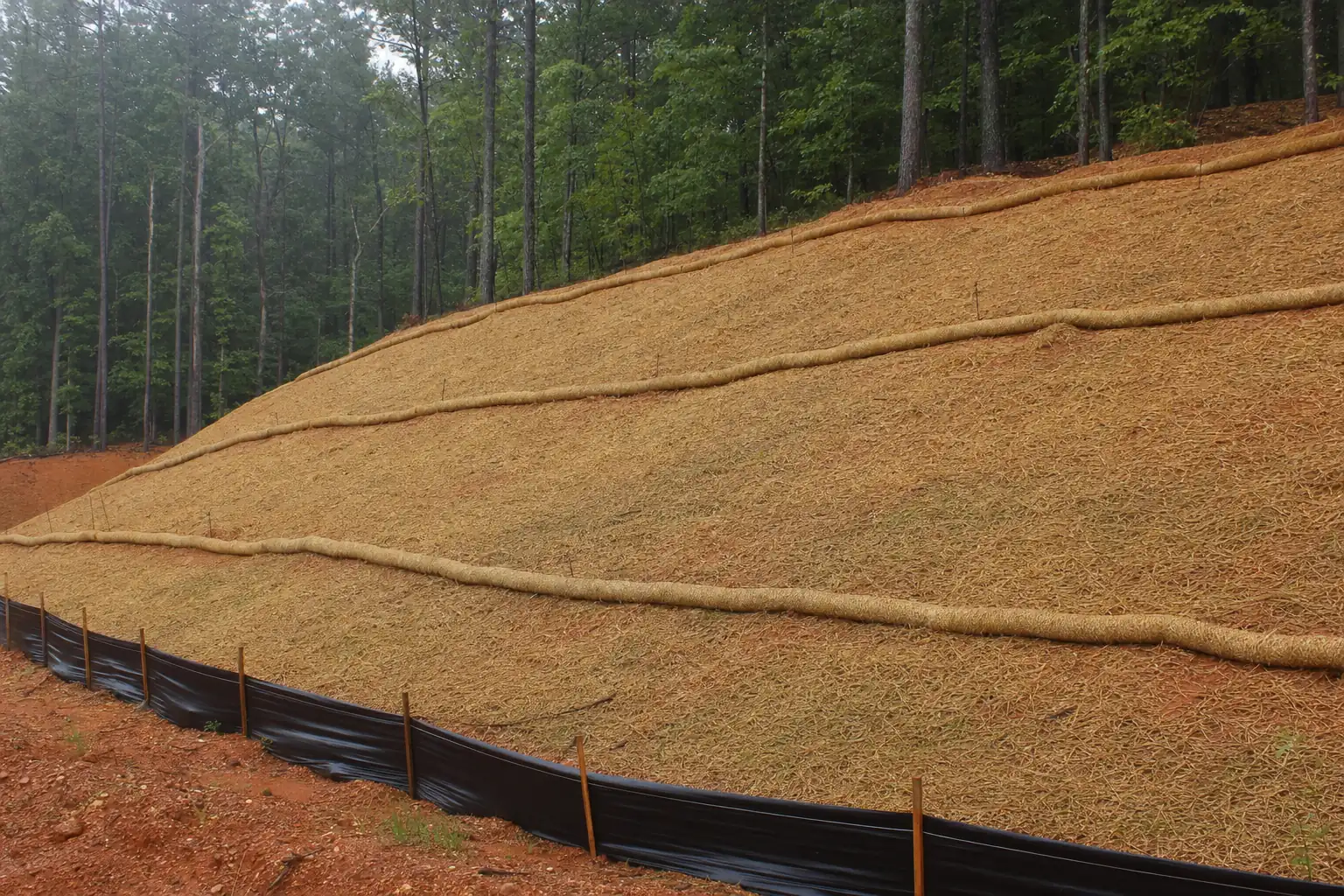
- 4Cover the slopesStraw over seed on bare slope so the clay holds while grass takes.
One caution from common experience: fresh wood chips worked into the soil can tie up nitrogen while they break down, and new grass in that ground may look pale. A soil test before you lime and fertilize tells you what the ground needs. For a hay field, a horse pasture or a lawn, the pasture and lawn answer goes further.
The complaint we hear about other jobs
Landowners who post about disappointing mulching jobs often say the same thing: the chips came out too coarse or too deep to seed or mow, and nobody asked what the land was for. The fix costs little up front. Tell the operator which areas get seeded, put chip size and stump height in the written quote, and walk the finished ground before the machine leaves. Our guide to what a quote should include lists the rest.
Leaving the mulch alone
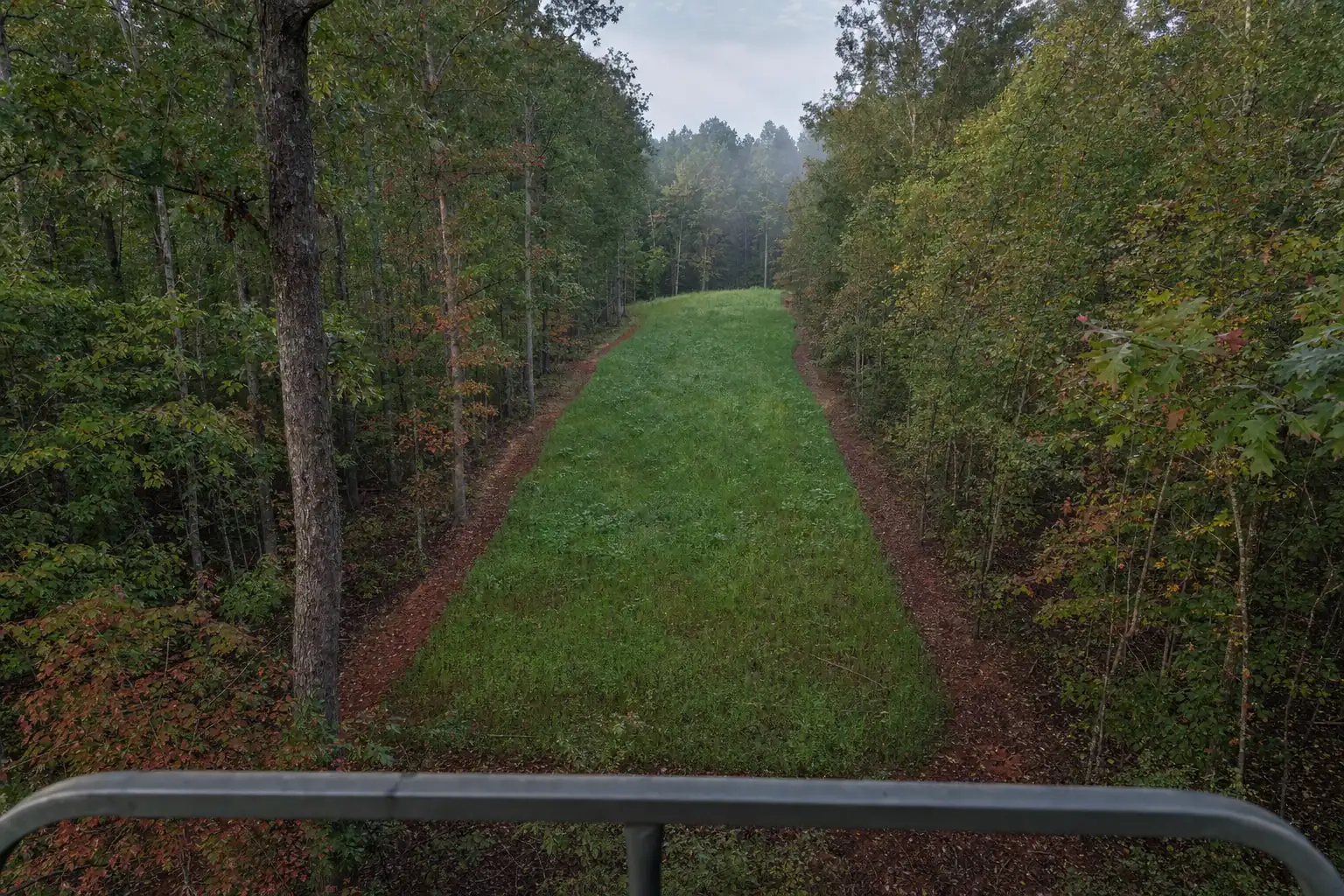
On most wooded and hunting land, you don’t seed at all. The chip layer holds the red clay on slope through the first hard rains and breaks down over a few seasons. Native grasses, wildflowers and woody sprouts come up through it on their own. The sprouts are the catch: hardwoods and privet come back from the roots, so the area needs maintenance mowing once or twice a year to stay open.
Ground that is bare after a job, around a pad or where we pulled stumps, gets straw and seed so it doesn’t wash. That is erosion control on the same contract. The forestry mulching page covers what the machine leaves elsewhere, and food plot clearing covers the plot finish in detail.
FAQ
More about mulch and seeding
- Can I throw seed on top of fresh mulch?
- Where the chips are thin and you can see soil between them, seed can take. On a thick mat, seed sits on wood instead of soil and most of it won't root. Thin or move the chips first on any area that has to come in as grass.
- How long does the mulch take to break down?
- A few seasons. Fine chips go faster than coarse ones, and chips in contact with damp soil go faster than a dry pile. Grass and weeds come up through the thin areas well before the thick ones.
- Should I have the chips hauled off instead?
- Only where you need bare soil and can't wait, such as a lawn going in this season. Hauling adds about $500 to $2,500 an acre and leaves the clay uncovered until the grass takes.
- Does a seeding finish cost more?
- Yes. Fine chips take more passes than a rough mulch for woods, and stumps ground below grade add $100 to $400 a stump. We price the seeding finish only where you plan to seed.