Straight answer · 4 min read
How Wide Should a Firebreak Be?
Wide enough for the fuel beside it and the job it does; no one number fits every line. On North Georgia timber land, a burn-unit line gets cut to bare mineral soil at the width your forester's burn plan sets, lines get wider beside heavy fuel and on slope, and every grade gets water bars.
Landowners usually ask this expecting a number, and the internet will hand you several. We’d rather tell you what actually sets the width on your land, and who should write it down, than repeat a figure that doesn’t fit your slope or your fuel.
What sets the width
A firebreak works by giving a fire nothing to carry it across the line. How wide that has to be depends on what’s beside the line and what you need the line to do.
- The fuel next to it. Short grass beside a line throws short flames. A privet thicket, a stand of young pines with low limbs or a deep bed of pine straw throws flames high and far, so the line has to be wider.
- Slope. Fire runs uphill faster than it moves on flat ground. A line across a Piedmont slope, with fuel below it, needs more width than the same line on level ground.
- Its job. A burn-unit line has to hold a prescribed fire the crew lit on purpose. A perimeter line protects the stand from a fire that starts outside. A green line behind a house slows a ground fire near the yard.
- The machine that cuts it. A bare-soil line is at least as wide as the blade or disk that made it, and lines that double as woods roads have to carry a truck or a tractor.
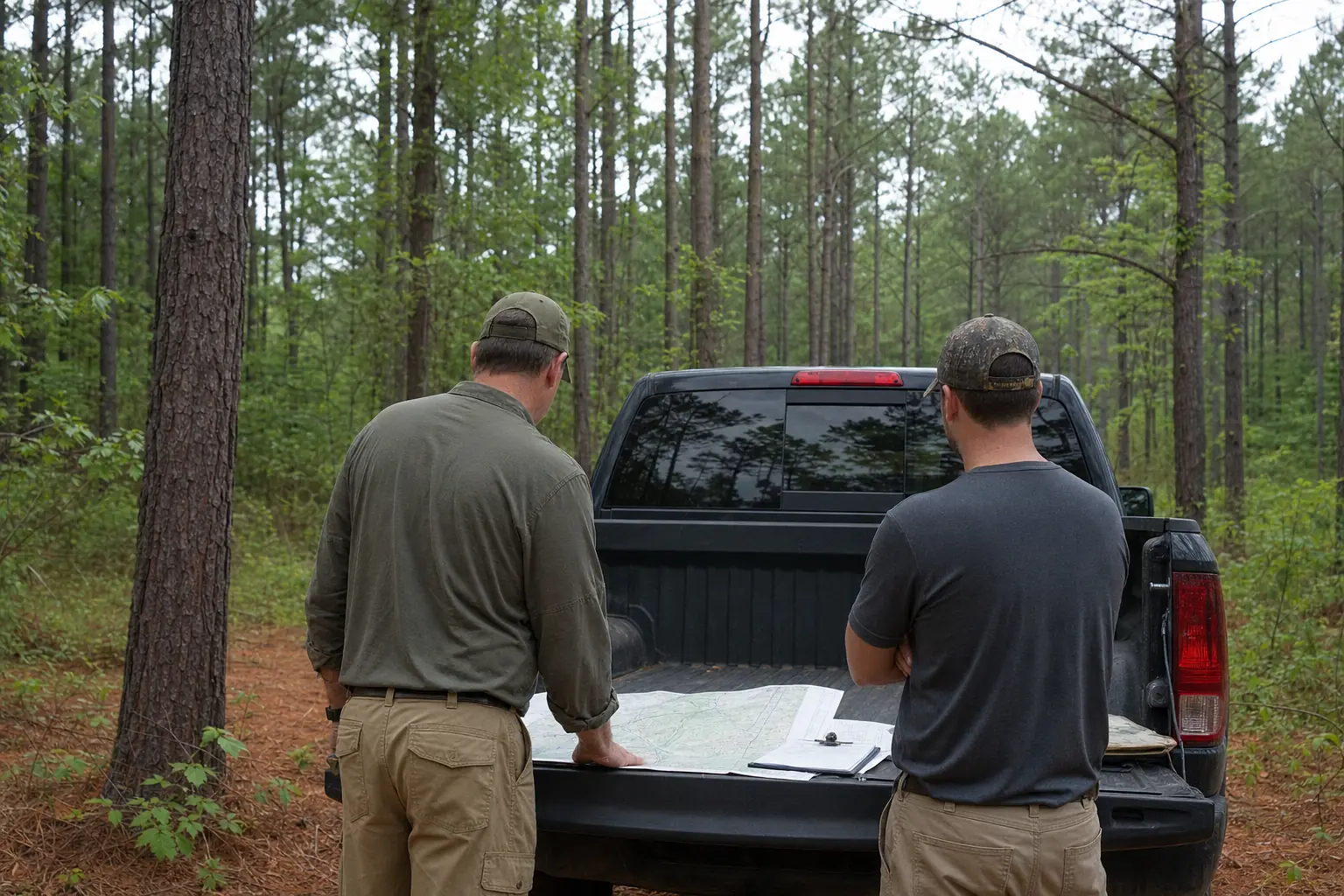
No single width fits every line. On timber land, a consulting forester sets it in the burn plan, and the burn crew agrees to it before the first fire.
Bare-soil lines and green lines
| Line | Surface | Where it fits | What sets the width |
|---|---|---|---|
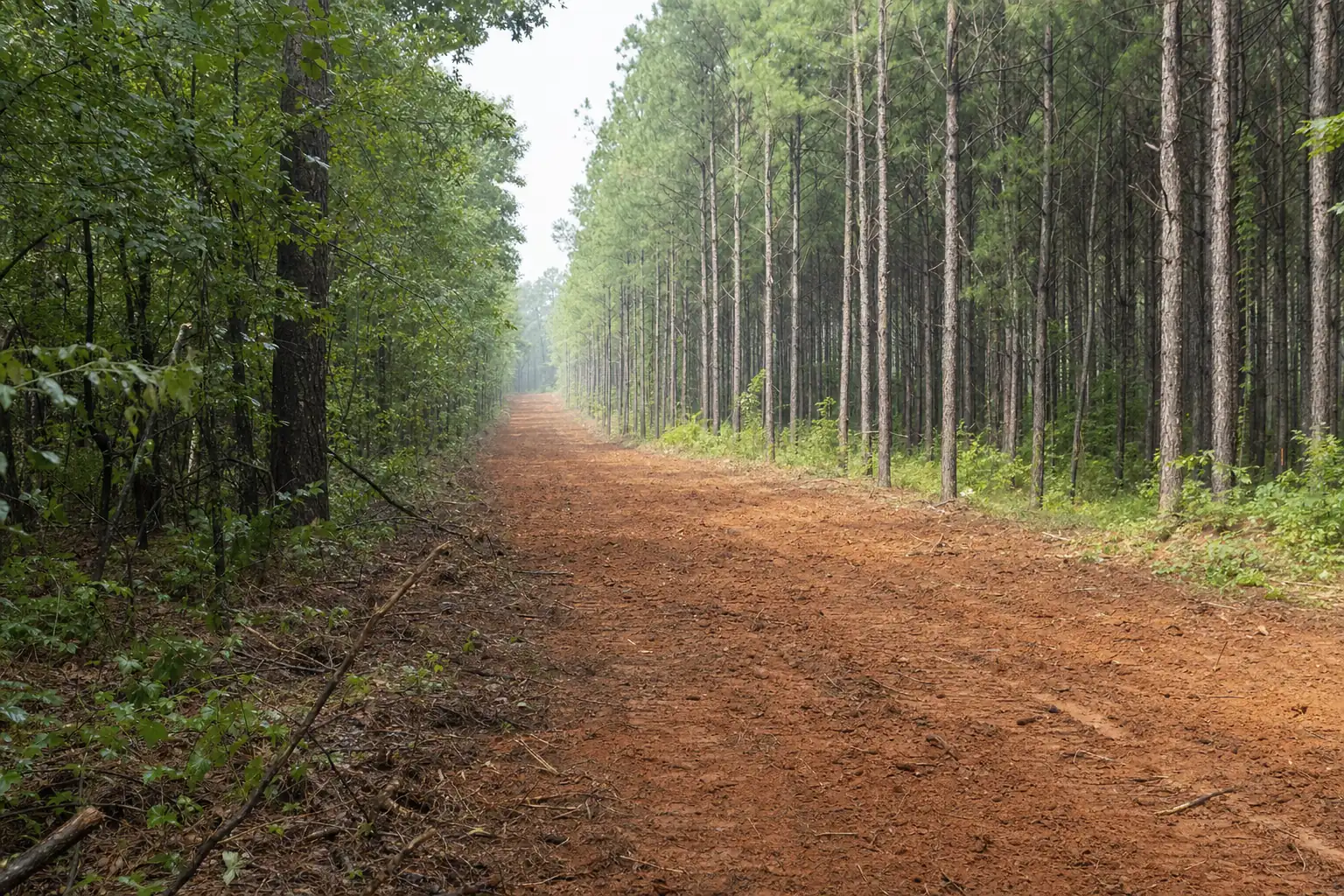
| Bare-soil line | Bladed or disked to mineral soil | Burn units and stand perimeters | The burn plan, the fuel and the equipment |
| Green line | Mowed or mulched low, soil covered | The house edge, steep ground that would wash | The fuel beside it and the room you have |
| Line that doubles as a road | Firm bare soil or short grass | Hunting tracts, stand access, timber | The widest vehicle that will use it |
Mulch still burns. A mulched strip slows a ground fire by cutting the fuel down to a thin layer of chips, but it won’t hold a prescribed burn. Burn-unit lines go to mineral soil.
Slope, rain and water bars
On red clay, the width of a firebreak matters less than what happens to it in the first storm. A bare line running straight down a slope turns into a gully. Every grade on a line needs water bars: angled berms that turn rain off the line and into the woods. A wider line on a slope carries more water, so it needs them closer together.
Where a slope is steep enough that a bare line would wash no matter what, a green line or a line laid out along the contour does the job with less damage. We work that out on the walk with your map or your forester’s.
Where a firebreak meets a creek
Firebreaks stop short of the stream buffer, or cross it at one planned point, never down the bank. Georgia keeps a 25-foot buffer along state waters, and Forsyth County holds a 50-foot undisturbed buffer plus a 25-foot setback. Forestry work is exempt from the county’s land disturbance permit, but if it disturbs a stream buffer, no other land disturbance except normal forest management is allowed on the property for three years.
Permit thresholds, fees and buffer widths are those published by Forsyth County and the State of Georgia as of November 4, 2026. Confirm current requirements with the issuing authority before work begins. This is not legal advice.
That three-year rule matters if any part of the tract might be developed later. We flag the creeks before the machine starts.
What a firebreak costs
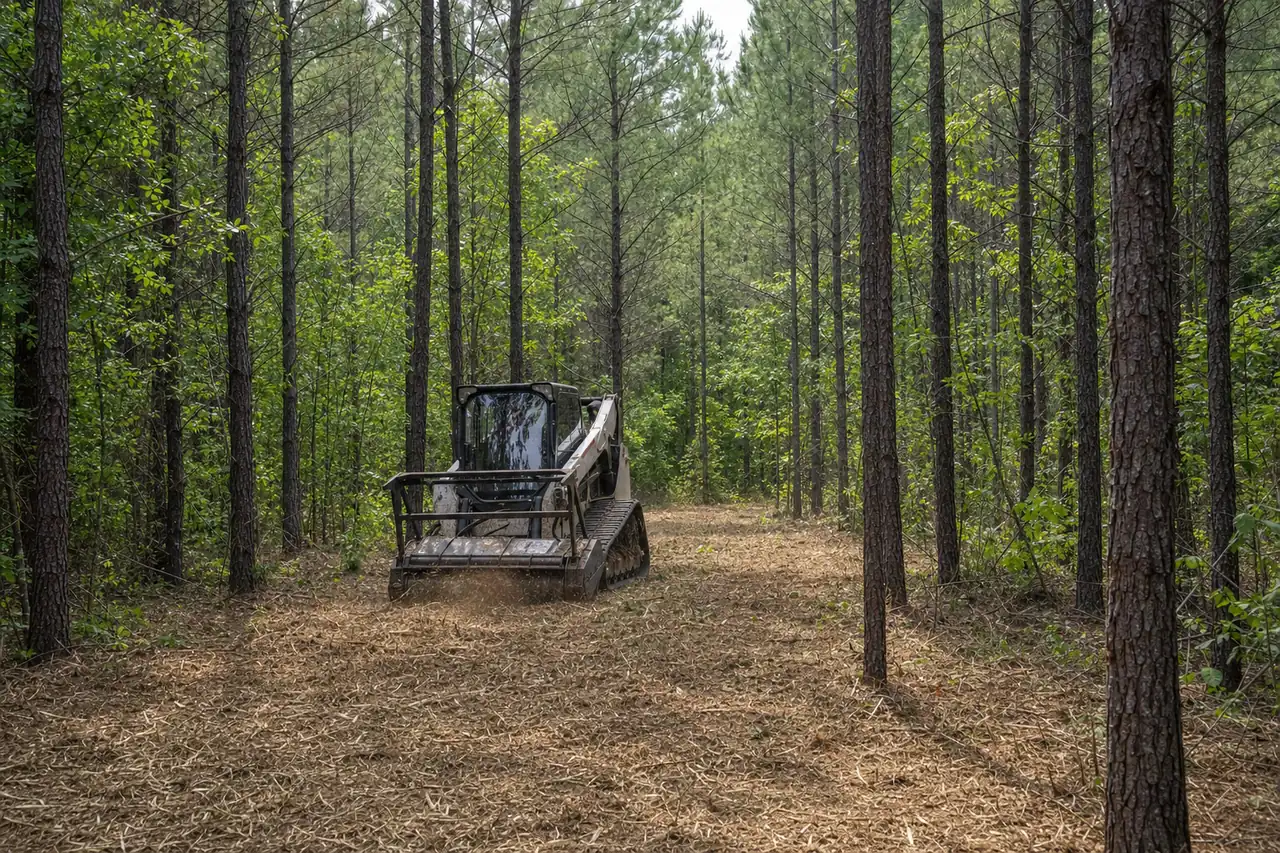
Firebreaks price by machine time, so the length of line and what grows on it matter more than the size of the tract. A wider line takes more passes.
- $150 to $300
- Mulcher with operator, per hour
- $1,800 to $3,000
- Machine day rate
- $1,200 to $2,500
- Per acre, light brush and saplings
- $1,200 to $2,000
- Small-job minimum
Ranges are estimates for Forsyth County and the surrounding area based on job density, terrain, access and acreage. Your written quote is the only price that applies to your property.
Cutting a line to bare soil adds a dozer or disk pass after the mulcher. Water bars on slope add time too, and they’re the part we won’t skip. Every firebreak grows back in grass, briars and sweetgum, so plan to mow or re-disk it once or twice a year; that’s bush hogging and maintenance mowing. Federal EQIP lists Firebreak among Georgia’s forestry practices for forest land; the cost-share guide explains how the programs work.
Program figures and sign-up windows are set annually and are current as of November 4, 2026. We confirm every figure with the Georgia Forestry Commission or NRCS before any application. This page explains how programs work; it is not a guarantee of eligibility or reimbursement.
The full service is on the firebreak installation page, and the hunting and timber land hub covers the rest of the work in the woods.
FAQ
More about firebreaks
- Will a mulched line stop a fire?
- It slows a ground fire by cutting the fuel, but mulch still burns. A mulched or mowed green line suits the house edge and slopes that would wash. Lines that have to hold a prescribed burn get bladed or disked to mineral soil.
- Can a firebreak double as a trail?
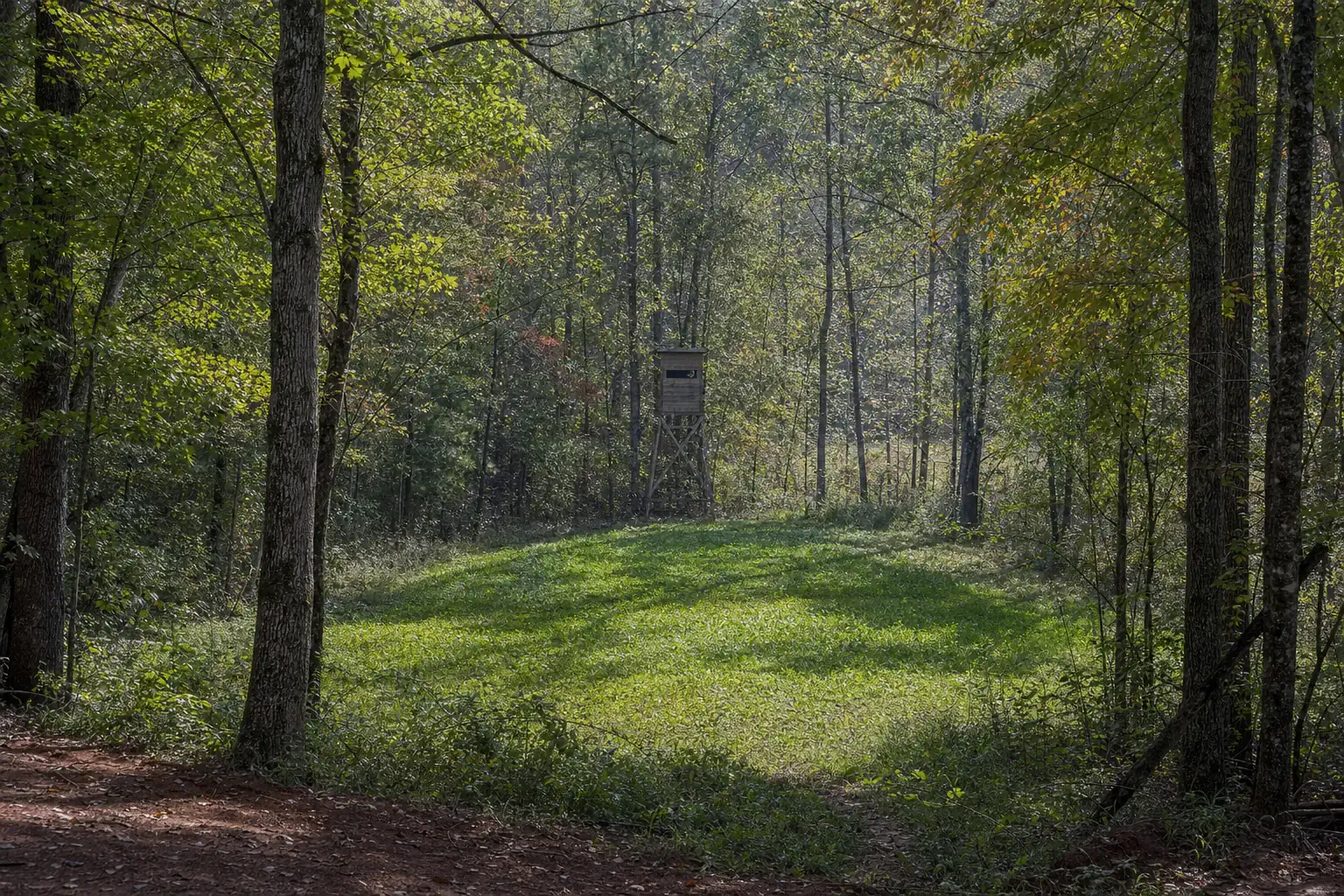
- Yes, and on hunting land most do. A firm line built wide enough for a truck or a tractor works as a woods road and a quiet route to a stand. Water bars on the slopes keep it from washing.
- How often does a firebreak need upkeep?
- Once or twice a year. Grass, briars and sweetgum move back onto a bare line, and a grown-over break no longer stops fire. Mowing or re-disking keeps it working, and water bars need checking after heavy rain.
- Does Georgia pay for firebreaks?
- Federal EQIP lists Firebreak among Georgia's forestry practices for forest land. The program office decides whether your line fits and what it pays. We confirm current terms with the program office before you apply. Thinning and firebreak cost-share.