Underbrush Clearing: Keeping the Trees You Bought the Land For
Underbrush clearing takes out the privet, saplings, briars and deadfall under your trees and leaves the canopy standing. Around Cumming we flag every keeper with you first, mulch the understory in place without digging in the root zones, and plan for the sprouts that come back. Light underbrush runs $1,200 to $2,500 an acre.
Reviewed by the Sawnee Land Clearing team·Last updated
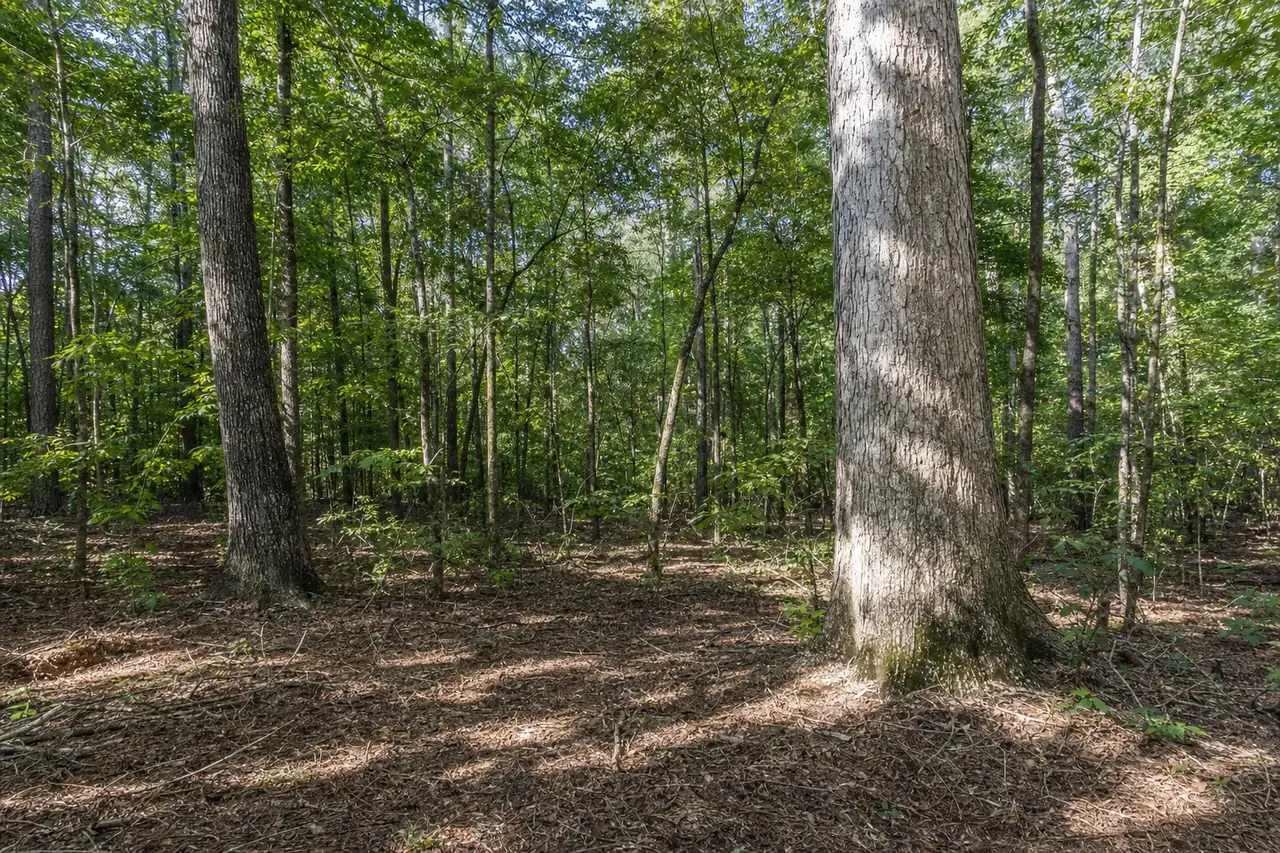
Most people who buy a wooded lot around Cumming remember the first walk. Big white oaks, a couple of tall poplars, pines along the back line, maybe a dogwood by the driveway. That walk is why they paid for the land.
A few years on, the same owner stands on the back deck and can’t see thirty feet into those woods. Privet has filled in under the oaks, sweetgum and maple saplings have shot up between them, and briars and greenbrier have closed the path to the creek. The big trees are still there. The owner can’t see them or get to them anymore.
That’s the usual start of an underbrush clearing job. The owner wants the woods back, with the trees in them.
What filled in under your trees
On Forsyth County ground, the understory is usually the same short list:
Chinese privet. Evergreen, dense, and the reason you can’t see through the woods in January. It comes back from the roots after it’s cut.
Sweetgum and red maple saplings. Fast, thin and crowded in wherever a gap let light through.
Briars and vines. Blackberry, greenbrier and whatever is climbing the saplings.
Deadfall. Limbs and trunks that came down in storms and never got picked up.
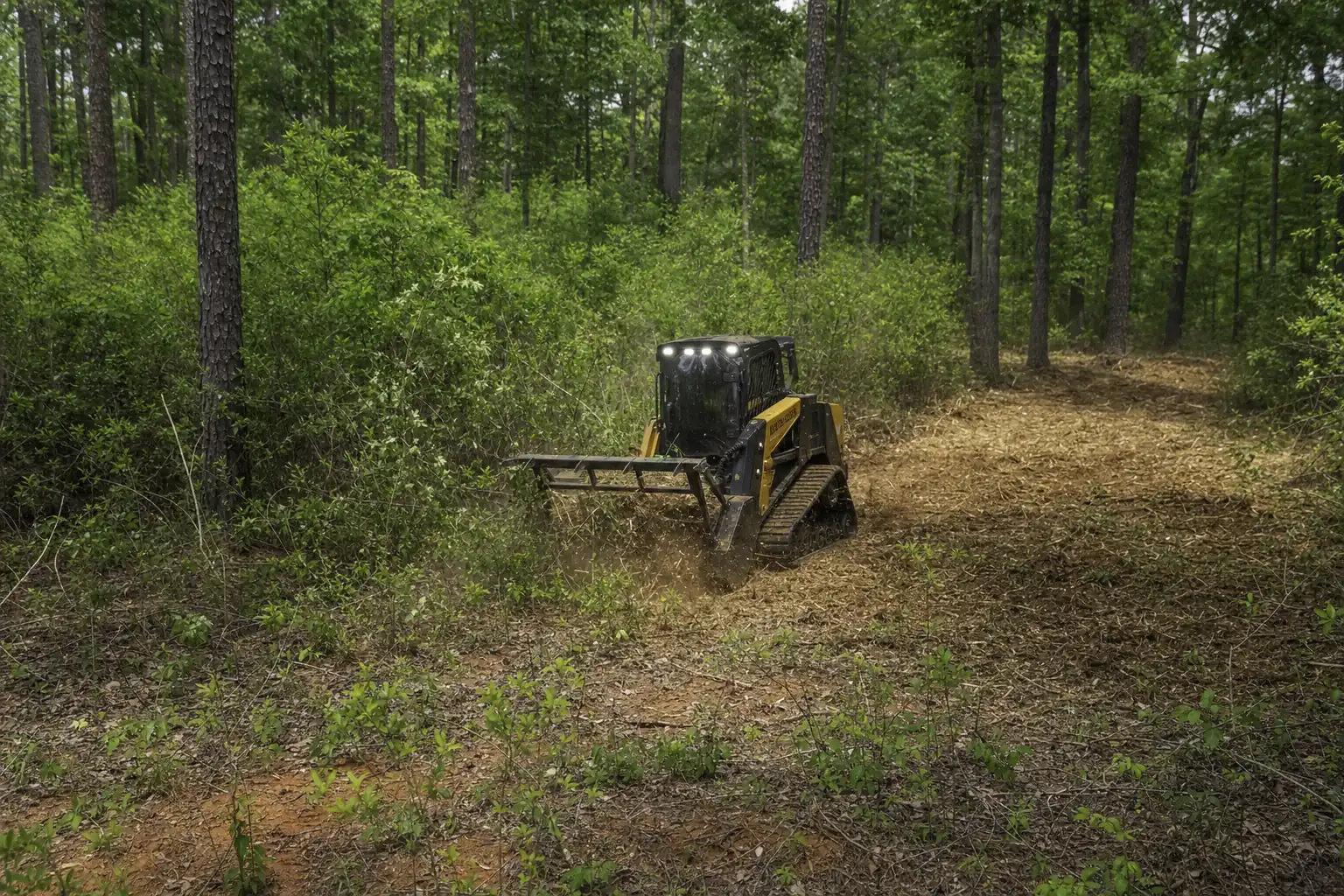
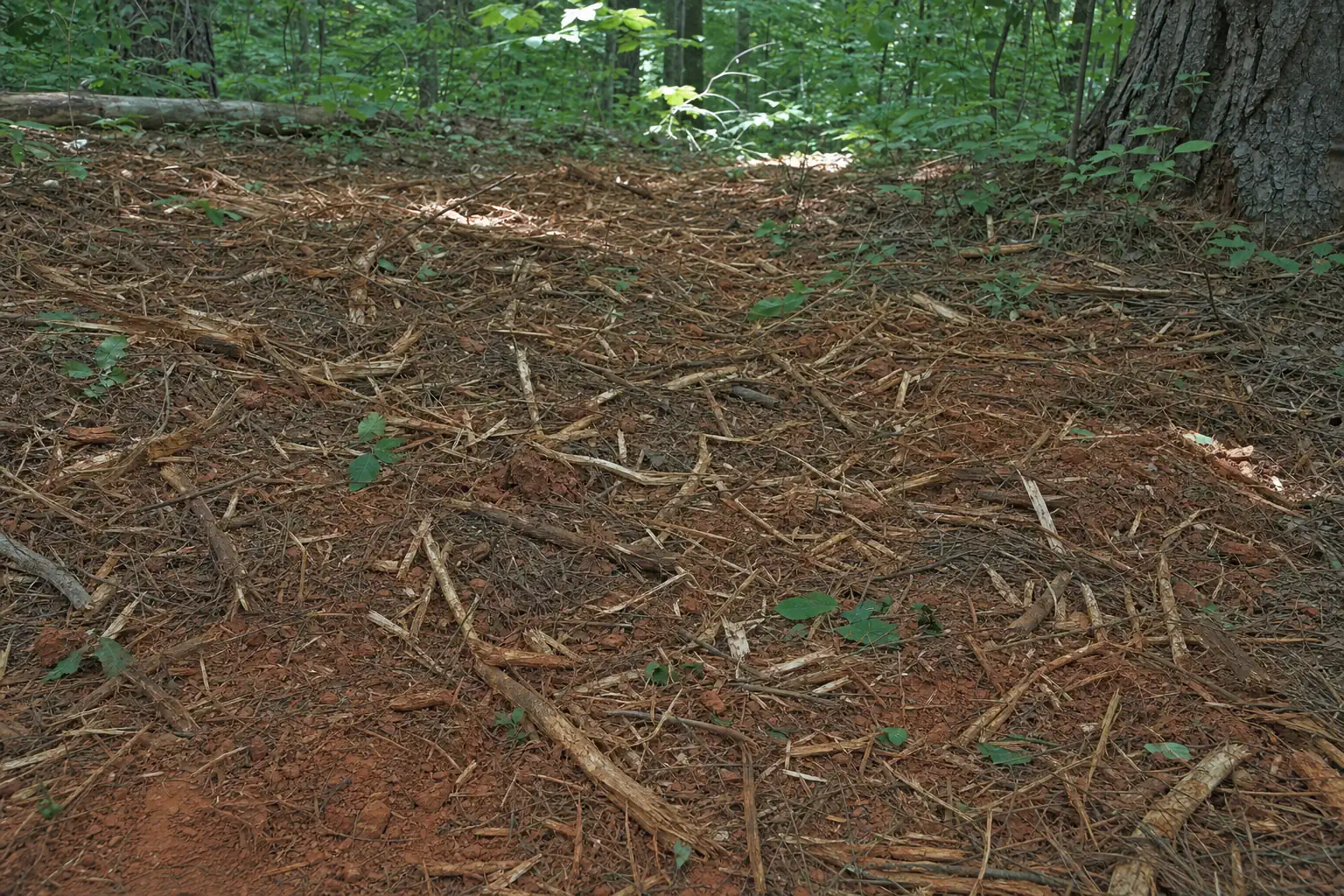
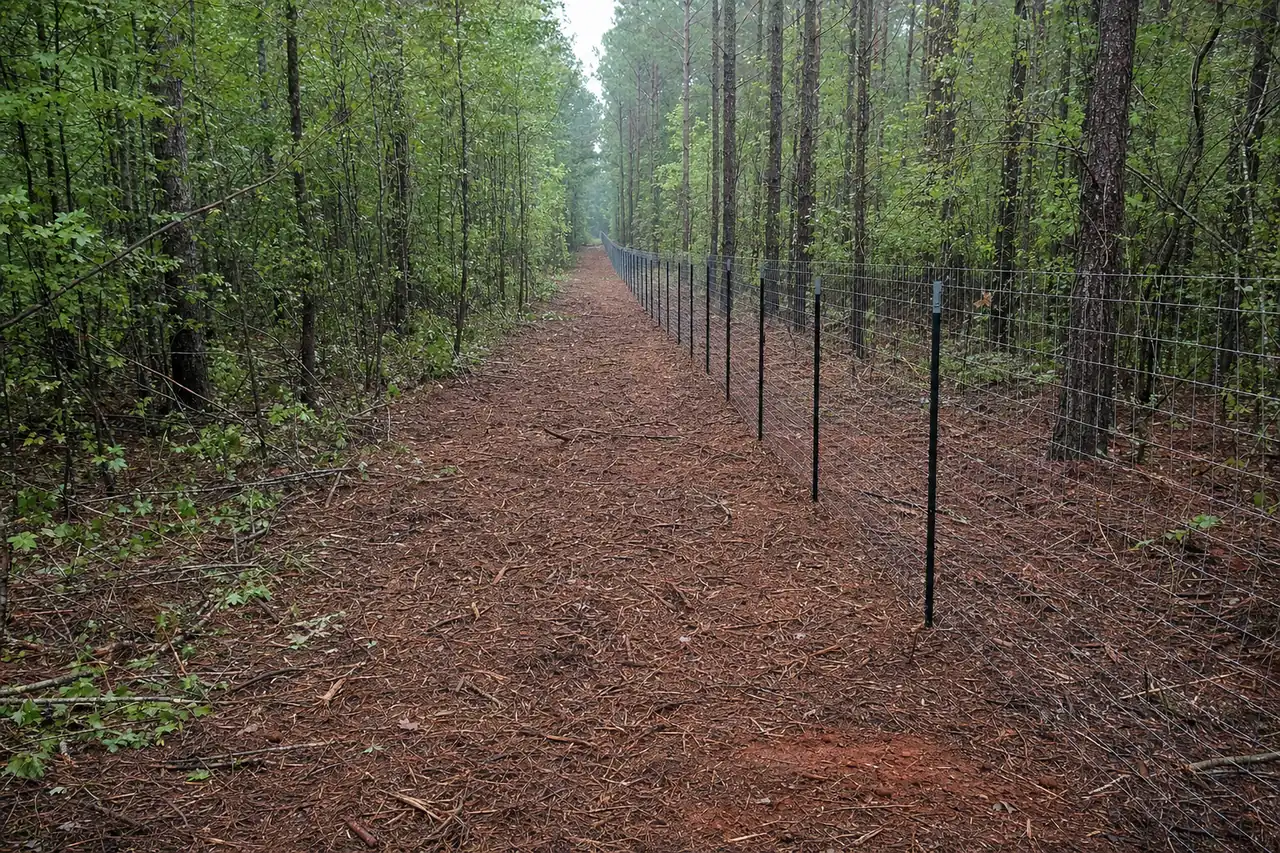
None of that is what you bought the land for, and all of it fits under a forestry mulcher. The head grinds it at ground level and leaves the chips on the clay. Nothing gets hauled off or burned.
Start with what you want the woods for
Before we talk about what comes out, we ask what the woods are for. The answer changes how far we go.
How the goal changes an underbrushing job
What you want
What we usually leave
What we usually take
To see into the woods from the house
The canopy, and flagged dogwoods and understory trees you like
Privet, saplings and briars in the view
To walk the woods
Everything along the path you flag
A loop or a path to the creek, mulched open
Privacy from the road or a neighbor
A screening strip along that edge
The understory behind the strip
Deer and turkey on the back acres
Thick cover in patches and along the creek
Lanes and openings you choose
Most owners pick two of those. A common one around Cumming is opened woods near the house and a screen left standing along the road. You don’t have to decide the whole lot at once, either. Some owners open the half they see every day and leave the back for later.
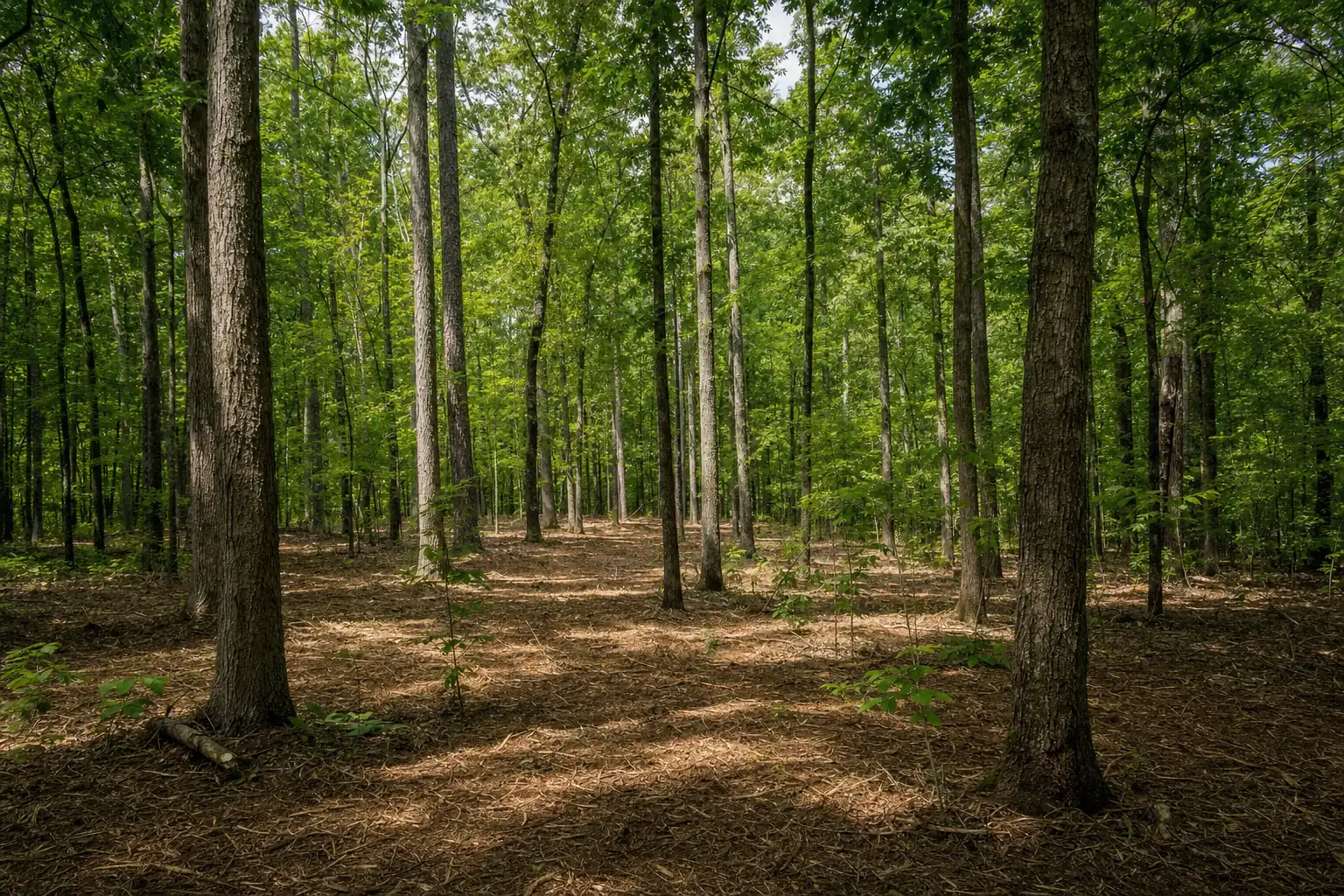
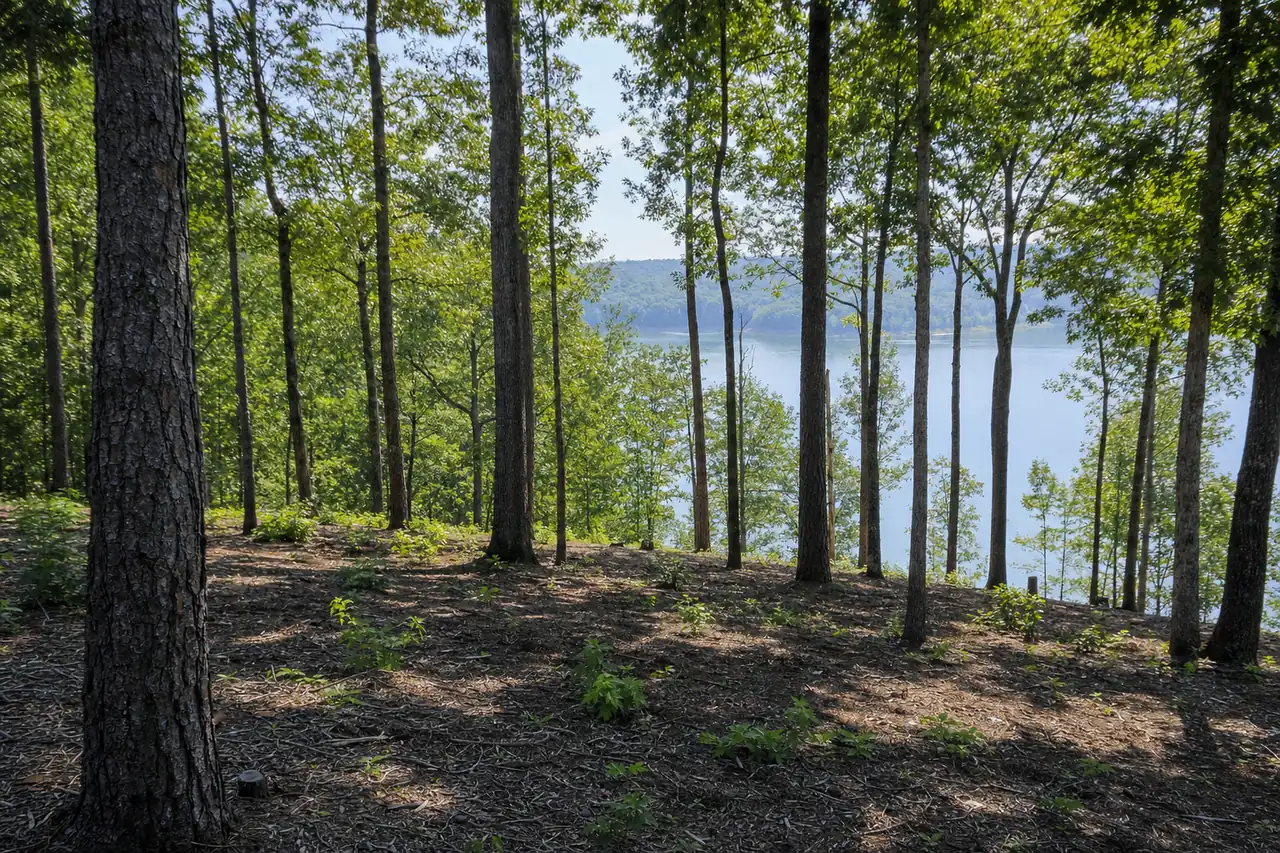
Big oaks with the understory mulched out: the trunks visible again and chips covering the clay between them.
The walk with the ribbon
Every underbrushing job starts with a walk. We go through the woods with you and tie ribbon on what stays. If a tree has a ribbon on it, the crew works around it.
On that walk we point out what you might not see from the deck. A dead pine leaning toward the house. A sweetgum crowding the crown of a good oak. A dogwood hidden in the privet that you’ll want to keep. The calls are yours. Our part is making sure you see each tree before you decide.
We also find the edges. Where the property line runs, how close to the house we work, how far down the slope we go, and where a creek sets a line we stop at. The detailed list of keep-or-clear calls is in can you keep the big trees and clear the rest?
How the machine works around a keeper
A forestry mulcher on a tracked loader grinds from the top of the brush down to the ground and stops there. It doesn’t dig. It doesn’t push over trees or rake roots out of the soil, so the root zones of your keepers stay the way they were.
The mulcher takes standing stems up to about 8 inches. A tree you don’t want that’s bigger than that gets felled first, away from the keepers, and handled on the ground. See what size trees a forestry mulcher can handle.
Close to a trunk, the operator slows down and works in from the side. Where keepers stand in a tight cluster, we finish the spot with a chainsaw.
What kills a kept tree
A tree that survives the clearing day can still die two summers later. The damage happens below ground, and you don’t see it until the crown thins out.
Ruts in wet clay. A heavy machine on soaked red clay cuts and packs the roots. We move the date instead. See clearing on wet red clay.
Scraping. A dozer blade takes the topsoil and the feeder roots with it. Underbrushing doesn’t need a blade.
Fill against the trunk. Soil or a deep chip pile heaped against the bark. We spread the mulch out and keep it off the trunks.
Clearing to the creek. In Forsyth County, a 50-foot undisturbed buffer and a 25-foot setback run along the streams. We flag the buffer and leave it standing.
Permit thresholds, fees and buffer widths are those published by Forsyth County and the State of Georgia as of November 4, 2026. Confirm current requirements with the issuing authority before work begins. This is not legal advice.
Underbrushing is priced by the acre like other mulching work. The size of what comes out sets the price band, and every keeper adds careful work between trunks.
Underbrushing around Cumming
$1,200 to $2,500
Per acre for brush, privet and saplings under 4 inches
$2,500 to $4,000
Per acre when the understory has trees 4 to 8 inches
1 to 3 acres
Light underbrush cleared per machine per day
$1,200 to $2,000
Minimum on a small lot
Ranges are estimates for Forsyth County and the surrounding area based on job density, terrain, access and acreage. Your written quote is the only price that applies to your property.
A typical 2 to 5 acre wooded lot on dry ground takes one to three days of mulching. Slope down toward a creek and a narrow gate both slow the machine. Working around twenty flagged oaks takes longer than clearing everything, and on a lot you bought for the oaks, that time is the job. The cost breakdown is in forestry mulching cost per acre.
Underbrushed woods come back. The mulcher cut the privet and the sweetgum, but their roots are still alive, and they send up sprouts the next spring. Shade from the big trees slows the regrowth under a full canopy. It doesn’t stop it.
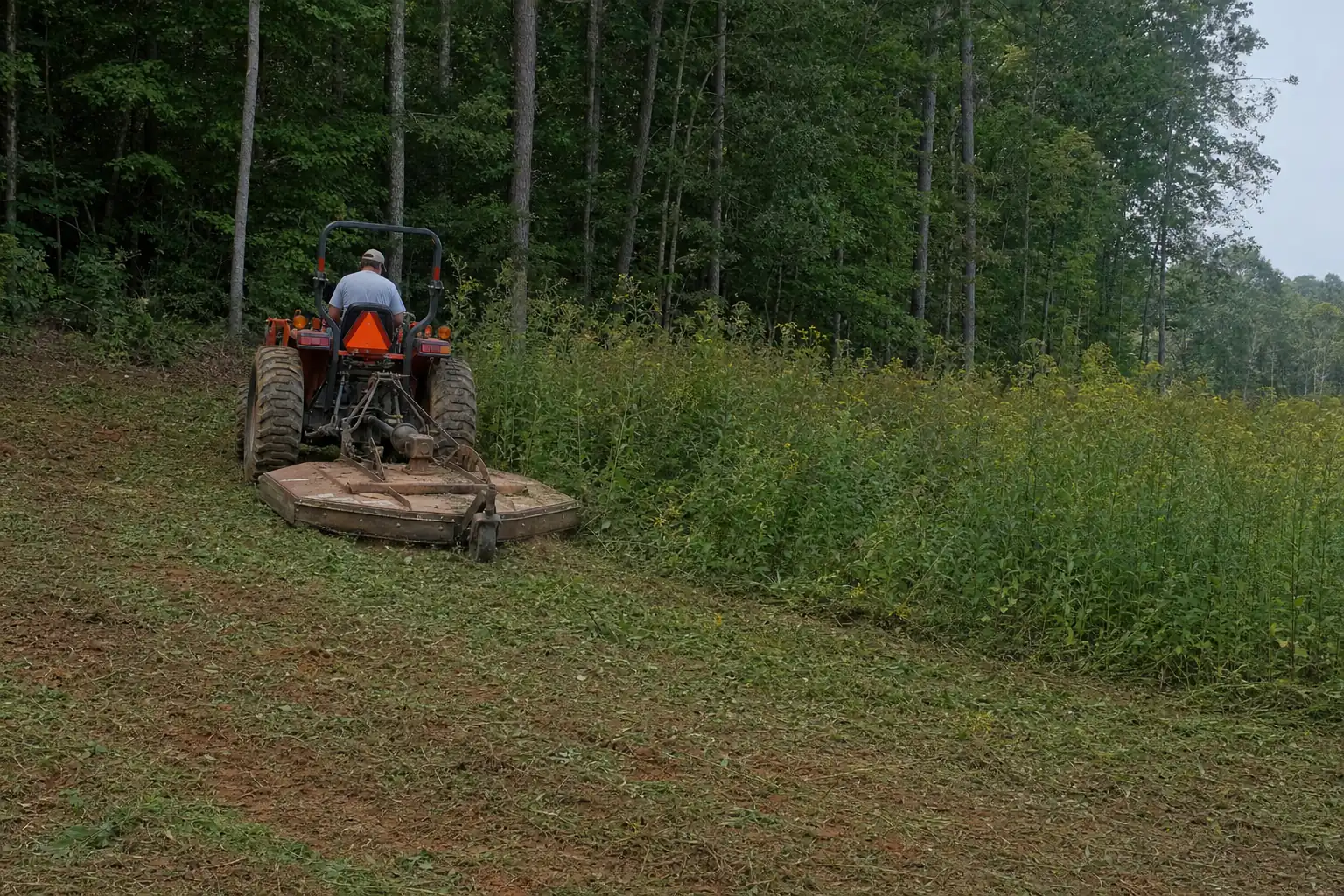
Two things keep the woods open. A mowing or mulching pass every year or two keeps the sprouts low, and we set that up on an annual maintenance arrangement so you don’t have to remember to call. Privet needs more than mowing: a dormant-season treatment on the resprouts, November to February, for more than one year.
Herbicide applications are performed by licensed applicators in accordance with the product label.
Tell us where the land is, what's growing on it and what you want it to be. Add a few photos if you have them. We'll call within one business day with what it takes and what it costs.

 Chinese Privet Removal
 Bush Hogging and Maintenance Mowing
 Forestry Mulching
 Forestry Mulching