Program guide · 8 min read
Federal Conservation Programs for Georgia Landowners (EQIP)
EQIP, the federal Environmental Quality Incentives Program, operates in Georgia for forest landowners through the USDA's Natural Resources Conservation Service. Georgia's current forestry practice list includes Brush Management, Firebreak, Tree and Shrub Site Preparation and Forest Stand Improvement. You apply at your local USDA Service Center, and NRCS sets the terms and the payment rates.
What EQIP is and who runs it
Most of Georgia’s forestry cost-share comes from two directions. The state programs, such as the Resilient Forest Incentives Program, run through the Georgia Forestry Commission. EQIP is federal. The USDA’s Natural Resources Conservation Service runs it, and in Forsyth County you deal with it through your local USDA Service Center.
EQIP covers farms as well as forests, so a lot of what you’ll read about it concerns cropland and pasture. For forest landowners, NRCS keeps a list of forestry practices for Georgia. That list is where a woodland plan starts.
| Program | Run by | Where you apply |
|---|---|---|
| EQIP | USDA Natural Resources Conservation Service | Your local USDA Service Center |
| Resilient Forest Incentives Program | Georgia Forestry Commission | Through the Commission, in its yearly window |
| Invasive Plant Control Program | Georgia Forestry Commission | Through the Commission, on its yearly cycle |
| Southern Pine Beetle Prevention Program | Georgia Forestry Commission | Through the Commission, by cycle |
Program figures and sign-up windows are set annually and are current as of November 4, 2026. We confirm every figure with the Georgia Forestry Commission or NRCS before any application. This page explains how programs work; it is not a guarantee of eligibility or reimbursement.
Program terms change, and we confirm the current ones with the program office before any application. The cost-share hub has the state figures we can confirm.
How the practice list works
NRCS works through named conservation practices. Each practice has a standard that says what it is for and what it has to achieve on the ground. Each state picks the practices it offers, and Georgia’s forestry list is the set that applies to woodland.
Three things follow from that. First, EQIP pays for practices. It does not pay for “clearing” or “mulching” as such. Second, the standard describes the result a practice is meant to reach; it is NRCS that decides which methods meet it on your land. Third, the list can change, so the practices on it this year are the ones to plan around.
That second point is why you won’t see us claim that a machine or a method is accepted for a federal practice. We describe what each practice covers, we show you which of our services does that kind of work, and we leave the decision with NRCS, where it belongs.
Four practices that match our work
Georgia’s current forestry practice list includes these four. Each one corresponds to work we do. Whether a given job meets the standard is for the Service Center to decide.
| Practice | What it covers | Related service |
|---|---|---|
| Brush Management | Reducing woody brush that crowds a site | Underbrush clearing |
| Firebreak | A strip of bare or low-fuel ground that slows or stops a fire | Firebreak installation |
| Tree and Shrub Site Preparation | Readying a site so planted trees can establish | Post-harvest site prep |
| Forest Stand Improvement | Work in an existing stand, such as thinning, that improves how it grows | Timber stand improvement |
Brush Management
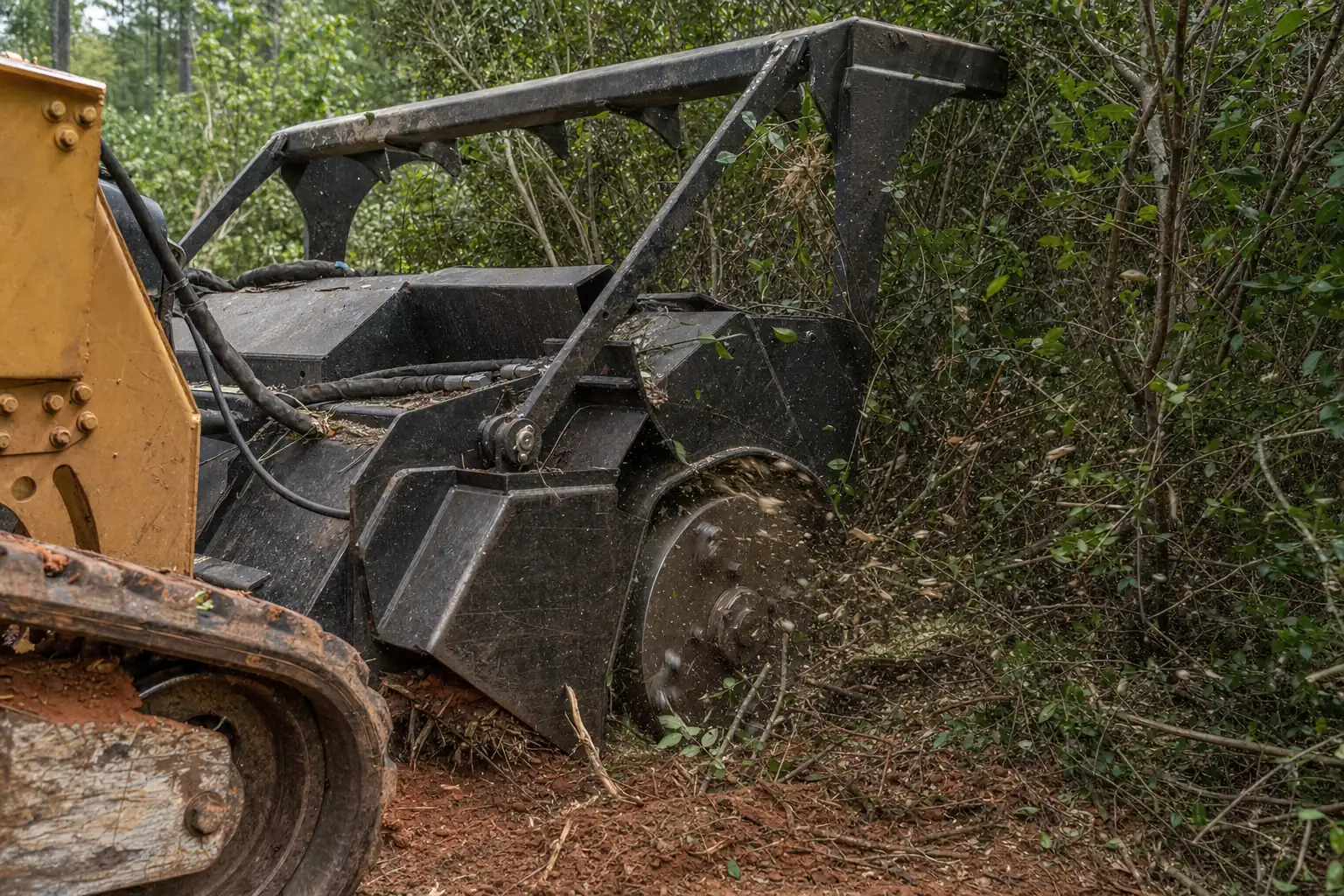
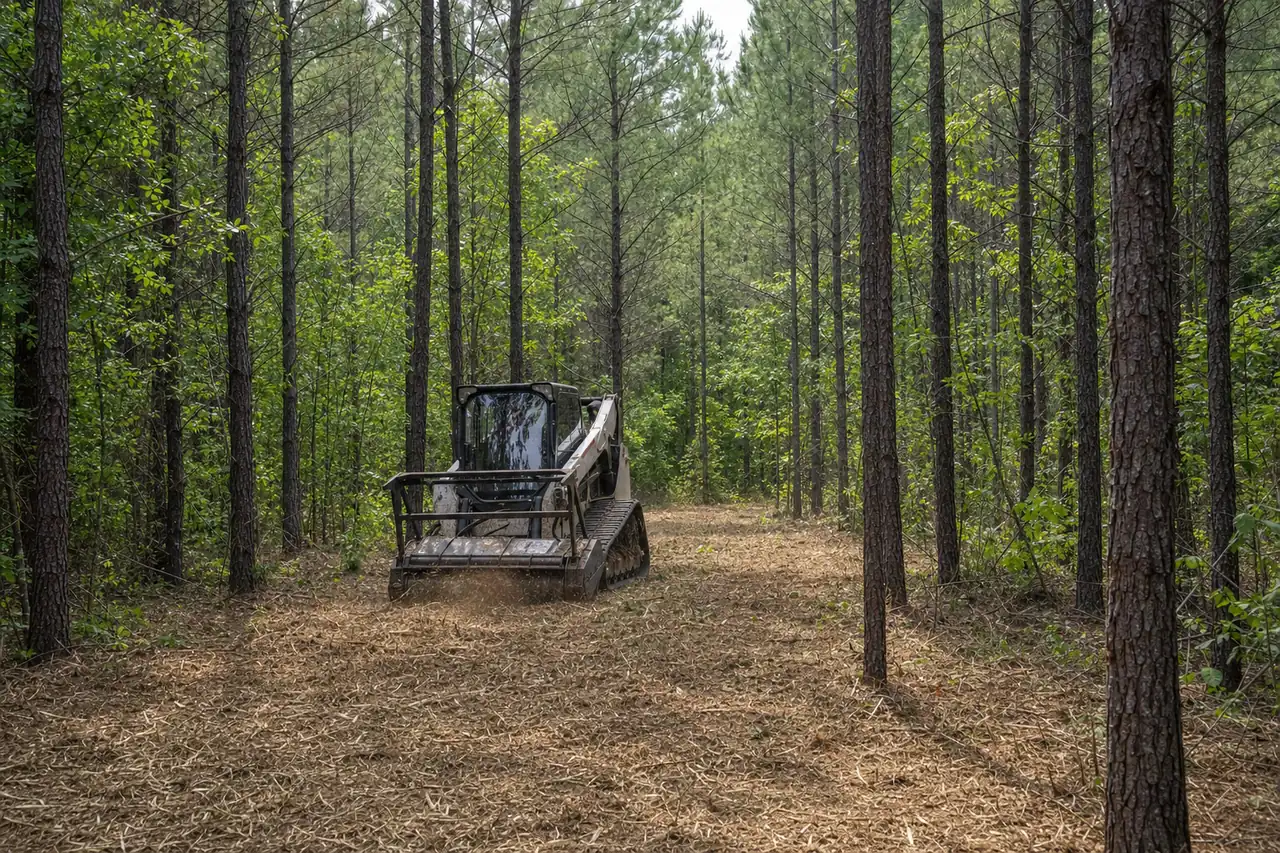
Woody brush is the privet, sweetgum, briar and sapling growth that takes over the floor of a stand or an old field edge. We grind that kind of growth in place with a forestry mulcher. NRCS decides which methods fit its standard for your site, and we confirm that before you apply.
Firebreak
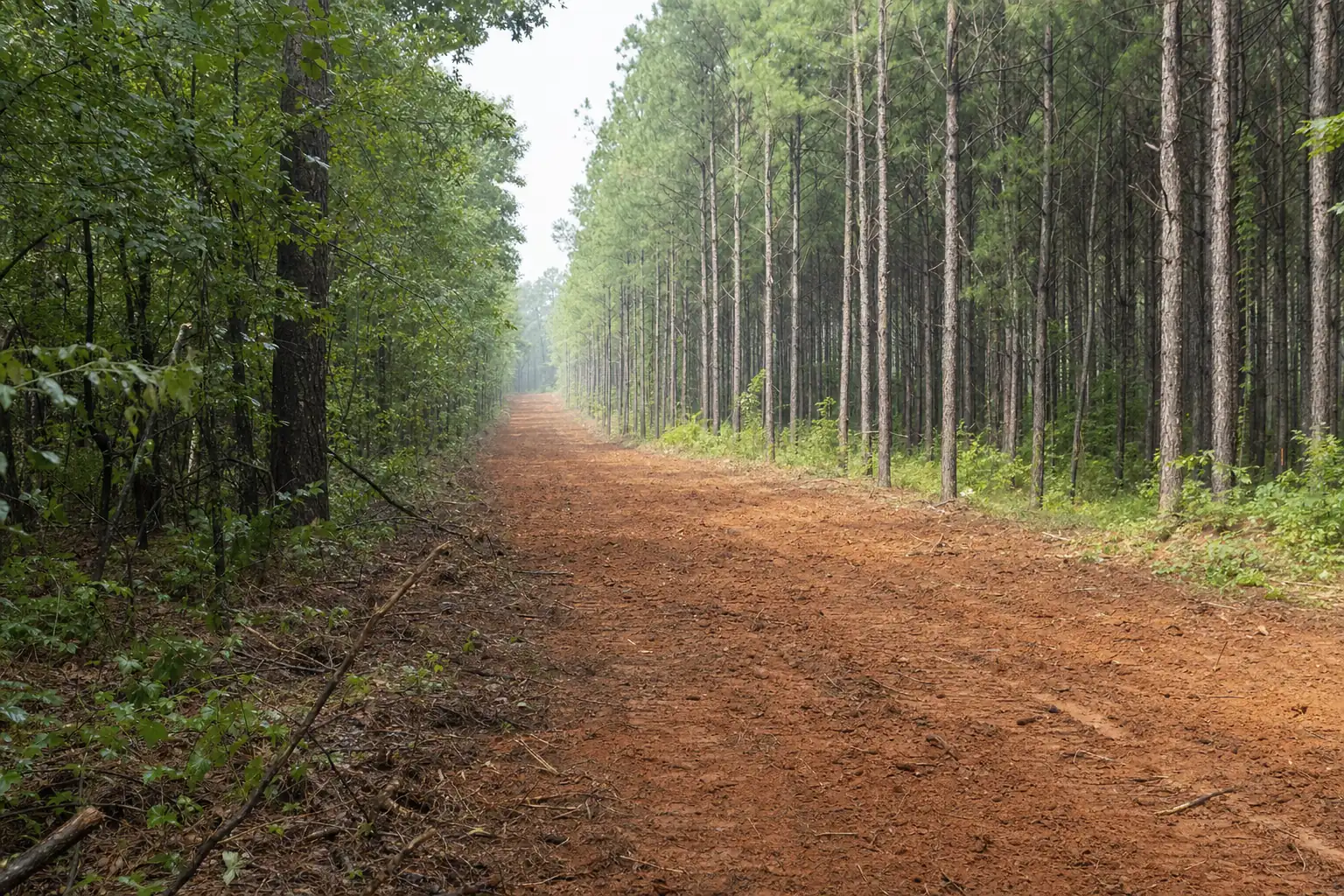
A firebreak is a line around a stand, a burn unit or a home site where a ground fire runs out of fuel. A mowed or mulched line slows a fire. A line meant to hold a prescribed burn goes down to mineral soil, since mulch still burns. We cut both kinds and set water bars where the line runs downhill. See how wide a firebreak should be.
Tree and Shrub Site Preparation
After a harvest, slash and leftover stems keep a planting crew out and shade the seedlings. Site preparation gets the ground ready for the replant. We mulch the slash flat instead of piling it to burn.
Forest Stand Improvement
This is work inside an existing stand: thinning crowded young pines, cutting back hardwoods that crowd the crop trees. Foresters prescribe it, and we cut to their marks. See pre-commercial thinning.
Why we don’t publish EQIP rates
NRCS sets EQIP payment rates for each practice, and the rates can change from one fiscal year to the next. We haven’t been able to confirm Georgia’s current rates against an official source, so this site doesn’t show any. A stale federal rate on a contractor’s website does a landowner more harm than no number at all.
Your Service Center can tell you what applies to your practices this year. Ask when you apply, and ask how payment works for each practice in your plan. We don’t estimate an EQIP payment on a quote.
How an EQIP application runs
EQIP doesn’t use a single short window the way the state’s forest incentives program does. NRCS takes applications through the year and groups them by batching deadlines it sets each fiscal year. Missing one deadline usually means waiting for the next batch. The steps on your side look like this:
- 1Know your landAcres, stands, creeks and what you want the woods to do. A forester's plan helps.
- 2Visit the Service CenterYou apply as the landowner. NRCS tells you what it needs from you.
- 3Agree the practicesNRCS decides which practices fit your land and what each one requires.
- 4Do the work and document itThe practices completed to the standard, with records for the file.
We come in at the first and last steps: the walk that sorts out what the land needs, and the work itself, with records itemized by practice. The guide to how the application works compares the state and federal paths side by side.
Once the practices are agreed, the season decides the order of the work. Firebreaks go in before the burn season the forester plans for. Site prep on dry ground in late summer or fall leaves a cut-over ready for winter planting. Mulching and thinning wait out wet weeks, because tracked machines on saturated red clay leave ruts that become their own erosion problem on a Piedmont slope. We plan the sequence with you so one practice doesn’t hold up the next, and so the records for each come in as the work finishes.
Questions to take to the Service Center
The first visit goes faster if you walk in knowing what you want to ask. These are the questions that settle the most for forest landowners:
- Which forestry practices are on Georgia’s list this fiscal year, and which of them fit my land?
- What is the next batching deadline, and what do you need from me before it?
- What does each practice’s standard require on the ground, and who checks the finished work?
- Can I use a contractor of my choosing, and what records do you want from them?
- If part of my land is in a state program, how does that affect an EQIP application on the rest?
- When and how does payment come, and what has to happen first?
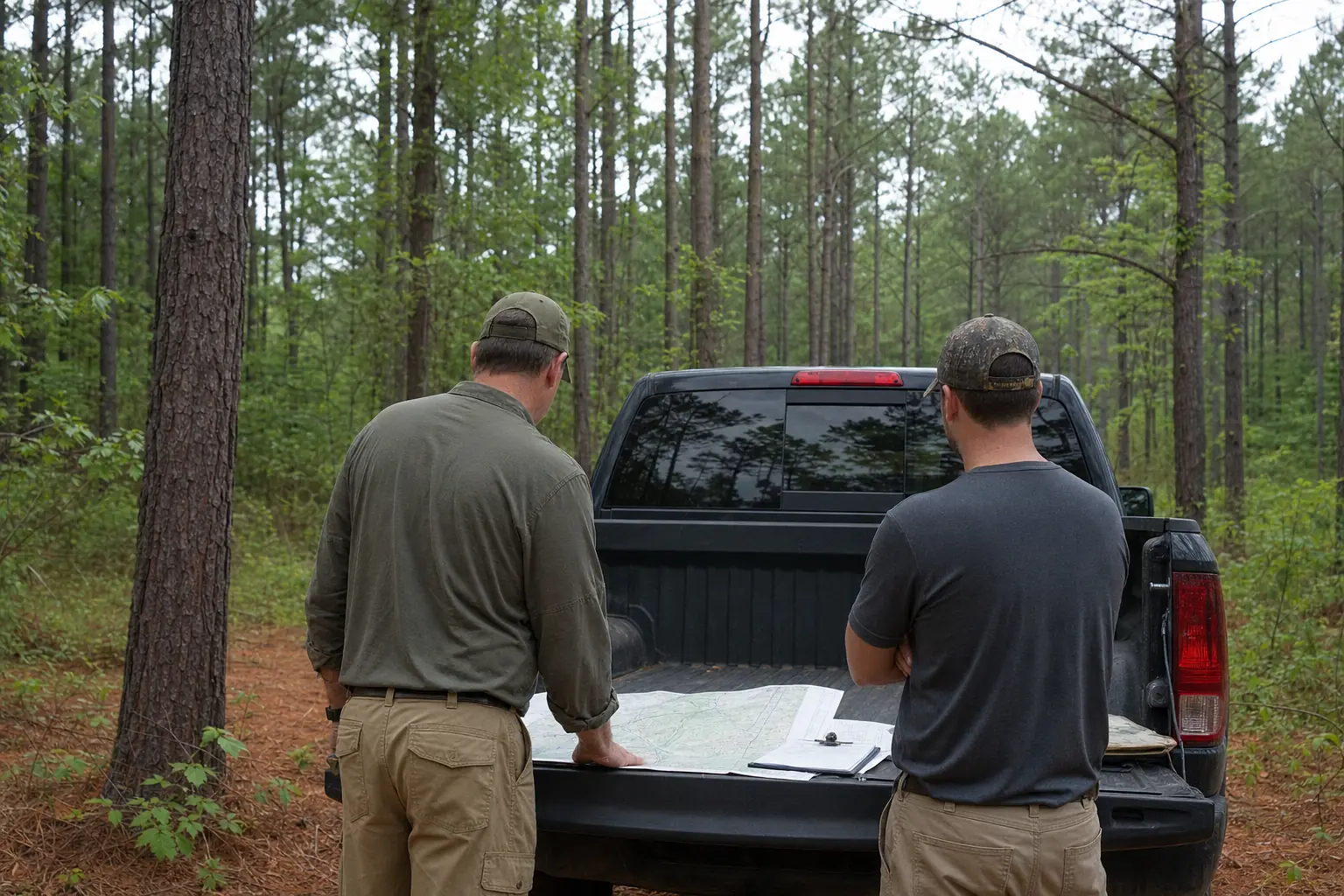
Write the answers down with the date and the name of the person you spoke to. Terms shift between fiscal years, and a dated note settles questions later. Bring a map of the property and, if you have one, the forester’s plan.
Where a forester fits
NRCS staff plan conservation work, and many landowners also bring in a consulting forester, who works for the landowner. A forester can cruise the timber, write a stand prescription with a target basal area, and mark the trees to cut or keep. That prescription makes it plain which practices the land calls for, and it gives the crew something exact to work to.
You don’t need a forester for every job. For thinning, post-harvest site prep or anything tied to a timber sale, you usually do. We work to the forester’s marks and keep the streamside management zones flagged before any machine moves. See working with a consulting forester.
A conservation plan needs more than one machine
Take a forty-acre tract near Coal Mountain with a young pine stand, an older stand gone to brush underneath, and a creek along one side. A realistic plan might call for Forest Stand Improvement in the young pines, Brush Management under the older ones, and Firebreak lines around both. That’s three practices. The thinning takes a mulcher and a saw crew, the brush work takes a mulcher, and a bare-soil firebreak takes a dozer or a disk.
A single-machine operator handles one of those and tells you to hire the rest out, so you end up with three companies. Then you’re the one lining up the schedules and collecting the invoices for the NRCS file. We run the whole plan on one contract, with one point of contact, and our invoices list each practice on its own line with acres or feet, dates and photos.
Firebreak Installation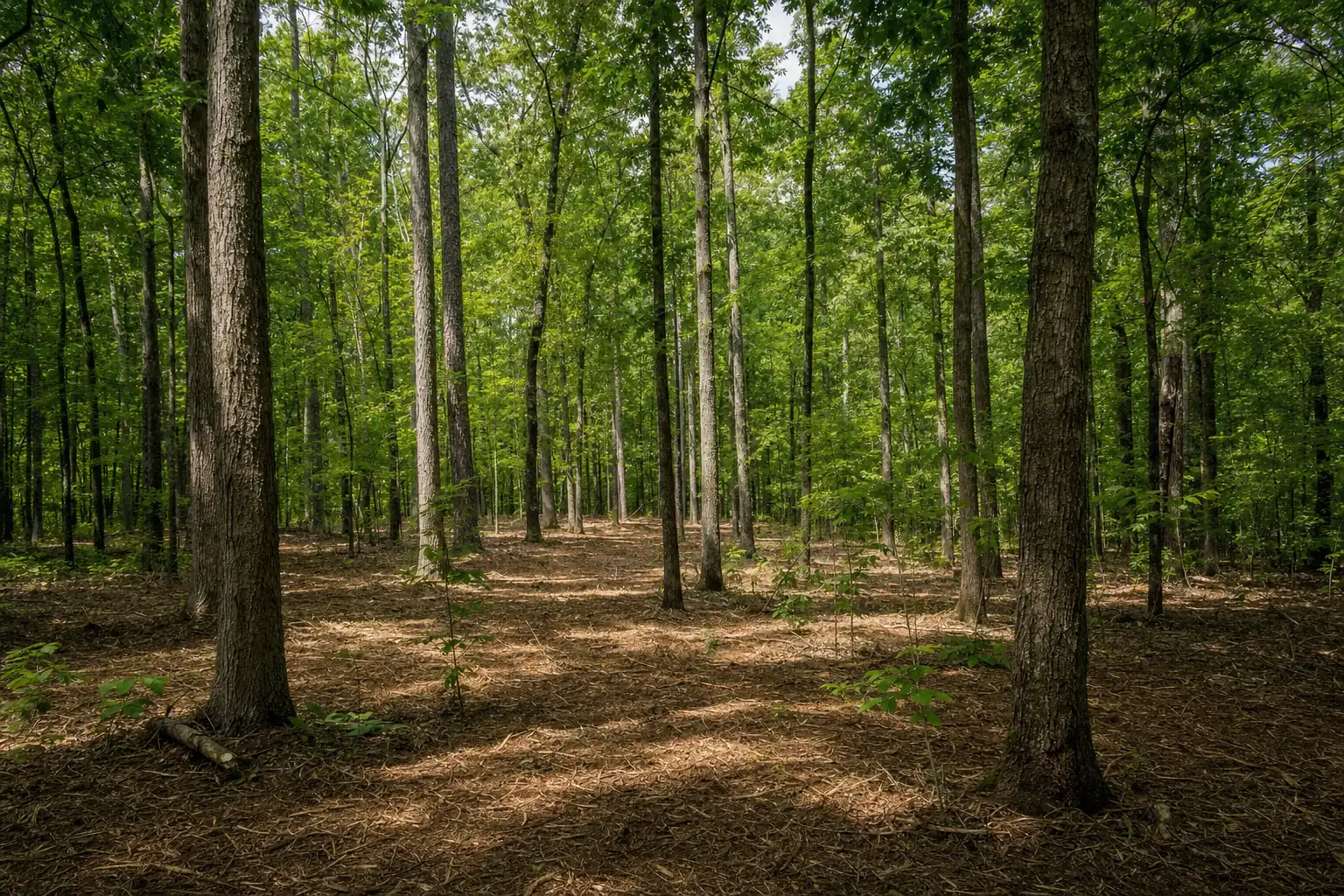 Underbrush Clearing: Open the Woods, Keep the Canopy
 Timber Stand Improvement and Post-Harvest Site Prep
EQIP alongside the state programs
Some forest tracts have work that fits a federal practice and other work that fits a state program. Brush under pines, privet in the creek bottom and a thinning in the young stand can each point toward a different program. Whether one property can draw on more than one, and whether the same acres can count twice, is a question for the program offices, and the answer can differ by program and by year.
What we can do is keep the work separated by practice and by acre, so whatever the offices decide, the records line up. More in can one property use more than one program.
What EQIP does not cover
- Development work. Clearing a house lot, a building pad or a driveway is outside a conservation program.
- Work outside the list. A job that doesn’t fit a practice on Georgia’s current forestry list isn’t part of an EQIP contract.
- Our price. NRCS pays by its own rates and rules, never as a share of a contractor’s invoice.
And the work you do under any program grows back. Brush resprouts within a season or two, and firebreaks and open lines need mowing to stay open. Plan the upkeep into the land’s budget from the start.