Straight answer · 3 min read
Does Cost-Share Cover Forestry Mulching?
Sometimes, on forest land. Georgia's Resilient Forest Incentives Program lists understory mulching on its schedule at $150 an acre, for brush under a standing forest canopy. Federal EQIP names practices such as Brush Management and leaves the methods to NRCS. Mulching to clear a house lot or pasture falls outside both. The program office decides whether your job fits.
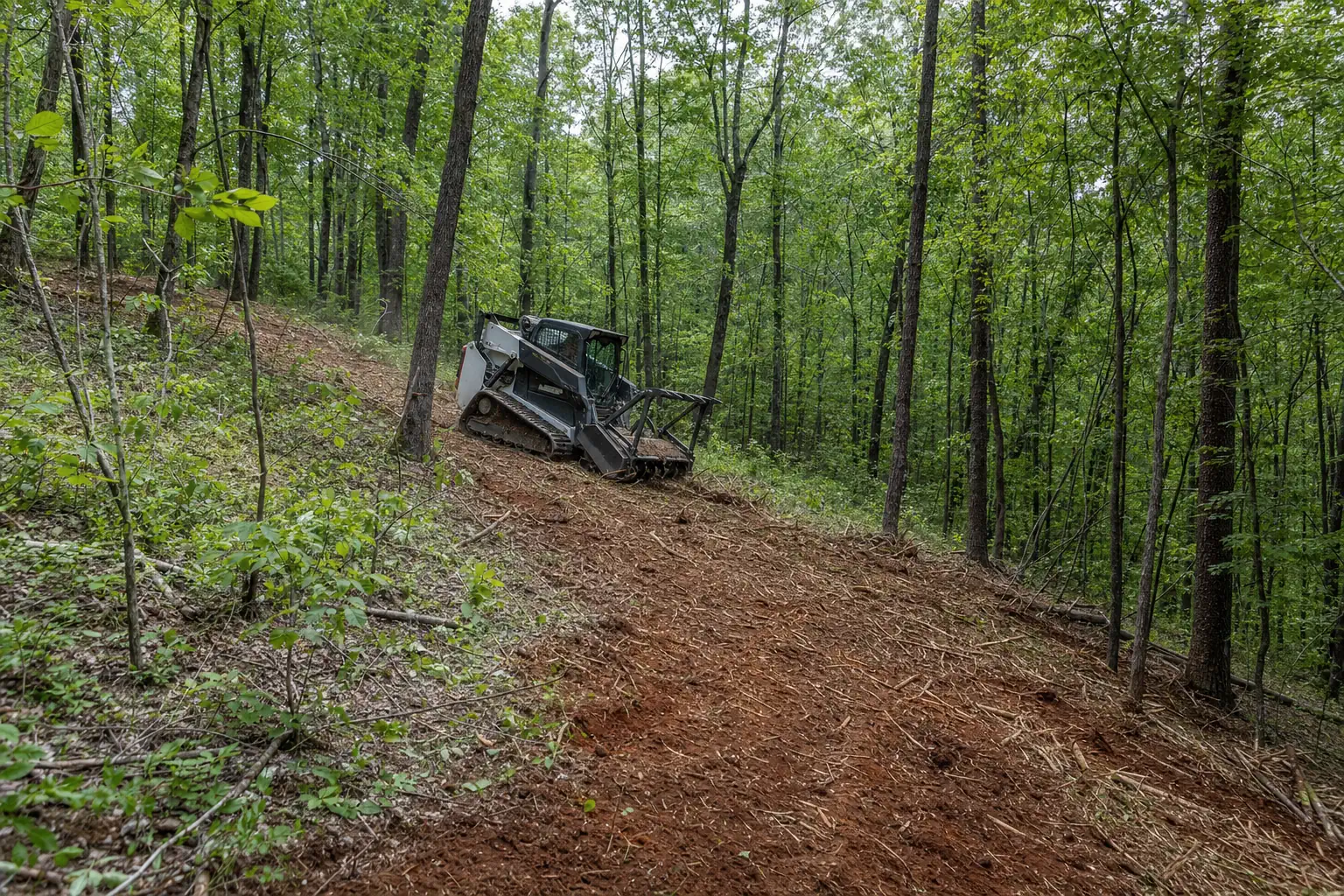
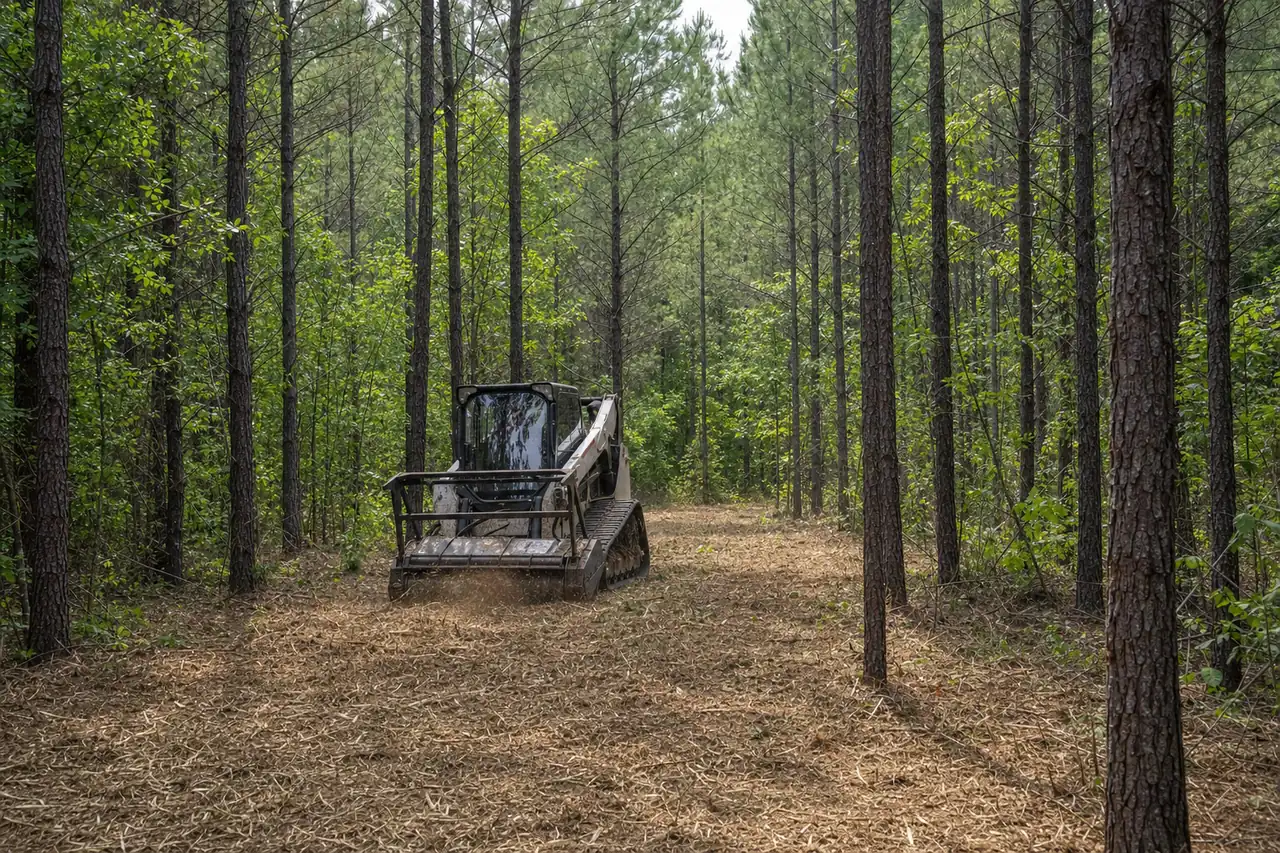
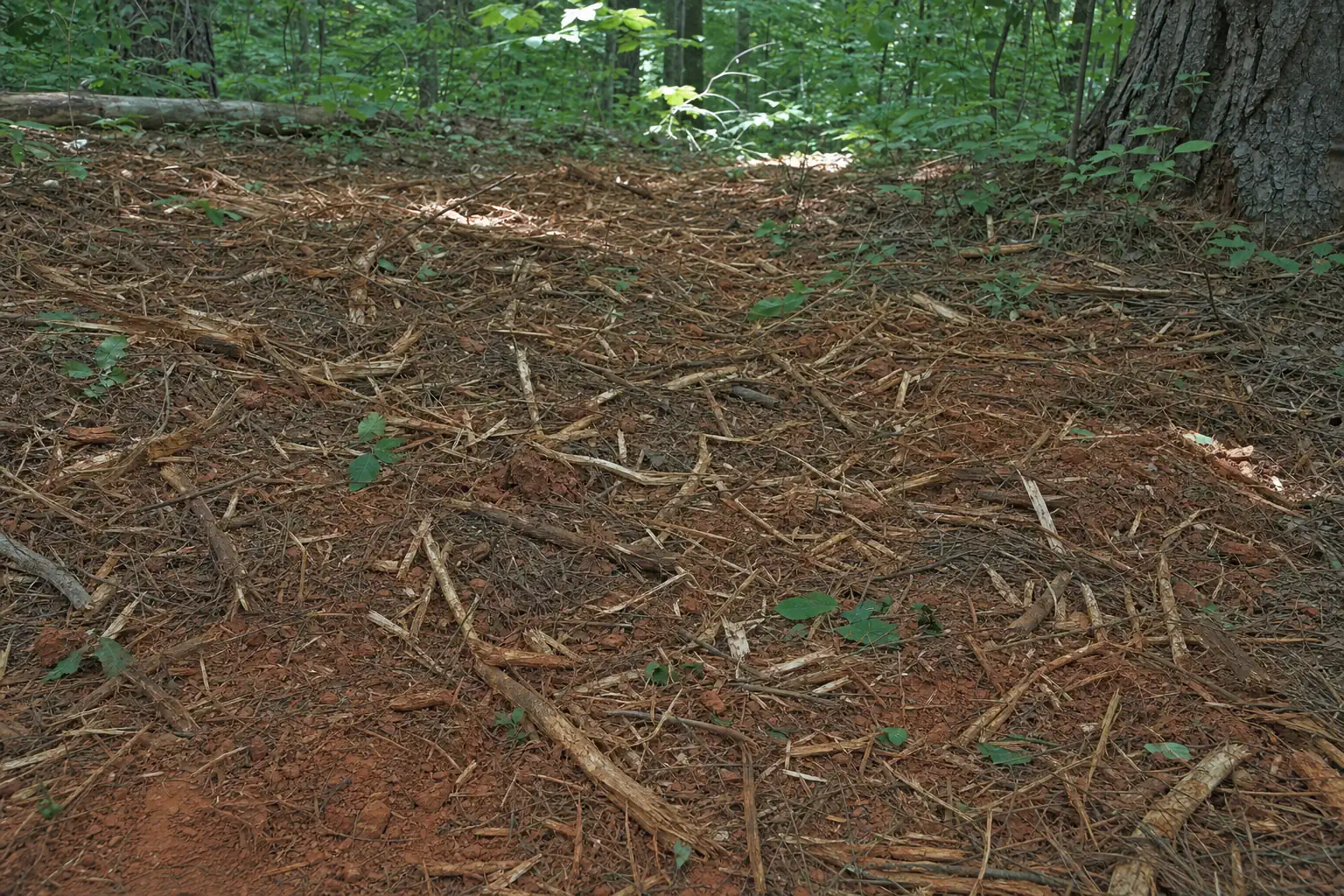
Forestry mulching is a method: a machine with a spinning drum of teeth grinds brush and small trees where they stand and leaves the chips on the ground. Cost-share programs don’t pay for methods. They pay for practices, which are named pieces of conservation work with their own descriptions. So the real question is whether your mulching job is the kind of work a practice describes, on land a program covers.
Practice and method are different things
A practice describes what the work is for and where it happens: brush cleared under a standing pine canopy, a crowded stand thinned, a line cut to stop fire. A method is how someone does it. Several methods can do the same practice, and a program decides which ones it accepts.
That’s why we never claim that mulching is accepted for a named practice. We describe what each practice covers, we show you which of our services does that kind of work, and the program office makes the call. More on how mulching itself works in how forestry mulching works.
What each program names
| Program | Practice | What it covers |
|---|---|---|
| Resilient Forest Incentives Program | Understory mulching, $150 an acre | Brush and small hardwoods under a standing forest canopy, ground in place. The practice name says mulching. |
| Invasive Plant Control Program | Invasive plant control | Mechanical treatment combined with herbicide. Mechanical work alone is only one part of it. |
| Federal EQIP | Brush Management, Forest Stand Improvement, Tree and Shrub Site Preparation, Firebreak | The result each practice should reach. NRCS decides which methods meet the standard. |
Program figures and sign-up windows are set annually and are current as of November 4, 2026. We confirm every figure with the Georgia Forestry Commission or NRCS before any application. This page explains how programs work; it is not a guarantee of eligibility or reimbursement.
Rates and terms change from year to year. We confirm current figures with the program office before any application. The state program is the only one of the three that names mulching in a practice. Even there, the office decides whether your stand and your work fit the practice.
The federal practice standards describe results, such as less woody brush on a site or a stand that grows better, and they don’t name mulching as a method. That leaves the method question with NRCS, and we ask the Service Center before you count on it. See federal conservation programs for Georgia landowners.
Mulching jobs the programs don’t cover
Most mulching around Cumming is outside the programs, because most of it is on land headed somewhere other than timber:
- House lots. Clearing a homesite, a pad or a driveway is development work. See lot clearing.
- Pasture and lawn. Turning woods into grass isn’t a forestry practice.
- Lake and view lots. Underbrushing a lake lot is about the view, not a forest stand.
- Land for sale. Opening a tract so buyers can walk it is useful, but it’s not a conservation practice.
- Small tracts. Woods under the ten-acre minimum fall outside the state forest incentives program.
All of that is still good mulching work. It’s priced as an ordinary job, with no program in the quote.
Mulching that lines up with a practice
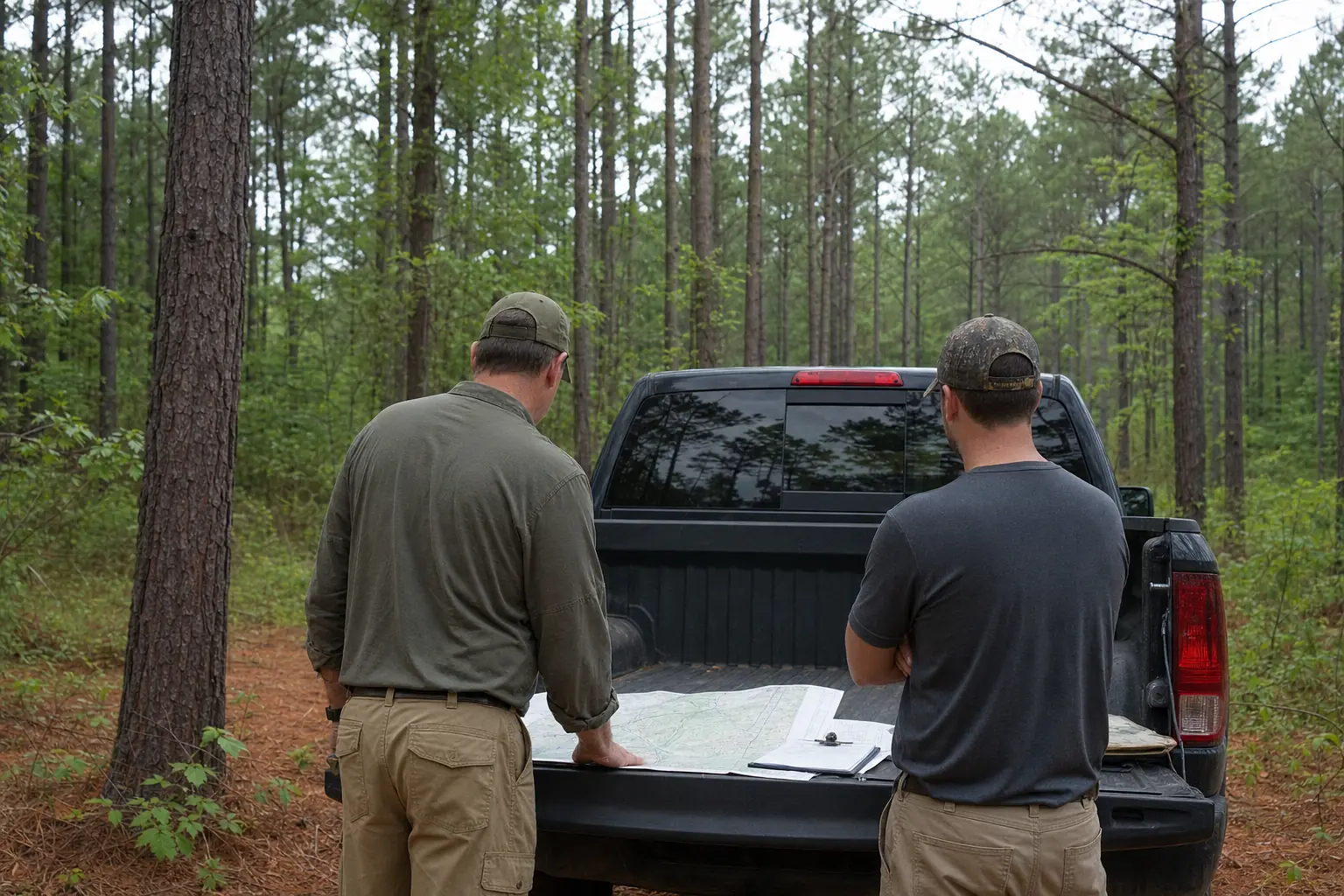
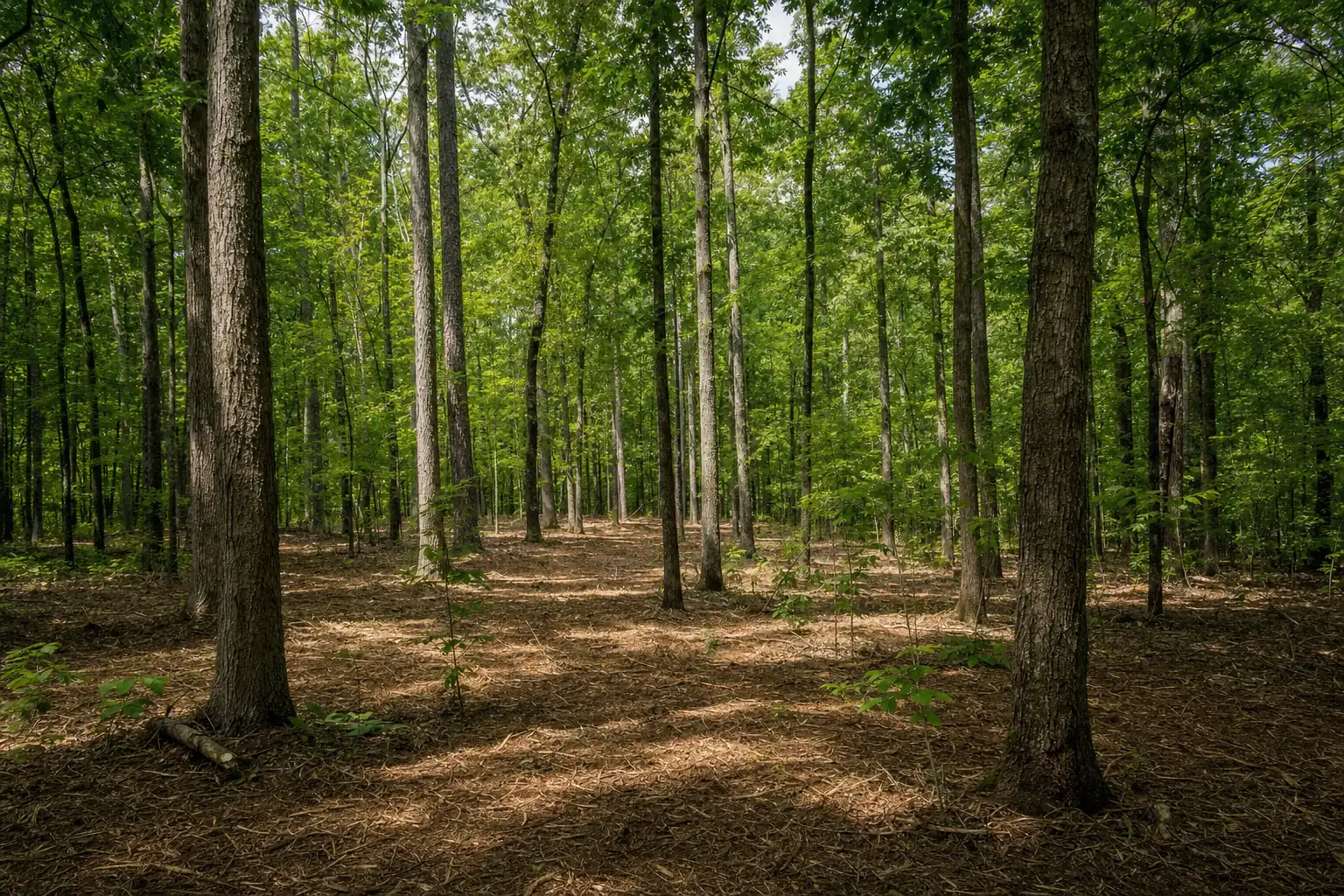
The jobs that come closest are on managed forest land: brush and hardwood sprouts under a pine stand, crowded young pines a forester has marked for thinning, slash on a cut-over tract before a replant, privet under the pines with a herbicide plan behind it. Our matching services are underbrush clearing and timber stand improvement. On those jobs we walk the stand with you, show which practice each piece of work corresponds to, and go over the current terms with the program office before you apply.
Mulched ground sprouts back. Hardwoods and privet come up from the roots within a season or two, so plan a follow-up pass, herbicide where the plan calls for it, or maintenance mowing on open ground.
A mulcher is one machine
A forest plan that includes understory mulching usually includes other things: thinning, a bare-soil firebreak that takes a dozer or a disk, herbicide by a licensed applicator. A single-machine operator with a mulcher can do the mulching and then tells you to hire three companies for the rest. We run the whole plan on one contract. You apply as the landowner. We do the work and keep itemized records by practice, so the mulched acres sit on their own line. The cost-share hub covers each program.
FAQ
More about mulching and cost-share
- Does EQIP pay for forestry mulching?
- NRCS decides. EQIP pays for practices such as Brush Management and Forest Stand Improvement, and NRCS decides which methods meet each practice's standard on your land. We confirm that with your USDA Service Center before you apply.
- Does the state pay for mulching privet?
- Only as part of a combined treatment. The Invasive Plant Control Program counts mechanical treatment combined with herbicide. Mulching without the herbicide follow-up is only one part of that, and the program office decides whether your treatment plan fits.
- Will you tell me what the program will pay for my mulching?
- No. The program sets the payment by its own published schedule and rules, never as a share of our price. We don't put a reimbursement figure on a quote. The program office confirms your amount after you apply.