Straight answer · 3 min read
Is There a Minimum Acreage for Cost-Share?
Yes, and it differs by program. Georgia's Resilient Forest Incentives Program has a ten-acre minimum. The Invasive Plant Control Program needs a treatment area of at least three acres and sets a separate minimum on the land you own. The Southern Pine Beetle Prevention Program and federal EQIP set their own terms, which we confirm before you apply.
Acreage is the first thing to check, because it settles most cost-share questions before anyone talks about practices or rates. It rules out the typical wooded house lot around Cumming, and it decides which programs a bigger tract can look at.
The minimums we can confirm
- 10 acres
- Resilient Forest Incentives Program minimum
- 3 acres
- Invasive Plant Control Program minimum treatment area
Program figures and sign-up windows are set annually and are current as of November 4, 2026. We confirm every figure with the Georgia Forestry Commission or NRCS before any application. This page explains how programs work; it is not a guarantee of eligibility or reimbursement.
| Program | Acreage rule |
|---|---|
| Resilient Forest Incentives Program | Ten-acre minimum |
| Invasive Plant Control Program | Three-acre minimum treatment area, plus a minimum on the land you own, confirmed by the Georgia Forestry Commission |
| Southern Pine Beetle Prevention Program | Set by cycle; we confirm it before you apply |
| Federal EQIP | Set by NRCS through your USDA Service Center |
Minimums can change from year to year. We confirm the current ones with the program office before any application.
Acres you own, acres of forest, acres treated
A “minimum” can count different things, and the difference decides whether your land fits. A program might count the land you own, the forest acres on it, or the acres of a single practice. The Invasive Plant Control Program uses two separate tests: one for the treatment area and one for ownership.
So ask the office which acres it counts. A twenty-acre property with eight acres of woods and twelve of pasture is a different case from twenty acres of pine, and the office is the one that says how it reads your land.
The Invasive Plant Control Program’s ownership minimum
This program sets a minimum on how much land you own, separate from the three-acre treatment area. Published descriptions of that ownership minimum don’t agree with each other on what gets counted, so we leave the number off this site rather than print one that might be wrong. The Georgia Forestry Commission confirms it, and we go over it with you and the office before you apply. More in the guide to the Invasive Plant Control Program.
How we measure your acres
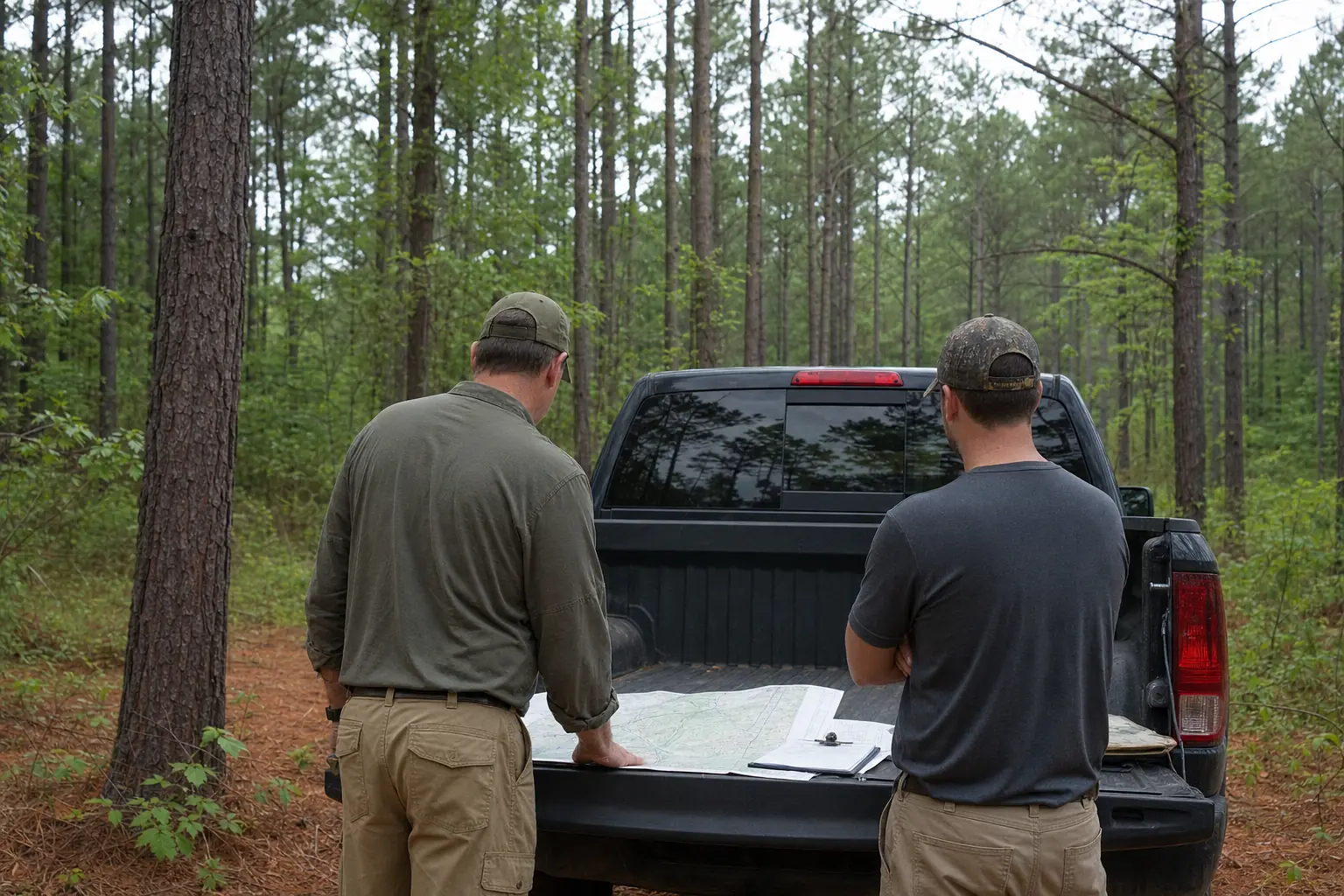
Tax records give the parcel size, not the forest acres or the size of a privet thicket. On the walk we measure what the programs care about:
- Forest acres. The woods, separated from lawn, pasture and the house site.
- Stands. Each block of pine, hardwood or cut-over, mapped on its own.
- Treatment area. The infested acres for invasive control, measured, not guessed.
- Buffers. The creek zones where machine work is limited, flagged.
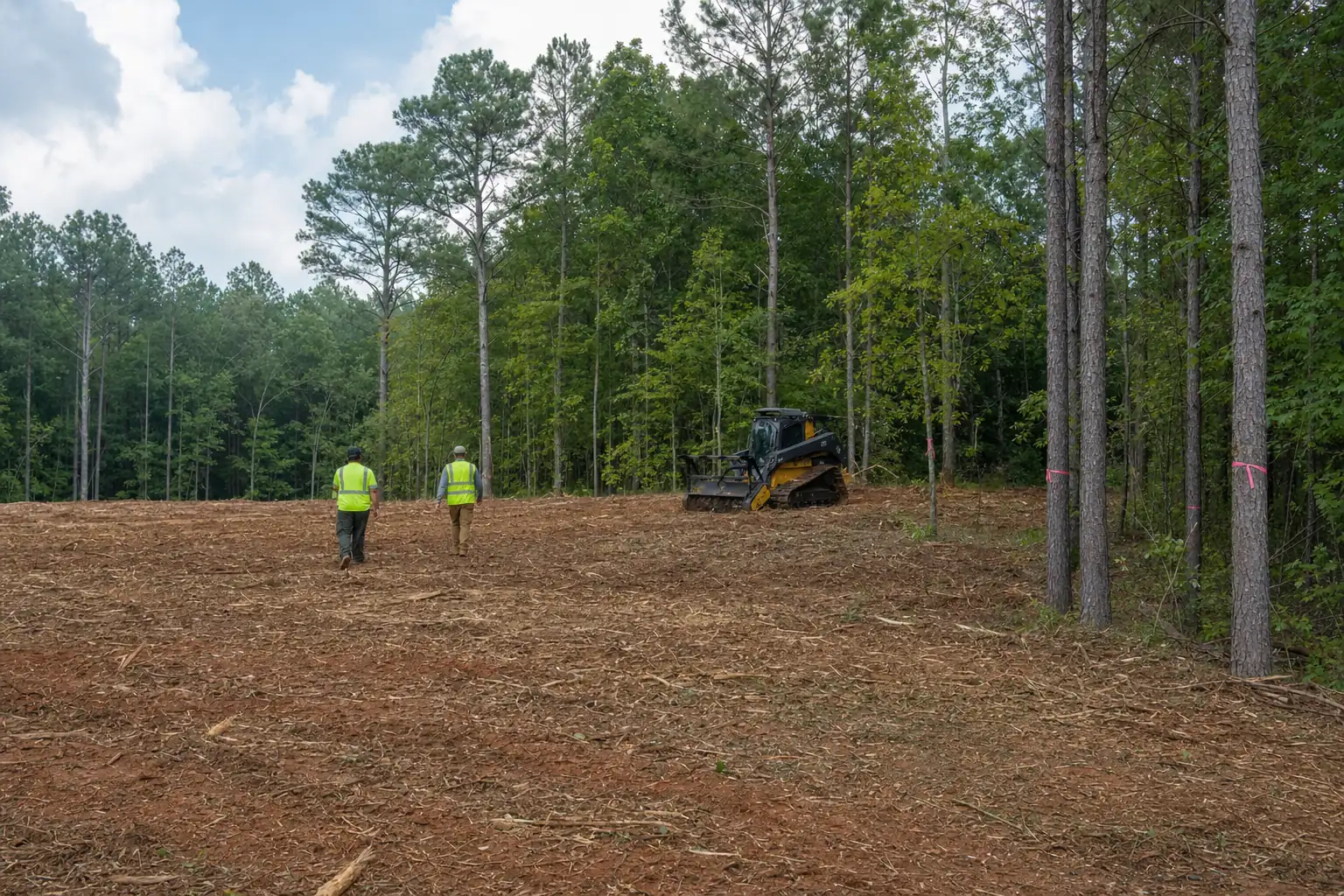
We report the acres as they are. If a tract falls short of a minimum, it falls short, and we tell you on the walk instead of after you’ve filed.
Three tracts and where they land
Four acres behind a house. Mostly woods, privet thick along a branch of Settingdown Creek. Under the Resilient Forest Incentives Program’s ten acres, and the privet patch is under two acres, short of the three-acre treatment area. No program here. The privet still needs work before it spreads.
Fourteen acres, eleven of them pine. A planted stand nobody has thinned, with brush coming up underneath. Over ten acres of woods, so the state program is worth a call to the office about how it counts them, and the thinning and understory work line up with practices on its schedule.
Sixty acres of hunting land toward Dawsonville. Pine and hardwood, privet in the bottoms, old roads grown shut. Over every minimum we can confirm. The question here is which programs fit which stands, which is covered in using more than one program.
Under the minimum, or over it
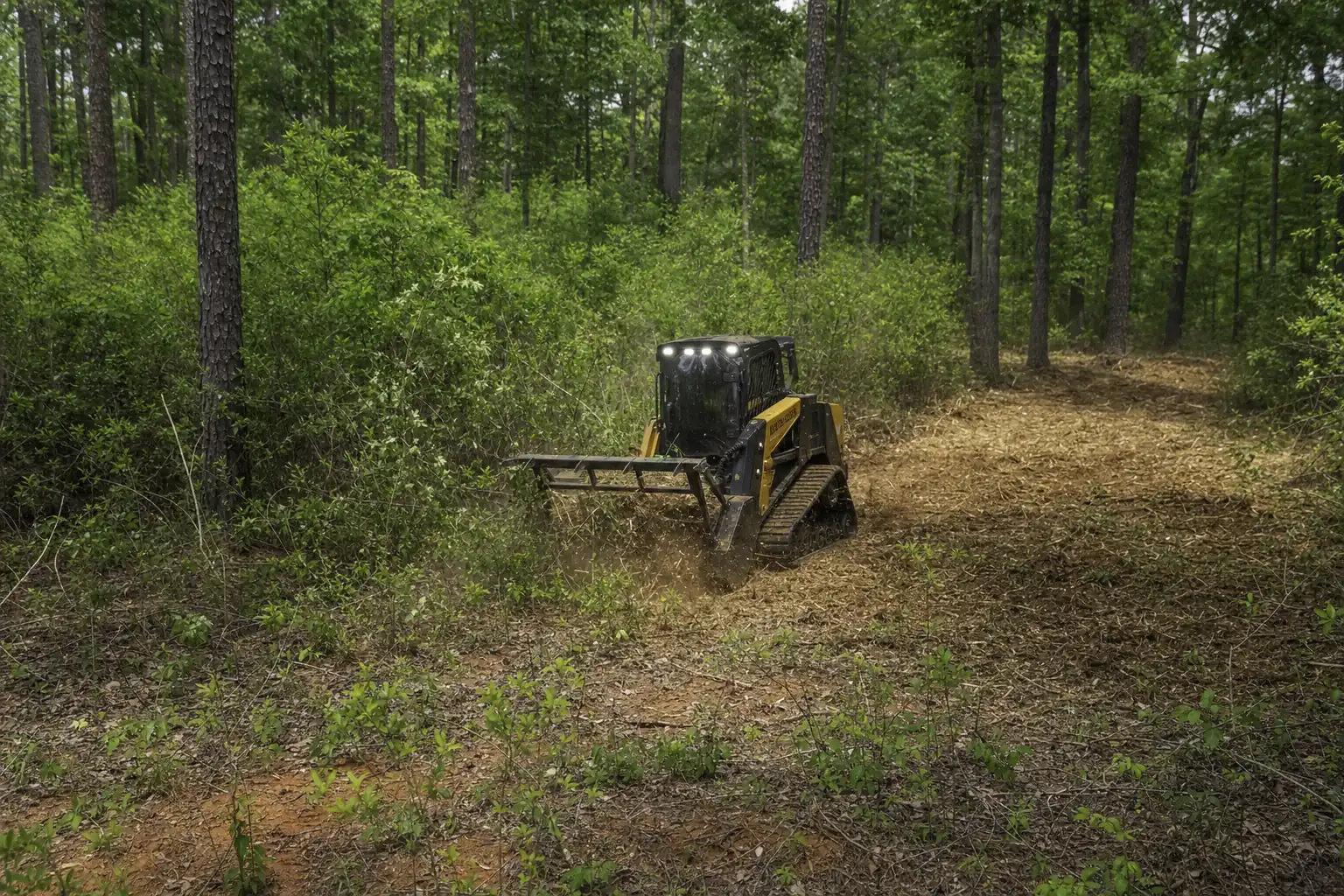
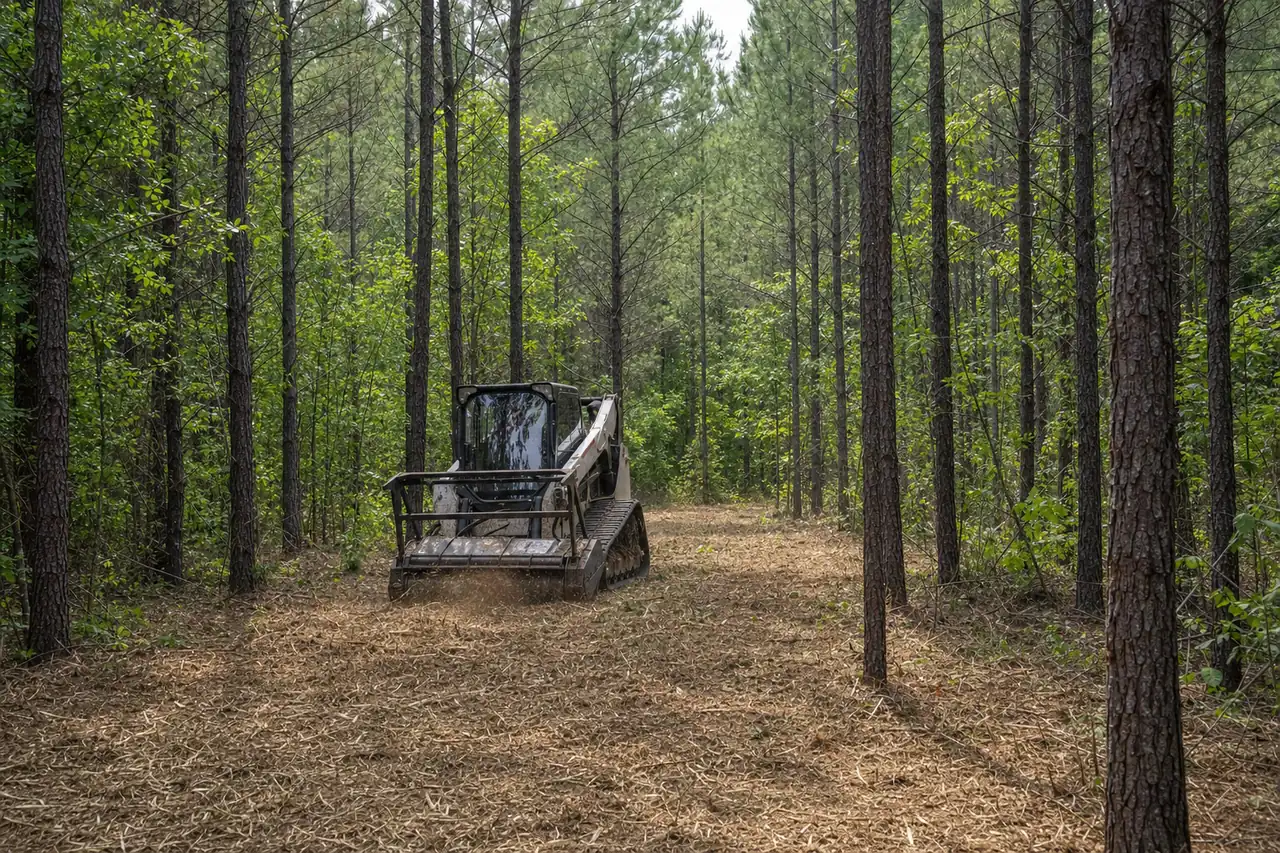
Under the minimum, the work is still worth doing, priced as an ordinary job. Privet along a creek or brush under a few acres of pines can be handled with privet removal or underbrush clearing, with no program in the picture. Plan for regrowth either way: mulched ground sprouts within a season or two and needs maintenance mowing to stay open.
Over the minimum, the plan usually spans several practices: thinning, understory mulching, firebreaks, privet treatment. A single-machine operator does one and tells you to hire three companies for the rest. We run the plan on one contract. You apply as the landowner, and we keep itemized records by practice for your claim. See who qualifies or start at the cost-share hub.
FAQ
More about acreage minimums
- Does the ten-acre minimum count my whole property or only the woods?
- Ask the program office. The Resilient Forest Incentives Program publishes a ten-acre minimum, and the office confirms how it counts the acres on your property. We measure the forest acres on the walk so you have the number in hand when you ask.
- Can I combine two parcels to reach a minimum?
- Ask the program office before you count on it. Ownership, parcels and how the acres connect all affect the answer, and the rules are the program's. We map each parcel's forest acres so the conversation starts from measured numbers.
- Is there a maximum as well as a minimum?
- The Invasive Plant Control Program caps what it pays each landowner, and the cap is on our guide to that program. Other programs set their own limits, which we confirm with the program office before any application.